
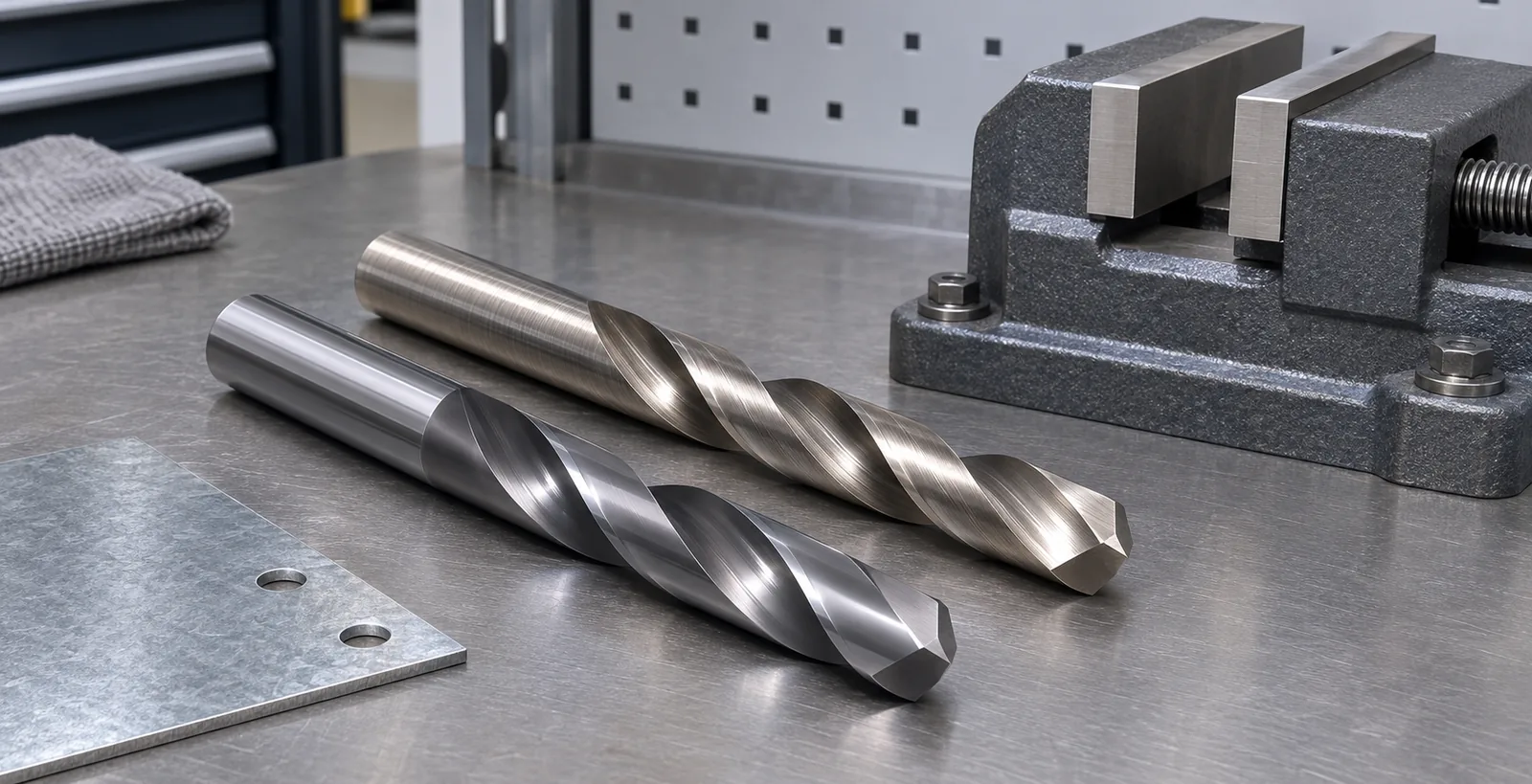
Cobalt vs carbide drill bits compares two different tool-substrate choices, not two coatings or colors. Cobalt drill bits are commonly cobalt-alloyed high-speed steel; cemented-carbide tools use a different hard, wear-oriented substrate. Carbide can offer wear and hot-hardness advantages in appropriate cutting conditions, while brittleness and the need for a rigid setup make it an unsuitable automatic upgrade in every operation. For a buyer reviewing a metal hardware hole-making proposal, compare the tool material with the workpiece, geometry, holding method, machine setup and production duty. Do not infer a universal speed, tool life, precision result or Koitor machine capability from the substrate name.
The practical sourcing question is whether the supplier’s actual tool and setup fit the part and the requested hole. A more wear-resistant cutting material cannot compensate for poor holding, unsuitable geometry or a process outside its intended conditions. Conversely, a cobalt-alloyed HSS tool can remain a reasonable choice when the operation and expected duty suit it. A buyer should request an explanation of the proposed setup without assuming that a tool label alone proves the finished feature.
What problem does a cobalt vs carbide drill bits comparison solve?
The comparison helps a buyer ask better questions when a drawing, sample or supplier discussion mentions drilling a hole in a metal component. It distinguishes a material property of the cutting tool from other factors that control the operation. That distinction is useful in product development because an engineering change may affect the hole location, diameter, edge distance, finish or assembly fit, even when the drawing calls out only a nominal dimension.
A hypothetical example is a mounting plate that needs a hole for a fastener. The buyer may be comparing a sample or a supplier’s process suggestion. The correct review is not to choose the most expensive or hardest-looking bit. It is to define the workpiece material and thickness, the hole geometry and tolerance, the surface that must remain cosmetic, the workholding approach and the expected quantity. The responsible manufacturer can then explain the planned process and its limits.
This article is a buyer guide to tool-substrate trade-offs. It does not prescribe machine settings or a cutting procedure, and it does not offer a drill-bit purchasing catalog. The technical source from Harvey Performance Company describes HSS, cobalt-alloyed HSS and carbide tool materials and discusses the rigidity and brittleness trade-off. This article uses that bounded comparison while excluding exact speeds, feeds, hardness cutoffs, life ratios and pricing. Those details vary with tool geometry, workpiece and manufacturer guidance.
What do cobalt and carbide labels describe?
Cobalt drill bits typically refer to high-speed-steel tooling alloyed with cobalt. The cobalt is part of the tool material, not a surface color or a promise that the bit is made from solid cobalt. Carbide usually refers to cemented carbide, a different tool substrate selected for its hardness and wear characteristics in suitable operations. Coatings are a separate attribute and may appear on tools made from different base substrates; the coating should not be confused with the tool body material.
For procurement, labels are only the starting point. A catalog description should identify the tool’s construction and intended use clearly enough for the manufacturing engineer or tooling specialist to review it. If the supplier says “cobalt bit,” confirm whether the meaning is cobalt-alloyed HSS. If the supplier says “carbide,” ask what tool form and operation are proposed. Do not infer the grade, geometry, coating or application from a photograph alone.
| Review field | Cobalt-alloyed HSS starting point | Cemented-carbide starting point | What remains operation-specific |
|---|---|---|---|
| Tool substrate | High-speed steel with cobalt alloying | Cemented carbide substrate | Exact tool design and supplier specification |
| Wear and heat behavior | May suit operations where HSS tooling is appropriate | Often selected for wear and hot-hardness potential in suitable setups | Workpiece, geometry, cutting conditions and tool documentation |
| Rigidity and fracture sensitivity | A different toughness and usage trade-off applies | Brittle behavior makes setup and support especially relevant | Runout, holding, vibration, machine and workpiece support |
| Coating | A coating may be a separate product feature | A coating may be a separate product feature | Coating identity and intended application, if specified |
| Buyer decision | Is the tool adequate for the stated work and duty? | Does the operation support the tool and its trade-offs? | Hole acceptance, finish, tolerance, repeatability and supplier method |
The table does not establish that carbide is always more precise or that cobalt HSS always tolerates an unstable setup. It separates the axes the buyer needs to discuss. Tool selection belongs to the party controlling the operation and must follow actual equipment and tool-manufacturer instructions.
How should a buyer evaluate the whole drilling setup?
Review the cutting tool as one element in a system. A hole-making proposal includes the workpiece material and condition, the part thickness, the drill geometry, the workholding, the machine and spindle, the entry surface, the exit support, the expected production duty and the acceptance method. Changing the substrate can alter the trade-off, but it does not remove the need to verify those other elements.
Start with the drawing. Identify the hole’s purpose: clearance, threaded engagement, locating, drainage, attachment or another function. Then note what must be controlled: diameter, location relative to a bend or edge, perpendicularity, burr condition, visible side, or fit with a mating screw. A buyer should not insert a tolerance that engineering has not approved. The aim is to make the critical feature explicit and ask the supplier how it will be produced and inspected.
Next, describe the workpiece and geometry that the tool will encounter. Sheet thickness, material grade and temper, stacked layers, a curved surface, a bend nearby or limited access can influence process planning. A hole close to an edge or formed feature may need more than a tool-material discussion. The buyer can ask whether the supplier expects a drilling, punching, laser or other process, and request a review of any change that affects burr, heat-affected area, finish or dimensional acceptance. This question does not presume which process is available at Koitor or any other supplier.
Workholding and rigidity matter because a brittle tool can be more sensitive to deflection, vibration and interruption. This is a qualitative selection caution, not a quantitative threshold. The buyer can ask who owns the setup decision, what equipment and tool documentation are being used, and how the supplier will identify a setup change that affects the part. The supplier does not need to disclose proprietary feeds or a full process recipe if the buyer’s requirement can be met through a defined sample and inspection record.
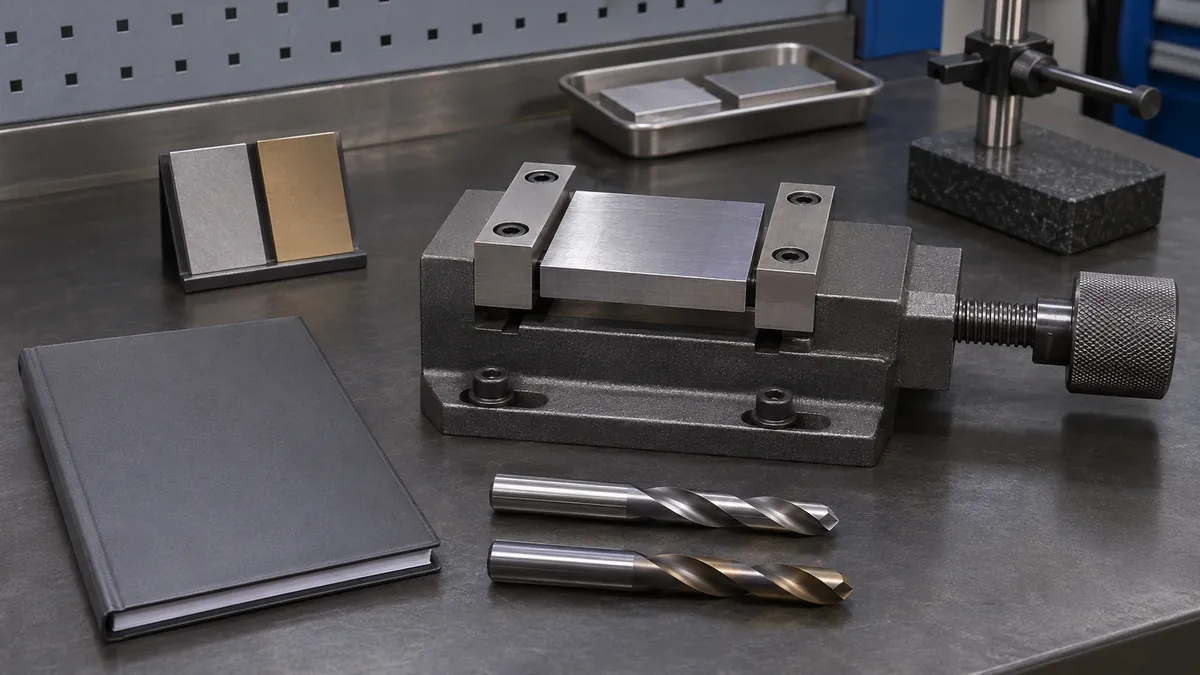
For a hypothetical hardware component, the supplier’s actual tool and machine documentation matters more than a general web chart. A cobalt-alloyed HSS tool and a carbide tool might both be viable in different operations, but that conclusion must come from the responsible process owner. A buyer can request the proposed tool class, the reason for the choice, and the feature-level acceptance method. Avoid demanding a specific speed or feed unless the buyer has the authority and evidence to specify it.
When the cobalt vs carbide drill bits choice appears in a quotation, ask whether the supplier is proposing a new method or only describing its existing tooling. Those are different conversations. A new method may require a sample and review of the affected dimensions or finish. A description of existing tooling may simply answer an information request, without changing the buyer’s drawing or acceptance plan. The buyer should not infer a process change or performance guarantee from a material name in a quote line. This distinction also helps purchasing teams compare offers fairly: one supplier may describe tooling in detail while another quotes the same finished feature without naming the tool. If both have quoted the same drawing revision and can provide the agreed feature evidence, the buyer can decide whether the tooling detail is needed for procurement. If the requested tool is a contractual requirement, state that explicitly and have the responsible engineer verify the requirement before the quotation is finalized.
The inspection plan must match the drawing. A caliper or pin gauge may be appropriate for some dimensions, while a location or perpendicularity requirement may need another method. A visual check can note burrs or visible damage but cannot establish every geometric condition. Agree on the datum, measurement point, instrument or sampling approach and record before production if the feature is critical. Do not assume that a harder cutting edge guarantees a tighter finished dimension.
What should importers ask about the sample and process change?
The buyer should connect the hole on the drawing to the physical sample and its revision. If the hole is functionally important, identify the mating part or fastener, the clearance needed, the position reference and which surface must remain acceptable. If the hole is cosmetic, define the relevant appearance expectations. This gives the supplier a concrete acceptance target rather than an ambiguous request for a “clean hole.”
During sample review, record the measured feature and the method used. Confirm the drawing revision and how the sample was manufactured if that information affects the production plan. Do not interpret one sample as proof of capability across every tool, machine or batch. A sample can validate a particular configuration at a particular stage; any process change should be evaluated against the same critical feature requirements.
Questions for the supplier can include:
- What tool-material family and tool form are being proposed, and who selected them?
- Which workpiece material and thickness does the proposal cover?
- What drawing features constrain tool access, holding or the hole location?
- Which dimensions or visible conditions will be checked on the first sample?
- Is a process change being proposed, and does it affect the approved finish or geometry?
- Which information is confidential process detail, and what evidence can be shared to verify the part?
These questions do not request proprietary machine parameters. They help the buyer distinguish a valid production control from a general statement that the supplier has “carbide tooling” or “cobalt drills.” If the buyer needs a capability commitment, that should be defined by the responsible manufacturer using its actual equipment, measured history and agreed method. This article does not establish any such Koitor capability.
The distinction between drilling and other machine processes is also useful when reviewing a drawing. A hole may be created by drilling, punched during sheet processing, or formed by another manufacturing route. Koitor’s knowledge library also covers drill-press-versus-mill choices and lathe-versus-milling part geometry. Those pages compare process concepts; they do not assert that any one machine is used for a specific Koitor order.
If a proposed hole is close to a bend, weld or formed feature, ask the engineering contact to review access and the finished part’s fit before a cutting tool is named as the solution. The tool choice cannot correct an incomplete datum scheme, an inaccessible entry angle or a hole that moves too close to an edge after a design change. A short drawing review can identify whether the unanswered issue is geometry, process sequence, fixturing, tool selection or inspection. That classification helps keep the quotation discussion focused and prevents an importer from requesting a tool specification when the actual problem is a drawing revision. It also gives the supplier a chance to say which details are confirmed and which should remain open until a sample is reviewed. Record any approved change against the drawing and sample so a later reorder does not rely on a verbal explanation.
What sourcing mistakes should buyers avoid?
The first mistake is equating hardness with a better result. A harder substrate may improve wear behavior in an appropriate setup, but the buyer still needs a suitable machine, workholding and operation. A brittle tool that is poorly supported can be damaged or produce an unacceptable feature. The substrate does not guarantee the finished-hole quality.
Other errors can lead to unclear purchase expectations:
- Choosing by color. A gold or black appearance may be associated with a coating, but color does not identify the base substrate or prove the coating’s function.
- Treating “cobalt” as solid cobalt. The common commercial description usually means cobalt-alloyed high-speed steel; confirm the actual tool description.
- Assuming carbide is an upgrade for every hole. The tool’s characteristics must suit the machine, part geometry and production conditions.
- Comparing tool labels without comparing operations. Two supplier quotes may use different workpiece materials, hole locations, setups or inspection criteria.
- Requesting a guaranteed tool life. Life depends on the specific operation and manufacturer guidance. Do not infer a ratio from substrate names alone.
- Using a generic speed/feed chart as a purchase specification. These figures depend on exact tool geometry, workpiece and setup. The responsible process owner should follow the relevant tool documentation.
- Ignoring the part function. A clearance hole and a locating feature can have different acceptance needs even when their nominal diameter is similar.
- Approving appearance but not function. A visually neat opening may still fail fit or location; a functional sample may still need a cosmetic-side review.
- Presuming the factory owns a process. A buyer should ask who will perform the operation and what evidence is available rather than infer equipment from a supplier’s website.
- Changing tooling without change control. If a new process changes burr, heat, finish or fit, evaluate the affected requirement and revise the sample record where needed.
When comparing offers, use a common technical scope. State the drawing revision, material, thickness, critical dimensions, quantity, finish, inspection expectations and packaging. If two suppliers propose different tool materials, compare the feature-level plan and sample evidence instead of choosing based on one word. A buyer may decide that the tooling detail is not necessary for commercial acceptance if the part meets agreed requirements; that decision should not be confused with a claim that the tools or capabilities are identical.
How can an OEM supplier review a metal hole requirement?
A custom metal hardware supplier can review the drawing, sample and relevant part features within its confirmed capabilities. Koitor Hardware’s role is to discuss a metal product, the buyer’s drawing or sample and project-specific development requirements. No specific drill inventory, process capability or machine setup is asserted here.
For a small-batch OEM project, a buyer can provide a marked drawing showing the hole function, critical dimensions, nearby bends or welds, cosmetic faces, finish and the mating component. The supplier can then identify the points requiring clarification before the sample stage. If the hole process is performed by a sub-supplier, define who owns the operation and what inspection record will be returned. This is especially helpful when a product includes multiple components and the hole position affects assembly later.
During sample development, confirm what is measured, which drawing revision governs, and whether an engineering change requires another sample. An accepted sample should not be used to infer all future process capability unless the evidence and agreement support that conclusion. The buyer can ask the manufacturer to note the sample’s actual process and report what it can verify, while avoiding unsupported claims about hidden process conditions.
Clear product information also helps with packaging, labeling and reorder control. A hole pattern revision can change compatibility with a bracket or fastener; the updated drawing, SKU, sample record and purchase order should match. A buyer can decide whether the tooling detail belongs in the supplier’s controlled process file or in the customer-facing approval package. The required depth depends on the product risk and purchase agreement.
For related metal part development, review Koitor’s OEM home-storage hardware information and use the contact page to share the drawing or sample. Include the exact question about material, hole function or inspection so the response can stay within the verified project scope.
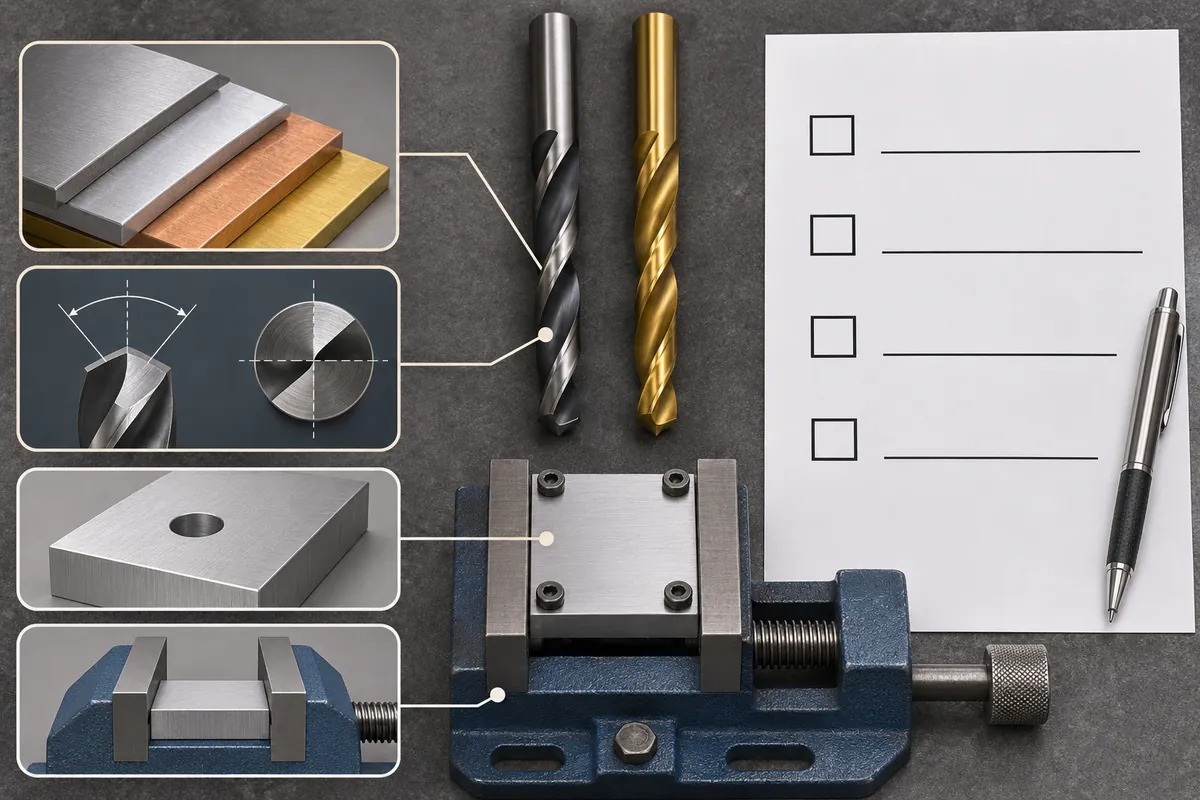
Buyer checklist before requesting a quotation
- Provide the current drawing and identify the hole’s function.
- Mark critical diameter, location, edge distance and any applicable tolerance.
- State the workpiece material, thickness and finish requirements.
- Identify nearby bends, welds, cosmetic faces and assembly interfaces.
- Ask whether the proposed tool is cobalt-alloyed HSS, carbide or another specified design.
- Confirm who selects and controls the actual machining process.
- Request the feature-level sample inspection method and revision record.
- Separate cosmetic acceptance from fit and dimensional requirements.
- Do not prescribe speeds, feeds or tool life without qualified process evidence.
- Document any process or tool change that can affect the accepted part.
الأسئلة الشائعة
Are cobalt drill bits made from pure cobalt?
Usually the label refers to high-speed steel alloyed with cobalt, not a bit made entirely of cobalt. Buyers should confirm the tool maker’s description and avoid identifying a tool only by its color.
Is carbide always better than cobalt-alloyed HSS?
No. Carbide has wear and hot-hardness advantages in suitable conditions, while brittleness and setup rigidity remain relevant. The actual operation determines whether those characteristics fit the work.
Does a carbide drill guarantee a more accurate hole?
No. Accuracy depends on the tool design, machine, holding, workpiece, setup and measurement method. The substrate label alone does not prove a dimensional result.
Should an importer specify the supplier’s feeds and speeds?
Usually the buyer should define the finished-part requirements and ask the responsible process owner to select settings according to the actual tool and machine documentation. A buyer should not invent operating parameters from a general article.
What should be checked on the first sample?
Check the drawing’s critical hole dimensions, position and fit requirements using the agreed method, and note visible burr or finish conditions where specified. Record the revision and do not infer unmeasured capability from one sample.
اعمل مع شركة «كويتور» للأدوات
Review a Hole Feature in Your Metal Hardware Drawing
Share the drawing or sample, workpiece details, hole function and the feature that must be accepted. Koitor can discuss the custom metal hardware project within its confirmed scope; the responsible process owner should confirm tool and setup decisions.
OEM / العلامة التجارية الخاصة
حوّل دليل التوريد هذا إلى موجز منتج
يرجى إطلاعنا على المنتج المستهدف، والحجم، والتشطيب، وكمية الطلب، ومتطلبات التغليف. وسيتلقى فريقك تقييمًا عمليًّا لإمكانية التصنيع قبل تقديم عرض الأسعار.
 English
 Español
 Português
 Français
 Deutsch
 العربية