

An install sheet can tell a buyer how to install a rubber grommet only after the packed elastomer panel family, the hole envelope and panel thickness, and the retention groove or lip are named from the supplier’s data. The family is a panel grommet for a metal or similar sheet hole, not a fabric eyelet.
It is also not a furniture desk cap unless the packed kit is documented as that product. The retention feature is the groove or lip the data actually shows.
Identification of grommet types belongs on the types-of-grommets map. Edge-protection and metal-hole-size procurement belong on the live cable-grommet RFQ. Those neighboring files should stay neighbors. This seating leaflet must not reprint their tables, and it must not borrow the rejected fabric head that asks how to install a grommet in canvas.
This guide is for importers, distributors, and private-label teams approving a seating leaflet for elastomer panel grommets treated as an adjacent purchased component already discussed in the live library. Koitor Hardware is a family-owned China OEM manufacturer of custom metal bathroom and home storage hardware. That published-library context is not a claim that Koitor currently manufactures a rubber grommet, a desk cap, or an electrical fitting.
Send the panel drawing, the hole and thickness, and the grommet sample or supplier data. We can review the wording and the named family. We will not issue a universal hole chart, an IP or electrical rating, a fabric-eyelet method, or a without-tool bypass.
What does a how to install a rubber grommet file actually freeze?
It freezes the packed elastomer panel-grommet family, the documented hole and panel thickness, and the retention groove or lip, or an explicit exclusion for any of those fields. It does not freeze a types map, a hole-size RFQ, a fabric-eyelet sequence, or an electrical certification.
Searchers often arrive with a generic grommet-install question because a panel hole was cut before the family was named, or because a fabric-eyelet video was the first result they saw. That demand is real. For an importer, the usable decision is whether a listing may say the grommet is easy to install, and which panel family, hole, thickness, and retention feature that sentence is allowed to assume.
A rubber panel grommet with a retention groove is not a canvas or sail eyelet, even when both are casually called grommets. A desk-cap cable opening is another product unless the packed kit is documented as that item. If the sheet does not say which family shipped, an easy-to-install line will be applied to the wrong hole and the wrong tool.
This file is not a consumer punch tutorial, and it is not a product listing. Koitor can review seating-sheet wording for an adjacent purchased component. That review does not turn Koitor into the elastomer manufacturer, and it does not create a current named grommet SKU.
و OEM home storage hardware manufacturer can review whether a seating sentence and a packed panel family stay together. Matching a color or a durometer nickname to a collection is not the same as inventing a default hole, a default thickness, or a fabric method. If you are screening this adjacent line, bring the panel drawing and the hole and thickness with the sample.
A published easy-to-install claim is only as complete as the named family, the named hole and thickness, and the named retention feature. If the photograph shows a panel grommet and the bag holds a fabric eyelet, the sheet has already failed. The same is true of a missing groove, a desk cap packed by mistake, or an electrical-rating mark that the supplier never issued.
This file can precede a seating-data review. It should not be turned into a types essay, a hole-size chart, or a fabric-craft guide. Those jobs already have, or should keep, their own files, including files this official lock-copy list cannot yet link.
Which packed family, hole and thickness, and retention feature must be named first?
Name the packed elastomer panel family first, in the supplier’s terms. Do not start with a generic grommet-install sequence, and do not start with a canvas or leather punch question that has not been excluded.
The family is the body style the carton actually ships for a panel hole: a grommet with a visible retention groove or lip, or another documented elastomer panel family. “It is rubber” is not a complete family line if the retention path and the intended panel are left unnamed.
Name the hole envelope and the panel thickness from the supplier’s data, or keep those fields named and honestly blank. Do not invent a factory-universal hole chart, a thickness table, or a borrowed blog list of diameters. If the data leaves a value to the buyer, the sheet should say that the value comes from that data, not from this page.
Name the retention groove or lip, or the documented retention feature the part actually uses. A grommet that seats by a groove is not the same first set as a part that relies on a different retention method. If that feature is not in the packed data, an easy-to-seat line will over-promise.
If the program packs more than one body style, the sheet must say which style each bag belongs to. A mixed photograph that shows a panel grommet and a fabric eyelet in the same seating panel is how the wrong method is promised for the wrong SKU.
Desk-cap or furniture cable openings, and electrical glands or certified fittings, stay off this family line unless the packed kit is documented as that product. Do not promote an informal desk-grommet or cable-grommet synonym into a second official target for this page.

What belongs in the seating-sheet kit list, and what must stay out?
The kit list should name what the carton actually ships for this seating, and what the cited data requires the buyer to supply. It is not a shopping list, and it is not a place to merchandise a punch as the thesis of the page.
If a seating card, a spare body style, or a panel coupon ships in the carton, say so in those terms. If a related part is sold separately, the sheet should say so on its own line. A hardware kit packing inspection checklist is useful only for that packing-honesty check, not as a substitute for the named family.
Fabric, canvas, and leather eyelet sequences stay off this kit list. Those heads were rejected or were not validated as this target. A grommet punch for cloth is not an approved seating tool on this file.
Without-tool paths stay off the list. Demand for a seating trick that avoids the documented retention feature is evidence that the family and the feature must be named. It is not a license to print a bypass.
IP ratings, electrical approvals, and similar certification lines stay off the list unless the supplier’s current data actually carries them and a different file owns that certification. This seating leaflet must not invent an electrical claim.
| Field or claim | What must be named | What belongs in the kit or data | What this row is not |
|---|---|---|---|
| Packed elastomer family | The panel-grommet family the carton actually ships, in the supplier’s terms | The packed grommets and the matching seating instructions | A fabric eyelet, a desk cap, or an invented Koitor SKU |
| Hole and panel thickness | The hole envelope and thickness taken from cited data, or a named field left blank | Only the values the cited data actually supplies | A factory-universal hole chart, or a borrowed blog table |
| Retention groove or lip | The documented retention feature the part uses, or an explicit exclusion | The feature shown on the sample and the data, not a nickname | A without-tool bypass, or a cloth-punch method |
| Easy to install | The family, hole and thickness, and retention feature the sentence is allowed to assume | Nothing beyond that named list and cited data | An IP or electrical rating, or a claim that Koitor makes the elastomer part |
The table is a decision map for the seating leaflet. It is not a hole standard, an electrical certificate, or a claim that Koitor manufactures rubber grommets. If a row cannot be filled from the supplier’s current data, leave the field named and blank rather than inventing a number.
A custom metal storage rack manufacturer review can confirm whether a panel-grommet sentence belongs on a metal panel program already in the live library. That review does not turn this page into a rack catalog, and it does not authorize a fabric method.
Why are fabric-eyelet tutorials not a factory seating method?
Many search results for grommet installation teach a canvas, banner, or leather eyelet sequence. That volume is a real demand signal. It is not a method this sheet may teach, and it is not a reason to borrow the rejected official head how to install a grommet.
A seating leaflet that prints a fabric-punch path will be copied onto cartons that never intended it. The buyer then treats a cloth tool as if it were the documented retention feature for a metal panel. When the grommet pulls out, or when the hole envelope is wrong, the listing still said the part was easy to install.
The honest response is to name the packed panel family and the retention feature, and to exclude fabric, canvas, and leather sequences in plain language. If the buyer’s job is actually a fabric eyelet, this sheet should say it is the wrong file rather than improvising a punch method.
Specialist blogs may also show a without-tool seating trick, or a desk-cap press-in story. Those sources can explain why a buyer arrived with a how-to question. They are not a factory standard for this leaflet, and they are not a license to invent a Koitor hole size, a durometer number, or a timed seating claim.
Electrical or ingress-rating commentary stays off this method section. A panel grommet used on a storage assembly is not an electrical-gland leaflet, and this file must not invent that authority.
Which neighboring grommet files should stay out of this sentence?
The types-of-grommets identification map should stay a types file. It can help a buyer name the family they are looking at. It should not be reprinted here as a seating sequence, and it is named in prose only because the official lock-copy of the internal-link list omits that href.
The live cable-grommet edge-protection and metal-hole-size RFQ should stay a procurement file. Hole and thickness values on this sheet come from cited data, or they stay named and blank. This page must not become a second hole-size chart.
Informal questions about how to install a cable grommet or a desk grommet were not officialed as secondaries for this page. If the packed kit is actually a desk cap or a different cable opening, the question belongs on a different file, not as a backdoor thesis here.
Do not use rubber-material test pages, such as hardness or compression-set files that may exist for pads or feet, as if they were this seating leaflet. A material-test neighbor is not a first-set map for a panel grommet.
If a later file owns chemical compatibility, color matching, or a purchased-component incoming-inspection routine, keep those questions there. A seating sentence that tries to settle every neighboring RFQ will be wrong for the carton that actually shipped.
What should be checked before a listing tells a buyer how to install a rubber grommet?
Use the list as a seating-sheet review, not as a shop sequence and not as a pass-fail audit grade. If a line cannot be answered from the drawing, the carton, or the cited data, keep the field named and unresolved rather than inventing a value.
- Name the packed elastomer panel family in the supplier’s terms before any seating sentence is printed.
- Name hole envelope and panel thickness from cited data, or keep the fields named and blank; do not invent a factory-universal chart.
- Name the retention groove or lip, or the documented retention feature the part actually uses.
- State clearly whether a spare body style or seating card is in the carton or sold separately; do not merge those states on one label.
- Exclude fabric, canvas, and leather eyelet sequences; do not borrow the rejected generic grommet-install head.
- Exclude without-tool bypasses; do not print those paths.
- Keep types-of-grommets and cable-grommet hole-size questions on their neighboring files, named in prose when the lock copy omits those hrefs.
- Do not invent an IP or electrical rating, and do not claim that Koitor manufactures rubber grommets.
- Do not treat a desk cap or a furniture cable opening as this family unless the packed kit is documented as that product.
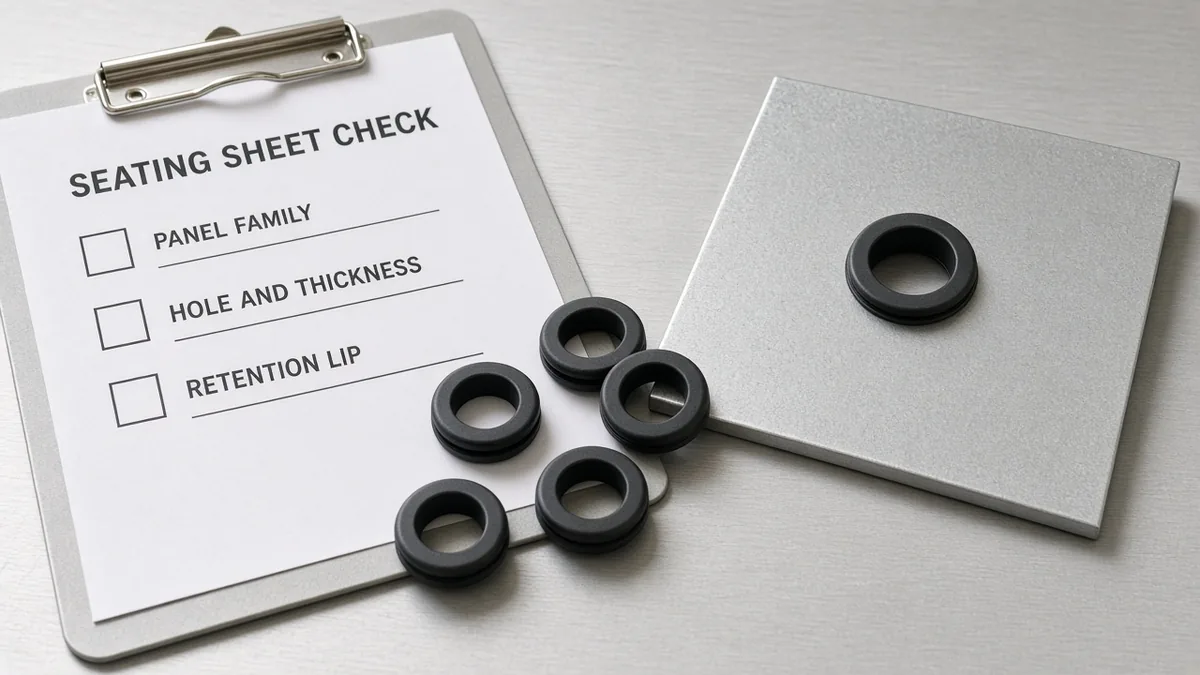
If the listing still wants an easy-to-install line after this review, the line may only assume the family, the hole and thickness, and the retention feature that were just named. A sentence that cannot point to those fields is not ready to print.
A missing retention feature is a data or packing defect, not a reason to publish a without-tool trick. The same is true of a photograph that shows a fabric eyelet, or of a bag that mixes panel grommets with desk caps.
If a buyer arrives with only a cloth-punch video, stop the seating sentence until the packed family is named from the sample and the data. A shared word such as grommet does not make a canvas eyelet and a panel grommet share a leaflet.
When the official lock-copy of the internal-link list omits a neighboring grommet href, name that neighbor in prose and stop there. Do not invent a URL, and do not paste a types table or a hole-size chart into this leaflet to make up for the missing link.
If the intended application is an electrical gland or a certified enclosure fitting, this sheet is the wrong file and should say so. Point the buyer off this leaflet rather than improvising a rating. Koitor will not issue an electrical conclusion on this seating page.
A seating claim written for a panel grommet will not travel safely onto a fabric banner program, even when both cartons use the same informal word. If the sample in front of you is an eyelet for cloth, stop and send the buyer off this file rather than rewriting the leaflet around a punch.
Thickness and hole values copied from a remembered project are not a substitute for the supplier’s current data. If that data has changed, or if the buyer has not sent it, keep the fields named and blank. A remembered millimeter is still an invented chart when it is printed as if it were this factory’s standard.
Color, hardness nicknames, and feel tests can help a sample conversation, but they do not replace the named family and the named retention feature. Do not let a durometer nickname or a color chip become the seating method on this page.
If two body styles share a carton, photograph them as separate groups with separate labels, the same way a kit review should separate a carton kit from a sold-separately part. A merged picture is how a desk cap or a fabric eyelet sneaks into a panel-grommet claim.
Buyers sometimes ask whether a lubricant, heat, or a household tool will help the grommet seat. This sheet should not answer that as a method. If the supplier’s data includes a documented seating aid, name it from that data. If it does not, leave the unofficial aid off the leaflet.
The question how to install a rubber grommet is a first-set question about a packed elastomer panel family. It is not a second types file, not a second hole-size RFQ, and not a craft tutorial. Keep those neighbors in their own sentences, even when this official lock-copy list cannot yet carry their hrefs.
When a replacement program later asks for a spare grommet of the same family, the spare still needs the same named hole, thickness, and retention feature. A spare bag that drops those fields will recreate the original wording defect, even if the first carton was correct.
If incoming inspection is part of the program, inspect against the named family and the named retention feature, not against a remembered fabric tutorial. A sample that looks familiar in a photograph can still be the wrong body style for the hole and thickness on the drawing.
Do not let a cable photograph, by itself, rewrite this leaflet as a cable-grommet RFQ. The live hole-size neighbor, named in prose, already owns procurement questions about edge protection and metal hole size. This seating file may point to that job. It should not reprint it.
A private-label team can still use this page when the grommet is purchased beside a Koitor metal program rather than made by Koitor. The usable service is a wording and kit-scope review. The unusable request is a claim that the elastomer part is a current Koitor SKU, or that a universal hole will fit every panel.
الأسئلة الشائعة
Can the listing say the rubber grommet is easy to install?
Only after the packed elastomer panel family, the hole and thickness, and the retention feature are named or honestly pointed to cited data, and only if fabric and without-tool methods are excluded. An easy-install line is not a substitute for a missing family.
Is this the same file as how to install a grommet in fabric?
No. Fabric, canvas, and leather eyelet sequences are a hard exclude. The rejected generic head how to install a grommet is not borrowed as volume or as a method. If the buyer’s job is a fabric eyelet, this is the wrong leaflet.
Does Koitor manufacture the rubber grommet?
This page does not claim that. Koitor can review seating-sheet wording for an adjacent purchased component already discussed in the live library. That review is not a current named grommet SKU, and it is not an elastomer manufacturing claim.
Can the sheet print a hole-size chart?
Only values taken from cited supplier data may appear, and even then this page must not become a second hole-size RFQ. If the data is incomplete, keep the field named and blank. Do not invent a factory-universal chart.
What about a desk grommet or a cable grommet?
Those informal phrases were not officialed as secondaries here. If the packed kit is actually a desk cap or a different cable opening, the question belongs on another file. Do not turn this panel-grommet seating leaflet into that thesis.
May the sheet include an IP or electrical rating?
Not as a Koitor invention, and not as the thesis of this file. If a different, documented certification file owns a rating the supplier actually issues, keep that rating there. This seating leaflet must not print an unofficial electrical claim.
اعمل مع شركة «كويتور» للأدوات
Review a rubber-grommet seating sheet
Send the panel drawing, the hole and thickness, and the grommet sample or supplier data. We can review the wording and the named panel family. We will not issue a universal hole chart, a fabric-eyelet method, or an electrical rating.
OEM / العلامة التجارية الخاصة
حوّل دليل التوريد هذا إلى موجز منتج
يرجى إطلاعنا على المنتج المستهدف، والحجم، والتشطيب، وكمية الطلب، ومتطلبات التغليف. وسيتلقى فريقك تقييمًا عمليًّا لإمكانية التصنيع قبل تقديم عرض الأسعار.
 English
 Español
 Português
 Français
 Deutsch
 العربية