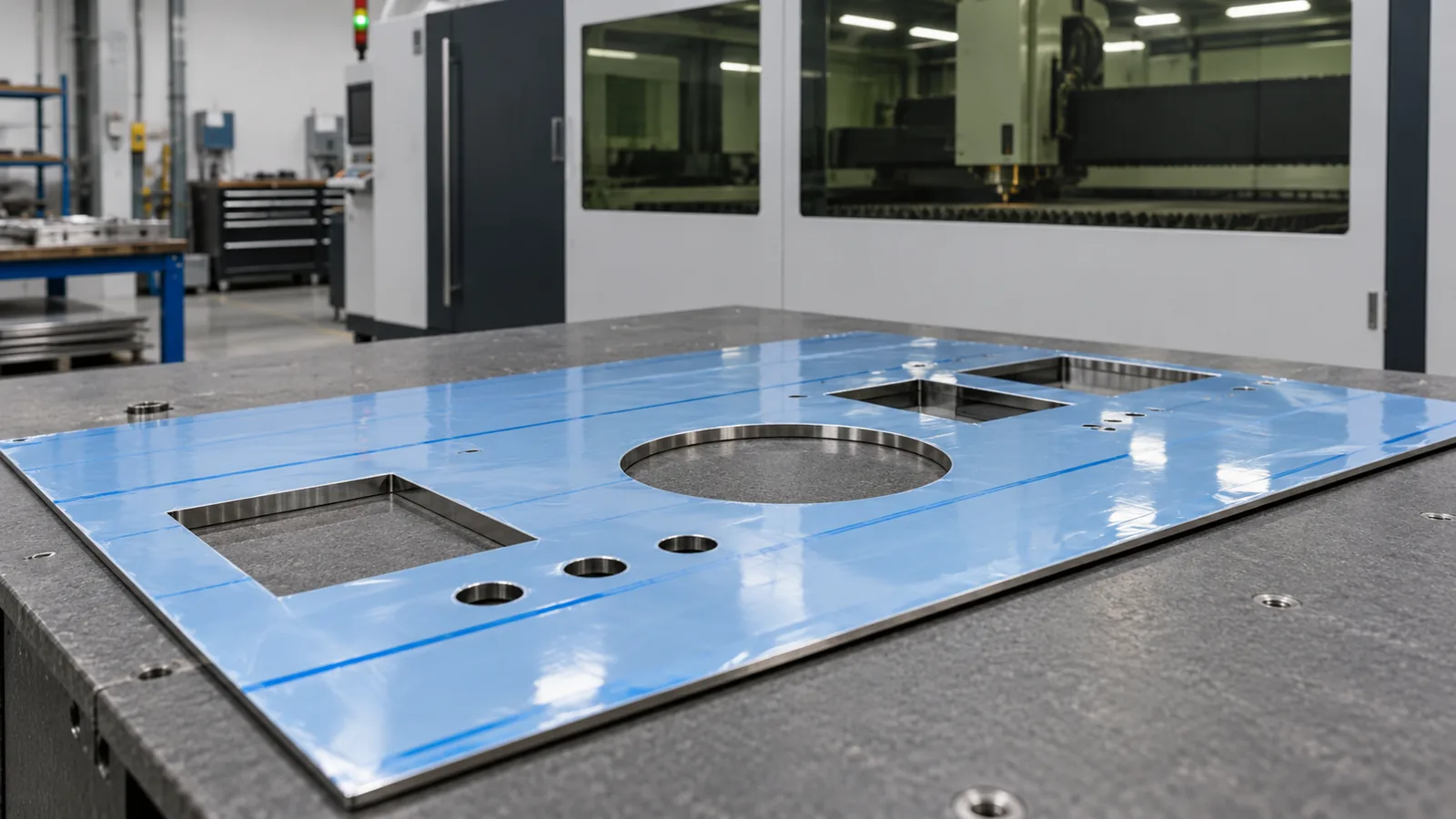
For laser cutting protective film stainless steel, buyers sourcing a film-covered stainless mounting part or sheet-metal component should define film product identity, stainless surface, laser/process compatibility, cut-trial result, residue and removal sequence and approve representative evidence before production. A protective film intended for storage may not be compatible with the actual laser-cutting process or with the buyer's removal timing.
For related manufacturing context, review OEM home storage hardware manufacturing; for a project discussion, contact Koitor with the drawing or sample.
Why does this buyer problem matter?
The buyer problem is specific: A protective film intended for storage may not be compatible with the actual laser-cutting process or with the buyer's removal timing. It is not resolved by a product label, a single nominal dimension, or a quick visual check. The useful starting point is to tie the question to a film-covered stainless mounting part or sheet-metal component, its actual interface and the way a buyer expects the finished item to be used. Keep the scope on the defined component and do not assume an adjacent material or process is a current Koitor production capability.
For an RFQ, translate the concern into a decision: film product identity, stainless surface, laser/process compatibility, cut-trial result, residue and removal sequence. A supplier can then identify assumptions before quotation rather than silently selecting a part or process that changes the finished product. The drawing, sample and purchase specification should use the same revision and name which party supplies, verifies and approves each component.
The risk is not proof that every product will fail. Rather, assuming any surface film can stay on during cutting may lead to edge contamination, poor cutting behavior or adhesive residue. A buyer should distinguish a plausible mechanism from a confirmed defect and ask what evidence would show the chosen assembly is suitable for the project. Generic published data is useful for forming questions, but it cannot replace the actual supplier's component identity and use-specific review.
This guide treats laser cutting protective film stainless steel as a search expression for a procurement decision, not as a universal engineering limit. The project team should define the intended environment, product geometry, functional endpoint and any specialist review needed. Koitor's verified scope supports custom metal hardware, sample development and supplier communication; material-specific performance and testing claims require supporting supplier evidence.
Which inputs should buyers define before quotation?
Start with a drawing or controlled sketch that identifies a film-covered stainless mounting part or sheet-metal component and the product revision. Show the functional datums, mating parts, assembly direction and any clearance that affects fit. If the dimension belongs to a bought-in component, label the responsible supplier and the final inspection stage. A nominal part number without the finished interface is rarely enough for a sourcing team to compare quotations on equal terms.
Next, identify the input that controls the issue: film/adhesive identity, stainless surface, cut geometry, process route, thermal behavior, cut-edge condition and removal timing. Some fields may be approved requirements while others are supplier proposals. Mark the difference clearly. Where a grade, compound, coating or fastener design is not yet known, request the supplier's proposed identity and limitations instead of writing an unsupported universal value into the specification.
Record the conditions that can change the outcome. These may include assembly sequence, contact with water or cleaners, storage temperature, sustained loading, repeated service, packaging or the final finish. State what is known and what remains unknown. If the product is intended for a condition outside an ordinary indoor environment, a qualified reviewer should confirm the appropriate material and validation scope before purchase approval.
Finally, define what counts as representative evidence. The sample should use the intended component, mating parts, manufacturing route and finish, or its deviations must be disclosed. Label it with a sample ID and drawing revision. A sample approved before a material or geometry substitution does not automatically approve the revised item; define a change-notification and reapproval path in the order documents.
How should sourcing options be compared?
Compare options against the same product envelope and intended use. An apparent upgrade can introduce a new fit, finish, availability or assembly issue, while a lower-cost option can leave the original question unanswered. For a film-covered stainless mounting part or sheet-metal component, ask each supplier to state the proposed component identity, process assumptions, evidence supplied and any excluded conditions. Use the following table as a decision aid; it does not rank materials or declare one option universally best.
A useful comparison also separates the component from the complete assembly. A material data sheet may describe a standardized specimen, whereas the buyer is approving a formed, joined, coated or assembled product. Geometry and neighboring parts can change contact, restraint and exposure. Ask whether the supplier evidence is directly applicable, an engineering analogy, or only an initial screen, and preserve that label in the review record.
For the quote, normalize quantity, finish, assembly, inspection and packaging assumptions. If one supplier includes a selected component and another assumes buyer-supplied parts, compare landed scope rather than unit price alone. Ask for written exclusions and proposed substitutions. Where the exact product is adjacent to Koitor's current categories, describe it as adjacent sourcing knowledge and verify actual production responsibility project by project.
The buyer should choose the minimum evidence package that answers the actual risk. That may involve identity documents, dimension checks, a visual review, assembly observations or a qualified test. Do not request a dramatic test simply because it sounds rigorous; a method that does not represent the product can create false confidence. Agree objective acceptance criteria and evidence ownership before committing to bulk production.
| خيار | Potential advantage | Limit to assess | Buyer evidence / decision |
|---|---|---|---|
| Remove film before cutting | Avoids film in the cut path | Exposes surface to handling marks | Plan protection and handling after removal |
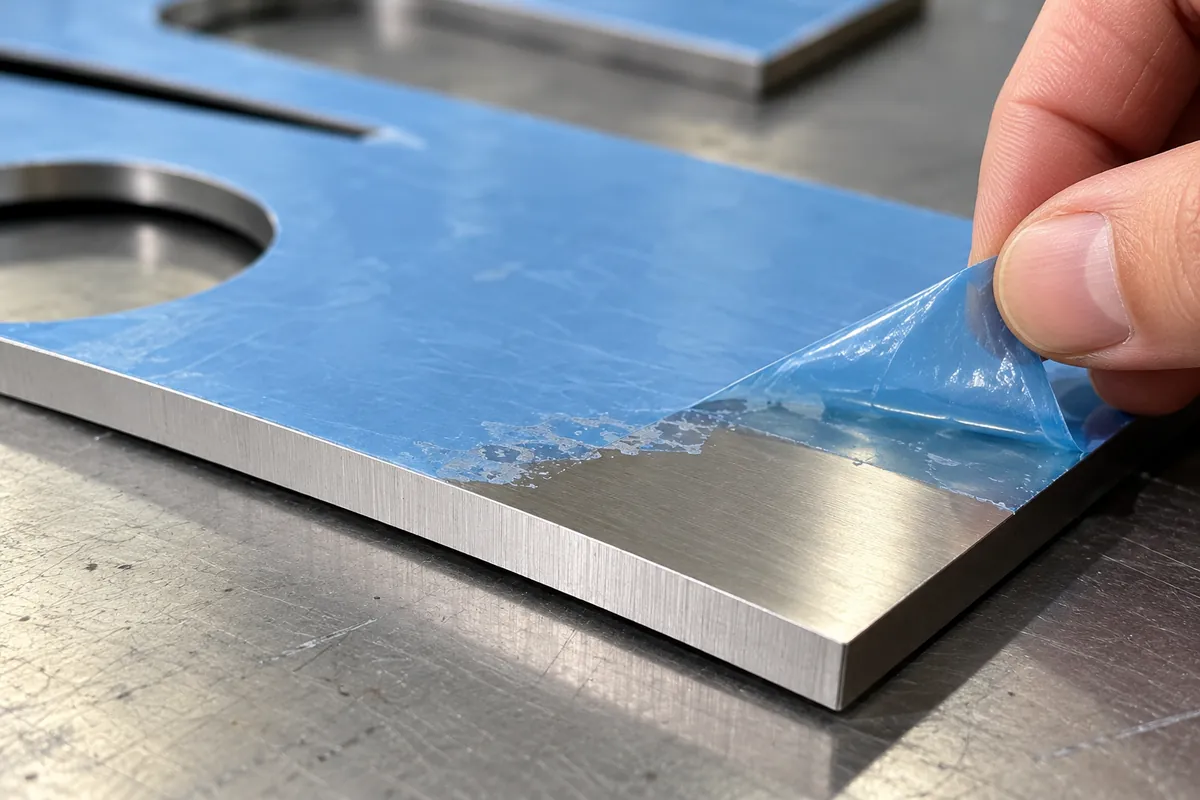
| Use a process-qualified film | May protect surface during a defined operation | Compatibility is product/process specific | Run a documented cut and removal trial |
| Apply protection after cutting | Separates cutting from shipping protection | Adds handling and application steps | Inspect surface and residue at each stage |
What evidence should a representative sample provide?
Sample approval should begin with identity: record the component supplier, material or part designation, revision, finish and manufacturing state. Then compare the sample to the controlled drawing and assemble it using the intended mating parts. For a film-covered stainless mounting part or sheet-metal component, a substitute sample or hand-fitted prototype may help explore a design but should not be mistaken for production-intent approval unless its differences are documented.
Observe the features tied to the buyer decision, including film/adhesive identity, stainless surface, cut geometry, process route, thermal behavior, cut-edge condition and removal timing. Identify the measuring or observation location, tool or visual setup, and who records the result. If the criterion is qualitative, use agreed reference samples, photos or an explicit description of acceptable variation. Avoid relying on adjectives such as strong, smooth, stable or premium without a common observable meaning.
If conditioning or duration matters, define the sequence before starting: baseline, exposure or assembly condition, observation time, post-condition function and any recovery period. The supplier and buyer should know whether the check is a screening study or a release criterion. A short sample check cannot establish every service-life outcome, and no universal load, temperature, corrosion or life claim should be inferred from this article.
Capture both a pass/fail decision and remaining limits. Note the sample ID, lot or source where available, drawing revision, deviations, records reviewed and open questions. If the sample is accepted with a restriction, state it plainly—for example, an excluded environment or a component that must not be substituted. This turns approval into a usable control for repeat orders instead of an undocumented visual impression.
How can inspection and change control reduce ambiguity?
An inspection plan should be proportionate to consequence and variation. Separate identity checks, dimensional fit, appearance and functional behavior rather than allowing one result to stand in for another. For a film-covered stainless mounting part or sheet-metal component, list the critical-to-fit features and the evidence source for each. A supplier record can establish what was checked; it does not automatically prove the requirement was appropriate or that every finished unit has been inspected.
Where a numerical tolerance is needed, specify the datum, instrument or method, sampling logic and decision rule with the supplier. Confirm that the measurement is possible after finishing and assembly. If a value has no design basis, do not invent one to make a checklist look complete. A buyer's engineering or compliance reviewer should resolve the technical requirement; sourcing staff can preserve the approved answer in the RFQ and order revision.
Keep traceability practical. Link the approved drawing and component identity to the sample record, purchase specification and change history. The amount of lot-level evidence should match the product risk and commercial need. Do not imply that a general certificate, marketing phrase or supplier catalog establishes a specific performance result. If specialist material analysis or laboratory testing is required, identify the qualified provider and scope separately.
For recurring issues, define containment and communication. Ask the supplier to identify affected lots, stop unauthorized substitutions, compare the defect with the approved reference and propose a corrective action supported by evidence. This is not the same as assuming the cause from appearance alone. A structured record helps the importer decide whether to accept, rework, sort, replace or revise the product, with the responsible buyer retaining disposition authority.
What should importers confirm before production release?
Cost is shaped by more than the nominal component. Material identity, part geometry, tooling access, finishing, assembly, inspection, packaging and supplier evidence can all affect the quoted scope. Ask for the assumptions behind any cost difference. A change that reduces one operation may require another inspection or alter the product envelope, so compare proposals against a stable functional brief rather than a single unit price.
Before production release, confirm the drawing revision, selected component and finish, sample disposition, inspection plan, packaging arrangement and open limitations. Record who approves a deviation and who may authorize a material or supplier substitution. If a component is buyer-nominated or bought in, clarify how its availability and change notices reach the assembler. This avoids a late discovery that the approved sample and bulk order use different inputs.
For repeat orders, review risk triggers rather than repeating every check mechanically. A new supplier, material grade, tool, geometry, finish or assembly sequence may change the relevant evidence. Keep stable items on routine controls and reopen the technical review when a trigger is crossed. The supplier should communicate proposed changes before implementation, while the buyer updates the controlled specification and sample record when needed.
Koitor Hardware's approved profile supports custom metal bathroom and home-storage hardware, drawing or sample-based customization, relevant fabrication and finishing discussion, packaging and direct factory communication. It does not establish current manufacture of every adjacent component described here, nor a specific test laboratory or performance guarantee. Buyers can share a drawing or sample for a project discussion and verify actual capability, supplier roles and required evidence before award.
Buyer approval checklist
- Identify the exact film and adhesive supplier/product.
- Confirm intended use covers the specific cutting process and substrate.
- Run a representative cut trial using actual geometry and production settings.
- Inspect cut edges and remove film at the agreed process stage.
- Check for adhesive residue and finish/assembly interference.
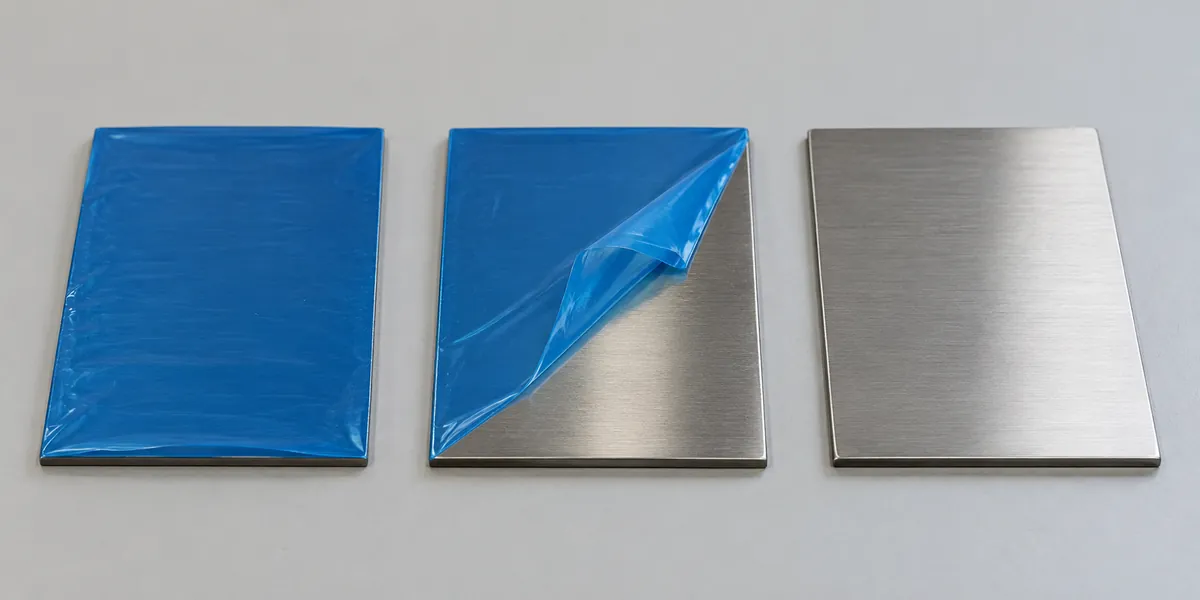
- Keep laser-process film approval distinct from shipping film retention.
Frequently asked questions
What is the first thing to define for laser cutting protective film stainless steel?
Start with a film-covered stainless mounting part or sheet-metal component, the drawing revision and film product identity, stainless surface, laser/process compatibility, cut-trial result, residue and removal sequence. A label alone is not a complete acceptance requirement.
Can a supplier data sheet approve the finished product?
Not by itself. Confirm that the document matches the supplied grade, component, geometry and stated conditions, then review the actual assembly where fit or function matters.
Does one sample prove long-term performance?
No. A sample is evidence only for the part, revision and conditions reviewed. Duration, environment and test scope must be agreed with qualified reviewers.
Does this article confirm Koitor manufactures every component discussed?
No. Koitor's confirmed scope is custom metal bathroom and home-storage hardware. Adjacent components and specialist material processes must be confirmed for each project.
When should a buyer request reapproval?
Reopen the review when the supplier, material, geometry, finish, tooling or assembly changes in a way that can affect the approved buyer decision.
Further technical context: Novacel, the worldwide leader of Laser protective films | Novacel. The reference applies to its own material or process context; buyers should verify the actual part and conditions for their project.
Discuss your product specification
Share the drawing, target interface, finish and sample requirements so the project scope can be reviewed.
OEM / العلامة التجارية الخاصة
حوّل دليل التوريد هذا إلى موجز منتج
يرجى إطلاعنا على المنتج المستهدف، والحجم، والتشطيب، وكمية الطلب، ومتطلبات التغليف. وسيتلقى فريقك تقييمًا عمليًّا لإمكانية التصنيع قبل تقديم عرض الأسعار.
 English
  Español
  Português
  Français
  Deutsch
  العربية