

A product-safety complaint should trigger careful evidence preservation and prompt escalation—not an automatic conclusion that a defect is confirmed or that a recall is required. This product recall response importer evidence checklist helps a hardware buyer connect the report to the exact product, revision, order and distribution window, then request records relevant to the alleged failure. Keep the safety and reporting decision with the legally responsible business and qualified advisers.
This short video shows the product or manufacturing context discussed in this guide.
This guide is an operational handoff checklist, not legal advice or a substitute for contacting the relevant product-safety authority. Rules differ by market and product. A routine cosmetic complaint, transit-damage claim and possible consumer-safety event are not interchangeable.
What should an importer do when a safety complaint arrives?
Preserve the report as received, record when it arrived, and avoid editing away uncertainty. Keep the customer’s description, product photographs or video, reported use conditions, purchase channel, date, and any known injury or property damage. Limit personal information to what is necessary and protect it under the applicable privacy rules.
Next, identify who owns the immediate decisions: the importer or brand, manufacturer, distributor, retailer or marketplace, and the relevant authority. If there is a credible indication of an immediate risk, do not wait for a complete factory root-cause report before escalating to the responsible product-safety lead or qualified counsel. A supplier investigation can inform the response; it does not replace the importer’s own duties.
A report can be incomplete and still be important. Mark unknown facts as unknown, assign an owner to obtain them, and record the next review time. Do not turn a single allegation into a confirmed defect or dismiss it because the product passed an earlier inspection.
How can the complaint be linked to the exact hardware product?
Build an identity record that connects the reported unit to the product version and its route to market. Request or locate:
| Identifier | What it helps connect | Important limitation |
|---|---|---|
| Product name, model, SKU and brand | The marketed item and responsible commercial records | Similar-looking variants may have different parts or revisions |
| Drawing, approved sample or specification revision | The intended construction and acceptance basis | Approval does not prove every shipped unit matched it |
| Purchase order and order line | The supplier order and buyer configuration | One PO can contain multiple SKUs or production dates |
| Available date, lot, batch or carton marks | A possible production or packing window | A carton code does not establish unit-level traceability unless the system links them |
| Shipment, invoice and distribution records | Quantities, dates, destinations and channel | Partial records may not identify each end user |
| Complaint date and source | The event timeline and contact route | Reported dates or descriptions may need confirmation |
Ask the supplier what each identifier actually means and which records connect it to a production or packing period. If there is no lot code, say so plainly. A bounded investigation may need to use purchase orders, production dates, carton counts, shipment records and available samples to estimate the potentially affected scope. Do not promise exact traceability where the records do not support it.
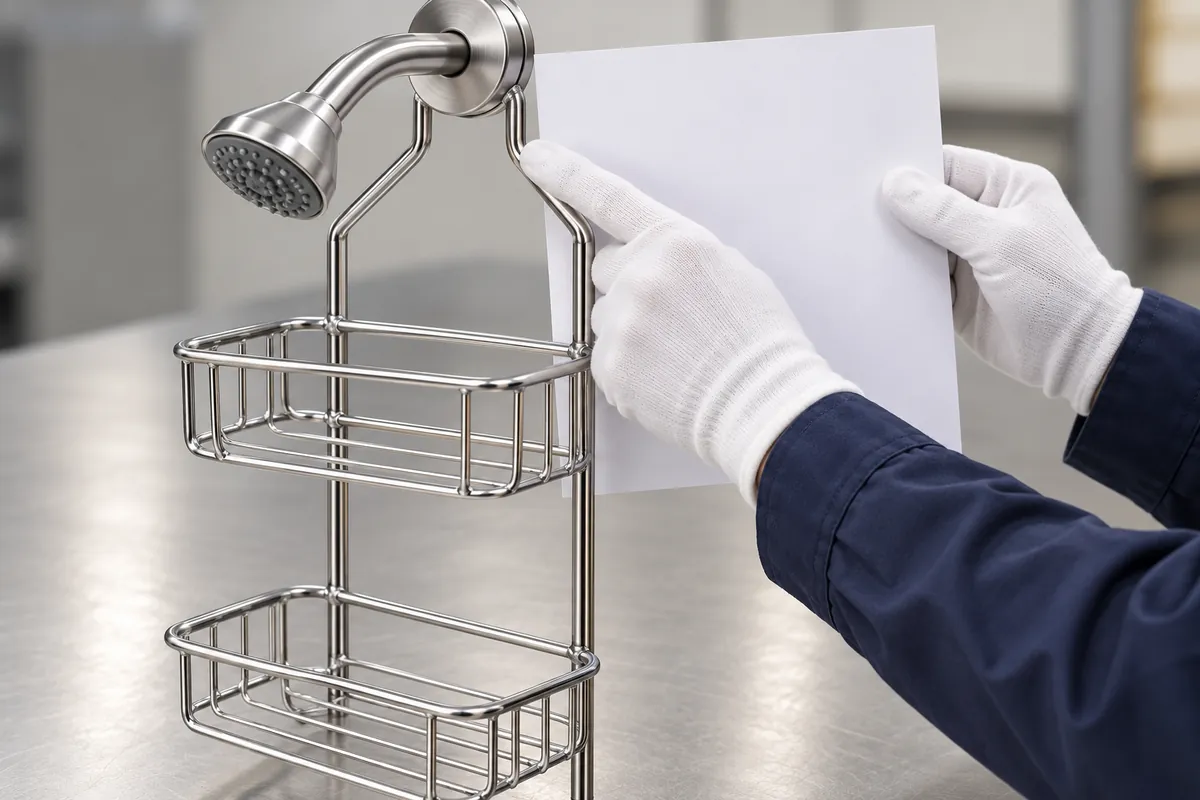
For a metal shower caddy, towel rack or wire basket, the relevant identifying details may include the mounting method, weld locations, finish, included fasteners and product revision. These are examples of product attributes to compare—not a claim that every supplier records each attribute by lot.
What factory evidence should the importer request?
Request records that relate to the alleged failure and ask the factory to distinguish records it holds from records it does not hold. A useful initial request may include:
- The controlled drawing, approved sample or specification that applied to the relevant order, including revision and approval date.
- Supplier-held production dates, order quantities, line or work-center information, and any available batch or carton-to-order links.
- Material or component records that are relevant to the suspected failure, if maintained for that product and order.
- Process and inspection records for the specific feature at issue—for example, weld inspection, dimensional checks, load testing, coating checks or assembly verification—where those checks were specified or performed.
- The production and inspection plan, acceptance criteria, test method and actual result, rather than a pass/fail statement alone.
- Retained samples, photographs, nonconformance records, rework or deviation approvals, and relevant engineering changes, if available.
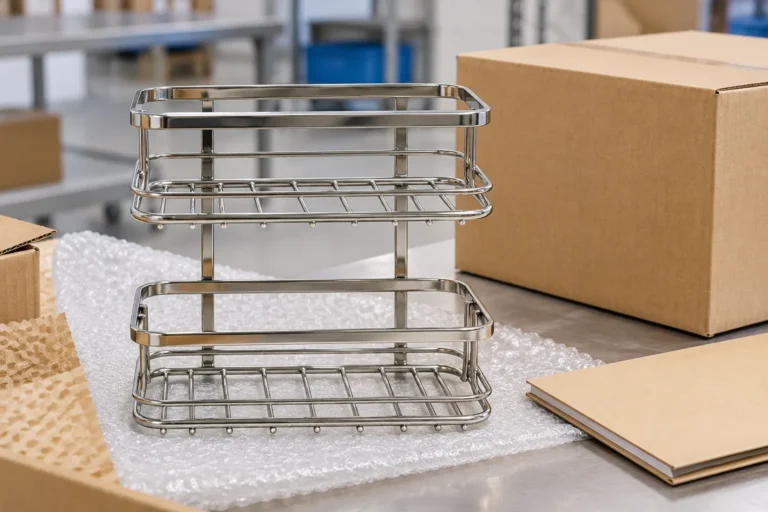
- Packaging configuration, packing records and shipment scope when handling or transit may have contributed.
- The factory’s containment actions, investigation owner, evidence reviewed, working hypotheses, corrective actions and follow-up checks.
Use a focused request. If a shower basket reportedly detached from a mounting point, ask for the approved mounting design and the records relevant to that feature; do not request unrelated coating data simply to make the file look complete. If the report concerns corrosion, identify the finish, environment, cleaning exposure and reported time in use before interpreting a material or test record.
A test report is evidence about the specimen, method and conditions stated in that report. It does not by itself prove that all units were tested, that production matched the sample, or that a product is safe in every use condition. Request the test scope and sample identity along with the result.
When should a complaint become a regulatory escalation?
Do not use the word “complaint” as a legal test. The applicable obligation depends on the product, market, facts, role and current law. A single report may be non-reportable, reportable, or require urgent expert review; the factory cannot make that determination for every importer.
In the United States, the CPSC explains that manufacturers, importers, distributors and retailers may have a duty to report specified information. Its business guidance says a company must report within 24 hours after obtaining reportable information; it does not say that every customer complaint automatically meets that threshold. Review the CPSC’s current Duty to Report: Rights and Responsibilities of Businesses و Duty to Report Questions with the facts and qualified advice. The CPSC’s filing guidance also illustrates why product, incident, distribution and supporting-document details should be preserved.
For products within the EU General Product Safety Regulation, importer obligations include action when the importer considers or has reason to believe that a product already placed on the market is dangerous. Depending on the case, the Regulation describes informing the manufacturer, ensuring appropriate corrective measures, informing consumers and notifying market-surveillance authorities through the Safety Business Gateway. It also addresses complaint and accident investigation and records. Read the current GPSR text, including Article 11 and the Commission’s Safety Business Gateway implementation guidance. The operator’s role and the product’s status matter; do not copy a general checklist into a legal conclusion.
The CPSC’s recall guidance is directed to firms across the supply chain and discusses planning and coordination. It does not make the factory’s corrective-action report a substitute for the importer’s reporting assessment or the authority’s process.
How should the importer coordinate containment and investigation?
Create a dated decision log with the question, evidence available, owner, action, deadline and unresolved uncertainty. Depending on the facts and advice received, actions may include preserving samples, pausing shipments or sales, segregating available inventory, tracing distribution, contacting retailers, or taking other corrective steps. The right action is case-specific; this article does not direct a universal stop-sale or recall.
Ask the factory to separate confirmed facts from hypotheses. A useful response format is:
- What product and production window were reviewed?
- Which records and samples were examined, and which were unavailable?
- What failure mechanism is supported by evidence, and what remains uncertain?
- What inventory or shipments might be affected, and how was that scope calculated?
- What immediate containment was completed, by whom, and when?
- What corrective action is proposed, how will it be verified, and what change-control approval is required?
Preserve the original files and versions. If a drawing, material or process changes during the investigation, record the approval and effective order or date. Keep the complaint investigation distinct from a routine supplier corrective-action workflow; the two may share evidence, but regulatory notification and market action belong to the responsible operators. See Koitor’s OEM home-storage hardware manufacturing overview for the supplier context, and use اتصل بـ «كويتور» for a product or manufacturing-record discussion. Do not send consumer personal data through a general inquiry form.

The investigation record should also protect uncertainty.
The first account of an event can change as more information arrives. Keep the original statement and media intact, then add dated notes rather than rewriting the original report to fit a later theory. Record the person who supplied each fact, whether it was observed directly or relayed by someone else, and which product identifiers were independently checked. If photographs show only one unit, do not extend that observation to every unit in an order.
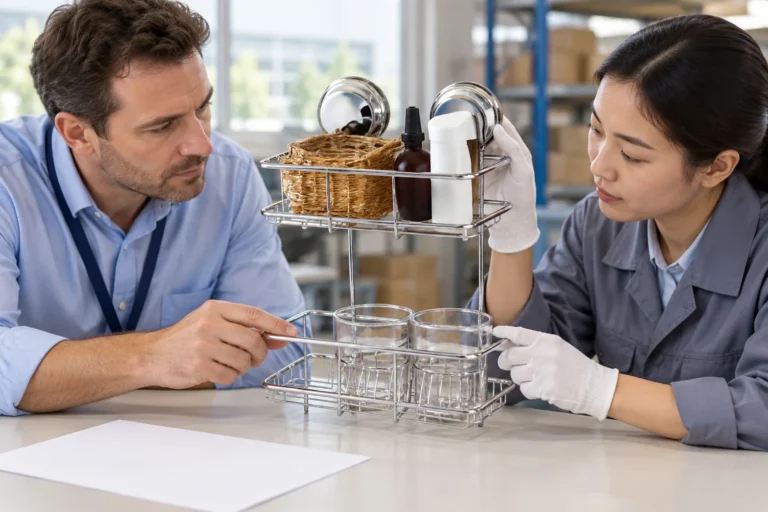
For each requested record, note its owner, date range, product scope and limitation. A purchase order can establish what was ordered; it may not prove which individual unit is involved. A production traveler or packing record may narrow the possible window if it is linked to the relevant order. A retained sample may help compare design or workmanship, but its representativeness must be established before treating it as evidence of all shipped pieces. Keep copies of the files received, their original names, and any later revisions so the timeline remains auditable.
Use this product recall response importer evidence checklist as a handoff aid, not a substitute for the responsible operator’s legal assessment. Separate immediate safety decisions from the manufacturing investigation: one team may preserve evidence and assess reporting while the factory checks a weld, mounting feature, finish or component. This avoids delaying escalation while still allowing the technical cause to be tested carefully. The record should show what is known, what remains uncertain, who owns the next action and when it will be reviewed.
A practical evidence handoff checklist
Before closing the initial handoff, confirm:
- The original complaint and supporting media are preserved with dates and controlled access.
- Product identity, revision and order are connected—or the missing links are recorded.
- The affected quantity and destinations are based on identified records, with assumptions visible.
- Factory requests target the alleged failure and specify the records, dates and product scope needed.
- Missing records are not represented as proof that an inspection or traceability step occurred.
- The responsible importer or brand has assessed applicable reporting and consumer-protection duties.
- Any containment, authority communication or market action is owned, time-stamped and followed up.
- Conclusions distinguish confirmed findings, working hypotheses and unresolved issues.
This evidence structure is compatible with broader product identification and supplier corrective-action practices, but it does not mean that a factory maintains a formal recall system or lot-level traceability for every product. Ask what exists for the exact product and order.
الأسئلة الشائعة
Should an importer wait for the factory’s root-cause analysis before contacting an authority?
Do not assume so. Reporting and escalation duties depend on the applicable law and the information already available. The CPSC describes reporting after a company obtains reportable information; a complete root cause is not stated as a universal prerequisite. Seek timely advice from the responsible safety lead or qualified counsel.
Does a factory corrective-action report decide whether a recall is necessary?
No. It can contribute manufacturing evidence, but the responsible business must assess its own duties and coordinate with the relevant authority. A supplier report alone does not establish legal reportability or decide market action.
What if the product or carton has no lot code?
Record that limitation and use other available identifiers—such as SKU, revision, PO, production window, packing records and shipment quantities—to define what can and cannot be connected. Do not promise exact unit tracing if the evidence does not support it.
Does an earlier inspection prove the product is safe?
No single inspection or test establishes safety for all units and conditions. Interpret a record by its sample, method, acceptance criteria, date and production scope, then compare it with the complaint evidence.
This article is for general B2B information only and is not legal advice. Confirm current requirements for the exact product, market and operator role with the relevant authority and qualified professionals.
Use the product recall response importer evidence checklist to preserve the initial account, identify the affected scope as far as records allow, and route regulatory decisions to the responsible business and qualified advisers.
Work with Koitor Hardware
Discuss a Bathroom Hardware Investigation
Share the product type, approved revision, order window and manufacturing question. Koitor can discuss factory-side records available for its own work; incident reporting, risk decisions and consumer remedies remain with the responsible businesses and authorities.
OEM / العلامة التجارية الخاصة
حوّل دليل التوريد هذا إلى موجز منتج
يرجى إطلاعنا على المنتج المستهدف، والحجم، والتشطيب، وكمية الطلب، ومتطلبات التغليف. وسيتلقى فريقك تقييمًا عمليًّا لإمكانية التصنيع قبل تقديم عرض الأسعار.

 English
 Español
 Português
 Français
 Deutsch
 العربية