
Suction cup bathroom accessory surface compatibility should be assessed against named wall samples, a defined installation method and the complete accessory—not inferred from the words “no drill.” A smooth ceramic tile can be a useful starting surface, while a textured tile, grout joint or painted wall requires a separate decision. For importers and private-label buyers, the practical objective is a defensible specification: which surfaces are within the approved use scope, which remain unverified, and what installation instructions must accompany the product.
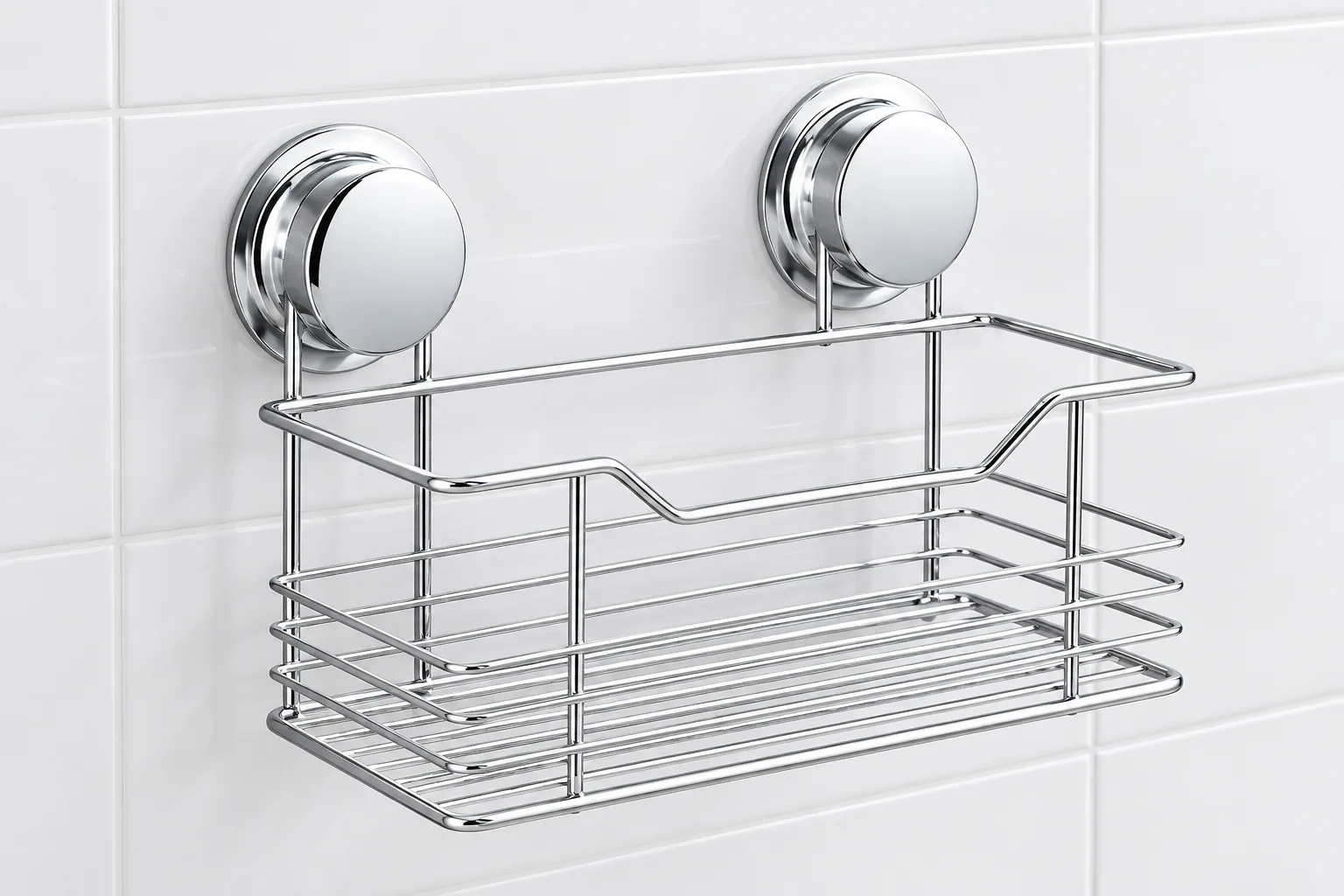
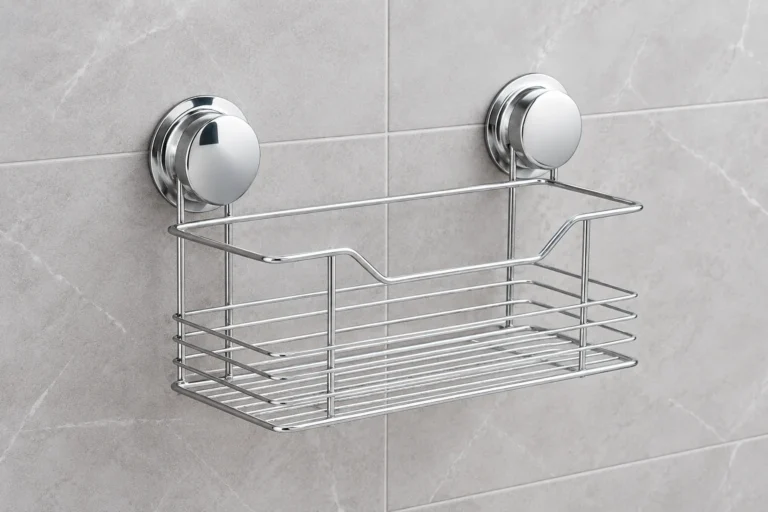
This guide uses a chrome wire shower basket with two circular suction mounts. Both mounts attach to the same basket, so the flatness and spacing of the contact locations matter together. An image showing one suction cup would represent the wrong product and cannot support approval of this dual-mount form. The article discusses selection and review planning, not a claim that any pictured basket has passed a particular test.
Why Does Wall Surface Definition Matter to OEM Buyers?
A suction mount depends on the interaction between its cup, the wall and the installation method. “Bathroom wall” is not a technical surface description. Glazed ceramic, glass, polished stone, textured ceramic, painted plaster and grout differ in texture, porosity, flatness and cleaning behavior. A buyer should name the intended surface class and obtain representative samples before choosing retail wording or approving a production sample.
Surface compatibility has two sides. The first is the local contact area under each cup. The second is the overall geometry of the wall where both cups must sit at the same time. A broad basket may cross a tile joint or meet a wall with slight curvature. One cup could appear seated while the other has a gap. Therefore a dual-mount product needs a review of both positions and their center-to-center spacing.
Marketing categories can obscure these details. “Tile” might mean a smooth glossy face, a fine matte glaze or a pronounced texture. A product photograph may hide the finish under lighting. Ask for a physical panel, a reliable material description and a photograph of the contact area. Record whether each sample is flat, clean and continuous under both mounts. Do not assume a successful observation on one tile proves no drill bathroom accessory wall compatibility across an entire retail assortment.
The buyer should also identify where the product is expected to be installed. A shower caddy may be exposed to moisture and cleaning products in a different way from a towel ring beside a basin. The product use does not automatically establish a chemical or environmental performance result, but it tells the team which scenarios deserve review. The no-drill bathroom accessories manufacturing page is a relevant starting point for specifying the hardware and mount as a complete unit.
Write the intended user instruction early. If the review method requires a cleaning, drying or seating step that the retail instruction does not mention, the evidence and the consumer experience are misaligned. An importer should approve the instruction, sample and surface scope together instead of treating the leaflet as an afterthought.
Which Surfaces Should Be Compared, and How?
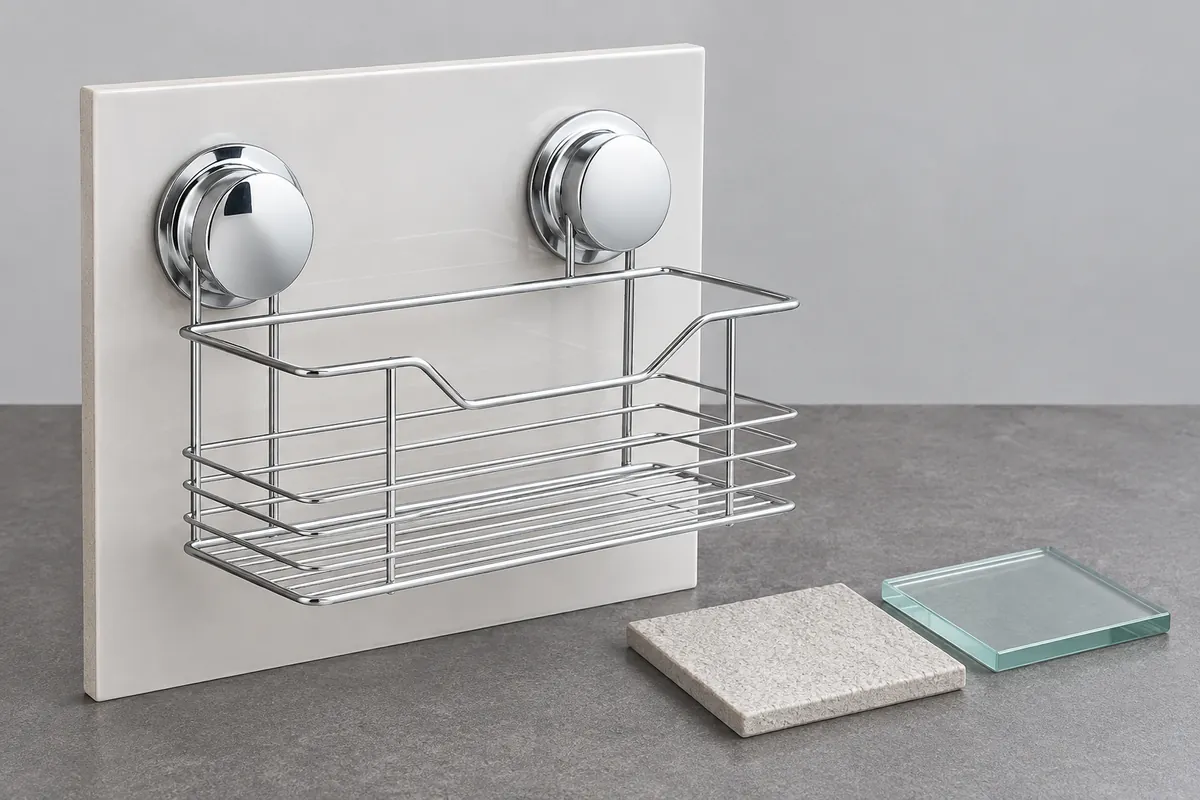
Compare specific samples in a controlled matrix. The following table is a planning aid; it does not declare any surface compatible. Actual outcomes depend on the approved suction assembly, surface sample and installation procedure. Keep loose comparison swatches visibly separate from the panel on which the product is installed so product photography does not imply that every sample has been validated.
| Surface sample | سؤال من المشتري | Record to keep |
|---|---|---|
| Smooth glazed ceramic tile | Is the contact area continuous under both cups? | Tile identification, preparation and left/right cup observation |
| Glass panel | Does the sample reflect an intended retail use case? | Panel type, installation method and separate observation |
| Textured ceramic tile | Does texture interrupt the intended seal? | Texture description and a distinct decision; never infer from smooth tile |
| Grout crossing | Would either cup overlap a recessed joint? | Mount spacing, tile layout and explicit installation restriction if needed |
| Painted or porous wall | Is this surface even within the proposed product scope? | Written inclusion or exclusion and any project-specific evidence |
Begin with the surfaces the brand actually intends to mention. A long list of exotic panels is not useful if the product will be sold only for smooth glazed tile. Conversely, a broad claim needs a broader evidence plan. For each sample, record supplier or sample ID, visible finish, flatness, cleaning preparation and any damage or coating that might affect contact.
Evaluate two-mount placement before use observations. Place the basket against the wall sample without fully seating it and check whether both cups can meet the same plane. Identify grout lines, tile edges and relief patterns that could fall under a cup. Confirm that the metal frame does not force one mount out of position. This geometry check can reveal a specification issue before a buyer spends time on a longer observation sequence.
Do not group all smooth-looking samples into one result. Glass and ceramic can appear alike in a catalogue photograph, yet they should retain separate sample identities and records. The purpose is not to predict a universal ranking among surfaces; it is to define what the buyer has actually reviewed for this accessory and what remains outside the claim scope.
What Installation Conditions Should the Buyer Control?
Use the same written procedure for every comparable sample. Surface preparation, cup cleanliness, positioning, seating and later removal all influence what is being observed. A buyer needs a procedure realistic enough for the intended retail instruction and specific enough that another person can repeat the review.
- Identify the exact product sample, drawing revision and both suction components.
- Identify the wall sample and photograph its contact areas before installation.
- Prepare the surface and cups according to the intended instruction; record any deviation.
- Mark two contact centers at the basket’s approved mount spacing.
- Seat the left and right cups using the same specified method.
- Check that both covers, the back rail and basket sit in the intended alignment.
- Record the initial condition and the planned observation points.
- If the use case includes removal or repositioning, use the proposed retail steps and document the changed state.
- Inspect the cup faces and wall sample after removal, then preserve the record.
The procedure should distinguish a surface issue from an assembly issue. If the left cup loses contact while the right remains seated, examine cup condition, wall texture at that location, base interface and frame alignment before blaming the whole material class. If both cups show similar behavior, look at common preparation and surface variables. Observations should lead to investigation, not a premature universal verdict.
Keep installation materials consistent. A sample reviewed after careful alcohol cleaning should not be silently compared with a dusty site wall. If the product instruction requires a dry surface, record whether the panel was dry. If a buyer proposes an installation wait, make it part of the documented method and the consumer instruction. Avoid adding undocumented aids or pressing methods that would make the sample behave unlike a retail unit.
Surface review must also consider access. A basket placed too close to a corner may prevent even pressure on one cup. A tile joint may lie exactly beneath the right cup for one installation orientation. A shower control, frame or shelf may force the accessory off the intended flat panel. Include real placement constraints in the buyer’s use-case description rather than discussing surface chemistry alone.
How Should a Two-Cup Basket Be Evaluated as a System?
Check both mounting interfaces and the connecting basket frame together. A suction cup bathroom accessory surface compatibility review has to treat the two-cup basket as one shared structure: a change in weld position, back-rail straightness or mount spacing can affect how both cups contact the wall. Approving the rubber cup alone does not approve the finished accessory.
Measure or compare the mount center distance against the drawing. Check whether the two circular covers appear level and whether the basket projects evenly. Confirm that the wire or bracket connections seat correctly at each base. If the left and right assemblies use the same components, verify that the parts list and packing method prevent mismatched pieces. Visible similarity is not a substitute for component identification.
During sample review, note the condition of each cup separately. One cup can be wrinkled, contaminated or damaged while the other is not. Also inspect the chrome covers and metal basket for rough edges, twisted rails or finish damage. The customer will experience one complete product; a cosmetic or assembly problem may be commercially important even when a surface observation is satisfactory.
For an OEM project, create a simple decision record: surface sample, installation state, left cup observation, right cup observation, basket alignment, open issue and reviewer decision. Photos can support each entry. This format makes a later drawing or component revision easier to assess because the team can see which part of the system changed.
Koitor Hardware can discuss the manufacturability of that geometry. As a family-owned custom metal hardware factory, Koitor works with buyer drawings or samples, metal forming, welding, surface finishing, basic assembly and packaging preparation. The factory can review whether a dual-mount basket frame and its metal connection points can be made consistently, while the buyer defines the intended wall surfaces and any claim evidence it needs.
Which Claims and Sourcing Mistakes Need Extra Care?
The largest risk is turning a narrow sample observation into a broad retail promise. A smooth wall suction mounting review is not proof of universal performance on every tile, painted wall or humid bathroom. If a brand wishes to print a surface list or performance claim, define the claim wording and evidence method before artwork approval. Do not place unsupported numbers, certification marks or sweeping phrases on the pack.
Another mistake is relying on a single attractive photograph. Product imagery may show the basket on white tile, but the tile’s coating, preparation and installation history are not visible. Use the image to illustrate the product form, not to substitute for a sample record. The source reference for this article deliberately shows both circular mounts because a one-mount image would describe a different accessory.
Do not let an “easy install” statement hide required steps. If the cup face must be clean and the wall must be smooth and dry, the instruction should say so in buyer-approved language. A retail leaflet, online listing and pack should not contradict the sampled procedure. Plan where an exclusion or caution belongs before translation and artwork are finalized.
Buyers should also avoid changing cup components between the sample and production order without review. The rubber cup, locating base and chrome cover are part of a functional assembly. Similar-looking pieces may have different interface details. A component substitution should trigger an assessment of fit, installation instructions and affected surface observations. Keep the approved bill of materials and sample revision with the purchase order.
Packaging deserves attention. Pressure on a rubber cup during storage can affect its condition before the customer opens the box. Loose chrome parts can scratch the basket or cover. A protective insert, separate component bag or other approved pack may reduce avoidable damage, but its selection should fit the product and retail channel. Review the packed unit, not only the installed photograph.
Finally, do not merge suction cup bathroom accessory surface compatibility with durability into one vague “quality passed” status. Compatibility asks which named surfaces and preparation steps are within scope. Durability asks how the same approved configuration behaves over an agreed handling or use sequence. They share product and installation records but answer different buyer questions. Separate decisions help a retailer avoid overstatement and help a supplier identify the right corrective action.
What Should an Importer Put in the Approval Pack?
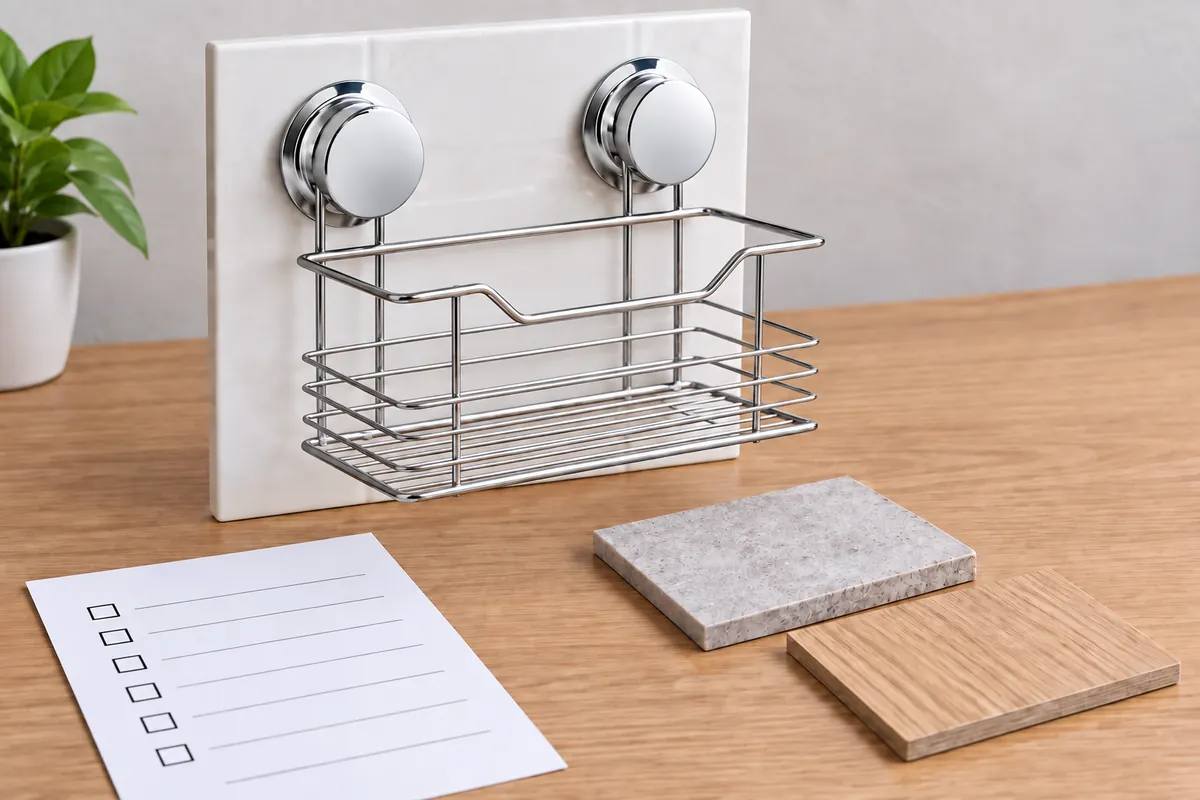
A useful approval pack lets purchasing, the brand team and the factory describe the same product and the same surface scope. It should be short enough to use but specific enough to survive a repeat order. Keep excluded or unverified surfaces visible rather than leaving silence that a later listing writer may interpret as permission.
- ☐ Product drawing, revision and retained sample identify the dual-mount basket.
- ☐ Two circular suction mounts are specified with left/right center distance.
- ☐ Rubber cup, base, cover and metal basket connection are listed in the parts record.
- ☐ Each reviewed surface has a sample ID and description.
- ☐ Smooth, textured, jointed and porous surfaces are not grouped without evidence.
- ☐ Cleaning, drying, seating, removal and repositioning steps are approved.
- ☐ Observations for the left and right cups are recorded separately.
- ☐ Buyer decisions distinguish approved, unverified and excluded use cases.
- ☐ Retail wording and artwork match the documented scope.
- ☐ The packed unit protects both cup faces and visible chrome parts.
- ☐ Component or instruction changes trigger a defined review.
Send this pack with the RFQ rather than only a product picture. Ask the supplier to identify assumptions about the rubber component, metal frame, finish, assembly and packaging. A quotation based on one set of parts cannot be compared fairly with a quotation that includes a different mounting assembly or retail pack. Koitor can discuss a practical small-batch OEM sample route; MOQ can start from 100 pieces for some products depending on structure, material, finish and packaging.
After a trial order, collect field feedback with enough context to be useful: product batch, reported wall type, preparation, installation position, symptom and photographs. Do not assume every installation complaint indicates the same cause. Compare reports with the approved surface list and instructions, then revise the product, pack or claim only when the evidence supports the change. A controlled learning loop is more useful than a blanket promise of compatibility.
الأسئلة الشائعة
Does “no drill” mean the basket works on every bathroom surface?
No. It describes an installation concept, not universal wall compatibility. Buyers should define and review named surfaces before making claims.
Why must both suction mounts appear in the sample review?
The two cups share one basket frame. Mount spacing, frame alignment and separate contact areas can affect the completed product. A single-cup sample is not the same configuration.
Can a glass-panel observation be used for textured tile?
No. Keep glass and textured tile as separate samples and decisions. Their visible contact conditions and preparation may differ.
What should be recorded if one cup behaves differently from the other?
Record the left and right condition separately, then inspect wall contact, cup condition, base fit and frame alignment before choosing a cause.
When should buyer instructions be approved?
Before final surface decisions and retail artwork. The reviewed installation procedure should match what the customer will be told to do.
Review Your Dual-Suction Basket and Wall Samples
Send Koitor your basket drawing or sample, two-mount spacing, intended wall samples, finish and packaging requirements. The team can review the metal structure and a practical OEM sample approach while you define the claim scope.
OEM / العلامة التجارية الخاصة
حوّل دليل التوريد هذا إلى موجز منتج
يرجى إطلاعنا على المنتج المستهدف، والحجم، والتشطيب، وكمية الطلب، ومتطلبات التغليف. وسيتلقى فريقك تقييمًا عمليًّا لإمكانية التصنيع قبل تقديم عرض الأسعار.
 English
  Español
  Português
  Français
  Deutsch
  العربية