
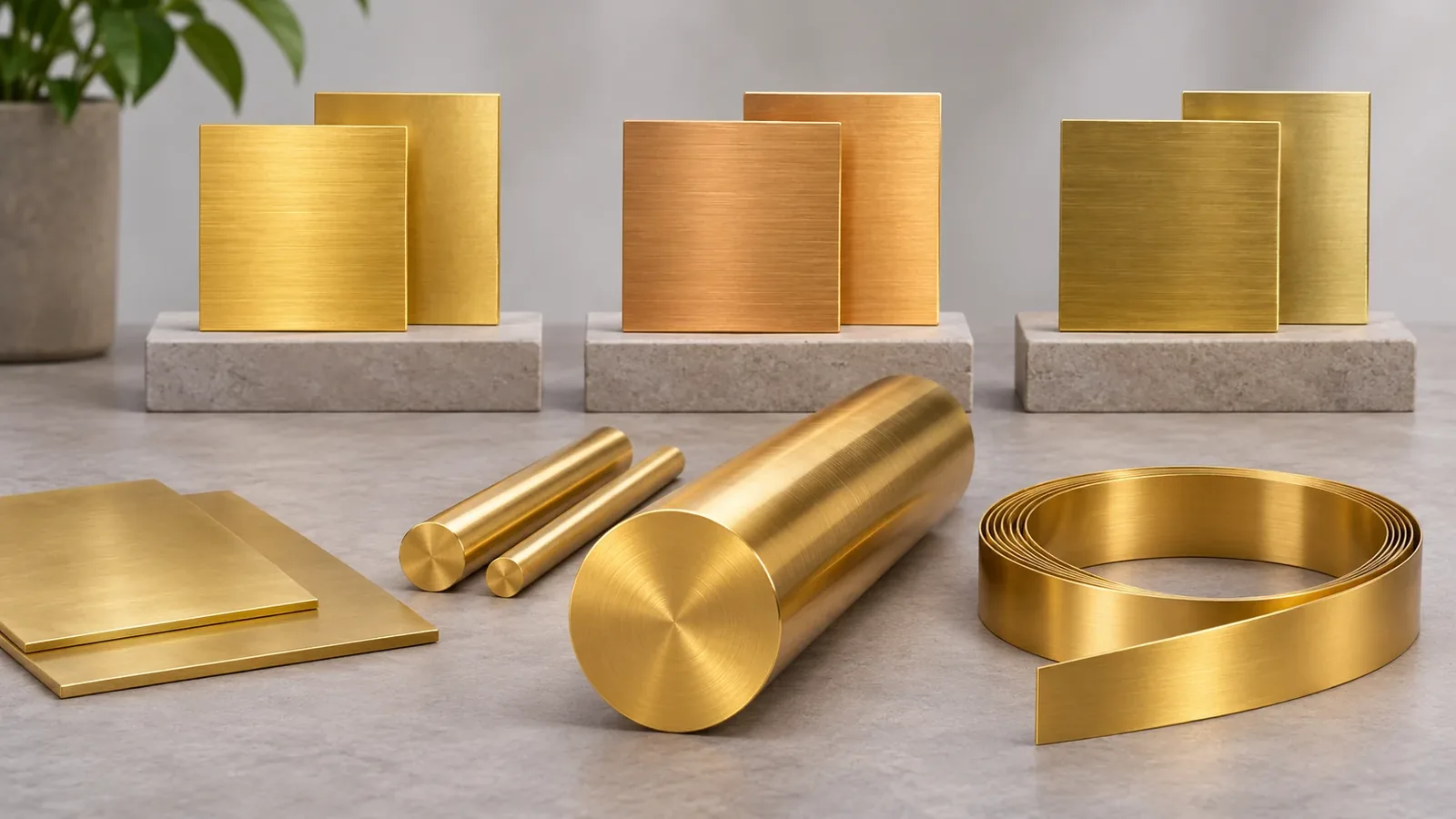
The types of brass are easiest to understand when buyers separate four kinds of information: alloy family, metallurgical structure, product form, and surface finish. These labels answer different questions. A brass-colored handle, rod, strip, or fitting does not by itself identify the alloy inside it, its temper, or its suitability for a particular manufacturing process. For a sourced hardware component, request the material designation and the evidence that connects it to the delivered product.
Brass is a copper-zinc alloy family. Some grades include additional alloying elements, and commercial descriptions may group them by composition, structure, intended processing, or traditional product name. A buyer should not treat these classification systems as one tidy list of mutually exclusive “types.” They overlap, and a color name or sales label may communicate much less than a grade designation.
Start with the label the buyer needs to verify
When a quotation says “brass,” ask what exact material designation is being proposed. The word can describe a broad family, but it may not identify the chemistry, product form, condition, or finish. If the part is important to fit, appearance, corrosion behavior, joining, or downstream forming, the approved drawing or purchase specification should state the required designation or define an approval process for alternatives.
The material designation should be tied to the actual component and its revision. A catalog description, sample appearance, or supplier invoice may not provide enough evidence to establish the delivered alloy. Depending on the project, the buyer may need a material certificate, traceability record, supplier declaration, or a test performed by a competent party. The needed evidence depends on the risk and the claim being made; do not assume one document proves every property.
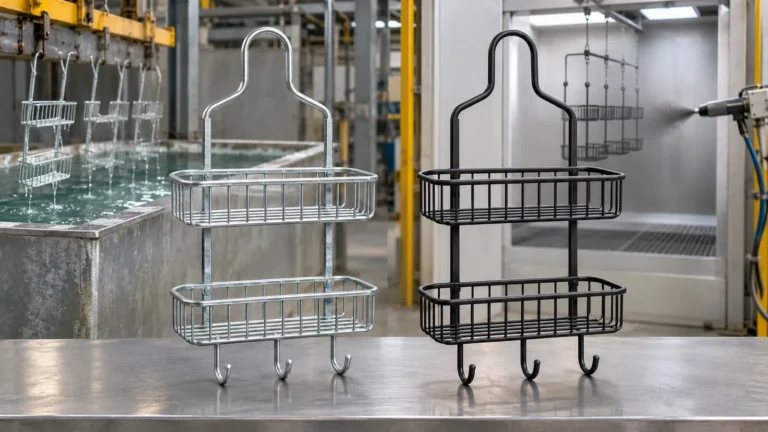
For custom bathroom and home-storage hardware, brass might appear in a fitting, insert, decorative part, fastener, trim, or bought-in component. The main product could instead be made from steel or stainless steel with a brass-colored coating. Those are different constructions. Specify whether the requirement is solid brass, a brass alloy component, or a particular appearance produced by a defined surface system. Do not infer solid brass from a gold tone.
Types of brass: alloy families and composition
Commercial discussions commonly distinguish binary brasses, leaded brasses, and higher-alloyed brasses. These broad groups help a buyer ask a better follow-up question, but they do not replace a specific grade or standard designation.
| Classification label | What it describes | What the buyer still needs |
|---|---|---|
| Binary brass | A copper-zinc base family description | Exact grade, form, condition, and applicable specification |
| Leaded brass | A family that may include lead as an alloying addition | Exact designation and project-specific substance evidence |
| Higher-alloyed brass | Brass families with additional alloying elements | Supplier specification and evidence for the intended component |
| Alpha or alpha-beta | Metallurgical structure terminology | The actual grade and technical basis; not a finish or color name |
| Rod, strip, sheet, or tube | Product form or supply geometry | Material designation, dimensions, condition, and surface requirements |
| Brass-colored finish | Visible appearance of a surface | Base substrate and the actual finish system |
The table compares naming axes rather than ranking grades. A single purchased part can fit more than one row: for example, it may use a specific brass designation, arrive as strip, and receive a separate surface treatment.
Binary brass
Binary brass refers to the copper-zinc base system without the label itself naming another intentional major alloy addition. Within that broad family, proportions and applicable specifications matter. The term “binary” is a family description, not a complete order requirement. A buyer still needs the grade or designation, applicable product standard where relevant, product form, and delivery condition.
Do not use “binary” to assume that every such alloy has the same forming behavior, machinability, color, corrosion response, or mechanical properties. Those depend on the actual grade, processing history, product form, and conditions of use. If a supplier proposes a substitute, compare the declared designation and the project’s critical properties rather than accepting the family label alone.
Leaded brass
Some brass grades contain lead as an alloying addition, often associated with machinability in particular applications. That broad statement does not determine whether a grade is appropriate for a component, product market, contact scenario, or jurisdiction. Requirements related to chemical content and product use must be checked against the actual applicable rules and customer specifications by the responsible parties.
A buyer should never infer lead content from color, shape, or a generic “free-machining brass” phrase. Ask for the exact grade designation and a suitable document or test if composition is material to the project. Do not make a compliance claim from the alloy family name. Where the component is part of a product subject to buyer or market restrictions, the product owner and compliance specialist must specify the relevant requirement and evidence.
Higher-alloyed brass families
Commercially recognized brass families can include additional elements, such as tin or other additions, to address specific material objectives. The presence of an additional element does not create a universal ranking. It does not prove a component is best for bathrooms, more corrosion resistant in every environment, or interchangeable with a different grade.
For purchasing, treat the family name as a prompt to inspect the detailed designation and intended product form. Ask what the designation means under the cited standard or supplier specification, whether it matches the drawing, and what evidence is supplied with the order. Keep the material question tied to the function of the exact part rather than turning a general family label into a performance guarantee.
Alpha and alpha-beta: structure terms are not finish names
Another way brass is described is by metallurgical structure. Some brass nomenclature distinguishes alpha from alpha-beta or duplex structures. These labels do not mean “light” and “dark” brass, do not identify a surface coating, and do not state the component’s final finish.
The structure terminology can help explain why different grades behave differently during processing. However, a buyer should not translate it into a universal numerical composition boundary or a one-line forming or corrosion ranking unless the applicable technical source and product specification support that interpretation. The source references in the research pack provide a bounded terminology explanation; they do not supply a complete grade-by-grade design table for every product form.
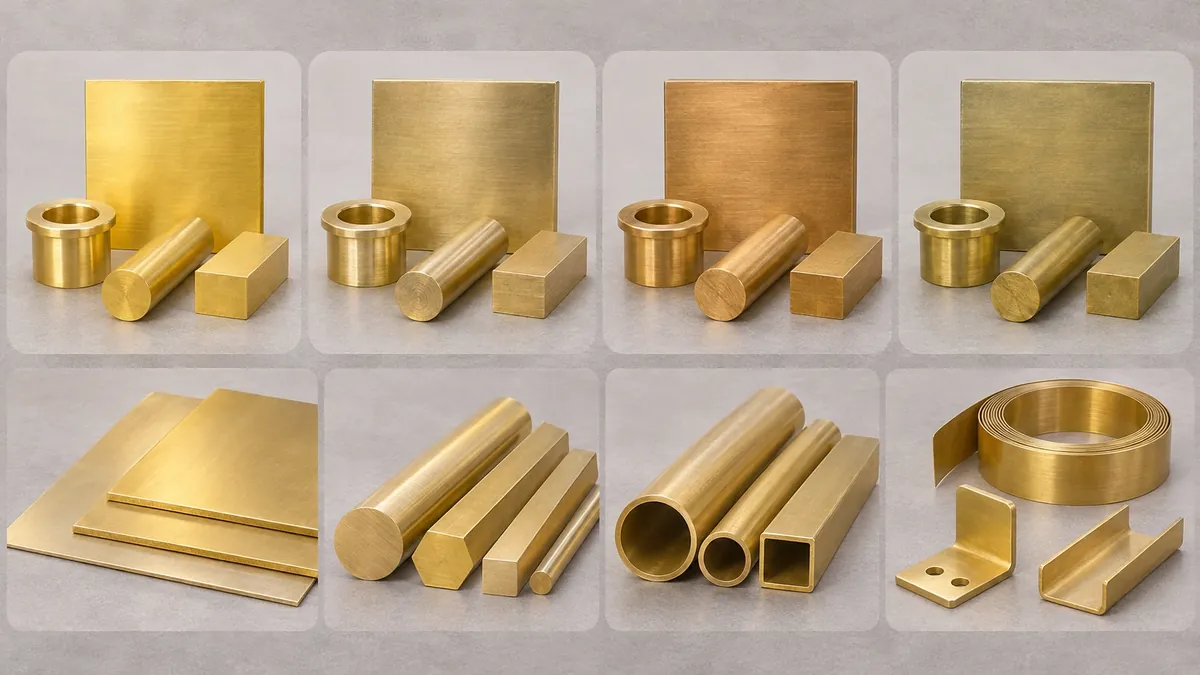
The practical rule is simple: keep the composition designation, structural family, product form, and finish in separate fields. A specification might separately identify the alloy designation, whether the supplied stock is rod or strip, the required condition, and the visible surface treatment. Each field should have its own acceptance evidence where needed.
Product form and condition answer different questions
Brass may be supplied as rod, bar, strip, sheet, tube, wire, casting, or another product form. Form describes the geometry and supply route, not the complete alloy identity. A grade available as a free-machining rod may not be appropriate or available in a different form and condition for a formed part.
Condition or temper also matters. It indicates a processing or delivery condition defined by the governing designation or specification. “Brass strip” alone does not say whether the stock meets the buyer’s needed condition, thickness tolerance, or surface requirement. Similarly, “brass rod” alone does not establish the machining result or fit of a finished component.
For a sourced fitting, record at least:
- The exact alloy or material designation and its source specification, if required.
- The product form and relevant dimensions.
- The delivery condition or temper required by the design.
- The surface state before any later finishing.
- Any critical dimensional, joining, appearance, or traceability requirements.
- The evidence required at quotation, sample approval, and production receipt.
When a supplier offers an alternative, ask the supplier to state the proposed designation and form clearly. Have the responsible designer or buyer compare the substitution against the component’s function and manufacturing route. A verbal assurance that an alternative is “equivalent brass” should not silently change the approved bill of materials.
Brass appearance does not identify brass construction
“Brass finish” is often an appearance description. It may refer to a coating, plating, lacquered surface, paint, or another finish applied to a different substrate. A gold or yellow surface may also change through lighting, polishing, wear, or photography. Appearance cannot prove that the component is a solid brass alloy.
This distinction matters for bathroom and home-storage products because buyers may specify a particular visual result while the design uses a steel core, an alloy fitting, or a separately finished component. The buyer should describe both construction and appearance: what the substrate is, what finish system is required, where it applies, and what sample or reference is approved. Do not use “brass” as shorthand for both metal composition and color unless the design truly makes those identical.
Finish acceptance should reference the agreed sample, drawings, supplier specification, or project-specific inspection criteria. A visual check can compare color and visible defects, but it cannot establish hidden composition or prove long-term performance. If composition matters, use the appropriate material evidence. If appearance matters, define the visible acceptance conditions. If both matter, verify both separately.
How buyers can specify a brass component
Describe the part and its role
Name the component, its mating parts, the assembly location, and what it must do. A fitting used to connect a tube, a decorative cap, a threaded insert, and a machined mounting piece can have different material and process constraints. Context helps the supplier identify what information is missing without assuming that every brass part serves the same purpose.
Reference the exact grade or require approval
If the product design requires a defined material, state it on the controlled drawing or purchase specification. If substitutions may be considered, require written comparison and approval before sampling or production. Keep the approved designation tied to the drawing revision, sample, and order record.
State form and condition
Specify whether the component is machined from rod, formed from strip, cast, or purchased in another form, when the design depends on that route. State relevant dimensions, tolerances, condition, and surface state. A supplier should not be expected to infer a process from a photograph if the drawing or description can make it clear.
Separate finish from substrate
Identify the base material and the required visible finish independently. If a color or gloss target is critical, define the approved visual sample and the comparison conditions. If the product uses plating, coating, lacquer, or another treatment, state who defines and verifies it. Avoid implying that a finish name proves the underlying alloy.
Define evidence in proportion to the risk
Ask what document or inspection is appropriate to confirm the exact requirement. A supplier declaration may be enough for one low-risk decorative component; another application may require a traceable certificate or independent test. The project’s technical and compliance owners should decide. No single document automatically verifies alloy, temper, dimensions, finish, and product performance together.

Common naming mistakes
Treating alloy family and product form as competing types
“Binary brass” and “rod” describe different dimensions. One concerns alloy grouping; the other concerns supply form. A component can be both a member of an alloy family and supplied in a particular form. Put those descriptors in separate fields rather than choosing only one.
Treating alpha and alpha-beta as color categories
These terms refer to structural descriptions, not finish colors. They should not be selected based on a photograph. Ask for the actual alloy designation and use technical documentation appropriate to the project.
Assuming a brass-colored part is solid brass
A surface appearance does not establish the substrate. Confirm whether the component is solid brass, another alloy, or a coated or plated substrate. The distinction may affect design, cost, fabrication, repair, and buyer claims.
Assuming every brass grade is interchangeable
Two items can both be called brass while differing in alloy designation, form, condition, processing, and requirements. A substitution should be reviewed against the component’s actual function and purchase specification.
Using grade names as unsupported performance promises
A grade designation does not by itself establish service life, corrosion outcome, compliance, or suitability for a particular bathroom environment. Those conclusions require context and appropriate evidence. Avoid claims such as “all brass is rust-proof” or “this grade never corrodes.”
Buyer checklist for a brass quotation
Before approving a brass component or a brass-finish hardware product, ask:
- Is the requirement for a brass alloy, a brass-colored appearance, or both?
- What exact material designation is quoted, and which specification defines it?
- What is the product form and delivery condition?
- Does the component’s function or manufacturing route constrain the material choice?
- What surface treatment is present, and which party controls it?
- What sample, drawing revision, or record is the production reference?
- Which document or test verifies the specific property that matters?
- Who must approve a substitution before it affects the BOM or repeat order?
- Are market or customer substance requirements applicable to this exact product, and who verifies them?
- Are the claims on the product page and packaging supported by the same evidence?
This list helps convert “brass” from a vague quote line into an identifiable component requirement. It does not make the buyer a metallurgist or compliance authority. If a choice depends on composition, forming, machining, joining, or market restrictions, involve the qualified technical or compliance owner and record the approved decision.
How to manage a material change or repeat order
Material identity should remain visible when a design moves from concept to sample and then to production. A sample may look right while leaving the alloy, condition, and construction undocumented. Before approving it, record which drawing revision it represents and which material designation the supplier used. If the sample is made from an available substitute, label that limitation and decide whether the sample can verify appearance only, fit, assembly, or some other defined point.
When a supplier proposes a change, ask for a written comparison that names both the approved and proposed materials, forms, conditions, and any associated process changes. Review the actual requirement rather than asking whether the new option is “the same.” A difference that is immaterial for a decorative cover may matter for a threaded connection, a formed clip, or a part that must mate with another component. The responsible design or quality owner should decide which characteristics need confirmation and whether the revised sample must be approved.
For repeat orders, reference the approved part number, drawing revision, material designation, finish, sample status, and any agreed deviation. A short material field in the purchase order may not carry the full project context; link it to the controlled specification or approved record. If the product is private label, also make sure marketing descriptions and packaging do not promise a material construction that the technical file does not support.
An importer can keep this process proportionate. A low-risk purchased decorative item may need a clear supplier declaration and sample comparison. A material that affects function, regulated use, or a customer claim may need stronger traceability or specialist review. The correct evidence follows the risk and requirement. More paperwork is not automatically better if it does not identify the delivered part or verify the property the buyer actually needs.
If production is split across multiple suppliers, clarify who controls the base alloy, who performs machining or forming, who applies the finish, and which party retains the records. The final assembler may not be the original material producer. Traceability is useful only when the document’s scope, part reference, and lot connection are understandable. Ask the supplier to explain any gap rather than assuming every certificate travels automatically with every shipment.
These steps also make supplier comparisons fairer. Two quotations that both say “brass handle” may describe different substrates, manufacturing routes, surface systems, and evidence packages. Put those assumptions in a comparison table before evaluating total cost. If the buyer’s design team is still deciding, label the choice as open and avoid treating a preliminary quote as an approved material decision.
When the approved part includes other materials, keep their specifications visible too. A brass fitting joined to a steel tube, a plated fastener, or a polymer insert may involve several suppliers and separate evidence. One “brass” line should never imply that the full assembly shares the same construction.
Treat each label as a claim that needs an owner and a matching record before release.
Handling a proposed brass substitution
When a supplier offers a substitute, first ask what problem the change addresses: availability, price, manufacturing, appearance, or another requirement. Then request the exact designation, form, condition, and finish for both the current and proposed options. Do not compare only broad family names. If the proposal changes the component process or joining method, include that change in the technical review because material and process assumptions can be linked.
The buyer’s engineer or product owner should identify the attributes that cannot change. These might include fit, thread engagement, visible appearance, assembly sequence, or a buyer-defined documentation requirement. A supplier may explain its manufacturing proposal, but the responsible design authority must approve any change to the released product. Record whether a sample is needed and what the sample is expected to prove.
After approval, update the drawing or BOM, quotation basis, sample reference, and purchase order. Ensure the change is applied only to the intended SKU and effective date. If a package or product listing uses a material claim, review that wording against the new construction and evidence before it is reused. This process prevents a preliminary cost option from becoming an untracked production substitution.
الأسئلة الشائعة
What are the main types of brass?
Common descriptions group brass by alloy family, structure, product form, or intended processing. Binary, leaded, and higher-alloyed families are broad composition groupings; alpha and alpha-beta are structure terms; rod and strip are forms. The exact designation and specification matter for a purchase.
Is brass a single material?
No. Brass describes a family based principally on copper and zinc, with different grades and sometimes additional alloying elements. A product requirement should identify the exact grade or a controlled approval route.
Does a brass finish mean the product is made from brass?
Not necessarily. “Brass finish” may describe a surface appearance over another substrate. Confirm construction and finish separately.
Can I identify a brass grade by color?
No reliable grade decision should be made from color alone. Appearance can vary by finish, lighting, wear, and surface treatment. Use the designation and suitable material evidence.
Is alpha brass always better for forming?
There is no universal answer based only on a broad structural label. Processing performance depends on the actual grade, form, condition, design, and operation. Confirm the specific material and manufacturing requirements with the responsible technical owner.
Sources and scope
- Copper Information Center: Brass rods and sections — used for broad family and product-form terminology; not used here to make grade-level composition or performance claims.
- Aalco metal glossary: copper and brass terminology — used for a bounded explanation of alpha and alpha-beta naming; not treated as a compliance certificate or universal performance ranking.
The article provides a buyer classification framework. It is not an alloy selection specification, material certification, legal opinion, or claim that Koitor manufactures every brass grade or brass component described.
اعمل مع شركة «كويتور» للأدوات
Define the substrate, finish, and component evidence
When a bathroom or home-storage hardware project includes a brass component or brass-colored finish, send the drawing or sample, intended use, required appearance, quantity, and packaging brief. Koitor Hardware is a family-owned custom metal hardware factory focused on bathroom and home storage products. The project team can discuss the confirmed product structure and manufacturing scope; material supply and performance claims must be verified for the actual component.
Review a Custom Hardware Material Brief
Share the component drawing or sample, material designation, base construction, finish requirement, target quantity, and packaging details. Koitor can review the manufacturing brief for a practical OEM discussion; technical and compliance acceptance should remain with the responsible project specialists.
OEM / العلامة التجارية الخاصة
حوّل دليل التوريد هذا إلى موجز منتج
يرجى إطلاعنا على المنتج المستهدف، والحجم، والتشطيب، وكمية الطلب، ومتطلبات التغليف. وسيتلقى فريقك تقييمًا عمليًّا لإمكانية التصنيع قبل تقديم عرض الأسعار.

 English
 Español
 Português
 Français
 Deutsch
 العربية