
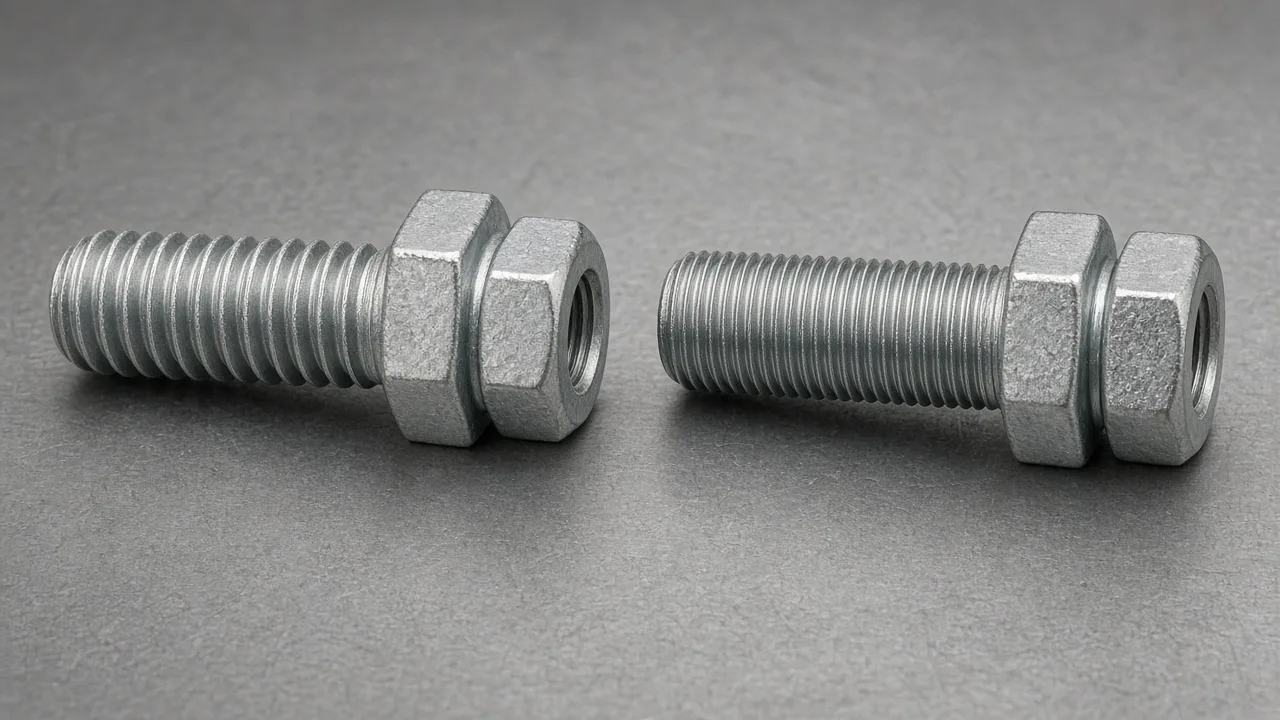
UNC vs UNF is the choice between two series in the Unified inch thread system. Unified National Coarse (UNC) and Unified National Fine (UNF) threads share the same thread form and nominal diameters, but the fine series has more threads per inch at a given diameter. That single difference changes engagement, assembly speed, adjustment and how the thread behaves in thin or soft material.
Neither series is better in general. The right choice depends on the mating part, the material, the available thread length, vibration, assembly method and what the end customer’s fasteners already use. The decision belongs on the drawing as a full thread callout, not as an assumption.
This guide is written for importers and sourcing teams buying hardware with inch threads, such as brackets, shelf supports, knobs and mounting plates sold into North American markets. Koitor Hardware is a family-owned China OEM manufacturer that taps and assembles threaded metal parts to customer drawings. We do not impose a default series.
Metric threads raise the same coarse versus fine question with different designations. That comparison lives in the live guide on coarse versus fine metric threads for thin hardware. This page stays with inch threads.
What is the difference between UNC vs UNF threads?
At the same nominal diameter, Unified National Fine has a smaller pitch, meaning more threads per inch, than Unified National Coarse. The thread profile angle and basic form are the same within the Unified system. Because the pitch is smaller, a fine thread has shallower thread depth, a larger minor diameter and more threads engaged over the same length.
Pitch is the distance from one thread to the next. In inch threads, it is usually expressed as threads per inch rather than as a distance. The live guide on thread pitch explains how pitch is defined and measured.
The Unified thread form is defined in ASME B1.1, which covers Unified inch screw threads, their series, designations and tolerance classes. A drawing that cites it gives both parties the same definitions.
Coarse threads are the general-purpose default in many inch fastener ranges. They are widely stocked and assemble quickly because each turn advances the fastener further.
Fine threads are common where finer adjustment is needed, where the wall or engagement length is limited, or where the design calls for a thread with a larger minor diameter. They are also used in some precision and aerospace contexts.
Other series exist within the Unified system, including extra-fine and constant-pitch series. They are not automatically in scope when someone says UNC or UNF, and they should not be substituted without a drawing change.
How did the Unified series come about?
The Unified system was developed to harmonise inch threads among several countries, so that fasteners made in one could be used with parts made in another. The coarse and fine series were part of that framework, which is why their form is shared and only the pitch per diameter differs. That history explains why the series names carry the word “National” and why callouts follow a consistent pattern.
Is UNC the same as a “standard” thread?
In everyday speech, people often call coarse threads “standard”. That habit causes confusion on drawings and purchase orders. A buyer who writes “standard thread” may mean coarse; a supplier may read it differently. The series should always be written explicitly.
Why not include a threads-per-inch table here?
The authoritative pitch for each diameter in each series is in ASME B1.1 and in fastener supplier data built on it. Reprinting a partial table invites copying errors. Use the standard or a verified reference for values, and use this page for the decision.
Identification of an unknown thread starts with the system and diameter, then the pitch. A thread that measures close to an inch size but has a metric pitch is a metric thread, and the reverse also happens. Measuring diameter with calipers and pitch with a pitch gauge separates the systems before the series question even arises.
How do you read a UNC or UNF thread callout?
A typical Unified thread callout states the nominal size, the threads per inch, the series designation, the tolerance class and sometimes the hand and length. The series letters, such as UNC or UNF, tell you which series the pitch belongs to. The class tells you how tight the fit is. Each part of the callout matters for manufacturing and inspection.
Nominal size comes first. It may be a fractional inch size or a numbered size for smaller diameters. Both are defined in the standard.
Threads per inch come next. Writing the number makes the pitch explicit, even if the series also implies it. Some drawings omit it and rely on the series; including it reduces ambiguity.
Series designation follows. UNC and UNF are the common ones. UNR indicates a controlled root radius on external threads, which affects fatigue performance and inspection. If the drawing says UNR, that is not the same as plain UN on the external part.
Tolerance class closes the callout. In the Unified system, external threads use classes with the letter A and internal threads use classes with the letter B. The number indicates the fit tightness. The class affects gauging and how much allowance is available for coatings.
Hand and length may also appear. Right hand is normally assumed; left hand must be stated. Thread length or depth, and the length of full thread, belong on the drawing for tapped holes and studs.
| Callout element | What it tells you | What to confirm |
|---|---|---|
| — | — | — |
| Nominal size | Basic diameter | Fractional or numbered size per standard |
| Threads per inch | Pitch | Matches the stated series |
| Series | UNC, UNF or other | No unapproved substitution |
| Tolerance class | Fit and allowance | Class suits plating or coating |
| Hand | Right or left | Left hand stated explicitly |
| Length or depth | Engagement available | Full-thread length on tapped holes |
Where should the callout appear on the drawing?
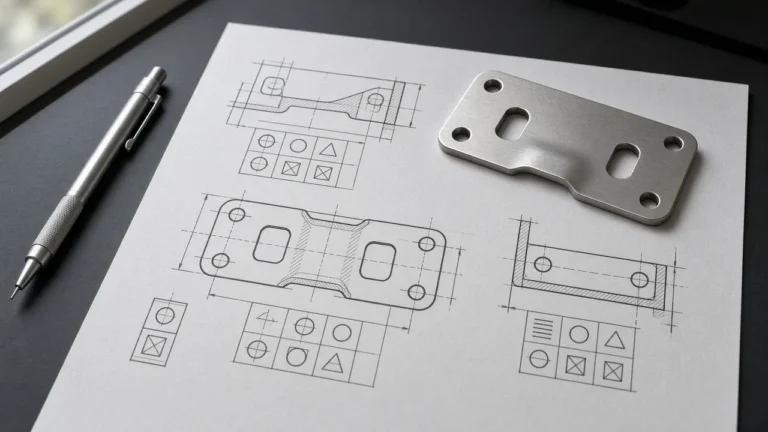
The callout should sit on a leader to the threaded feature, or in a note that references the feature clearly. Hole tables on sheet-metal parts often list thread callouts alongside hole sizes. Whatever the format, each threaded feature should have a callout that cannot be confused with a neighbouring hole.
How do coatings affect inch threads?
Plating and powder coating add material to threads. A class with allowance leaves room for some coating; a class without allowance may not. The metric equivalent is covered in the live guide on metric thread tolerance classes 6H and 6g with coating allowance. The same principle applies to Unified classes: confirm whether the class applies before or after coating.
Design teams that serve several markets sometimes document a preferred series per product family, so new designs stay consistent with existing fastener packs.
Why does the series matter for retail hardware?
In North American retail, end users often replace or add fasteners from a hardware store. A product that uses a common coarse-thread size is easy to service; one that uses a less common fine size can frustrate customers. That practical point is part of the design decision, alongside engineering performance.
When does Unified National Coarse suit hardware better?
Unified National Coarse often suits general assembly, softer materials, parts assembled frequently, and situations where the mating fastener is a stock coarse-thread item. Its deeper thread is more tolerant of minor damage and contamination, and each turn advances further, so assembly is quicker. Those traits fit many consumer hardware products.
Assembly speed matters on products that end users assemble at home. Fewer turns mean less effort and less chance of cross-threading if the thread starts cleanly.
Damage tolerance helps on parts that are handled, plated or shipped loose. A deeper thread profile is less likely to be blocked by a small burr or a coating build-up, though coatings still need to be accounted for in the class.
Stock fasteners are a practical driver. If the end customer’s retail packs contain coarse-thread bolts, the hardware should match. Designing a fine-threaded insert for a product whose fasteners are coarse creates assembly failures in the field.
Soft materials, such as some aluminium or zinc die-cast parts, often perform better with coarse threads because the larger thread form carries load over more material per thread.
Supply chain is another consideration. Coarse-thread fasteners, inserts and taps in common sizes are widely available from many sources, which helps when a product is made in one country and serviced in another. Fine sizes are available too, but range and stock depth can be narrower, especially in stainless or specialty coatings. That availability should be checked before a design is fixed.
Does coarse thread mean lower strength?
Not simply. Strength depends on the stress area, the material on both sides, engagement length and how the joint is loaded. Fine threads have a larger stress area at the same diameter, but coarse threads can strip less readily in softer internal material. The joint as a whole, not the series label, determines strength.
Corrosion and maintenance also play a role. A coarse thread with its deeper profile tolerates some corrosion product and dirt before it binds. Outdoor and bathroom hardware, which sees moisture, may benefit from that tolerance, though material choice and coatings still matter more than the series.
When does Unified National Fine suit hardware better?
Unified National Fine often suits thin walls, limited engagement length, fine adjustment, and applications where a larger minor diameter helps. More threads engage over a short length, and the shallower thread removes less material from a thin wall. Those traits suit some tube fittings, thin-wall bosses and adjustment screws.
Thin walls are a common reason. Tapping a coarse thread into a thin tube wall may leave little material at the root; a fine thread with shallower depth can leave more wall intact. The design must still check that engagement is sufficient.
Short engagement length favours fine threads because more threads fit into the available length. Sheet-metal parts with extruded or formed holes often have limited thread length.
Fine adjustment benefits from smaller pitch. Levelling feet and tension screws move less per turn, giving finer control.
Vibration resistance is sometimes cited for fine threads. The smaller helix angle can help, but locking features, preload and joint design usually matter more than series alone. Claims that fine threads never loosen are not reliable.
Fine threads in soft material deserve care. Aluminium and zinc die-cast bosses may not hold fine threads as well under repeated assembly. Inserts or a coarse series may be more robust, depending on the design.
Are fine threads harder to assemble?
They need more turns and can be more sensitive to damage, contamination and cross-threading, especially on soft or coated parts. On products assembled by end users, those traits should be weighed against the benefits.
How does the UNC vs UNF choice affect manufacturing?
The series affects tooling, process choice, cycle time and inspection equipment. Taps, rolling dies and gauges are specific to series, size and class. Fine threads need more care in tapping thin or work-hardening material, while coarse threads remove more material per thread. Raising these points at the design stage avoids late tooling changes.
Tapping is common for internal threads in hardware. The tap drill size depends on the series, because the minor diameter differs. Using a coarse-thread tap drill for a fine thread, or the reverse, leaves too much or too little material. Tap drill guidance comes from thread references built on the standard.
Thread forming, which displaces rather than cuts material, is an alternative in ductile metals. It produces no chips and can give a strong thread, but needs a different pre-hole size and suits some materials better than others. Whether forming or cutting is used should not change the callout, but it affects how the thread is produced.
Stainless steel deserves attention. Austenitic stainless work-hardens during tapping, and fine pitches with shallow threads can be sensitive to tool wear and galling. Lubrication, tool condition and speeds matter. This is a process consideration for the supplier, not a reason to change the series without design approval.
External threads on studs and screws may be cut or rolled. Rolling forms the thread by pressure and is common in fastener production. The series and class define the result, whichever method is used.
Weld nuts, rivet nuts and press-in inserts are often used in sheet-metal hardware instead of tapping thin walls. They come in specific series. The drawing should name the insert type and series so the supplier buys the right component.
What happens if a supplier substitutes the series?
A substituted series will not assemble with the intended fastener, and the error may not be noticed until the customer tries to assemble the product. Substitution should only happen through a documented drawing change. Gauges for the stated series catch it at inspection if they are used consistently.
What should incoming inspection check for inch threads?
Incoming inspection should confirm that threads accept the go gauge and reject the no-go gauge for the stated class, that the series matches, and that thread length is sufficient. For coated parts, the check should follow the agreed coating stage. Records should show the gauge identification so results can be traced.
Can one product use both series?
Yes, but it increases the risk of mix-ups in assembly and packing. If a product genuinely needs both, the parts and fastener bags should be clearly marked, and assembly instructions should identify which fastener goes where. Many designs avoid mixing series for that reason.
How should buyers specify and inspect UNC vs UNF threads?
Specify the full callout on the drawing, including series, threads per inch, class, hand and length, and agree how threads will be gauged. Inspect with thread gauges suited to the series and class, and verify that mating fasteners match. A thread that looks right but is the wrong series will not assemble with the intended fastener.
Gauging is the practical acceptance method for most threaded hardware. Go and no-go thread gauges for the stated class check whether the thread falls within limits. The live guide on thread go/no-go gauge inspection for OEM buyers explains how those gauges are used.
Pitch identification comes first when the series is in doubt. A pitch gauge identifies the threads per inch; it does not confirm class. Class needs proper gauging.
Pitch diameter measurement is a deeper check used in some disputes and on external threads. The live guide on thread pitch diameter by three-wire measurement covers that method.
Mixing systems is a risk. Some metric and inch sizes are close enough to start by hand but not to engage properly. A product that mixes metric and inch threads should mark them clearly, and inspection should confirm the system as well as the series.

Communication with the supplier should confirm the callout before tooling. Taps, thread-rolling dies and gauges are ordered by series and class. A late change from coarse to fine, or the reverse, can mean new tooling and gauges, so it is worth settling early.
Assembly testing with the actual mating fastener closes the loop. A thread that passes gauging can still fail in assembly if the fastener comes from a different series or is coated differently. A short assembly check on first articles reduces surprises.
- Full callout on the drawing: size, threads per inch, series, class, hand, length.
- Coating stage stated relative to the class.
- Gauges for the correct series and class available.
- Mating fasteners confirmed as the same series.
- Assembly checked with real fasteners on first articles.
Documentation should follow the decision. If the series was chosen for a specific reason, such as thin-wall engagement or retail fastener compatibility, a note in the design record helps future engineers avoid changing it without understanding why. Product families that share fasteners benefit from a single documented choice.
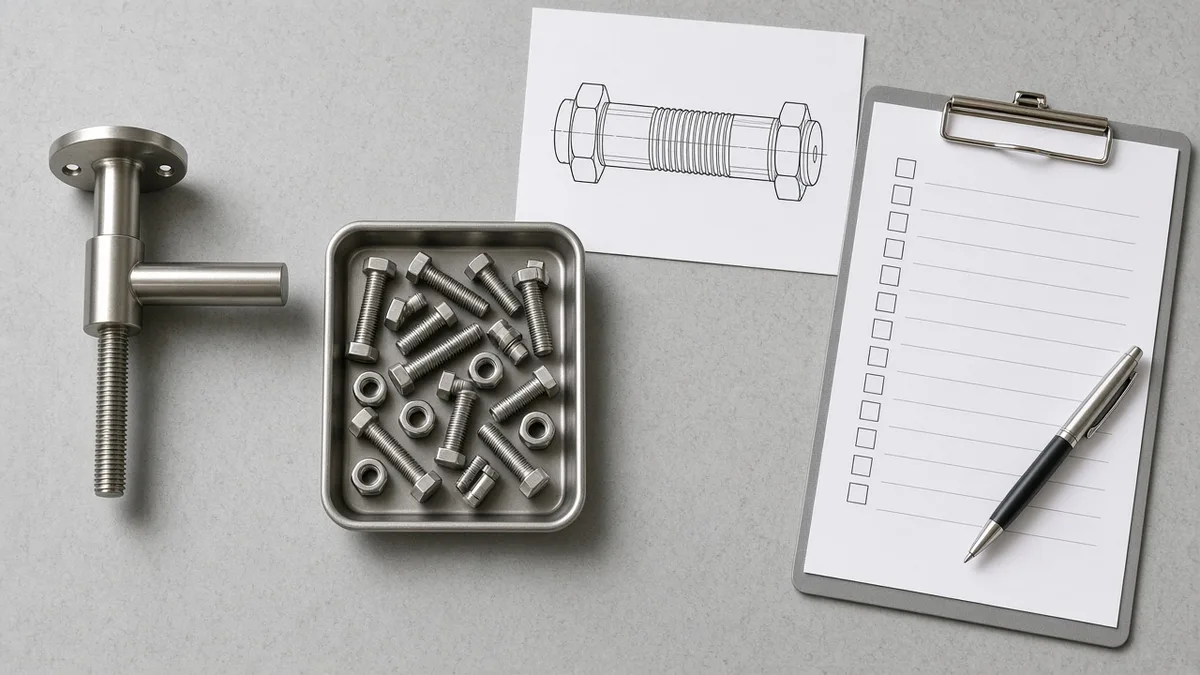
Buyer checklist for inch thread series
- Series stated explicitly, not inferred from size alone.
- Threads per inch written in the callout.
- Extra-fine or other series not substituted without approval.
- Class chosen with coating in mind.
- Engagement length checked for thin walls.
- Retail fastener packs matched to the hardware series.
- Inspection by thread gauges for the stated class.
FAQ
What is the difference between UNC and UNF?
UNC is Unified National Coarse and UNF is Unified National Fine. At the same nominal diameter, the fine series has more threads per inch, a shallower thread and a larger minor diameter. The basic thread form is the same.
Is UNF stronger than UNC?
Fine threads have a larger stress area at the same diameter, which can increase the tensile capacity of the fastener. Joint strength also depends on the internal thread material, engagement length and loading, so fine is not automatically stronger in a real assembly.
Can I use a UNC bolt in a UNF hole?
No. The pitches differ, so they will not engage properly. Forcing them damages both threads. Always match the series, threads per inch and size.
Which is more common, UNC or UNF?
Coarse threads are the more common general-purpose choice in many inch fastener ranges. Fine threads are common in specific applications such as thin walls, adjustment and some precision assemblies.
What does the A or B in a thread class mean?
In the Unified system, A indicates an external thread class and B an internal thread class. The number before the letter indicates the fit; the exact limits are defined in ASME B1.1.
Are UNC and metric coarse threads interchangeable?
No. They belong to different systems with different diameters and pitches. Some sizes are close but not compatible. The metric general-purpose system is described in ISO 261 and related standards.
اعمل مع شركة «كويتور» للأدوات
Confirm inch thread callouts on a hardware drawing
Send the drawing, the mating fastener or part and the material. We can review whether the thread series, class and engagement are clearly specified for your metal hardware parts. We do not set a default thread series for customer designs.
OEM / العلامة التجارية الخاصة
حوّل دليل التوريد هذا إلى موجز منتج
يرجى إطلاعنا على المنتج المستهدف، والحجم، والتشطيب، وكمية الطلب، ومتطلبات التغليف. وسيتلقى فريقك تقييمًا عمليًّا لإمكانية التصنيع قبل تقديم عرض الأسعار.
 English
 Español
 Português
 Français
 Deutsch
 العربية