
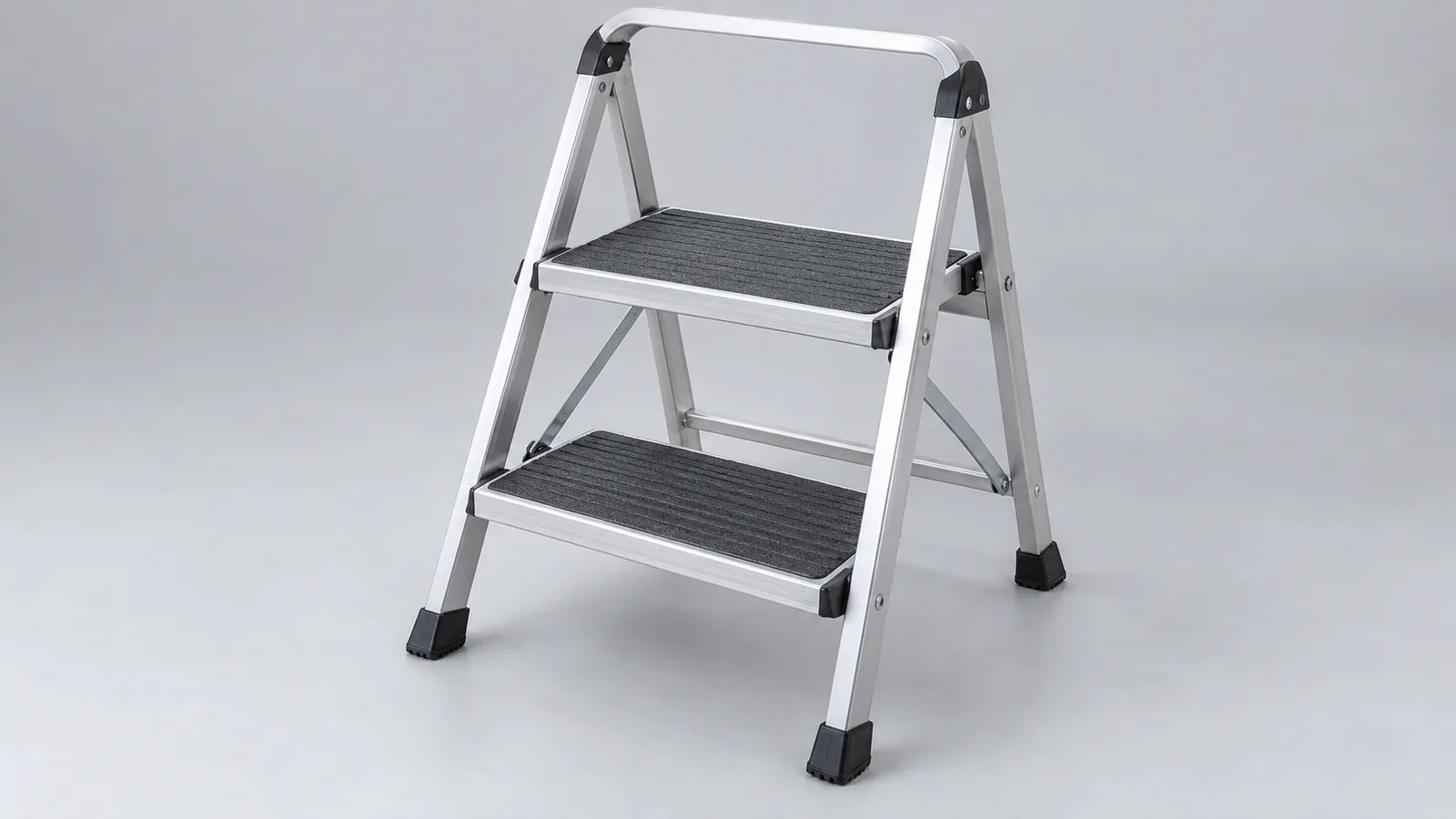
For buyers comparing EN 14183 step stools, the report and standard edition must match the exact model. An EU buyer comparing household step stools may see a supplier listing that says “EN 14183 tested” or “compliant.” That short phrase does not answer the questions that matter before a launch: Is the product actually within the standard’s scope? Which edition was used? Does the report identify the exact model, material, dimensions, and revision being ordered? Has a later draft or standard change affected the buyer’s plan?
For an EN 14183 step stool importer, the practical task is to connect four records: the product definition, the applicable published standard or other product-safety requirements, the test evidence, and the production-intent sample. Each must refer to the same configuration. A product listing or a test report for a similar-looking stool cannot replace that linkage.
This article is a procurement checklist, not a legal determination or a substitute for the full standard, qualified laboratory advice, or review of the destination-market obligations for a specific product.
Confirm the product category before requesting evidence
“Step stool” is a commercial description, not a complete classification. A compact one-step stool, folding household platform, two-step household product, and professional access product can raise different scope questions. Record the intended user, setting, number and arrangement of steps, standing height, folding mechanism, and any use limitation printed in the instructions. Do not start with the supplier’s category label alone.
The product must be defined as it will be sold. Record the model and SKU, intended market, maximum user or total-load claim if one is proposed, whether it folds, how it locks open, its feet or contact surfaces, and the supplied instructions. Clarify whether the stool is intended for general household use or limited professional use. A product’s intended use and instructions may affect which standard and assessment route a competent reviewer considers relevant.
Ask the supplier to state which standard and edition it believes apply, and to identify the basis for that view. Then have the buyer’s product-safety reviewer or testing laboratory confirm the scope. This matters because the phrase “step stool” may be used for products that do not share the same design, access height, user, or use environment. A B2B importer should be able to explain why the selected reference fits the product being sold.
Read the edition status accurately
As checked on 29 October 2026, BSI lists BS EN 14183:2003, Step stools as the current published release and labels it “Current, Under Review.” BSI also has a step-stool standard project, prEN 131-9:2026, whose project page shows a draft stage and an estimated publication date in January 2028. A draft is not the same as a published replacement standard. The dates and status can change, so recheck the standards publisher when a product reaches design freeze or a new order.
For EN 14183 step stools, buyers should link the current standard edition to the exact model and supporting evidence rather than treating a listing statement as approval.
This status distinction is important in RFQs and supplier declarations. Ask the supplier to write the full reference, including edition and any amendments, on the report or technical evidence list. If the supplier cites a draft, ask why it is being used and how its result relates to the currently published edition and the buyer’s market plan. Do not accept a future projected publication date as proof that a draft already applies.
The standard’s publication status also does not, by itself, answer whether a product can be sold, whether a conformity mark is required, or whether a specific legal route applies. Avoid using “EN tested” as a substitute for a market-specific assessment. Ask the responsible compliance reviewer to distinguish a voluntary test benchmark from a harmonized-standard route or a legal obligation for the exact product. Do not assume that mentioning a European standard automatically creates a CE-marking requirement or grants a certification.
Match the report to the item you will actually buy
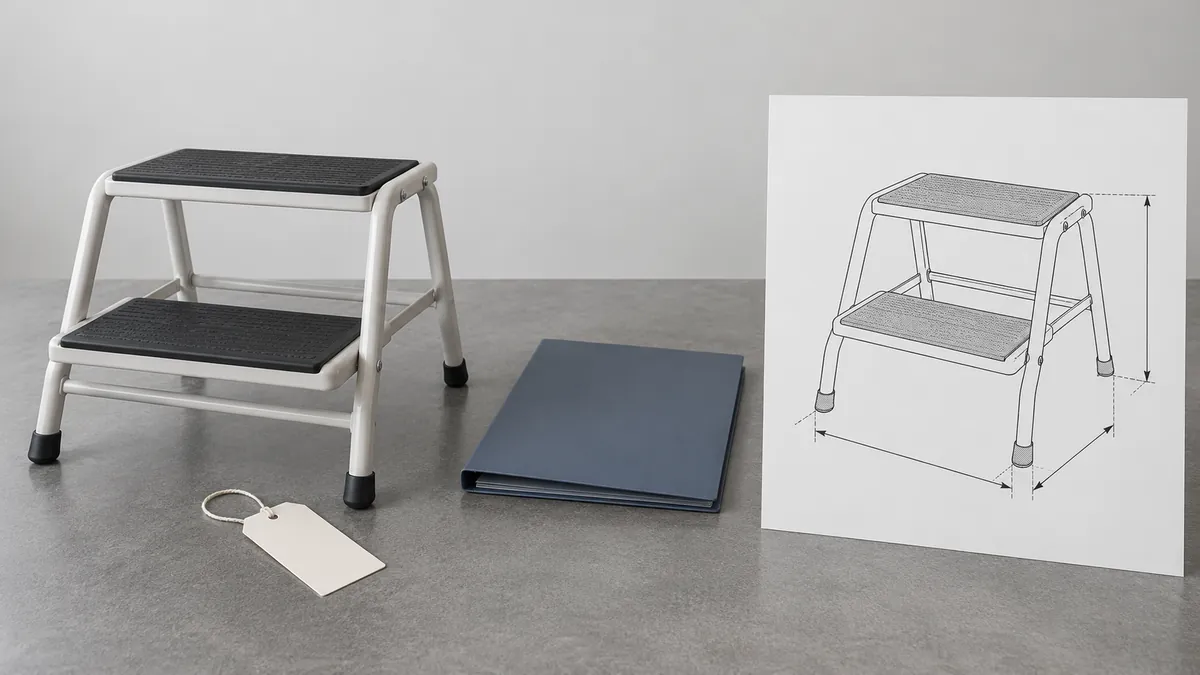
Before accepting a report, check its identity fields and scope. The title should identify the product or model, and the report should make clear which specimen, configuration, material, dimensions, and revision were assessed. Compare the report against the drawing, bill of materials, sample photographs, instructions, labels, and purchase-order description. If one of those references points to a different model or older revision, list the difference and ask the lab or qualified reviewer whether it matters.
A supplier’s summary page can help you find the report, but the buyer should ask for the complete report or an authorized, independently verifiable record. Confirm the test organization, report number, date, scope, result, and any stated limitations. If a report is confidential, ask the supplier to arrange direct verification with the issuing lab or provide written permission for the buyer’s reviewer to confirm authenticity. Do not infer a pass from a logo, a certificate-looking image, or a supplier’s unsupported statement.
The buyer should also understand what the report does not cover. A test against a stated standard does not automatically validate a different finish, new hinge, alternate foot, different fastener, taller configuration, revised platform, or a supplier’s latest production run. It does not necessarily prove that the product will be used correctly, that all packaging risks are addressed, or that every destination-market obligation has been met. Ask the lab to explain the boundaries of the test and identify any supplementary checks the product’s risk review requires.
| Evidence item | Buyer’s question | Record to retain |
|---|---|---|
| Produktidentität | Does the evidence name the exact model, SKU, and revision? | Drawing and model cross-reference |
| Standard reference | Which published edition and amendments were applied? | Full designation and review date |
| Test report | Who issued it, for which specimen, on what date, and with what scope? | Complete report or verified access |
| Design changes | Did material, dimensions, lock, feet, or assembly change afterward? | Revision and change history |
| Instructions and label | Do user-facing claims match the assessed product and intended use? | Approved artwork and instructions |
| Launch decision | Who reviewed applicability and open differences? | Signed internal approval record |
For an EN 14183 step stool importer, that traceability table is more useful than collecting a stack of unrelated documents. Keep the evidence attached to the model and revision, not just to a supplier folder.
Review the production-intent sample and user-facing information
A sample review should begin with identity, not a visual impression. Confirm the sample is the one listed on the drawing, report, and purchase-order plan. Record the revision and photograph the opening and folding arrangement, locking mechanism, platform, feet, joints, and product label. If the supplier sends a sample that cannot be tied to the report, treat the gap as unresolved until the buyer’s reviewer confirms the relationship.
For the sample, follow the proposed instructions exactly. Observe whether the product opens and folds as the manual describes, whether any lock indication is understandable, whether parts can be assembled in the intended sequence, and whether the displayed use position matches the approved drawing. Document which surface was used for any observation and whether the sample was assembled with the parts intended for retail. These are repeatable observations, not a substitute for required laboratory testing.
Compare claims on the packaging, product page, manual, and label. The name of a standard, any load statement, age or user limitation, warnings, and the product’s intended application should be consistent across all materials. If a copywriter or marketplace listing makes a broader statement than the evidence supports, resolve that before artwork is approved. A report should not be used to support claims outside its scope.
Ask who is responsible for maintaining the technical file and updating the buyer if a model changes. The answer should name a role, process, or record—not just say “the factory will manage it.” Agree how the buyer will receive notice of changes to material, supplier, component, process, finish, assembly, label, or instruction. The exact change-control obligations depend on the commercial arrangement and applicable law, but the importer should be able to trace the version placed on the market.
Compare suppliers with the same product and test brief
When comparing a step stool test report importer request across suppliers, send the same product definition and evidence questions to each one. Include the intended use, market, model geometry, folding or fixed format, user-facing claims, and required report scope. Ask each supplier to identify which documents are already available, which are model-specific, which are from another model, and which require a new test or review.
Compare EN 14183 step stools only when the reports and model revisions describe the same product configuration.
Separate quotation cost from compliance readiness. One supplier may quote a lower price but provide a report for another SKU or an outdated configuration. Another may provide a complete evidence package for the exact sample. These are not equivalent offers. Record the evidence gap, owner, due date, and any expected cost or lead-time impact before comparing commercial terms. Do not use an invented “certification included” assumption to normalize bids.
A simple scorecard can help the sourcing team:
- Identity: exact model, drawing, bill of materials, and revision match.
- Scope: the reviewer agrees the product is within the cited standard’s intended scope.
- Evidence: the report and issuing body can be verified, and the tested configuration is clear.
- Change control: the supplier will notify the buyer of relevant changes.
- Instructions and claims: artwork corresponds to the assessed model and intended use.
- Offene Posten: every unresolved legal, testing, or design question has a named owner.
Do not let a supplier’s willingness to provide a document stand in for technical review. The importer should decide whether evidence is sufficient with its product-safety specialist, laboratory, or counsel. Likewise, a buyer should not ask a supplier to promise “EU compliant” as an undefined catch-all. Ask for the specific product facts, standards, test evidence, and responsible reviewer needed for the launch decision.
Keep market and standard updates in the launch plan
A product may be designed, tested, and launched on different timelines. If the standard is under review or a successor draft is in development, note that in the project plan. Set a checkpoint before design freeze and another before placing a repeat order or changing the destination market. Recheck the official publisher’s status and ask the responsible reviewer whether the change affects the product, the evidence, or the claim language.
The project record should state the date the standards status was checked, the exact edition used, and the person who confirmed its suitability. A future standard date is not a guarantee that no interim revision, market-specific requirement, or product change will arise. Buyers should not leave standard selection as an undocumented assumption that only appears after a retailer requests evidence.
The buyer should also consider what could invalidate an approval: a new step height, a different platform surface, a changed locking mechanism, a new material, a revised foot, or a reworked carton that alters the product received by the user. The decision to repeat testing belongs with the qualified reviewer and depends on the actual change. Preserve that assessment rather than making a blanket rule that every minor edit requires—or never requires—new testing.
Buyer checklist and common questions
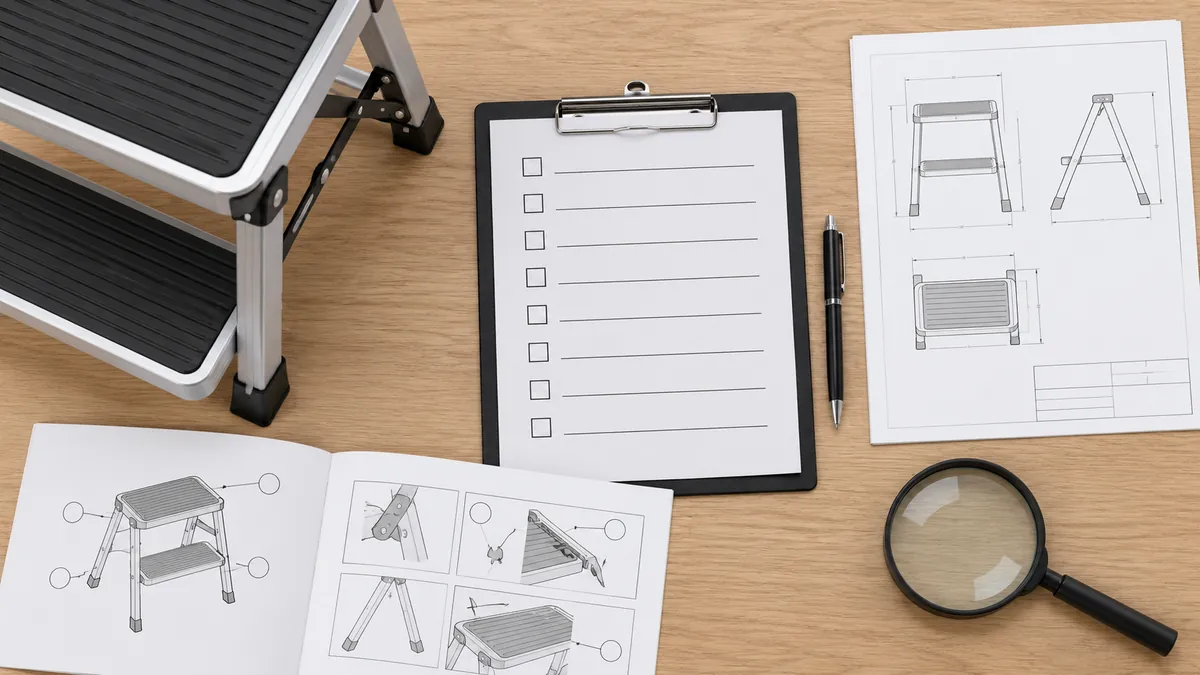
Before supplier selection, define the product and market, identify its intended user and use setting, confirm whether it is fixed or folding, and list the intended claims. Ask the supplier for model-specific drawings, bill of materials, instructions, available test records, and the standard edition referenced. Have the buyer’s competent reviewer confirm the scope before the RFQ is frozen.
Before sample approval, match the sample to the model and report; examine the opening, locking, folding, assembly, label, and instructions; and record any differences. Before launch, obtain a decision on the applicable standard and other product obligations, verify evidence authenticity, approve artwork and claims, and save the final model revision. Before reorder, check whether any input changed and whether the earlier approval still applies.
Is EN 14183:2003 still the published standard? BSI listed BS EN 14183:2003 as current and under review on 29 October 2026. Because standards status can change, confirm the publisher’s live status again before design freeze or launch.
Does a draft replacement standard apply now? A draft is not automatically a published standard. The BSI project page listed a draft step-stool project with an estimated future publication date. Ask the standards reviewer which published reference applies to the exact product and how to monitor the draft’s progress.
Does a report for a similar stool cover my model? Not automatically. Compare its model, revision, dimensions, materials, locking parts, and intended use with the item you plan to buy. Ask the issuing lab or qualified reviewer to assess differences.
Does EN 14183 on a product listing prove CE conformity? No. A standard reference or test report is not by itself a legal conclusion or a conformity mark. Have a competent reviewer determine the market route, required documentation, and permitted claims for the exact product.
Can a supplier’s certificate replace the full report? Only if the buyer’s reviewer determines that it provides the necessary verifiable scope and evidence. Ask for report identity, test organization, specimen, date, and limitations, and verify authenticity.
Make product evidence part of supplier qualification
A household step stool manufacturer search should lead to a model-specific qualification process, not a capability claim inferred from a catalog. Koitor’s documented business is bathroom and home-storage metal hardware; this guide does not claim that Koitor manufactures step stools, performs ladder testing, or certifies products. Buyers evaluating adjacent metal products should confirm feasibility and responsibility for testing directly against the actual drawings and intended market.
For EN 14183 step stools, leave unresolved scope questions with the buyer’s compliance reviewer before launch.
For documented supplier context, review Koitor’s OEM home-storage hardware information and send project-specific questions through the Kontaktseite. Keep design, legal, test, and launch decisions with the responsible product team and qualified reviewers.
Sources checked 29 October 2026
- BSI: BS EN 14183:2003 Step stools, current and under review
- BSI standards project: prEN 131-9 step stools
- BSI: current release landing page for BS EN 14183
- Test & Research Centre: EN 14183 testing service scope
These sources establish publisher status and examples of testing services; they do not determine legal obligations or conformity for a particular SKU.
Discuss a metal product and supplier evidence brief
Share the product drawings, target market, intended use, model revision, and the evidence already available. A project review should identify what is known, what remains unverified, and which product-safety questions require a qualified reviewer.
OEM / EIGENE MARKE
Verwandeln Sie diesen Beschaffungsleitfaden in ein Produktdossier
Teilen Sie uns Ihr Zielprodukt, die Größe, die Oberflächenausführung, die Bestellmenge und Ihre Verpackungsanforderungen mit. Ihr Team erhält vor der Angebotserstellung eine praxisorientierte Prüfung der Herstellbarkeit.


 English
 Español
 Português
 Français
 Deutsch
 العربية