

For buyers specifying GDSN supplier onboarding, the approval brief should define the intended use and measurable fit criteria. When a retailer requests GDSN, the importer or brand owner should first confirm the retailer’s current onboarding instructions, identify which organization owns each product-data field, and coordinate with a GDSN-certified data pool. The factory can provide verified product and packaging facts, but the importer or brand owner usually controls the commercial item record, identifiers, market details, and retailer relationship. GS1 describes GDSN as a network of interoperable data pools through which suppliers publish and recipients subscribe to item information. A GTIN or a factory spreadsheet alone does not mean the item is ready for a retailer’s specific process. For an importer, the GDSN supplier onboarding should be evaluated against the target assortment, installation context, and written sample criteria.
GDSN requirements, attributes, recipient rules, fees, and workflows can vary by retailer and market. This guide explains a practical handoff; it does not claim that every hardware retailer requires GDSN or that successful synchronization guarantees every product measurement is correct.
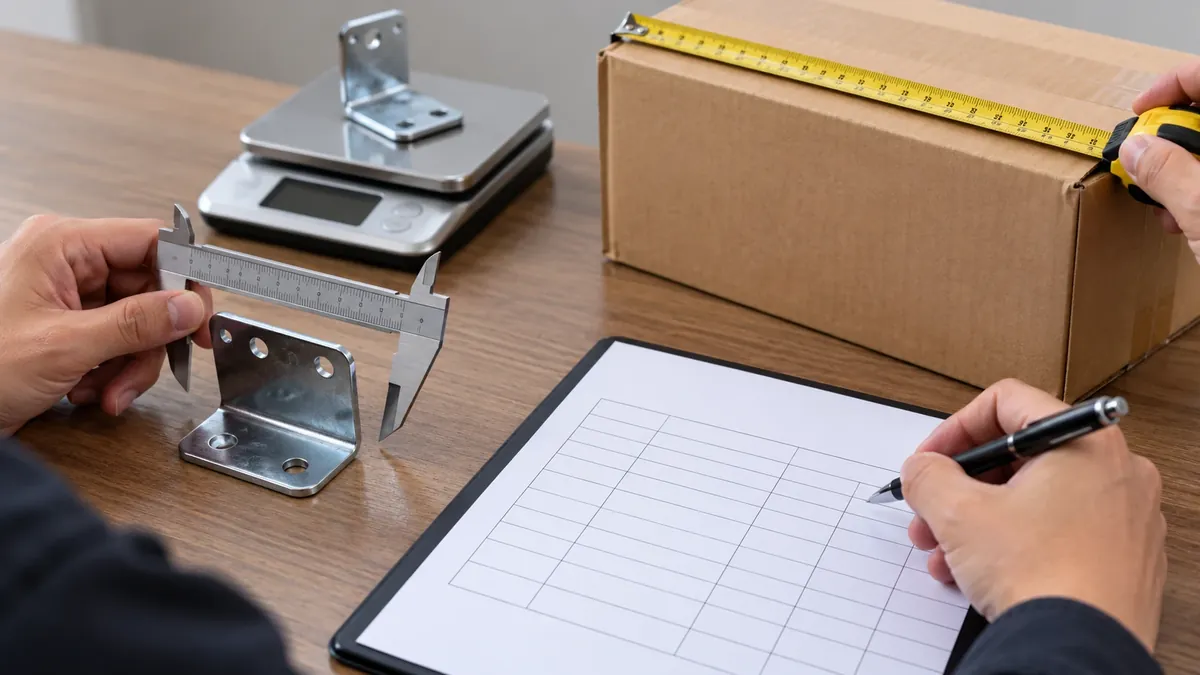
Confirm what the retailer is actually requesting
The phrase “GDSN required” may refer to a defined onboarding task, a retailer’s item setup process, or a request that product data be available through a recipient’s chosen data pool. Ask for the current recipient implementation guide, the relevant product scope, required target market, applicable location or party identifiers, and the party responsible for submitting the data. Do not rely on a dated checklist or another retailer’s process as current policy.
Ask the retailer or its onboarding contact:
- Which products or item levels are in scope?
- Is GDSN the required channel, or are other data submission routes accepted?
- Which data pool or recipient endpoint should receive the publication?
- Which product attributes, images, documents, and packaging levels are required?
- What are the current validation and approval steps?
- How are corrections, retailer questions, and item changes handled?
- What deadlines or commercial milestones are specific to this onboarding?
Record the response, document title, revision date, and contact. A retailer’s request may apply only to certain product types or vendors. Do not claim that all products, categories, or suppliers must use the same process.
Understand the roles in the data handoff
The high-level GDSN workflow involves a data source, a source data pool, the GS1 Global Registry, a recipient data pool, and a data recipient. GS1’s current explainer describes suppliers preparing standardized item and party data, publishing through a certified source data pool, and recipients subscribing through their own chosen certified data pool. The registry supports item and party discovery and matching; the trading partners’ pools support synchronization.
The brand owner, importer, factory, and data-pool provider may have different responsibilities:
| Party | Typical contribution to coordinate | Confirm for the actual program |
|---|---|---|
| Brand owner or importer | Product identity, commercial item data, brand, market, approvals | Who is authorized to publish and approve each item? |
| Fabrik | Measured product and packaging facts, materials, drawings, photos, revision data | Which facts can the factory verify, and for what revision? |
| Source data pool | Data entry, validation, publication workflow and technical support | Which service and attributes are included in the contract? |
| Retailer or recipient | Recipient rules, subscriptions, additional business requirements | Which current guide and approval statuses apply? |
| Distributor or broker | May support item or trading-partner data where agreed | Which data can it maintain or transmit? |
These are coordination roles, not universal legal assignments. A brand owner can have a product manufactured by another company and still own the product specifications. GS1’s guidance says the brand owner is normally responsible for allocating GTINs, with defined exceptions. Confirm the responsible organization and any exceptions directly with GS1 and the retailer rather than asking the factory to create identifiers by default.
Not every factory needs its own GDSN account or data-pool subscription. GS1 says trading partners that participate in GDSN use a certified data pool. The importer should ask its retailer and data-pool provider whether the factory needs direct access, can provide structured facts to the brand owner, or will participate through another agreed workflow. Do not assume that every manufacturer must independently publish.
Separate GTIN readiness from data readiness
A GTIN identifies a trade item within the GS1 system; it does not by itself complete the product record or satisfy a retailer’s item setup requirements. The buyer should verify the item identity, brand-owner responsibility, packaging hierarchy, market, and the retailer’s required attributes. If there is uncertainty about GTIN allocation, consult the relevant GS1 Member Organisation and the recipient’s current guidance.
For a hardware assortment, the item may have several packaging levels: each consumer unit, inner pack, master carton, or pallet configuration. Which levels require data depends on the product and customer process. The factory can often contribute measurements and pack-out details, but the importer must confirm what constitutes an orderable item and how the retailer expects each level to be represented.
Do not reuse one identifier for a changed trade item without checking the applicable GS1 rules. Product identity and packaging changes can affect the item record. The buyer’s product-data owner should ask the relevant GS1 organization or data-pool specialist how the change is handled rather than applying a rule from memory.
Build a factory data request around measurable facts
A factory data request should name the SKU, drawing revision, sample, packaging revision, and measurement basis. Ask for facts that the factory can verify and clearly label those that require a buyer or retailer decision. For example, the factory may measure a finished article and master carton, while the brand owner decides the consumer-facing description and the retailer determines which attributes are mandatory.
For each item and packaging level, request:
- Internal SKU and product name used by the factory.
- Drawing or approved-sample revision.
- Product dimensions and measurement method.
- Net and gross weights with units and scope.
- Material and finish descriptions supported by records.
- Included components and accessories.
- Units per inner pack or master carton.
- Carton dimensions and orientation.
- Packaging materials and pack-out photographs.
- Product images and usage documentation, if requested.
- Date, source, and responsible person for each fact.
Use a controlled template with units, definitions, and evidence fields. “Product height” can mean the item alone, the item with a protruding hook, or the assembled product in its retail packaging. State what is being measured. “Gross weight” should also identify whether it includes individual packaging, master carton, or another level.
Ask the factory to flag unknowns instead of estimating. A provisional value should be marked as such and should not flow into a retailer record as a verified measurement. If a fact depends on a purchased component or packaging vendor, identify that source and the revision used. The importer should reconcile contradictory values before publication.

Create one source of truth for the item record
Keep the approved product-data record separate from raw supplier submissions. The importer or brand owner should reconcile factory information, drawings, packaging artwork, product images, and retailer requirements before sending data to the data pool. Assign a data owner and an approver for each field group. A spreadsheet can be a useful staging format, but it is not automatically the published GDSN record or proof of recipient acceptance.
Use a source-of-truth record with:
- GTIN and product/packaging level.
- Brand and item description.
- Target market and recipient.
- Product and package dimensions, units, and evidence source.
- Product classification or category selected through the required process.
- Images, documents, and packaging hierarchy.
- Approval status and date.
- Revision history and change owner.
- Open questions and retailer exceptions.
The exact attribute list should come from the current data-pool and recipient instructions. Do not publish a universal “GDSN checklist” of fields and imply that it applies to every hardware item or retailer. GS1 standards and recipient profiles can evolve, and specific programs may request additional information.
Validate before publication and close the recipient loop
GS1’s implementation guidance emphasizes factual accuracy and proper classification, and recommends piloting with selected items and trading partners before broader rollout. Use that principle to start with a small, well-documented SKU set. Confirm that the factory measurements, packaging data, identifiers, and images all point to the same revision. Resolve missing or contradictory values before publication.
A pilot sequence can be:
- Select one representative SKU and packaging hierarchy.
- Confirm brand-owner and data-source responsibilities.
- Validate the required identifiers and recipient instructions.
- Collect and reconcile factory facts against the approved sample and pack.
- Enter or upload the item through the chosen certified data pool.
- Publish to the intended recipient and monitor the returned status.
- Resolve validation errors or retailer questions with the correct data owner.
- Record the accepted version and any recipient-specific additions.
Do not treat a successful technical publication as proof that every measurement or claim is factually correct. The data pool may validate required fields and standards, while the source organization remains responsible for the information it supplies. Recipient acceptance is also distinct from the manufacturer’s approval of the physical product.
Control changes after the first publication
GDSN is intended to support ongoing synchronization, so an item-data process needs a change owner. Product dimensions, packaging count, finish, image, or included components may change after launch. The team should define which changes require a new revision, who obtains updated factory data, who approves the record, and who confirms whether the recipient must be notified or resubscribed.
Link every change to the affected SKU and packaging level. Ask the factory to provide the new measured values and revision evidence. The importer or brand owner should determine whether item identity or GTIN treatment changes under applicable GS1 rules, then coordinate publication through the data pool and recipient process.
Keep a change log with the old value, new value, effective date, evidence source, and approval. If multiple factories produce the same private-label item, identify which source supplies each data field and how the brand owner reconciles differences. A correct record for one production version may become outdated when a component, carton, or supplier changes.
Specify how the GDSN supplier onboarding sample will be measured, installed, and approved before production release.
Handle errors by tracing the field owner
When a retailer reports an item-data issue, capture the exact field, GTIN, recipient, published value, expected value, and evidence source. Then assign the correction to the party that owns the underlying fact. A carton measurement issue may require a factory or packaging-vendor remeasurement; a brand description may belong to the importer; an attribute-mapping question may need the data-pool provider or retailer.
Do not send a corrected value without confirming the product or packaging revision. If the reported difference is between retail and master-carton data, identify the level before changing anything. Preserve the original record and the correction history. Avoid using “GDSN error” as a generic label when the issue could be a physical measurement, classification choice, mapping, publication status, or recipient interpretation.
RFQ and onboarding handoff checklist
Before responding to a retailer request, confirm:
- The retailer’s current implementation guide and product scope.
- The responsible brand owner and publishing organization.
- The certified data pool and recipient destination.
- GTIN and packaging-level responsibility.
- Factory data request template and evidence requirements.
- Product and carton measurement definitions.
- Required images, documents, classifications, and attributes.
- Validation, publication, recipient feedback, and correction owners.
- Change-control process for product and packaging revisions.
- Any customer-specific fees, deadlines, or exceptions from current written guidance.
For cost, fees, timelines, or technical integrations, obtain current information from the selected data-pool provider and retailer. This guide does not quote universal charges, deadlines, or acceptance guarantees.
Koitor can discuss manufacturing facts that it can verify for a specific metal hardware project. It is not presented here as a GDSN data-pool provider or retailer onboarding service. The importer or brand owner should manage data-pool selection, identifier responsibility, recipient approval, and record governance with the relevant organizations.
Sourcing takeaway
When a retailer requests GDSN, coordinate a fact-based handoff: the factory supplies measured product and packaging evidence; the brand owner or importer controls the item record and approvals; a certified data pool supports publication and synchronization; and the retailer confirms its own requirements. Pilot a small item set, trace every field to a source, and maintain change control. GDSN publication is a data exchange step, not a guarantee that the physical product, dimensions, or retailer item setup have all been independently verified.
For Koitor’s metal home-storage product focus, review the OEM home-storage hardware information and confirm the exact product and packaging facts directly with the factory.
Discuss Your When a Retailer Requests GDSN Specification
OEM / EIGENE MARKE
Verwandeln Sie diesen Beschaffungsleitfaden in ein Produktdossier
Teilen Sie uns Ihr Zielprodukt, die Größe, die Oberflächenausführung, die Bestellmenge und Ihre Verpackungsanforderungen mit. Ihr Team erhält vor der Angebotserstellung eine praxisorientierte Prüfung der Herstellbarkeit.

 English
 Español
 Português
 Français
 Deutsch
 العربية