

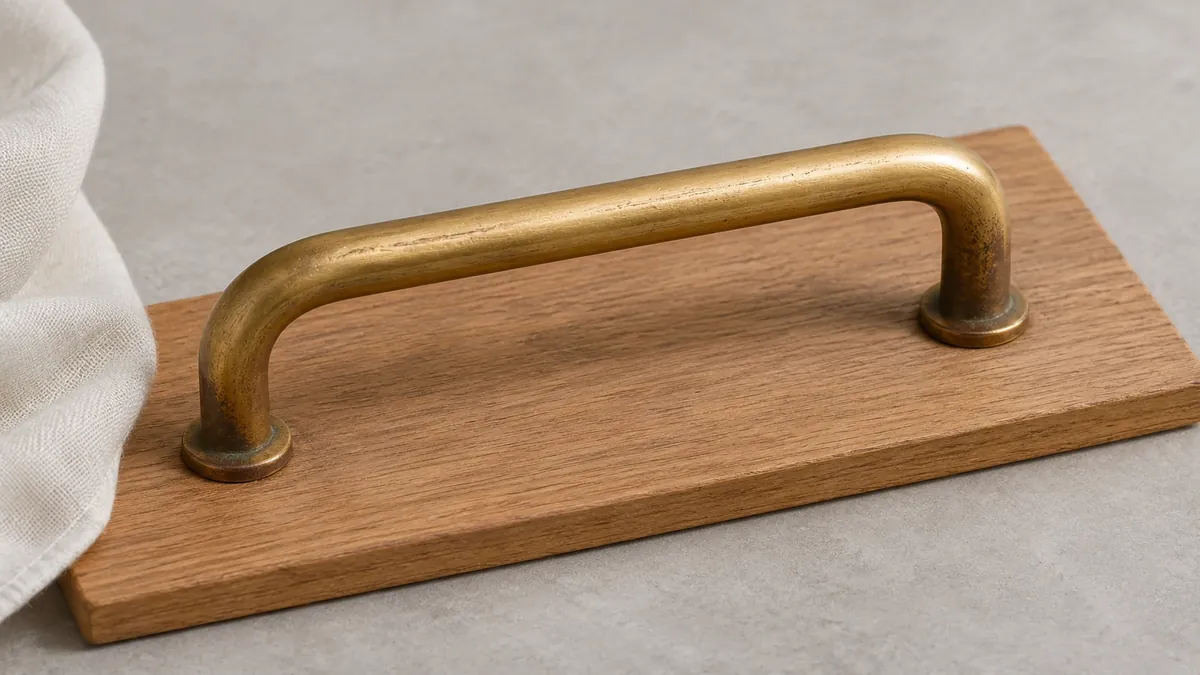
How to clean brass without removing patina begins with deciding whether the darker surface is intentional, stable aging, lacquer change, dirt, or active deterioration. Do not polish a brass-colored bathroom part simply because it is not bright. Confirm the material and finish with the product maker, follow the approved care instructions, and stop when the surface identity is uncertain. A conservation source can explain why patina may be valued on historic objects, but its procedure should not be transferred to a modern bathroom fitting without the product owner’s approval.
What Does Patina Mean on a Brass Hardware Product?
“Patina” is often used loosely in product listings and customer conversations. It can refer to a deliberate living-finish appearance, natural tarnish, a protective lacquer that has changed, residue, a stain, or corrosion. These conditions do not have the same cause or care response. A dark or uneven appearance alone does not prove that the product is brass or that the surface should be preserved.
Start with controlled product information. Check the drawing, bill of materials, finish specification, approved sample, and care document. Determine whether the visible component is solid brass, brass-plated material, a brass-colored coating, or another substrate. Identify whether a clear lacquer or topcoat is present and whether the intended finish is meant to change over time. If the product is a mixed assembly, record which parts are brass and which may be steel, zinc alloy, plastic, or purchased fasteners.
For a buyer, the key question is not merely whether the surface looks aged. Ask whether the appearance is an approved characteristic of this SKU, whether the change is expected under the product’s use conditions, and whether the product owner has a care method for the specific surface. If those answers are missing, do not let a generic cleaning recommendation decide the finish.
| Observed condition | What it might mean | Buyer action before cleaning |
|---|---|---|
| Even darkening on an identified living finish | Intended or expected appearance change | Check the care guide and approved sample; do not polish for brightness by default. |
| Bright area beside a darker area | Handling, contact, prior cleaning, or finish variation | Record location and history; ask whether the appearance is acceptable for the SKU. |
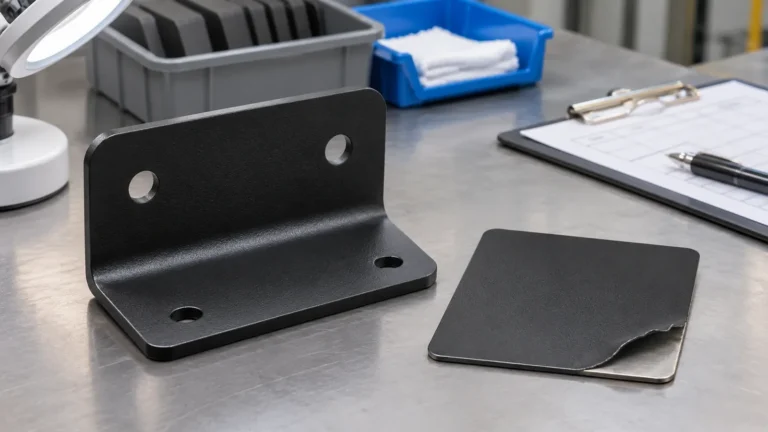
| Blistering, peeling, or a sharp coating boundary | Possible lacquer or coating damage | Stop and request the product maker’s assessment. |
| Green or powdery deposits, pitting, or localized attack | Possible corrosion or chemical residue | Avoid rubbing; preserve the sample and escalate. |
| Unknown brass-colored surface | Could be plated, coated, or a different substrate | Identify the material and finish before using a cleaner or polish. |
This table is a triage tool, not a diagnostic test. A photograph may show where a condition appears but usually cannot establish the substrate, lacquer system, or underlying cause. A brand or supplier should make the finish decision using the specification and representative product sample.
How Can a Buyer Distinguish Cleaning From Polishing or Restoration?
Cleaning removes an unwanted deposit from the surface using an approved method. Polishing is an abrasive process that removes tarnish and some surface material to change appearance. Restoration may include stripping, refinishing, or replacing a surface system. These are different decisions. A buyer who asks only to “clean the brass” may unintentionally authorize a more aggressive visual change than the product owner intended.
Define the desired outcome before selecting a method:
- Remove loose dust or ordinary soil: use only the product maker’s approved routine.
- Preserve an intentional aged appearance: avoid abrasive polishing and use the care information created for that finish.
- Restore a bright appearance: confirm that the finish is designed to be bright and that an approved restoration path exists.
- Address damaged lacquer or plating: contact the product owner or finish processor; cleaning may not repair a broken coating.
- Investigate an unknown deposit: record and identify it before trying to dissolve or scrape it.
The Canadian Conservation Institute explains in its Note 9/3 on cleaning and polishing brass and copper that cleaning and polishing are distinct, and that polishing is abrasive and removes tarnish and some surface metal. It also describes how some objects have a deliberately valued appearance or lacquer. This is conservation guidance for copper-alloy objects, not a maintenance instruction for every contemporary bathroom product. Its relevance here is the distinction between dirt removal and a deliberate change in appearance.
The same Institute’s care guidance for old tools notes that stable brass patina may be valued and recommends avoiding polishing for those objects. That example does not prove that a modern brass-finished towel bar has a conservation patina. It shows why the owner’s intent and the item’s finish history must be known before someone restores brightness.
For a hardware product, a supplier’s care document should specify the goal and stop conditions. If it says “wipe with a soft cloth,” do not add a polish or protective wax by inference. If the document is silent about a darkened area, ask the responsible product owner whether the condition is expected before escalating.
How Should Buyers Check Whether Brass Is Lacquered?
Do not use a solvent or abrasive as an informal lacquer test. A failed test can permanently change the finish before the buyer knows what it was. Check the specification, sample approval, processor record, or manufacturer’s care instructions. If the product has a controlled surface-treatment description, make sure it applies to the item’s current revision and not an older sample or a visually similar product.
For a distributor or importer, ask for the following evidence when the surface identity affects care or claims:
- Base material and component-level mapping for the visible parts.
- Finish name and whether a clear or colored topcoat is used.
- Approved sample or appearance reference for new and aged condition, if applicable.
- Cleaning instructions and products or actions that are not approved.
- Supplier and revision information for any purchased finish component.
- Escalation contact for peeling, color change, deposits, or finish damage.
A visual sample remains useful for appearance but should not be treated as chemical identification. Brass plating and brass-colored coatings can imitate solid brass. A lacquered surface may initially look similar to an unlacquered living finish. Mechanical or chemical tests should be performed only by a qualified party using an agreed protocol and appropriate sample, not by a consumer following a generalized article.
When the product is part of a coordinated collection, verify the surface by SKU. A handle, hook, towel ring, and shelf may share a commercial color name without using the same substrate or finish route. If a buyer uses one care instruction for all items, the instruction should be supported across each material and finish combination that it covers.
Which Cleaning Actions Should Buyers Avoid Until the Finish Is Identified?
Until the product owner approves a method, avoid metal polish, abrasive pads, powders, steel wool, scrapers, acids, ammonia-containing products, strong alkalis, solvent mixtures, and unapproved waxes. Do not assume a product is gentle because it is sold for “brass” or “metal.” Different cleaners can act differently on bare copper alloys, lacquer, plating, sealants, and adjacent materials.
The Canadian Conservation Institute’s technical notes discuss specific materials and controlled methods for collection objects. They should not be copied as consumer instructions for a bathroom accessory. The object’s history, substrate, lacquer, deposits, and conservation goal are part of the decision. In an active product program, the manufacturer’s instructions and safety documentation govern what a user may apply.
For routine customer support, use a conservative decision path:
- If the exact product instructions identify the finish and approved wipe routine, follow that routine without adding steps.
- If the part is visibly damaged, has an unknown topcoat, or has a residue that does not respond, stop and escalate.
- If a customer used an unknown cleaner, record the product name, exposure, and result before recommending anything else.
- If a supplier proposes polishing, request a representative sample, defined appearance target, and written disposition before treating saleable stock.
- If the product combines brass with another material, include that material in compatibility review.
Do not promise that a polish will restore the original surface or that a cleaner will preserve all patina. “Non-abrasive” on a package is not proof that it is compatible with a particular lacquer, plating, or aged finish. Similarly, a product may remove tarnish but also remove an intentional appearance layer. Ask the finish owner to approve the product and method for the item being sold.
What Should a Distributor Do When a Customer Wants Brass to Look New?
Clarify the expectation and the product specification before offering a cleaning or replacement solution. “Look new” could mean removing grease, restoring a bright metallic color, matching a new unit, removing a water mark, or replacing a damaged clear coat. The result requested may conflict with an intentionally aged finish or a surface designed to change with use.
Ask the customer or service team for:
- Product model, purchase or lot information, and finish name.
- The requested appearance compared with the current condition.
- Photos under neutral light from several angles.
- Any cleaners, polishes, cloths, or tools already used.
- Whether the item is still installed and which materials contact it.
- The care document or packaging instruction supplied with the product.
Then compare the report to the approved sample and manufacturer’s document. If an actual finish failure is suspected, route it through the product warranty or supplier-quality process. Do not diagnose a manufacturing defect from one photograph, and do not claim that an unusual appearance is expected unless the product specification says so.
When a service team receives the question “how to clean brass without removing patina,” the reply should first separate the customer’s goal from the reported condition. Ask whether the customer wants ordinary soil removed, the current aged appearance preserved, or a bright appearance restored. These goals can conflict. If a customer says the part “looks dirty,” request a comparison with the approved product photo or sample and ask what has already been applied. Do not translate an aesthetic preference into permission to abrade the surface.
For a multi-unit complaint, record whether the same change appears on one part, several units from one lot, or different parts exposed to different contact conditions. That pattern can guide the supplier’s investigation, but it does not prove a cause. Keep the affected item separate and avoid cleaning it before the finish owner can review it. If a replacement part is supplied, make sure the buyer understands whether its bright appearance will change in the same way as the original finish; otherwise a replacement can create a second expectation problem.
Use a controlled response template with four fields: what the buyer observes, what care instructions apply, what treatment has already occurred, and what decision is requested. The requested decision might be finish identification, sample comparison, approved maintenance, or product disposition. This helps route the question to the material or finish owner instead of answering from a color name alone. If a consumer receives a product without adequate instructions, the brand should correct the documentation for later shipments rather than expecting each distributor to invent a consistent method.
When the item is a living finish, the product owner should explain what degree of variation is expected and what maintenance is allowed. Koitor’s existing page on appearance expectations for living-finish bathroom hardware addresses that separate product-planning question. This cleaning guide focuses on how to avoid changing an unknown surface while handling a care request.
If the required appearance cannot be restored with an approved method, the product owner may decide to replace, refinish, or accept the variation. Those are commercial and product-quality decisions that should be recorded with the part and finish revision. A customer service reply should not promise refinishing capability or a specific result unless the responsible supplier has confirmed the available route.
How Can Buyers Write a Brass-Finish Care Specification?
Create one controlled document for each material-and-finish combination or clearly defined family. Include product codes, surface type, desired appearance, routine care, restrictions, and escalation contact. Separate the intended surface from a damaged coating or unknown deposit. If a finish is expected to evolve, say what the product owner considers normal and what conditions should be reported.

| Specification field | Buyer record | Approval question |
|---|---|---|
| Substrate | Solid brass, plated substrate, or brass-color coating by component | Is the material identified by a controlled document? |
| Finish intent | Bright, lacquered, brushed, or specified living finish | Is appearance change allowed, and how is it described? |
| Approved care | Exact manufacturer-approved cloth and routine | Does the method cover the full product assembly? |
| Restricted methods | Polishes, abrasives, solvents, or other disallowed methods | Are restrictions backed by the finish owner’s instructions? |
| Reference sample | Approved production sample and revision | How is an appearance difference assessed? |
| Service escalation | Evidence required and responsible contact | Who decides whether the part is cleaned, repaired, or replaced? |
| Change review | Material, supplier, topcoat, or color revision trigger | Will the care document be reapproved after a change? |
Keep a customer-facing care card short, but make the source document complete. Translations should preserve limits and warnings. If packaging space is limited, link or refer to a product-specific manual only when the customer can access the correct revision. Do not reduce a careful condition such as “use only the cleaner approved for this finish” to a broad claim like “safe for brass.”
For a range with several finishes, map every SKU to the applicable instructions. A collection may include brushed stainless steel, lacquered brass, powder-coated steel, and a living finish in the same color family. The brand can make the customer experience clear without pretending those materials share one cleaning response.
Review the care card whenever a coating supplier, substrate, color, or assembly changes. A supplier may retain the same commercial finish name while changing a purchased component or topcoat. The product team should confirm whether the new route preserves the approved appearance and whether the former care text still applies. Keep an old and new sample labeled by revision so an aftersales team can compare a complaint with the right production reference. If no owner can confirm the change, keep the instruction on hold and do not replace a missing process fact with a generic cleaning tip.
How Can a Small-Batch OEM Factory Support Brass-Finish Decisions?
A factory can help buyers connect product drawings, material choices, finish requirements, samples, assembly, and packaging instructions. Koitor Hardware is a family-owned custom metal hardware factory specializing in bathroom and home-storage hardware. Approved company facts support discussion of OEM customization from buyer drawings or physical samples, metal fabrication, finishing requirements, assembly, and packaging preparation. They do not confirm that Koitor makes every brass fitting, performs every plating or lacquer operation, or operates a conservation-restoration service.
For a project review, send the current drawing or sample, the target brass appearance, material and finish records if available, visible-face locations, expected care guidance, quantity, and market. The team can help identify which points concern the fabricated part and which must be confirmed with a finish processor or purchased-component supplier. If a living finish is intended, state that directly and agree the approval sample and customer explanation before production.
For small-batch product development, sample approval can help align appearance and packaging expectations before a larger order. Depending on the product, MOQ can start from 100 pieces; samples usually take 5–7 working days after details are confirmed; bulk production usually takes 4–6 weeks depending on quantity, finish, and packaging. These are planning ranges, not promises for an unconfirmed brass treatment or restoration process.
Review the Umfang der OEM-Fertigung von Hardware für die Heimdatenspeicherung, then share the finish question and reference through the Koitor contact page. The objective is a clear specification and a responsible finish owner, not a universal cleaning claim.
Häufig gestellte Fragen
Can I use brass polish on every brass bathroom accessory?
No. First identify whether the surface is bare brass, plated, lacquered, coated, or intended to develop a living finish. Use only the product maker’s approved care method. A polish may alter an intentional patina or damage a coating.
Does darkening mean brass is dirty?
Not necessarily. Darkening may be an intended appearance, tarnish, coating change, residue, or corrosion. Check the product specification, care instructions, and approved sample before deciding to clean or polish it.
Can a lacquered brass finish develop patina?
A clear coating can change or become damaged, but that does not mean the exposed surface is an approved living finish. Ask the product owner to identify the coating system and confirm the condition before using a cleaner or polish.
How to clean brass without removing patina on a product with no care card?
Do not polish or use a chemical based on appearance alone. Find the product model and supplier, ask for its current care instructions, and preserve the surface until the finish owner confirms the material and approved routine.
Is patina always protective?
This article does not make a universal performance claim. Stable appearance on a conservation object and the behavior of a modern bathroom product are different questions. Use the product’s technical information and ask the finish supplier to assess an unfamiliar deposit or corrosion concern.
Can a photo confirm that an accessory is solid brass?
No. A photograph can document appearance but cannot reliably identify a substrate, plating, or clear coat. Use a controlled material record or a qualified supplier assessment.
What should I send when reporting a brass-finish problem?
Provide the model, finish name, lot or purchase record, neutral-light photographs, care document, and any cleaner or polish already used. Do not apply additional treatment before the supplier reviews the evidence.
Should an importer specify bright or aged brass?
Specify the intended appearance, surface route, reference sample, expected variation, approved care, and acceptance process. A color name alone does not state whether the finish should stay bright or change with use.
Arbeiten Sie mit Koitor Hardware zusammen
Share the product sample, finish specification, desired appearance, and any care question. Koitor can help clarify the hardware and sourcing scope; use the responsible finish processor’s guidance for treatment-specific care and restoration.
Confirm the Brass Finish Before Recommending a Polish
Send the drawing or sample, surface specification, and target appearance for a product-scope discussion.
OEM / EIGENE MARKE
Verwandeln Sie diesen Beschaffungsleitfaden in ein Produktdossier
Teilen Sie uns Ihr Zielprodukt, die Größe, die Oberflächenausführung, die Bestellmenge und Ihre Verpackungsanforderungen mit. Ihr Team erhält vor der Angebotserstellung eine praxisorientierte Prüfung der Herstellbarkeit.

 English
 Español
 Português
 Français
 Deutsch
 العربية