

An inspection and test plan schedules the checks that are intended to occur during work and identifies the requirement, method, responsible role, record, and any agreed participation or release point. It is a plan, not proof that an inspection happened. A completed checklist, test report, or other execution record documents the actual part or job, who performed the check, when it occurred, what result was observed, and how any issue was dispositioned. Buyers should keep the planned activity and its completed evidence linked but distinct.
What Does an Inspection and Test Plan Control?
An inspection and test plan (often shortened to ITP) organizes inspection activities around a product or process sequence. It can tell the buyer and supplier which stage is checked, what requirement or acceptance reference applies, which method is intended, who is responsible for the activity, and what record should result. Where participation or release points are included, the plan should also identify the agreed notice, attendance, and authorization arrangement.
The plan is useful because checks occur at different stages. A supplier may need to verify a material or component before forming, check a feature after joining, review a finish before packing, or inspect the final packaged lot. The plan connects those activities with the sequence of work. It helps the parties discuss when evidence is expected and what needs to be reviewed before the product moves to a later step.
However, listing a check does not mean it has been performed. A plan row that says “Quality Control inspect weld profile” assigns or describes a planned role. It does not identify the inspector who completed the check, the date, the sampled part, the actual observation, or the outcome. The plan can be complete as a planning document while the production evidence remains absent.
For importers of formed, welded, finished, or packed metal hardware, the plan should be connected to the actual order, product revision, and agreed requirements. The plan is not a substitute for the drawing, test method, acceptance criteria, or qualified technical approval. Nor does the existence of an ITP establish that Koitor maintains a certified quality system, an accredited laboratory, or a formal plan for every project. Each order’s inspection scope and release responsibility must be agreed for that order.
How Is a Planned Check Different from a Completed Record?
The difference is between intent and evidence. The plan says what is expected to happen. The execution record says what actually happened for a specified part, sample, lot, or job. A buyer needs both when the supplier’s process requires staged reviews: the plan helps establish expectations, while the record supports confirmation that a specific activity was completed.
| Information | Planned inspection activity | Completed checklist or report |
|---|---|---|
| Purpose | Schedule and define planned activity | Record the activity that was actually performed |
| Product reference | Intended product, process stage, drawing or order scope | Actual part, lot, sample, or job reviewed |
| Responsible person or role | Assigned role, party, or intended participant | Actual performer or reviewer, when required by the record format |
| Method and criterion | Planned method and cited requirement or reference | Method used and the criterion applied to the actual check |
| Result | Usually not yet known when the plan is prepared | Observed result, status, or recorded measurement where applicable |
| Issue handling | May identify escalation or disposition responsibility | Records an issue, corrective action, retest, or disposition if one occurred |
| Completion evidence | Establishes the planned checkpoint | Provides evidence that the checkpoint was executed |
QualitySystems’ ITP explanation includes a source-specific welded-frame example that distinguishes an inspection role in the plan from the actual person and result recorded in the checklist. The plan can assign “Quality Control” as the role, while the execution record captures who performed the inspection and the resulting evidence. This article uses that concept in an original generic example; it does not reproduce the source’s table or example tolerance. See the source’s inspection and test plan explanation for its own manufacturing context.

The paired example makes an important distinction visible: a plan row can be populated before work begins, while the execution record remains blank until the check actually occurs. Do not mark the record as passed, signed, or completed in advance. In a real process, the person completing the record should use the agreed format and attach the evidence required by the plan.
What Should a Buyer Include in a Plan-to-Record Pair?
The plan and the record should have enough shared information to be traceable to the same item and requirement. The plan can identify the stage, check, responsible role, method, criterion, planned record, and any buyer or supplier participation. The record should then identify the actual item or job, completion date, performer, observation, result, and disposition as relevant to the agreed scope.
The following table is an authored example for a generic metal hardware job. It is a planning illustration only; the execution cells intentionally remain blank to show that planned activity is not evidence of completion. It does not state that a real Koitor inspection occurred or prescribe a measurement tolerance.
| Stage | Planned check | Planned role and reference | Record expected | Execution evidence |
|---|---|---|---|---|
| Incoming material or component | Verify the identified item against the agreed order documentation | Assigned supplier role; project reference to be named | Incoming check record | Not completed in this example |
| Formed or joined component | Review the stated feature against the applicable drawing or sample criteria | Responsible quality or manufacturing role; exact revision to be identified | In-process inspection record | Not completed in this example |
| Überprüfung abschließen | Compare the specified finish reference with the supplied sample or requirement | Assigned reviewer; method and reference agreed for the order | Finish review record | Not completed in this example |
| Pack-out | Check that the identified product and packaging configuration match the order | Assigned packing or quality role; packaging revision referenced | Packing record | Not completed in this example |
The actual record can take different forms depending on the supplier’s procedure and the parties’ agreement. It might be a checklist, inspection report, test report, photograph, measurement record, or another document. The document title matters less than whether it identifies the item, criterion, method, performer, date, observation, and completion status needed for the buyer’s review.
Avoid duplicating detailed work instructions in the ITP if a controlled checklist or procedure already contains them. The plan can reference the controlled document and identify the stage where it applies. If the referenced document changes, record the version used so that a buyer can see which method or requirement governed the check.
What Do Hold, Witness, and Review Points Mean?
Some plans identify participation or release points where one party may need to be notified, attend an activity, review a document, or provide release before work proceeds. The exact labels and consequences should be defined by the parties for the project. A label such as hold, witness, or review should not be treated as self-explanatory authorization.
In a commonly used framework, a hold point requires the agreed release before the next activity proceeds; a witness point involves a specified notification or attendance arrangement; and a document-review point identifies records for review. QUALITAS describes staged ITP activities and point types in its inspection and test plan methodology. Its terminology is a source-specific framework, not an automatic contract rule for every buyer or supplier.
If an ITP uses H, W, or R abbreviations, define them in the project document. State who must be notified, how much notice is expected if agreed, what evidence is needed, who can release a hold, and what happens if a person cannot attend. A witness point does not necessarily mean the work stops if a buyer is absent; the actual agreement must say what the parties have chosen. Do not infer permission to proceed merely because a representative did not attend.
The buyer should also distinguish attendance from acceptance. A buyer’s presence at a supplier’s inspection does not automatically mean the buyer accepts every feature or waives a later review. Likewise, reviewing a document does not by itself prove that the underlying product meets all requirements. The plan and contract should define the purpose and effect of each participation point.
What Evidence Should Close an Inspection Activity?
The plan should identify what record will close each planned activity. Depending on the check, that may include the item or lot reference, drawing or requirement revision, inspection date, responsible person, method, observed result, and issue disposition. The level of detail should reflect the buyer’s agreement and the nature of the check; a general article cannot prescribe a universal form for every product or jurisdiction.
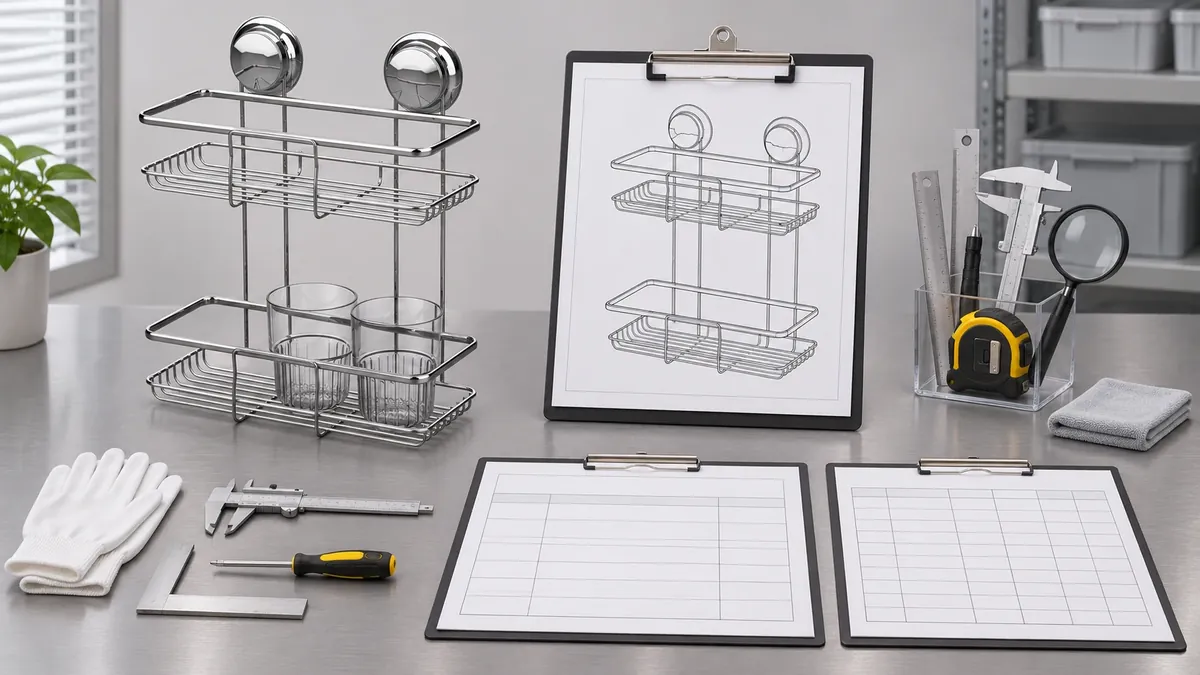
The buyer should be able to connect the evidence to the correct part and order. A completed checklist for an unidentified sample may not prove that the production lot was inspected. A result with no method or criteria may be difficult to interpret. A signed form without a clear status may not say whether an exception remains open. Ask the supplier to identify the record that belongs to the ITP row and explain any exceptions through the agreed process.
Use a simple traceability set when reviewing supplier evidence:
- Product, order, drawing revision, and sample or lot identity.
- Planned ITP activity and its linked requirement or acceptance reference.
- Actual date, performer or responsible reviewer, and method used.
- Observation or result, with units where a measurement is part of the agreed record.
- Any deviation, hold, corrective action, retest, or disposition that applies.
- Final status and the person or role authorized to close the activity.
Do not create an inspection result that was not measured or observed. If the result is not available, mark it pending. If a record is missing, ask the supplier whether the activity occurred and what evidence exists. If the check was skipped or did not follow the agreed method, route that issue to the responsible buyer and quality owners rather than treating the empty cell as a pass.
How Does an ITP Fit with First-Article and Final-Lot Reviews?
An ITP can include first-article, in-process, or final-lot checks, but it does not replace the distinct purpose of those activities. A first-article review asks whether a representative production-intent unit is ready to move into bulk production under the applicable criteria. The existing first-article inspection guide addresses that decision.
Likewise, the quality assurance versus quality control guide distinguishes system-oriented assurance from product-oriented control. An ITP can identify planned quality-control activities without proving that the whole quality system is effective. A production update may report milestones and blockers; the separate factory production update guide covers that communication. A buyer can also consult the remote versus onsite inspection guide for how requirements can be stated when requesting offers.
These topics relate, but they do not replace one another. The ITP describes planned checks and any agreed participation. The first-article approval records a defined decision about a representative unit. Production updates communicate progress. Completed inspection records document actual activity. Keeping the records distinct helps the buyer avoid interpreting a schedule as an inspection result or a milestone message as acceptance.
For custom bathroom or home-storage hardware, an ITP may be tailored to the order’s actual formed, joined, finished, and packaged features. A buyer should specify which requirements matter and what evidence is expected, rather than ask for a generic “inspection plan” without describing the product. The plan should reference the buyer’s actual drawing, sample, and agreed acceptance criteria; it should not invent checks or imply certifications that have not been provided.
What Common ITP Interpretation Mistakes Should Be Avoided?
One mistake is treating a plan as proof that work occurred. A plan can be prepared, reviewed, and complete while execution records remain empty. Ask for the completed record tied to the relevant part or lot.
Another mistake is treating an assigned role as the name of the person who performed the check. “Quality Control” can be the planned role; the record may need to identify the actual performer. Use the fields agreed for the job and do not prefill a signature or result.
A third mistake is assuming that a witness point automatically lets work proceed if the buyer does not attend. The notice and release rules depend on the agreed arrangement. Define the point in writing and confirm how nonattendance is handled.
A fourth mistake is assuming that one checklist proves every requirement. The plan may refer to several controlled forms and tests. Review each record against the ITP row and the relevant criterion. A checklist with a passed box but no product identity or reference may be insufficient to establish which check it documents.
A fifth mistake is copying a template’s example tolerance or role labels into a buyer’s plan without review. A source’s sample values are not Koitor tolerances or universal metal-hardware acceptance criteria. Use project-specific requirements and approved documentation.
A sixth mistake is treating the plan as a certification or guarantee. An ITP schedules activities; it does not establish that a factory is certified, that an independent laboratory performed work, or that every item meets a performance guarantee. Those are separate claims requiring separate evidence.
Finally, do not assume Koitor has a formal ITP for every order or a certified quality system. Koitor’s confirmed scope supports discussion of metal hardware requirements and buyer communication. The actual inspection scope, record, testing party, and release authority should be agreed and confirmed for the specific project.
How Should a Buyer Prepare an ITP Request?
When an inspection and test plan is relevant, the buyer can provide the product drawing and revision, material or finish requirements that are actually specified, critical features, process stages that need attention, the acceptance references, the records needed, and any participation or release requirement. The buyer should name its responsible contact and identify who can approve a deviation or close a hold, if those controls are part of the agreement.
The request should be sized to the order and risk. A small hardware order may use a concise schedule that references existing checklists; a project with several components, revisions, or staged approvals may need more detailed points. The plan’s format is less important than whether both parties understand the planned check, criterion, role, record, and decision authority.
Ask the supplier to read back the proposed points and note any requirement that is unclear, unavailable, or outside its confirmed scope. If the supplier proposes a different method, compare it with the buyer’s requirement before approving the plan. If a party needs advance notice for a witness or hold point, specify the required communication channel and how a release is documented. Do not leave those terms to assumption.
At order kickoff, confirm the ITP revision and its relationship to the product drawing, purchase order, and sample approval. If the product or process changes, determine whether the plan or its linked checklist also needs revision. When inspection evidence is submitted, reconcile the record against the current plan rather than an obsolete copy.
Koitor can review confirmed buyer drawings, samples, and OEM project requirements within its manufacturing scope. The buyer should request the specific records and roles needed for the order and confirm which party will perform each activity. No claim about a laboratory, accreditation, certification, or universal formal quality system should be inferred from a generic ITP template.
Häufig gestellte Fragen
Is an ITP the same as a checklist?
No. The plan schedules the inspection activity and can identify its requirement, method, responsible role, record, and participation point. A checklist or report records what actually happened, who performed the check, and the observed result or status.
Does a completed ITP prove that every planned check passed?
No. A plan may show what should happen, but it does not prove completion or a passing result. Review the execution records tied to the actual part, lot, or job and the applicable criteria.
Who should be named in the plan?
Identify the responsible party or role for each activity and define who performs, reviews, witnesses, or releases it as agreed. The completed record should identify the actual performer or reviewer where required by the project format.
Does a witness point mean work must stop until the buyer arrives?
Not automatically. The parties must define the notice, attendance, and proceed rules for that project. A label alone does not establish permission or a stop-work obligation.
What does a hold point require?
In a commonly used framework, a hold point requires an agreed release before the next activity proceeds. The exact authority, evidence, and process should be stated in the order or plan. Do not infer the release rule from a letter alone.
Can one ITP apply to every product a supplier makes?
Not necessarily. The plan should connect to the actual product, order, process, drawing revision, and agreed requirements. A generic template may need tailoring before it is useful for a particular hardware order.
Does an ITP mean a supplier or factory is certified?
No. An ITP is a planning document and does not establish certification, accreditation, or an independent laboratory result. Verify any such claim with separate, applicable evidence.
What should a buyer do if an inspection record is missing?
Ask whether the planned activity occurred, which method and criterion were used, and what evidence is available. Keep the status open until the responsible parties resolve the missing record or agree on a documented disposition.
A plan and its completed record are easier to reconcile when they share practical identifiers. A purchase order or project reference, product and drawing revision, lot or sample identifier, inspection activity number, and report reference can connect what was scheduled with what was observed. The identifiers should be usable by the people preparing and reviewing the records. A detailed spreadsheet row that cannot be tied to the actual lot or sample may be harder to verify than a shorter record with clear references. For a small order, the documents can be concise; the distinction between intended work and evidence remains important.
The same discipline helps when activities change. If a planned check is moved, replaced, repeated, or skipped, note the change and its reason in the execution record or revision history. Do not leave the plan row looking complete merely because it existed in the original file. If an issue is found, link the observation to a disposition or follow-up record where applicable. These links help a buyer trace what happened without assuming that a planned check automatically passed.
Discuss inspection scope for a hardware order
Share the product drawing, sample, revision, and buyer-specific inspection requirements so the planned checks, records, and project responsibilities can be reviewed. Any participation or release point should be agreed for the actual order.
OEM / EIGENE MARKE
Verwandeln Sie diesen Beschaffungsleitfaden in ein Produktdossier
Teilen Sie uns Ihr Zielprodukt, die Größe, die Oberflächenausführung, die Bestellmenge und Ihre Verpackungsanforderungen mit. Ihr Team erhält vor der Angebotserstellung eine praxisorientierte Prüfung der Herstellbarkeit.


 English
 Español
 Português
 Français
 Deutsch
 العربية