

A list price is a stated starting or reference price before the adjustments defined for a particular offer; a net price is the resulting price after those applicable adjustments. The phrase “net” does not automatically tell a buyer whether freight, taxes, rebates, tooling, or other charges are included. For a useful list price vs net price comparison, identify the unit, currency, discount basis, and included scope before comparing suppliers.
How Does List Price vs Net Price Work in a Supplier Comparison?
A list price is a reference amount from which a seller may state adjustments, but the label alone does not establish who set it or what commercial conditions apply. It might be a supplier’s catalog reference, a quotation starting point, a published selling price, or another defined base. Do not assume every list price is a manufacturer’s suggested retail price, the highest amount a buyer could pay, or proof of a genuine future saving.
The buyer’s first task is to attach a definition to the number. Ask whose list it is, which product and revision it covers, the unit of measure, the currency, and the date or validity period. A price for one piece is not comparable to a price per set or carton. A quoted accessory kit can also contain several components, so a low amount may reflect a different pack quantity rather than a better unit price.
A list price may be useful as a common starting point when two offers use the same scope. It becomes misleading when one supplier’s “list” covers a finished packed unit and another supplier’s reference excludes assembly or packaging. The label is not a substitute for line-item scope. Buyers can compare equivalent amounts only after they confirm that the products, quantity basis, specifications, included work, and commercial terms align.
Keep the reference price distinct from the buyer’s payable amount. A supplier might show a stated list amount and one or more discounts. The net figure could then mean the price after those adjustments, while taxes, transport, bank charges, duties, or later credits may sit elsewhere. The quote must say what “net” means in that particular context. There is no universal rule that every seller uses the same definition.
What Does Net Price Mean, and What Can the Label Not Tell You?
Net price generally describes the amount remaining after applicable price adjustments have been applied in the context being discussed. It answers a useful question only when the adjustments and calculation basis are named. It does not by itself disclose every later charge or establish the buyer’s landed cost, accounting treatment, tax obligation, or final cash outlay.
A buyer should therefore resist treating “net” as a complete commercial scope. A quote may use net to mean after a stated trade discount while listing freight separately. Another document may present a net unit amount and show taxes or shipping in separate totals. A rebate may be conditional on later volume, timing, or documentation and may not reduce the invoice line at the moment of purchase. Each arrangement must be read from its actual terms rather than inferred from a short label.
Use a price bridge with explicit stages. For example: reference amount; discount one and its base; discount two and its base; any other immediate adjustment; resulting unit net; quantity extension; and separately identified charges or credits. The bridge lets a buyer see which amount is being compared and which parts remain outside it. It also makes a disagreement easier to resolve because each step can be checked independently.
Do not mix unit price with extended order value. A unit net price multiplied by the quoted quantity produces a line extension under the stated conditions. It does not reveal the value of a separate tooling charge, sample fee, packing surcharge, freight estimate, or conditional rebate unless that item is specifically included. A buyer may need both a comparable unit figure and a total cash-flow view, but those are different measures.
How Can Two Discount Bases Produce Different Net Prices?
The same discount percentages can produce different results when the second percentage applies to a different base. Oracle’s pricing documentation distinguishes cumulative and cascading configurations; that demonstrates why the basis must be explicit. It does not prove that all supplier discounts can stack or that one configuration is universal.
Consider an authored example with a reference amount of 100 currency units, a first adjustment of 20%, and a second adjustment of 5%. In a cumulative illustration, each reduction uses the original 100 base: 20 plus 5 equals 25, leaving 75. In a cascading illustration, the first reduction leaves 80; the second 5% applies to 80 and equals 4, leaving 76. These arithmetic examples explain the basis difference. They are not Koitor prices, an observed customer transaction, a recommended discount, or a claim about a particular supplier’s rules.
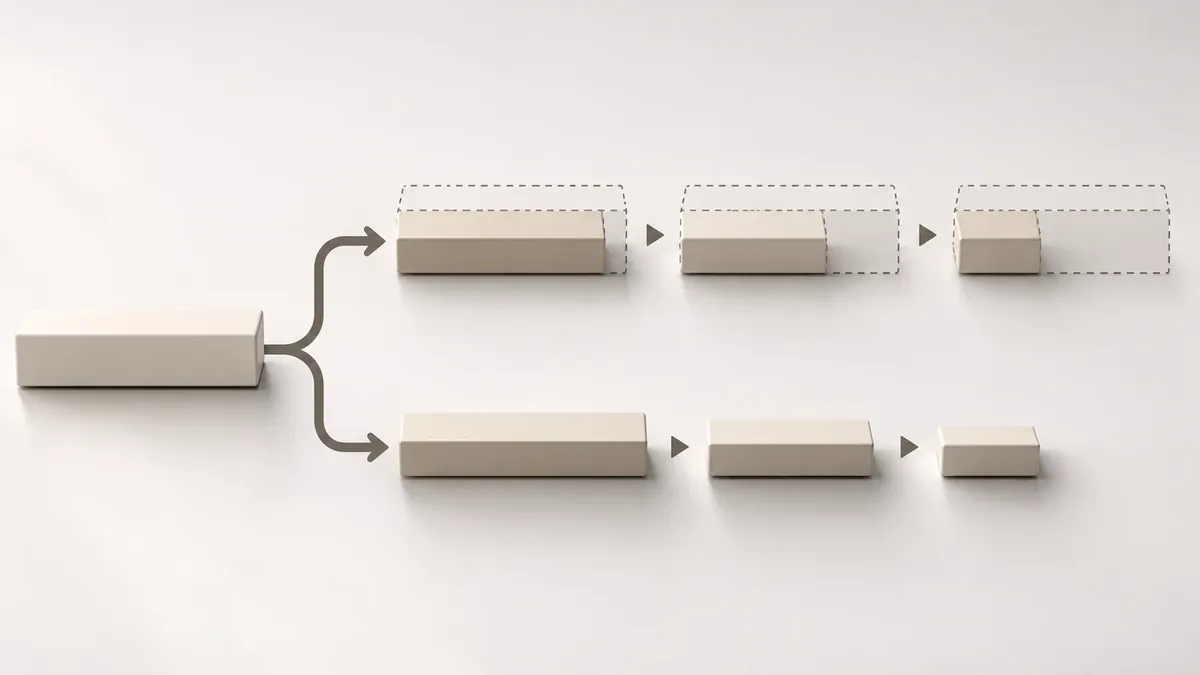
The difference is small in this example, but it can grow with larger bases, more adjustments, or higher quantities. More importantly, a buyer cannot reproduce either result from percentages alone. The buyer needs the starting amount, order of operations, base for each percentage, rounding convention when relevant, and whether the adjustment applies to the entire line or only certain items.
A concise comparison table can expose missing information:
| Quote field | Offer A | Offer B | Käuferprüfung |
|---|---|---|---|
| Reference amount | Stated base | Stated base | Same product, revision, unit, and currency? |
| First discount | Percent or amount | Percent or amount | Which amount is the base? |
| Second discount | Percent or amount | Percent or amount | Original base or remaining balance? |
| Resulting net | Calculated amount | Calculated amount | Can the arithmetic be reproduced? |
| Other charges | Named separately | Named separately | Included, excluded, estimated, or conditional? |
If a quotation lists multiple discounts but does not state whether they are cumulative or cascading, ask for the calculation in currency, not just percentages. Request the resulting net unit amount and the order of adjustments. The supplier can clarify its quotation basis without the buyer assuming a commercial convention that may not apply.
Which Items Should Buyers Confirm Before Comparing Supplier Quotes?
Start by comparing the same deliverable. For bathroom or home-storage hardware, a product description should identify the relevant construction, dimensions, material or finish requirement, included components, pack quantity, and any approved drawing or sample revision. A commercial comparison that ignores those details can place unlike products side by side.
Then compare the price basis. Record currency, unit of measure, quantity tier, quote date, validity period, and the price unit. If the offer is per set, confirm the set contents. Check the supplier quote validity and ordering conditions in the quotation validity guide. If it is per carton, confirm units per carton. If a supplier uses a reference list amount, preserve that number separately from the resulting quote price so that later changes remain traceable.
Identify which deductions are immediate and which depend on a later event. An invoice discount may reduce an amount at the stated transaction stage. A rebate may depend on qualified volume or another contractual condition. These concepts are not interchangeable; buyers comparing them should use a dedicated volume rebate versus quantity discount guide. Do not subtract a conditional future amount from a current net price unless the buyer’s analysis explicitly models that condition and labels the result accordingly.
Check whether the commercial document is a quotation, estimate, invoice, or another record. Those documents serve different roles and may have different levels of commitment. Check the quote date and stated validity before comparing offers; a price bridge only describes the scope and terms in the identified quotation.
For cross-border purchases, keep transport and tax questions visible without pretending the word “net” answers them. A buyer should identify which party’s offer includes freight, what delivery term or destination assumptions are used, and which tax or customs amounts are quoted separately. This article does not provide tax or legal advice. Confirm applicable treatment with the appropriate professional and the actual transaction documents.
How Should Buyers Normalize Two Offers?
Normalization means translating offers into a comparable format while retaining each source’s original terms. It should not erase the difference between a supplier’s quoted amount and a buyer’s own modeled estimate. A clear comparison keeps source values, assumptions, and calculated figures in separate columns.
Use a short sequence:
- Match the product specification and revision.
- Convert both offers to the same quantity unit, without changing the original quote record.
- State the currency and the exchange-rate source/date if a conversion is required.
- Reproduce each supplier’s stated discounts using the documented base and order.
- Separate immediate price adjustments from conditional rebates or credits.
- List freight, taxes, duties, packaging, tooling, and other charges as included, excluded, estimated, or unknown.
- Calculate any buyer-created comparison in a separate field and label the assumptions.
This process helps prevent an apples-to-oranges conclusion. It also keeps the buyer from presenting a modeled landed-cost estimate as if it were the supplier’s net price. If an exchange rate is used internally, it should not silently change the supplier’s currency quote. Keep the original denomination beside the translated analysis and record the rate date.
A buyer can use a comparison sheet with four price views: quoted reference price; supplier-calculated net unit price; buyer-normalized comparable unit price; and estimated order total under named assumptions. Each has a different purpose. The reference price explains the starting point. The net unit price reflects the supplier’s stated adjustments. The normalized amount aligns unlike units or conditions for analysis. The estimate adds assumptions or separate costs that may not be final.
Do not select a supplier solely because the normalized number is lower. A difference may be explained by material, finish, inspection scope, packaging protection, order quantity, lead time, included parts, or an unconfirmed assumption. Price normalization helps identify the commercial difference; technical and operational checks determine whether the offers actually satisfy the same requirement.
What Common Errors Distort a List Price vs Net Price Comparison?
Treating every list price as MSRP. A seller’s reference price may have another meaning. Ask who established it and where the figure applies.
Assuming net means all-in. Net may be after a discount while freight or taxes remain separate. Read the terms and request a line-by-line inclusion statement.
Applying every percentage to the original amount. The second adjustment may use the running balance or another defined base. Ask the supplier to show the arithmetic.
Comparing percentages instead of resulting amounts. A 10% reduction on a higher starting price may still yield a higher net amount than a smaller reduction on a lower base. Compare the reproducible result, not the promotional percentage alone.
Combining an immediate discount with a conditional rebate. A future credit contingent on volume or timing is not automatically a current invoice reduction. Record the condition and expected timing separately.
Mixing per-piece, per-set, and per-carton prices. Confirm the denominator and pack quantity. A low carton price may represent fewer units, or a set price may include parts missing from another offer.
Ignoring quotation scope. One quote may include assembly or export packing while another omits it. A lower line price can shift work or risk to the buyer.
Relying on a rounded displayed number. Where rounding affects the order extension, ask whether calculations retain more precision and how the final currency amount is rounded. Do not invent a rule if the quote does not state one.
Using a discount as proof of savings. A percentage off a reference amount does not verify that the reference was a genuine market price or that the buyer saved a specific amount. No such conclusion follows from the label alone.
How Does Price Basis Connect to Hardware Sourcing?
The commercial number should remain attached to a defined product and sourcing scope. A buyer comparing a custom towel rack, shower caddy, tissue holder, or metal storage basket should identify the relevant drawing or sample, finish, components, packaging, quantity, and target market. If the scope changes, a previously calculated net price may no longer describe the same supply.
A custom order may involve choices that change quotation assumptions. A revised bend, hole pattern, weld location, surface treatment, accessory set, or protective insert can affect process steps or packing. This is not a claim that every change changes price in a fixed way. It is a reason to ask the supplier to identify which revision the quoted price covers and whether the amount needs to be re-confirmed after approval.
Separate product cost analysis from the definition of net price. Direct and indirect cost categories explain a different question from the quote’s list-to-net bridge; use the relevant direct versus indirect costs guide when that distinction is needed. Do not infer the factory’s cost structure from a buyer-facing price label.
Koitor Hardware is a family-owned custom metal bathroom and home-storage hardware factory. Buyers can share a drawing, sample, finish requirement, intended quantity, and packaging scope so the manufacturing request can be reviewed against the actual project. That positioning does not imply that Koitor sets a universal list price, publishes a price book, guarantees savings, or provides tax and accounting advice. Quotation details depend on the specified project and the scope confirmed for it.
What Should a Buyer Record in the RFQ and Quote Review?
A useful request for quotation (RFQ) gives each supplier enough shared information to quote the same requirement. Provide a product description, drawing or representative sample, revision, dimensions, material and finish requirements where known, included components, pack-out expectation, target quantity, sample needs, and destination assumptions. If a field is undecided, mark it as open rather than letting each supplier make a different silent assumption.
Ask suppliers to present price fields in a consistent format:
- Currency and unit of measure.
- Quantity tiers and minimum order assumptions, if applicable.
- Reference or list amount, if the supplier uses one.
- Each immediate discount or adjustment and its calculation base.
- Resulting net unit price for the defined scope.
- Packaging, tooling, sample, freight, and other charges shown separately where applicable.
- Conditions, validity dates, exclusions, and the quote’s drawing or sample revision.
The goal is not to force every supplier into an identical internal accounting system. It is to make each offer understandable enough for a buyer to compare scope and calculation. If a requested field is not meaningful to a supplier’s quotation structure, ask for an equivalent explanation and record the difference.
During quote review, trace a changed price to its cause. Was the quantity tier different? Did the discount basis change? Was an accessory added? Did the supplier revise packaging or surface finish? Was a conditional adjustment treated as immediate? The price bridge makes these questions answerable without reducing the discussion to “your price is higher.”
How Should a Price Bridge Be Preserved After a Quote Revision?
Keep the original quote and each revised offer associated with its issue date, validity period, product revision, quantity tier, and adjustment basis. If a supplier changes only a discount percentage, retain the old and new calculation rather than replacing the previous amount in a spreadsheet. If the product scope also changes, note that the new amount may no longer be a directly comparable net price. A revision history helps the buyer distinguish a changed commercial term from a changed product or order condition. It does not determine whether either offer is commercially fair; it simply makes the arithmetic and scope traceable.
When a buyer shares a comparison internally, label each field as supplier-stated, buyer-calculated, or still unconfirmed. That small distinction prevents an estimated freight amount or modeled rebate from being copied into a supplier’s net unit price. It also gives the next reviewer a clear route back to the quote and the assumptions used.
Buyer Checklist Before Comparing Net Prices

- Is the product and drawing or sample revision identical?
- Does each number use the same unit, pack quantity, currency, and quantity tier?
- Is the quoted list or reference amount defined by the supplier?
- Is every discount named with its amount, percentage, base, and order?
- Can the resulting net unit amount be recalculated from the quote?
- Are freight, taxes, duties, packaging, tooling, and samples included, excluded, estimated, or conditional?
- Are later rebates or credits kept separate from immediate adjustments?
- Is the validity period clear?
- Are buyer-created normalization assumptions visible and kept separate from supplier values?
- Does each price refer to the same scope, finish, components, and packaging requirement?
If one or more answers are unknown, the comparison is incomplete. Preserve the gap as a question for the supplier rather than filling it with an assumption. The buyer can still make a provisional comparison, but should label the result and avoid presenting it as a final net or landed price.
Häufig gestellte Fragen
Is net price the same as final price?
Not necessarily. Net price usually refers to an amount after specified adjustments in a particular pricing context. Freight, taxes, duties, fees, conditional credits, or other charges may be shown separately. Confirm the quote’s definition before treating a net amount as the final cash outlay.
Does list price always mean MSRP?
No. The phrase can describe different reference amounts. Ask who established it, which market and product it covers, and how it is used in the quotation. Do not infer a suggested retail price or maximum payable amount from the words alone.
Can two discounts be applied one after another?
They can be configured on different bases in a pricing system, but a buyer must confirm the supplier’s actual terms. An illustrative cumulative calculation and a cascading calculation can yield different results from the same percentages. Request the order and base for each adjustment, plus the resulting amount.
Should a buyer subtract a future rebate from today’s net price?
Keep a conditional rebate separate unless the analysis expressly models its qualification conditions, timing, and documentation. A possible future credit is not automatically the same as an immediate reduction on the quoted line.
What is the simplest way to compare two supplier offers?
Match the product scope and unit first, then record currency, quantity, adjustment basis, and separately stated charges. Recalculate each supplier’s net amount from its own terms. Keep any buyer-normalized or landed-cost estimate in a separate field with its assumptions visible.
Sources
- Prisync: Net Price and List Price
- Oracle: Create Discounts That Accumulate or Cascade
- Koitor Hardware OEM home storage manufacturing
Arbeiten Sie mit Koitor Hardware zusammen
Need a Clear Quote Scope for a Metal Hardware Project?
Share the product drawing or sample, finish, quantity, included components and packaging expectations. Koitor Hardware can review the defined manufacturing scope for a custom bathroom or home-storage hardware request.
OEM / EIGENE MARKE
Verwandeln Sie diesen Beschaffungsleitfaden in ein Produktdossier
Teilen Sie uns Ihr Zielprodukt, die Größe, die Oberflächenausführung, die Bestellmenge und Ihre Verpackungsanforderungen mit. Ihr Team erhält vor der Angebotserstellung eine praxisorientierte Prüfung der Herstellbarkeit.



 English
 Español
 Português
 Français
 Deutsch
 العربية