

A rust-proof wire story does not settle shower caddy rust under shelf when a plastic liner is in the kit. Water can sit under the insert, against the wire or a weld, and the listing will still look dry from above. Freeze liner retention, a cleaning-removal path, and the hidden trap under the insert, and keep an unbounded rust slogan off the artwork until that path is named.
This guide is for importers and private-label teams writing hanging shower caddies that ship with a plastic or polymer shelf liner or tray. It is not a removable-versus-welded architecture page, not a general rust-proof construction page, not a joint-rust page, and not a pantry-shelf liner page. The decision is whether the liner is retained and whether it traps water against rust-prone sites.
Koitor is a family-owned custom metal hardware factory. We can review the liner part, how it is held, how it is removed for cleaning, and the wording you want to print. We do not invent a liner SKU, a salt-spray hour, or a rust-free promise for a hidden site we have not agreed how to observe.
Why rust-proof construction and removable shelves do not close a liner trap
A rust-proof construction file talks about material, weld, and coating of the wire family. That file can be carefully written and still miss a puddle under an insert. The wire may be a suitable family and still stain at a hidden contact if standing water is trapped against a raw end, a thin coating, or a weld.
Removable versus welded architecture answers whether a shelf can be taken off the frame for service. A removable shelf is not the same part as a liner that sits on the shelf. A welded shelf can still have a trapped insert. Keep serviceability on that page. Keep the under-liner path here.
shower caddy drainage design answers how a basket or shelf is supposed to shed water through the wire or through designed openings. A liner can block those openings, or it can have its own drain holes that still leave a film on the wire below. Drainage design and under-liner trapping are neighbors, not substitutes.
A pantry or wire-shelf liner article is usually about spill containment in a cabinet, not about a wet shower caddy. Do not borrow a dry-goods spill sentence and print it as a shower rust line. Joint rust at tension-pole collars, and rust in a drip cup, are also different sites and are not this insert trap.
Shopping photographs that show a tidy white tray from above do not close the file. The hidden face is the underside of the liner and the top of the wire. If you cannot photograph that site, you are not yet ready to deny a trap.
How should the liner and its retention be named?
Name the liner as a specified part. Record material family as the project will name it, whether it is a drop-in tray, a clip-in insert, or a formed liner, and whether it is sold as standard or optional. “Includes tray” is not a specification if the carton can omit it.
Name how it is retained. Typical project details are a lip over the rim, tabs into the wire, a friction fit, or another specified hold. A liner that floats is a different after-sales story than a liner that is meant to stay during ordinary use and still come out for cleaning.
Name the removal path. If the listing or the care line says the liner can be removed and cleaned, the sample should show how, and whether it can be reseated without cracking or losing a tab. A liner that can only be removed by damaging it is not a cleaning feature.
Name the drain story of the liner itself. Some liners have holes or slots; some are solid trays. A solid tray can be a spill feature and a rust trap at the same time. A holed liner can still hold a film at the contact points. Write what the part actually does, not what the category name suggests.
If the same caddy is sold with and without a liner, observe both, or write an exclusion. A no-liner wire check does not clear a liner SKU, and a liner SKU should not be photographed as if the wire is freely draining when the insert is in.
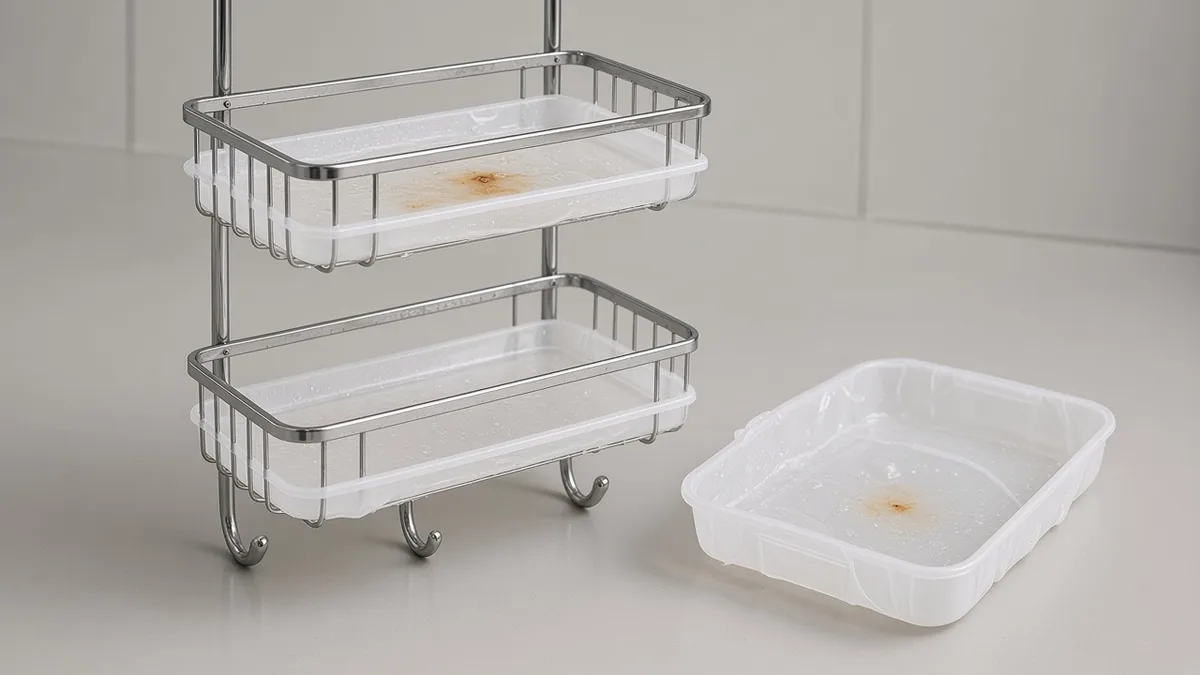
How should drain path and standing water under the insert be judged?
Agree what you are looking for before anyone talks about rust. Typical project choices are a standing film under the liner after an agreed wet condition and wait, staining at the contact wires or welds, and whether water can leave once the liner is in place. Photograph the underside, not only the top of the tray.
Do not turn that observation into a salt-spray report interpretation hour unless the project has already adopted a named method and a named report scope. Salt-spray methods are not automatically an under-liner protocol. If a project later uses a named method, record the scope. Do not borrow hours from another SKU.
A practical wet observation can be a splash or wet-cloth condition, a wait, and a look under the insert. The condition is a project choice. Do not invent a Koitor cycle count. If the merchandising shows a shower stall, the observation should be at least as wet as that use, or the artwork should carry an exclusion.
Separate staining on the liner surface from rust on the wire under it. A mark on plastic may be soap, mineral film, or transferred rust. A stained wire or weld under the insert is the hidden trap this page cares about. Those findings should not share one casual rust note.
If the liner is meant to be left in for weeks between cleanings, say so, and observe a realistic wait. A liner that is pulled out every day in a lab is not the same use as a household that almost never removes it. Write the cleaning interval you are willing to defend, or do not imply one.
What should spare liners and claim limits look like?
If a spare liner is part of the offer, put it in the packing list and in the after-sales path. A trapped-water stain on the wire is harder to reverse than a stained insert. A replacement liner is not an unbounded rust claim, but it is a practical service part if the insert is the worn or stained item.
Do not print an unbounded rust slogan for the site under the shelf, and do not say the tray keeps the wire dry forever. Safer language names the liner, the retention, the cleaning-removal path, and the observation you have.
Do not invent a liner material grade or a Koitor life span. If the buyer wants a stated polymer family, write it as a project callout after the part is agreed.
What should the importer freeze before artwork is approved?
Use a written liner-trap file. The checklist and the matrix remind you which decisions to freeze. They do not replace the underside photographs or the liner part in the bill of materials.
Do not approve a shower caddy rust under shelf line until the liner, the retention, and the hidden-site check are in the pack. A top-down tray photograph is not an under-liner observation.
If production later changes liner fit, drain holes, coating at the shelf, or how the insert is packed, the file needs a new observation. A copied rust-proof sentence from a no-liner lot is not evidence for a liner SKU.
A first-article pack should include the liner part, the retention features, the removal and reseat check, and before-and-after photographs of the underside after the agreed wet wait.
Care instructions should match the file. If the insert must be removed to dry the wire, the instruction has to say so. A “wipe the tray” line that never mentions the underside will not protect the claim.
Carton packing should keep the liner with the caddy it belongs to. A missing liner in a liner SKU is both a packing defect and a changed water path if the user then runs the shelf bare, or if the user buys a loose substitute that does not fit.
Substitute liners from a later lot should be checked for fit and drain pattern. A slightly thicker rim can raise standing water or change how tabs seat. Write the spare as part of the family, or require a new check.
After-sales photos should show the liner out, the underside, and the wire or weld site. A picture of surface rust on a hanging hook is a different site and should not be filed as an under-shelf liner complaint.
Mineral film and soap scum on the top of the tray are not automatically rust under the shelf. Sort those findings, and do not let a cleaner or hard-water discussion stand in for the hidden trap.
If the same frame is sold in chrome and in a coated finish, observe the hidden contact on the finish you will claim, or write an exclusion. A coated shelf can hide a thin coverage at a wire crossing where the liner sits.
When the liner, the retention, and the underside check agree, the listing can stay modest and still be useful. Name the insert and the cleaning path, and leave unbounded rust-proof language off the page.
A finish-only change to the frame can often keep the prior liner record if the insert and the contact geometry did not change. Confirm the liner fit first, then keep or retire the sentence.
Do not borrow a pantry liner spill sentence, a joint-rust sentence, or a drip-cup sentence to finish this file. Those neighbors have their own sites. This page stays under the shower-caddy insert.
Send the drawing, the liner part, and the intended sentence before the artwork is locked. A factory can quote the caddy while the underside observation is still being written, but the rust headline should wait for the hidden site.
If a later complaint shows rust only where the liner sat, treat that as this file, not as a general material failure, until the underside path has been checked. The next lot may need a drain change, a coating change at the contact, or a care-line change, not a new slogan.
Tabs and lips that hold the liner can also create local cups. A retention feature that keeps the insert from sliding can hold a drop against a wire crossing. Photograph those features from below, not only from the side, and do not assume a tight fit is a dry fit.
Soap and hair on the tray change how water leaves. If the project wants a claim after ordinary shower use, the observation should include a realistic residue, or the artwork should not imply a perfectly rinsed tray. A freshly washed lab liner is a weak basis for a household wait.
A coated liner rim that sheds water onto an uncoated weld is a mixed-material path. Write both sides of the contact. The polymer can look fine while the metal stains, and the opposite can also be true if a metal contact discolors the insert.
Hanging hooks under the shelf are a different site unless the liner overflow runs down to them. If overflow is possible, include that run-off in the file or write an exclusion. Do not let a hook stain automatically be filed as an under-liner trap, or the reverse.
Warehouse humidity and shower use are also different waits. A carton-stored liner that arrives with a mark may be a packing or coating issue, not a shower trap. Sort incoming marks from use marks before you change the drain story.
When the underside photographs, the retention, and the care line agree, the listing can stay modest and still help a buyer. Name the liner and the cleaning path, and leave unbounded rust slogans off the page.
If a later review finds only a color change to the liner or the frame, the prior hidden-site record can usually stay, provided the liner fit, drain pattern, and contact geometry are unchanged. Confirm those functional parts first, then keep or retire the sentence.
Keep the rust headline tied to the pack you will ship. A factory can quote the caddy while the underside observation is still being written, but a top-down merchandising tray should not be asked to support a hidden-site promise that was never photographed.
If the buyer also wants a harder-water or cleaner-compatibility sentence, keep those on their own finish files and cross-check only whether the wipe used in those files would be used on the liner or on the wire. Do not let a mineral-spot discussion replace the under-insert rust observation.
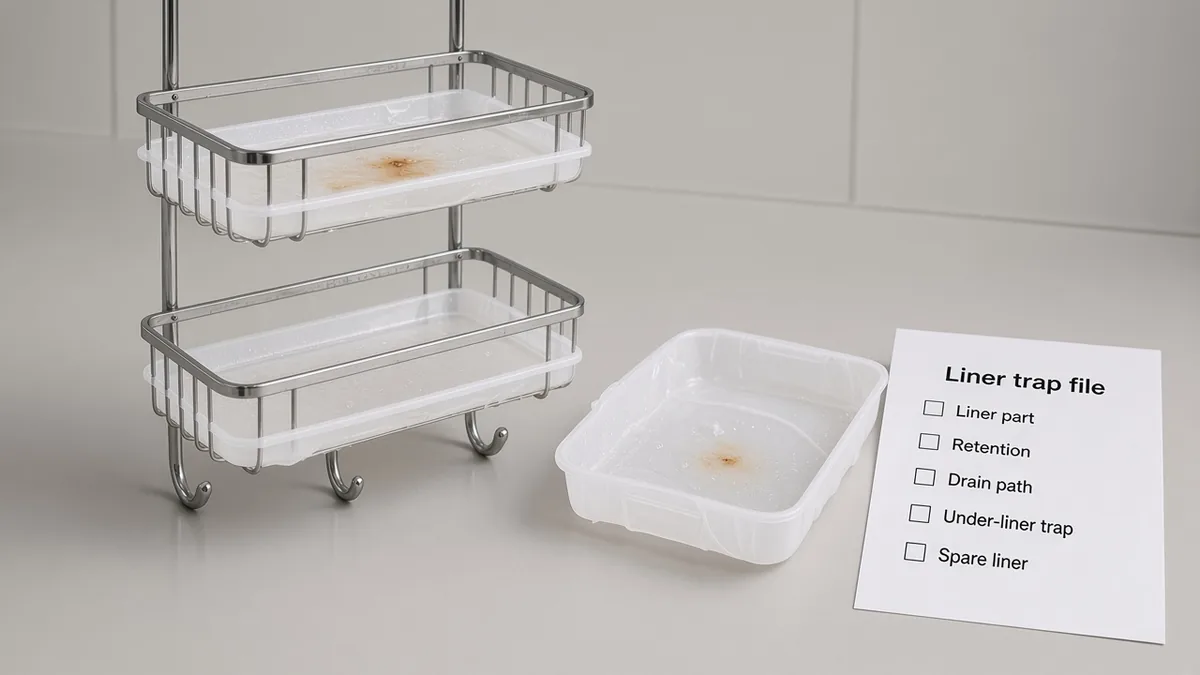
| Claim impulse | What to freeze | What the sample should show | What to keep off artwork until then |
|---|---|---|---|
| Liner keeps the shelf dry | Liner part, drain pattern, and underside check after a wet wait | The hidden contact is judged, not assumed dry from above | An unbounded dry-shelf or rust slogan |
| Tray pops out for cleaning | Retention, removal, and reseat without damage | The liner comes out and goes back as claimed | A cleaning feature on a liner that cannot be removed intact |
| Holes in the tray drain everything | Where water leaves, and what still sits on the wire | The drain path is visible, and the contact film is still judged | A holed-liner photo used as proof the wire stays dry |
| Wire is rust-proof, so the tray is fine | A split between the wire family file and the under-liner trap | The hidden site was inspected with the liner in the use condition | A construction headline treated as an under-shelf pass |
| Spare liner solves rust | Whether a spare is in the kit, and what the spare actually replaces | The spare is a service part, not a rust-proof claim | A spare-liner offer written as a never-rust promise |
- Write the product as a hanging shower caddy that ships with a specified shelf liner or tray, not as a pantry liner or a tension-pole joint.
- Name the liner part, whether it is standard or optional, and how it is retained.
- Name the removal and reseat path if cleaning is claimed.
- Photograph the underside of the liner and the wire or weld below after the agreed wet wait.
- Do not invent a Koitor hour, a liner grade, or a rust-free promise.
- Keep general rust-proof construction, joint rust, drip-cup rust, and pantry liners on their own files.
- If with-liner and no-liner versions are sold, observe both or write an exclusion.
- Put spare liners in the packing and service path if they are part of the offer, without turning them into an unbounded rust claim.
- Align care instructions with the hidden-site file.
- Send the drawing, the liner, and the intended sentence before the artwork is locked.
How can a family-owned OEM review the liner brief?
Koitor can review the shelf and liner geometry, the retention and drain features, and the wording you want to use. That is a construction and acceptance discussion, not a corrosion certification. Fertigung von maßgefertigten Duschablagen is the usual starting point when the caddy family itself still needs development.
If you already have a liner part and a wet-observation outline, attach them. If you only have a top-down tray photograph, say that. We can help you tighten the hidden-site check and the sentence, but we will not invent an hour to fill a blank. For a liner-file review, send the liner and under-shelf brief to Koitor with the drawing and the intended claim.
MOQ, sample timing, and bulk lead time stay on the quotation path and depend on the product, the finish, and the order. They are not a substitute for the under-liner observation.
Häufig gestellte Fragen
Can shower caddy rust under shelf be cleared by a rust-proof wire headline?
No. A wire-family story does not show whether water sits under an insert. Take the hidden-site record with the liner in the use condition, after the agreed wet wait.
Do we need a salt-spray hour to talk about staining under the tray?
Not from this article, and not as an invented Koitor figure. You need a named liner path and an agreed underside check. If a later project adopts a named method, record the scope. Do not borrow hours from another accessory.
How is this different from drainage design or joint rust?
Drainage design is how the shelf or basket is supposed to shed water. Joint rust is a different site, often at a tension-pole collar. This page is liner retention and the hidden trap under a shower-caddy insert.
What if the liner is optional?
Observe the with-liner path if you will sell it, and do not print a liner sentence on a no-liner carton. Optional parts have to be in the pack or clearly excluded.
Does a spare liner mean the wire will stay clean?
No. A spare is a service part for the insert. It is not an unbounded rust claim for the wire underneath. Write the spare honestly, and still judge the hidden contact.
Can Koitor write the under-shelf rust sentence for us?
Koitor can review a liner-trap sentence against the insert retention and the underside photographs, as a construction and acceptance discussion. The buyer still owns what is printed. If the hidden-trap observation is missing, the safer path is to narrow or drop the line.
Arbeiten Sie mit Koitor Hardware zusammen
Need a liner-trap brief reviewed?
Send Koitor your hanging caddy drawing or sample, the liner part, and the under-shelf sentence you want to print. Our team can review liner retention, the hidden water path, and claim wording as a construction and acceptance brief before quotation. MOQ can start from about 100 pcs depending on the product; samples usually take 5–7 working days after details are confirmed; bulk production usually takes 4–6 weeks depending on the project.
OEM / EIGENE MARKE
Verwandeln Sie diesen Beschaffungsleitfaden in ein Produktdossier
Teilen Sie uns Ihr Zielprodukt, die Größe, die Oberflächenausführung, die Bestellmenge und Ihre Verpackungsanforderungen mit. Ihr Team erhält vor der Angebotserstellung eine praxisorientierte Prüfung der Herstellbarkeit.


 English
 Español
 Português
 Français
 Deutsch
 العربية