
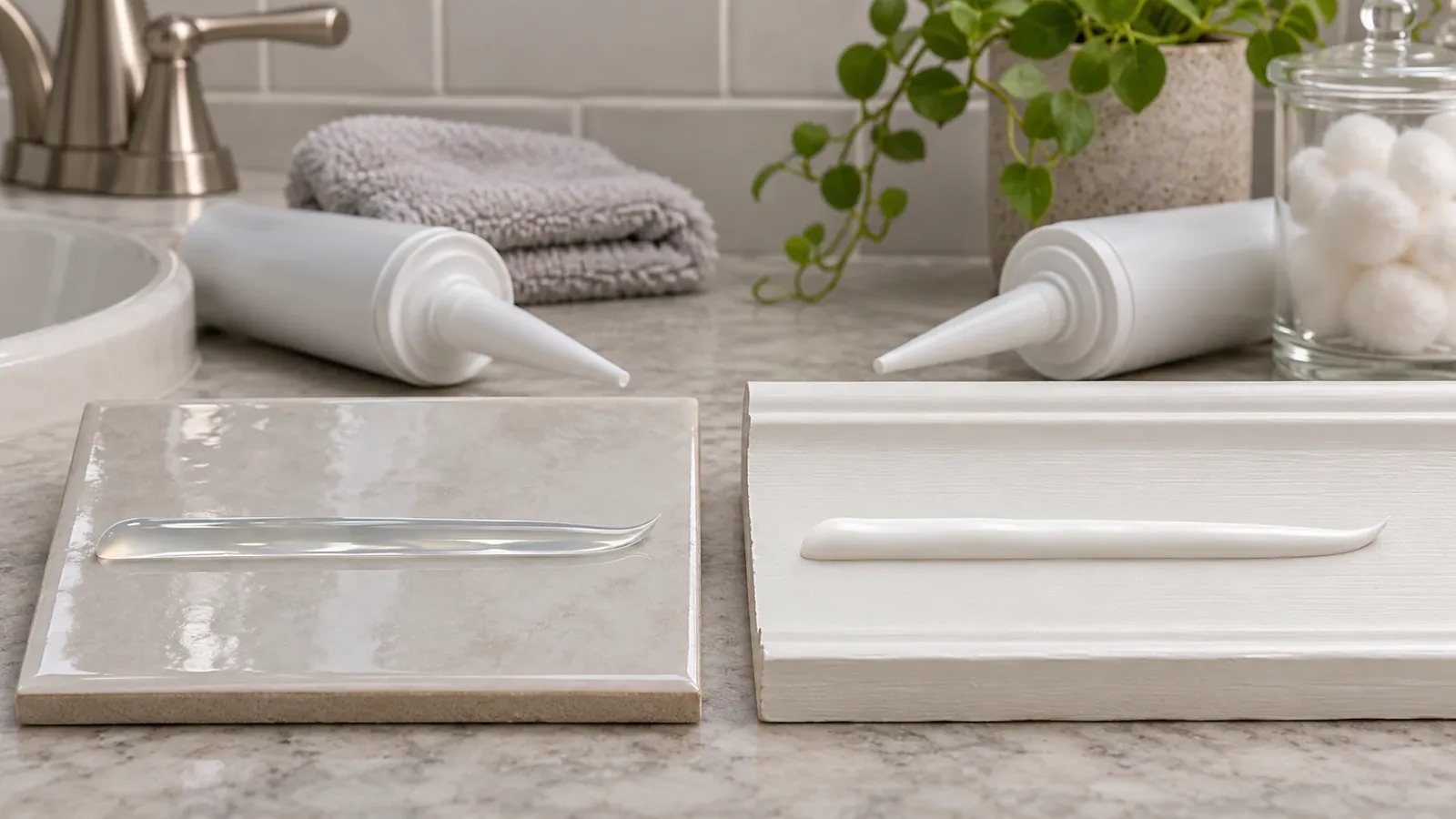
Silicone vs latex caulk is not a simple choice between two universal products. “Silicone” and “latex” describe different formulation families, while a product can combine an acrylic-latex base with silicone additives. Paintability also varies by the exact formulation and product instructions. A buyer should read the named product’s current label and technical data sheet, confirm its intended application and substrate, and treat paintability, water exposure, cure and joint suitability as separate questions. The word “silicone” on a package does not by itself tell you whether the product is a conventional silicone sealant or a silicone-modified acrylic caulk.
This distinction matters in product development, maintenance and private-label procurement because a familiar label can hide important differences. A buyer might see “silicone,” “latex,” “acrylic,” “paintable” or “bath” on a product page and assume one word answers all selection questions. It does not. The manufacturer’s current product documentation governs the specific formulation and use conditions.
What is the difference between silicone and latex caulk?
Conventional silicone sealant and acrylic-latex caulk belong to different formulation families. An acrylic-latex product may include silicone additives, which means a product described as “latex plus silicone” is not automatically the same formulation as a conventional 100% silicone sealant. Product names and marketing descriptions should be checked against the actual technical data sheet.
DAP’s current material provides an example of the naming distinction: ALEX PLUS is described as acrylic latex caulk plus silicone. DAP’s product information identifies it as an acrylic-latex formula with silicone additives. That is a specific product example, not a claim that every latex product contains silicone or that every silicone-modified product behaves alike. Other manufacturers may use different formulations and product naming.
| Label or phrase | What it may identify | What the buyer should verify |
|---|---|---|
| Silicone sealant | A product based on a silicone formulation | Exact chemistry description, substrate and use limitations |
| Acrylic-latex caulk | A water-based acrylic or latex caulk family | Paintability, intended location and product-specific conditions |
| Acrylic latex plus silicone | An acrylic-latex product with silicone additives | The maker’s stated properties and actual technical data sheet |
| Paintable | A specific product’s stated coating compatibility | Which paint type, preparation and timing the maker permits |
| Kitchen or bath | A product positioned for a named application | Exact moisture, substrate and installation instructions |
The table is a terminology guide, not a substitute for a product approval or installation specification. The manufacturer’s documentation should resolve questions about the exact product.
Is silicone caulk paintable?
Do not assume that conventional silicone caulk is paintable. DAP’s FAQ states that its non-paintable 100% silicone sealants must be removed and replaced with a paintable product if the surface needs painting; it also warns that paintable latex caulk will not adhere to its silicone product or residue. That is the manufacturer’s guidance for its product family. Buyers should read the current instructions for the exact sealant being considered rather than generalizing from one brand to every formula.
The procurement lesson is to define the finished surface before selecting a caulk. If paint will cover the joint, verify that the selected product is explicitly approved for that paint system and application. If the sealant itself is a visible finished surface, confirm the required color and appearance. These are separate from whether the product is marketed as silicone or latex.
An acrylic-latex caulk can be paintable, but the buyer should not transfer a paint timing or compatibility statement from one SKU to another. DAP’s FAQ and product pages give product-specific paint guidance and direct readers to the label for exact product conditions. The data sheet for the named sealant should control the decision. A broad article cannot determine whether a selected caulk is appropriate for a particular substrate, paint or moisture exposure.
Paintability is also not a proxy for full cure, water exposure suitability, flexibility, adhesion, cleanability or joint movement. A product might be paintable while still having other limitations that matter to the actual application. Keep those requirements separate in the product comparison.
What does “silicone-modified acrylic” mean?
It describes a product that remains an acrylic-latex caulk formulation while incorporating silicone additives. DAP’s ALEX PLUS technical sheet is an example: its full product name identifies acrylic latex caulk plus silicone, and its description says it contains silicone additives. The exact properties claimed for that product belong to its own current documentation.
This example shows why label shorthand can be misleading. A buyer who sees the word “silicone” may assume that the item is a conventional silicone sealant. A buyer who sees “latex” may assume no silicone ingredient is present. Neither inference is safe without checking the named formulation. A product title is an identifier to investigate, not a complete technical definition.
For an importer comparing product offers, record the full manufacturer name, product line, SKU, color and package. Then review the technical sheet for the description, approved substrates, paintability, intended application and any stated limitations. If two products use similar words, do not assume they are equivalent or interchangeable. Ask the manufacturer to clarify how the terms apply to the particular formula.
How should buyers compare the intended application?
Start with the joint and substrate, then match the product documentation to the intended exposure and finish. A product designed for trim work may not be suitable for a different bathroom joint or for a location subject to prolonged water contact. A “bath” label may indicate a product family, but the actual instructions remain product-specific.
DAP’s FAQ says that bath-formulated caulks are preferable for high-moisture contact in the context of its own general guidance. That statement does not approve a specific product for every wet location or establish suitability around a particular bathroom accessory. Use the exact label and technical data sheet, and ask the product maker if the location or substrate is uncertain.
Before selecting a caulk, document:
- The materials and finish on both sides of the joint.
- Whether the joint is visible or will be painted.
- The expected contact with water or humidity as described by the project owner.
- Whether the joint may move and the product maker’s applicable instructions.
- The intended cleaning and maintenance environment.
- The exact product reference and current technical document revision.
- Which party approves the sealant for the application.
These fields help route the question to the responsible product manufacturer. They do not create an installation method, joint-size specification or approval on their own.

What should a product data sheet answer?
The data sheet should identify the product and provide the manufacturer’s current technical description and intended-use information. A buyer should not accept a bare statement such as “silicone caulk” when paintability, surface compatibility or moisture exposure is a selection gate. Ask the product maker for the correct document if the listing omits essential details.
Check that the data sheet corresponds to the exact product name, SKU, color and country or market variant being quoted. Similar products may have different names or formulation changes across markets. If a manufacturer supplies separate technical and safety documents, use each for its intended purpose. This article does not replace a safety data sheet or provide chemical handling instructions.
The buyer can compare suppliers using one record per offer. Capture formulation description, paintability, intended application, substrate instructions, document revision, package format and open questions. Do not fill missing fields from a different product in the same product family. A brand may offer silicone, latex and modified acrylic products that serve different purposes.
How do paintability and cure differ?
Paintability describes a product’s compatibility with a specified paint under the manufacturer’s conditions. Cure or drying describes a separate change in the sealant over time. The two concepts are related in product use but are not synonyms. A product’s paint-ready statement should not be used as a universal cure time or proof that it is ready for water exposure.
DAP’s FAQ lists timing examples for its own products and notes that conditions can vary. This article does not repeat those numbers as a general rule because timing depends on the named product and conditions. Follow the current product label or technical data sheet for the particular sealant. If a project requirement conflicts with that documentation, resolve the conflict with the product maker before specifying the product.
Likewise, a claim that a caulk is paintable does not automatically identify which paint system is acceptable. The buyer should verify whether the product instructions mention latex paint, oil-based paint or another coating, and whether there is a stated preparation step. A sample test may be appropriate when the combination is critical, but the test method and acceptance decision must be agreed with the responsible technical parties.
What mistakes should importers avoid?
The largest risk is choosing by one marketing word. Product name, paintability, substrate compatibility and exposure suitability each describe a different part of the decision. A buyer should confirm the actual application with current product documents rather than treating the label as a complete recommendation.
Avoid these shortcuts:
- Assuming every product containing “silicone” is conventional silicone. Some products are acrylic latex with silicone additives.
- Assuming every latex caulk is paintable in the same way. Verify the exact product and paint conditions.
- Assuming all silicone sealants can be painted. Check the manufacturer’s documentation; some are explicitly non-paintable.
- Using a bath label as universal approval for immersion or prolonged water contact. Follow the exact product instructions.
- Transferring one SKU’s cure or dry time to another. Product formulation and conditions matter.
- Applying caulk as a substitute for a mechanical fastener or load-bearing support. A sealant label does not establish structural attachment suitability.
- Comparing product names without confirming the market and revision. Keep the exact SKU and data sheet together.
These cautions do not claim that every sealant project is complex. They identify where a buyer should ask for product-specific information before treating a broad label as a specification.
How is caulk different from hardware attachment?
Caulk can seal a defined joint when the product and application support that purpose; it should not be assumed to mount a shelf, towel rack or other load-bearing hardware. A sealant product may have instructions for a specific attachment or substrate, but such instructions must come from its maker and the product’s intended use. A generic silicone-versus-latex comparison cannot approve a wall-mounting method.
For bathroom hardware, separate the accessory’s mounting design from adjacent surface sealing. A buyer may need both a mechanical attachment specification and a sealant around a joint. The two decisions should not be collapsed into one. Koitor’s product drawings and manufacturing discussions address custom metal hardware within the company’s scope; the sealant manufacturer remains responsible for confirming its own product instructions.
If a buyer is developing a custom metal accessory, provide the drawing, mounting surface, fastener arrangement and finish target. If a caulk is also part of the project, identify it as a separate supplied material and obtain its technical approval from the manufacturer. This prevents a product comparison article from being mistaken for installation advice.
How can Koitor support a related hardware project?
Koitor Hardware is a family-owned custom metal hardware factory specializing in bathroom and home storage hardware. The company supports OEM product discussions using buyer drawings or physical samples and can review product structure, finish and packaging questions within that manufacturing scope. That positioning does not mean Koitor manufactures sealants or approves a caulk for a particular application.
A product manager can keep the hardware and sealant workstreams connected while assigning each technical decision to the right supplier. Share the metal accessory requirements with the hardware manufacturer, and share the joint, substrate and exposure details with the sealant maker. This division helps avoid unsupported claims and keeps the specifications traceable.
For custom metal product context, review Koitor’s custom bathroom hardware manufacturing information or contact Koitor with the project details. The manufacturer of the selected caulk should confirm formulation and paintability.
How should a buyer read a product name and technical sheet together?
Use the product name to identify the item, then use the technical sheet to confirm its formulation and approved use. A title may use more than one chemistry word because the product combines a base formulation with additives. Read the full name and description rather than isolating “silicone” or “latex” from the rest of the label.
For example, DAP’s ALEX PLUS sheet calls the item acrylic latex caulk plus silicone and explains that it contains silicone additives. That is enough to show why a buyer should not classify products by a single word. It does not authorize the buyer to assume that another manufacturer’s “latex plus silicone” product has the same composition, paintability or intended application. Similar names do not make two SKUs equivalent.
When a distributor prepares a catalog or sourcing comparison, preserve the exact manufacturer claim and avoid rewriting it into a stronger statement. If a data sheet says “paintable,” do not change that to “compatible with all paints.” If the sheet describes a product for bathrooms, do not extend the claim to submerged or continuous-water use. Use the boundaries stated by the manufacturer and ask for clarification where the document leaves a gap.
What should a buyer do when sources conflict?
If a marketplace listing, carton label and technical sheet use different descriptions, treat the mismatch as unresolved until the product maker confirms the correct current information. Record the product identifier, market, package size and document revision. A product family may include multiple formulas or market-specific variants, so a page for one product should not be used to approve another.
Ask the supplier to confirm which document applies to the SKU being quoted and whether any formulation or labeling changes have occurred. If the buyer’s application depends on paintability or moisture exposure, request the current technical sheet and any product-specific instructions. If the answer cannot be confirmed, do not infer compatibility from a similar product in the same brand family.
An imported product may also require the buyer to review its own market labeling or regulatory obligations. This article does not provide a compliance assessment. Any legal or product-safety claim should be checked against the applicable jurisdiction and current primary requirements by the responsible party.
How can buyers separate caulk from an adhesive attachment system?
Caulk is commonly selected to seal a joint; an adhesive may be selected to bond components, but the product’s exact intended use controls. The words alone do not define whether the material is suitable for a mounting interface. For a bathroom shelf or accessory, the product’s mounting design and fasteners should govern unless a product maker has specifically approved another attachment system.
If a project includes both a sealant bead and a mounted metal product, identify them as two separate line items in the specification. State which product seals the joint and which hardware feature carries or positions the accessory. A caulk label does not establish a load rating, and a bathroom-specific sealant label does not make the material a structural adhesive.
This separation is useful when a product sample looks finished but the mounting arrangement is not visible. Ask for the hardware drawing and the sealant manufacturer’s instructions independently. That allows the buyer to verify product scope without assigning a function to a material based on appearance.
For a buyer asking “silicone vs latex caulk?”, this checklist should be applied to the named sample, assembly or supplier record.
Buyer checklist before choosing a caulk
- Record the exact product name, SKU, color and market version.
- Read the current label and technical data sheet.
- Determine whether the product is conventional silicone, acrylic latex or a modified formulation.
- Confirm paintability for the actual coating and application.
- Confirm the intended substrates and moisture exposure with the product maker.
- Keep cure, paint-ready and water-contact requirements separate.
- Do not use a caulk as a hardware mounting substitute without explicit approved design evidence.
- Retain the document revision and supplier response with the purchase record.
- Ask the sealant maker about unresolved compatibility or application questions.
Häufig gestellte Fragen
A useful “silicone vs latex caulk?” answer states the comparison boundary and points to the product-specific evidence.
Is silicone caulk always non-paintable?
No universal statement should replace the exact product instructions. Many conventional silicone sealants are non-paintable, but buyers must verify the selected product’s current documentation.
Is latex caulk always acrylic latex?
“Latex” is often used in product names for acrylic-latex caulks, but the exact formulation should be confirmed from the technical data sheet rather than inferred from a short label.
Can a product be both acrylic latex and silicone?
Yes. DAP’s ALEX PLUS documentation identifies an acrylic-latex caulk with silicone additives. This is a specific example; other formulations need their own documentation.
Does paintable mean ready for water exposure?
No. Paintability and exposure suitability are different product claims. Follow the manufacturer’s current instructions for the specific use.
Can I use caulk to attach a bathroom shelf?
Do not infer attachment suitability from a generic product category. Follow the specific sealant manufacturer’s approval and the hardware design requirements; use the intended mounting system.
Should I use the same paint-ready time for another product in the range?
No. Timing and compatibility statements are product-specific. Check the current label and technical data sheet for the exact product and conditions.
Build a Product-Specific Sealant Comparison
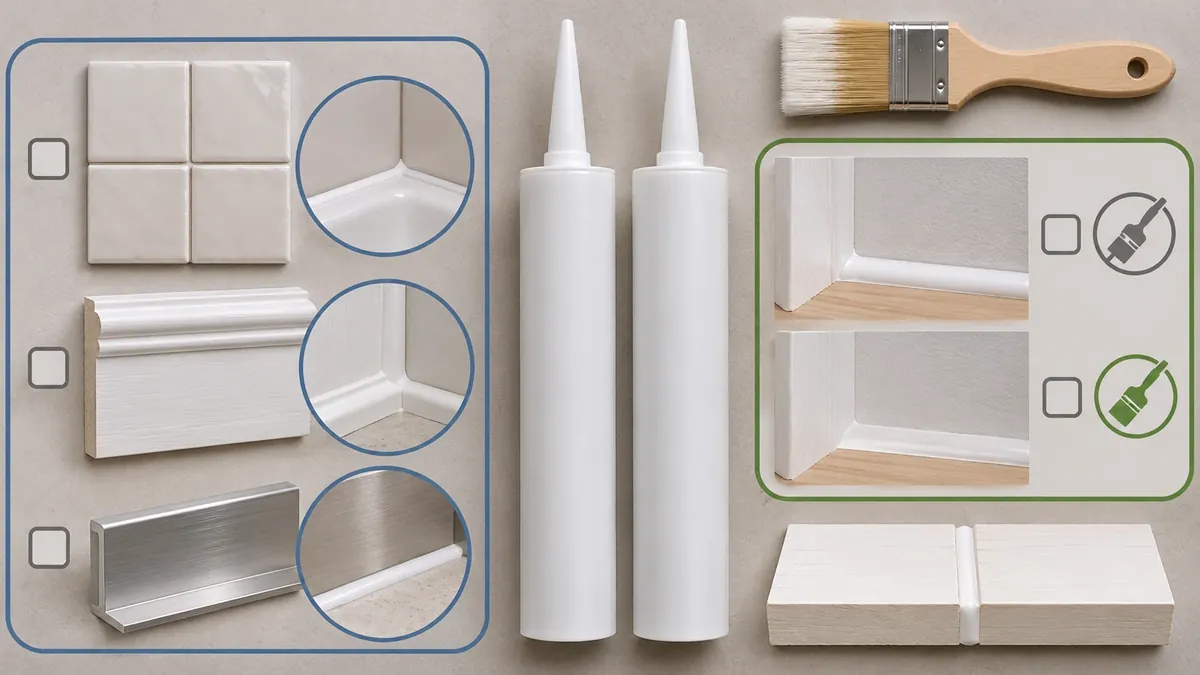
When a buyer compares two tubes, begin with the exact product identifiers rather than the broad words silicone and latex. Record the manufacturer, product name, formulation description, color, package size, and current technical data sheet revision. Then compare only attributes that matter to the planned joint: listed substrates, intended interior or exterior use, paintability, cleanup method, application limits, cure or paint-ready statements, and any stated exposure restrictions. If a data sheet does not address an attribute, mark it as unconfirmed instead of filling the gap with a category-wide assumption.
This method also separates formulation from marketing shorthand. A product sold as acrylic latex may include silicone additives, while another product in the same aisle may use a different chemistry. The comparison table should quote or accurately paraphrase the named product’s documentation and link to the source. It should not turn a single example into a universal rule for every acrylic, silicone, hybrid, or specialty sealant.
Next, distinguish the sealant’s role from the hardware’s mounting design. Sealant may be specified to seal a joint or finish an interface, while a shelf, rail, or accessory may depend on screws, anchors, a designed adhesive system, or another mounting method. Similar-looking materials do not make those functions interchangeable. If the project asks a sealant to carry a structural or retention load, the responsible designer must verify the exact product, substrates, joint geometry, preparation, and service conditions using product-specific evidence.
For a private-label assortment, keep the approved comparison with the SKU record and check it again when the supplier changes the formulation or revises its technical sheet. Revalidate label claims, application instructions, colors, and compatibility rather than copying old text to a replacement product. The buyer can then explain why one specified item was selected without claiming that an entire chemistry family is always paintable, waterproof, faster, stronger, or more suitable for a bathroom. This is a documentation workflow, not an application recommendation; the current manufacturer instructions govern actual use.
Source note
Product examples are drawn from DAP’s ALEX PLUS technical data sheet und DAP’s caulk FAQ. Their product descriptions and instructions apply to the named products and should not be generalized to other sealants.
Arbeiten Sie mit Koitor Hardware zusammen
Discuss a Custom Bathroom Hardware Project
Share your product drawing, mounting interface, finish target and expected quantity with Koitor. Confirm sealant formulation and use conditions separately with the manufacturer of the selected caulk.
OEM / EIGENE MARKE
Verwandeln Sie diesen Beschaffungsleitfaden in ein Produktdossier
Teilen Sie uns Ihr Zielprodukt, die Größe, die Oberflächenausführung, die Bestellmenge und Ihre Verpackungsanforderungen mit. Ihr Team erhält vor der Angebotserstellung eine praxisorientierte Prüfung der Herstellbarkeit.


 English
 Español
 Português
 Français
 Deutsch
 العربية