

Stainless steel vs galvanized steel is a comparison between two different constructions: a stainless alloy and a steel substrate protected by a zinc coating. The labels do not establish a universal winner for corrosion resistance, appearance, cost, strength, service life, or manufacturing ease. A buyer should identify the stainless grade or the galvanized coating route, then compare the finished part, fabrication sequence, exposed edges and joints, environment, maintenance, and supporting evidence.
For storage hardware, the same words can describe materially different proposals. One supplier may quote a stainless wire basket with welded joints; another may offer a steel basket formed from coated stock or galvanized after fabrication. Geometry, joining, coating coverage, finish, fasteners, packaging, and order quantity can change the comparison. Make the quotes equivalent before using material labels to choose a product.
What Is the Difference Between Stainless Steel and Galvanized Steel?
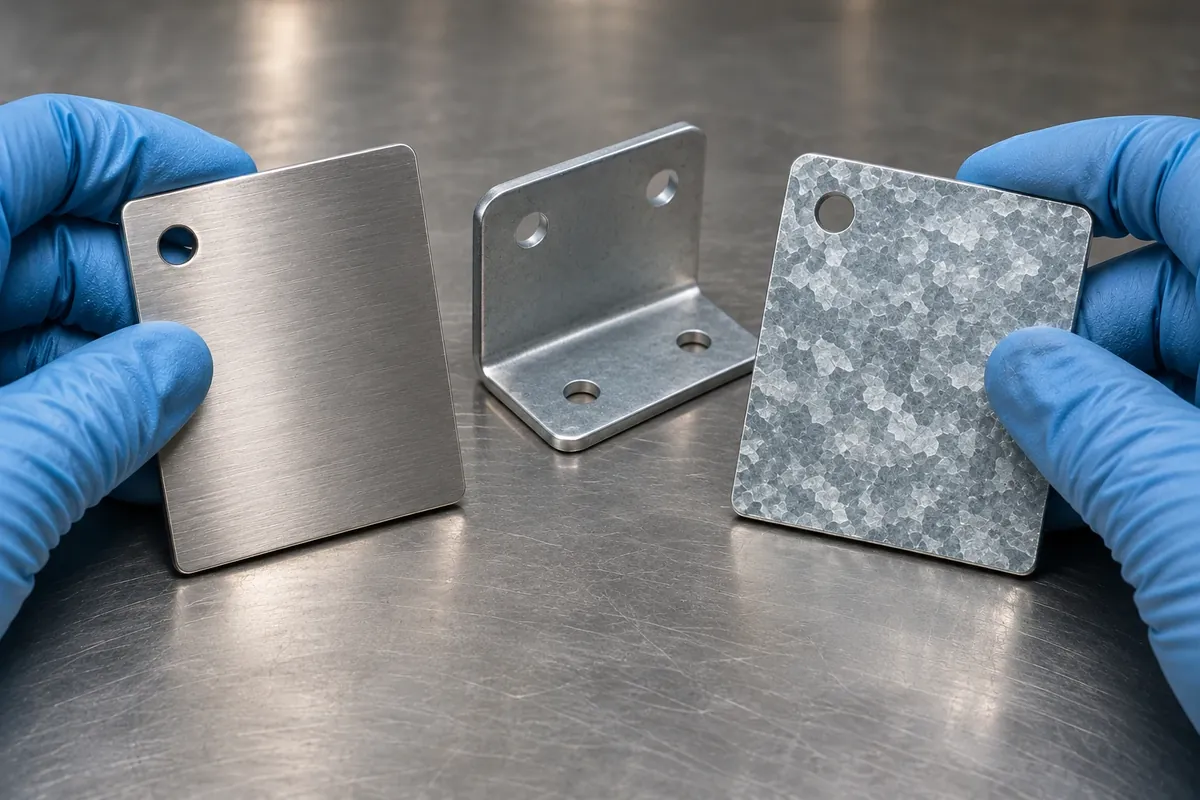
Stainless steel is an alloy family in which the actual grade and condition matter. A product specification should identify the grade or approved declaration for each component and its relevant surface condition. “Stainless” alone does not tell the buyer which grade was supplied, how a welded or formed part was finished, or how it will perform in every service condition. The Australian Stainless Steel Development Association (ASSDA) discusses grade selection and corrosion factors in its stainless-versus-galvanized comparison. Its comparison table is explicitly for 316 in that context; do not apply its statements automatically to every stainless grade.
Galvanized steel begins with a steel substrate and applies zinc protection by a specified process. The term can cover different coating routes and product forms. AGA describes several zinc-coating application processes for fasteners, illustrating why the route and part geometry should be identified rather than treating galvanized as one uniform finish. The AGA fastener coating overview can help buyers ask about process identity; the supplier must confirm which method applies to the actual component.
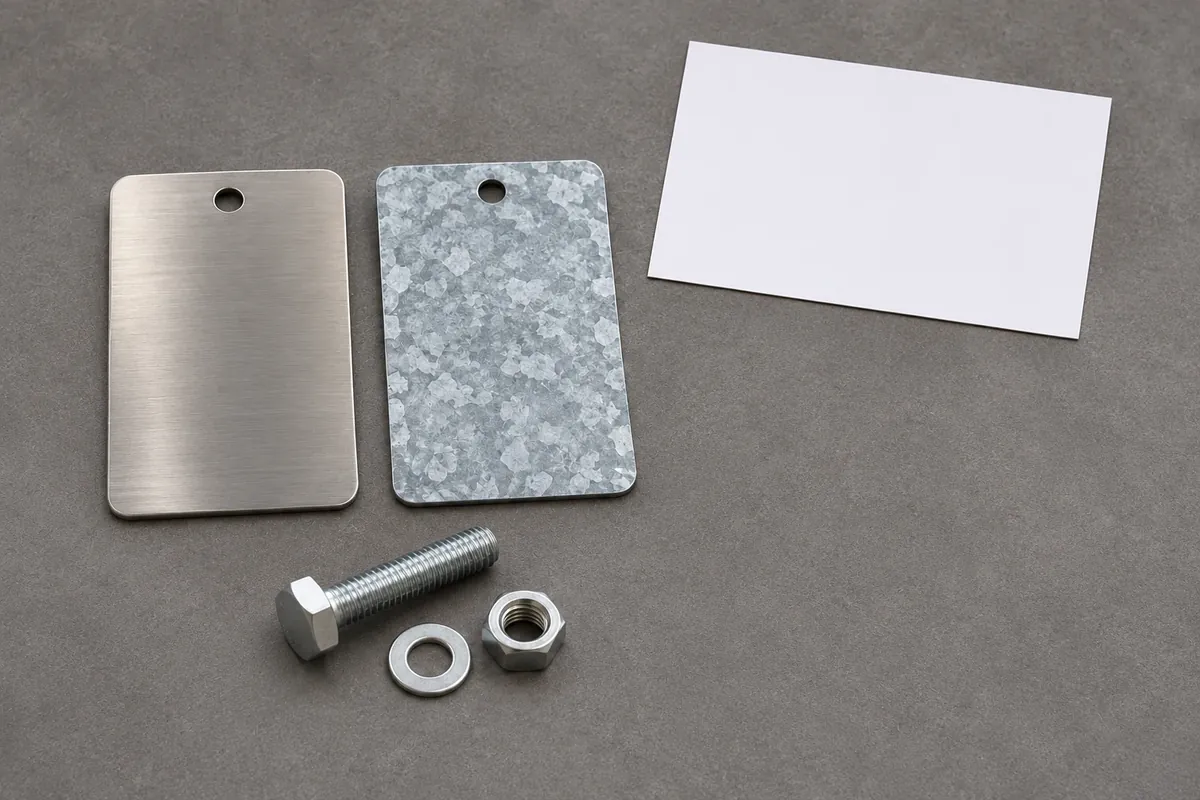
A buyer should separate the substrate from its coating. A coating description does not identify the steel grade underneath, and the steel grade does not identify coating coverage, thickness, adhesion, or surface appearance. Ask for both the substrate declaration and the coating specification, including who applies the coating and when it enters the manufacturing sequence.
The words “stainless” and “galvanized” also say little about the assembly. Screws, brackets, inserts, welds, and packaging contacts may use different materials. Map the product by component so the decision applies to the complete hardware rather than a single coupon.
How Do Fabrication and Coating Sequence Affect the Part?
The point at which zinc protection is applied can affect which surfaces and edges receive coating. The buyer should ask whether the steel arrives pre-coated, whether the finished part is galvanized after forming or joining, or whether another specified zinc coating process is used. The applicable route depends on the component, supplier equipment, design, and specification. Do not assume every galvanized part has the same coverage or that a coating route can be changed without affecting threads, fit, dimensions, or appearance.
Forming, cutting, drilling, welding, grinding, and assembly may expose or alter surfaces. If coated stock is formed or cut, ask how exposed edges and damaged areas are controlled under the applicable specification. If coating follows fabrication, ask how the process addresses the complete part, including internal or recessed areas, drain points, threads, and surfaces that may hold liquid. A supplier or coating specialist should define the relevant process and inspection controls; a buyer should not invent a repair method from a general article.
Stainless components also have process dependencies. Welding, polishing, cleaning, passivation, and handling may affect the surface condition. A welded stainless basket and a formed zinc-coated basket can involve different steps and inspection points. These process differences should be captured in the quotation and sample review rather than hidden behind a material comparison table.
For either route, identify interfaces that could affect assembly. Coating can change dimensions at a hole, threaded feature, mating surface, or sliding component. A material alternative may also require different fasteners or design details. Request a production-intent sample when the interface or appearance is important and specify the revision being approved.
Which Service Conditions Should the Buyer State?
The use environment should be described before comparing corrosion claims. Identify indoor or outdoor location, humidity, direct water exposure, coastal or industrial atmosphere if relevant, cleaning chemicals, storage conditions, and frequency of use. A bathroom cabinet interior, shower area, covered laundry, and coastal installation can expose hardware to different conditions. Avoid assuming that one generic “bathroom” label defines the actual exposure.
Include design features that could change local exposure: joints, crevices, cut edges, contact points, drainage, hollow sections, and surfaces that collect residue. The product’s intended use, cleaning, and packaging should be part of the review. If the buyer requires a defined corrosion test, state the test method and acceptance rule with the responsible technical owner. A test result applies only within its stated sample and conditions; it does not create a universal service-life ranking.
Material contact also matters. A galvanized steel component can be assembled with stainless fasteners or aluminum parts; a stainless assembly can include coated steel screws. The suitability of a pair depends on the actual materials, coatings, electrical contact, wetness, area relationship, and design. It is not enough to read one material name on the main component. Ask the supplier to identify the fasteners and any bought-in hardware that touches or drains onto the primary part.
Maintenance expectations should be explicit. The product maker should provide cleaning and inspection instructions for the actual finish and environment. Do not prescribe abrasive cleaning, coating repair, or passivation based on a general material-family label. If an application exceeds the available evidence, hold the claim and consult the responsible supplier or technical owner.
How Should Buyers Compare the Two Proposals?
A fair comparison holds function, geometry, quantity, finish expectations, inspection, and packaging constant. Ask each supplier to name its substrate, grade or coating route, fabrication sequence, finish requirements, purchased components, and exclusions. If one proposal includes post-fabrication coating while another uses pre-coated material, record that as a process difference and ask what it means for edges, joints, fit, and inspection.
| Buyer field | Stainless-steel proposal | Galvanized-steel proposal | Evidence to retain |
|---|---|---|---|
| Material identity | Grade or approved declaration by component | Steel substrate designation by component | Material records tied to drawing revision |
| Protection route | Surface condition and any additional finish | Zinc-coating process and applicable specification | Processor declaration and process record |
| Fabrication | Forming, welding, polishing, cleaning, assembly | Coating timing relative to forming, cutting, joining, and assembly | Process sequence and sample review |
| Critical areas | Welds, cosmetic faces, crevices, threads | Cut edges, formed zones, threads, recesses, and coating coverage | Drawing notes and agreed inspection points |
| Environment | Use, moisture, cleaning, and metal contacts | Same conditions and contact map | Product-specific requirements and evidence |
| Appearance | Texture, sheen, color, and visible joints | Coating color, texture, coverage, and accepted variation | Approved production-intent sample |
| Commercial scope | Quantity, processing, inspection, packaging, exclusions | Equivalent scope with route-specific additions | Comparable quotation and revision |
Do not compare a finished stainless assembly with uncoated steel stock or use a supplier’s unit price as a direct material price comparison. Normalize the design and scope first. If coating, welding, or finish work is outsourced, identify how costs and changes are passed through to the finished part. A quote that excludes a coating operation is not comparable to one that includes it.
The phrase stainless steel vs galvanized steel should therefore lead to a scoped choice, not a color or weight shortcut. Ask which record would be different if the supplier changed the grade, coating route, or process sequence. That question often reveals the actual decision the product team needs to control.
The table is a decision aid, not a performance ranking. A project may prioritize appearance, a defined environment, supply-chain repeatability, repair, or cost. State the priority and the acceptable trade-offs before approving a substitution. Record unresolved assumptions as open items rather than treating them as accepted product facts.
What Should Be Checked on the Sample and Lot Records?
Review an assembled production-intent sample when possible. Confirm the substrate declaration, coating or finish description, critical dimensions, welds or fasteners, surface condition, drainage and packaging. A flat material coupon may help compare color and texture but does not represent the entire component’s edges, joints, holes, and interfaces.
The sample record should include product code, drawing revision, material or coating declaration, supplier or processor, sample date, and the buyer’s acceptance criteria. If the sample was produced by a prototype route, identify which elements differ from production. A visually acceptable sample made from pre-coated stock does not automatically validate a final part that is coated after fabrication, or vice versa.
For each production lot, request records appropriate to the purchase specification. The supplier should identify which lot or part the record covers, the controlled procedure or coating specification, and any deviations. A certificate or inspection report is only as useful as its scope and link to the delivered lot. Confirm how the lot ID appears on cartons, labels, or shipping documents so receiving can match records to components.
Packaging should protect visible surfaces and prevent parts from rubbing or damaging one another during shipment. Review separators, bags, and carton layout with the sample. If different metals are packed together, evaluate contact and moisture exposure in transit. The buyer should record the approved arrangement and require review before a packaging material or component changes.
Compare the Purchase Scope, Not Only the Material Line
The quotation should show which supplier owns the steel, coating, secondary operations, assembly, inspection, and packaging. One offer may include coating after fabrication while another includes only coated input stock. Their prices do not represent the same scope unless finishing, handling, inspection, and protection are aligned. Ask suppliers to state minimum order assumptions, tooling or fixture needs, and any route-specific setup separately from recurring part costs when those fields are available. Do not extrapolate a small insert or fastener cost comparison to a complete storage product.
A lower initial quote may also shift work to another party. A distributor might need to source a compatible fastener separately, arrange a local touch-up, or carry additional appearance variation. Include these responsibilities in the landed product review without inventing a market price or maintenance cost. If a supplier cannot provide a comparable number, record the difference as unknown and request a clarified quote rather than estimating it from a material label.
For repeat orders, clarify whether raw material, coating processor, and process revision are fixed or subject to change. Confirm who will notify the buyer if a sub-supplier or route changes. A stable product specification helps commercial teams compare reorders against the approved design and avoid treating a different surface or coating route as an equivalent substitution.
Identify Coating Continuity at Edges and Interfaces
The drawing should identify edges, cutouts, holes, welds, and mating surfaces that deserve review. Ask the supplier how the specified coating route treats these features and what inspection is available for them. A buyer should not assume that a generic sample coupon represents a formed part with joints, recesses, and contact faces. The finish provider’s procedure and the agreed inspection criteria determine what can be confirmed.
If a component uses pre-coated material, identify operations that occur after coating and how exposed or altered areas are controlled. If coating follows fabrication, confirm which internal faces, threads, and tight spaces are within process scope. The answer depends on the design and route. If an area cannot be coated or inspected as expected, the buyer and engineering owner should resolve whether the design changes, the specification changes, or the part is rejected.
Do not prescribe a repair or coating touch-up based on a generic description. The responsible processor should identify an approved corrective method for the exact coating and substrate. Record who authorizes rework and what inspection confirms the repaired lot meets the agreed acceptance rule.
Consider Fit, Maintenance, and End-of-Life Needs
Material choice can affect service and maintenance planning. Ask whether a bracket, fastener, or basket can be replaced independently, what part numbers apply, and whether the supplier can maintain the same material and finish specification at reorder. If the product is exposed to repeated cleaning, confirm the approved care instructions for the complete assembly. Do not assume that a cleaning method suitable for stainless steel is also suitable for an adjacent zinc coating, or vice versa.
The buyer may also need to understand how the finished product is separated, repaired, or recycled at end of use. These questions belong to the product’s declared materials, coatings, fasteners, and local handling arrangements. Do not claim a broad sustainability advantage from “stainless” or “galvanized” alone. Ask the relevant supplier for information that supports the buyer’s specific reporting or design requirement, and distinguish data about the material from data about the complete finished product.
Before releasing a production lot, create a receiving checklist that matches the approved material and finish record. Confirm that labels identify the part and revision, the shipment includes the agreed documentation, and any specified inspection points have been reviewed. If the buyer expects a coating or material certificate, state its required identifier and lot link in the purchase order. Keep the accepted sample and report available for later comparison.
A stainless steel vs galvanized steel selection should be revisited when the use environment, design, processor, or supplier changes. A design moved from a dry cabinet to a regularly wet location may need a new technical review. A change from pre-coated stock to post-fabrication coating can also affect the process interface. Write down what changed, what evidence was reviewed, and who approved the revised release. This makes the comparison actionable across production and reorders.
How Should a Buyer Handle Substitution or a Corrosion Claim?
Treat a proposed material or coating change as a controlled design change. Request the new substrate identity, coating route, fabrication sequence, sample, dimensions, assembly interfaces, test evidence, and packaging impacts. Decide whether a pilot lot or additional inspection is needed. Document approval against the drawing revision and update purchasing and quality records before the change enters production.
For a field concern, preserve the product and document the installation environment, product code, lot, cleaning history, and photos. A stain or coating defect can have multiple possible causes; do not diagnose from color alone. Identify whether the issue is on the substrate, coating, fastener, joint, or adjacent surface. Keep potential explanations separate from confirmed observations until the supplier or qualified technical owner reviews the evidence.
A corrective action should address the actual cause. This may involve a coating specification, design feature, process sequence, assembly material, cleaning instruction, packaging, or supplier control. Do not assume that re-coating or polishing is suitable without checking the substrate and finish. An unapproved repair can alter dimensions and appearance or make traceability more difficult.
The decision record should note what was confirmed, what remains uncertain, who owns follow-up, and which lots or revisions are affected. This creates a practical basis for reorders and prevents an individual incident from becoming a broad claim about all stainless or galvanized products.
How Can an OEM Buyer Coordinate the Choice?
An OEM buyer can send the drawing, sample, quantity, environment, finish target, installation details, packaging, and inspection requirements to the manufacturer. Ask the factory to distinguish its fabrication work from outside coating or bought-in components. For galvanized proposals, identify the responsible coating supplier and route. For stainless proposals, confirm the grade and finishing sequence. The buyer should keep the two scopes comparable while allowing for documented process differences.
Koitor Hardware is a family-owned custom metal hardware factory focused on bathroom and home-storage hardware. Approved company information supports customization from buyer drawings or physical samples and discussion of forming, welding, finishing requirements, assembly, and packaging. It does not establish a particular galvanizing service, stainless grade, corrosion test laboratory, or universal suitability claim. Those facts need confirmation from the responsible supplier and product records.
A structured sample review can help resolve geometry and appearance questions. Identify the critical faces, joining features, mounting interfaces, drain paths, and packaging contacts. If a specialist supplier performs the coating or finish, coordinate the sample approval and process revision across the manufacturer and processor. A final decision should show which material route was approved and why, using evidence connected to the actual product.
Review Koitor’s OEM home-storage hardware page und custom bathroom hardware manufacturing page. Send the drawing and finish question through the Kontaktseite. The manufacturer can help clarify product scope; the technical processor must confirm its coating or material-specific information.
Häufig gestellte Fragen
Is stainless steel always better than galvanized steel?
No. The actual stainless grade, galvanized substrate and coating route, design, environment, appearance, maintenance, and evidence determine the choice. There is no universal ranking.
Does galvanized mean the whole part is coated evenly?
The term alone does not establish coverage. Confirm the process route, geometry, specification, critical surfaces, and inspection evidence with the responsible supplier.
Is every galvanized finish the same?
No. Zinc protection can be applied by different processes and to different part forms. Request the applicable route and specification for the component.
Does stainless steel never corrode?
No. Grade, surface condition, fabrication, contamination, environment, and maintenance matter. Do not infer immunity from the word stainless.
Can stainless steel be used near galvanized steel?
That is a product-specific design question. Identify both materials, coatings, contact, moisture, and geometry, then ask the responsible technical owner to evaluate the assembly.
Can a material coupon approve a storage basket?
It supports limited material or appearance discussion, but it does not represent every weld, edge, joint, dimension, assembly, or packaging condition of the basket.
What should be in the RFQ?
State the same drawing, quantity, environment, finish target, inspection, packaging, and change rules. Ask suppliers to identify substrate, coating route, process sequence, and exclusions.
What should a buyer keep for a reorder?
Retain the approved drawing, material and coating records, sample ID, process revision, lot traceability, inspection evidence, and substitution approvals.
Arbeiten Sie mit Koitor Hardware zusammen
Share the drawing revision, use environment, material proposal, finish sample, quantity, inspection requirements, and packaging plan. Koitor can help clarify custom hardware and sourcing scope; the responsible material or coating supplier must confirm the process and product-specific evidence.
Compare the Coating Route and Finished Part
Send the drawing, material proposal, service environment, and approved finish reference.
OEM / EIGENE MARKE
Verwandeln Sie diesen Beschaffungsleitfaden in ein Produktdossier
Teilen Sie uns Ihr Zielprodukt, die Größe, die Oberflächenausführung, die Bestellmenge und Ihre Verpackungsanforderungen mit. Ihr Team erhält vor der Angebotserstellung eine praxisorientierte Prüfung der Herstellbarkeit.


 English
 Español
 Português
 Français
 Deutsch
 العربية