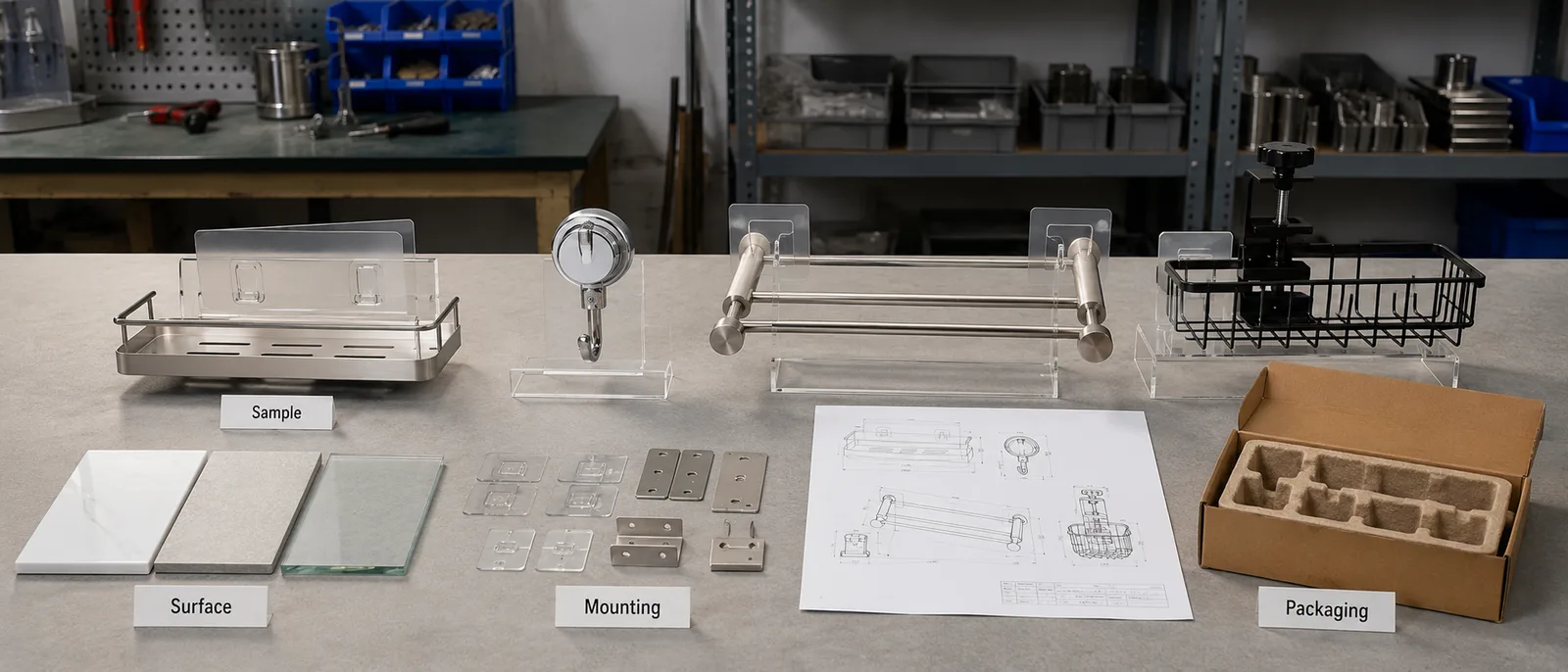
A no drill bathroom accessories manufacturer should be evaluated as a complete mounting-system supplier, not only as a metal rack factory. Importers need to confirm the accessory structure, adhesive or suction component, target wall surface, installation procedure, sample validation, finish and packaging before bulk production. No-drill performance should always be stated for defined conditions rather than promised for every wall and bathroom environment.
The metal shelf or towel rack may be well made while the installation still fails because the mounting plate, adhesive, surface preparation or instructions are unsuitable. A controlled OEM project therefore approves the complete installed product, including every mounting component and the customer-facing installation steps.
Which No-Drill Mounting Systems Should Importers Compare?
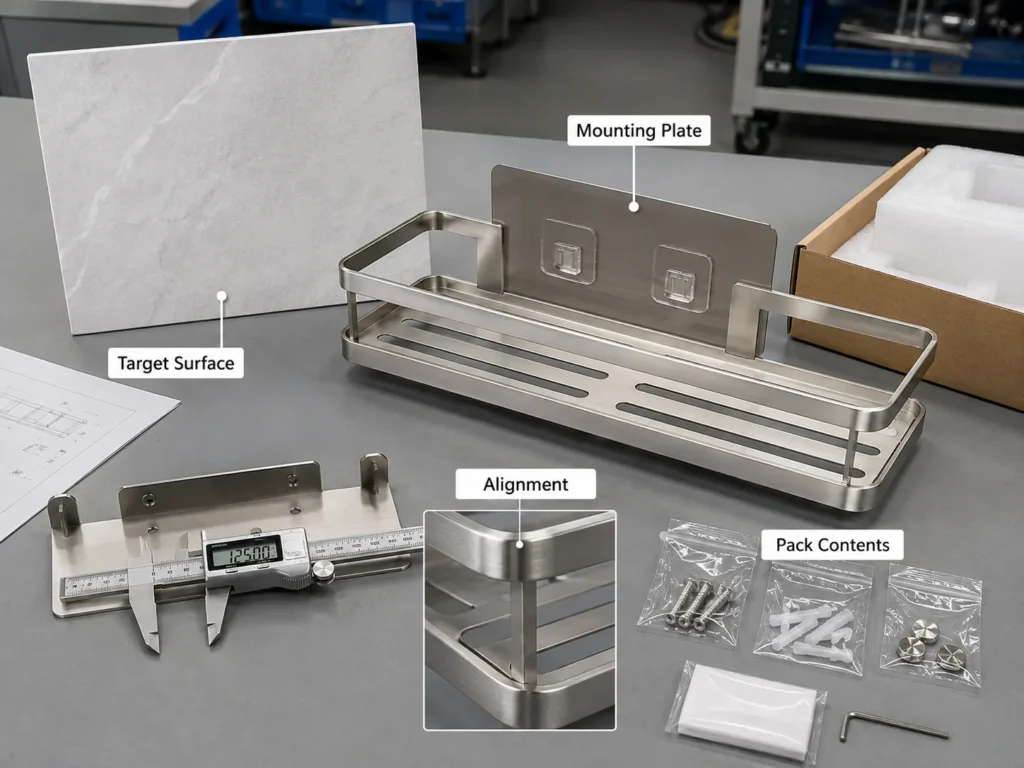
Importers should compare adhesive, suction, clamp, over-door and tension-based systems according to the target surface, product weight, customer installation process and intended use. These systems solve different installation problems and should not be treated as interchangeable.
| Mounting system | Typical application | Comprobación del comprador principal | Common risk |
|---|---|---|---|
| Adhesive plate or pad | Shelves, hooks, towel bars and holders | Surface compatibility, cleaning, curing and replacement | Weak bonding on unsuitable, dusty or textured surfaces |
| Ventosa | Light shelves, hooks and removable storage | Seal geometry, smooth surface and reinstallation | Air leakage or loss of seal |
| Clamp or clip | Shower rails, glass panels or shelves | Interface dimensions and surface protection | Poor fit, movement or marking |
| Over-door hook | Hanging baskets and towel storage | Door thickness, closing clearance and pads | Door interference or scratches |
| Tension or compression | Corner poles and adjustable racks | Adjustment range, contact ends and assembly | Incorrect setup or unstable contact |
Each system requires its own sample and instructions. A result from smooth glazed tile cannot automatically be applied to painted walls, stone, glass, textured tile or damp surfaces. The intended substrate must be part of the product specification.
Los compradores pueden consultar las valoraciones de Koitor’s no-drill bathroom accessory manufacturing options when comparing product structures and small-batch OEM development.
How Should Target Surfaces and Installation Conditions Be Defined?
Target surfaces and installation conditions should be defined before the mounting component is selected. The buyer should state the intended wall or interface, surface texture, cleaning method, installation sequence, curing time where relevant and expected bathroom exposure.
Adhesive systems usually depend on surface cleanliness, flatness and sufficient contact area. Residue, dust, moisture or texture can reduce contact. The installation guide should use clear steps and state any waiting period required before normal use, based on the approved mounting-component instructions.
Suction products need a suitable smooth surface and a maintained seal. Cup material, rim condition, mounting plate and customer installation all affect the result. The instruction should explain how to install, inspect and reinstall the product without implying universal suitability.
Clamp and over-door products rely on dimensional fit. Confirm glass, rail, shelf or door thickness and check protective pads. A bracket that is too tight may mark the surface; one that is too loose may move during use.
Product claims should match the validated configuration and clearly name suitable surface conditions. Any load, holding time or durability statement requires project-specific evidence for the complete product, mounting part, surface and installation method.
How Do Product Structure, Material and Finish Affect Performance?
Product structure, material and finish affect how forces reach the mounting interface, how the accessory behaves in moisture and how it appears in a coordinated bathroom range. The strongest mounting component cannot correct a poorly balanced rack or misaligned bracket.
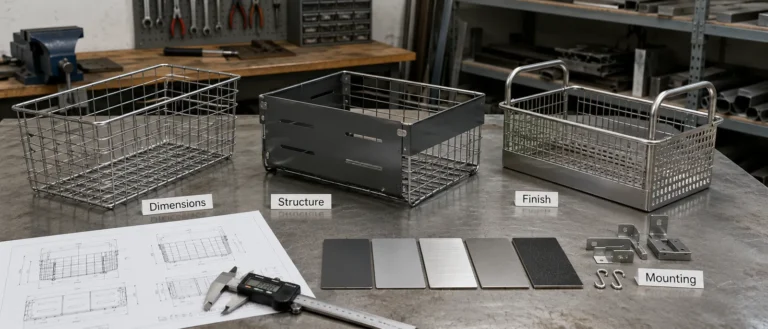
Review the distance between the wall and the stored items, bracket spacing, center of gravity, wire or tube size, shelf depth and product weight. Deep shelves and projecting towel bars can create greater leverage at the mounting point. This should be considered during design and sample validation.
Welds, bends and brackets should align so the product sits correctly against its mounting plate. Distortion can prevent full contact or create visible gaps. Hooks, guards and drainage spacing should suit the intended bottles, towels or bathroom items.
Powder-coated steel allows color and texture customization, while stainless steel can support a metallic appearance. In both cases, substrate preparation, welding, polishing or coating, handling and exposure affect the finished product. No material should be described as universally rust-proof.
Mounting plates, plastic caps, rubber pads and adhesive parts may use different materials from the metal accessory. Include every component in the approved sample and pack list. Color, fit and replacement control should be reviewed together.
A no drill bathroom accessories manufacturer should explain how the complete structure connects to the wall interface. Koitor Hardware can review wire or tube geometry, welding points, mounting-plate fit, finish and packaging before sample production.
How Should Samples, Instructions and Design Changes Be Approved?
Samples, instructions and design changes should be approved as one complete installation system. A loose metal sample is insufficient because the customer experience depends on the mounting component, surface preparation and installation sequence.
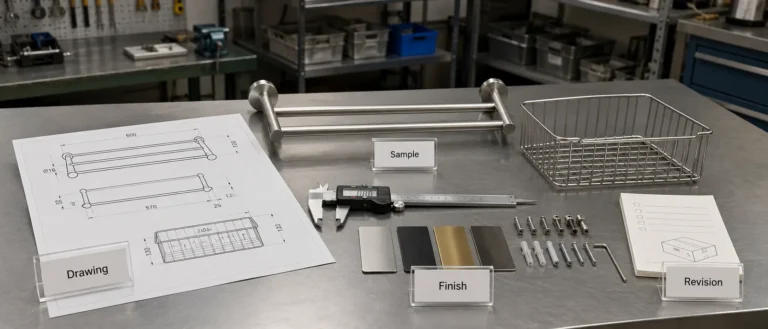
Send the factory a drawing or physical reference, target surface, accessory function, expected stored items, material and finish preference, mounting concept, expected quantity and packaging idea. Mark which details are fixed and which can be adjusted for manufacturing practicality.
The sample should include the final mounting plate or pad, accessory hardware, cleaning material if specified, protective parts and draft instructions. Install it on the intended reference surface using the customer-facing steps. Record surface condition, preparation, timing and any observations.
Review fit, alignment, access, drainage, movement and removal or replacement where relevant. Testing criteria should be defined for the project. Do not convert one successful demonstration into a universal performance claim.
After review, update the drawing, mounting-component specification, instruction and packaging layout with revision codes. A proposed adhesive, pad, bracket or structural substitution should be approved before production because apparently similar parts may behave differently.
A controlled trial order is useful before a larger rollout. The trial should use the approved mounting component, instruction, finish and packaging rather than temporary sample parts. Inspect units from different cartons and install representative products from normal packed stock. This checks whether the factory can repeat alignment, keep mounting surfaces clean, include every component and maintain the approved instruction revision.
Record trial findings by product code, mounting-component batch or reference, surface used, installation date and observed condition. If a problem appears, separate product structure, mounting part, surface preparation, instruction and user-sequence causes. A corrective action should identify the affected goods, proposed control and verification step. This traceability is more useful than replacing parts without understanding the source of variation.
Repeat orders should preserve the approved records. If the mounting-component supplier, material, dimensions, storage condition or packaging changes, review whether another sample or installation check is needed. No-drill products depend on interfaces, so a small unapproved component change can be commercially important even when the metal rack looks unchanged.
Koitor samples usually take about 5-7 working days after details and materials are confirmed. MOQ can start from around 100 pieces for some products, depending on structure, finish, mounting components and packaging. Bulk production often takes about 4-6 weeks depending on quantity, complexity, materials and approvals.
Private-label buyers should coordinate product and packaging development. The private-label bathroom accessories workflow can include instructions, artwork, mounting contents and retail presentation.
¿Cómo se deben comprobar la calidad y el embalaje antes del envío?
Quality and packaging should be checked against the approved product drawing, mounting-system reference, installed sample, finish sample and pack-content list. Inspection should cover both metal workmanship and installation completeness.
Measure critical product and mounting dimensions. Check frame alignment, bracket position, weld areas, sharp edges, shelf spacing, drainage and assembly. Compare finish color, gloss, polishing direction and visible coverage on representative units.
Verify every mounting component by item code or controlled reference. Count adhesive plates, suction cups, clamps, pads, screws, caps, cleaning materials and instructions as applicable. Assemble or install representative packed units rather than inspecting only loose parts.
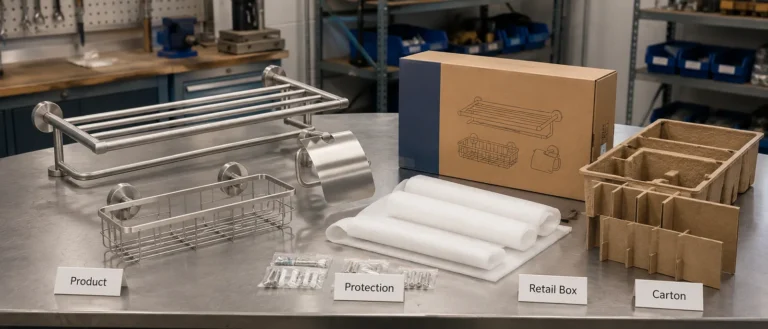
Packaging must protect both the metal accessory and the mounting system. Keep metal parts from rubbing, prevent brackets from puncturing the box and seal small components in identified bags. Adhesive surfaces or suction rims should remain clean and protected from deformation.
Review instruction readability and revision, product orientation, inner separators, retail-box fit, barcode and carton markings. An instruction change can affect installation as much as a hardware change, so it belongs in the same revision-control process.
Secuencia recomendada para la inspección final
- Confirm item code, drawing, mounting-system and instruction revisions.
- Measure critical product and wall-interface dimensions.
- Check alignment, welding, edges, finish and assembly.
- Verify mounting components against the approved reference.
- Install representative units using the packed instructions.
- Count all pads, plates, caps, tools and printed materials.
- Inspect protective packing, retail boxes and master cartons.
- Anota el tipo de incidencia, la cantidad afectada, las pruebas y la resolución.
What Should Be on a No-Drill OEM Buyer Checklist?
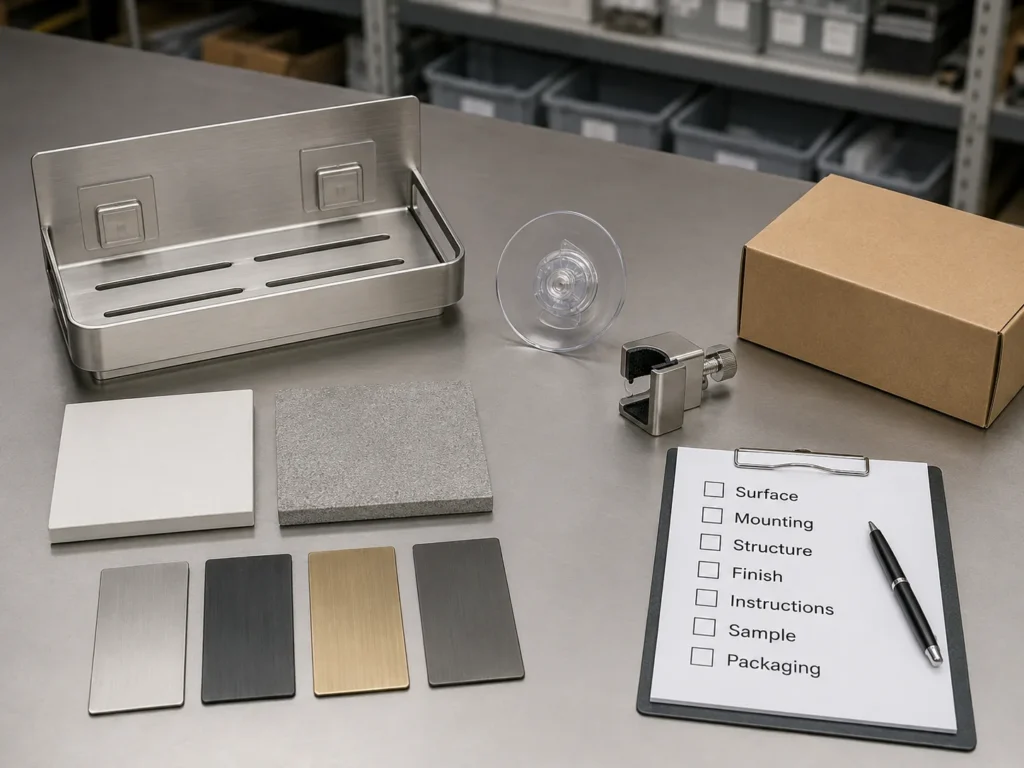
A no-drill OEM buyer checklist should connect the target surface, mounting system, product structure, sample validation, instructions, packaging and commercial terms. This makes supplier comparisons evidence-based and keeps key installation assumptions visible.
- Product type, intended use and target sales channel
- Adhesive, suction, clamp, over-door or tension mounting system
- Defined target wall, glass, rail, shelf or door interface
- Surface preparation and customer installation steps
- Product dimensions, wall offset and center of gravity
- Wire, tube, sheet, bracket and mounting-plate structure
- Target bottles, towels or bathroom items
- Material and finish reference
- Complete mounting component specification and pack list
- Installed sample review on the intended reference surface
- Project-specific test and acceptance criteria
- Drawing, component, instruction and artwork revisions
- Trial quantity, MOQ, sample and tooling charges
- Protective packaging for metal and mounting surfaces
- Plazos de producción y dependencias de la aprobación del comprador
Mandatory installation issues should not be hidden by a general supplier score. An incorrect bracket, contaminated adhesive surface, missing instruction or poor interface fit needs closure before shipment.
A no drill bathroom accessories manufacturer should also define the approved product and surface scope. Passing an adhesive hook review on smooth tile does not automatically approve a suction shelf, tension rack or installation on textured walls.
Preguntas frecuentes
Are adhesive bathroom accessories suitable for every wall?
No. Suitability depends on the adhesive system, wall material, texture, cleanliness, moisture, installation and product structure. Buyers should define and validate the intended surface for the project.
What should be included in a no-drill sample?
Include the complete metal accessory, final mounting plate or pad, protective components, any installation aid, instructions and initial packaging. The sample should be installed using the customer-facing process.
How should a suction bathroom shelf be evaluated?
Review cup and seal condition, mounting geometry, suitable smooth surface, installation steps, product balance and project-specific acceptance criteria. Reinstallation instructions may also be relevant.
Can no-drill bathroom accessories start with a small order?
Some projects can start from around 100 pieces depending on structure, finish, mounting components and packaging. Component or printed-packaging minimums may differ from the metal product MOQ.
What is the biggest packaging risk?
Common risks include metal parts rubbing, brackets puncturing boxes, adhesive surfaces becoming contaminated, suction rims deforming and small mounting parts going missing. Controlled separators and sealed component bags help reduce these risks.
Trabaja con Koitor Hardware
Developing a No-Drill Bathroom Accessory?
Send Koitor your drawing, physical sample, mounting concept, target surface, finish requirement, packaging idea and expected quantity. Our team can review the structure, sample plan and small-batch production options before quotation.
OEM / MARCA BLANCA
Convierte esta guía de abastecimiento en un resumen del producto
Indícanos el producto que deseas, el tamaño, el acabado, la cantidad del pedido y los requisitos de embalaje. Tu equipo recibirá un análisis práctico de la viabilidad de fabricación antes de recibir el presupuesto.
 English
  Español