
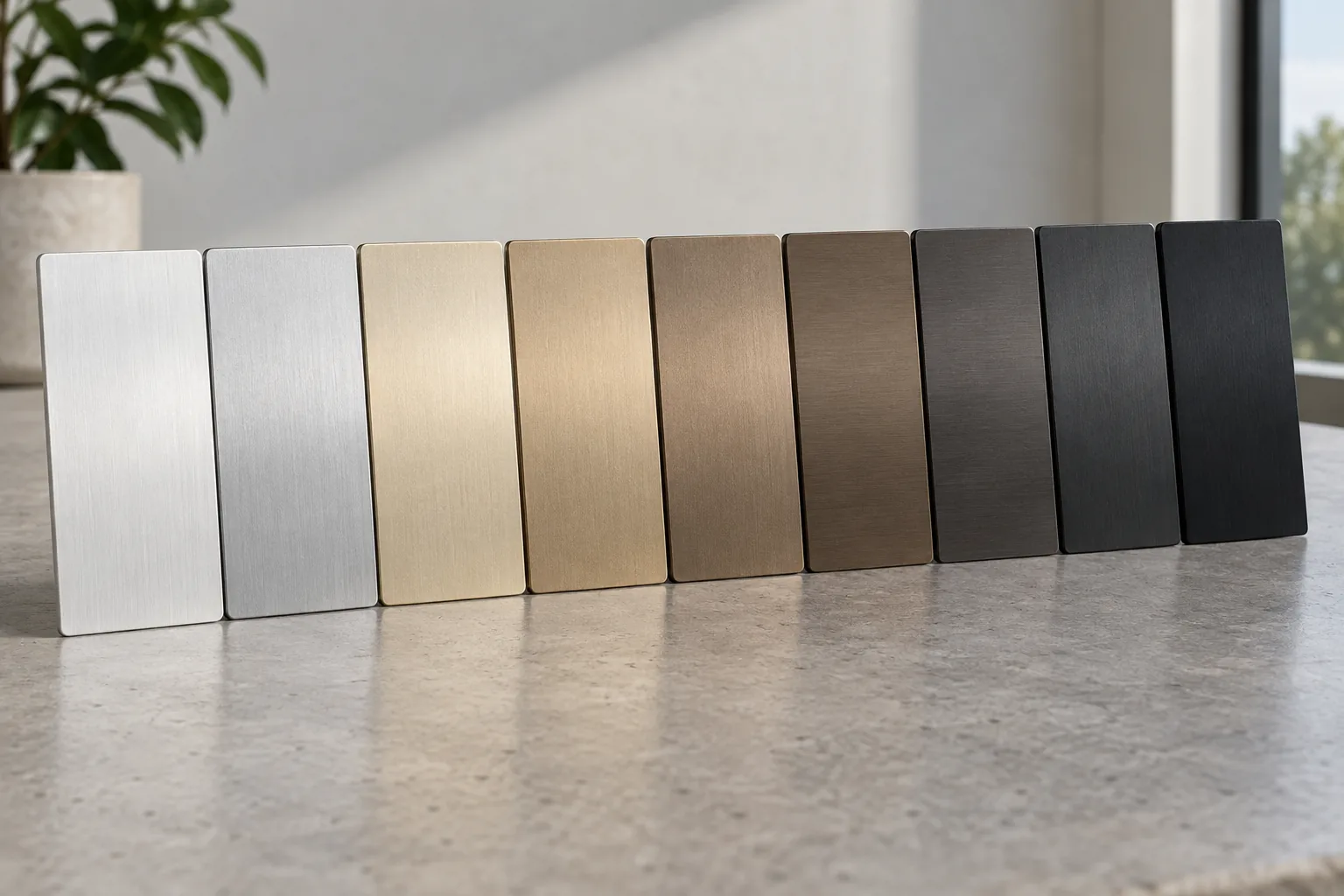
For anodized aluminum color variation alloy temper should be treated as a system of related inputs, not as a single color-control setting. Buyers should identify the alloy and temper, part geometry, surface preparation, anodizing route, batch arrangement, and approved reference sample, then judge production under consistent viewing conditions. A color chip or finish name alone cannot guarantee that differently shaped parts or separate lots will look identical.
This article is a sourcing framework for product developers considering anodized components in bathroom and home-storage assortments. Anodizing is a specialist finishing route that may be supplied by an external processor; this guide does not claim Koitor performs anodizing in-house or currently manufactures any specific aluminum product. A particular alloy, temper, geometry, and finish must be confirmed for each project.
Why can anodized parts vary in color?
Anodized appearance depends on the aluminum substrate and the finishing process. The alloy’s composition can influence resulting color, and temper, part shape, surface preparation, and process loading may also matter. A primary anodizing supplier, Linetec, identifies alloy composition as a major influence on color variation and also notes other contributing factors such as temper and part geometry. That supports a practical RFQ point: the buyer should control the actual part and material combination rather than approve a generic color label. See Linetec’s explanation of anodize color variation.
Color variation is not necessarily evidence of a defect. The buyer’s question is whether the range is acceptable for the product, brand, and assembly. A small variation may be acceptable on separate hidden components but noticeable across a large visible panel. Parts next to one another may need tighter visual matching than parts sold individually or assembled in different locations.
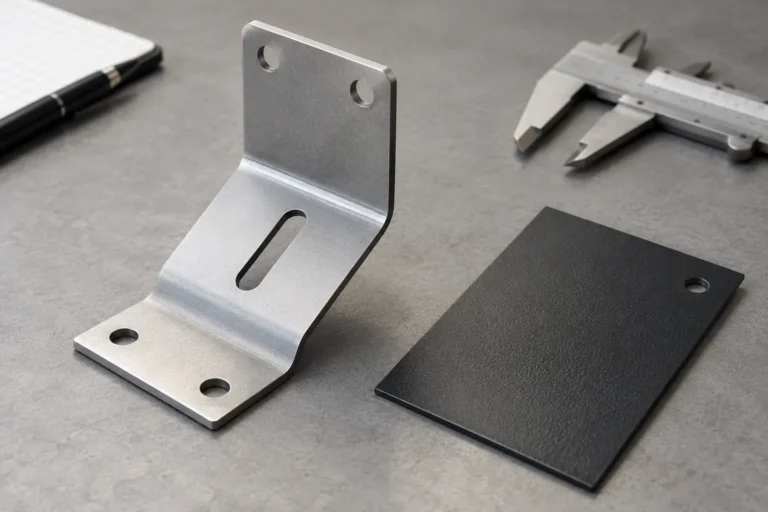
Geometry affects how a surface is presented and processed. Edges, recesses, holes, bends, and hanging points can create different visual areas. A flat coupon may therefore fail to represent a tube, bracket, basket component, or assembled product. Approve a part-shaped sample where appearance and fit matter.
How should alloy and temper enter the decision?
Begin with the product’s functional and manufacturing requirements. Specify alloy and temper if they are already established by engineering, or ask the supplier and finishing provider to propose an available combination for sample review. Do not choose an alloy only because a sample from an unrelated product has a preferred shade.
The buyer should identify the exact material source or grade as required by the project, the supplied form, and whether mixed material lots are allowed. If a private-label product uses multiple components, clarify which parts are anodized together and which are sourced separately. Different alloys or batches can produce appearance differences even when the same color target is requested.
| Buyer control | Por qué es importante | Documentación que hay que solicitar |
|---|---|---|
| Alloy and temper | Substrate influences finish response and forming behavior | Material declaration or agreed documentation |
| Part geometry | Surface area and shape affect visual presentation and process handling | Production-representative sample |
| Preparación de la superficie | Starting texture and cleaning influence appearance | Process sequence and approved finish sample |
| Batch arrangement | Components processed in different runs may not match exactly | Lot plan and visual comparison |
| Color acceptance | A name alone may be subjective | Physical master and viewing conditions |
| Change control | Material or processor changes can shift appearance | Written notice and reapproval trigger |
A supplier may propose an alternative alloy or temper to improve availability, formability, cost, or finish response. Evaluate that as a change to the product system, not a harmless substitution. It may influence dimensions, forming, assembly, and surface appearance at once.
What should the RFQ specify for color consistency?
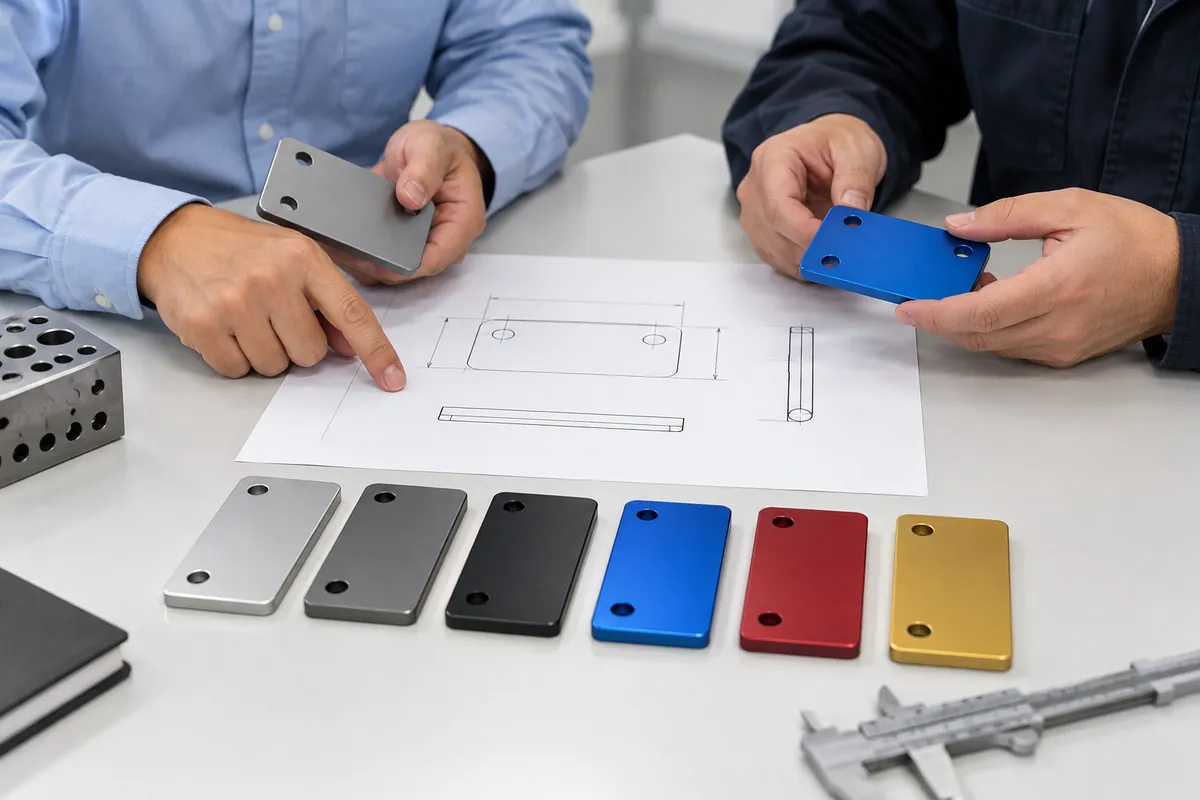
Define the required appearance in a way that can be reviewed. If the program already uses a controlled color specification, provide the reference and explain whether the acceptance is visual, measured, or both. If no standard exists, approve a physical master sample and define how it is stored, protected, and used. Avoid relying only on a digital image because monitor settings, lighting, camera exposure, and image processing affect perceived color.
The RFQ should include:
- – exact alloy and temper, if defined, or a request for a supplier proposal;
- – part geometry and the specific visible faces;
- – surface texture, preparation, and any pre-finish operation;
- – intended anodized color or finish target, with reference samples if available;
- – whether the order allows multiple material or processing lots;
- – which components should be processed in one batch where practical;
- – acceptable visual range or comparison method;
- – sample quantity and the parts that represent the final assembly;
- – approved processor and notice requirements for changes;
- – packaging that prevents surface contact, abrasion, and contamination.
For complex or large parts, ask the supplier to identify the representative sample locations. A coupon can be useful for early color direction, but it should not replace the part-shaped sample needed for final approval. If the product combines components, inspect them together in the intended lighting and assembly.
How should buyers approve the finish sample?
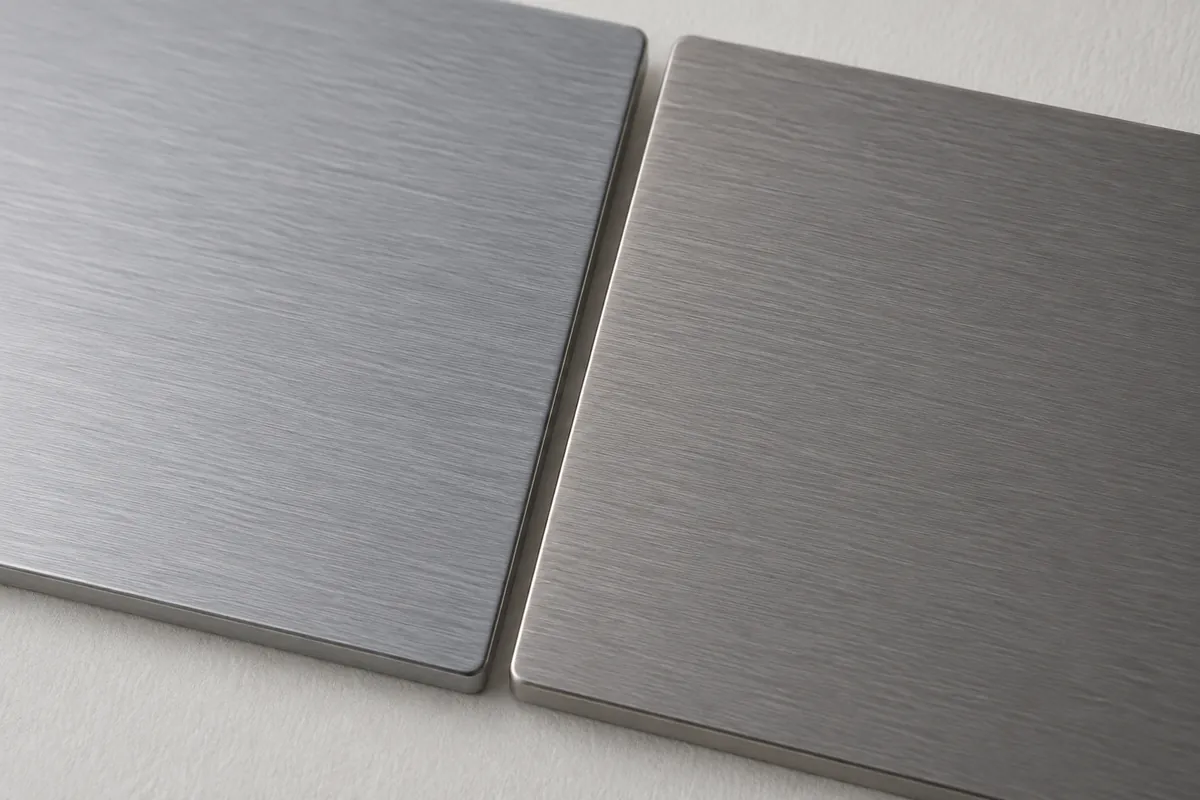
Use consistent lighting, viewing distance, background, and orientation when comparing samples. Inspect the visible faces and transitions, not only the broadest flat surface. Look for acceptable shade, texture, streaking, handling marks, edge coverage, and differences between adjacent components. If a product will be displayed under retail lighting, define whether that lighting is part of the approval condition or simply a reference.
Keep a physical approved master when the color expectation is important. Label its project, part, material, temper, finish, and approval date. Protect the master from light, abrasion, and handling that could change its appearance. Record whether it represents the target appearance or one acceptable point within a range. A single sample without that context can create disputes in later lots.
A sample approval record should also identify the process route and any known limitations. If the sample uses a different alloy, temper, geometry, or processor than production, mark the approval as provisional and list what remains unverified. Do not silently treat a visual prototype as proof of production matching.
For multi-component products, arrange the pieces as the end customer will see them. A finish difference across a joint or across adjacent parts may matter more than a similar difference on isolated parts. If components cannot be processed in the same batch, the supplier should explain how matching will be evaluated and what the buyer can expect.
What does the supplier need to control from lot to lot?
The supplier should connect material identity and finishing records to the order, identify its approved process provider, and define how samples or production parts are compared. Buyers can ask for a reasonable first-off review and lot records without dictating confidential process parameters. The control should focus on product acceptance and notification of relevant changes.
Changes that may require review include a different alloy or temper, new material source, surface preparation, finishing subcontractor, process sequence, fixture or hanging arrangement, and batch plan. Not every internal adjustment has the same impact, but the supplier should notify the buyer when the change can affect appearance, dimensions, function, or contractual requirements.
If the order includes visible components assembled from different process batches, define how matching is assessed. A supplier may recommend running the set together where practical, but operational constraints and order volume may affect feasibility. The buyer should discuss the risk and decide what evidence is needed before production rather than after a shipment arrives.
How do finish, geometry, and cost trade off?
A wider acceptable color range may increase sourcing flexibility. A narrow visual target can require more careful material segregation, sample approval, or batch coordination. These are potential commercial trade-offs, not an automatic cost formula. Ask suppliers to quote based on the same finish definition and to list any assumptions about lot mixing, sample approval, or rework.
Geometry may also affect finishing efficiency and appearance. Recesses or complex shapes can be harder to inspect consistently. A design change that simplifies surfaces or groups matching components may reduce uncertainty, but it could affect product appearance or assembly. Review cost, aesthetics, and functional needs together with the supplier.
Do not assume that a different temper is a simple color correction. The selected temper must also support the part’s forming, assembly, and dimensional requirements. Any proposal should include evidence on both the finished appearance and the product function.
For broader OEM metal-hardware context, see Koitor’s Fabricación a medida de accesorios de baño y OEM home-storage hardware pages. They do not imply Koitor’s in-house anodizing capability.
Buyer checklist: what should be approved?
- – Sustrato: record alloy, temper, form, and accepted sourcing documentation.
- – Geometry: identify the actual visible part and the faces that matter.
- – Preparation: document surface texture and process sequence.
- – Finish target: define color and appearance using a physical master or controlled standard.
- – Viewing: set consistent lighting, background, orientation, and distance.
- – Batch: specify whether components should be processed together and disclose lot assumptions.
- – Ejemplo: approve a production-representative part, not only a flat coupon.
- – Inspection: define how shade, surface, and component matching are checked.
- – Records: retain material, finish, lot, sample, and approval information.
- – Control de cambios: review material, processor, preparation, or batch-plan changes.
How should the approval record support later orders?
The buyer should also name an owner for each open item. Product engineering may own the interface, sourcing may own price and supplier changes, and quality may own inspection evidence. Smaller teams can combine these responsibilities, but assignment still needs to be explicit. Without an owner, an open dimension or sample deviation can be mistaken for an accepted production condition.
Use sample review to close the highest-risk unknowns first. A photograph or supplier explanation can support the conversation, but a physical, production-representative sample is stronger evidence when the requirement depends on fit, finish, use, or handling. If a full test is not available before purchase, record that limitation and avoid making a performance promise beyond the evidence.When the product contains multiple anodized pieces, review them as an assembled set. A supplier may produce separate parts in different loads or source them from separate material lots. Decide which surfaces must match closely and which can tolerate a wider visual range. Record relevant part numbers and sample grouping so future production is compared on an equivalent basis.
If appearance limits cannot be stated numerically, use a protected physical master and a clear visual review protocol. The anodized aluminum color variation alloy temper review should note lighting, distance, background, orientation, and whether parts are viewed together. This gives buyer and supplier a consistent basis for discussion and a record for later change control.
For this project, the anodized aluminum color variation alloy temper requirement should be recorded with the approved sample and drawing. Reconfirm the anodized aluminum color variation alloy temper criteria if material, process, supplier, or intended use changes.
For a repeat order, buyers should preserve the approved alloy and temper alongside the finish master. If a supplier proposes a substitute, treat it as a controlled change: compare representative parts from the new material and process route under the same lighting and viewing conditions, then document acceptance before production. This does not require every project to use one universal color instrument; the method should match the buyer’s product risk and visual standard.
FAQ
Alloy composition can influence the result, and suppliers also identify temper, geometry, and process factors. The actual effect must be evaluated on the target material and part.
Does temper determine anodized color by itself?
No. Temper is one input among several. Do not use it as a standalone color guarantee.
Can a digital color image replace a physical master?
Usually not when close appearance matching matters. Screens and lighting change perceived color; use a physical reference and consistent comparison conditions.
Should visible components be anodized in one batch?
That may help align processing conditions, but feasibility depends on the program. Ask the processor and supplier to explain the proposed batch arrangement and approve the assembled sample.
What if the supplier proposes another alloy?
Treat it as a material change. Review function, forming, dimensions, finish appearance, documentation, and cost before approval.
Does Koitor anodize aluminum in-house?
This article makes no such claim. Confirm the actual process route and project capability during sourcing.
Trabaja con Koitor Hardware
Discuss a Custom Metal Hardware Project
Share your drawing, target interface, material, finish, sample needs, and buyer acceptance criteria with Koitor. Confirm exact category capability and process responsibilities for each project.
OEM / MARCA BLANCA
Convierte esta guía de abastecimiento en un resumen del producto
Indícanos el producto que deseas, el tamaño, el acabado, la cantidad del pedido y los requisitos de embalaje. Tu equipo recibirá un análisis práctico de la viabilidad de fabricación antes de recibir el presupuesto.

 English
  Español
  Português
  Français
  Deutsch
  العربية