

An install sheet can only explain how to install drywall anchors once it names the anchor family packed with the accessory. A ribbed plastic expansion plug, a winged plastic anchor, a self-drilling threaded anchor and a metal molly sleeve all go into drywall differently. Each one needs its own hole, its own set step and its own check that it is holding.
The questions users ask most are predictable: what size hole to drill, why the anchor spins, why it will not sit flush, and which anchor holds what weight. The first three are answered by the family and its supplier sheet. The last one is a load question the install sheet should not try to answer with a borrowed chart.
This guide is for importers, distributors and private-label teams who ship towel bars, robe hooks, shelves and storage accessories with drywall anchors in the fixing bag. Koitor Hardware is a family-owned China OEM manufacturer of custom metal bathroom and home storage hardware. The guide covers the anchor section of an install sheet, not anchor manufacturing or load testing.
Toggle bolts already have their own first-hang guide: how to install a toggle bolt. Selection between toggles and molly anchors is covered by toggle bolt vs molly bolt. This page covers plastic and self-drilling anchors in full and molly sleeves as a separate family.
What does how to install drywall anchors depend on first?
It depends on which anchor family is in the bag and what that anchor’s supplier documents for the hole, the set and the screw. Drywall anchors are not interchangeable. A hole that is right for a plastic plug is wrong for a self-drilling anchor, and a set step that is right for a molly sleeve does nothing for a winged plug.
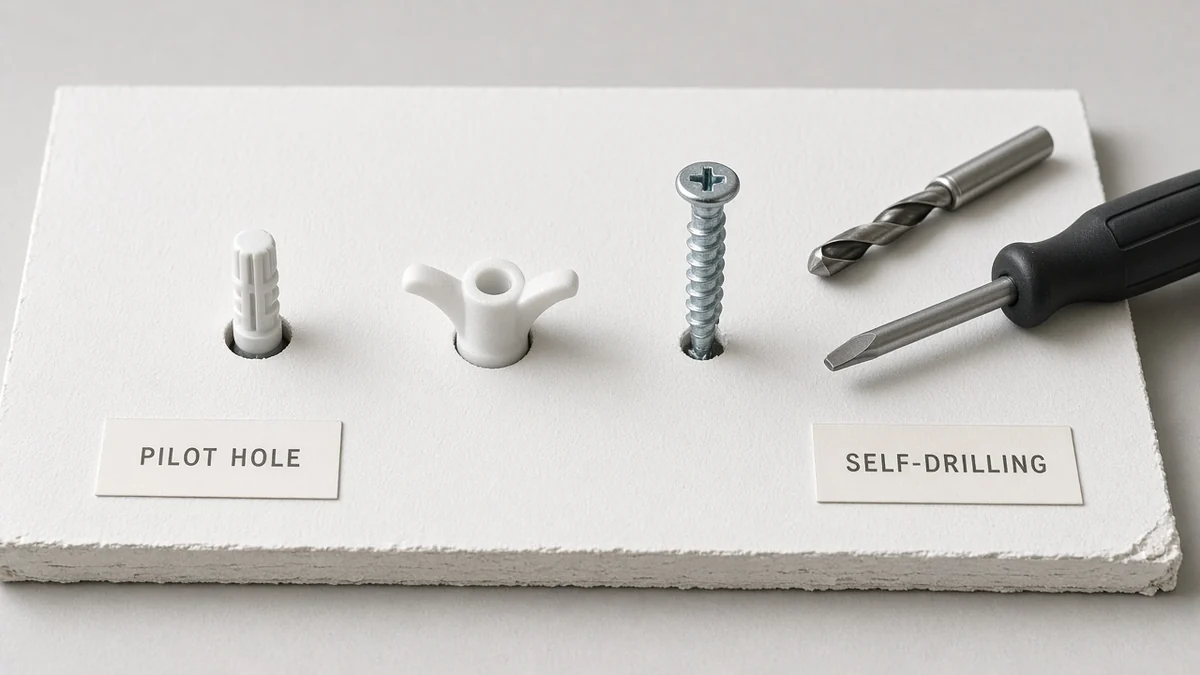
Ribbed plastic expansion plugs are pushed or tapped into a drilled hole. When the screw is driven in, the plug expands against the sides of the hole. They rely on the gypsum around the hole, which is why hole size and board condition matter so much.
Winged or ribbed plastic anchors with fins or folding legs go into a drilled hole and spread behind or within the board when the screw is driven. Their wings increase the bearing area. Some need a specific hole size so the wings fold through; others are tapped flush and then expanded by the screw.
Self-drilling threaded anchors, made from nylon or zinc alloy, have a pointed tip and coarse threads. They are driven into the board with a screwdriver and cut their own thread in the gypsum. No pilot hole is usually needed, though some suppliers recommend a starter hole. The accessory screw then goes into the anchor.
Molly sleeves are metal anchors that expand behind the board when their screw is tightened. They are covered later on this page as a separate family. Toggle bolts are covered on their own page.
For a brand, the question is what the listing promises. “Wall anchors included” says nothing about the wall the buyer has or the weight of the accessory. The install sheet should name the family and the wall the packed anchors are intended for, and leave load capacity to tested supplier data.
Start the anchor section with an identification block: a photo of each packed anchor, its family name and the screw it takes. If the supplier documents a board thickness range or a pilot hole size, include it. If not, leave the field named and blank rather than copying a value from another brand.
How do plastic plugs, winged anchors and self-drilling anchors set?
Each family sets by a different mechanism, and a short description on the sheet helps users recognize when something has gone wrong. The supplier’s steps decide the details.
Ribbed plastic expansion plugs
A typical documented path is to drill a hole of the size the supplier states, push or lightly tap the plug in until its collar is flush, then drive the screw through the accessory into the plug. The plug should not turn while the screw is driven. If it does, the hole is too large or the board is damaged.
Plugs that stand proud of the wall stop the accessory sitting flat. Plugs that are pushed in too far lose their collar grip. The sheet should show a flush plug and tell the user to stop if the plug does not seat flush.
Winged and finned plastic anchors
Winged anchors usually need a drilled hole. Some are pushed through until the wings snap open behind the board; others are tapped in and the wings spread when the screw is driven. The sheet should show which behavior the packed anchor has, because users who expect the wrong one push too hard or stop too soon.
Self-drilling threaded anchors
A typical path is to press the anchor tip into the wall at the mark and drive it with a screwdriver, keeping it square, until the head is flush. Then the accessory screw is driven into it. Over-driving strips the thread in the gypsum and the anchor spins. Power drivers make that easy to do.
The sheet should copy the supplier’s advice on whether a power driver may be used and at what setting, or recommend hand driving if the supplier says nothing. If the anchor hits a stud, it will not drive further; the sheet should say to use a wood screw directly into the stud instead, if the supplier allows.
Screws supplied with the anchor
Each anchor family is designed for a screw diameter and length range. The packed screws should match the anchors and the accessory thickness. The sheet should say “use the screws supplied” and name them, because substitute screws are a common cause of spinning or loose anchors.
Marking and drilling accurately
Most accessories need two or more anchors in line. A paper template or the accessory bracket itself is the usual way to mark the positions. The sheet should say which the kit uses and show it. Measuring each hole separately is how brackets end up out of level.
When drilling, keeping the drill square to the wall gives a clean, round hole that suits the anchor. An angled hole is larger at the surface and lets plugs spin. The sheet can say this as general practice without naming drill speeds.
Dust and debris in the hole
Drilling gypsum leaves dust in the hole and on the surface. Some suppliers recommend clearing the hole before inserting a plug. The sheet can repeat that advice. It should not suggest blowing into the hole, which sends dust into the eyes.
Accessories with concealed brackets
Many towel bars and shelves use a concealed mounting plate that is screwed to the wall first, with the accessory clipped or set-screwed onto it. The anchors hold the plate, not the accessory. The sheet should show the plate as the part being fixed, so users do not try to screw through decorative parts.
How are molly sleeves and toggle bolts handled on the same sheet?
Many accessory ranges pack more than one anchor family, and a single install sheet ends up covering them. The cleanest approach is a separate short section for each family, with its own photo. Molly sleeves and toggle bolts need that separation more than any other anchor.
Molly sleeves as their own family
A molly sleeve is a slotted metal sleeve with a flange. A typical documented path is to drill a hole of the size the supplier states, or drive the pointed type with a hammer if it is designed for that, then tighten the screw so the sleeve legs fold and grip the back of the board. The screw is then removed, the accessory placed, and the screw refitted.
Molly sleeves often have small teeth under the flange to stop them spinning while they are set. Some kits include a setting tool. The sheet should copy the supplier’s steps exactly and keep them under a molly heading, because plastic-plug steps do not apply.
Removal later follows a different path again. The molly bolt removal guide covers that, and the install sheet can point to it in one line.
Toggle bolts on their own page
Toggle bolts need a larger hole and a first-hang sequence where the wing is pushed through before the accessory is fitted. That sequence is covered on the published toggle bolt installation guide. If the bag contains toggles, the install sheet should send the user there rather than describe a toggle sequence under a generic anchor heading.
Removing a toggle later is covered by the toggle bolt removal guide. Choosing between the two belongs on the toggle versus molly comparison.
Studs and anchors in the same accessory
A towel bar may have one bracket on a stud and one between studs. In that case, one bracket uses a wood screw and the other an anchor. The towel bar anchor kit drywall versus stud buyer guide covers that scope decision, and the install sheet should show both cases if the kit supports them.
What should a drywall anchor install sheet list?
The anchor section is a short set of fields followed by a family-specific path. The table is a template. It has no load ratings, hole sizes or screw sizes, because those belong to the supplier’s data for a named anchor.
| Campo | What to write | Source |
|---|---|---|
| Anchor family | Plastic plug, winged plastic, self-drilling, molly sleeve, or toggle | Packing list and supplier drawing |
| Board range | Board thickness the anchor is designed for | Supplier sheet; blank if not stated |
| Pilot hole | Size and method, or none for self-drilling | Supplier sheet |
| Set step | Tap flush, drive flush, push until wings open, or tighten to expand | Supplier sheet |
| Screw | The screw supplied, with any length limit | Packing list and supplier sheet |
| Set check | Anchor flush, not spinning, screw tightens firmly | Supplier sheet; general practice |
| Load statement | Only tested supplier data with conditions, or none | Supplier test data |
| Exclusions | Ceilings, overhead loads, grab bars and safety-critical fixings | Brand policy |
Keep hole sizes with the anchor
A universal hole chart printed on the sheet invites users to drill the wrong size for the packed anchor. If the supplier gives a hole size, print it next to that anchor’s photo, not in a general table. If the supplier does not, say that the hole size is printed on the anchor packaging, if it is.
Make the set check visible
A short “how to tell it worked” note under each family helps more than any extra step. For plugs, the collar is flush and the screw tightens without the plug turning. For self-drilling anchors, the head is flush and does not spin. For mollies, the flange is tight and the screw resists turning when snug.
Version with the bag
Fixing bags change more often than accessories. If a production run switches from plastic plugs to self-drilling anchors, the install sheet must change too. Tie the sheet to the bag’s bill of materials and check both with the hardware kit packing inspection checklist.
Over-tightening the accessory screw
Once the anchor is set, the accessory screw is driven through the bracket. Over-tightening can crush a plastic plug, strip a self-drilling anchor or pull a molly flange into the board. The sheet should describe the stopping point in plain words, such as “snug, with the bracket held firmly,” unless the supplier gives a specific instruction.
Anchors near edges, corners and other holes
Anchors set very close to a board edge, an outside corner or another hole may break out the gypsum. Suppliers sometimes state minimum spacing or edge distance. If they do, the sheet should print it beside the anchor. If not, the sheet can say to avoid edges and existing holes without inventing a distance.
Packaging that helps the installer
Small changes to the fixing bag make the sheet easier to follow. Separate compartments for each anchor family, a printed label with the family name, and screws bagged with their anchors all reduce mix-ups. The sheet can refer to the labels directly, for example “use the anchors in bag A for the wall plate.”
What should the sheet say about walls, studs and loads?
Drywall is the most common wall in North American homes, but not every wall is drywall, and not every drywall is the same. The sheet should say which wall the packed anchors are intended for and what to do if the wall is different.
Gypsum board is specified under recognized standards such as the ASTM gypsum board specification. Board thickness and type vary between rooms and buildings. If the supplier’s data lists a board thickness range for the anchor, the sheet should repeat it so the user can check.
Plaster walls, masonry, tile over cement board and thin paneling are different substrates. The packed drywall anchors may not suit them. The sheet should say so and recommend suitable fixings for those walls rather than suggest the same anchor will work.
Finding studs
Where a stud is available at a bracket position, a screw into the stud is often preferred over an anchor. The sheet can suggest checking for studs before drilling. It should not give stud-finding techniques beyond general advice, and it should not claim an anchor is equivalent to a stud fixing.
Load statements
Load capacity depends on the anchor, the board, the screw, the accessory and how the load is applied. Supplier test data, where it exists, comes with conditions. The sheet should print only tested data with its conditions, or no load figure at all. A borrowed chart from another brand is worse than no chart.
Bathroom conditions
Bathrooms are humid, and moisture-resistant board is common. The anchor choice and the sheet’s instructions should suit the board used. The sheet should not claim the anchors are moisture-proof unless the supplier documents it.
Finishing around anchors
Most anchors are hidden behind the accessory. If a hole is drilled in the wrong place, it needs patching. ASTM’s specification for application and finishing of gypsum board is a common reference for finishing practice. The install sheet can point to normal finishing without detail.
Multi-pack programs for hotels and rentals
Hotels and property managers fit the same accessory in many rooms. A one-page card per anchor family, with the hole source, the set step and the set check, works well for maintenance teams. It should carry the same version as the full install sheet and the bag’s bill of materials.
What to do when an anchor fails during install
If an anchor spins or pulls out while the screw is being driven, the hole is no longer usable for the same anchor. The sheet should tell the user to move the fixing to a new position, use a stud, or use a different anchor family suited to the damaged hole if the supplier provides one. It should not suggest packing the hole.
What must a drywall anchor install sheet not print?
Check the sheet against this list before release.
- Load ratings without tested supplier data and its conditions.
- A universal pilot hole chart for every anchor.
- Toggle or molly sequences under a generic plastic anchor heading.
- Ceiling, overhead or grab-bar installation steps.
- “Holds anything” or “heavy duty” without data.
- Claims that the anchors suit plaster, masonry or tile without supplier support.
- Power-driving instructions for self-drilling anchors that the supplier does not document.

After the list check, install each packed anchor family in a sample board following only the sheet. If each anchor sets flush and holds the screw firmly, the sheet is ready.
Translation and pictograms
Anchor leaflets are often pictogram-only. Make sure each family has its own pictogram row: hole, insert, set, screw. Mixing families in one row is the most common leaflet error.
Sign-off
The brand approves the wording and the anchor supplier confirms the data. Koitor can review the install sheet against the packed bag and flag mixed families, borrowed charts or unsupported claims.
Frequently asked questions about drywall anchors
What size hole do I drill for a drywall anchor?
The size the anchor’s supplier states for that anchor. Plastic plugs and winged anchors need a drilled hole; self-drilling anchors usually do not. Check the anchor packaging or the install sheet.
Why does my drywall anchor spin?
The hole may be too large, the board may be damaged, or a self-drilling anchor may have been over-driven. Remove it and set a new anchor in a fresh spot, or follow the supplier’s advice.
Should drywall anchors be flush with the wall?
Yes, for most plastic plugs and self-drilling anchors. A proud anchor stops the bracket sitting flat; a sunken one may lose its grip. Follow the set check for the packed family.
Do I need a drywall anchor if I hit a stud?
Usually not. A screw into the stud is normally used instead. Follow the supplier’s advice for the accessory.
Can I use a power drill to set drywall anchors?
A drill is usually used for the pilot hole. For self-drilling anchors and the final screw, many suppliers recommend hand driving or a low clutch setting, because power driving easily strips the anchor. Follow the supplier’s instructions.
How much weight can a drywall anchor hold?
Only the supplier’s tested data, with its conditions, can answer that. The install sheet should not print a borrowed figure.
Can I use drywall anchors in the ceiling?
Not with a general accessory install sheet. Ceiling and overhead fixings are excluded and need their own instructions.
Does Koitor make drywall anchors?
Koitor makes custom metal bathroom and home storage hardware and reviews install wording for fixing kits packed with it. The specific anchor in a program is confirmed on the packing list and quote.
Trabaja con Koitor Hardware
Review a drywall anchor install sheet
Send the accessory drawing, the anchor bag contents and the current install sheet. We can review whether the wording names each packed anchor family and its documented set steps. We will not issue load ratings, universal hole charts or ceiling and grab-bar approvals.
OEM / MARCA BLANCA
Convierte esta guía de abastecimiento en un resumen del producto
Indícanos el producto que deseas, el tamaño, el acabado, la cantidad del pedido y los requisitos de embalaje. Tu equipo recibirá un análisis práctico de la viabilidad de fabricación antes de recibir el presupuesto.


 English
 Español
 Português
 Français
 Deutsch
 العربية