
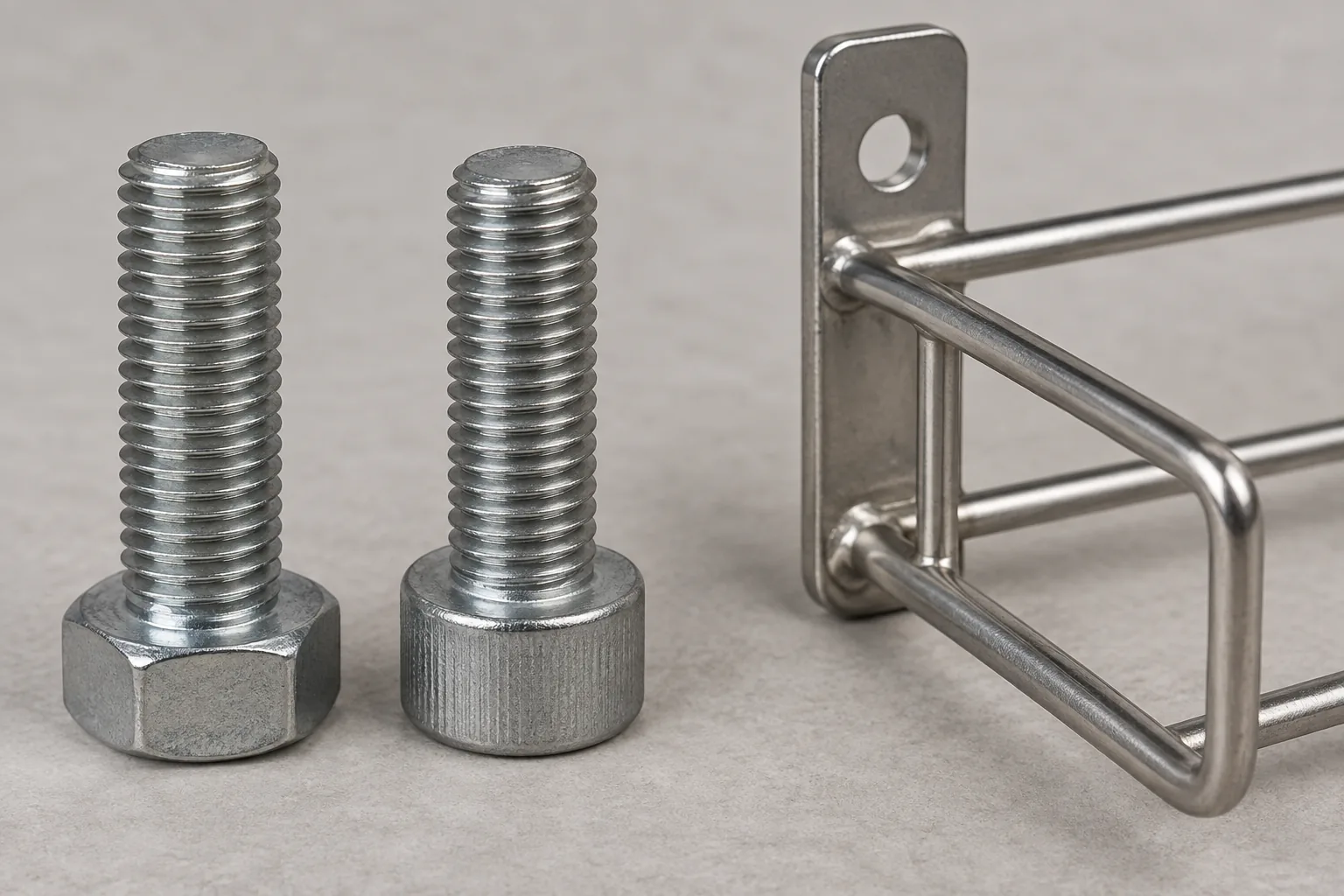
For rolled vs cut threads metal storage hardware, buyers should specify the finished thread standard and mating interface—not assume that the starting blank diameter will equal the final thread’s outside diameter. Thread rolling displaces material to form a thread, while thread cutting removes material. The processes can therefore produce different relationships among the blank, finished diameter, runout, and available threaded length. The supplier should identify its proposed route and confirm fit on a production-representative sample.
This article helps OEM buyers and product-development engineers specify external threads used on mounting studs, brackets, and storage-frame hardware. It does not claim Koitor owns thread-rolling equipment or performs the process in-house. Threaded components may be bought in or supplied through a specialist; confirm the actual route and capability for each project.
What is the difference between rolled and cut threads?
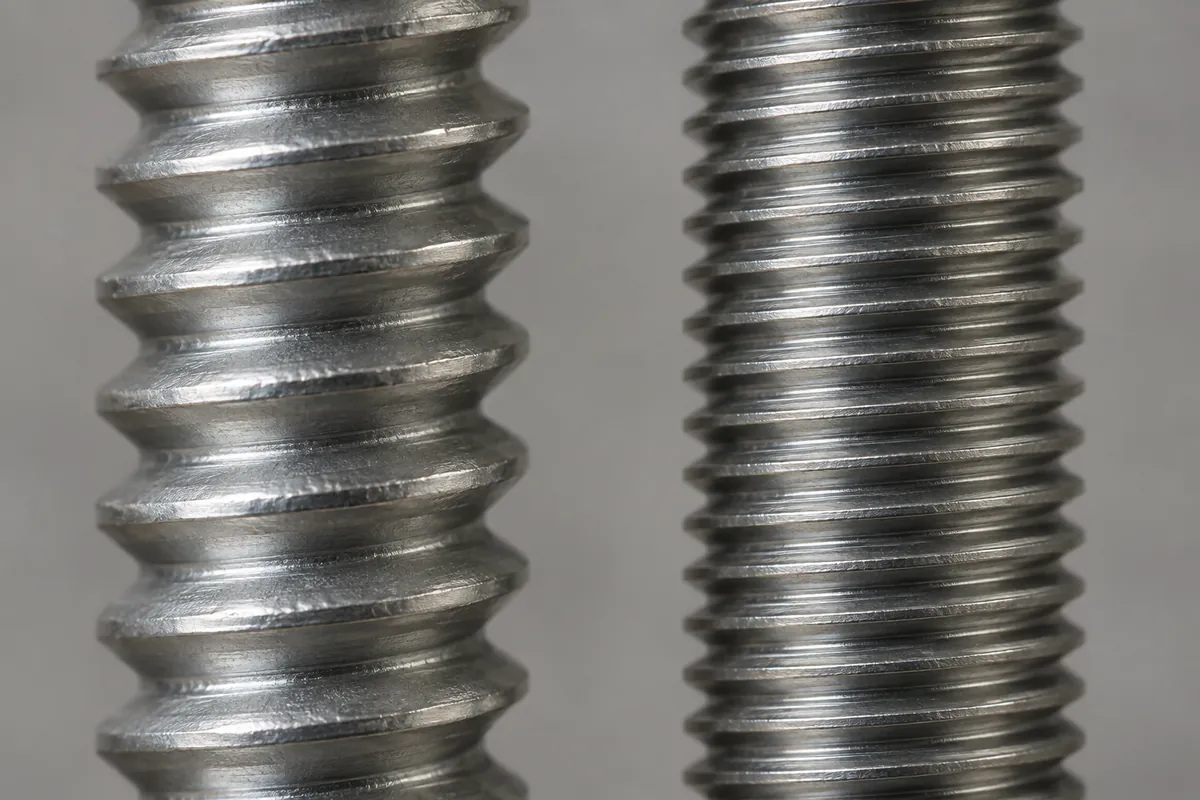
A rolled thread is formed by pressing or rolling the workpiece so material flows into the thread profile. A cut thread is produced by removing material to create the profile. A fastener supplier such as Accu explains these broad process differences and discusses trade-offs; the exact result still depends on material, geometry, thread form, equipment, and supplier control. Review a fastener supplier’s overview of rolled and cut threads.
The key sourcing implication is that the “blank diameter” before rolling is not necessarily the final external thread diameter. Material is displaced during forming. A buyer who specifies a stock diameter without clarifying whether it refers to the pre-process blank or the finished thread can create confusion at quotation or inspection.
Cutting and rolling also differ in their process constraints and economics. Thread rolling can require suitable equipment, tooling, material condition, and runout space. Cutting may be considered for geometry or quantities where a rolling route is not selected. Neither process should be declared universally stronger, cheaper, or better without a defined material, thread, load condition, volume, and validation basis.
Which thread dimensions must be controlled?
The drawing should define the finished interface and reference the applicable thread standard or a fully dimensioned profile where appropriate. Include nominal size, pitch, tolerance class or fit requirement, threaded length, unthreaded shoulder, end condition, and the mating nut or tapped feature. Identify where the thread begins and what region must remain available for assembly.
For an externally threaded stud or mounting feature, specify:
- – finished thread diameter and pitch in the stated standard;
- – thread tolerance or fit class required for the mating component;
- – usable thread length, including where runout is permitted;
- – shoulder, undercut, lead-in, chamfer, and end geometry;
- – material and condition as established for the application;
- – finish or coating and whether thread fit is checked before or after finishing;
- – datum and measurement method;
- – sample component or mating part used during verification.
Do not substitute a vague instruction such as “M6 thread” for a full functional interface when length, class, finish, or mating engagement is important. The supplier should identify any dimensions it interprets differently. If the stud is welded to a bracket, show the thread’s relationship to the joint and assembly surfaces.
Why can blank diameter and finished thread diameter be confused?
When a buyer sees a rolled threaded part, the thread crest can extend beyond the original blank surface because material has been displaced to create the profile. In a cut thread, material is removed from the original stock. A forum question about a threaded diameter appearing wider than the blank illustrates the confusion, but the actual dimensional result must be confirmed on the specific part and specification.
This makes terminology essential. Ask the supplier to mark whether any quoted diameter refers to raw stock, pre-process blank, finished major diameter, or a different measurement. A buyer should not compare two supplier quotes until both are using the same dimensional reference. Similarly, a raw wire or rod diameter is not proof of the finished thread size.
The thread should be checked with appropriate gauges or an agreed mating component according to the referenced standard and inspection plan. Caliper readings alone may not verify pitch, profile, or functional fit. The buyer and supplier should agree what evidence is required and who performs it.
How should buyers compare the process options?
| Decision point | Rolled thread route | Cut thread route | Acción del comprador |
|---|---|---|---|
| Material flow | Forms the profile by displacing material | Removes material to create the profile | Ask supplier to state the proposed process |
| Blank relationship | Blank dimensions may differ from finished crest dimensions | Finished profile is cut from stock | Label pre-process and finished dimensions |
| Tooling | May depend on rolling tooling and compatible geometry | May use cutting tools or machining route | Confirm tooling, setup, and quote assumptions |
| Runout | Requires suitable transition and clearance | Also needs defined thread start and relief | Dimension usable thread and permitted runout |
| Inspección | Finished thread must meet the specified fit | Same functional requirement applies | Specify gauge or mating-part check |
| Cost suitability | Depends on quantity, part design, tooling, and supplier route | Depends on machining time and volume | Compare total quoted part cost, not process label |
The table does not establish performance superiority. Buyers should consider production quantity, material, geometry, dimensional requirements, lead time, supplier route, and total cost. A supplier may select a process based on its equipment or subcontractor network; if the choice changes the part interface, the buyer must review it.
What should an RFQ ask the supplier?
Provide the assembly drawing, mating component, thread standard, required engagement, material, finish, and expected quantity. If the design is not frozen, state which inputs are open and request a proposed process with assumptions. Ask whether the thread is rolled, cut, machined, or bought in, and whether that route may change between sample and production.
The supplier response should identify:
- – the process route and any subcontracted operation;
- – which dimensions apply before and after thread formation;
- – raw material and finished thread dimensions;
- – usable threaded length and runout assumptions;
- – material and finish sequence;
- – inspection gauge, standard, and acceptance method;
- – sample and production-representative material;
- – proposed tooling or minimum economic quantity assumptions;
- – changes that require notice or reapproval.
A buyer does not need to demand the supplier’s confidential process parameters. The buyer does need enough product-level evidence to verify the thread fits the assembly and that the approved sample represents the quoted production route.
How should a sample and first article be reviewed?
Use a sample that matches the intended material, finish, and process route. Confirm the thread using the agreed gauge or mating part. Check usable engagement length, alignment to the bracket or mounting face, runout, burrs, coating buildup, and assembly access. If the threaded feature is welded or attached to a formed component, review the complete assembly rather than only a loose stud.
A first-article record should show the drawing revision, material identity if available, thread specification, supplier process declaration, measured critical dimensions, inspection method, mating component, finish condition, and deviations. Record any adjustment or rework. A prototype with a cut thread should not automatically approve a later rolled thread if the route or finished interface differs.
When a buyer changes the mating nut, hole, coating, or assembly stack, the thread fit may need to be reviewed again. The same applies to changing the source of a bought-in fastener. Document change control so the approved interface remains clear when a supplier or process changes.
What failure modes can the specification prevent?
Ambiguous thread length can leave too little engagement or create an exposed projection. Uncontrolled runout can interfere with a shoulder or nut seating. A mismatch between raw blank and finished thread dimensions can lead to rejected parts if the inspection datum is unclear. Coating can also affect fit when the specification does not state whether the thread is measured before or after finishing.
A supplier substitution can create another risk. The part may look similar but use a different thread process, material, or finish sequence. Buyers should require notice when those changes affect fit, assembly, or contractual requirements. The control should be proportionate: not every supplier adjustment needs a new full product validation, but a change to the functional interface should be assessed.
For broader metal-hardware sourcing context, see Koitor’s pages on custom metal storage racks y custom bathroom hardware. They do not imply in-house thread-rolling capability.
Buyer checklist: what should be approved?
- – Finished interface: specify thread standard, size, pitch, fit, and mating component.
- – Dimensiones: separate raw blank diameter from finished thread diameter.
- – Length: control usable thread length, shoulder, runout, and end geometry.
- – Process: ask whether threads are rolled, cut, machined, or purchased.
- – Material and finish: define identity, sequence, and inspection condition.
- – Ejemplo: use production-representative material and process.
- – Inspection: agree on gauge or functional mating check and records.
- – Assembly: verify the complete bracket or storage-hardware interface.
- – Quote: compare process and tooling assumptions transparently.
- – Control de cambios: review process, source, material, and finish changes.
How should the approval record support later orders?
The buyer should also name an owner for each open item. Product engineering may own the interface, sourcing may own price and supplier changes, and quality may own inspection evidence. Smaller teams can combine these responsibilities, but assignment still needs to be explicit. Without an owner, an open dimension or sample deviation can be mistaken for an accepted production condition.
Use sample review to close the highest-risk unknowns first. A photograph or supplier explanation can support the conversation, but a physical, production-representative sample is stronger evidence when the requirement depends on fit, finish, use, or handling. If a full test is not available before purchase, record that limitation and avoid making a performance promise beyond the evidence.The rolled vs cut threads metal storage hardware choice may affect how the buyer manages supplier substitution. A fastener or threaded stud that appears similar can differ in blank diameter, runout, material, finish, or process route. State which attributes are controlled and which changes require approval. If a thread is a bought-in part, ask the prime supplier to keep approved part identity and mating fit linked to the finished assembly.
During development, a prototype can answer whether the assembly works while leaving the production route open. Label that status clearly. Before order release, request a production-intent sample or first-article evidence matching the quoted material, process, finish, and inspection method. Keep the specification focused on the finished mating interface so a supplier process change does not obscure the buyer’s need.
For this project, the rolled vs cut threads metal storage hardware requirement should be recorded with the approved sample and drawing. Reconfirm the rolled vs cut threads metal storage hardware criteria if material, process, supplier, or intended use changes.
For repeat orders, preserve the approved thread form, tolerance class, mating component, finish condition, and any go/no-go inspection method in the controlled drawing package. If a supplier changes the forming route, evaluate representative finished parts with the same mating hardware and coating condition used for approval. A process label alone is not an acceptance criterion.
FAQ
The process can displace material to form the thread profile, so the blank and finished crest dimensions should not be assumed equal. Confirm the actual dimensions for the specified thread.
Are rolled threads always stronger than cut threads?
Do not make a universal claim. Performance depends on the material, process, geometry, and application. Specify the functional requirement and use evidence appropriate to the product.
How should buyers verify thread fit?
Use the referenced thread gauge or agreed mating component and inspection method. A simple visual check or caliper reading may not verify functional fit.
Does coating affect thread fit?
It can, depending on the finish and dimensions. State whether the thread is inspected before or after finishing and validate the finished assembly.
Should the buyer specify thread-forming equipment?
Usually the buyer specifies the finished product requirements and asks the supplier to disclose the process route. Process selection belongs to supplier engineering unless the contract requires a specific method.
Does Koitor roll threads in-house?
This article makes no such claim. Confirm whether the project uses an in-house or subcontracted route during RFQ.

Trabaja con Koitor Hardware
Discuss a Custom Metal Hardware Project
Share your drawing, target interface, material, finish, sample needs, and buyer acceptance criteria with Koitor. Confirm exact category capability and process responsibilities for each project.
OEM / MARCA BLANCA
Convierte esta guía de abastecimiento en un resumen del producto
Indícanos el producto que deseas, el tamaño, el acabado, la cantidad del pedido y los requisitos de embalaje. Tu equipo recibirá un análisis práctico de la viabilidad de fabricación antes de recibir el presupuesto.

 English
  Español
  Português
  Français
  Deutsch
  العربية