
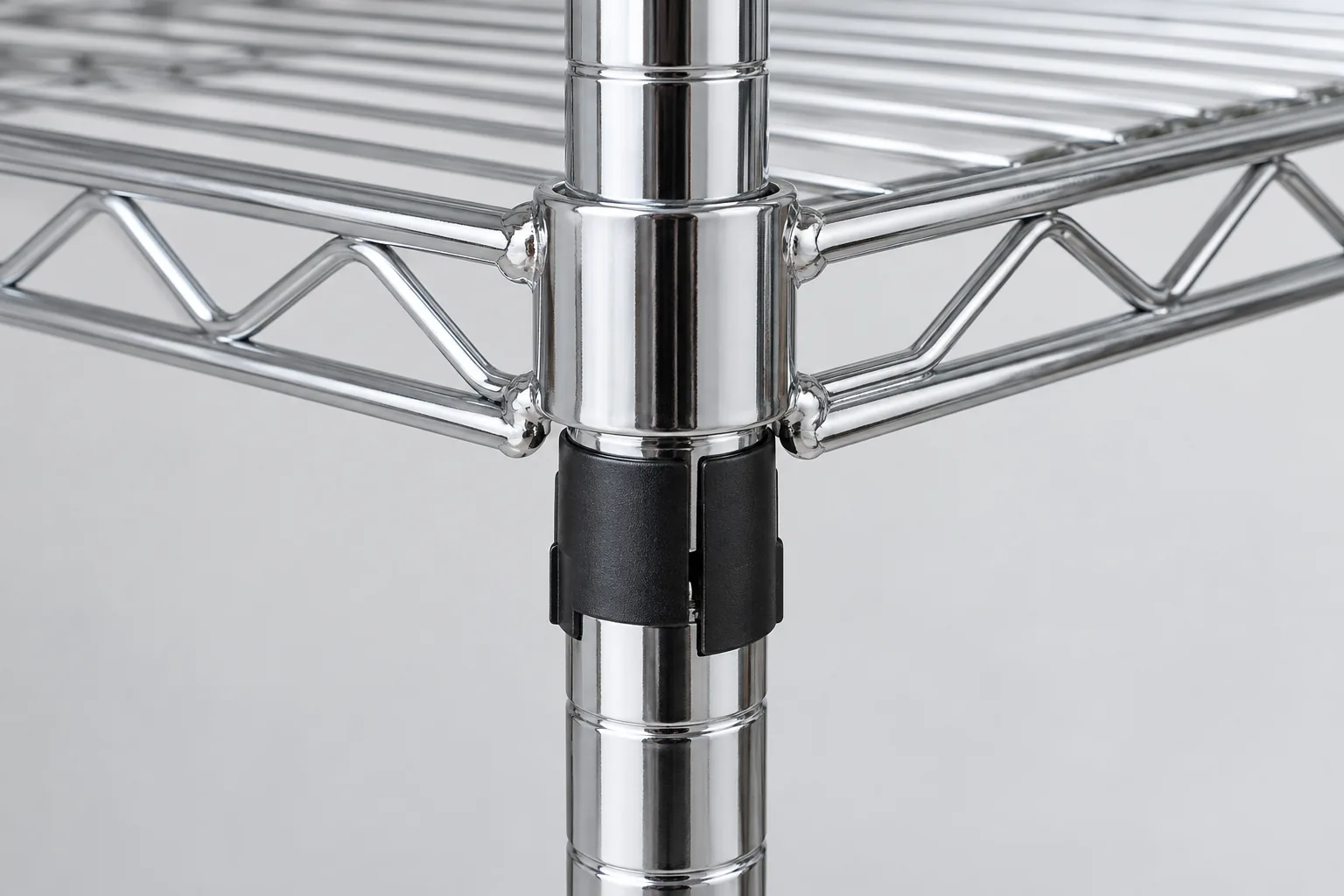
For wire shelving split sleeve compatibility, buyers should match the sleeve to the exact post profile and groove geometry, then verify collar seating and shelf assembly using production-intent parts. A nominal post diameter or a sleeve that looks similar does not prove interchangeability. The post groove, sleeve taper or ribs, shelf collar, material and assembly orientation act together; the buyer should approve the combination rather than assume that parts from different systems will work together.
This guide is for adjustable-wire-shelving importers and product engineers evaluating a supplier or replacement interface. It focuses on drawings, RFQ inputs and sample checks. It does not set a universal post size, groove pitch, load value or cross-brand compatibility rule.
Why can a split sleeve misseat on a post?
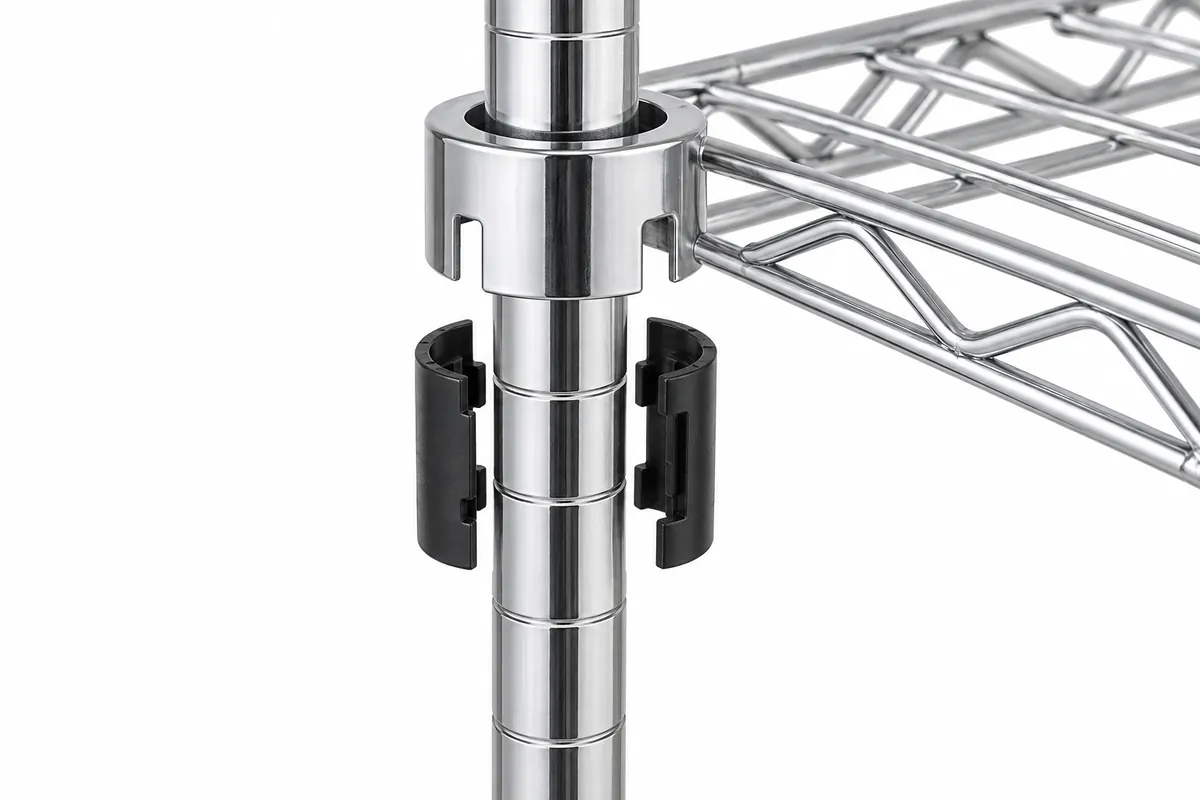
A sleeve is a small part with a functional role. It sits around a post and interacts with a groove or retaining feature as the shelf collar engages it. If the sleeve’s inner profile, taper, rib shape or length does not match the post, it may sit unevenly, fail to locate at the intended height, or shift while the shelf is positioned. A shelf corner that appears low can have several causes; a sleeve mismatch is one possibility, not a diagnosis from an online anecdote.
The interface has at least three geometries: the post outside profile, the post’s groove or indexing feature, and the shelf collar that bears on the split sleeve. A sleeve must be oriented and seated as intended. A split may enable the component to open around a post, but the split itself does not guarantee retention or compatibility. Suppliers may use distinct tapered forms, ribs and collar engagements even where products are marketed for a similar nominal post dimension.
Metro’s wire-shelving resources and product ecosystem show that commercial shelving systems use defined accessories and configuration-specific components. Buyers should consult the selected manufacturer’s current assembly instructions and item documentation, rather than treat a generic accessory listing as an interchangeability standard. Review Metro’s wire shelving resources. The reference is a supplier-specific example, not evidence that another manufacturer’s post or sleeve is compatible.
What belongs in an OEM RFQ or engineering drawing?
Identify the shelving system and the intended relationship among post, sleeve and shelf collar. If the buyer owns a reference sample, include it or provide a dimensioned drawing and photos. State which dimensions are controlled and which the supplier must propose. Avoid asking for “a split sleeve for a one-inch post” without identifying what the nominal means and what groove or collar geometry is used.
At minimum, ask the supplier to document:
- Post interface: outside diameter or profile, groove form and pitch, groove depth where specified, and post material/finish relevant to contact.
- Sleeve geometry: inner profile, outer taper or ribs, overall length, split position, orientation marks if any, and the specific post/shelf system it is intended for.
- Shelf collar: opening profile, bearing surface and engagement relationship with the sleeve.
- Material and process: exact sleeve material family and supplier designation, molded or otherwise manufactured part identification, and revision control. Do not infer polymer identity from appearance.
- Assembly: installation direction, seating method, shelf lowering sequence and how an operator can confirm engagement.
- Evidence: part numbers, drawing revision, sample dimensions, assembly photos and stated limits or exclusions.
For the wire shelving split sleeve compatibility review, request the supplier’s own interface drawing when a dimension is not visible in a catalog sheet. Ask where measurements are taken and whether a feature is measured before or after assembly. A groove may be described by a pitch or profile, but the buyer needs to know how that feature relates to the shelf’s finished height. If the component is molded or sourced from another vendor, request the supplier’s controlled identifier rather than relying on a generic material description. Do not demand confidential mold details when a dimensioned interface and traceable item identity are sufficient for the buyer’s decision.
It is helpful to define a measurement plan with a small number of fit-critical features. For example, the buyer and supplier can identify the post envelope, groove location, sleeve seating surface and shelf collar engagement as the items that need to be measured or checked. The exact characteristics and tolerances depend on the design; this article does not assign universal values. A clear plan helps prevent a broad dimensional report from missing the feature that actually controls assembly.
When multiple suppliers are quoting, provide the same post and collar reference. Ask each to show proposed sleeve dimensions and list deviations. If a supplier recommends a different sleeve material or geometry, record it as an alternative requiring approval, not as an invisible substitution. That makes quotation comparison and sample review more meaningful.
How should options be compared?
Use component identity and fit evidence to compare options; do not select by a generic product label alone.
| Option | Potential sourcing use | Buyer questions |
|---|---|---|
| Original system sleeve | Useful reference for maintaining an existing, identified system | Does the item number and revision match the post and shelf collar in the RFQ? |
| Replacement sleeve from same supplier | May support replenishment within a defined supplier family | Has the supplier confirmed the exact post and collar combination and current assembly method? |
| Cross-supplier sleeve proposal | Can be evaluated when alternate sourcing or OEM development is needed | What dimensions and sample evidence support compatibility? What parts were used in the fit check? |
| Custom sleeve or revised interface | May address a specific post/collar design requirement | What tooling, material, trial samples and compatibility approvals are needed before release? |
Cost should include the relevant assembly consequences. An inexpensive sleeve that is difficult to orient, easy to misseat or not consistently identified may create extra inspection or service questions. On the other hand, a custom design may require development work or a minimum order that is not justified for a small assortment. Ask suppliers to separate component cost, tooling, sample and packaging assumptions. Do not infer lifecycle cost or failure rates without project evidence.
Also compare documentation and replenishment. Can the supplier keep the same sleeve identity available for repeat orders? Are spare sleeves packed separately or installed during assembly? Does a distributor need a replacement part code that can be matched to a rack generation? These questions matter to private-label assortment maintenance, especially if a buyer expects to sell replacement shelves or poles over time. They are procurement considerations, not a claim that any supplier guarantees long-term availability.
How can a buyer qualify assembly on a sample?
Use the exact post, sleeve and shelf collar intended for approval. Confirm part identities and revisions before assembly. Inspect each sleeve for obvious damage or dimensional variation against the buyer-approved drawing. Place it at the intended post location and follow the supplier’s stated installation sequence. Avoid trimming or modifying the sleeve to make the sample fit unless the modification is part of a documented redesign proposal.
For OEM sourcing, wire shelving split sleeve compatibility should be a named approval item in the project checklist, with the post and collar references written beside it. That way, a purchasing team can distinguish a passed fit review from a supplier’s unverified statement that the accessory is “standard.”
Lower the shelf collar onto the installed sleeve in its intended orientation. Observe whether the sleeve remains seated, whether engagement appears consistent at each corner, and whether the shelf sits at the expected position. Repeat the assembly and removal sequence the product is expected to support. Record the sleeve orientation, post location and any difference between corners. If one point sits low, check the actual post groove, sleeve placement, collar condition and rack assembly before naming a cause.
Do not turn a limited fit check into a structural rating. If load or stability claims are required, use the applicable product-specific design and validation process. This guide supplies no load capacity or safety result. A visual assembly pass only records observed seating under that sample condition; it cannot establish performance across every production lot or system combination.
For reconfiguration, repeat the seating observation at each intended shelf position rather than checking only a single groove near the top of one pole. Verify that the sleeve remains at its selected position while the shelf is lowered, and that the collar does not push it out of place. If the product has several poles and shelves, note whether the assembly sequence gives the installer a clear view of each sleeve. A controlled demonstration can reveal confusing instructions even when the parts themselves are dimensionally correct.
For useful evidence, retain photographs and measurements tied to the drawing revision. Record the post supplier and item, sleeve source and lot if available, shelf collar identity, assembly orientation, operator instruction and observed deviations. If a supplier substitutes a sleeve material or molding source, repeat the agreed qualification rather than assuming the former sample remains representative.
An OEM buyer should also evaluate instruction clarity. A retail or distributor product may be assembled by staff who do not know the engineering intent. If the split sleeve can be installed in more than one orientation, define the correct one and whether a visual cue is needed. Check whether packaging keeps matching sleeves and shelf components together. These are design-for-assembly and product-control questions, not claims that a particular cue or package eliminates assembly error.
Koitor’s approved scope includes custom metal bathroom and home-storage hardware, manufacturing discussion, sample development, assembly and packaging preparation where relevant. The company does not claim to manufacture every adjustable shelving system or sleeve, or to guarantee cross-brand fit. Any specific component sourcing or development scope must be confirmed for the project.
What changes require compatibility review?
Re-review the assembly if the post profile, groove pitch or form, sleeve taper/ribs, sleeve material or source, shelf collar, surface finish, assembly method or packaging assortment changes. A supplier may describe a replacement as equivalent, but the buyer should request a comparison to the approved drawing and sample. Keep changes in the purchase specification and identify who approves them.
When a field complaint arrives, capture the exact combination before sending corrective instructions. Ask for post and sleeve identifiers, shelf corner location, installation direction, photos and whether the rack was reassembled. A sleeve slip or uneven shelf may result from misassembly, a mismatched part, a damaged groove or another structural condition. Treat these as hypotheses until checked. Corrective action should follow verified evidence and should change the relevant control point.
Buyer checklist and FAQs
- Is the exact post profile and groove form documented rather than represented only by a nominal diameter?
- Are sleeve taper/ribs, split orientation and shelf-collar engagement defined?
- Does each supplier quote identify the sleeve item, material designation and revision?
- Did the sample use the intended post, sleeve, shelf collar and assembly sequence?
- Have all corners been checked for consistent seating and position?
- Are fit observations kept separate from load or safety claims?
- Are substitutions, packaging and assembly instructions under change control?
Does the same nominal post diameter guarantee sleeve compatibility?
No. Groove shape, sleeve profile and shelf collar engagement still need to match.
Can a split sleeve be used across brands?
Only if the exact combination is documented and qualified. Do not infer compatibility from a shared nominal size.
What should be included in an approval sample?
Use the identified production-intent post, sleeve and shelf collar, with the planned assembly instructions.
Does successful shelf seating prove its load capacity?
No. Fit and structural performance are separate questions requiring project-specific evidence.
What causes a shelf corner to sit low?
Possible causes include a misseated sleeve, mismatched parts or other geometry issues. Inspect the actual assembly before deciding.

Developing a Custom Storage Hardware Assembly?
Send Koitor the assembly drawing or representative sample, material and finish requirements, target quantities and open fit questions. We can discuss confirmed metal hardware manufacturing and sample planning; polymer component scope and cross-system compatibility require project-specific confirmation.
OEM / MARCA BLANCA
Convierte esta guía de abastecimiento en un resumen del producto
Indícanos el producto que deseas, el tamaño, el acabado, la cantidad del pedido y los requisitos de embalaje. Tu equipo recibirá un análisis práctico de la viabilidad de fabricación antes de recibir el presupuesto.
 English
  Español
  Português
  Français
  Deutsch
  العربية