

430 vs 304 Stainless Steel Deep Drawing: A Buyer’s Specification Guide
When evaluating 430 vs 304 stainless steel deep drawing for a shallow bathroom-hardware base or cover, buyers should qualify the actual sheet form, drawing geometry, surface requirement, supplier documentation, and production-intent sample—not select a grade from a simple “which is easier to form?” rule. Ferritic and austenitic grades can behave differently, but results depend on the exact grade and product design. A material certificate, controlled drawing, and approved sample provide a more reliable decision than appearance alone.
What decision should a buyer make before comparing grades?
The useful decision is not “Which grade is always better?” It is “Which documented material and forming route can make this geometry, finish, and repeat-order requirement consistently?” That reframing prevents an importer or private-label product developer from treating a broad grade label as a complete manufacturing specification.
A Reddit metalworking discussion describes drawn parts that may wrinkle or split and the limits of choosing only by bendability. It is an anecdotal signal, not proof of failure frequency or a diagnosis for a particular product ([community discussion](https://www.reddit.com/r/metalworking/comments/rw8fth)). For a bathroom accessory component, the question becomes practical: what must the buyer define before a supplier quotes a shallow formed base or cover, and what evidence should be reviewed before production approval?
Deep drawing is one type of press forming. A flat blank is shaped through tooling into a cup-like or recessed form. Buyers may be discussing such a part when a bathroom fitting, organizer, cover, or mounting detail uses a shallow formed shell. This article is a sourcing guide, not a claim that every such component is made by deep drawing or that Koitor currently produces a specific drawn base. Confirm the process and capability for the actual project.
The material comparison is only one part of the system. Blank dimensions, draw depth, corner radii, wall transitions, lubrication, tool surface, incoming sheet condition, later trimming or joining, and cosmetic finish all influence the result. A grade substitution without reviewing those interfaces can change appearance or manufacturability even when the nominal finished dimensions stay the same.
How do 430 and 304 differ in a drawing decision?
Grade families can indicate different forming considerations, but they do not determine a universal winner. Outokumpu’s forming guidance explains that ferritic steels can have better drawability than austenitic grades when the material is not thinned as in stretch forming; it also notes that austenitic grades can be well suited to deep drawing when thinning is allowed. It discusses ridging or roping as a possible surface phenomenon for low-alloy ferritic grades after deep drawing. These are general process observations, not a guarantee for every 430 or 304 supply condition or part geometry.
The 430 and 304 designations are not enough to approve a component. The exact product standard, sheet form, temper or delivery condition, thickness, surface finish, and supplier documentation matter. A part with a generous radius and shallow wall may present a different challenge from a tighter, deeper shape. A polished visible face may also make surface appearance more important than a hidden internal surface. The buyer should ask the material supplier or forming specialist to confirm suitability for the actual part and process.
| Buyer comparison point | What to establish | Pourquoi est-ce important ? |
|---|---|---|
| Material identity | Exact grade designation, product form, thickness, finish, and supporting lot documents | A broad “430” or “304” label does not define the complete incoming material condition |
| Part geometry | Blank, draw depth, corner radii, wall transitions, trim edge, and critical interfaces | Forming severity and dimensional needs depend on geometry, not grade name alone |
| Surface acceptance | Visible zones, acceptable marks, directional appearance, and finish after forming | Ridging, tool marks, scratches, or local variation may matter differently by product location |
| Process evidence | Representative trial, agreed inspection points, and approved production-intent sample | Paper comparison cannot replace evidence from the proposed route and tooling |
| Commercial basis | Material availability, yield assumptions, tooling responsibility, and requalification triggers | Lets the buyer compare total supply risk rather than unit material price alone |
Price should be reviewed only after the technical basis is aligned. A lower quoted sheet price can be offset by more difficult forming, additional finishing, higher rejection risk, or a change to tooling and process control. Conversely, a more expensive option is not automatically justified if the part geometry and use conditions do not need the added material characteristics. Ask suppliers to quote the same drawing revision, acceptance criteria, and evidence package.
What should the RFQ drawing and material specification state?
A useful RFQ makes the geometry and acceptance decision reviewable. A drawing should identify the part’s controlling dimensions, material thickness and tolerance where required, critical radii or interfaces, visible surfaces, trim edges, hole or joining locations, and the approved finish. If a component is only a concept, label unresolved dimensions and ask the supplier to identify assumptions instead of allowing different suppliers to quote different interpretations.
For material, specify the exact grade and product form only when those are confirmed project requirements. Otherwise, list acceptable alternatives as conditional proposals and require the supplier to disclose the proposed grade, thickness, surface condition, source documentation, and any process implications. Never let “stainless steel” silently replace a confirmed grade, or let a substitute become the production standard without written buyer approval.
The drawing or RFQ should also clarify where later operations occur. Trimming, drilling, welding, polishing, coating, assembly, or contact with dissimilar components can affect the finished appearance and acceptance process. Koitor’s approved manufacturing scope includes metal fabrication and assembly processes such as bending, punching, welding, grinding, polishing, powder coating, assembly, and packaging preparation. That provides a practical basis for discussing interfaces on bathroom and home-storage hardware; it does not establish a deep-drawing line, specialist draw tooling, or production of this particular component.
For a product that may be made by a separate forming specialist, ask who owns the forming process, who provides the material traceability documents, and who is responsible for inspection after subsequent finishing or assembly. The supplier chain should be clear enough that a buyer can connect the approved sample to the material and process proposed for bulk production. If the project involves multiple vendors, define where the official sample is held and which party controls revision changes.
Where the formed component is cosmetic, describe the viewing conditions and locations that matter: normal product distance, lighting, orientation, and whether the surface is exposed after installation. This is more useful than a vague requirement such as “perfect finish.” For functional features, identify the fit or interface to the mating part and how it will be checked. Avoid inventing universal tolerances; set project-specific limits with the qualified supplier.
How should buyers qualify a sample without overclaiming?
Sample approval should answer whether the proposed material, geometry, process, and finish meet the buyer’s stated requirements. It should not be treated as a guarantee of every future unit or as proof of an unperformed laboratory test. Agree the sample stage, lot identity, drawing revision, measurement points, appearance criteria, and approval record before a production order.
The first review is document-to-part consistency. Confirm that the sample is tied to the drawing revision and proposed material documents. Check that the material and thickness stated in the supplier’s records match the quotation and sample identification. If the supplier has not provided those details, mark them open; do not infer grade from a polished surface, magnet response, color, or a photograph.
The second review is geometry. Compare the sample with the drawing at the agreed critical dimensions. Inspect the flange, wall transition, edge condition, holes, fit to the mating component, and any assembly contact points. Pay attention to visible shape variation between multiple samples when the buyer’s order requires repeatability. A single hand-selected sample may be useful for design review, but it cannot by itself establish batch consistency.
The third review is surface and finish. Use the agreed lighting and viewing distance to inspect visible faces for unacceptable waviness, scratches, tool marks, or local appearance changes. Ridging or roping is described in technical forming literature as an aesthetic surface effect that may appear on some low-alloy ferritic sheet after drawing. Whether it is acceptable depends on the product location and buyer criteria. Do not label an observation as a material defect until the supplier and buyer have agreed the applicable standard and investigated the cause.
The fourth review is process-change control. Record what would require a new sample or written approval: grade or source change, thickness change, tooling repair, geometry revision, finish supplier change, or a change in an operation that affects the visible surface or fit. The exact triggers should be agreed per project. If a buyer is comparing 430 vs 304 stainless steel deep drawing options, each option should be evaluated against the same drawing and acceptance plan; otherwise the comparison is not like-for-like.

If the buyer needs mechanical, chemical, or corrosion verification, define the requirement and qualified test method with the responsible supplier or laboratory. This article does not claim that Koitor owns a laboratory or has performed a test on either grade. Keep the material certificate, sample record, inspection result, and approved drawing together so the purchasing decision remains auditable.
What commonly goes wrong when buyers compare only grade names?
The first mistake is confusing bendability with drawability. A bending trial, a material datasheet, or a supplier’s general statement may be useful background, but it does not prove that a specific blank can be drawn into a particular shape with acceptable surface and dimensions. Use a production-relevant sample or process review when the geometry warrants it.
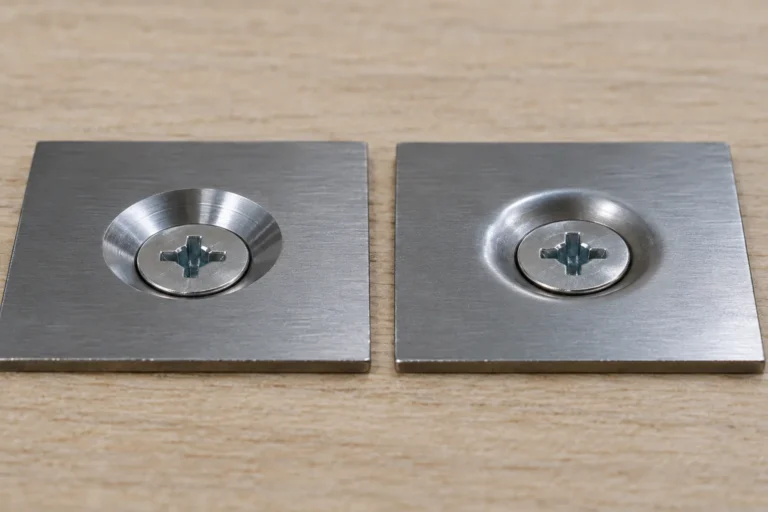
The second mistake is treating grade as a cosmetic shortcut. Two stainless samples can look similar, and a generated or catalog photograph cannot establish composition. Verify material identity through the agreed documents and traceability process. Appearance checks answer appearance questions; they do not replace material verification.
The third mistake is approving the shape while leaving the finish undefined. A part may fit but have surface waviness in an exposed location, or a cosmetic surface may be polished later and reveal a different appearance. Define both functional acceptance and visual acceptance before sampling.
The fourth mistake is changing the material after tooling or quotation approval without reopening the decision. A change can affect forming behavior, supplier availability, process settings, surface result, or cost. Review the full route and sample again if the change affects the approved requirements.
The fifth mistake is comparing quotes that assume different scopes. One supplier may include material documentation and forming trials while another quotes only a formed component. Ask each supplier to state material, process owner, tooling assumptions, inspection scope, finishing, packaging, and exclusions. This makes commercial comparisons meaningful and exposes unresolved risks early.
What should the buyer checklist include before sample approval?
Use this short checklist to align the RFQ, supplier quote, and approval record:
- Identify the final product and the function of the shallow formed component.
- Share the current drawing or physical reference, revision, and unresolved assumptions.
- State the confirmed grade and product form, or request a documented alternative proposal.
- Confirm thickness, surface condition, finish, and any visible-face requirements.
- Mark the critical geometry, radii, interfaces, trim edges, holes, and mating parts.
- Ask who owns the forming route, tooling, material sourcing, and lot documentation.
- Define sample quantity, sample stage, dimensions to inspect, and appearance criteria.
- Record how changes in grade, source, thickness, tooling, finish, or geometry are approved.
- Compare quotations using the same scope, inspection basis, and packaging assumptions.
- Retain the approved sample reference and its supporting documents for repeat orders.

For a broader supplier discussion, buyers can review Koitor’s custom bathroom hardware manufacturing scope and share the project drawing or sample through the contact page. A supplier conversation can clarify process ownership and project fit, but it should not substitute for confirming unverified equipment or material capability.
Frequently asked questions about 430 vs 304 stainless steel deep drawing
Is 430 always easier to deep draw than 304?
No. General forming guidance describes tendencies for ferritic and austenitic families under particular forming conditions, but the result depends on the specific grade, supply condition, thickness, geometry, and whether the operation involves thinning. Ask a qualified material or forming supplier to assess the actual part and confirm it with relevant sample evidence.
Can a buyer identify grade 430 or 304 from a finished sample’s appearance?
No reliable grade determination should be made from ordinary visual appearance alone. A polished or brushed finish does not prove composition. Use the agreed material documentation and traceability process, and use qualified testing only where a project requirement calls for it.
What should be included in a shallow-drawn component RFQ?
Include the drawing revision, part function, required material or approved alternatives, thickness, surface and finish requirements, critical geometry, visible zones, inspection points, sample stage, and change-approval rules. Ask the supplier to identify assumptions and exclusions so quotations can be compared on the same basis.
Does an approved sample guarantee bulk consistency?
No. An approved sample is a reference for the defined requirements, not a statistical guarantee. Link it to the agreed material and process documents, specify production inspection expectations, and define what changes require renewed approval.
Does Koitor currently manufacture deep-drawn bathroom accessory bases?
The approved company information supports custom metal bathroom and home-storage hardware manufacturing, including several fabrication, finishing, assembly, and packaging processes. It does not confirm deep-drawing equipment, specialized dies, or production of this particular part. Share the drawing so the exact scope can be reviewed without assuming capability.
Review a Bathroom Hardware Material and Sample Decision
Send Koitor the drawing or physical sample, confirmed material and finish requirements, target quantity, and the questions that must be answered at sample approval. We can discuss fit with Koitor’s confirmed bathroom and home-storage hardware scope; any deep-drawing process or specific part capability must be confirmed for the project.
Fabrication pour compte de tiers / Marque de distributeur
Transformez ce guide d'approvisionnement en cahier des charges
Indiquez-nous le produit souhaité, ses dimensions, sa finition, la quantité commandée et vos exigences en matière d'emballage. Votre équipe recevra une analyse pratique de la faisabilité de la fabrication avant l'établissement du devis.
 English
 Español
 Português
 Français
 Deutsch
 العربية