
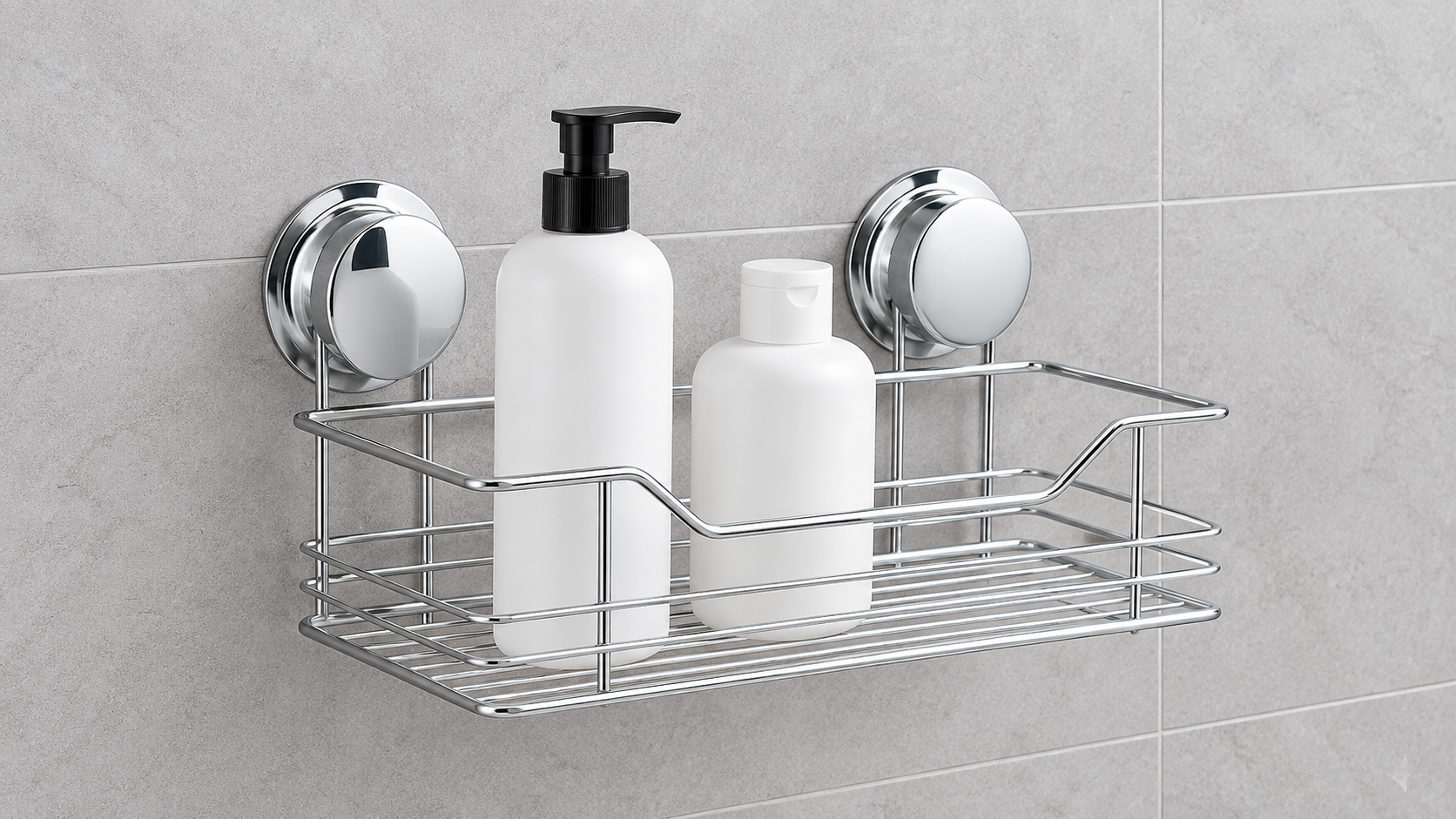
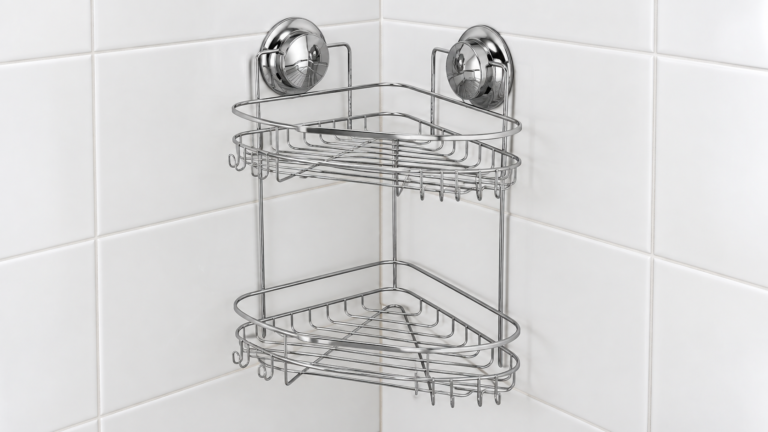
A suction cup bathroom basket manufacturer should be assessed on usable basket geometry, wire forming, weld quality, dual-mount alignment, finish consistency, sample approval and packaging. Importers are sourcing a storage system that combines a metal basket with a specific mounting assembly. The frame, suction components and installation assumptions must therefore be controlled together.
The most useful inquiry is not simply “What size basket do you have?” It defines what the basket must store, which smooth surfaces will be used for validation, how the two suction centers relate to the frame, which finish and packaging are required and what evidence will support any retail claims. These inputs allow comparable quotations and reduce changes after sampling.
What Should Buyers Define Before Requesting a Basket Quote?
Start with the usable storage envelope. State the intended bottle or container range, approximate product height, base size and pack count. Overall basket length and depth do not reveal the internal space lost to corner radii, front-rail bends or mounting supports. Include usable inside dimensions and the minimum clear base area in the drawing.
Define basket length, depth, rail height, base-wire spacing, side-wire spacing, perimeter frame, wall offset and suction-center distance. Use the wall plane, frame centerline and top rail as stable datums. For a two-mount product, show both horizontal center distance and vertical relationship. The mounts should not be located by eye after the basket has already been formed.
Identify the material and finish direction, visible cosmetic zones and acceptable appearance reference. Chrome-like, polished and powder-coated descriptions can cover different process routes. The buyer should approve a physical finish sample or controlled reference and state whether the basket, support wires and decorative suction covers need a coordinated appearance.
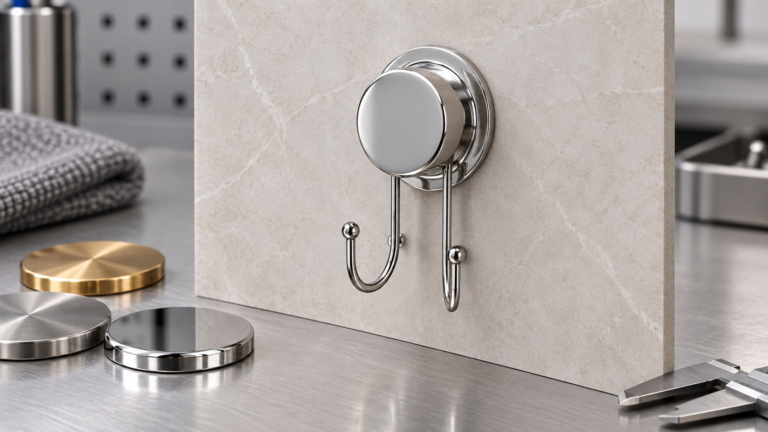
Specify the complete accessory set. A basket inquiry should identify two rubber cups, two center connectors, locating bases, covers, metal interfaces and any instruction or cleaning item included in the retail pack. If the buyer supplies a component, separate its responsibility, delivery timing and inspection criteria.
Koitor’s fabrication sur mesure de paniers de rangement en métal page is a relevant product-family reference for discussing wire structure, samples, finish and private-label development.
Which Basket Structures Should OEM Buyers Compare?
Basket structure affects bottle support, drainage, cleaning, appearance, manufacturing effort and pack volume. The right option depends on the buyer’s container mix and target market rather than on one universal design.
| Structure | Potential advantage | Buyer approval point |
|---|---|---|
| Parallel wire drainage base | Open structure and straightforward cleaning | Gap size versus bottle-base support |
| Cross-wire or mesh support | Supports smaller containers | Joint count, cleaning and finish coverage |
| Round-wire perimeter | Light visual appearance | Frame straightness and corner consistency |
| Flat-bar top rail | Broader visual edge and structured profile | Bend radius, surface marks and alignment |
| Two suction mounts | Distributes the connection across the frame | Center distance, height alignment and equal wall contact |
A vacuum suction storage basket OEM program should define whether the front rail has an access dip, continuous height or an integrated hanging feature. An access dip can make bottles easier to remove, but its bends and transition points become additional inspection locations. The minimum rail height should still match the intended containers.
Drainage wires need a deliberate pitch. Gaps that are too wide can let narrow bottles or caps sit unevenly. Very tight spacing adds material, joints and cleaning surfaces. Approve the pattern with representative bottle bases or buyer-defined gauge blocks. Check the edge zones, where a curved perimeter can create a larger local opening than the nominal center spacing.
Dual suction mounts do not remove the need for frame control. If the rear support wires are twisted or the center distance varies, one cup may contact the wall before the other. Forcing both covers into position can preload the frame. The drawing and inspection fixture should therefore connect mount position to basket geometry.
How Should Wire Geometry and Dual-Mount Alignment Be Controlled?
Use a flat inspection surface and stable datums to review the basket before mounting. The base should not rock excessively, the top perimeter should follow the approved plane and the front rail should appear level. Check overall dimensions and the usable interior rather than relying on only one outside measurement.
Wire spacing can be checked with a simple gauge or caliper at agreed locations. Perimeter bends should have consistent radii, and parallel wires should not converge visibly. Review wire ends, welds and joints for sharp projections, excessive buildup or marks that remain visible through the finish.
Mount-center distance should be measured from the centerlines of the approved interface features, not from decorative cover edges. Check the vertical position of both centers relative to the basket rail. A fixture can hold the frame while the support wires and mounting interfaces are reviewed. The buyer can request measured results without prescribing the exact fixture construction.
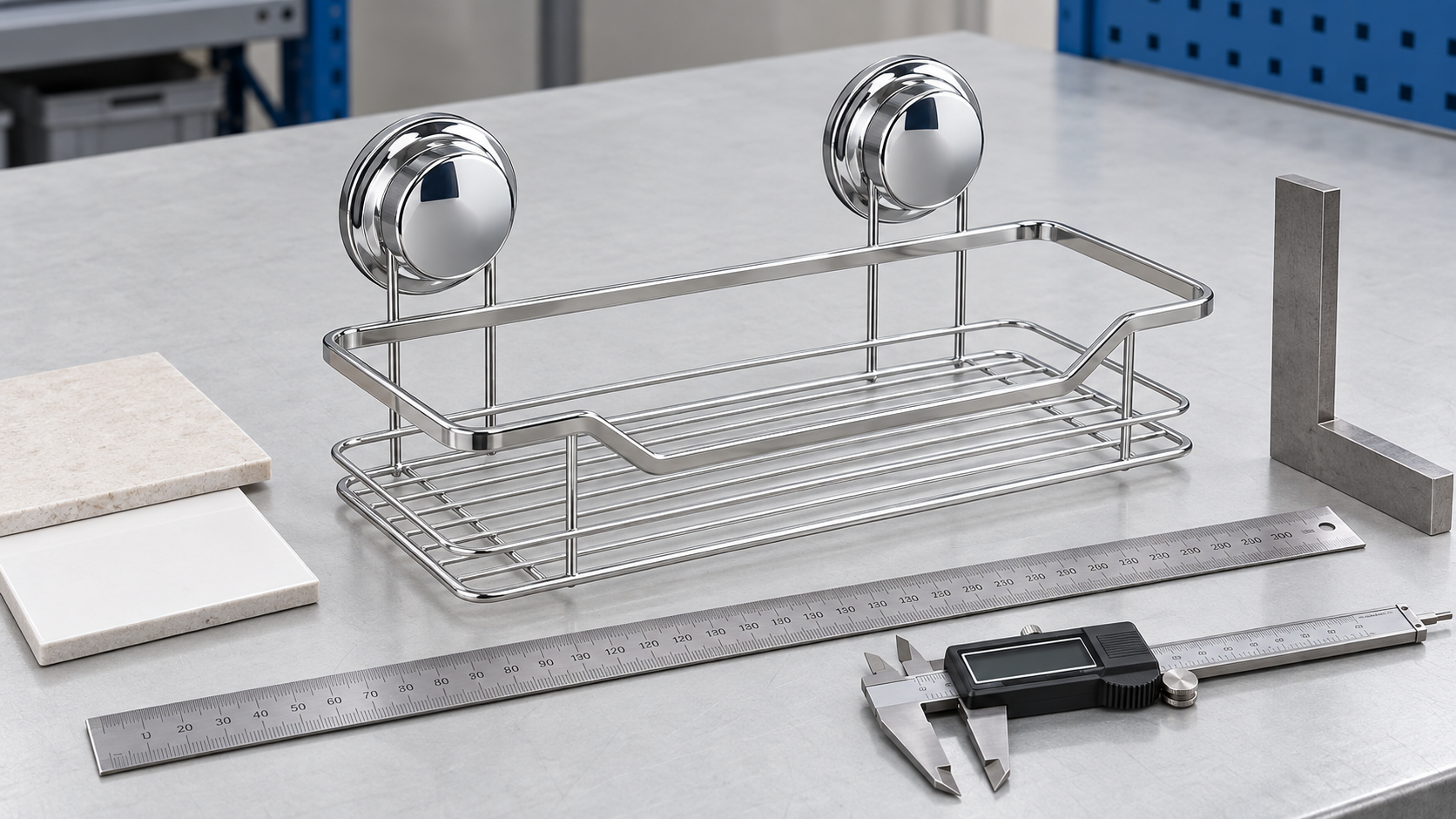
A no drill bathroom basket supplier should explain the surface and installation conditions used for validation. Smooth glazed tile or glass is not equivalent to textured tile, porous stone, grout joints or walls with surface contamination. Record cleaning, installation, settling or observation time, bottle arrangement and acceptance criteria.
Do not assign a universal load statement from basket size alone. Performance depends on the complete mounting system, surface, installation, load distribution and observation method. If a claim is required, approve the wording only after the relevant configuration has been tested and documented.
What Should the Approval Sample and Factory Review Cover?
The approval sample should represent production-intent wire, mounting components, finish and packaging. An early sample can confirm dimensions and appearance, while final approval should reference a controlled drawing revision, bill of materials, finish reference and packed configuration.
- Confirm the intended bottle and container samples.
- Measure overall and usable basket length, depth and rail height.
- Check base and side wire spacing at defined locations.
- Review frame flatness, corner radii, front-rail shape and wall offset.
- Inspect joints, wire ends and visible finish zones.
- Measure both suction centers and their relation to the basket datums.
- Assemble the approved suction components without forcing the frame.
- Install on agreed smooth surfaces and document the validation conditions.
- Load representative containers in the approved arrangement.
- Review the complete retail pack and shipping protection.
The manufacturing route may include wire cutting, straightening, forming, fixture loading, joining, grinding or polishing, surface finishing, assembly and packaging. Ask where the factory confirms the first piece, how it prevents mount-center drift and how baskets are separated after finishing.
Weld review should be tied to function and appearance. A joint needs adequate consistency for the approved structure, but excessive material or grinding can create visible defects. Identify high-visibility zones and areas that contact bottles or hands. Finished samples should be inspected under consistent lighting rather than only in low-resolution photographs.
Koitor Hardware is a family-owned custom metal hardware factory specializing in bathroom and home storage hardware. Koitor can review buyer drawings or physical samples, discuss manufacturability and support flexible small-batch OEM production. MOQ can start from 100 pieces for some products, while the practical quantity, sample plan and schedule depend on basket structure, finish, purchased suction components and packaging.
Buyers comparing suction with other mounting options can also review Koitor’s no-drill bathroom accessories capabilities. Keep suction and adhesive structures separate in drawings, instructions and product claims.
Which Quality and Packaging Checks Reduce Sourcing Risk?
Quality control should follow the product’s main risks. Incoming inspection confirms suction components. First-piece checks confirm frame and mount geometry. In-process inspection focuses on forming and joining. Final inspection confirms assembly, finish, accessories, packaging and traceable approval references.
Use this buyer checklist before releasing a private label suction wire basket order:
- ☐ Intended bottles and usable internal dimensions are documented.
- ☐ Overall length, depth, rail height and wall offset match the drawing.
- ☐ Base wires support the smallest approved container base.
- ☐ Parallel wires, corners and front-rail bends are consistent.
- ☐ The basket sits correctly on the inspection reference without visible twist.
- ☐ Both mount centers and heights match the approved datums.
- ☐ Suction cups, bases, covers and connectors match the bill of materials.
- ☐ Joints and wire ends are smooth and correctly finished.
- ☐ Finish color, gloss and cosmetic zones match the approved reference.
- ☐ Installation instructions state surface preparation and limitations.
- ☐ Packaging separates finished baskets and protects rubber contact faces.
- ☐ Any frame, mount or component substitution requires reapproval.
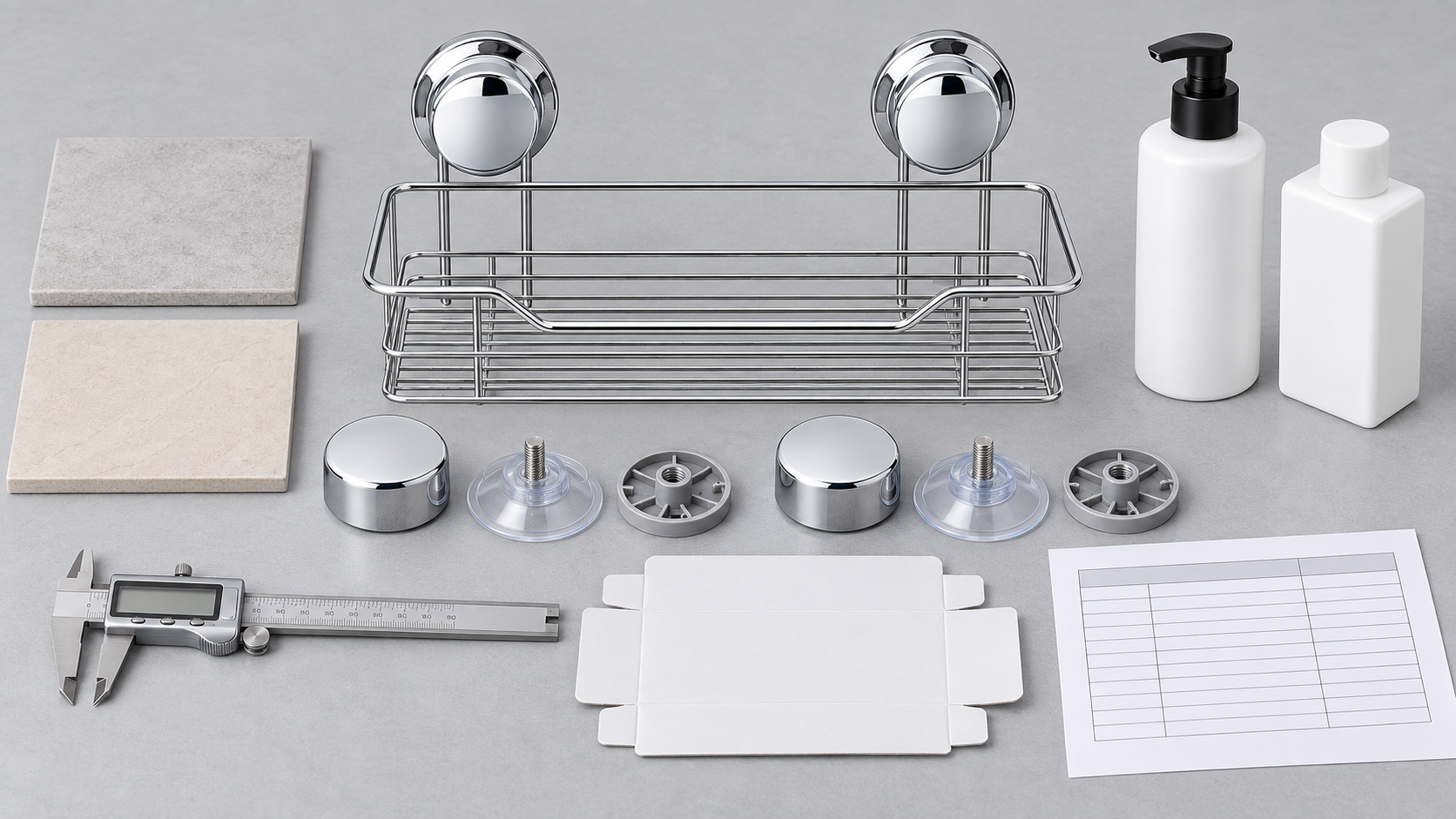
Packaging requires attention because wire baskets can nest, lock together or rub. Define the nesting direction, maximum stack, separators and protection around decorative covers. Avoid placing the rubber suction faces under frame pressure. The packed sample should also confirm that instructions and small components cannot move into positions that scratch the finish.
Common mistakes include quoting only outside dimensions, ignoring usable bottle space, approving wire spacing without real containers, measuring suction positions from cover edges, assuming two mounts compensate for a twisted frame and publishing load claims without defined conditions. Another mistake is changing purchased suction components because a substitute looks similar in a photo.
Compare quotations on the same scope: metal frame, suction assemblies, finish, sample charges, fixture or tooling assumptions, inspection, retail packaging and delivery basis. Ask suppliers to list exclusions and alternatives. This makes a price difference easier to understand and prevents missing components from appearing late in the project.
Order release should include a concise list of open points and responsible approvals. Resolve bottle samples, wire spacing, mount centers, finish reference, instruction wording and packed configuration in controlled documents rather than leaving decisions across separate messages. When a sample is approved, retain photographs that show the basket from the front, side, base and mounting interface, together with the revision date.
For repeat production, compare the current bill of materials and component sources with the previous approved order. A suction cover can look unchanged while its internal locating features differ, and a wire supplier or finishing route can affect forming or appearance. Substitutions should be declared and the affected assembly, geometry, surface and packaging checks repeated before shipment.
Shipment feedback is most useful when linked to a production lot and a clear symptom. Record whether an issue concerns frame twist, wire spacing, finish damage, a missing component, installation instructions or suction behavior on a defined surface. This helps the buyer and factory investigate the correct process rather than treating every field report as the same problem.
Before quotation is finalized, ask the suction cup bathroom basket manufacturer to return a written assumption list. It should identify the basket dimensions, representative containers, included mounting components, finish reference, sample route, inspection scope, packaging method and delivery basis. Resolve any difference in the drawing or purchase specification. This keeps purchasing, product development and quality teams aligned and prevents a catalogue photograph or informal message from becoming the only production reference.
Foire aux questions
What should buyers send to a suction cup bathroom basket manufacturer?
Send a dimensioned drawing or physical sample, representative containers, mounting concept, material and finish direction, target quantity, packaging format and approval criteria.
Which basket dimensions matter most?
Usable inside length and depth, rail height, wire spacing, wall offset and suction-center positions usually have the strongest effect on storage function and installation.
Why are two suction-center measurements important?
The two mounts must contact the wall in the approved relationship without forcing the frame. Center distance and height alignment connect the mounting system to basket geometry.
How should drainage spacing be approved?
Use representative bottle bases or controlled gauges. Check both central spacing and larger local gaps near curved perimeter wires.
Can Koitor customize a basket from a physical sample?
Koitor can review a buyer drawing or physical sample within its supported manufacturing scope. Missing dimensions, mounting, finish, container and packaging requirements should be documented before final approval.
Collaborez avec Koitor Hardware
Planning a Custom Suction Bathroom Basket?
Send Koitor your drawing, basket sample, representative bottles, mounting requirements, finish target, packaging idea and expected quantity. The team can review manufacturability, dual-mount alignment and a practical small-batch OEM route before quotation.
Fabrication pour compte de tiers / Marque de distributeur
Transformez ce guide d'approvisionnement en cahier des charges
Indiquez-nous le produit souhaité, ses dimensions, sa finition, la quantité commandée et vos exigences en matière d'emballage. Votre équipe recevra une analyse pratique de la faisabilité de la fabrication avant l'établissement du devis.
 English
  Español
  Português
  Français
  Deutsch
  العربية