
How to Choose SS304 vs SS201 (and the Right Finish Stack) for a Large Wire Basket: A Scenario-to-Spec Playbook
If you’re buying a large wire basketat scale, you’re not really buying “a basket.” You’re buying a repeatable performance system: stainless grade + finish stack + CTQs + packagingthat survives the real environment (humidity, cleaners, abrasion, shipping) without turning returns into a hidden tax.
What this how-to gives B2B buyers
A scenario-to-spec playbook to choose SS304 vs SS201(or a cost-down alternative), then lock a finish stacket verification gatesthat keep large-format wire frames consistent lot after lot.
Recommended internal references: SS304 vs SS201 Stainless Steel, Humid Bathroom Powder Coating (DFT + Faraday + Packaging), AQL Sampling Plan & QC Checklist, Comparable + Inspectable RFQ Template.
Why large-format wire baskets fail (and why it’s expensive)
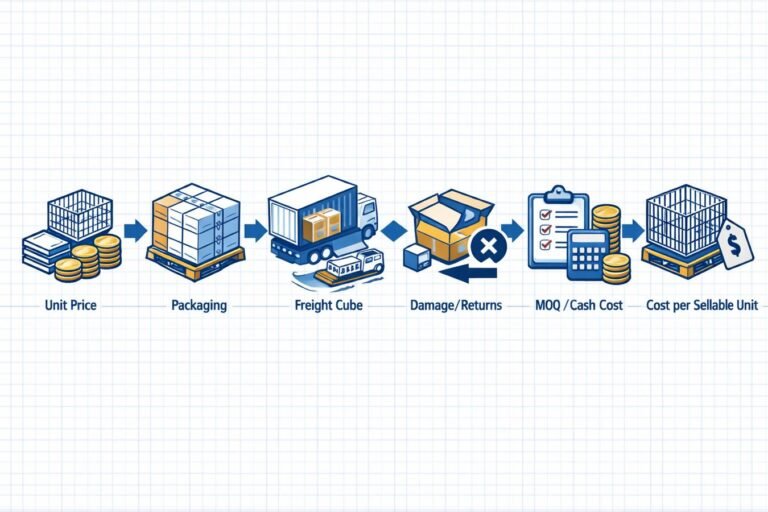
Large wire baskets amplify risk: more corners and recesses (powder coating Faraday thin-film risk), more surface area (scratch exposure), and higher freight/return costs. A $0.20 cost-down that triggers a 2% cosmetic return rate can erase margin fast in e-commerce and retail.
SS304 vs SS201: start with scenario, not the alloy name
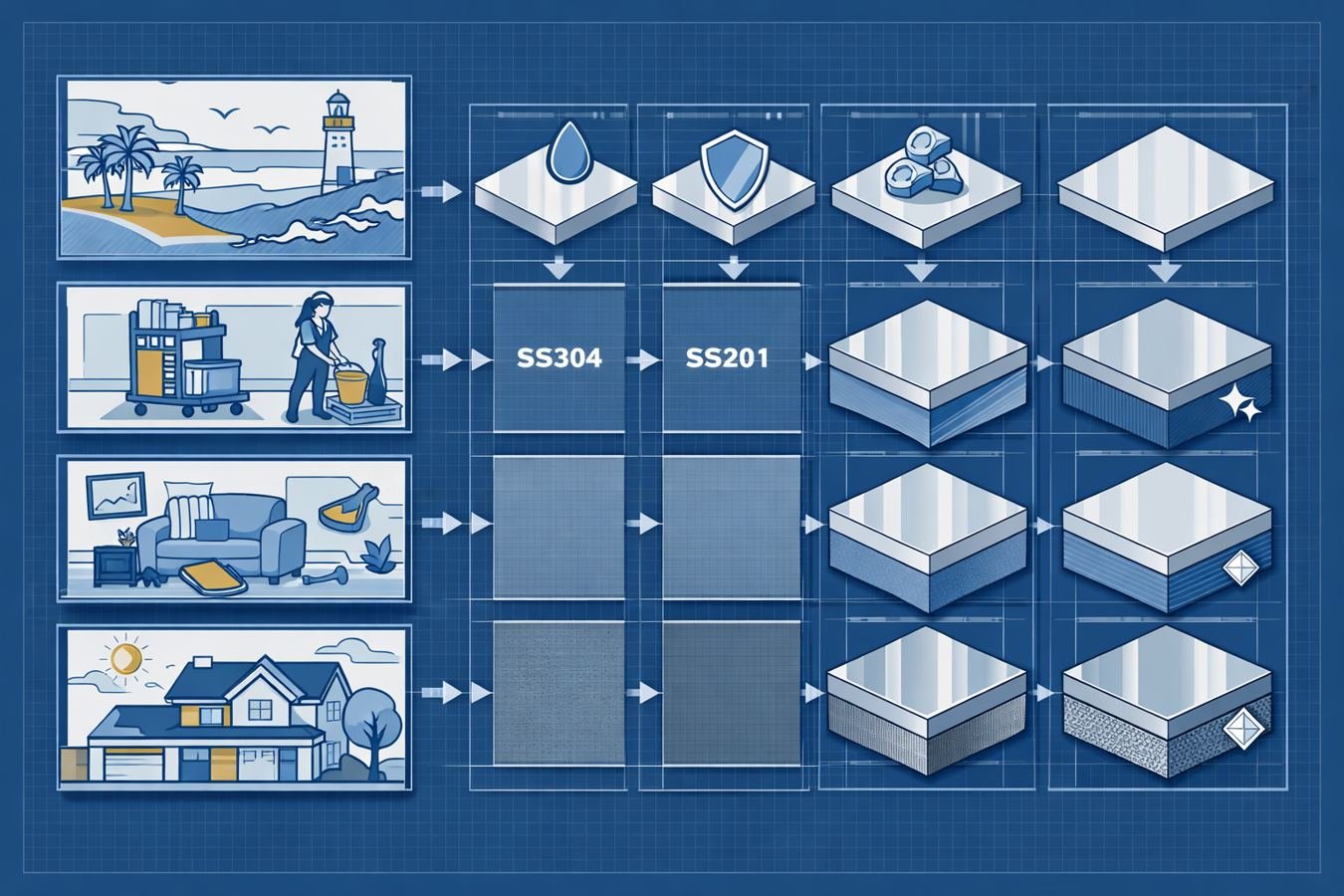
Step 1 — Classify the environment
- Coastal / chloride: salt-laden air + wet/dry cycles
- Hospitality / harsh cleaning: bleach or high-chlorine detergents
- Utility / rental abuse: abrasion + impacts + heavy loads
- Standard dry home: low corrosion risk, high price pressure
Then choose the cheapest system that passes: base material + finish stack + packaging engineering + verification gates.
Hero Module: Scenario-to-Spec Matrix (copy into your RFQ)
| Scenario | Primary failure mode | Recommended material | Recommended finish stack | Minimum verification gates |
|---|---|---|---|---|
| Coastal humidity (chloride + moisture) | Tea staining / pitting at welds and corners | SS304 (consider SS316 for premium/warranty-sensitive programs) | Stainless appearance + controlled weld cleaning/passivation; or premium coating system verified | Salt spray spec; weld-zone cleaning proof; packaging humidity controls |
| Hotel / commercial cleaning (bleach/high chlorine) | Discoloration + corrosion after chemical exposure | SS304 preferred | Chemical-resistant finish system + cleaning guidance | Chemical wipe test; adhesion after exposure; corrosion gate |
| Rental/dorm/utility (abuse + abrasion) | Chips/scratches, dents, deformation | Carbon steel + robust coating (or SS304 if premium look required) | Tough powder system with higher minimum DFT + abrasion-proof packaging | DFT map incl. Faraday corners; handling abrasion simulation; carton drop/stack |
| Standard dry home (low corrosion risk) | Cosmetic defects + shipping scratches | SS201 can work if controls are locked; SS304 for easier robustness | Powder coat or stainless appearance depending on positioning | AQL cosmetic spec; packaging separators; corner coverage check |
Manufacturing CTQs that decide whether your finish survives
On a large wire basket, geometry and weld quality are finish prerequisites. Lock these CTQs early—before you argue about SS304 vs SS201 price.
CTQ set to include in RFQ + inspection
- Geometry stability: flatness/twist tolerance at defined measurement points (large frames warp easily)
- Weld integrity + cosmetics: alignment, spatter limits, no sharp points; consistent nugget formation
- Sécurité des bords: no burrs/cut hazards; defined deburr method + tactile/glove check at FQC
- Surface cleanliness at weld zones: control heat tint/contamination prior to finishing
Finish stacks: buy a system, not a label
A finish stack includes surface prep, base/top layers, cure controls, and handling + packaging. The weak link sets your real performance.
Common finish stack options for a large wire basket
- Stainless appearance(brush/polish + passivation): lower chipping risk; requires disciplined weld-zone cleaning; still needs scratch-safe packaging.
- Powder coating(on carbon steel or stainless): great color consistency and abrasion resistance if pretreatment + DFT + corner coverage are engineered.
- Chrome plating: bright look; must control micro-defects and cleaner sensitivity; verify corrosion expectations for the channel.
Compare finishes here: Chrome vs Stainless vs Powder Coating.
Humid bathrooms: pretreatment + DFT plan + Faraday-corner controls
If your SKU will live in humidity, a generic “powder coat” note is not a spec. Require verifiable controls.
What to require
- Pretreatment evidence: defined steps, bath controls, rinse quality, and records
- DFT target + minimum: include a measurement map (points per part) and minimum thickness
- Faraday risk zones: mandatory DFT readings at inside corners/recesses and dense weld clusters
- Adhesion + corrosion gates: define method, duration, and acceptance criteria
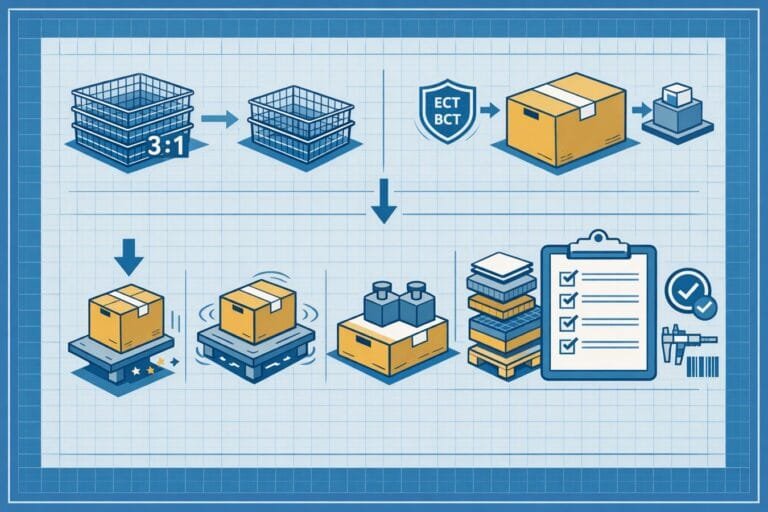
Packaging engineering: nesting ratio without scratch returns
Large baskets are return-cost multipliers. Nesting ratio improves freight—until wire-on-wire contact destroys the finish. Treat packaging as part of the finish stack.
Packaging rules to specify
- Define nesting ratio + maximum nesting depth per carton
- Separators at predictable contact points(rim/edge and wire crossovers)
- Carton strength(ECT/burst) matched to weight + stacking
- Drop/handling validationand required packaging QC photos per lot
Buyer Decision Checklist (copy/paste)
- Scenario: define humidity/chloride/cleaners/abuse + appearance expectations
- Matériau: pick SS304/SS201/alternative based on scenario; lock wire diameter and reinforcements
- Finish stack: specify prep + layers + cure + appearance acceptance criteria
- DFT plan: target + minimum + map; include Faraday zones
- Emballage: nesting ratio + separators + carton strength + drop/stack rules
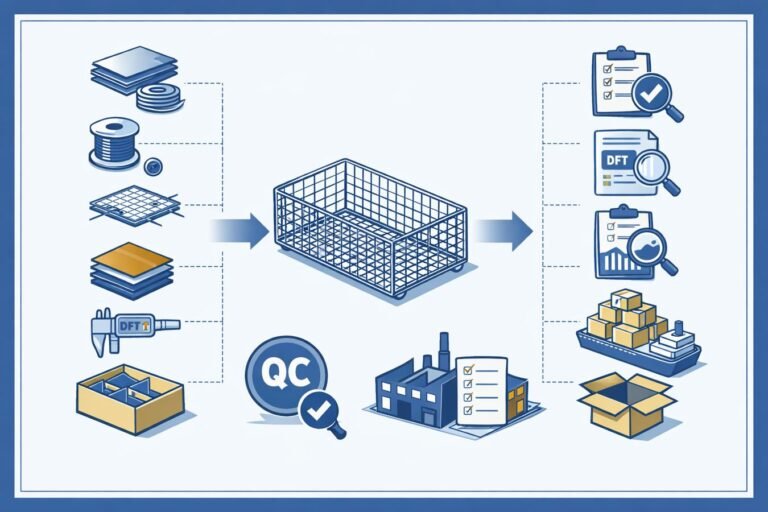
- QC gates: IQC/IPQC/FQC checklist + defect photo standards + AQL plan
Supplier Verification Plan (run this before scaling volume)
Use a 3-stage gate to prevent the classic failure mode: sample passes, production fails.
- Stage 0 (paper audit): process flow, material traceability, finish line controls, QC plan, packaging spec
- Stage 1 (concept sample): geometry stability, weld CTQs, edge safety, baseline cosmetics
- Stage 2 (engineering sample): pretreatment evidence, DFT map incl. Faraday corners, adhesion + early corrosion screen, packaging prototype
- Stage 3 (PPS/pilot): AQL execution, lot-to-lot appearance, packaging QC at line speed, loading/stacking validation
Référence : 3-Stage Sample Gate (Concept → Engineering → PPS).
Starter PO clauses (practical, not legal advice)
Your RFQ defines intent; your PO enforces repeatability. Keep clauses measurable.
- Material substitution control: no grade/diameter change without written approval and re-qualification sample
- DFT reporting: per-lot DFT report including Faraday zones; failure triggers corrective action before shipment
- Corrosion/adhesion gates: document method + duration + acceptance; retest/arbitration rules
- Packaging change control: nesting ratio and separators are part of spec; changes require approval
Conclusion
For a large wire basket, SS304 vs SS201 is only one lever. The win comes from buying a verified system: scenario-driven material choice, finish stack with measurable gates, and packaging that protects the surface through logistics.
If you want to turn this into an enforceable RFQ quickly: use the Comparable + Inspectable RFQ template.
Simon, expert en approvisionnement
Prêt à moderniser votre chaîne logistique :
Stop paying for defects. Build a repeatable OEM program for wire shower caddies, towel racks, and storage baskets—quality controls, export packaging, and stable lead times.
Demander le catalogue 2025 Lancer un projet OEM
E-mail : simon@koitorhardware.com | Usine : Jiangmen, Chine
Envoyez à Koitor votre dessin, une photo d'échantillon, une référence de finition, la quantité souhaitée et le marché cible.
Fabrication pour compte de tiers / Marque de distributeur
Transformez ce guide d'approvisionnement en cahier des charges
Indiquez-nous le produit souhaité, ses dimensions, sa finition, la quantité commandée et vos exigences en matière d'emballage. Votre équipe recevra une analyse pratique de la faisabilité de la fabrication avant l'établissement du devis.
 English
  Español
  Português
  Français
  Deutsch
  العربية