
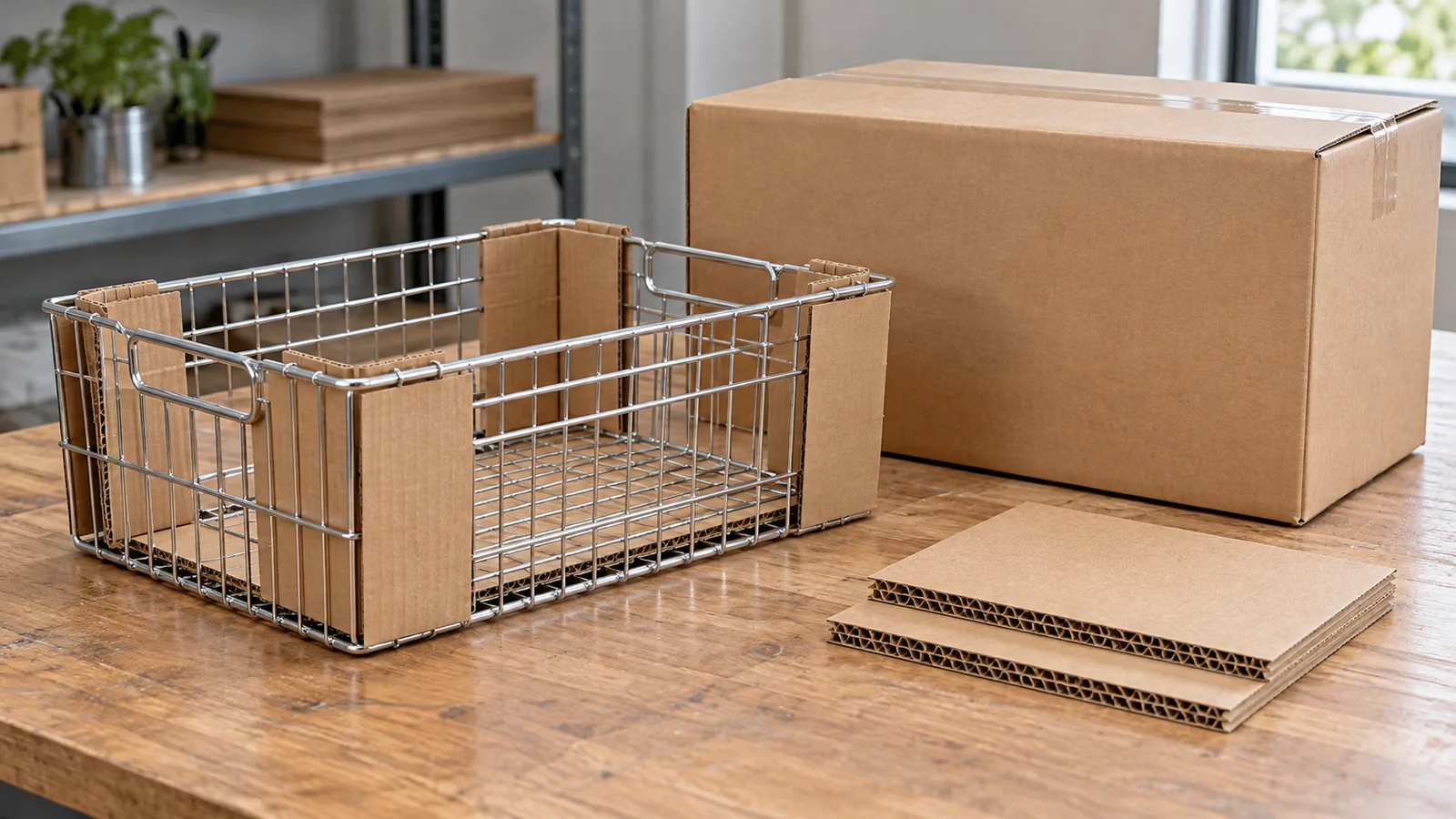
When a buyer asks for a corrugated Cobb water absorption packaging specification, the first step is to define what question the test is meant to answer. The Cobb method measures water absorbed by a specified paper or board surface under defined test conditions and time. It is not the same as measuring the board’s moisture content, proving a carton will survive a particular route, or predicting condensation inside a container. For metal bathroom or home-storage hardware, a useful specification ties a board-side test result to the actual packaging construction, exposed surface, conditioning, acceptance rule, and carton revision.
TAPPI/ANSI T 441 om-24 describes a procedure for determining the quantity of water absorbed by sized, non-bibulous paper, paperboard, and corrugated fiberboard in a specified time under standardized conditions. TAPPI’s current T 441 om-24 listing identifies its scope and distinguishes it from the method for absorbent, unsized paper. The full standard governs the procedure when it is contractually specified; a public summary is not a substitute for the controlled method, trained testing, or buyer-defined acceptance criteria.
For buyers, this corrugated Cobb water absorption packaging specification is a packaging-material decision, not a claim that Koitor runs a Cobb laboratory or that a certain board value guarantees shipment performance. A result can support supplier qualification or material comparison when samples and methods are controlled. It cannot replace packaging design review, transit testing where required, carton compression/drop criteria, storage controls, or inspection of packed hardware.
What does a Cobb test measure?
The Cobb value represents the mass of water absorbed by a defined area of paper or board during a specified exposure, under the conditions of the named method. In everyday supplier discussions, “Cobb test” is often used loosely. The buyer’s document should identify the applicable method and edition, test duration, exposed face, sample preparation, conditioning, and result units as required by the method and contract. Avoid converting a general product brochure number into an acceptance criterion without confirming that its method, board grade, and tested side match the purchase requirement.
TAPPI describes water absorptiveness as related to characteristics of the paper or board, including sizing and porosity. That means a Cobb result is one property measurement. It does not directly tell the buyer the board’s moisture percentage, overall water-vapor transmission, edge-wicking behavior in a finished carton, or resistance to prolonged wetting. A buyer should not treat a “low Cobb” claim as a universal “waterproof carton” statement.
The exact face matters because corrugated packaging contains liners and a fluted medium, and the finished board may present different surfaces or constructions. A sample taken from a flat board sheet may not represent a coated printed area, a scored region, an exposed cut edge, or the adhesive joints of a completed box. The test surface and purpose need to be defined before comparing values between suppliers or lots.
Cobb value is not carton moisture content
Board moisture content describes water already present in a board sample relative to the measurement basis used by the specified method. Cobb testing instead introduces water to a surface and measures absorption under defined conditions. These measurements answer related but different questions. A board can have a particular moisture content before the test and a separate absorptiveness result. Neither number alone describes the whole packaging system’s behavior during storage or transport.
This distinction matters for export hardware. An importer may be trying to prevent damp packaging from contacting a plated or polished surface, assess a paperboard insert, qualify the exposed liner, or investigate moisture-related damage. A Cobb test could be relevant to surface uptake, while incoming moisture checks, environmental conditioning, package design review, barrier layers, desiccant decisions, or transit simulation may address different parts of the problem. The buyer should name the suspected mechanism rather than request a test simply because the word “moisture” appears in a complaint.
Likewise, a Cobb result does not establish corrosion resistance of the metal product. If a concern involves staining or corrosion, investigate the full chain: hardware finish and handling, protective separation, packaging cleanliness, moisture source, storage exposure, and the relevant inspection or corrosion evidence. Do not use the board’s surface-absorption result as a surrogate for a corrosion test on the finished hardware.
When is Cobb evidence useful for a hardware package?
It may help compare defined board constructions when the buyer’s concern is water absorption at a specified exposed face. For example, the team may want to review whether a proposed liner or paperboard component behaves differently after a material or supplier change. The test can also be part of a packaging qualification plan if the buyer has selected it for a defined reason and established the acceptance logic in advance.
It is less useful when the actual issue is a crushed carton, weak stack performance, corner damage, a punctured pack, scuffed hardware, or condensation after a long sea route. Those may require other evidence and an investigation of pack geometry, cushioning, product restraint, stacking, storage, or transport conditions. Cobb testing does not predict compression strength or package drop performance. The method’s result should not be stretched beyond the property it measures.
Before requesting a test, explain the pack architecture. Identify the unit pack, inner carton, master carton, partitions or inserts, board grade if known, coatings or laminations, print coverage near the tested region, and which surface contacts the product. Ask whether the supplier is proposing an existing stock carton or a custom construction. A test on a liner sheet that is not used in the approved finished carton may not resolve the buyer’s packaging risk.
What should the purchase specification identify?
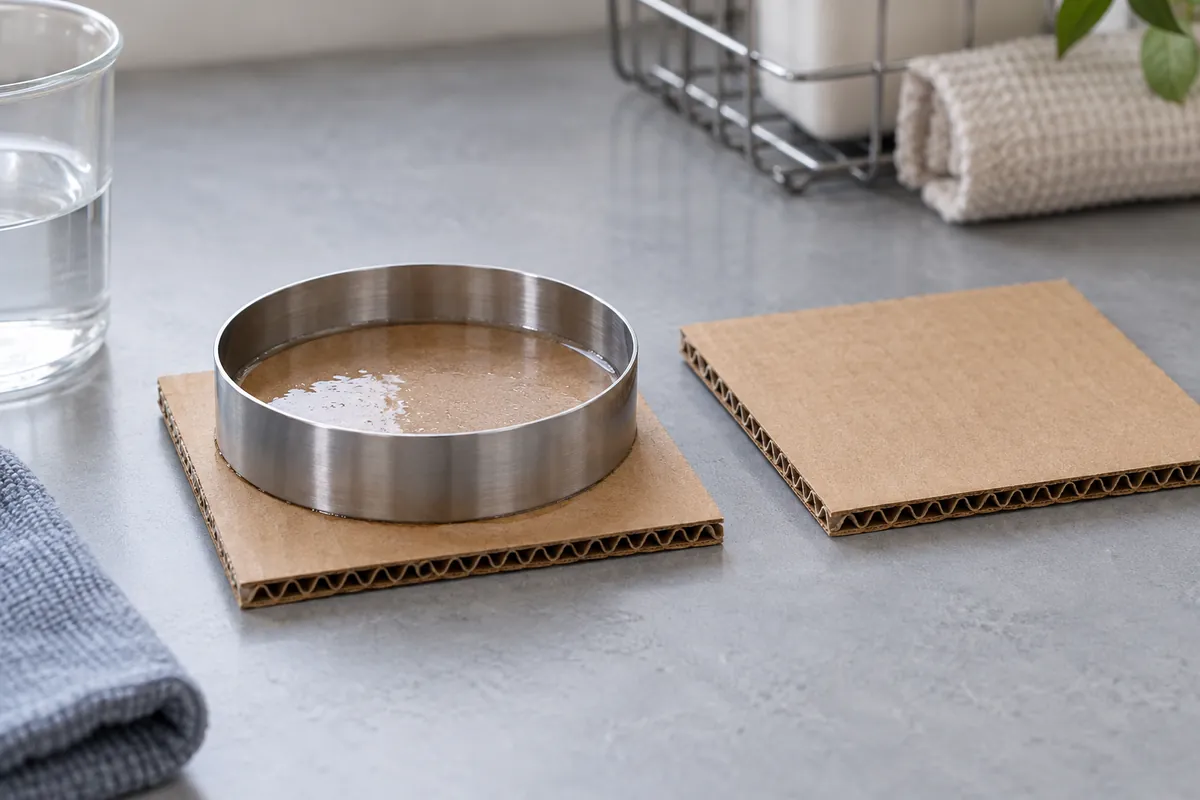
Start with the purpose: comparison of board surfaces, qualification of a changed material, supplier control, or investigation of a defined packaging issue. Then state the packaging item and revision to which the requirement applies. The box maker’s grade designation may not fully describe every layer, coating, adhesive, flute, print, and converted feature that affects the final pack. If the buyer controls a drawing or packaging specification, the relevant construction should be identifiable there.
The method reference should name the standard organization, designation, edition, and any agreed modification. If the supplier proposes an internal method, ask how it corresponds to the buyer’s intended evidence and what differs. Do not mix results from different test durations, exposed faces, sample conditioning, or calculation methods as though they were directly comparable. Where a customer requires a precise edition, confirm it remains current for the contract and quote.
The sample plan should state where specimens come from, how many are taken, which side is tested, whether samples are conditioned, and how the lot or packaging revision is identified. Sampling and conditioning must follow the referenced method or the buyer-approved plan. Do not invent a sample count or environmental conditioning recipe just to make a purchase order look complete. A qualified packaging specialist can advise how to apply the controlled method to the intended board construction.
Acceptance limits belong to the buyer’s packaging risk assessment and the approved supplier agreement. A method defines how to measure; it does not automatically choose what value is acceptable for every hardware pack. If the project has no validated target, consider a qualification comparison, agreed reference sample, or packaging engineer’s recommendation before setting a numeric threshold. Record whether the rule is maximum, range, change trigger, or information-only, and define what happens when a result is outside it.
| Specification item | Buyer should identify | Pourquoi est-ce important ? | Avoid assuming |
|---|---|---|---|
| Test method | TAPPI/ANSI designation and edition or approved equivalent | Makes the procedure auditable | Every “Cobb test” uses identical conditions |
| Board construction | Board/packaging item and controlled revision | Connects data to the pack that will ship | A supplier’s grade name describes every layer |
| Test face | Liner or surface relevant to the intended contact/exposure | Different faces may answer different questions | One side represents all exposed surfaces |
| Sample condition | Source, conditioning, location, and identity under the method/plan | Supports fair comparison and traceability | A loose unconditioned coupon represents a finished box |
| Acceptance rule | Buyer-approved limit or qualification decision and disposition | Defines how the result affects approval | The method itself provides a universal buyer limit |
| Change control | Who notifies and re-approves material or converter changes | Preserves evidence after supplier changes | A passing historic result covers future revisions |
How should buyers interpret supplier reports?
Check whether the report identifies the exact test method and edition, sample date, packaging item, board side, sample source, conditioning, measured value, units, and responsible laboratory or supplier function. Ask if the report covers the buyer’s construction or a generic board grade. If the supplier does not disclose a field, record it as unknown rather than infer it from a logo, stamp, or product description.
Confirm whether the report is a qualification result, routine incoming-board check, periodic verification, or one-time comparison. Those are different evidence roles. A qualification report may support initial approval but will not establish that every incoming lot matches without a separate control plan. A routine result may support lot monitoring but may not establish the packaging’s behavior in a complete distribution simulation. State which decisions the report can support.
Compare only like with like. If two suppliers use different method editions, faces, durations, or conditioning, a numerical ranking may be misleading. First align the method and sample plan or explain the limitation. If a supplier reports only “pass,” ask which criterion and revision define pass. If the board has a coating, print, or lamination that changes, determine whether the old result still represents the pack surface under review.
When a result fails, avoid jumping directly to carton rejection or a redesign. Confirm sample identity, method execution, conditioning, test face, and data transcription. Then determine whether the material, storage condition, conversion operation, coating, or requirement changed. The disposition should be agreed by the buyer’s packaging/quality owner and supplier. A retest can confirm a questionable result, but repeating a test without investigating the cause may merely repeat the same uncertainty.
Cobb testing and other packaging evidence
Packaging qualification is usually a system question. The metal product, protective bag or wrap, inserts, carton, pallet arrangement, storage and route can interact. Cobb evidence can address surface absorptiveness; other methods may address board strength, carton compression, vibration, drop impact, water-vapor transmission, seal integrity, or corrosion protection. Select tests based on the failure mechanism and contract, and avoid claiming that one test qualifies the entire shipment.
For a rack or basket, inspect the finished pack as well as its board materials. Is the product restrained from moving? Do wire ends or brackets contact the carton wall? Are polished or plated surfaces separated? Can moisture be trapped against the finish? Does the packaging revision show the intended insert locations and orientation? These are product/pack interface questions; they are not answered by the Cobb value alone.
If transit or storage performance is important, define the intended route and handling environment with the relevant packaging specialist. A buyer should not assume that a supplier’s ordinary export carton covers every shipment mode, stack height, warehouse climate, or handling event. Any test program should state the package configuration, sample identity, sequence, conditioning, acceptance criteria, and responsible reviewer. Results from a deliberately different configuration should be labeled as such.
A practical approval and change-control checklist
Before approving a board or pack change, check that:
- The purchase item, packaging drawing, board construction, and revision match the sample.
- The reason for Cobb testing is stated and tied to a buyer question.
- The specified method and edition, test face, sample source, and conditioning are identifiable.
- Results include units and enough traceability to connect the specimen to a packaging lot or revision.
- Acceptance logic and out-of-limit disposition were agreed before testing.
- The result is not being used as proof of compression, drop, moisture-vapor, corrosion, or total transit performance.
- Changes in liner, coating, print, board supplier, converter, adhesive, or carton geometry trigger an impact review where relevant.
- A production-intent pack confirms that the hardware’s actual contact and protection points remain as approved.
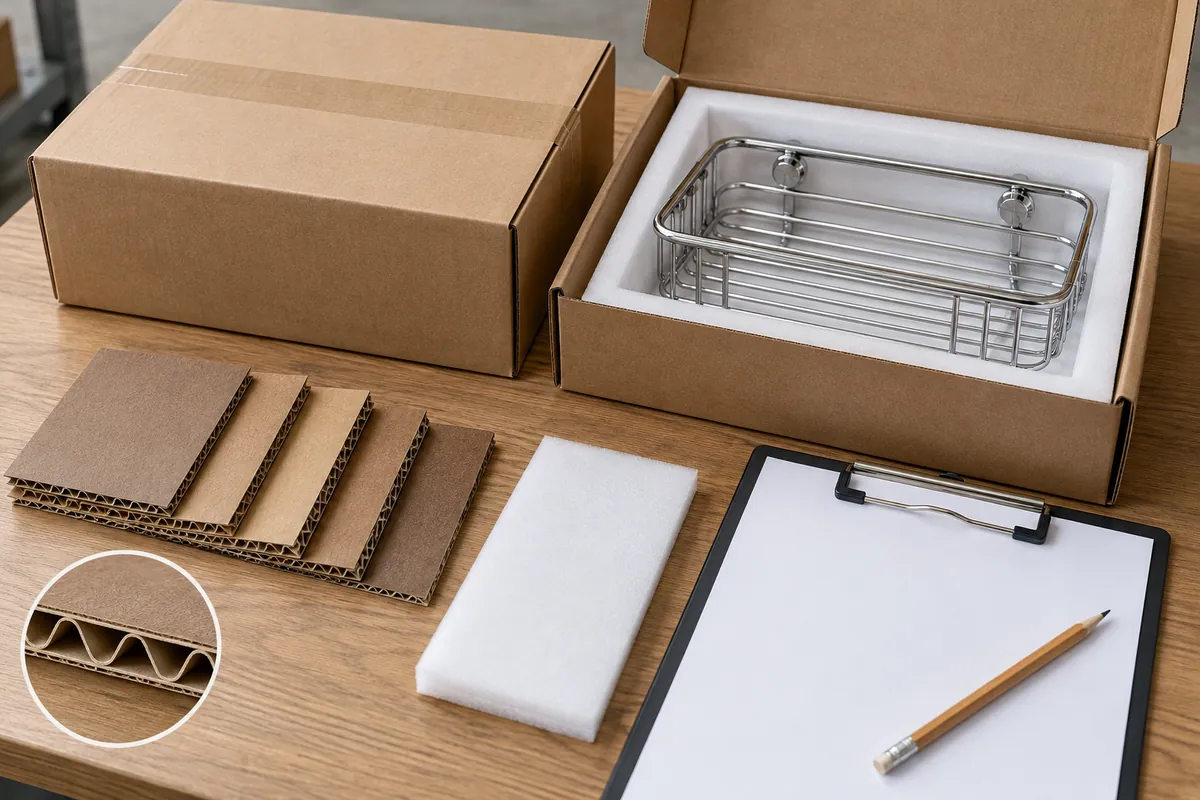
For repeat orders, ask the supplier what change notification will occur if the paper mill, converter, board grade, treatment, or packaging revision changes. You may not need to repeat every qualification test after every administrative change, but there should be a reasoned review with a record of the decision and any verification required. Keep the approved carton drawing or specification tied to the part number and purchase order so old and new constructions are not confused.
Packaging scope also includes communication with the supplier. Koitor’s private-label bathroom accessories page describes relevant product and buyer context; it is not a claim of accredited board testing. Buyers can contacter Koitor with a packaging drawing, sample, or specific carton evidence question so the appropriate project details can be reviewed.
Buyer questions
Does a lower Cobb value always mean a better carton?
Not automatically. It indicates lower measured water uptake only within the stated method conditions and test face. The best material depends on the complete packaging design, the failure mechanism, performance requirements, cost, availability, and whether the method is appropriate to the board surface.
Is Cobb testing the same as measuring carton moisture content?
No. One measures water absorbed under defined surface-test conditions; the other concerns moisture already present in the board under its own method. They should not be substituted for one another in an incoming-material specification.
Can a Cobb result prove my hardware will not corrode?
No. Corrosion can depend on the hardware finish, contamination, moisture source, packaging contact, storage, and exposure. Cobb testing alone does not measure corrosion resistance or establish that a finished product is protected for a specified period.
Should buyers test every carton lot?
The sampling frequency should follow the buyer’s risk, supplier controls, contract, and change history. A qualification test, routine verification, and lot-release check serve different purposes. Agree the plan with the packaging and quality owners rather than applying a universal frequency.
What should happen if the supplier’s report says only “pass”?
Ask which method, edition, test face, sample identity, and acceptance criterion define that result. Until those are known, “pass” cannot be compared reliably with another supplier’s data or linked to the approved packaging revision.
Does this method cover printed or coated corrugated board?
Application depends on the specific construction, method scope, and exposed surface. Confirm the current standard and test plan with the responsible packaging specialist, especially if a coating, lamination, or printed area is part of the surface relevant to the buyer’s question. A complete corrugated Cobb water absorption packaging specification should name the exact board face and packaging revision, so a later report can be matched to the material actually approved for shipment.
Review packaging requirements with the product, carton construction, approved revision, and specific evidence question identified.
Fabrication pour compte de tiers / Marque de distributeur
Transformez ce guide d'approvisionnement en cahier des charges
Indiquez-nous le produit souhaité, ses dimensions, sa finition, la quantité commandée et vos exigences en matière d'emballage. Votre équipe recevra une analyse pratique de la faisabilité de la fabrication avant l'établissement du devis.

 English
  Español
  Português
  Français
  Deutsch
  العربية