
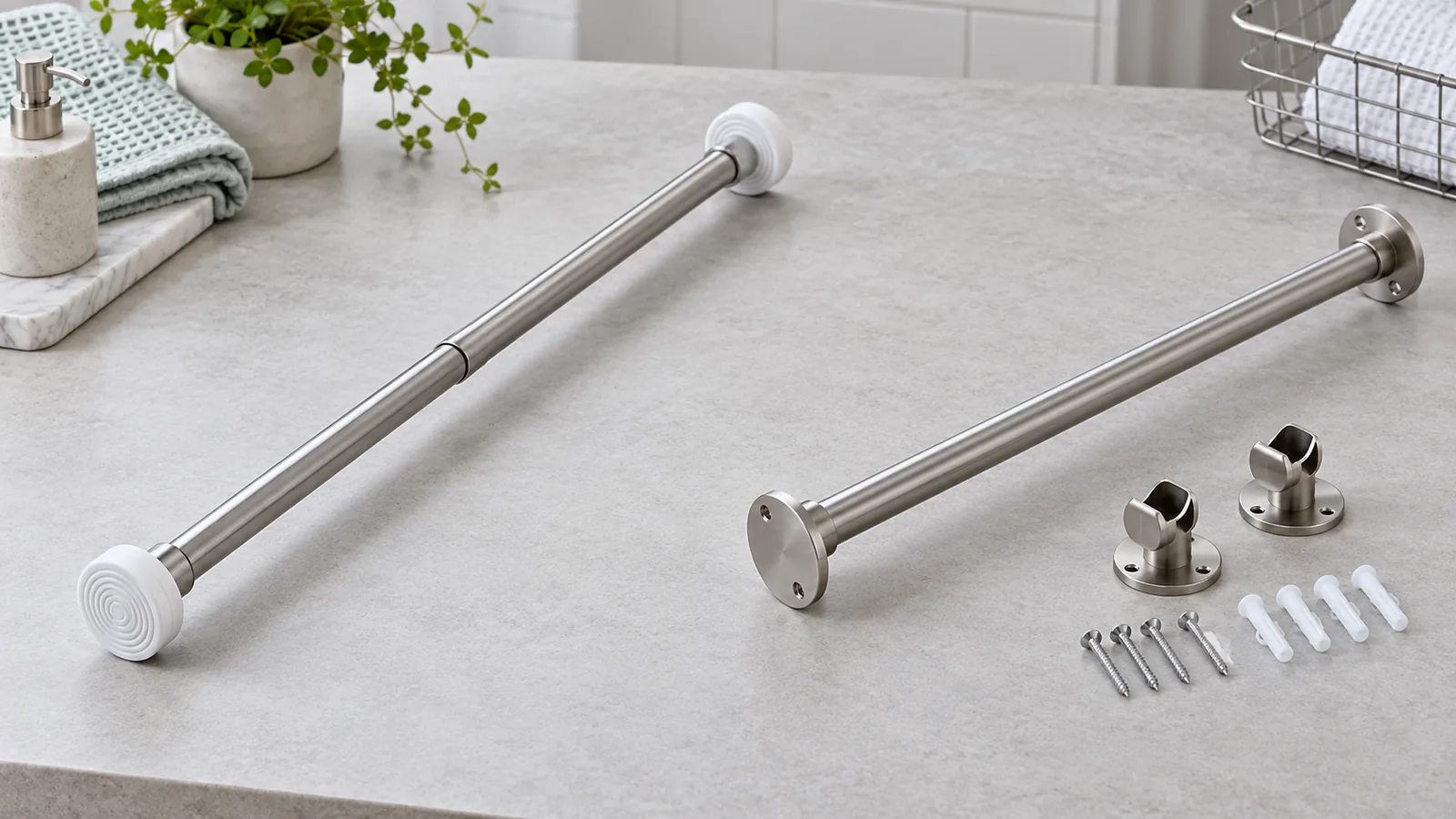
A tension shower curtain rod supplier should quote the actual mounting architecture, usable span and supplied components, rather than only a nominal length. Tension rods press between opposing surfaces through an adjustable mechanism and end contacts; bracket-mounted rods rely on fixed supports and specified fasteners. For importers, the practical choice depends on the installation brief, buyer’s distribution channel and the evidence the supplier can provide for the exact product. Compare both systems using the same opening dimensions, finish, hardware scope and sample checks before approving a program.
Why do the two mounting types need separate specifications?
A product title such as “adjustable shower rod” does not tell a buyer whether the rod is pressure-fitted between two walls or attached to fixed brackets. Those architectures differ in installation steps, included parts, adjustment range, packaging, and the assumptions a supplier makes when quoting. A line item with only “metal shower rod, 120 cm” can therefore hide different products.
Retail and institutional catalogs illustrate this distinction. Medline lists tension rods by adjustable ranges, while its same catalog lists stationary rods in fixed lengths and separately identifies wall-mount brackets. Bradley’s example specification describes fixed-length rods with named swivel brackets and supplied installation screws and anchors. These examples show why buyers should record configuration and kit contents; they do not establish a universal product standard or prove that one style is always suitable.
The distinction also matters when buyers compare suppliers. A tension system may include nested tube sections, an internal spring or locking arrangement, end caps or pads, and instructions. A bracket-mounted system may include one or more brackets, screws, anchors, a template or cover pieces. Which components are included varies by product. If one quote includes a wall kit and another treats it as an option, the prices and pack-out are not directly comparable.
For assortment planning, separate the consumer-facing choice from the sourcing decision. First define where the rod will be used and who will install it. Then select the architecture and create a product brief that describes how the sample will be measured, fitted and packed. The buyer does not need to design every component, but must define the intended configuration and ask the responsible supplier to identify unresolved engineering assumptions.
How should an importer choose tension or bracket mounting?
Start with the target installation scenario, not a broad claim such as “no drilling is better.” A pressure-mounted design may fit a program where buyers need adjustment and the supplier’s documented instructions allow installation on the intended opposing surfaces. A bracket-mounted design may fit a program where a defined permanent attachment and repeatable bracket position are part of the product brief. Neither description by itself proves suitability for a particular substrate, span or use.
| Buyer condition | Tension / telescopic system | Bracket-mounted system | What to confirm |
|---|---|---|---|
| Intended installation | Pressure between opposing surfaces; mechanism varies | Rod supported at fixed mounting points | Target opening, wall geometry, install method and exclusions |
| Length definition | Minimum and maximum usable span, including end parts | Fixed rod length plus bracket position and projection | Measurement datums and tolerances at the installed surfaces |
| Main interfaces | Telescoping joint, lock or spring, end contacts | Rod-to-bracket fit, bracket base, screws and anchors | Which supplier makes or sources each component |
| Buyer flexibility | Adjustment may cover several openings when validated | Different fixed lengths or bracket arrangements may be offered | SKU count, range endpoints, adjustment steps and color options |
| Sample review | Fit at agreed endpoints; check joint action and end contact | Confirm rod seating, bracket spacing and hardware fit | Representative opening mock-up and approval criteria |
| Emballage | Nested sections and protected end components may affect pack-out | Long fixed parts and separate brackets may need retention | Carton dimensions, component count, rub protection and instructions |
A tension option is not simply a bracket rod without screws. Ask the supplier to state whether adjustment comes from telescoping tubes, a spring, a twist-lock or another mechanism, and how the buyer should operate it. If the design combines a telescoping joint with a separate locking action, list those as distinct functions. Do not infer how the rod behaves from a product photo.
A bracket-mounted option also needs more than an overall rod length. Record the bracket center-to-center distance, projection or offset where relevant, rod diameter or section that mates with the bracket, how the joint is retained, and which mounting parts are included. If the model has a center support, swivel feature or special cover, list it in the drawing and bill of materials. The supplier should identify any substrate-specific fasteners as supplied, recommended, optional or buyer-provided; do not treat a generic kit as suitable for every wall.
Use a neutral comparison before committing to a product family. If the business brief calls for rental-friendly or temporary use, define the allowed installation method and the supplier’s written limitations. If the program is for a commercial project or a fixed-size enclosure, specify the architectural opening and responsible installer. When a tension shower curtain rod supplier offers more than one adjustment range or mounting architecture, request a separate line for each SKU and its complete component set. “Rental,” “commercial” and “no drill” are not performance specifications.
Which dimensions and components belong in the RFQ?
Give the supplier the dimensional envelope and the measurement method. For an adjustable rod, state the minimum and maximum clear opening the product should address, how each value is measured between finished surfaces, and whether the range includes installed end contacts. For a fixed rod, state the finished rod length, bracket spacing, projection and any clearance requirements. If buyers use a range across multiple SKUs, identify each SKU and its range instead of combining the variants into one ambiguous line.
For telescopic designs, request the supplier’s proposed tube sections, usable adjustment range and overlap condition at the relevant endpoints. A visible overlap length alone does not prove an adequate design: the product’s joint and locking features, materials and operating conditions also matter. Ask how the supplier defines minimum engagement and how that condition is represented in the approved drawing or sample. Keep that question distinct from the end-cap grip question; the overlap joint and the wall contact are different interfaces.
For bracket systems, specify the mounting datum, bracket spacing, hole locations, projection, rotation range if applicable, and the rod-to-bracket retention method. A drawing should mark the cosmetic faces and the locations buyers will inspect. When a supplier proposes changes to a bracket or tube interface, ask for an updated drawing and sample before treating the old approval as applicable.
The buyer can ask for the following fields without dictating an unverified design:
- Product type and mounting architecture: pressure/tension, fixed bracket, or another named system.
- Intended opening range or fixed installed dimensions, with a datum and units.
- Tube material and section, outside dimensions, wall thickness where known, and finish.
- Adjustable sections, overlap/engagement condition and locking or spring action, when applicable.
- End-contact parts, bracket geometry, supplied fasteners and parts purchased from another source.
- Curtain-ring or hook compatibility, if these accessories are included in the program.
- Finish, color, exposed surfaces and acceptable cosmetic variation tied to a reference sample.
- Pack-out: each rod section, brackets, fasteners, instructions, spare parts and protective materials.
- Sample quantity, representative fit conditions and written approval records.
Do not fill gaps with guessed tube gauges, universal span tolerances or load ratings. Ask the supplier to propose values and explain which are product-critical. A shared drawing revision and a component list make it easier to compare quotes and catch changes before production.
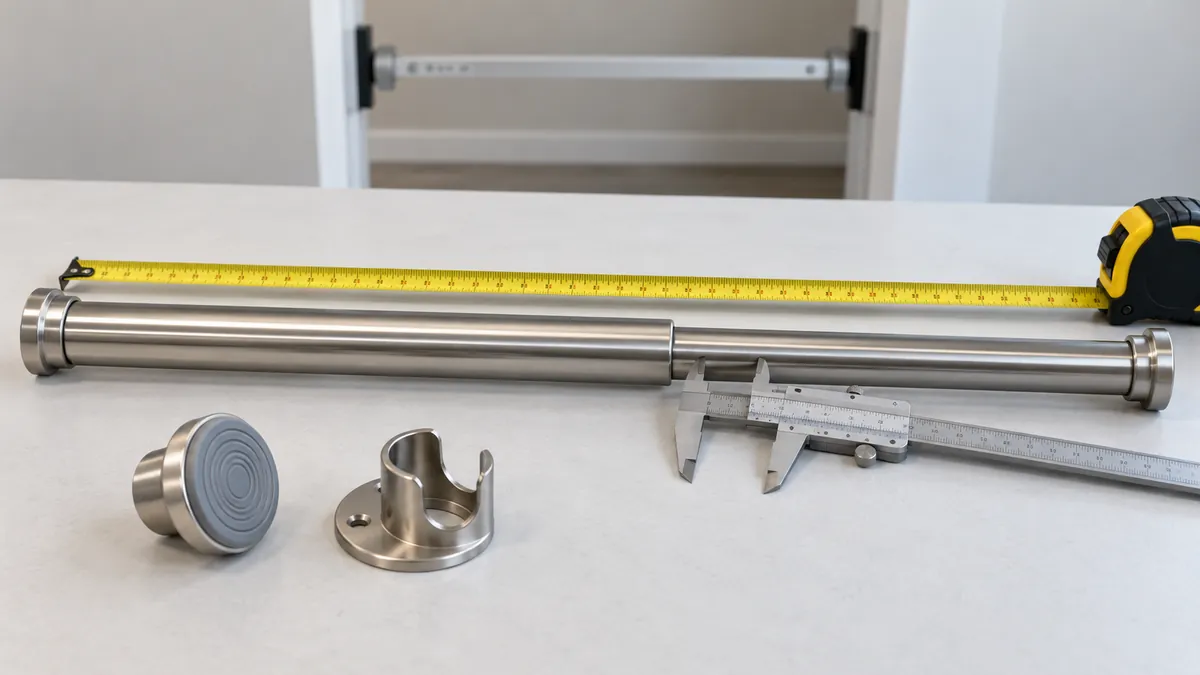
Illustrative review scene: confirm the exact product structure, dimensions and supplied hardware with the selected supplier.
How can buyers compare quotes and kit scope?
Normalize the offers line by line before deciding that one supplier is cheaper. Confirm whether the quote covers the rod body, extension sections, finish, end contacts or brackets, screws and anchors, instructions, individual retail packaging, inner protection and master-carton quantity. Some sources sell mounting hardware separately; others include a kit. A price cannot be compared fairly until inclusions and assumptions are visible.
Use a quote comparison matrix with one row per SKU and columns for architecture, opening range, rod dimensions, mechanism, hardware, finish, package, MOQ or quantity tier, sample scope and any excluded item. Mark unknowns as “to confirm” rather than silently treating them as included. If the project requests a mixed assortment, record whether the quote applies to each variant or only to a combined order quantity.
Ask the supplier to separate product facts from proposals. “Stainless,” “heavy duty,” “universal” or “anti-slip” is not a complete material or performance specification. Request the exact grade or trade material designation where relevant, finish description, component list, and test evidence for any claim that the buyer intends to put on packaging. A supplier’s catalogue range can guide discussion, but it is not proof that the same construction, finish or test applies to the offered SKU.
A sample request should state what the supplier is expected to provide: one production-intent assembly, a chosen finish, the included bracket or end-contact kit, instructions and the packaging configuration to review. If buyers want to compare both architectures, ask for separate samples and drawings. Ask the tension shower curtain rod supplier to label each submitted sample with the same SKU, drawing revision, finish and included kit shown on the quote. Do not ask a supplier to “match the other quote” without identifying the exact variant and scope.
For private-label programs, align the product and packaging decisions before artwork approval. The OEM supplier may produce the metal components, while an end cap, spring, anchor, screw or instruction sheet could be sourced elsewhere. Ask the program owner to identify who controls each component and who checks the final kit. A drawing or bill of materials can show ownership and interfaces; it does not, by itself, prove the performance of an outsourced part.
How should the importer approve the sample?
Create a written sample protocol tied to the intended application. For a tension system, use a representative opening fixture or agreed installation surfaces at the minimum and maximum claimed ranges. Record the exact setup and follow the product instructions. Observe whether the sections adjust, whether the lock or spring acts as described, and whether the end parts remain positioned during the defined check. These observations are product-specific; one sample in one opening does not demonstrate compatibility with every wall surface or prove long-term holding behavior.
Do not deliberately over-tighten a tension rod to make it feel more secure. Ask the supplier to state the installation method and any restrictions, and use only the defined review procedure. If the buyer needs a load or cycle claim for a market-facing specification, agree on the method, fixture, duration or cycles, sample count, acceptance criteria and responsible test party before testing. A quick hand check should not be translated into a load rating.
For a bracket-mounted sample, verify the rod fits the proposed brackets, the bracket spacing matches the drawing, the supplied hardware matches the approved kit, and the assembly can be installed using the intended instructions. If the fit depends on a project’s substrate or fastener selection, involve the responsible installer or specifier. The importer should not substitute a different screw or anchor during evaluation without recording that change.
Across either architecture, inspect the exposed finish for handling marks, dents, burrs or damage at the joints and ends. Check the assembly at all specified adjustment positions and make sure supplied parts correspond to the bill of materials. If a cosmetic sample is made with a different material, finish or production route from the intended bulk product, record the difference and request a production-intent sample before final approval.
Record the sample ID, drawing revision, date received, sample configuration, measurement results, photos, open issues and approval status. If a change is made, ask which dimensions or components changed and whether the quote or packaging is affected. Keep the approved sample or an agreed reference set available for incoming inspection. This records the buyer’s decision; it does not promise that every production piece will be identical.
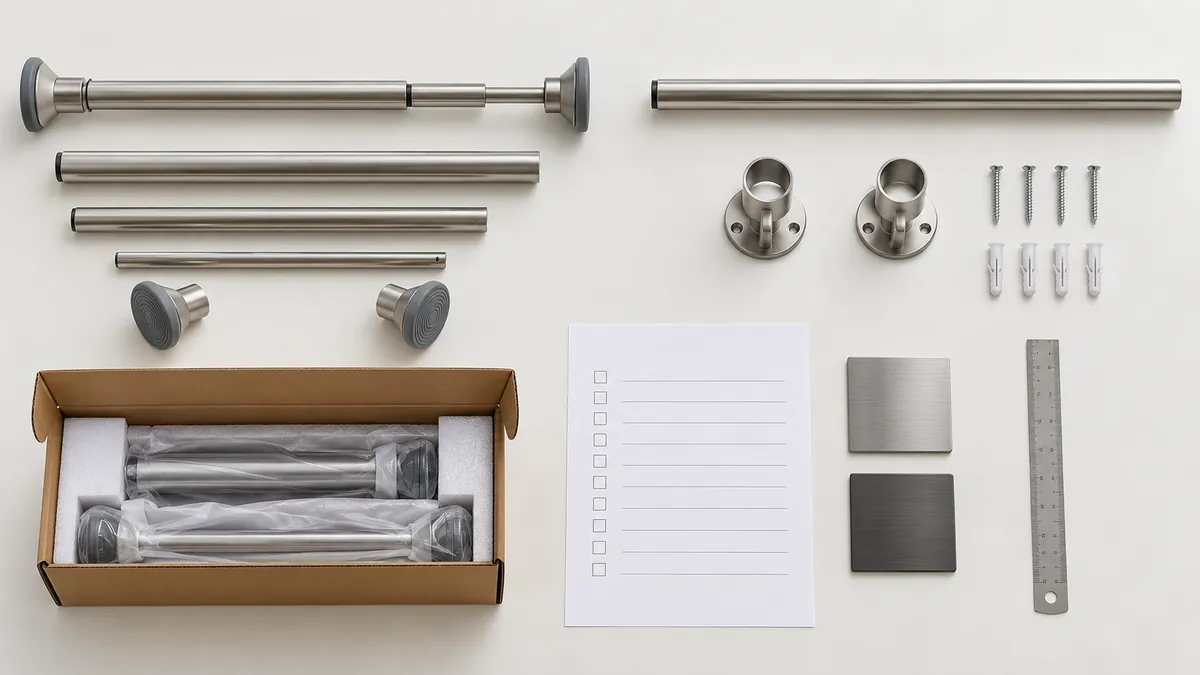
Use a representative installation fixture and the supplier’s documented instructions when evaluating the specified sample.
What sourcing mistakes should buyers avoid?
Treating “tension” as a universal design. Spring-loaded, screw-adjusted and telescoping products can differ. Name the proposed mechanism and check its range and instructions.
Comparing nominal lengths. A listed length may refer to the rod body, adjusted range or installed opening. Define the finished-surface datum and measurement endpoints.
Assuming kit contents. Brackets, anchors, screws, end contacts, hooks and instructions may be optional or sold separately. Match each quote to a written component list.
Using one setup to represent every installation. A sample tested in one opening and on one surface does not establish suitability for all openings and finishes. Define the actual test conditions.
Treating a fixed bracket system and tension rod as equivalent substitutes. They have different mounting interfaces and may need different packaging, instructions and accessory kits. If alternatives are acceptable, ask for separate drawings and quotes.
Allowing the product description to replace inspection criteria. “Premium,” “strong” and “rust-resistant” do not tell the receiving team what to measure, look at or count. Write observable criteria and identify evidence required for any performance statement.
Koitor is a family-owned custom metal hardware factory with documented experience in bathroom and home-storage hardware. That background supports practical discussion of metal tube, finishing, sample and packaging decisions, but it does not establish a current Koitor shower-rod product line. If an importer asks Koitor about a related development, the exact product range, purchased components, engineering responsibility and testing scope would need project-specific confirmation. Buyers looking for a documented bathroom-hardware OEM scope can review the custom bathroom hardware manufacturer information and the private-label bathroom accessories program.
Buyer checklist and FAQs
Before requesting a revised quote or approving a sample, confirm these points in writing:
- Is the proposed system tension/pressure-mounted, permanently bracket-mounted, or another defined architecture?
- What are the usable installed minimum and maximum spans, and where are the measurement datums?
- Which rod sections, end contacts, brackets, fasteners, accessories and instructions are included?
- Which material and finish apply to each component, and what cosmetic sample sets the standard?
- How is the telescoping joint or bracket interface defined in the approved drawing?
- What test setup, sample count and acceptance criteria apply to the buyer’s required checks?
- What packaging protects the product and keeps loose hardware with the correct SKU?
- Who supplies and verifies any spring, pad, bracket, anchor, screw or instruction set sourced outside the rod assembly?
Is a tension rod always easier for the buyer’s customer?
It may require fewer fixed mounting parts in some programs, but ease of installation depends on the product instructions, opening, surfaces and user capability. Review the intended installation scenario with the responsible supplier and do not treat “no drill” as a universal fit claim.
Does a bracket-mounted rod always hold more securely?
That cannot be concluded from the architecture name alone. The complete rod, brackets, fasteners, substrate and installation determine the result. If a buyer needs a performance claim, define and document the applicable test rather than inferring it from a picture or mounting style.
Should a buyer request one sample or both types?
Request one sample for each architecture the buyer is genuinely considering. Keep separate drawings, component lists and evaluation records because the interfaces and installation methods differ.
Can Koitor supply this shower-rod product?
The article does not establish that Koitor currently manufactures shower rods. Koitor’s documented scope is bathroom and home-storage metal hardware; any adjacent product would need confirmation of product scope, sourcing responsibility and project-specific capability before a buyer relies on it.
Further reading: compare these decisions with the buyer approved bathroom-accessory assortment plan and confirm the supplier scope in writing before production approval.
Need Help Scoping a Bathroom Hardware OEM Project?
Share the product drawing or sample, target market, finish, quantity range and packaging requirements. Koitor can review the documented bathroom and home-storage hardware scope and confirm whether the project fits its production capability.
Fabrication pour compte de tiers / Marque de distributeur
Transformez ce guide d'approvisionnement en cahier des charges
Indiquez-nous le produit souhaité, ses dimensions, sa finition, la quantité commandée et vos exigences en matière d'emballage. Votre équipe recevra une analyse pratique de la faisabilité de la fabrication avant l'établissement du devis.
 English
 Español
 Português
 Français
 Deutsch
 العربية