

A practical CBP Form 28 request for information importer checklist starts before a customs inquiry: map each U.S. entry to the exact hardware SKU, order revision, product description, material records and transaction documents that a supplier may hold. CBP’s form can request a transaction contract or purchase order and its revisions, descriptive product information, components and materials by weight and actual cost at assembly, samples, and specified transaction expenses. The importer remains responsible for accurate entry information even when a broker files, while a factory may be asked to provide factual records it controls. Agree on retrieval ownership, authorized recipients and a secure handoff in advance; if a Form 28 arrives, follow the exact notice and coordinate with the broker or trade counsel.
What information can CBP Form 28 request?
CBP Form 28 is a request for information, not a notice that automatically proves a violation. CBP uses information requests when it needs additional information or samples to carry out its import responsibilities. The request identifies a particular entry or transaction and indicates the questions or documents that the recipient should address. The buyer should respond to the items actually selected, not assume every box on a blank form applies to every shipment.
CBP’s publicly listed Form 28 (the PDF is labeled 08/24) includes questions about whether the importer is related to the seller and, if so, how that relationship affects the price paid or payable. It also identifies possible transaction expenses such as packing, commissions, proceeds that accrue to the seller, assists, and royalties or license fees. Under the document section, the form lists a copy of the contract or purchase order and seller confirmation, including revisions; product literature or information explaining what the merchandise is, where and how it is used, and how it operates; and a breakdown of components, materials, or ingredients by weight and actual cost at the time of assembly into the finished article. It can also request samples and other specified material.
Those are examples of information CBP may request, not a universal checklist that every importer must submit with every entry. The form asks the recipient to answer indicated questions and furnish indicated items. Read the actual request line by line, note the entry number, invoice description, invoice number, tariff item and country fields shown, then map each requested item to a record owner. If an entry covers several models or revisions, do not use one generic product description to answer a SKU-specific question.
The CBP Forms page currently lists Form 28, and the linked public PDF displays “CBP Form 28 (08/24)” and an OMB expiration date of August 31, 2025. Because that printed date is past, buyers should not assume a saved blank copy is the latest operational version. Use the form or electronic notice actually received, verify current instructions with the broker or CBP contact named on it, and do not delay a response while searching for a different template. The form’s official CBP listing links to the CBP Form 28 PDF.
For a released shipment, 19 CFR 151.11 specifically says an authorized CBP official may request samples or additional examination packages using Form 28, its electronic equivalent, or another appropriate form. If the inquiry requests a physical sample, capture the model, finish, revision, shipment association, container or marks information, and the sample’s chain of custody before dispatch. Never substitute a visually similar item or assume a sample will be returned; the form itself warns that samples consumed in analysis or not specifically requested back normally may not be returned.
Who should answer, and where does the importer remain responsible?
The importer should lead the response process because it is responsible for the accuracy of its entry information. CBP’s importer guidance says that using a customs broker does not remove the importer of record’s ultimate responsibility for the correctness of documentation presented to CBP. The broker can organize submissions and advise within the engagement, but the buyer should not treat the broker’s file as a substitute for supplier facts or an internal owner who can approve those facts.
That does not mean the factory should be ignored or that a supplier can never receive or complete a Form 28. The form contains “TO” and “FROM” fields and notes that its certification section is not required if a foreign firm completes the form. A supplier may therefore be involved directly in a particular request. The named recipient, the precise questions, and the request’s instructions control who must respond and what is expected. Do not tell a supplier that it is automatically the legal respondent, and do not assume it has no role if CBP has addressed the request to it.
A useful responsibility split is:
| Work item | Importer or U.S. buyer | Supplier or factory | Broker or trade counsel |
|---|---|---|---|
| Identify the entry and requested response items | Owns the entry and assigns an internal lead | Helps match supplier order and product records | Confirms filing route, scope and deadline from the notice |
| Confirm the product supplied | Approves the commercial description used for the entry | Provides controlled product facts, drawings and revision history it holds | Advises how facts relate to the entry and tariff questions |
| Provide materials, weights and component records | Decides what evidence is required and reviews consistency | Supplies supported item-level records available from its systems | Advises on presentation and any confidential submission route |
| Determine customs value or legal treatment | Remains accountable for its declarations and decisions | Does not make the importer’s legal conclusion | Provides professional advice within the engagement |
| Submit a response | Authorizes and retains the final response | Supplies facts or responds if directly instructed | Files or transmits only as authorized |
This table is a planning model, not a legal assignment of responsibility for every case. If CBP directs the supplier to respond, the importer should coordinate with the supplier and its broker immediately. If the notice is addressed to the importer, the factory should not send an independent explanation that could conflict with the importer’s records. One response owner should reconcile the final package and keep the sent version and supporting files together.
The distinction between factory facts and importer conclusions is especially important when a question touches product classification, transaction value, related parties, assists, royalties or origin. A manufacturer can explain how a basket, towel rack or storage component is made and what material records exist. The manufacturer should not be asked to invent the importer’s valuation method or decide which statutory treatment applies. For a classification-focused product-data checklist, see the U.S. hardware importer guide to HS code preparation.
Which records should buyers map to each SKU, order and entry?
Before a purchase order is placed, set up a traceable record map with enough identifiers to connect supplier documents to the goods declared on the U.S. entry. A Form 28 answer can become difficult when an invoice describes “metal bathroom accessory,” the PO uses a marketing name, the production drawing carries a later revision, and the broker file contains only a parent SKU. The solution is not to create customs records for a hypothetical inquiry; it is to make normal commercial and product records findable, controlled and consistently named.
A buyer and supplier can agree on a basic file key such as buyer SKU + supplier model + PO number + production revision + shipment or invoice reference. Use that key on the relevant files or in a controlled index. If one shipment contains several items, keep each line tied to its own product description and revision. Where an item changed after the first sample, record when the change was approved and which production lot used the changed version.
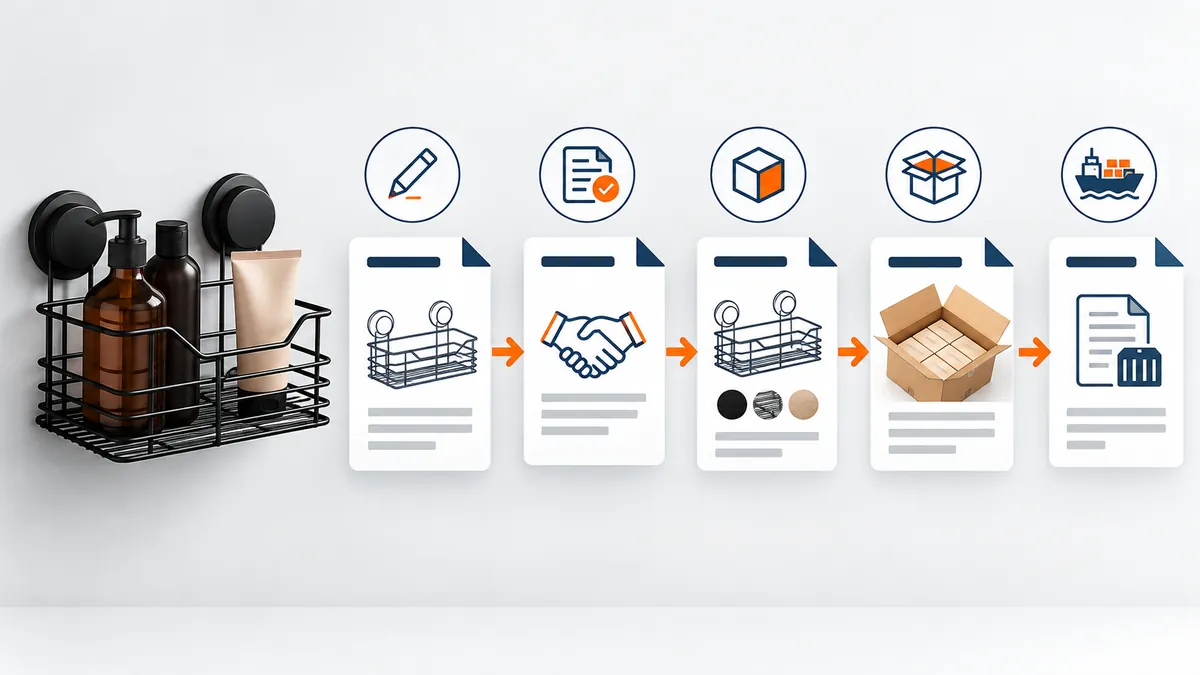
| Record family | Useful supplier-side facts to map | Buyer-side action before ordering |
|---|---|---|
| Contract and order history | Accepted quotation, PO acknowledgment, contract version, amendments, approved price or quantity changes | Retain the buyer-seller version and record which revision governs the shipment |
| Product identity | SKU, model, product name, dimensions, intended use, drawing, sample approval, finish and revision | Make the commercial invoice description consistent with the actual product and entry data |
| Component and material structure | BOM or assembly list, material names or grades if confirmed, component quantity, available weight records and the date/revision they apply to | Ask which fields are measured, calculated, estimated or unavailable; do not label estimates as measured facts |
| Costs requested by CBP | Actual component cost information at the time of assembly if maintained and available; supporting supplier records that can be identified | Decide with the broker how requested cost information will be reviewed and securely conveyed |
| Transaction expenses | Packing charges, commissions, assists, seller proceeds, royalties or license fees where relevant to the transaction | Identify the party that holds each record and ask the broker whether the particular expense matters to the entry |
| Pack-out and shipment | Carton count, pack-out revision, packing method, packing costs if separately recorded, invoice, packing list and shipment references | Preserve a copy matching the shipped configuration; distinguish the product from its package and freight documents |
| Samples and technical explanation | Approved sample ID, product literature, assembly or use explanation, product photographs and changes since approval | Keep a date and revision with photos; avoid sending a sample that cannot be linked to the entry |
A record map need not expose commercially sensitive details to every buyer employee. It should reveal that a record exists, what it covers, who owns it, and how an authorized importer or broker can request it if CBP asks. For example, the factory could maintain a detailed internal component cost schedule while the buyer sees a record index. If the actual Form 28 later requests the schedule, the importer and supplier can use an agreed controlled channel to determine the appropriate evidence and recipient.
Use the same discipline for physical product changes. A drawing revision that changes wire diameter, a mounting plate, a hook, a screw set, a weld position or a surface finish can alter the product description or relevant supplier records. It does not automatically change customs treatment, and a supplier should not make that determination. The buyer should record the approved revision and ensure the shipped item, product literature, invoice and internal description are not describing different versions.
For a basket or bathroom organizer, the components might include a welded wire body, mounting parts, screws, end caps, a coating or plated finish, and retail packaging. This is an illustrative component list, not a claim about every Koitor product or about a specific shipment. Buyers should ask the actual supplier for the structure of the actual SKU. Do not infer material grades from color, magnetism, photographs or a marketing name.
How should suppliers handle component costs and confidential data?
Treat the phrase “actual cost of the components at the time of assembly” as a specific information request printed on the form, not as permission to replace actual records with a convenient estimate. The supplier should identify what its records can substantiate for the relevant product and revision. If a cost schedule is not maintained at the requested level, the importer should not ask the factory to backfill invented precision. Instead, record what can be supported, identify limitations, and ask the broker or counsel how to handle the actual request.

A supplier’s component cost is also not automatically the same thing as the importer’s customs value. CBP may ask about other transaction expenses, including packing, commissions, proceeds, assists or royalties and license fees. Whether a particular amount is relevant and how it should be treated are questions for the importer and its qualified customs adviser based on the transaction. Do not instruct a factory to label an amount dutiable or non-dutiable, and do not assume that a purchase price answers every cost-related question.
The buyer can make a future disclosure less chaotic by agreeing on a controlled process rather than demanding unrestricted access to the supplier’s accounting system. A practical arrangement may include:
- A named importer contact who may request records for a stated U.S. entry or CBP inquiry.
- A broker or counsel contact who may receive a specific record when the importer authorizes the release.
- A secure transfer method, access expiration, limited recipient list and file-level access log.
- A record index that identifies model, PO, revision, shipment and record owner without broadcasting confidential cost figures.
- A process to preserve the original supplier file and separately document any explanation, translation, redaction or conversion.
- A point of contact for a direct CBP request addressed to the factory, so the importer and its broker can be notified promptly where legally permitted.
A nondisclosure agreement or purchase-order clause can define ordinary commercial confidentiality and a process for lawful requests, but it cannot guarantee that a particular record will be accepted or override a valid government demand. Have counsel review contract language that controls disclosure, record access, retention or cross-border data transfer. If a buyer needs a component schedule before ordering, specify why it is needed, which SKU or revision it covers, who can see it, and whether an indexed summary is sufficient for routine planning. Do not suggest that a summary will replace underlying substantiation if the actual request calls for source records.
A supplier can state its own manufacturing facts. It should not promise that CBP will accept an explanation, determine transaction value for the importer, certify the importer’s entry, or answer on behalf of the broker unless the specific authorization and request support that action. A careful handoff is more credible than a broad promise to provide “all customs documents.”
What should be agreed before production?
Make document retrieval part of order readiness, alongside drawing approval and pack-out confirmation. The objective is not to anticipate every question CBP could ask. It is to ensure that an ordinary request can be connected to the shipment without reconstructing years of email from memory. Use the following steps for a new U.S.-bound SKU or a material product revision.
- Confirm the parties and transaction identifiers. Record the importer of record, seller, manufacturer if different, supplier model, buyer SKU, PO, invoice and expected entry references. Note related-party status only through the buyer’s approved process; do not ask the factory to make a legal conclusion from a casual supplier questionnaire.
- Freeze the product identity at shipment. Preserve the approved drawing and revision, sample reference, material or finish facts available from the supplier, product description and photos of the approved configuration. Mark superseded versions so they cannot be mistaken for the shipped product.
- Ask what component records exist. Agree whether the supplier keeps a BOM, weight schedule or component-level cost record, the revision covered, and who can retrieve it. Identify measured data separately from calculated or estimated data.
- Map expenses to owners. Ask which party records packing charges, commissions, buyer-provided tools or materials, seller proceeds, royalties or license fees, where applicable. Do not decide their customs treatment in the supplier record map. A separate buyer-funded tooling and customs records guide covers that distinct issue.
- Define an authorized release path. Name the importer lead and broker contact; agree how the supplier will receive a properly scoped request and how an approved response file will be transferred and logged. Determine in advance who handles translation or document formatting.
- Keep a record index with the order file. List the document name, owner, product and order revision, date, access method and whether it is confidential. Update the index when an approved order change alters product, packaging, component or price records.
- Set a escalation path for an actual notice. The recipient should notify the importer’s designated contact promptly, preserve the notice and attachments, and use the due date and response channel printed on the specific request. The importer should coordinate with its broker or trade counsel before choosing how to answer.
A CBP Form 28 request for information importer checklist is useful only when it maps a supplier record to the particular order, SKU and entry; use it as a retrieval index, not as a predetermined response. These steps can fit into a supplier questionnaire, document-control appendix or order kickoff checklist. Keep the request proportional: a factory may hold its own manufacturing information but not the importer’s customer contract, broker entry summary, downstream proceeds or every upstream subcontractor invoice. Identify the expected custodian for each category rather than assigning “supplier” to every line.
What do record-retention and response-timing rules actually say?
Use current U.S. rules to set expectations, but do not turn a general recordkeeping period into a blanket promise that every factory file must be retained for the same period. Under 19 CFR 163.4, records required to be made, kept and produced under Part 163 are generally retained for five years from the entry date, or from the activity that required their creation, subject to exceptions and provisions that may control for particular record types. The importer should determine which records it is required to keep, where they are stored, and which records may be held by a broker or other party. Supplier contracts can create separate commercial duties, but the importer should not assume that a five-year rule automatically applies to every foreign supplier document.
Timing also requires precision. 19 CFR 163.6 addresses production of demanded entry records. It generally provides 30 calendar days after receipt of a demand, while allowing a shorter period when records relate to admissibility or release; it also describes a way to request a specific additional period before the applicable due date. That provision should not be presented as a universal Form 28 response deadline. A Form 28 may specify its own due date and instructions, and an importer should treat the actual notice as controlling and ask the broker or counsel immediately if retrieval time is a problem. A request for more time is not automatically approved merely because it was sent.
If records are missing or a supplier cannot retrieve a requested item, preserve what exists and tell the importer’s response owner promptly. Do not backdate a document, alter a supplier record to make it look contemporaneous, or use an unrelated SKU’s file as a substitute. The importer and its adviser can decide how to explain the gap, whether other evidence is available, and how to communicate with the CBP officer identified on the request.
For each record, store the original version and any response copy separately. If a document is translated, annotated, redacted or converted to a spreadsheet, retain the source file and identify the transformation. That distinction helps the buyer explain what the original showed and what was prepared for the response. For a shipment sample, preserve the request, item identification, shipping proof, and any instruction about return or destruction.
What mistakes create avoidable Form 28 record gaps?
A common failure is not that a supplier has no data at all; it is that the data cannot be tied confidently to the entry. A generic BOM, a quote from an earlier model, a drawing with no revision number, and a shipment photo taken after an unrecorded change can each be individually plausible while describing different products. Build the link between commercial, technical and shipment records before an inquiry, then test it on one SKU.
Avoid these assumptions:
- “The broker has everything.” A broker may hold entry documents and messages, but supplier product or component facts may remain at the factory. Confirm record ownership instead of relying on an informal assumption.
- “The factory is responsible for the whole response.” The actual recipient and instructions determine the factory’s role. The importer remains responsible for its entry records; a supplier contributes facts or responds where the request and authorization require it.
- “A quote is the same as a cost breakdown.” A quotation may not show component actual cost at assembly or identify the basis and revision of the numbers. Do not relabel one as the other.
- “Every shipment needs every file listed on the form.” The Form 28 directs the recipient to answer indicated questions and furnish indicated items. Read the actual selections.
- “Thirty days is always the Form 28 deadline.” Do not import a general Part 163 production rule into every Form 28. Check the received notice and contact the adviser early.
- “The product photo proves the material and construction.” A photograph can help identify appearance, but it cannot by itself substantiate alloy grade, component weight, assembly cost or hidden construction.
- “Confidentiality means no one can see the record.” A blanket refusal may obstruct a valid request. Agree on an authorized, scoped disclosure path and get counsel to review sensitive arrangements.
- “A missing record can be recreated later.” A reconstruction may be possible only with transparent methodology and approval; it must not be represented as an original contemporaneous record.
A useful dry run is to select one current hardware SKU and ask a colleague who did not place the order to locate the approved PO, invoice description, product revision, component records and pack-out file using only the index. Record where the search fails. This is a document-retrieval exercise, not a simulated customs response or a guarantee of CBP acceptance. Fix unclear names, owner assignments and version links in the buyer-supplier process rather than generating unnecessary duplicate files.
CBP Form 28 importer checklist and FAQs
Use a CBP Form 28 request for information importer checklist as a retrieval index before an order ships, then adapt it to the exact Form 28 if CBP sends a request:
- Name the importer of record, seller, factory, customs broker and internal response owner.
- Connect each buyer SKU and supplier model to the purchase order, invoice, entry, product revision and production lot.
- Keep the accepted contract, PO acknowledgment, confirmations, amendments and pricing changes under revision control.
- Preserve product descriptions, approved drawings, samples, use information and relevant technical literature.
- Ask which BOM, component/material weights and cost records the supplier maintains; label their date, revision and source.
- Map packing, commissions, assists, proceeds, royalties and license fees to the party that holds any relevant records; ask the broker how an actual item should be handled.
- Define who may request and receive confidential files, for what purpose, through which secure channel and with what access log.
- Keep original source files separate from translations, summaries, redactions and response copies.
- Confirm applicable importer recordkeeping duties and storage ownership with the broker or counsel.
- If CBP contacts the importer or supplier, preserve the notice, check the requested items and due date, and escalate immediately.
- If a requested record is missing, disclose that to the response owner; do not invent, backdate or substitute unsupported numbers.
- Review the current CBP form page and the exact electronic or paper notice rather than relying on a saved blank copy.
Does receiving a Form 28 automatically mean the importer did something wrong?
No. A Form 28 requests information or samples. Its presence alone does not establish that CBP has found an error or violation. The importer should take the request seriously, identify the entry and requested items, and coordinate a factual response with its broker or trade counsel.
Should the supplier send component costs directly to CBP?
Follow the recipient and instructions on the actual request. If CBP addressed the form to the supplier, involve the importer and its broker where appropriate and preserve the exact submitted materials. If the request is addressed to the importer, the importer should coordinate any supplier records and decide with its adviser how they should be transmitted. Do not send sensitive information to an unverified address or assume an informal email is the designated response channel.
Can a supplier provide a summary instead of detailed cost records?
Only if the actual request, CBP contact or the importer’s qualified adviser determines that the summary is an appropriate response. A summary can help routine coordination, but it should not be described as a substitute for requested underlying evidence unless that treatment is authorized for the specific matter. Keep the source record and clearly identify any calculated or summarized fields.
Does the five-year retention rule apply to every supplier record?
Not automatically. The general period in 19 CFR 163.4 applies to records required under Part 163 and has exceptions. The importer should identify its own legal recordkeeping obligations and separately negotiate supplier access or retention duties that are commercially needed. Ask trade counsel about the specific record and transaction.
Work with Koitor Hardware
For an actual hardware SKU, share the approved product drawing or sample, order revision, pack-out details and the specific supplier-controlled product facts needed for your review. Koitor Hardware is a family-owned custom metal hardware manufacturer; it can discuss confirmed product and manufacturing records that it holds. The importer and its customs broker or trade counsel remain responsible for the customs response, legal analysis and any valuation conclusions.
Plan a Clear Supplier Record Handoff
Share the approved SKU, drawing revision and supplier-data questions so the buyer and factory can identify which product records are available and how to route an authorized request.
Fabrication pour compte de tiers / Marque de distributeur
Transformez ce guide d'approvisionnement en cahier des charges
Indiquez-nous le produit souhaité, ses dimensions, sa finition, la quantité commandée et vos exigences en matière d'emballage. Votre équipe recevra une analyse pratique de la faisabilité de la fabrication avant l'établissement du devis.
 English
 Español
 Português
 Français
 Deutsch
 العربية