
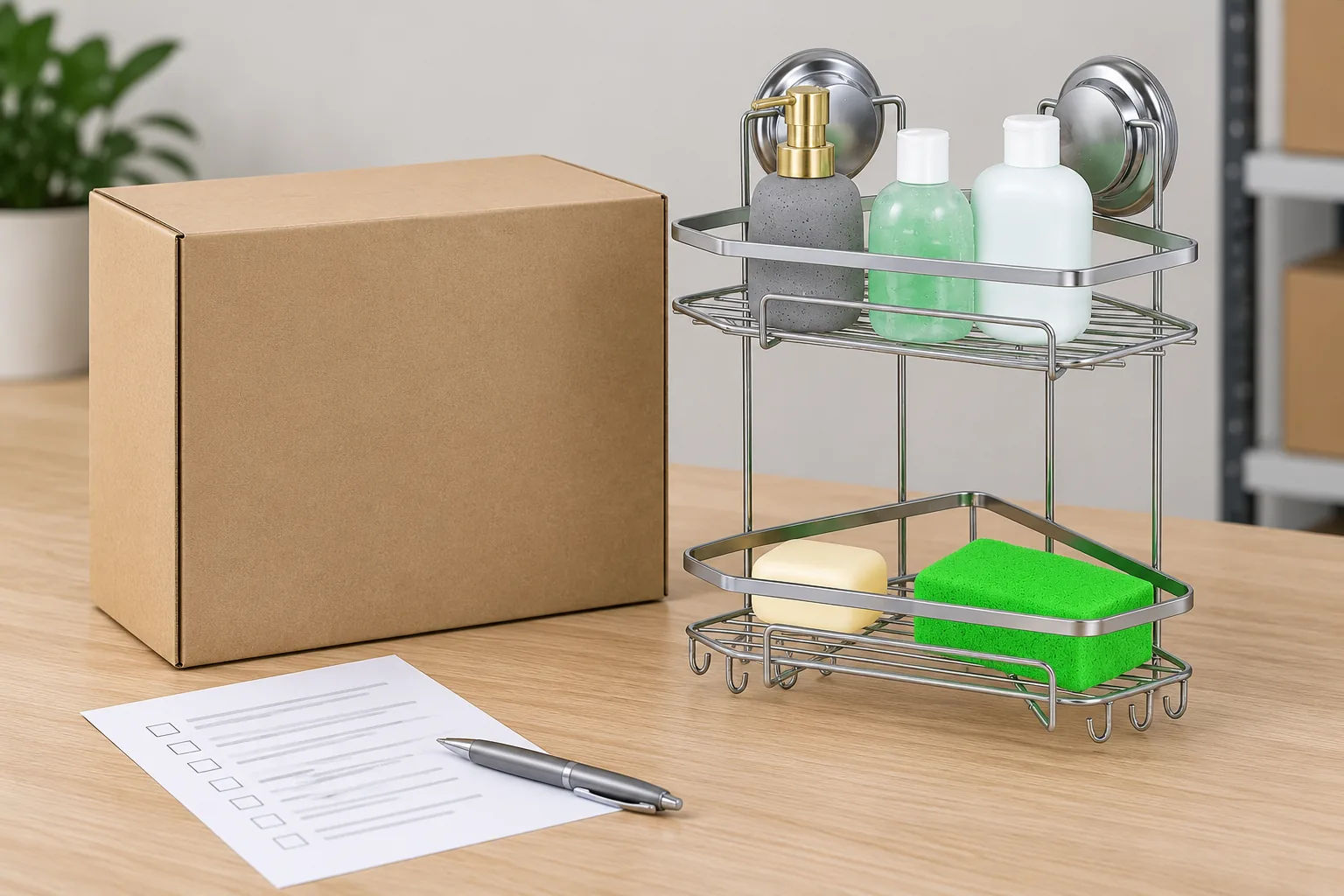
Canada bilingual labeling requirements non-food products depend on classification, package and sales channel. For a consumer-facing prepackaged hardware item, the importer should confirm which federal label fields apply, supply verified Canadian dealer information and approved English/French copy, then review Quebec requirements separately if the SKU will be sold there. A factory can work from controlled artwork and inspect the first packed sample, but the importer or its qualified adviser must decide the legal wording and applicability for each product.
First decide whether the federal non-food rules apply
The Canadian Competition Bureau’s Consumer Packaging and Labelling Act guidance addresses prepackaged non-food products sold to consumers. It also lists products outside that framework, including products intended only for commercial, industrial or institutional use, products intended only for export, and certain other categories. A consumer retail shelf may need a different analysis from a replacement component supplied only to a commercial project. Review intended use, sale channel, package configuration and any category-specific rule with the importer, broker or qualified adviser.
The Competition Bureau’s packaging and labelling requirements and its more detailed mandatory label information guide are the starting points for a covered retail item. This guide turns that baseline into a factory handoff; it is not a product-specific legal opinion.
Buyers searching for Canada bilingual labeling requirements non-food products should treat the federal baseline as a scope check first, then verify Quebec and product-specific rules for the actual SKU.
Before artwork is released, create a one-page scope record for each product family:
| Scope question | Buyer input to confirm | Why it matters before artwork |
|---|---|---|
| What is the sellable product? | SKU, common product name, included pieces, model and intended use | The label should describe the actual packaged item, not a broad category or an obsolete model. |
| Who will buy and use it? | Consumer retail, professional installation, institutional supply, or another channel | The federal non-food consumer-packaging framework has scope limits and exclusions. |
| Which markets are included? | Canada overall, Quebec, or specific provinces and channels | Quebec adds French-language checks that are distinct from the federal bilingual baseline. |
| Which package version is under review? | Dieline, artwork revision, product revision and pack configuration | A proof must match the product and packaging that will actually be packed. |
| Who approves legal content? | Named importer, brand or compliance owner | The factory should not guess dealer details, classification, translation or origin obligations. |
Keep this record with the SKU’s drawing or sample, packaging specification and controlled artwork. Reopen the review when the product, market or package changes.
What the federal baseline asks the buyer to prepare
For covered consumer prepackaged non-food products, the Competition Bureau identifies product identity, net quantity and dealer identification as core label components. Details depend on the product and package. The importer provides approved information and placement; the factory reproduces the file and flags legibility or fit issues.
Product identity. The label must show the product’s commonly used generic name or function, and the product identity must be in English and French. A brand name alone may not identify the product. The buyer should approve its common product description and French equivalent; the factory should not invent a translation or infer identity from a marketing slogan.
Net quantity. The package needs an accurate net quantity declaration unless a specific exception applies. The Bureau’s guidance says quantity information is generally presented in English and French using valid metric wording or symbols. A hardware product may be sold as one item, a multi-piece set or a kit. Confirm the quantity basis and any exception for that package; do not assume a set image or visible screws removes the requirement. Give the factory the approved statement and package version.
Dealer identification. The required company name and full mailing address belong to the responsible dealer under the applicable rules. The Bureau says the name and address may be shown in either English or French, and it describes specific ways to identify imported products, including “imported by/importé par” or “imported for/importé pour” before the Canadian dealer details, showing place of origin beside those details, or identifying the foreign dealer. These are rule-based options, not interchangeable design suggestions for every shipment. The buyer must determine which approach applies and provide the exact authorized company name and mailing address. A Chinese factory should not insert its own address simply because it is the manufacturer, nor should the artwork team invent a Canadian importer.
Placement and legibility. Mandatory content must be presented in the required location and format. The product identity has principal-display-panel rules and minimum type-height rules; net quantity and dealer information have their own placement and size requirements. Review the full dieline and panel dimensions, not only an enlarged screen image; type may be unreadable at print size or fold across a seam.
Some optional information, such as promotional statements and directions, does not have to be bilingual under the federal rule described by the Bureau. That does not mean every optional phrase can be printed in one language for a product sold in Quebec. The provincial language review is separate. Buyers may choose to provide bilingual directions for customer clarity, but they should not confuse a voluntary copy decision with the mandatory fields in the federal baseline.
The Bureau lists conditional net-quantity exceptions for some countable packages. If one is relied on, record the basis and reviewer in the SKU file.
Treat Quebec as a separate market review
If the product will be sold in Quebec, the buyer should add a Quebec language review before approving the retail artwork. The Office québécois de la langue française (OQLF) explains that inscriptions on products, packaging and accompanying documents must be in French; other-language text may also appear under conditions that prevent it from taking precedence or being more accessible than the French. This scope can include the product, its packaging, manuals and warranty materials, so a front-panel translation alone may not complete the review.
That is why Canada bilingual labeling requirements non-food products are only a starting point for a Quebec-bound SKU; the provincial review covers a separate set of product inscriptions and documents.
The OQLF also explains changes effective June 1, 2025 for trademarks appearing on products. Generic or descriptive elements included in a trademark—such as a product characteristic—must also appear in French on the product or on a medium permanently attached to it. The marketed product name and company name may remain only in another language under the stated guidance. The rule has defined transition conditions for certain older products, but they are narrow; do not treat a general 2027 date as a blanket extension for new production. Have the brand or compliance owner check the actual trademark, registration record, production date and product text.
For a Quebec SKU, check:
- Does French appear on the product, retail package and each relevant document supplied with it?
- If English is also used, is French at least as visible and accessible under the applicable rule?
- Does a registered or otherwise relevant trademark contain a generic or descriptive product term that needs French treatment?
- Are manuals, warranty cards, inserts and labels all in the same approved revision?
- Has the importer reviewed any exception or transition claim against the product’s actual facts?
Use the OQLF’s product-trademark guidance and current regulation or qualified advice for uncertain wording. The factory can place approved text but should not certify legal compliance.
Keep country-of-origin marking as its own check
Country-of-origin marking is related to import documentation but is not a substitute for the federal consumer label fields. Canada’s Marking of Imported Goods Order lists classes of imported goods that must be marked, subject to exceptions. The legal schedule and the relevant tariff classification matter. Do not assume every hardware item needs the same origin statement or that a carton mark satisfies a separate product-marking rule.
Give the broker or compliance owner the product description, tariff classification and import route. After the responsible party confirms requirement and placement, provide approved text. Track origin, “Product of” claims, dealer identity and bilingual copy as separate fields.
Build a factory-ready bilingual artwork brief
A factory-ready label package is a controlled production input, not a request to “make this box Canadian.” Provide one approved source file per SKU, identify confirmed and open fields, and include a dieline showing safe areas, folds, seams, barcodes and label placement.
| Artwork field | Buyer should provide | Factory should verify on proof/sample |
|---|---|---|
| Product identification | SKU, model, approved common product name in English and French | Correct SKU/name appears on the matched package revision |
| Dealer details | Authorized Canadian legal name and mailing address, plus approved imported-product wording if applicable | Text is reproduced exactly and not substituted with factory details |
| Quantity statement | Approved quantity basis and exact copy or symbol | Count/kit configuration matches the sampled package contents |
| Quebec copy | Buyer-approved French text for product, package and accompanying materials in scope | All specified panels and inserts carry the correct revision and readable copy |
| Origin statement | Responsible-party decision, wording and location where required | Marking appears on the specified item or package surface |
| Artwork control | Dieline, revision number, issue date and approver | Old files removed from the packing point; sample matches current revision |
| Print and pack instructions | Color references, substrate/finish, label stock, orientation and carton placement | Actual print, adhesive, folds and product fit are visible in the first pack |
Send editable artwork, print-ready PDF, current dieline, copy sheet, translation approval, SKU/BOM revision, sample photos and open questions. Name the change approver and require a hold for written approval if text cannot fit or a component alters the pack.
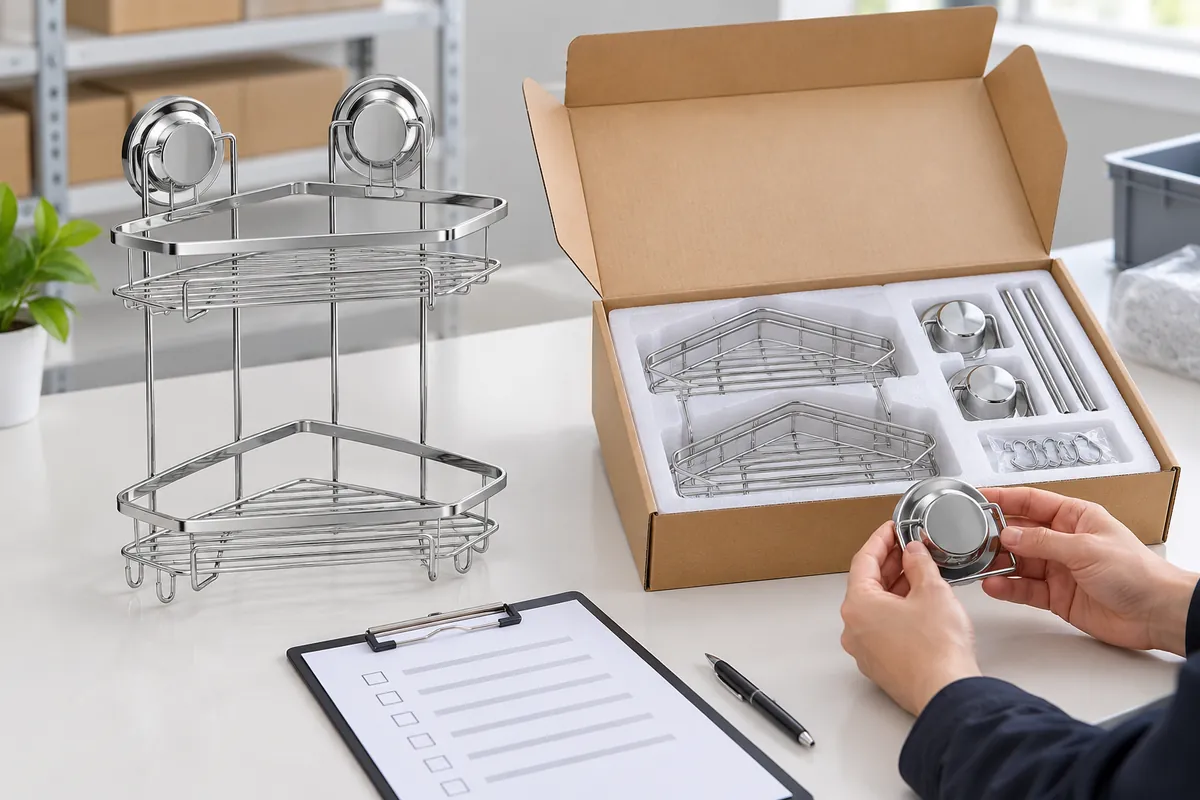
A basket or rack kit may include mounting hardware, instructions, warranty material and a retail box. The factory can compare the pack with the file and product list; the buyer decides what must be described and which claims are authorized. Keep legal decisions separate from routine print adjustments.

Approve the first packed sample, not only the screen proof
A digital proof helps confirm wording, revision and panel layout. It cannot show every issue that appears on the real package. Before mass production, inspect a printed package or first packed sample against the latest buyer-approved artwork and a known product revision. The review should include the actual retail unit, any included insert or instruction sheet, and the shipping carton if that outer package carries required information.
Use a line-by-line check rather than relying on memory:
- Match the product SKU, model, included parts and drawing/BOM revision to the approved label record.
- Confirm the printed file carries the approved revision date and has not been replaced by a supplier’s older export.
- Compare English and French copy character by character with the approved text; check accents, punctuation, spacing and line breaks.
- Check the assigned panels and actual type sizes at normal viewing distance, including folds, edges, seams and any covered areas.
- Confirm dealer identity and any imported-product or origin wording match the exact approved version.
- Open the package and compare listed contents, image and quantity statement with the actual product kit.
- Review labels, instructions, warranty cards and inserts together for language and revision consistency.
- Record the reviewer, date, package version, sample photos and any correction before approving pack-out.
This is a production-control step, not confirmation that legal interpretation, translation or exemption is correct. Those decisions remain with the importer and its adviser.
If the label is revised after sample approval, mark the earlier version obsolete and identify the change in the purchase-order or packaging instruction. Changes to dealer address, SKU, claims, trademark text or Quebec distribution may reopen the review. Link each update to a date and SKU so a reorder does not reuse obsolete artwork.
Avoid the handoff mistakes that create rework
Prevent rework by assigning legal-copy ownership and giving the factory a controlled file plus a clear way to flag production issues.
Sending only a screenshot. It can hide fonts, bleed, folds and revision. Identify the production file that controls.
Using the factory’s address as the Canadian dealer. The legal dealer identity is buyer information. The manufacturer’s address should not be substituted unless the responsible party has determined it is the correct dealer identification under the applicable option.
Translating at the last minute. Use buyer-approved language across affected surfaces and inserts; machine translation is not final approval.
Assuming one scope fits all. Sale channel, package and product-specific rules can change the analysis.
Treating Quebec as “Canada French.” Quebec requirements extend beyond the federal requirement to show product identity bilingually. Product, package, accompanying documents and trademark elements may need their own review.
Adding origin claims without a source decision. “Made in,” “Product of” and importer wording are not decorative phrases. Confirm the specific rule, claim standard and placement before sending artwork.
Approving only a flat proof. A packed sample exposes small type, seam placement, missing inserts and SKU mismatches; retain the review record.
Questions importers ask before releasing label artwork
Does every hardware product need English and French packaging?
Not always. Covered consumer prepackaged non-food goods have federal bilingual rules, with exclusions and exceptions; Quebec adds separate requirements. Classify the SKU and channel first.
Can the factory decide the Canadian importer name and address?
The buyer provides the authorized identity and wording. The factory reproduces it and flags layout problems; it should not invent dealer information.
Are directions and marketing claims always required in both languages federally?
Some optional directions and promotional statements need not be bilingual under the federal guidance, but Quebec and product-specific rules need separate review.
Does every item need a country-of-origin label?
Only specified classes are covered, subject to exceptions. Check classification and schedule with the importer or broker.
What should happen when the label will not fit?
Stop before changing mandatory wording, type or location. Share a proof showing the actual dieline and ask the buyer’s compliance owner to approve a compliant alternative. The factory may suggest a practical layout or label placement, but the buyer must confirm the legal solution.
Before releasing retail artwork, the importer should be able to answer four questions: which rule set applies to this SKU, who owns every legal statement, which artwork revision is approved, and what physical sample will prove the packing team used it. Koitor can discuss a buyer-approved packaging handoff as part of a metal hardware project; the importer remains responsible for the market-specific label decision. See the OEM home storage hardware manufacturer page for product scope, or contacter Koitor with a drawing or sample and the approved packaging brief.
Need to Align a Hardware Sample With Approved Canadian Artwork?
Share the product SKU, current drawing or sample, approved package artwork and any unresolved label questions. Koitor can discuss the metal hardware and packaging handoff; the importer or its qualified adviser should approve legal scope and language.
Fabrication pour compte de tiers / Marque de distributeur
Transformez ce guide d'approvisionnement en cahier des charges
Indiquez-nous le produit souhaité, ses dimensions, sa finition, la quantité commandée et vos exigences en matière d'emballage. Votre équipe recevra une analyse pratique de la faisabilité de la fabrication avant l'établissement du devis.



 English
 Español
 Português
 Français
 Deutsch
 العربية