
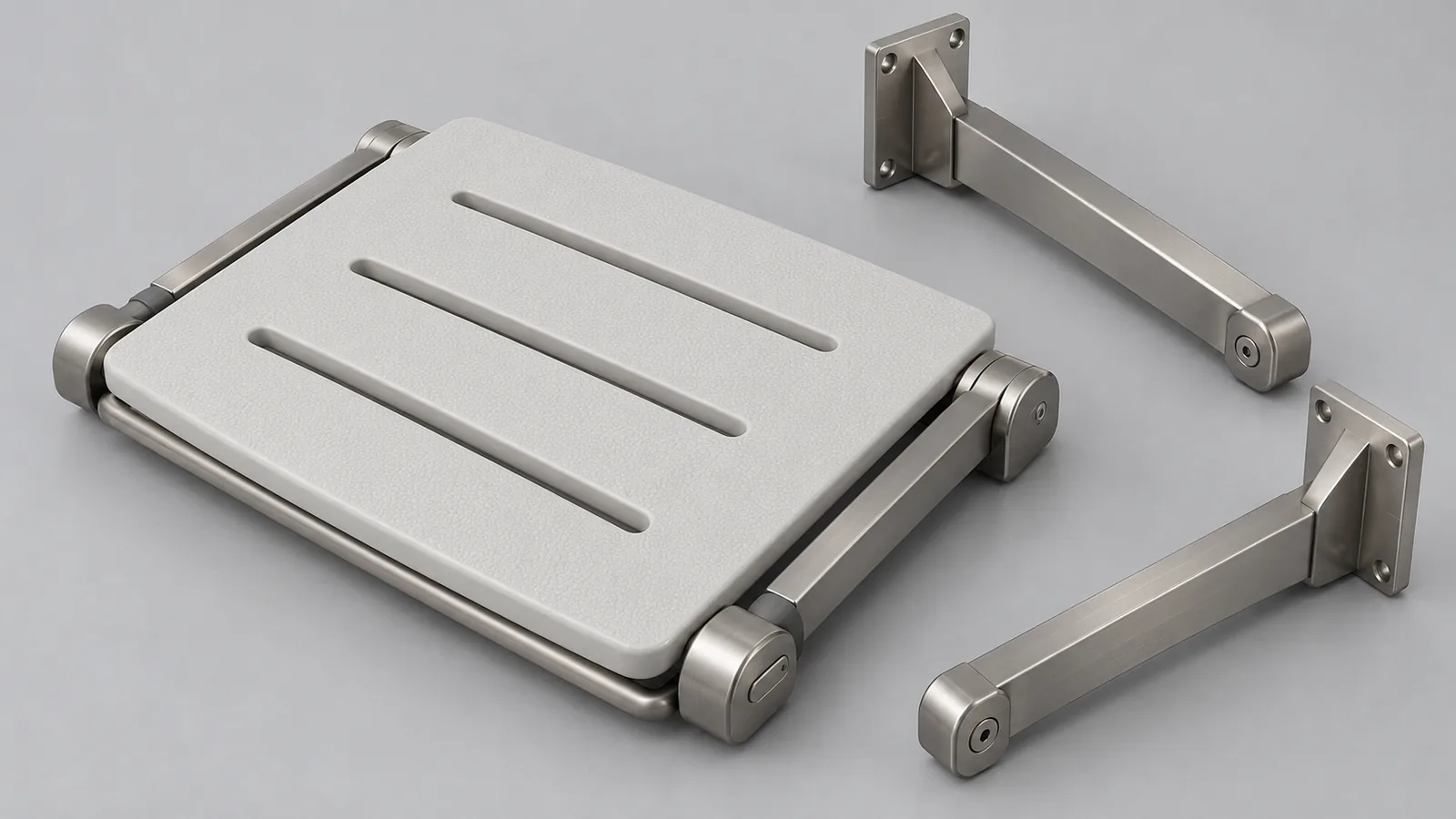
A buyer evaluating commercial shower seats should first define the exact project, product configuration, drawing revision, and evidence needed for that use. A supplier’s broad “commercial” or “accessible” description is not a substitute for matching the quoted seat, folding geometry, brackets, fasteners, supporting assumptions, and documents to the same review scope. This is a sourcing guide, not installation or engineering advice. Koitor’s approved company information does not confirm shower-seat manufacturing, structural design, testing, or certification, so the topic is treated as adjacent supplier-qualification education.
Why should importers define the project before comparing seats?
The useful first question is not simply which seat looks strongest or has the most features. It is what kind of project or product range the buyer is supporting, which market or facility rules may apply, and who has authority to decide technical suitability. A product selected for a named public project may need a different review package from an item being considered for a general distributor assortment.
Commercial shower seats can vary in seat material, shape, hinge arrangement, support arms, brackets, finish, fasteners, folded profile, and packaging. Two products that look similar in a catalog may have different interfaces or assumptions. A comparison becomes unreliable if one supplier quotes a complete assembly while another quotes only the seat panel, or if product literature refers to a different model than the drawing.
Before sending an RFQ, separate four layers:
- The buyer’s intended use and project context.
- The product configuration being requested.
- The supplier’s statements and supporting documents.
- The project-specific design, code, and installation decisions owned by qualified professionals.
That separation prevents a marketing label from being treated as a technical conclusion. It also helps the buyer recognize what can be decided commercially—such as finish option, part identification, packaging, or drawing revision—and what must be reviewed by the responsible project professional.
The phrase “commercial shower seats” can describe a market segment, not a universal performance category. Ask the supplier what it means for the specific model. Do not assume that a commercial label defines a load rating, applicable code, corrosion performance, or suitability for every facility.
What product details should the drawing and quote identify?
A controlled drawing or specification should make the offered product identifiable without relying on a photograph alone. Record the model or buyer part number, drawing revision, overall dimensions, seat shape, visible finish, material descriptions supplied by the manufacturer, hinge and support arrangement, and the items included in the quoted package. If any component is optional or sourced separately, show that boundary explicitly.
For a folding model, distinguish its deployed envelope from its folded envelope. Buyers should ask the supplier’s drawing to show how the seat is represented in each state and to identify the areas that interface with brackets, supports, or other components. These are document-control questions, not instructions for selecting dimensions. A project designer or other qualified reviewer must determine whether the geometry and clearances satisfy the actual project.
Clarify how the seat is supported and what the supplier assumes about the supporting structure and attachment components. The document should state which bracket, fastener, and other included parts belong to the specific configuration. If the supplier’s standard product requires site-provided items, record them as exclusions so that the quote does not imply a complete assembly where it is not one.
A buyer can also request a revision table or other method of identifying drawing changes. The goal is to tie the quoted item, sample, approval record, production order, and delivered identification to one version. If an updated drawing changes the seat outline, hinge, support arm, material, finish, or mounting interface, ask the supplier to explain whether existing documents still apply and whether another review is needed.
Do not use a generic web image as a substitute for a controlled drawing. Catalog images help shortlist styles, but they may not show back-side joints, component boundaries, fastener details, or the folded envelope. A clear drawing and a specifically identified sample reduce ambiguity before technical approval.
Which mounting assumptions and responsibilities need to be recorded?
Supplier evidence for a component is only meaningful when its assumptions are visible. Ask the supplier to identify the bracket and fastener configuration represented in any drawing or evaluation, and whether the supporting wall or structure was part of the assessed assembly. If the supplier document assumes a specific substrate or reinforcement, record that assumption rather than applying it automatically to a different site.
This article does not prescribe a wall construction, anchor, fastener, installation method, or load test. Those decisions depend on the project, jurisdiction, product configuration, and qualified technical review. The importer should identify who is responsible for evaluating the site and approving the installed assembly—such as the project’s design professional, contractor, code consultant, or authority where applicable.
Ask the supplier to distinguish product-side information from site-side decisions. Product-side information may include the model, drawing, component list, and instructions for the supplied configuration. Site-side decisions may include whether a particular wall or reinforcement is suitable and how the installation should be approved. A supplier’s general instruction sheet does not automatically settle a project-specific structural question.
The record should also identify excluded items. For example, if fasteners are not supplied, the buyer should not imply that the product document covers the site-selected fastener. If a supplier makes a statement about a wall or installation condition, ask where that statement is documented and which configuration it concerns. Send unresolved structural or code questions to the qualified professional rather than translating them into an improvised acceptance criterion.
What supplier evidence should buyers request and compare?
Request evidence that answers a defined question about an identifiable model. Depending on the procurement and project, the package may include a dimensioned drawing, material and finish description, bill of materials, assembly or installation instructions, sample identification, test or evaluation report, and a revision or change-control record. Not every project needs every document, and receiving a document does not mean its scope has been accepted.
| Review topic | Ask the supplier to identify | Compare it with | What the document alone may not establish |
|---|---|---|---|
| Product identity | Model, part number, drawing revision, and date | Quote, sample label, order data, and carton identification | That a similar-looking model is the same construction |
| Folding geometry | Deployed and folded representation and interfaces | Current buyer drawing and project review | Site clearance or project suitability |
| Bracket and support | Included brackets, support parts, and interfaces | Bill of materials and drawing revision | Suitability of a particular building structure |
| Fasteners and assumptions | Supplied or excluded items and any stated substrate assumption | Instructions and project responsibility record | Approval of an unassessed site installation |
| Material and finish | Supplier’s description for this exact model | Specification, sample, and any relevant report | Hidden composition or long-term field performance unless supported |
| Evaluation or testing | Specimen, configuration, method, conditions, date, and issuer | Buyer’s requested scope and reviewer’s needs | Transferability to a different model or installation |
| Change control | How design, material, finish, or component changes are recorded | Approval history and order revision | That a previously accepted sample covers future changes |
Ask whether a report addresses an individual component or a complete assembly. If it concerns a seat panel or a bracket alone, it may not answer questions about the assembled configuration. Likewise, a result from one model or revision should not automatically be transferred to another. Ask for the report’s scope and have the responsible qualified reviewer determine whether it addresses the intended question.
A useful supplier exchange is specific: “Which exact model and revision does this document cover? Which included bracket and fastener arrangement was represented? What conditions and method were used? What is outside the report’s scope?” If an answer is not documented, record it as unresolved. Do not fill gaps with assumptions based on appearance, product family names, or a supplier’s general assurance.
How do accessibility references relate to product selection?
In the United States, the Access Board’s ADA Standards address seats in defined shower-compartment contexts. Sections 608.4 and 610 describe when seats are provided in particular covered settings and refer to specified seat provisions. The official Access Board bathing-rooms guide explains the relevant context, while the ADA Standards text contains the source provisions.
Those references are not a blanket certification for a product sold as “commercial,” nor do they establish that a particular supplier’s seat, bracket, fastener, supporting structure, or installation has been approved. Applicability depends on the project and the governing requirements. The buyer should identify the relevant project specification and ask the qualified design professional or authority to interpret how the provisions apply.
The article intentionally does not repeat dimensional or force values as a product pass/fail rule. A number in a standard is scoped to its wording and setting; it should not be repackaged as a universal product rating or a substitute for a test report. If a buyer’s project requires a particular evaluation, the responsible reviewer should define the configuration, method, and acceptance basis.
A specific 2024 CPSC recall notice for one wall-mounted folding bath and shower seat model family describes corrosion and breakage in the recalled product’s supporting bracket and seat rods. That notice is evidence about those identified products and the remedy stated by CPSC; it is not evidence that all folding seats share the same design or failure mode. For buyers, it is a reason to ask which materials, finish, components, and exact revision are represented in supplier documentation—not to infer a universal material choice or performance threshold.
Keep regulatory interpretation, technical acceptance, and supplier qualification distinct. A supplier may provide documents; the buyer can check identity and completeness; a qualified project professional evaluates applicability. A general article or product page cannot replace those project responsibilities.
How should samples and revisions be handled before approval?
When a sample is requested, identify it with the same model or buyer part number and revision shown on the drawing. Compare visible shape, finish, seat surface, hinge arrangement, support components, and included parts with the quote. Note differences and ask the supplier to resolve them before calling the sample representative of the approved configuration.
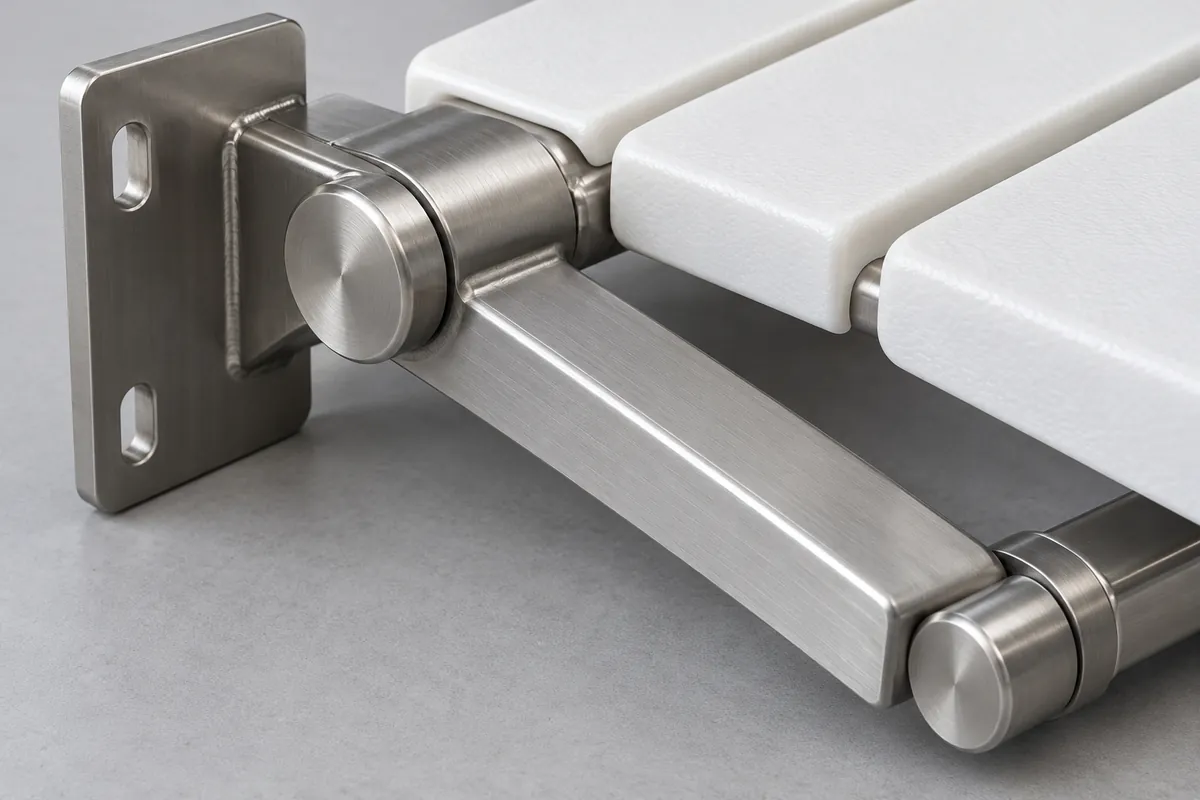
A sample review can confirm visible identity and workmanship points that the buyer has defined. It does not establish hidden material composition, structural performance, installation suitability, or compliance. If a project requires testing or technical assessment, have the qualified party specify how the sample and configuration should be evaluated. Do not improvise a load check or place someone on a sample as an informal test.
Keep a sample record with the review date, model, drawing revision, finish, included parts, observations, open questions, and the person responsible for technical disposition. If the sample is only for appearance or dimensional reference, say so. Do not use an appearance-approved sample as blanket approval for structural, regulatory, or site conditions that were not part of the review.
Before production release, confirm whether the supplier has changed any part, finish, or drawing since the reviewed sample. If a change occurs, ask what documents or approvals need updating. Reconfirm the product identity on the order record and any agreed packaging or identification documents. This modest traceability step can prevent the buyer, supplier, and project reviewer from discussing different revisions without realizing it.
What should happen when supplier evidence is incomplete?
Create an open-item list rather than silently accepting a gap. Each item should name the missing evidence or clarification, the model and revision it concerns, the responsible reviewer, and the status. Useful status language includes “requested,” “received, not reviewed,” “clarification required,” “accepted for this project,” and “not applicable with rationale.”
If a supplier cannot provide the preferred document, ask whether another record can answer the same question. Then let the responsible reviewer decide whether the substitute is adequate. A verbal statement, marketing page, test summary, or visual inspection may be useful context, but it should not be described as equivalent to a controlled report unless the reviewer accepts it for a stated purpose.
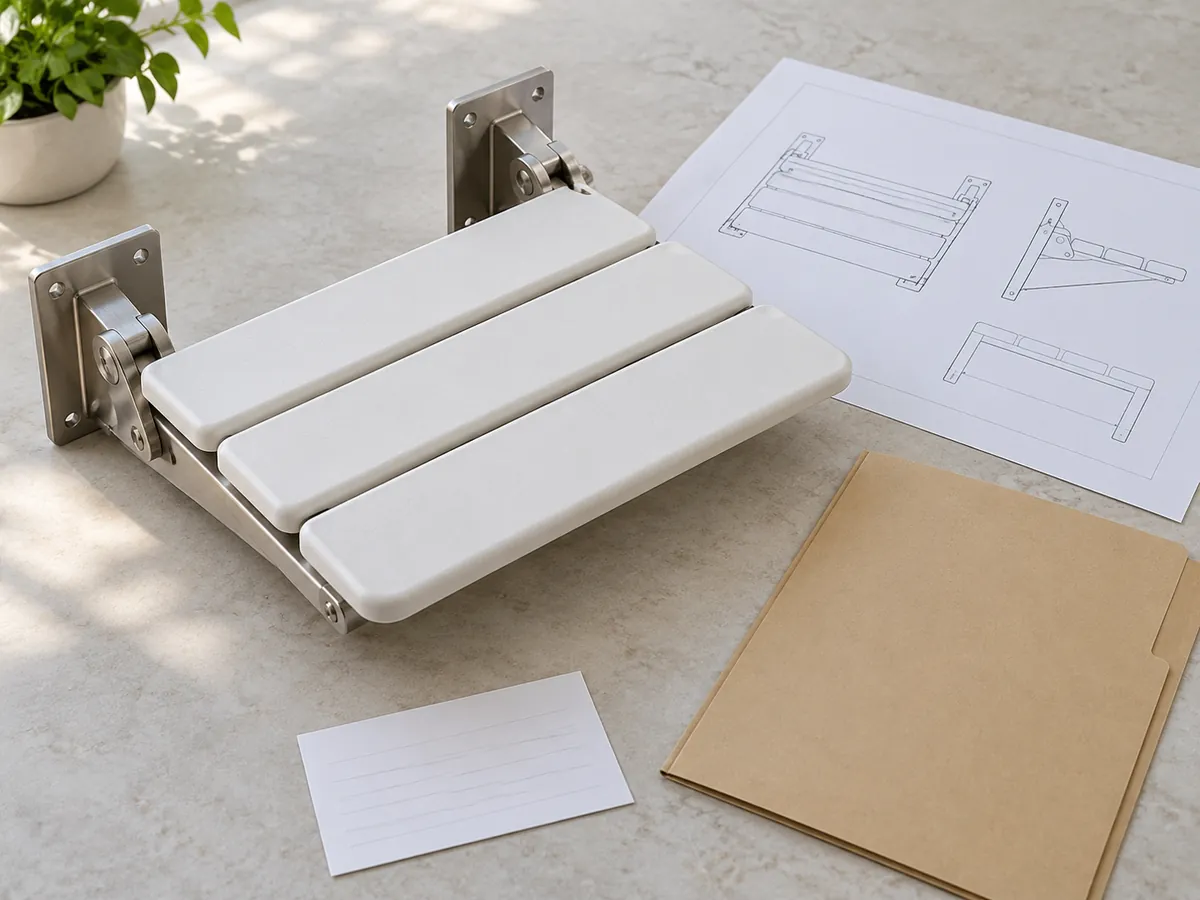
This process keeps commercial status separate from technical approval. “Supplier submitted” means a file arrived; “buyer reviewed” means its identity and completeness were checked; “project approved” should be reserved for the decision made by the person authorized to make it.
What belongs in a folding-seat RFQ and approval checklist?
A buyer can make supplier responses more comparable by asking for the same fields from each bidder. The checklist should define a question, not invent a specification or substitute for professional design review.
- Target country or market, facility type, and whether the RFQ concerns a named project or a general product assortment.
- Requested model or product concept, buyer part number, and controlled drawing revision.
- Seat shape and the drawing representation of deployed and folded geometry.
- Supplier-identified material and finish descriptions for the quoted model.
- Hinge, support, bracket, fastener, and included/excluded component list.
- Any supporting-structure or substrate assumptions stated by the supplier.
- Requested documents and the model, revision, and configuration each document covers.
- Any project-specific testing or evaluation requested by the qualified reviewer, including who defines the method and acceptance basis.
- Sample identification, review purpose, visible differences, open issues, and disposition owner.
- Change-notification and reapproval expectations for design, material, finish, or mounting-component revisions.
- Packaging and product identification needed to preserve traceability between approval and shipment.
- Contact person responsible for closing each unresolved technical or commercial question.
Keep technical sign-off separate from quotation comparison. Procurement can compare scope, quantities, lead time, packaging, and document completeness, while the appropriate professional reviews design and installation applicability. If a required decision is not yet available, show it as open and avoid presenting the product as approved for that project.
For importers searching for a folding shower seat supplier, the most useful outcome is a clear evidence map: which item was offered, what its controlled documents cover, what assumptions remain, and who is responsible for resolving each open point. That is more actionable than a broad “commercial grade” label.
Foire aux questions
Does “commercial” mean a shower seat is approved for every public project?
No. “Commercial” may describe a target market or product line, but it does not identify the applicable project rules or establish approval. Confirm the exact model and ask the responsible project professional to evaluate the intended use.
Does an ADA reference on a supplier page prove the product is compliant?
Not by itself. Ask what standard provision and product configuration the statement concerns. A qualified reviewer must determine applicability and whether the evidence is sufficient for the actual project.
Can one supplier report cover several similar folding seats?
Only when the report scope or a qualified technical assessment identifies the models and configurations it covers. Confirm the revision, components, method, and limitations before relying on it.
Does an approved sample confirm the installation?
No. A sample can support product-identity and visible-condition review, but it does not by itself approve a site, structure, fastener choice, installation, or project compliance.
Does Koitor currently manufacture or certify commercial shower seats?
The approved Koitor company information supports general bathroom and home-storage metal hardware OEM experience, but does not confirm shower-seat manufacturing, design, testing, or certification. Buyers should confirm the actual capability and qualification of any proposed supplier.
Discuss a bathroom-hardware sourcing question with Koitor
If you are comparing a bathroom-hardware project, share the target market, drawing revision, and supplier-evidence questions. Koitor can discuss general metal hardware OEM inputs; this does not imply shower-seat production, design, testing, or certification.
Review a Bathroom-Hardware Drawing or RFQ
Share a product drawing or sample, target dimensions, finish and packaging needs, and expected order range. Koitor can review general metal-hardware manufacturability and OEM inputs without implying a shower-seat product capability.
Fabrication pour compte de tiers / Marque de distributeur
Transformez ce guide d'approvisionnement en cahier des charges
Indiquez-nous le produit souhaité, ses dimensions, sa finition, la quantité commandée et vos exigences en matière d'emballage. Votre équipe recevra une analyse pratique de la faisabilité de la fabrication avant l'établissement du devis.
 English
 Español
 Português
 Français
 Deutsch
 العربية