
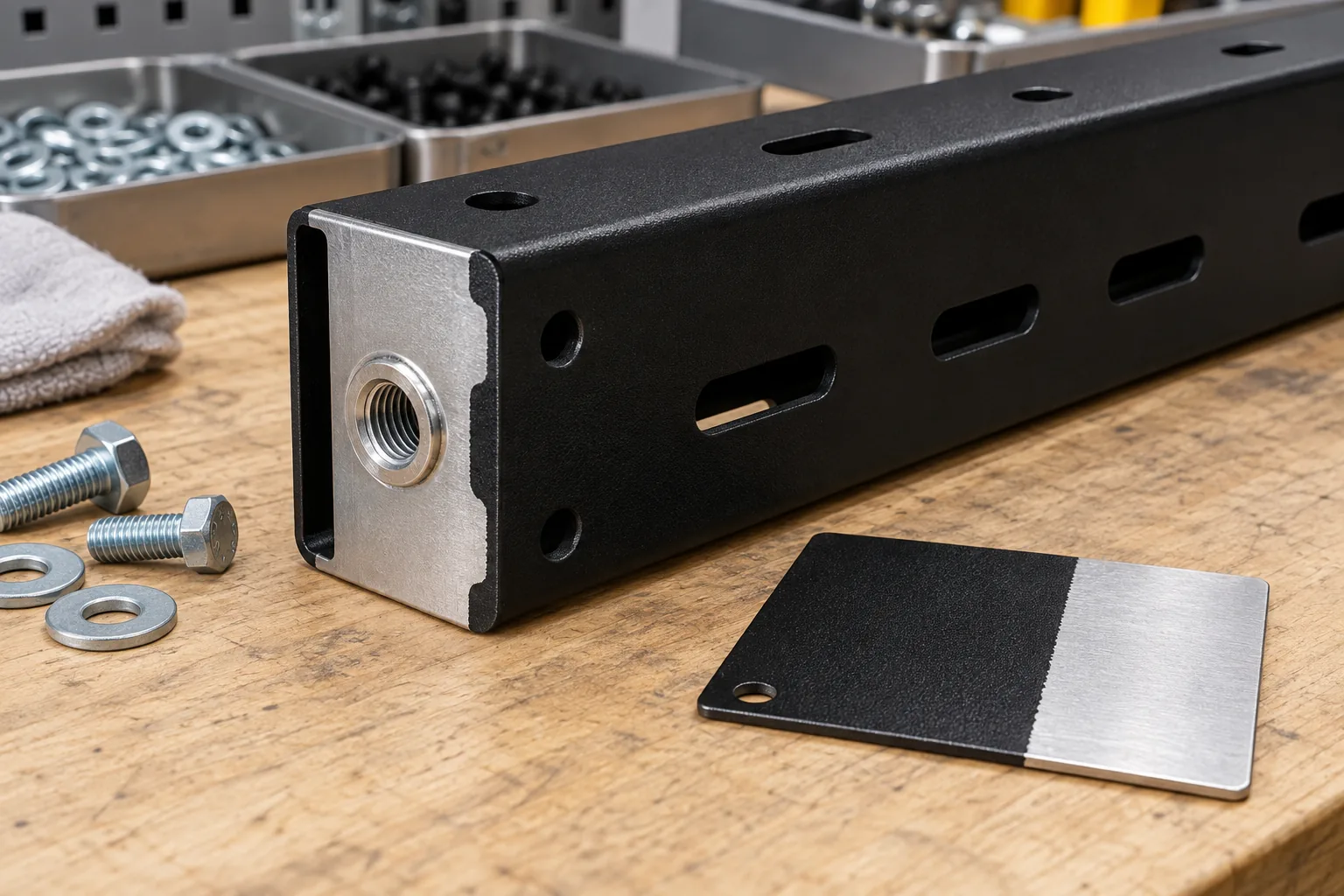
For powder coating masking threads, buyers should define the actual functional requirement, approve a representative finished sample and retain the evidence against a controlled drawing. The correct choice depends on product geometry, material, finish and intended assembly; no universal dimension, setting or performance claim can replace project-specific review. Which surfaces require coating, which require masking, and how the finished interface is accepted should be recorded before the supplier releases a production route.
Why do coated threads need their own buyer requirement?
For threaded holes and mating surfaces on a knock-down storage rack, judge the finished assembly against its agreed function, not appearance alone. A coated threaded interface is a functional feature, not just a patch of cosmetic finish. The an importer or private-label buyer releasing a coated, fastened metal assembly should define the controlling interface before the supplier selects a route. This keeps the decision tied to the product rather than an assumed standard configuration.
In an RFQ, powder coating masking threads labels this specific buyer decision; the drawing and sample criteria still define acceptance.
Treat this as a controlled design input during why do coated threads need their own buyer requirement?. Mark each functional surface on a controlled drawing and name it consistently in the bill of materials, sample review and inspection record. Make the drawing, sample and inspection note use the same feature names and revision. Resolve conflicting records before purchase release instead of relying on a later visual interpretation.
Connect which surfaces require coating, which require masking, and how the finished interface is accepted to an observable acceptance step. A full masking boundary can preserve assembly access, while partial or selective coverage may be proposed where a surface must remain protected. Ask the supplier to list assumptions about material, finish or geometry for buyer approval. The goal is clear design intent and evidence, not an unsupported machine setting or tolerance.
The sample should represent the production-intent condition for threaded holes and mating surfaces on a knock-down storage rack. A first sample should represent the agreed material, fabrication, coating and masking sequence. Record any omitted finish or feature on an early prototype. An identified sample, controlled drawing and disposition make later comparisons repeatable without implying unperformed tests.

Which interfaces should the drawing identify?
For threaded holes and mating surfaces on a knock-down storage rack, judge the finished assembly against its agreed function, not appearance alone. Mark each functional surface on a controlled drawing and name it consistently in the bill of materials, sample review and inspection record. The an importer or private-label buyer releasing a coated, fastened metal assembly should define the controlling interface before the supplier selects a route. This keeps the decision tied to the product rather than an assumed standard configuration.
Treat this as a controlled design input during which interfaces should the drawing identify?. A full masking boundary can preserve assembly access, while partial or selective coverage may be proposed where a surface must remain protected. Make the drawing, sample and inspection note use the same feature names and revision. Resolve conflicting records before purchase release instead of relying on a later visual interpretation.
Connect which surfaces require coating, which require masking, and how the finished interface is accepted to an observable acceptance step. A first sample should represent the agreed material, fabrication, coating and masking sequence. Ask the supplier to list assumptions about material, finish or geometry for buyer approval. The goal is clear design intent and evidence, not an unsupported machine setting or tolerance.
The sample should represent the production-intent condition for threaded holes and mating surfaces on a knock-down storage rack. For a repeat order, carry the approved map and sample identity forward with the revision and finish-system reference. Record any omitted finish or feature on an early prototype. An identified sample, controlled drawing and disposition make later comparisons repeatable without implying unperformed tests.
How should masking and finish options be compared?
For threaded holes and mating surfaces on a knock-down storage rack, judge the finished assembly against its agreed function, not appearance alone. A full masking boundary can preserve assembly access, while partial or selective coverage may be proposed where a surface must remain protected. The an importer or private-label buyer releasing a coated, fastened metal assembly should define the controlling interface before the supplier selects a route. This keeps the decision tied to the product rather than an assumed standard configuration.
Treat this as a controlled design input during how should masking and finish options be compared?. A first sample should represent the agreed material, fabrication, coating and masking sequence. Make the drawing, sample and inspection note use the same feature names and revision. Resolve conflicting records before purchase release instead of relying on a later visual interpretation.
Connect which surfaces require coating, which require masking, and how the finished interface is accepted to an observable acceptance step. For a repeat order, carry the approved map and sample identity forward with the revision and finish-system reference. Ask the supplier to list assumptions about material, finish or geometry for buyer approval. The goal is clear design intent and evidence, not an unsupported machine setting or tolerance.
The sample should represent the production-intent condition for threaded holes and mating surfaces on a knock-down storage rack. A coated threaded interface is a functional feature, not just a patch of cosmetic finish. Record any omitted finish or feature on an early prototype. An identified sample, controlled drawing and disposition make later comparisons repeatable without implying unperformed tests.
| Décision de l'acheteur | Define or compare | Preuve d'approbation |
|---|---|---|
| Interface | Drawing instruction | Sample evidence |
| Threaded hole | Identify thread and approved coating boundary | Fastener starts and assembles as intended |
| Mating face | Mark contact area and appearance expectation | Part seats without interference |
| Visible edge | State acceptable boundary and viewing condition | Finished transition matches approved reference |
| Exposed substrate | Name location and buyer requirement | Record condition; do not infer performance from appearance |
What should a finished-sample inspection verify?
For threaded holes and mating surfaces on a knock-down storage rack, judge the finished assembly against its agreed function, not appearance alone. A first sample should represent the agreed material, fabrication, coating and masking sequence. The an importer or private-label buyer releasing a coated, fastened metal assembly should define the controlling interface before the supplier selects a route. This keeps the decision tied to the product rather than an assumed standard configuration.
Treat this as a controlled design input during what should a finished-sample inspection verify?. For a repeat order, carry the approved map and sample identity forward with the revision and finish-system reference. Make the drawing, sample and inspection note use the same feature names and revision. Resolve conflicting records before purchase release instead of relying on a later visual interpretation.
Connect which surfaces require coating, which require masking, and how the finished interface is accepted to an observable acceptance step. A coated threaded interface is a functional feature, not just a patch of cosmetic finish. Ask the supplier to list assumptions about material, finish or geometry for buyer approval. The goal is clear design intent and evidence, not an unsupported machine setting or tolerance.
The sample should represent the production-intent condition for threaded holes and mating surfaces on a knock-down storage rack. Mark each functional surface on a controlled drawing and name it consistently in the bill of materials, sample review and inspection record. Record any omitted finish or feature on an early prototype. An identified sample, controlled drawing and disposition make later comparisons repeatable without implying unperformed tests.
How can buyers control changes and supplier handoff?
For threaded holes and mating surfaces on a knock-down storage rack, judge the finished assembly against its agreed function, not appearance alone. For a repeat order, carry the approved map and sample identity forward with the revision and finish-system reference. The an importer or private-label buyer releasing a coated, fastened metal assembly should define the controlling interface before the supplier selects a route. This keeps the decision tied to the product rather than an assumed standard configuration.
Treat this as a controlled design input during how can buyers control changes and supplier handoff?. A coated threaded interface is a functional feature, not just a patch of cosmetic finish. Make the drawing, sample and inspection note use the same feature names and revision. Resolve conflicting records before purchase release instead of relying on a later visual interpretation.
Connect which surfaces require coating, which require masking, and how the finished interface is accepted to an observable acceptance step. Mark each functional surface on a controlled drawing and name it consistently in the bill of materials, sample review and inspection record. Ask the supplier to list assumptions about material, finish or geometry for buyer approval. The goal is clear design intent and evidence, not an unsupported machine setting or tolerance.
The sample should represent the production-intent condition for threaded holes and mating surfaces on a knock-down storage rack. A full masking boundary can preserve assembly access, while partial or selective coverage may be proposed where a surface must remain protected. Record any omitted finish or feature on an early prototype. An identified sample, controlled drawing and disposition make later comparisons repeatable without implying unperformed tests.
A useful review scenario is a change between the prototype and the intended production sample. For threaded holes and mating surfaces on a knock-down storage rack, even a small change in geometry, finish or assembly order can alter coating can make a thread or locating face difficult to engage even when the visible finish looks uniform. The an importer or private-label buyer releasing a coated, fastened metal assembly should ask which acceptance points remain valid and which need a new check. This avoids treating an earlier approval as blanket authorization for a different configuration.
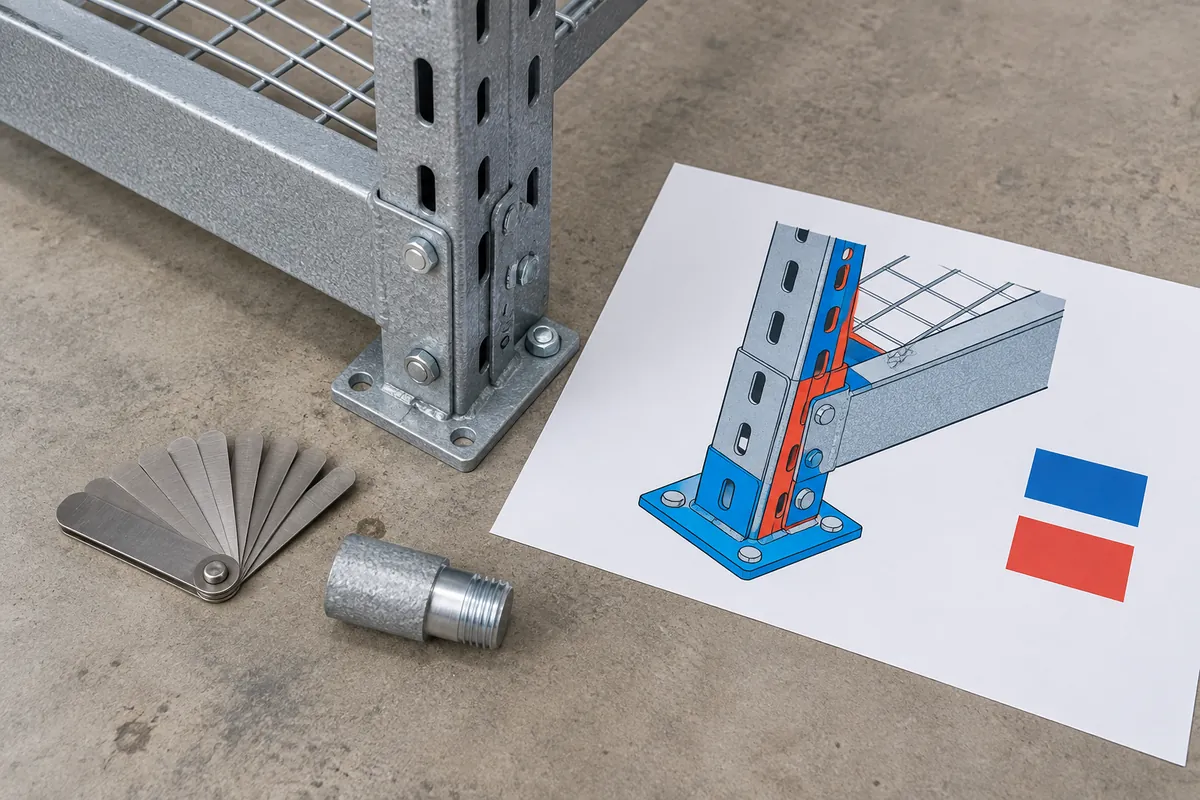
Before requesting a quotation, provide the controlled drawing, the product’s installed or assembled orientation, the specified material and finish, and the buyer’s use conditions. Call out a coat/no-coat map keyed to part number, thread callout, mating face, orientation and final assembly. Ask the supplier to identify missing inputs and quote assumptions in writing. A clear RFQ helps compare proposals fairly and reduces the risk that two suppliers price different interpretations of the same short product description.
At sample review, use the same names for features that appear in the drawing, photographs and inspection notes. Check fit the specified fastener and mating part to a representative finished sample without forcing or altering the interface. If the result is borderline or the sample differs from the production route, record the limitation and assign a decision owner rather than silently changing the criterion. The resulting evidence should be concise enough for sourcing and quality teams to reuse during a later order.
Finally, maintain a change record linking the approved configuration to the supplier response and the next purchase order. The exact powder supplier’s technical data, the approved finish sample, the drawing revision and recorded post-finish fit observations If a proposed substitution affects a relevant feature, compare it with the accepted reference and document the buyer’s disposition before release. This modest control is especially useful when a private-label program moves from sampling into repeat orders or adds a related size.
Buyer approval checklist
Use this checklist at RFQ, sample approval and change review. Tailor it to the actual part and identify the person responsible for accepting each requirement.
- Identify every threaded and locating feature that affects assembly.
- Mark coat, mask and exposed regions on the controlled drawing.
- Name the finish system and sample state; do not rely on a generic color note.
- Check final fit with the intended fastener and mating component.
- Record revision, sample ID, acceptance observations and change triggers.
Frequently asked questions
Should every threaded hole be masked before powder coating?
No universal rule fits every design. The buyer and supplier should agree whether the thread must remain clear, how the boundary is protected, and whether the final assembly route preserves the specified function.
Can a fastener simply cut through coating?
Do not assume that. It can damage the finish, affect assembly effort or create an uncontrolled boundary. Define an approved production-intent method and assess the finished sample.
Does a visible uncoated edge prove poor corrosion resistance?
Not by itself. Appearance does not establish performance. The buyer should identify the substrate, finish specification, exposure and evidence required for the program.
Can masking plugs be selected from a generic chart?
A chart may help start a supplier discussion, but fit depends on the actual feature and process. Confirm retention, boundary, removal and finished-interface condition on a representative sample.
Does this guide confirm a Koitor rack SKU or coating line?
No. It is a sourcing and specification guide. Exact product, process and equipment availability must be confirmed for the project.
Technical references
Use source documents as context and confirm their scope, revision and applicability to the actual material and process.
Keep powder coating masking threads tied to the approved configuration and revision when recording a supplier decision.
For related sourcing context, see Koitor Hardware manufacturing information or contact the project team.
Discuss Your Product Specification
Share the controlled drawing, intended use, finish and representative sample requirements so the relevant manufacturing questions can be reviewed for your project.
Fabrication pour compte de tiers / Marque de distributeur
Transformez ce guide d'approvisionnement en cahier des charges
Indiquez-nous le produit souhaité, ses dimensions, sa finition, la quantité commandée et vos exigences en matière d'emballage. Votre équipe recevra une analyse pratique de la faisabilité de la fabrication avant l'établissement du devis.

 English
  Español
  Português
  Français
  Deutsch
  العربية