
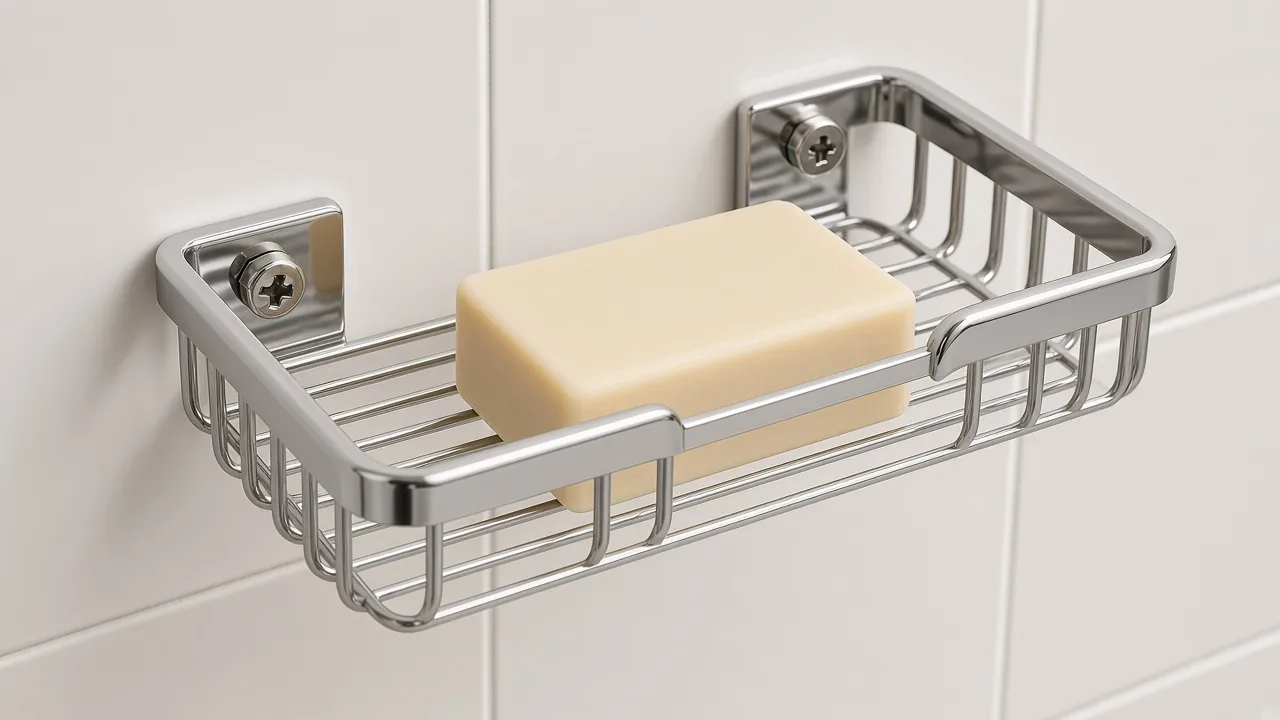
A basket that drains well can still drop the soap. Soap basket wire opening should be frozen against a named bar of soap, on the finished coated basket, separately from drainage-slot geometry. If the clear opening is large enough for the bar to slip through, or if a softened bar slumps through after a few showers, a no-fall-through line does not belong on the artwork.
This guide is for importers and private-label teams writing a screw-mounted wire soap basket specification. It does not own drainage-slot geometry, wall-mount set-screw seating, or hanging-caddy bottle retention. Koitor Hardware, a family-owned China OEM manufacturer of bathroom and home-storage metal hardware, can review an opening brief with a drawing or a sample; the buyer still has to name the soap and the claim.
Why a draining basket can still drop the soap
Drainage answers whether water leaves the tray. Opening answers whether a named bar stays in the tray. Those checks can point in opposite directions. A wide slot or a wide wire gap moves water quickly and can also pass a thin or softened bar.
A retention line is a substantiation problem. Advertising claims need a reasonable basis before they are made; the U.S. FTC Policy Statement Regarding Advertising Substantiation is a useful reminder of that duty, not a Koitor laboratory result. The file should say which soap was used, how the finished opening was measured, and whether the bar still sat after a wet trial.
Wire soap dish bar retention and drainage is the neighboring drainage and general retention discussion. Use it when water path and drain design are the question. This page stays on wire opening versus a named bar of soap, and it does not republish a slot-geometry file.
Worked example: artwork says the dish “holds standard soap.” The photo uses a large, dry, unused bar. The brand’s actual guest bar is shorter and, after two showers, slumps and falls through a long opening. The drain was excellent. The opening file was missing.
Worked example: the dry bar sits, but the buyer measures only the uncoated prototype. After powder coating, the wires look thicker in a photo and still leave a clear gap large enough for a travel bar. Coating changed the look, not enough of the opening. The measurement must be on the finished basket.
Set-screw seating and flange flatness belong on a mount page. A basket can be firmly seated and still drop soap. Keep mount seating out of the opening sentence.
How should the finished wire opening be measured?
Measure soap basket wire opening on the finished, coated or plated basket, as the clear gap a bar can pass through, not only as a center-to-center pitch on a drawing. Pitch is useful for the tool and the weld fixture. Retention cares about the clear opening after coating build, including any flattened or misaligned wire.
Write the datum: which bay, at what location in the floor, and whether you measure the long direction, the short direction, or both. A rectangular grid can hold a bar in one orientation and drop it in another. If the listing does not tell the shopper how to place the bar, the tighter of the two clear openings is the honest check, or the file must name the intended orientation.
Outer bays and corners often differ from the center. A turned-up edge wire can shrink a corner opening. A missing cross wire can enlarge an end bay. If the bar can slide, those end bays belong in the measurement, not only a tidy center cell.
If the program needs a numeric opening, agree it on the sample and write it as a project figure with a plus-and-minus tolerance. Do not invent a Koitor standard opening in this article or on the carton. Empty drawings that say “even wire spacing” are not enough once a retention line is printed.
Keep the measurement method in its own clause, not inside a sampling-plan sentence. You may later agree how many baskets in a lot are measured, using a scheme such as ISO 2859-1 if both sides want a sampling standard. That scheme does not define the opening.
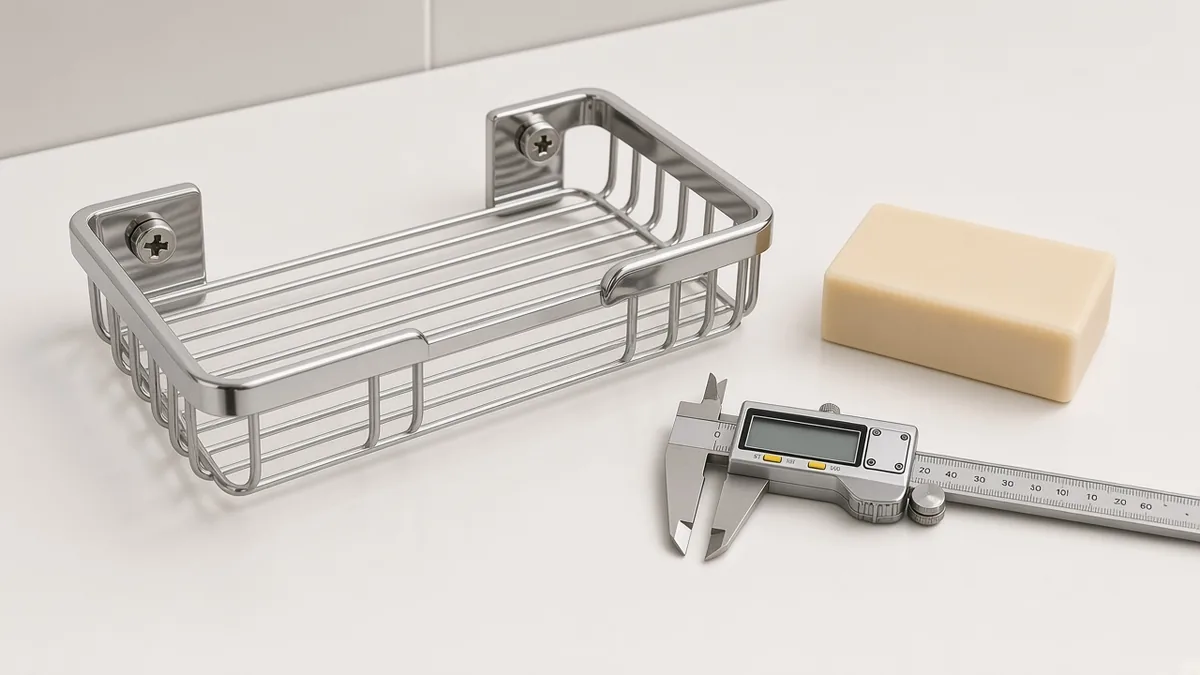
A caliper or a simple go-and-not-go block can be used, but a photograph of a caliper display is not a published opening. Record the method and the result in the file. If a gauge represents the named soap’s smallest cross-section, retain that gauge with the first article.
Custom metal storage basket manufacturing can quote a wire soap basket, but only if the inquiry lists the opening method and the named soap. A request that only says “won’t drop the soap” is not yet a claim file.
Side-wall gaps matter when the floor is tight and the side is open. A bar that cannot fall through the floor can still slide out a low side or a wide end opening. Include those gaps if the basket is shallow or has an open end.
Wire diameter is a change-control item. A slightly thinner wire, or a missed cross wire in a later fixture, can open a cell without a drawing change that anyone notices in a face photo. If production changes wire diameter, coating thickness, or the weld fixture, the opening file is open again. A first-article pass does not travel with a silent substitute.
Hooks or a small hanging rail on the soap basket, if present, are not an opening. They may catch a soap bag or a cloth and hide a fall-through in a photo. Keep hooks out of the retention claim unless the file names them as a separate accessory, and do not let a hook hide an end bay in the approval photograph.
Which bar-soap references and wet trials belong in the file?
Name a reference soap by length, width, thickness, and whether it is a project-supplied bar that will be retained. “Standard soap” is not a size. If the brand sells a house bar, use that bar. If the brand will not, pick one conservative size and say so, then list exclusions for smaller travel bars, guest soaps, or round soaps.
A dry, new bar is only the first trial. Many bars shorten and soften after use. Write a wet trial: soak or use the named bar in an agreed way, place it in the finished basket in the installed attitude, and see whether it still sits after an agreed hold time. Do not invent a Koitor cycle count; write the number of wet placements the sample room will actually run.
Round, oval, and very thin bars need their own line if they will be claimed. A rectangular bath bar that sits across two wires may not represent a small circular soap that can drop through a single cell. Either exclude those shapes or add a second reference and a second trial.
Fill and placement matter. A bar jammed against a side wall is not the same as a bar placed in the center. Write the placement you will photograph and the placement you will accept. If the lifestyle photo uses a large bar and a tight corner, the artwork should not imply a small bar is equally safe.
If more than one soap will be claimed — for example a bath bar and a guest bar — write two sizes and two trials, or write one conservative size that covers both. A single “fits soap” line that secretly uses only the largest bar will fail as soon as a shopper uses a smaller one.
Retain the reference bar, or retain a rigid gauge that represents its smallest wet cross-section. A verbal size will drift between offices and seasons. If the house bar changes next year, the opening file is open again.
Do not mix shampoo bars, pumice stones, or soap bags into the same count unless they were named. A mesh soap bag can catch on wires and hide a fall-through risk. A shampoo bar can be thinner than the house bath bar. Keep those items in an exclusion or in a separate line.
Installed attitude is part of the trial. A basket on a bench can hide a slope that exists on a tiled wall. Observe the finished, screw-mounted basket on a vertical fixture, because a slight downward tilt can walk a softened bar toward a larger end bay.
| Claim element | What to freeze | What a sample should show | What to keep off artwork until then |
|---|---|---|---|
| Finished opening | Clear gap on the coated or plated basket, with a stated datum and both directions if needed | Center and end bays still meet the written opening, including after coating | A pitch taken only from an uncoated fixture |
| Reference soap | Length, width, thickness, shape, and whether it is a retained project bar | The named bar sits in the written placement | “Holds standard soap” with no size in the file |
| Wet trial | A named wet or used-bar condition and a hold time you will actually run | The softened or shortened bar still sits | A dry, unused bar used as the only evidence |
| Side and end gaps | Low sides or open ends that could let a bar slide out | Those gaps are measured or excluded | A floor-only photo used to imply full retention |
| Exclusions | Travel soaps, guest soaps, round soaps, or other items not in the claim | Those items are absent from the line, or they have their own line | A silent claim that “fits all soap” |
| Drainage file | Water path stays in its own document | Drainage can pass or fail without rewriting this opening file | A single sentence that treats drain slots as the opening |
What listing language should stay off artwork?
Once the opening method, the named soap, and the wet trial exist, choose words the file can support. “Holds the named bath bar when placed as shown” is closer to a file than “never drops soap.” If the file is incomplete, stay silent on the carton, the insert, and the online title.
Do not print an open-ended retention slogan, and do not write a slogan that the basket will hold every soap. Those phrases overstate what one reference bar can prove. A soap basket wire opening question can be answered on this page without putting a universal promise on the sell-in sheet.
Photography should use the reference bar, or should be captioned so a shopper is not shown a large dry bar as if it were a travel soap. A hero image that hides the end bays can also hide an opening problem. Keep at least one straight-on photo of the floor grid.
Translations must keep the size and the limit together. A version that drops the soap size and keeps “holds soap” is a new, weaker method and a stronger claim.
If the brand will sell both a tight-grid basket and a wide-drain basket under similar photography, keep two files. Shared lifestyle photos are not a shared opening.
Channel copy should follow the same file. A marketplace bullet that says “fits all bars” when the carton only names one house bar is still a claim. Align the bullet with the file, or change the file before the bullet goes live.
Instructions should not undo the trial. If the sheet tells the shopper to use a soap bag, a dish liner, or a smaller bar than the artwork shows, that step belongs in the file or in an exclusion.
What belongs on the drainage-slot page instead?
Slot length, slot width, tray camber, and whether water leaves toward the wall or the room belong in the drainage-slot file. That decision remains occupied and must not be republished here, and its registry slug must not be used as a link. This page may say only that drainage and opening are separate, then return to the named bar.
A neighboring drainage-and-retention guide can stay in the reading path for water movement. It does not replace a finished-opening measurement against a retained soap. If a project needs both, write both files and do not let a pass on one approve the other.
Hanging or hook-over soap baskets, suction soap dishes, and adhesive trays are different mounts. This page stays on a screw-mounted wire basket. Do not mix those mounts in the sample photograph, and do not use this opening file to clear a suction dish.
Soap dishes with a stamped, slotted floor are a different construction from a wire grid. If the SKU is stamped, the opening question becomes a slot-and-land question and belongs in the drainage-slot decision, not in a wire-opening file. Keep the constructions apart.
Spare bars in the box, promotional soaps, and gift-set soaps should be named if they are smaller than the house bar. A gift-set mini bar can fall through a grid that holds the house bar. Either include that mini bar in the trial or keep it out of the set.
Chrome, powder, and other finishes can be sold as a family, but they may not share an opening after coating build or after a different wire is chosen for a color. If the program will offer more than one finish, either run the opening and the wet trial on each finished sample or write a conservative opening that was checked on the finish with the smaller coating build.
Packing should not invent a claim. A carton that includes a bar of soap is a reference only if that bar is the named bar in the file. A thicker promotional bar in the pack can make the grid look safer than it is. Either use the packed bar as the official reference, or keep a packed bar from being photographed as if it were the acceptance piece.
If the same grid is later used on a larger corner basket or a smaller dish, do not copy the opening file by product name. The end bays, the side height, and the wall attitude may change. Freeze the opening on the SKU that will actually be sold.
Private-label buyers sometimes inherit a factory “usual soap” from a previous program. That habit is not a method. Ask for the current house bar, or supply a retained bar, before the first article is signed. A size that worked for another brand’s thicker bar will not automatically clear this listing.
If the inquiry is still early and the soap is not chosen, you can still freeze a maximum clear opening and a minimum bar size as a holding rule, then replace that holding rule with a named bar before artwork is released. Do not print a retention line while the holding rule is the only thing in the file. Convert the holding rule into a named bar and a wet trial before the carton is released.
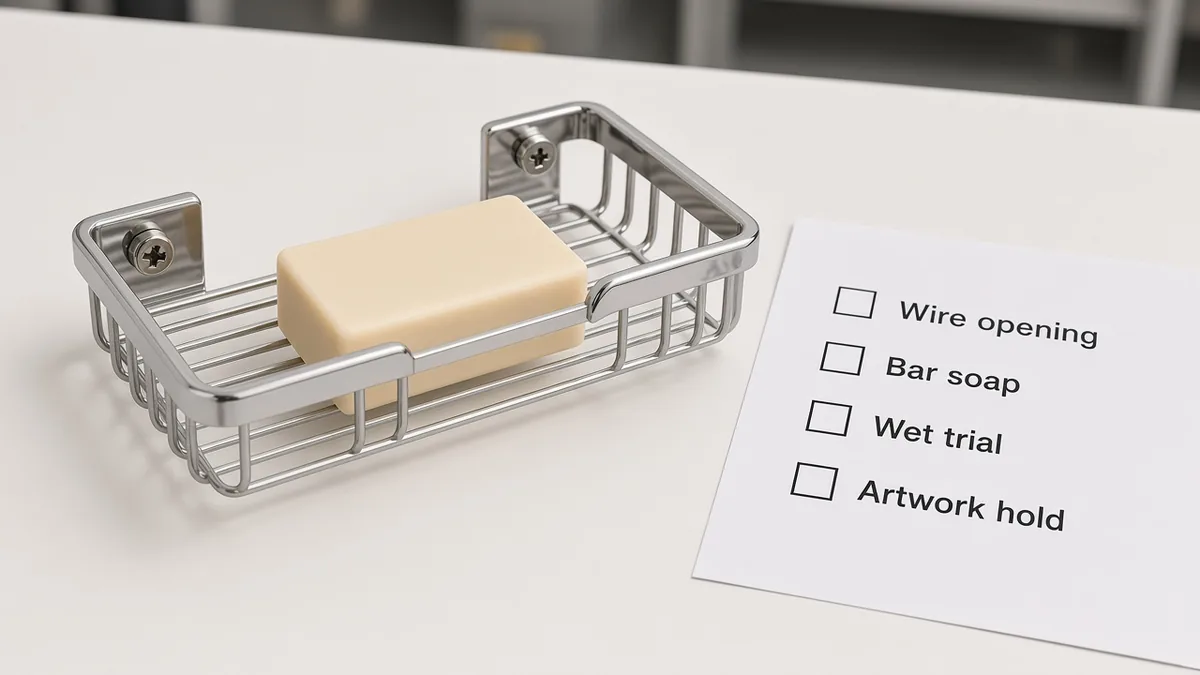
Buyer checklist for soap basket wire opening
Use this list before a no-fall-through or “holds soap” line is approved for a wire soap basket.
- Treat drainage and soap basket wire opening as separate files, and do not let a drain pass approve a retention line.
- Measure the clear opening on the finished coated or plated basket, with a stated datum, including end bays and both directions if the bar can be rotated.
- Keep that measurement method out of any sampling-plan clause.
- Name a reference soap by size and shape, or retain a project bar, and use it in the sample placement.
- Run a wet or used-bar trial, in the installed attitude, and write the hold time you will actually run.
- Include low sides or open ends if a bar could slide out as well as fall through the floor.
- List exclusions for travel soaps, guest soaps, or shapes that were not tried.
- Keep suction, adhesive, and hanging soap dishes off this screw-mount file.
- Align carton, insert, and marketplace bullets with the named soap; do not print a universal retention slogan.
- Send the drawing or sample, the named soap or gauge, and the intended listing phrase with the inquiry.
Foire aux questions
Can I use wire pitch from the drawing as the opening?
No. Pitch is a tooling figure. Retention depends on the clear gap after coating or plating, including misaligned or flattened wires. Measure the finished basket.
The basket drains quickly. Is that enough?
No. Fast drainage can come from a wide opening that also drops a small or softened bar. Keep the drainage file and the opening file separate.
What if my brand sells several soap sizes?
Name each size you will claim, or name one conservative size and exclude the others. A single line based only on the largest dry bar is not a method.
Is a dry first-article placement enough?
Usually not, if shoppers will use the bar. Write a wet or used-bar trial. A dry unused bar is often larger and firmer than a bar after a few showers.
Can I link or reuse the drainage-slot article slug?
No. That decision is occupied, and the registry slug should not be used as a link. Use a live drainage neighbor only as contrast, and keep slot geometry off this page.
What should a first sample include?
The finished screw-mounted basket, the opening method and datum, a retained reference soap or gauge, photographs of the placement, the wet-trial result, and the intended listing phrase or an explicit decision to stay silent.
Collaborez avec Koitor Hardware
Need a soap-basket opening brief reviewed?
Send Koitor your drawing or sample, the named bar of soap or a gauge, and the intended listing phrase. Our team can review finished wire opening and a wet-trial brief before quotation. MOQ can start from about 100 pcs depending on the product; samples usually take 5–7 working days after details are confirmed; bulk production usually takes 4–6 weeks depending on the project.
Fabrication pour compte de tiers / Marque de distributeur
Transformez ce guide d'approvisionnement en cahier des charges
Indiquez-nous le produit souhaité, ses dimensions, sa finition, la quantité commandée et vos exigences en matière d'emballage. Votre équipe recevra une analyse pratique de la faisabilité de la fabrication avant l'établissement du devis.
 English
 Español
 Português
 Français
 Deutsch
 العربية