

Solid versus semi tubular rivets pivot joints should be selected according to the joint’s intended movement, retention, geometry and production method—not from the rivet name alone. A buyer developing a folding hook, adjustable holder, hinged accessory or moving bracket needs the joint to pivot as designed without excessive looseness, binding, visible damage or premature wear. The correct rivet and formed joint depend on the material stack, hole geometry, assembly tooling and product requirements. This guide gives importers and product developers a practical specification and sample-approval framework; it does not assign universal strength values or claim that either rivet type is always superior.
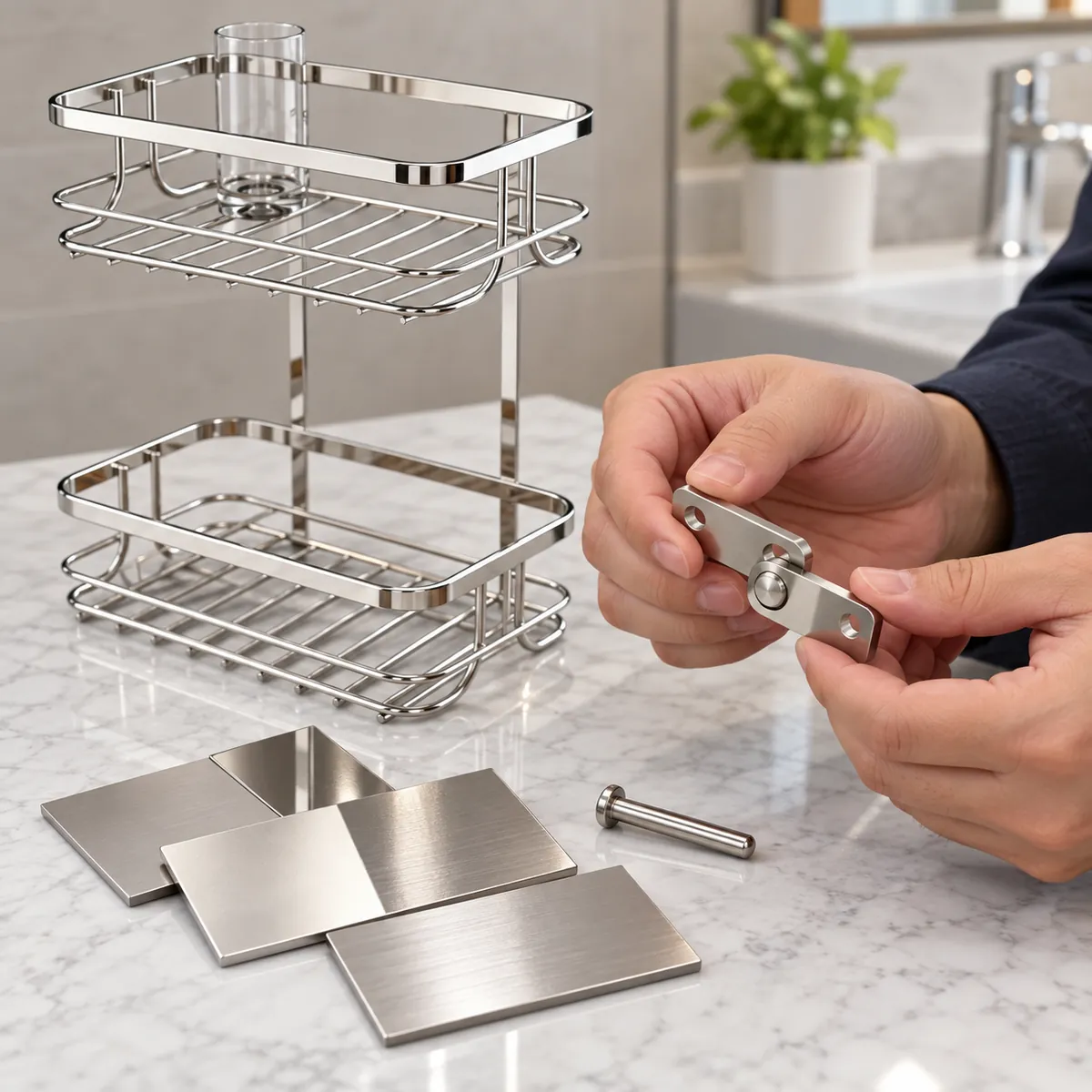
A solid rivet has a solid shank that is formed during installation. A semi-tubular rivet has a partial cavity at its tail, allowing the tail to flare or form under a different installation mechanism. Rivet manufacturers describe semi-tubular designs as useful in some pivot applications because the tail deformation can be localized while the joint retains movement. That is a design possibility, not a guarantee of free rotation or load capacity in every assembly. Koitor’s confirmed scope includes custom metal hardware design-to-drawing/sample and metal forming/assembly; specific rivet sourcing, tooling and product performance must be confirmed per project.
What does a pivot joint need to do?
Before choosing the rivet, define the joint’s function. Does the part rotate through a limited range, fold flat for packaging, swing into a user-selected position, or remain nearly fixed after adjustment? Is the movement occasional during installation or repeated during product use? Does the joint carry a product load, locate a cover, support a hook, or merely allow adjustment? Each answer changes which characteristics matter.
A pivot has at least two competing needs: retention and movement. The joint must keep the connected members assembled while allowing the intended motion. Too much setting can clamp the plates together and cause binding. Too little setting can create rattle, excess play or a joint that feels unstable. The desired result is not necessarily “as tight as possible”; it is a controlled fit consistent with the functional design.
Buyers should define the product-level outcome in observable terms. For example: movement is smooth through the intended range; no unintended separation is observed; the part remains in its intended position if the design requires that behavior; no sharp or snagging tail is present; and the visible head appearance matches the approved sample. Exact travel, retention force, operating torque and cycle life require project-specific engineering validation. Do not invent those values from a generic rivet article.
A bathroom accessory can also face moisture, cleaning and repeated handling. The rivet material, surface finish, galvanic compatibility, crevice geometry and cleaning access may matter. If corrosion performance or cycle life is a requirement, define the exposure and validation method separately. A rivet style label alone does not establish durability.
How do solid and semi-tubular rivets differ?
A solid rivet is a continuous shank. It may be appropriate where a robust permanent fastening is required and the assembly process can form the tail while preserving the needed joint condition. The installation load, material hardness, member thickness, support and tool access all influence the result. If the joint is intended to rotate, the design needs a controlled bearing interface or clearance so the formed head does not bind the moving members.
A semi-tubular rivet has a shallow hollow at the tail. During setting, the tail can roll or flare, which may reduce the material deformation required compared with forming a fully solid tail. Some rivet makers specifically describe semi-tubular or tubular rivets as suitable for pivots because deformation occurs mainly at the tail. The buyer should confirm that the particular product and setting process achieve the intended articulation; a cavity does not automatically create a hinge.
The relevant comparison is the complete joint, not just the cross-section. Rivet diameter, shank length, head style, hole clearance, member stack, washer or spacer design, forming tool and installation stroke can all affect movement and retention. A solid rivet paired with an appropriate shoulder or spacer could be a better fit than a poorly specified semi-tubular rivet. Conversely, a semi-tubular fastener may simplify forming in some thin-material assemblies. The engineering owner should choose the configuration against the actual geometry and requirements.
| Decision dimension | Solid rivet consideration | Semi-tubular rivet consideration | Buyer evidence |
|---|---|---|---|
| Forming mechanism | Full solid tail must be upset or formed as designed | Partial tail cavity permits a different flare/roll mechanism | Production-intent sample and process description |
| Pivot movement | May require a defined shoulder, spacer or clearance feature | Can be designed for movable joints, but still needs controlled stack-up | Movement check across the intended range |
| Retention | Depends on shank, materials, formed head and joint design | Depends on tail formation, cavity and member stack | Retention requirement and agreed verification method |
| Appearance and access | Head and tail may require clearance and cosmetic review | Formed tail shape and tooling access need review | Approved sample, sharp-edge and interference checks |
Which drawing and RFQ details should be controlled?
A drawing or specification should identify the joint parts and their revision, material descriptions, thicknesses, hole locations and diameters where controlled, rivet style, head geometry, assembly orientation and any spacer or bearing feature. If the supplier is expected to recommend the rivet, identify the required movement, retention and appearance rather than leaving the functional need implicit.
State which dimensions are critical to movement. The distance between clamped members, shoulder length, hole alignment and tail-form envelope can matter. If the product includes coating or plating, clarify whether the joint is assembled before or after finishing, because finish thickness and assembly sequence can alter fit or movement. The supplier should flag any proposed design change that affects the intended behavior.
Avoid specifying a rivet solely by a catalogue name if the final joint depends on a custom length, head, material or setting method. A buyer can request a controlled part number, supplier drawing or approved sample so the same configuration can be repeated. If an equivalent fastener substitution is allowed, define the review and approval process first.
Clarify what is known and what remains an engineering decision. If cycle life, load, torque or retention targets have not been validated, mark them as open requirements. Do not copy a value from an unrelated hinge, appliance or automotive fastener application. A supplier can only quote and validate against a defined requirement.
How should buyers approve movement and retention?
Use a production-intent sample built with the specified member materials, thicknesses, finish and assembly route. A loose bench prototype can reveal an initial interference but may not represent a riveted production joint. Identify each sample and drawing revision. If several stack-ups are being compared, tag them clearly so a favorable result cannot be attributed to the wrong fastener.
Define the movement evaluation. The inspector should know what direction and range to move, whether motion should be free or friction-controlled, how the part is supported, and whether it is checked before or after finishing. Record observations such as binding, unintended looseness, rattle, contact marks, separation, deformation or sharp edges. If a numerical torque or retention test is required, assign the method, equipment, fixture and limit to a qualified owner before the trial.
A visual check and hand movement can be useful for early sample review, but should not be called a validated endurance test. If the product must survive repeated motion, agree on a cycle test with the design authority: cycle count, rate, travel, load condition, environmental state and post-test criteria. Those conditions must be developed for the product. The article makes no claim about a default number of cycles.
Inspect the formed tail and surrounding surfaces. A rivet may protrude into an adjacent part’s movement envelope, leave an unacceptable cosmetic mark, or create an edge that catches packaging. For a bathroom product, check cleaning access and finish damage near the joint as well. Photograph both sides of the joint and record the sample condition before testing.
What can cause a pivot joint to bind or loosen?
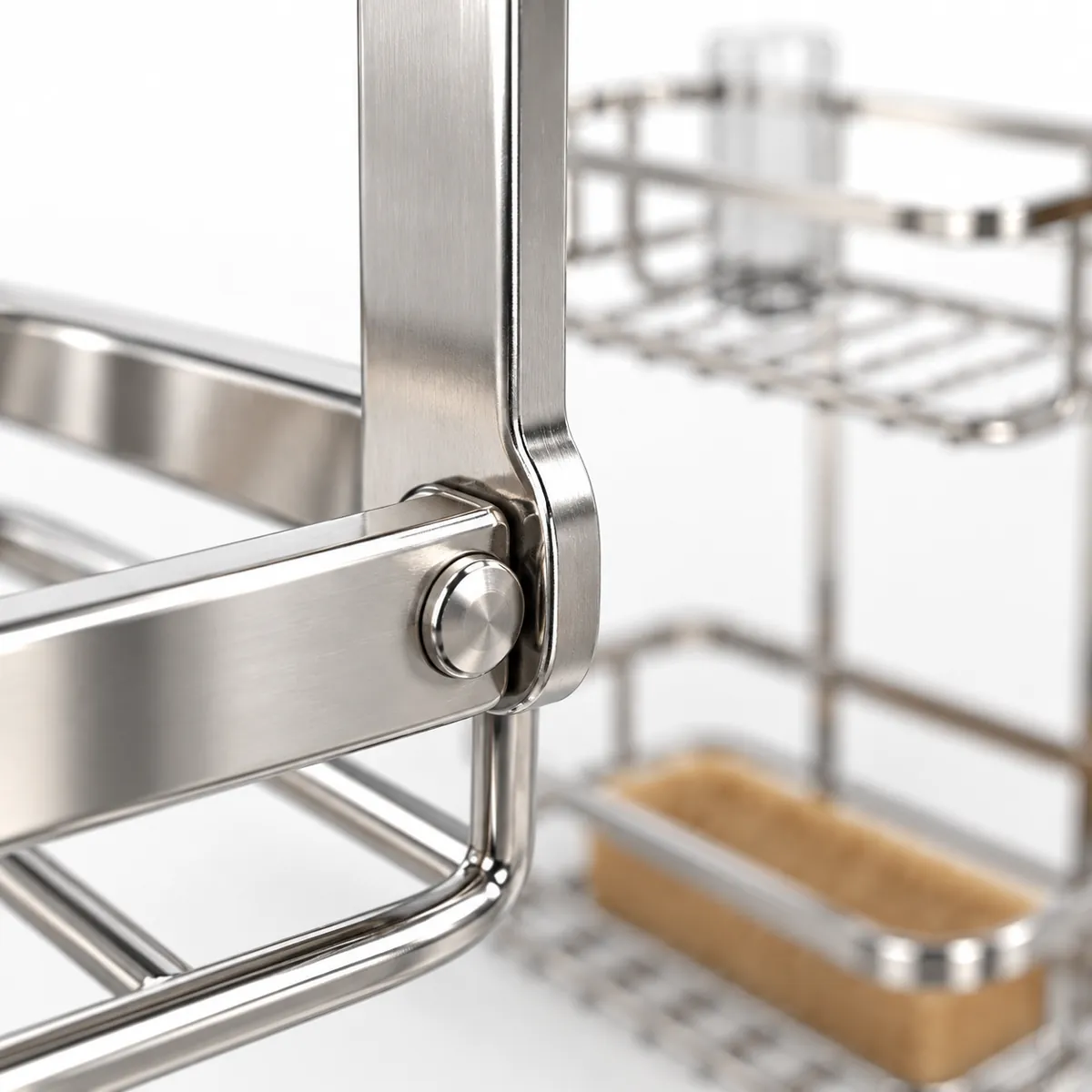
Binding can result from excessive clamping, misaligned holes, burrs, a distorted member, an incorrect spacer, coating interference or an assembly fixture that changes the stack. It may also occur when the design assumes a clearance that the production tolerance stack does not provide. Simply changing from a solid rivet to a semi-tubular rivet may not address these causes.
Looseness can result from insufficient tail formation, excessive hole clearance, wrong rivet length, member wear or variation in the stack. A joint may also loosen after repeated operation, but that needs to be demonstrated under an agreed test. Do not attribute all movement to the rivet alone; the connected metal, bearing surfaces and support geometry share the load path.
A supplier troubleshooting record should separate observed symptom from suspected cause. “Pivot binds before reaching the end position” is an observation. “Rivet setting force is too high” is a hypothesis until the process and sample are examined. Record what changed between samples, which conditions stayed constant and what evidence supports the corrective action.
When a problem appears, contain suspect lots and compare a conforming reference with a nonconforming sample. Check fastener identity, part stack, hole alignment, forming result, coating state and fixture setup. A controlled change to one variable at a time makes it easier to identify the relevant factor. Reapprove the sample if the fastener or geometry changes.
How do tooling and volume affect total cost?
The fastener’s purchase price is only part of the cost. Buyers should consider forming tooling, feeder or press setup, assembly labor, inspection, rework risk, sample development and the consequences of a joint that binds or loosens in use. A rivet that costs less per piece may require more difficult setting or additional inspection; a higher-priced design may simplify assembly in a particular application. These are project-dependent tradeoffs, not general savings guarantees.
At quotation, ask whether the proposal assumes standard or custom fasteners, what tooling is included, who owns or maintains dedicated tooling, and how changes are priced. Clarify minimum order quantities, trial quantities and whether manual or automated assembly is proposed. Do not claim a production rate or cycle-time advantage without supplier evidence.
For a small trial order, the best decision may be to validate the geometry and assembly process before investing in custom tooling. For repeat production, controlled tooling and a stable fastener specification can improve consistency. The buyer should compare total program cost at the expected order volumes and risk level rather than selecting based on unit price alone.
Common mistakes when specifying solid versus semi tubular rivets pivot joints
A common mistake is assuming that semi-tubular automatically means a free pivot. The member stack and formed tail still determine whether the joint moves. Another is specifying “tight” without clarifying whether that means no rattle, controlled friction, a fixed position or high retention. Those are different outcomes and may conflict.
Do not approve only a rivet sample without the assembled product. A fastener that looks correct on a flat coupon may interfere with a nearby shelf, hook or mounting component. Do not treat a one-time hand movement as proof of repeated-use durability. Do not specify strength from a generic web table without validating the fastener, material and installation.
Avoid changing rivet type mid-production without change review. A substitute can differ in length, head, material, cavity, finish or forming behavior even if a catalogue description sounds similar. Record the approved part number, drawing revision, sample, process owner and change triggers.
Finally, keep functional requirements separate from commercial liability. The buyer and supplier should agree how defects, rework and warranty claims are handled under the purchase terms. The engineering comparison explains the joint; it does not decide contractual responsibility.
Buyer checklist and FAQs
For solid versus semi tubular rivets pivot joints, confirm these items before approving a supplier proposal:
- The intended motion, travel, retention and user interaction are stated.
- The rivet and connected member stack are identified on a controlled drawing or sample.
- Hole, shoulder, spacer and clearance features are defined where functionally necessary.
- The sample uses production-intent material, finish and assembly sequence.
- Movement and retention checks have defined support, method and acceptance criteria.
- Both formed tail and visible head are reviewed for interference and edge condition.
- Cycle or load testing is included only where a qualified product requirement supports it.
- Substitutions, tooling changes and process changes trigger review as agreed.
Is a semi-tubular rivet always better for a pivot?
No. It can be suitable for some movable joints, but the full stack-up, formed tail and intended friction/retention determine performance.
Can a solid rivet still be used in a moving joint?
Potentially, if the design provides the required shoulder, bearing clearance and controlled setting. Validate the assembled product rather than relying on the fastener name.
Should a buyer specify a cycle count?
Only when repeated movement is a validated product requirement. Define cycle count and test conditions with the design authority; do not copy an unrelated value.
What should be inspected after rivet setting?
Check movement, retention, formed-tail shape, head appearance, interference, surrounding finish and any sharp edge against the approved drawing and sample.
Koitor develops custom metal bathroom and home-storage hardware from drawings and samples. Share the joint drawing, intended movement, material stack and sample approval criteria through Koitor’s contact page, ou consulter le Présentation de la fabrication OEM. Exact fastener sourcing, tooling and performance requirements must be confirmed per project.
Technical references: DEGO’s solid and semi-tubular rivet information et European Aluminium mechanical-joining guidance. Verify current supplier documentation for the selected fastener and material.
Review a moving metal joint
Share the joint drawing, intended movement and production sample needs for a focused OEM discussion.
Fabrication pour compte de tiers / Marque de distributeur
Transformez ce guide d'approvisionnement en cahier des charges
Indiquez-nous le produit souhaité, ses dimensions, sa finition, la quantité commandée et vos exigences en matière d'emballage. Votre équipe recevra une analyse pratique de la faisabilité de la fabrication avant l'établissement du devis.


 English
 Español
 Português
 Français
 Deutsch
 العربية