

Stainless steel finishes include mill-supplied surface conditions and later mechanical, patterned, blasted, electrochemical, colored or coated surfaces. These are surface families, not stainless grades and not one ascending quality scale. A sheet-finish code, where applicable, describes a defined process and surface category for that product form; words such as brushed, satin or mirror still need a supplier reference and representative sample. Before approving a hardware finish, record the substrate grade, product form, finish system, appearance target and acceptance method separately.

What do stainless steel finishes describe?
The word “finish” can refer to the condition supplied on flat stainless products, a later surface treatment, a visible texture or a coating system. A buyer should first identify which meaning is being used. A broad label such as brushed or polished may describe appearance, while a numbered designation may refer to a named process-based category within a particular standard or market convention.
A useful buyer map separates several surface families:
| Surface family | What the term generally describes | Buyer clarification |
|---|---|---|
| Mill-supplied finish | Surface condition associated with a mill-processed product | Which product form and supplier designation does the term cover? |
| Mechanical finish | Abrasion, brushing, polishing or another mechanical surface operation | What exact appearance, direction, sample or process reference is required? |
| Patterned or embossed surface | A repeated texture or relief created by a forming or surface process | What pattern, orientation and visible-face reference are approved? |
| Blasted surface | A texture produced by an abrasive or blasting operation | What media, appearance and acceptance reference apply to the actual part? |
| Electrochemical treatment | A treatment such as electropolishing or passivation, each with its own purpose and process | Which treatment is actually specified, and what evidence is required? |
| Colored or coated surface | A deposited, converted or applied layer that changes appearance or surface behavior | What coating system, color, coverage, preparation and acceptance sample are required? |
This is an organizing map, not a complete standards table or a claim that every family is suitable for every stainless product. Several treatments can be combined. A supplied sheet finish could be followed by a fabricated component’s grinding, polishing, passivation or coating. The final part appearance depends on the full route and the actual product geometry.
Le British Stainless Steel Association’s article on flat products discusses mill and special finishes and refers to EN 10088-2:2024 for sheet and plate. It also recommends agreeing on a representative appearance reference. The International Molybdenum Association’s Euro Inox guide provides a broader educational overview of architectural stainless finishes. These sources are helpful for terminology but should not be used to transfer numerical roughness values, performance promises or process recipes to an unspecified bathroom accessory.
Does a stainless finish identify its alloy grade?
No. Finish and alloy grade answer different questions. A surface designation or appearance word does not establish the stainless grade, chemistry, product form or material record. Specify the material and surface separately.
How should buyers read stainless finish codes?
Some flat-product finish systems use numerical and letter codes to describe a surface condition or production route. Examples include 1D, 2D, 2B and 2R in the EN flat-product context discussed by BSSA. These labels have defined meanings within their governing system and product scope. They should not be treated as universal translations for every country, supplier, sheet, tube, wire or finished assembly.
A code is useful when the purchase actually concerns the product and standard to which the code applies. If the project uses formed wire, tube or a fabricated bracket, a sheet-and-plate designation may not describe the final surface in the same way. Fabrication may add welds, grinding, brushing, polishing, pickling or another treatment. The buyer should ask the supplier which surface reference applies to the actual part.
Avoid translating codes into a single visual adjective without checking the source. A code can identify a process category while a commercial buyer needs to approve a particular appearance. The same broad code can still leave details about supplier, production route, sheet orientation, visible face, surface variation, processing marks or downstream finishing unresolved. A material standard is not an approved product sample.
When a supplier uses a code, request:
- The full code and standard or specification system.
- The product form the code applies to, including sheet, plate, coil or another stock.
- Whether the item is supplied as-is or will be fabricated or treated further.
- Which face or surface is visible in the finished product.
- The representative sample or visual reference used for approval.
- The inspection lighting and viewing conditions where appearance matters.
- The party responsible for confirming the surface and documenting changes.
Do not insert numerical roughness ranges from a secondary summary unless the project has a verified specification that calls for them. A typical value may be informative but is not automatically an acceptance requirement. If a measured surface parameter matters, the buyer must specify the method, sampling approach and responsible reviewer.
Does a sheet-finish code apply automatically to tube or wire?
No. A sheet-and-plate finish system should not automatically be extended to tube, wire or a completed hardware assembly. Confirm which designation applies to the supplied product form and the finished part.
Brushed, satin, polished and mirror are appearance words
Appearance words help a buyer describe an intended look, but they can vary by supplier and process. Brushed may refer to a directional grain, a particular abrasive sequence, or a supplier’s product family. Satin can describe a less reflective appearance without a universal surface definition. Mirror typically describes a highly reflective visual result, but it does not identify the stainless grade or prove a particular polishing route.
A buyer should link an appearance word to a reference. The best reference depends on the project: a physical sample, approved control sample, representative finished part, controlled photograph under consistent conditions or a written specification with a named standard. A photograph can help communicate direction and tone, but screen display, lighting, image processing and camera angle can distort surface appearance. For close appearance matching, a physical control sample is usually more useful when it is representative and traceable.
For fabricated metal hardware, the substrate surface and finished surface can differ. A welded joint may need blending; a brushed direction can change around a bend; a formed edge can expose a different face; polishing access can be constrained by the assembly; and a coating can obscure the original texture. These are design and process questions, not proof of a defect. The buyer should identify cosmetic faces, grain direction, joint visibility, edge expectations and finishing sequence before mass production.
Use an agreed reference with a scope note. Record the supplier, product form, process stage, sample identifier, revision and date. If a surface sample is approved before welding or coating, state whether the approval applies to the raw material or the final assembly. This prevents a raw sheet coupon from being treated as proof of an assembled product’s appearance.
Mechanical, patterned and treated surfaces
Mechanical finishes use physical surface operations to change texture or reflectivity. Brushing and polishing are familiar examples, but the exact abrasives, sequence and operator method can vary. The buyer should avoid specifying a process recipe based on a competitor’s article unless that process is needed and technically approved. A visible result and its acceptance reference may be more relevant than a guessed abrasive sequence.
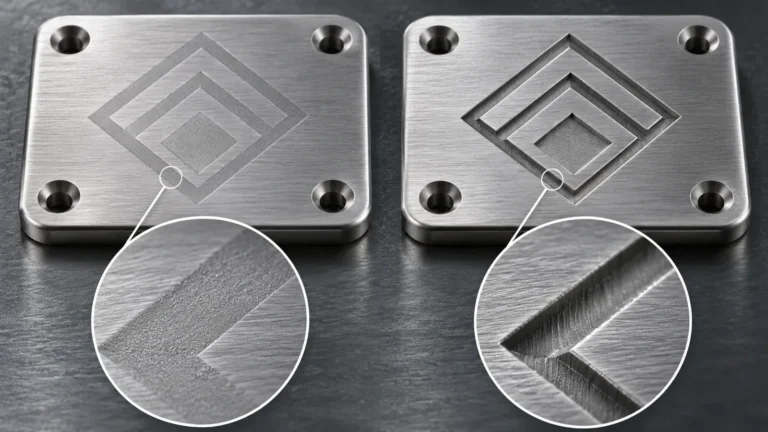
Patterned and embossed surfaces add a repeatable texture or relief. The pattern may be selected for appearance, product identification or another design reason. Buyers should specify which face carries the pattern, its orientation, the areas that remain smooth, and whether the pattern continues through bends or transitions. A catalog name alone may not identify the exact pattern geometry.
Blasted surfaces can produce a diffuse or textured appearance, but “blasted” by itself does not establish the media, roughness, color, cleanliness or suitability for a particular coating. If the surface will receive another treatment, the supplier should define the required preparation and the buyer should approve a representative part or sample.
Electrochemical and chemical treatments require careful terminology. Passivation and electropolishing are distinct processes with different mechanisms and purposes. Neither should be used as a generic synonym for “stainless finish.” Where a buyer needs a specific treatment, name it, identify the governing requirements and decide what record or inspection demonstrates the process. This article does not claim that a treatment guarantees corrosion performance or hygiene.
Colored and coated finishes include multiple technologies. A color name or visual swatch alone does not define the coating system, substrate preparation, coverage, masking, cure or acceptance requirements. If a coated part is part of a bathroom product, specify the environment and maintenance context, but avoid converting a material or coating label into a service-life guarantee.
| Question | Pourquoi est-ce important ? | How to make the request clearer |
|---|---|---|
| What is the base stainless grade? | Finish names do not identify the substrate | State the grade and source document separately |
| What product form is being finished? | Sheet codes may not apply to wire, tube or assemblies | Name the stock form and final component |
| What surface family is required? | “Finish” can refer to process, appearance or coating | Identify the intended family and process stage |
| What does the buyer need to approve? | A generic word may not match the desired product appearance | Use a traceable control sample or standard reference |
| What is the acceptance method? | Appearance and measured attributes are not the same | State viewing conditions, inspection scope and measurement method where required |
| Who can authorize a change? | Suppliers may propose alternate routes or sources | Name the buyer’s technical or quality approver |
How to compare stainless finish proposals
A proposal should make clear what the supplier is quoting. Compare the complete product, not just the finish word. Two quotes may both say brushed stainless yet differ in grade, stock form, grain direction, visible-face treatment, weld finishing, polishing sequence, passivation, coating or sample basis.
Create a comparison record with the exact supplier terms in one column and the buyer’s required attributes in another. Mark each attribute as confirmed, different or not stated. For every “not stated” item, ask a direct question before approving the sample or placing an order. Avoid translating a supplier’s commercial name into a standard code without the supplier’s confirmation.
A practical proposal review can cover:
- Base grade and material evidence.
- Product form and incoming surface condition.
- Process family and whether it occurs before or after fabrication.
- Direction of grain or pattern on visible surfaces.
- Weld visibility and blending scope, where applicable.
- Edge and bend appearance.
- Coating or color reference, if used.
- Approved sample identity and the stage it represents.
- Inspection conditions and the party responsible for acceptance.
- Change control for supplier, process or finish-material substitutions.
A sample approval should state what was approved and what was not. For example, a buyer may approve the color while leaving corrosion evidence, coating adhesion or a hidden surface unresolved. The record should not imply that review of one visual feature verifies every other requirement.
Reorder control is equally important. Keep the approved finish name, supplier reference, sample number, drawing revision and process notes with the purchase order. If a supplier proposes a new mill source, treatment route or coating, request a side-by-side comparison and get approval before production. “Same finish” should be a documented comparison, not an informal assumption.
For a product-form scoped record, start with one row for the incoming material and another for the completed component. The incoming row can name the sheet, plate, tube, wire or other stock, the stated grade, the supplier finish reference and the visible face. The finished-part row can identify forming, welding, edge treatment, secondary surface operations, coating and the approved sample stage. If the product changes from sheet to a fabricated assembly, do not copy the incoming stock finish code into the final part description without confirming that the code still applies. Instead, describe the finished appearance and identify the process or control sample that makes it reproducible.
This distinction is useful when several suppliers participate. A mill or distributor may identify the incoming flat-product finish; a fabricator may define grinding or brushing around a joint; and a coating supplier may manage the final color. The importer should decide which party is accountable for each line item and which evidence is returned with the order. One party’s document should not be assumed to verify another party’s work. This staged record makes it easier to resolve a mismatch without treating every visible difference as a material-grade issue.
If a purchaser needs a measured property as well as appearance, define it separately. State the test method, measurement locations, sampling basis and acceptance limits only after the relevant technical owner has selected them. Avoid adding a roughness number simply because it appears in an explanatory source; a number without a method and product context is not an actionable inspection requirement.
Can satin and brushed mean the same surface for every supplier?
No. These words may be interpreted differently depending on a supplier’s catalog and process. Define the visual target and the product form, then approve a representative sample with a traceable reference.
Common mistakes when specifying stainless steel finishes
Treating a finish as a material grade. Base metal and surface are separate. Confirm both in the purchase documents.
Using a flat-product code for a fabricated part without checking scope. Sheet and plate conventions may not describe the finished tube, wire or welded assembly. Confirm the applicable surface system.
Relying on “brushed,” “satin” or “mirror” alone. The words may not produce the same result across suppliers. Attach a sample or a defined reference.
Assuming an appearance sample proves material identity. Color, gloss or texture cannot by itself identify the stainless grade or lot. Use material evidence for that requirement.
Assuming a finish guarantees corrosion resistance. Performance depends on the material, surface condition, fabrication, environment, cleaning and project-specific exposure. Do not make a universal service-life inference from a finish label.
Confusing treatment names. Passivation, electropolishing, mechanical polishing and coating are not interchangeable terms. Specify the actual requirement and responsible process.
Ignoring the finished assembly. A sheet coupon may not represent welds, bends, edges, joints or post-fabrication treatment. Approve the relevant product stage.
Copying typical numerical ranges into a PO. A range from an explanatory article is not necessarily a standard requirement or appropriate acceptance target. Verify the official specification and measurement method.
Does a polished surface prove a particular stainless grade?
No. A polished appearance is a surface characteristic. It does not establish the base grade, chemistry, supplied condition, traceability or finished-product performance.
Buyer checklist before approving a stainless finish
Before approving a stainless finish proposal, answer these questions:
- What exact stainless grade and product form are specified?
- Which finish system or naming convention is being used?
- Does the reference apply to sheet, plate, tube, wire or the completed assembly?
- Is the surface mill-supplied, mechanically treated, patterned, blasted, electrochemically treated, colored or coated?
- What visible faces, grain direction, joints, edges and bends must be reviewed?
- Is there a physical control sample or another traceable appearance reference?
- At what production stage was the sample made?
- Which attributes does sample approval cover, and which remain unverified?
- What inspection lighting, viewing distance or measurement method is required?
- Who approves changes to supplier, material, surface route or coating?
- What records must accompany production or reorders?
- Are performance or regulatory requirements supported by the correct separate evidence?
A useful approval record is specific enough for a different buyer or inspector to understand the decision later. Attach the controlled drawing, material callout, sample ID, finish reference, revision, review date and outstanding actions. If the project depends on an unverified requirement, leave the item open and identify the responsible person who must resolve it.

What Koitor can review for a hardware project
Koitor is a family-owned custom metal bathroom and home-storage hardware factory. Its approved scope includes customization from buyer drawings or physical samples and relevant forming, joining, finishing, assembly and packaging work. This does not establish that every specialist stainless treatment is available in-house, nor does it create a full finishing catalogue, materials laboratory or certification service.
For a project-specific review, provide the controlled product drawing, the base grade and product form, the finish designation or approved sample, the visible-face requirements, and any unresolved question about how the surface interacts with the assembly. Koitor can review the metal hardware manufacturing scope and clarify where the actual finishing supplier or buyer’s technical reviewer needs to confirm a requirement.
The buyer remains responsible for specifying the performance outcome and acceptance criteria. The finishing source should confirm the process it will use and the product form it can treat. A sample review should identify whether it is raw stock, a fabricated subassembly or the final part. This makes the quotation and approval more useful without implying that the finish name itself proves all performance.
Foire aux questions
What are common stainless steel finish families?
Broad groups include mill-supplied surface conditions, mechanical finishes, patterned finishes, blasted surfaces, electrochemical treatments and colored or coated surfaces. The exact product and supplier determine which descriptions apply.
Is 2B the same as brushed stainless steel?
Not necessarily. 2B is a finish designation in a defined flat-product context, while brushed is a broad appearance or process description. Confirm the governing product standard and the actual surface reference.
Does mirror stainless have a particular roughness value?
The word mirror does not by itself establish a measurement value or acceptance method. If a measured parameter matters, specify the relevant standard, instrument method, location, sampling and limit with the responsible technical authority.
Can stainless steel finishes be compared by quality level?
Not as one universal ranking. Different finishes serve different appearance or process needs. Choose based on the product form, design, exposure, cost scope, supplier capability and buyer-defined acceptance criteria.
Should the buyer approve a sample before production?
When appearance or assembly fit matters, a representative sample can support a clearer decision. Record which revision and production stage it represents and what the sample does not verify.
Collaborez avec Koitor Hardware
If you are sourcing stainless bathroom or home-storage hardware, share the current drawing, base material callout and approved surface reference. Koitor can review the metal product and manufacturing scope within its stated OEM capabilities. Any material certification, specialist finish process or performance verification should be confirmed with the responsible supplier and technical authority.
Review a Stainless Surface Specification
Send the product drawing or sample, exact material callout and finish reference. Koitor can help clarify the hardware manufacturing scope and identify questions for the finishing supplier.
Fabrication pour compte de tiers / Marque de distributeur
Transformez ce guide d'approvisionnement en cahier des charges
Indiquez-nous le produit souhaité, ses dimensions, sa finition, la quantité commandée et vos exigences en matière d'emballage. Votre équipe recevra une analyse pratique de la faisabilité de la fabrication avant l'établissement du devis.

 English
 Español
 Português
 Français
 Deutsch
 العربية