

Wholesale vs retail describes how a product moves to a customer, not who manufactured it. Wholesale generally serves business distribution, resale or other business-use channels; retail is organized primarily around sales to the public or household buyers. Quantity is a common operational difference, not a universal definition: businesses can buy from retailers, and wholesale orders are not defined by one fixed minimum. Compare customer, order unit, assortment, fulfillment and service responsibilities for the actual product.
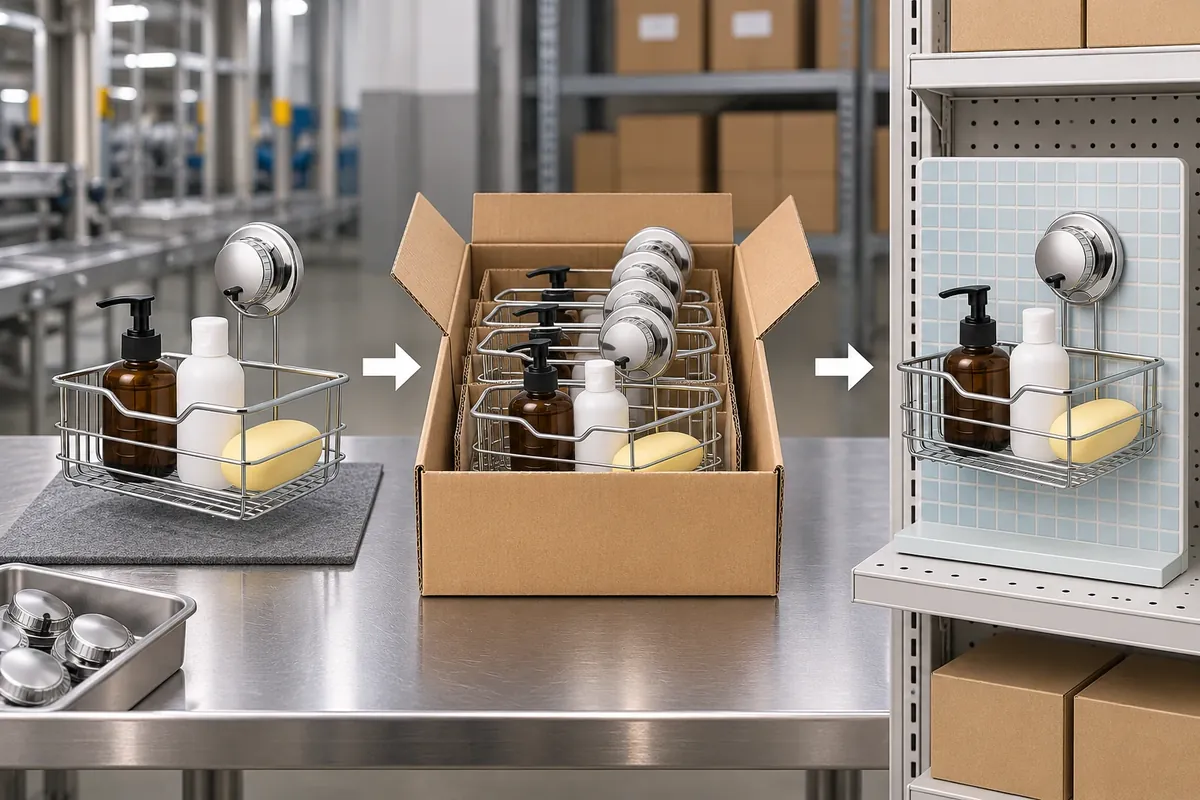
What decision does the wholesale and retail comparison answer?
The terms are often used as if they mean “large quantities” and “small quantities.” That shorthand can be useful in conversation, but it hides the channel’s function. A wholesaler may buy from a manufacturer or another distributor and sell to business customers, resellers or institutions. A retailer typically presents products for purchase by the public or household consumers. A company can participate in both roles, and a business customer can sometimes buy from a retailer. The particular transaction, not the label alone, determines the details.
For a bathroom hardware buyer, the channel question affects more than price. It can determine the order unit, pack configuration, item presentation, product information, inventory planning, fulfillment expectations and who answers downstream questions. A distributor might order cases of a bathroom basket SKU and resell it to shops, while a retailer sells an individual boxed unit to a consumer. The product may be identical, but its package and service context may differ.
This guide helps importers, distributors, retailers and product teams map those responsibilities before quoting or launching an assortment. It does not provide tax, legal, accounting or contract advice. Terms such as wholesale, retail, resale and business-to-business can carry different definitions in statutes, tax regimes or commercial agreements. If those definitions affect an obligation, use the relevant jurisdiction’s rules and qualified advice.
How do wholesale and retail roles differ?
Wholesale commonly organizes transactions around supply to businesses, resellers or other organizational buyers. A wholesaler may consolidate products from several manufacturers, hold inventory, break bulk, support sales to trade accounts or serve a project buyer. These activities vary: some wholesalers hold stock, some arrange fulfillment, and some operate with different title or delivery arrangements. Do not assume every wholesale seller performs every service.
Retail commonly organizes product presentation and transactions for the final user or household. A retailer may sell single units, display product features, provide consumer-facing instructions and arrange after-sales support. But the United States Census Bureau’s 2022 NAICS manual makes a useful qualification: retail establishments can also serve business and institutional customers. This illustrates why the channel should be understood through its main function and the actual transaction rather than a rigid rule that retail means “consumer only.”
Manufacturing is a separate role. A factory makes or assembles the item; a wholesaler distributes it; a retailer sells it to a downstream buyer. One business can combine roles, and private-label arrangements can place a brand owner between manufacturer and retail seller. In a supply chain, ask who designs the product, who owns or controls the specification, who purchases the stock, who ships the order and who supports the next customer.
| Comparison field | Wholesale channel | Retail channel | Buyer’s practical question |
|---|---|---|---|
| Typical customer | Reseller, distributor, project buyer or other business | Public or household shopper is often the primary audience | Who is buying this specific transaction? |
| Order unit | Case, master carton, assortment, project lot or another defined unit | Individual retail-ready unit is common | What exact quantity and unit does the quote mean? |
| Product presentation | Trade data, case labels, product specifications and replenishment details | Consumer description, packaging and use instructions | Which information is needed at each handoff? |
| Fulfillment | May consolidate, stock or deliver to business accounts | May ship or hand over individual items to end customers | Who fulfills, and where does responsibility transfer? |
| Support | Commercial account, replenishment or project coordination may apply | Product questions, returns or consumer support may apply | Who handles which question or claim? |
| Product origin | May source from a factory or another channel participant | May source through a distributor, importer or direct supplier | Who is the actual manufacturer and who is the seller? |
Le U.S. Census Bureau’s 2022 NAICS manual describes wholesale distribution as serving business and resale channels and retail as organized around final sales, while noting that retail may also serve business or institutional clients. Use it as statistical classification context, not as a universal legal or contract rule. A current commercial comparison from Salesforce also discusses typical channel differences and hybrid participation; its general business claims should not be read as guaranteed price or margin outcomes.
Why order quantity does not define the channel by itself
Order size is visible and easy to count, so it often becomes the shorthand for wholesale. But a business may buy small quantities from a retailer for an office or project, while a retailer may place a large replenishment order. A wholesale transaction can be small, especially for samples, assortment trials or a new account. Quantity is therefore one commercial term to record, not the only test of what channel the buyer occupies.
Define the order unit precisely. “One box” can mean one consumer box, one inner pack or one master carton. A case quantity can differ from the quantity per SKU, and a mixed assortment can contain several products under one outer carton. For a bathroom storage item, specify the number of finished pieces per retail package, retail packages per inner carton and inner cartons per master carton only where those levels apply. A quote should say what is included and which unit the price references.
Quantity also interacts with demand planning and stock risk. A distributor may decide how many cases to hold; a retailer may decide how many consumer units to display and replenish. These roles affect the forecast and pack-out, but they do not guarantee a lower cost or a particular margin. Price depends on the product, order terms, packaging, logistics, services and negotiated agreement. Avoid comparing wholesale and retail prices as though the difference automatically represents profit.
Map the channel around one SKU
Take a hypothetical wire bathroom basket with a private-label retail package. The manufacturer supplies the product and agreed export packing. An importer or distributor receives cases, allocates inventory to accounts and provides product data to retailers. A retailer lists the individual unit, communicates included mounting components and provides a consumer-facing support route. Each participant has a distinct handoff, even if one company performs multiple roles.
At the factory-to-importer handoff, identify the product revision, specification, carton quantity, package contents, labels and documents. At the distributor-to-retailer handoff, confirm SKU identifiers, unit description, stock availability and order terms. At retail, check that the packaging and listing accurately state what is included, how the buyer identifies the product and where questions should go. These checkpoints are a planning framework, not a claim that every business follows the same sequence.
If the product has a screw set, adhesive pad, suction cup or another accessory, record who supplies that component and who is responsible for its instructions. A product description should not imply a component is included when the box contains only the main basket. Similarly, a retailer should not promise performance or installation compatibility that is not supported by the product documentation. Channel clarity helps keep the original technical scope attached to the SKU as it moves downstream.
For a private-label program, add the brand owner’s role. The brand owner may control naming, packaging artwork and customer experience while another organization manufactures the item. Make sure each side knows who approves specification changes, who owns the artwork, who reviews claims and who authorizes production. Private label does not by itself establish that the brand owner made the product or holds every supplier record.
How do hybrid businesses fit into the channel map?
Many companies do not fit a single label across every transaction. An importer may buy from a factory, sell cases to other businesses and operate its own online store for individual buyers. A retailer may sell to households and also fulfill a hotel renovation order. A manufacturer may sell direct to a distributor and accept a small sample order from a brand owner. These arrangements do not invalidate the channel terms; they show that role should be assigned at the level of the transaction or activity being discussed.
Map each handoff rather than assign one permanent label to the whole company. For a given order, identify the seller of record, purchaser, delivery recipient, order unit and intended onward use. Then record who owns the inventory, who accepts the order, who ships it and who handles a product question. If the same company handles both wholesale and retail, its wholesale pack and retail unit may still require different packaging, product data and fulfillment instructions.
This distinction is useful during assortment planning. A distributor may want master cartons that can be split across accounts, while a direct-to-consumer offer may need individual packaging, consumer instructions and a parcel-ready configuration. A project channel may require a scheduled delivery and a room or site identifier. The physical product may be shared, but the fulfillment unit and information requirements differ. Confirm those requirements before packaging is frozen or artwork is approved.
Compare offers on a like-for-like basis
When reviewing bids, normalize the product and service scope before comparing the quoted price. Ask whether each quote covers the same model revision, accessories, package count, labels, inspection and delivery point. Identify whether the price applies per piece, per retail pack, per case or to a mixed assortment. If one seller includes warehousing, order consolidation or customer support, record it as a service difference instead of treating it as an unexplained unit-price gap.
Keep forecast assumptions separate from agreed order terms. A retailer’s expected sell-through or a distributor’s account plan may inform a purchase forecast, but it does not prove demand or guarantee a margin. If the buyer is testing a new assortment, a smaller order may reduce exposure while revealing practical issues with packaging, instructions or replenishment. The appropriate quantity still depends on the supplier’s confirmed capacity, order economics and the buyer’s inventory plan.
The same SKU can be offered under multiple channel plans, but the documentation must remain coherent. Use a master product record to identify the controlled dimensions, materials, finishes and revision. Then maintain channel-specific fields for consumer content, carton configuration, order unit and support. This reduces the risk that a channel-specific package statement is mistaken for a product specification or that a retail listing silently changes the product scope.
For instance, a distributor order may be priced and packed by master carton, while the retailer’s website displays one basket as a consumer unit. The master carton label and the retail package label serve different users and should not be treated as duplicates. The buyer should define the information each label needs, who approves it and how the count is reconciled at receipt. If a carton is later split, the remaining retail units still need their own identification and instructions. These operational details are part of channel readiness, not evidence of a particular wholesale-versus-retail price advantage.
Reviewing the channel map at each reorder also helps catch quiet changes in pack count, label revision or support ownership before they become receiving discrepancies.
For a new SKU, ask each downstream partner to confirm the unit and case identifiers they will use. That keeps the manufacturer’s carton count, distributor’s order line and retailer’s displayed item aligned during replenishment.
Document who approves the consumer description when the wholesale and retail listings use different names. Keep technical product identity stable so that channel-specific wording does not accidentally suggest a different model, included accessory or material.
What should be included in a wholesale quote?
A useful wholesale comparison begins with the same product definition. Include the product identifier, drawing or sample revision, material and finish requirements, order unit, packaging levels, included accessories, private-label requirements, inspection expectations and delivery scope. If one quotation covers retail-ready packaging and another covers bulk packing, they are not like-for-like even if they name the same SKU.
Clarify commercial terms in their own section. The quote should indicate currency, price basis, order quantity, payment terms, delivery point or agreed logistics term, validity, lead-time assumptions and any exclusions. These items depend on the parties’ agreement. This article does not prescribe a tax treatment, title transfer, payment milestone or legal risk allocation. Those terms should be reviewed by the responsible procurement and legal or finance owners.
For a retailer buying from a distributor, the relevant questions may instead focus on case pack, minimum order, replenishment cadence, product data, packaging and returns process. The retailer may also sell to a business customer, such as a contractor or hotel purchaser. If so, the actual transaction may combine retail assortment operations with business account service. Describe the agreed arrangement rather than assuming the channel label answers it.
Common channel and sourcing mistakes
One mistake is confusing the seller with the manufacturer. A wholesale supplier might be a distributor, importer, manufacturer or an intermediary; the label alone does not identify the factory. If the origin and manufacturing responsibility matter, ask for the actual parties and what each controls. The separate guide to direct factory sourcing versus a sourcing agent covers role and authority questions.
Another mistake is treating “wholesale” as a guarantee of cheaper pricing. Wholesale price is affected by quantity, assortment, packaging, services, delivery terms, payment and other negotiated factors. A business should compare total cost and responsibilities across proposals rather than rely on a general channel slogan. Likewise, retail pricing does not directly disclose the upstream manufacturing cost or margin.
A third mistake is leaving the package unit ambiguous. A purchase order can say “carton” while a supplier interprets it as a master carton and a buyer means one retail box. A fourth is assuming every wholesaler stocks inventory or every retailer sells only to households. A fifth is mixing channel choice with inventory ownership. A consignment arrangement, for example, has separate questions about custody, title and settlement; see the consignment vs wholesale inventory guide.
Document a channel handoff
A channel handoff record can make a business model concrete without forcing every participant into one permanent category. For each transaction, note the seller, buyer, delivery destination, product identifier, order unit, package level and intended onward use. Then state who owns the inventory, who coordinates freight, who invoices the buyer and where product questions are routed. These responsibilities may be combined in one company or split across several parties; the record should describe the actual agreement.
For a bathroom hardware assortment, include a product master with the controlled specification and a separate channel plan with case pack, consumer unit, retail description and order identifiers. This separation allows a manufacturer to keep the technical identity stable while an importer or retailer adapts product presentation for its audience. If a brand owner changes a name or bundle, verify that the displayed contents and SKU still match the supplied item.
Review the handoff when an order changes from sample to repeat purchase. A sample may ship as a single unit, while the production order is packed by case or mixed assortment. That does not automatically change the channel, but it may change the carton label, accessory count and receiving process. Align the purchase order, packing list and product identifiers so each party can confirm the unit received.
For a hybrid business that sells wholesale and retail, assign channel responsibilities at the order level. One business may stock cases for trade accounts and also sell single units online. Its customer service, packaging and fulfillment processes can differ even when the product is the same. A clear handoff map helps protect that distinction and avoids inaccurate claims about a seller’s role.
Buyer checklist before setting a channel plan
For a cross-border order, also confirm who owns product data, country-specific labels and the customer-facing instructions. These details can vary by market and should be checked by the responsible importer and compliance owner; the channel label alone does not settle them.
- Identify the customer for each transaction and the intended end market.
- Distinguish manufacturer, importer, distributor, agent, brand owner and retailer roles.
- Define the order unit, case pack and assortment structure for each SKU.
- List packaging contents, accessories, labels and required product information.
- Clarify fulfillment, inventory, delivery and customer-support responsibilities.
- Align product revision and technical requirements across each handoff.
- Separate wholesale price comparison from retail pricing and margin assumptions.
- Record private-label artwork, claims, revision and approval responsibilities.
- Determine how product or service questions are routed downstream.
- Review jurisdiction-specific tax, resale and contract issues with qualified advisers.
- Keep inventory title, consignment and settlement terms separate from channel labels.
- Ensure the final product listing reflects the actual supplied unit and included items.
Foire aux questions
Is wholesale always sold in bulk?
Wholesale often uses business-oriented order units, but there is no single quantity that defines every transaction. Samples, trial orders and account-specific purchases may be smaller. State the quantity and unit explicitly.
Can a retailer sell to a business?
Yes. The U.S. Census Bureau’s statistical description recognizes that retail establishments can serve business or institutional customers as well as the public. The transaction context should be assessed directly.
Is wholesale always cheaper than retail?
No universal price relationship is guaranteed. Product scope, quantities, services, packaging and commercial terms affect the comparison. Evaluate the total proposal rather than the channel name.
Does a wholesaler manufacture the product?
Not necessarily. A wholesaler may distribute goods produced by another party, while some businesses combine manufacturing and distribution. Ask who makes the product and who controls the specification.
Work with Koitor Hardware
For an OEM bathroom or home-storage product, share the item drawing or sample, channel plan, target order unit, packaging requirements, brand needs and expected customer. Koitor Hardware is a family-owned custom metal hardware factory and can discuss drawing or sample customization, production coordination and packaging preparation within confirmed project scope. Channel strategy, taxes and downstream retail services remain the buyer’s responsibility. Start a product discussion on the OEM home storage hardware page.
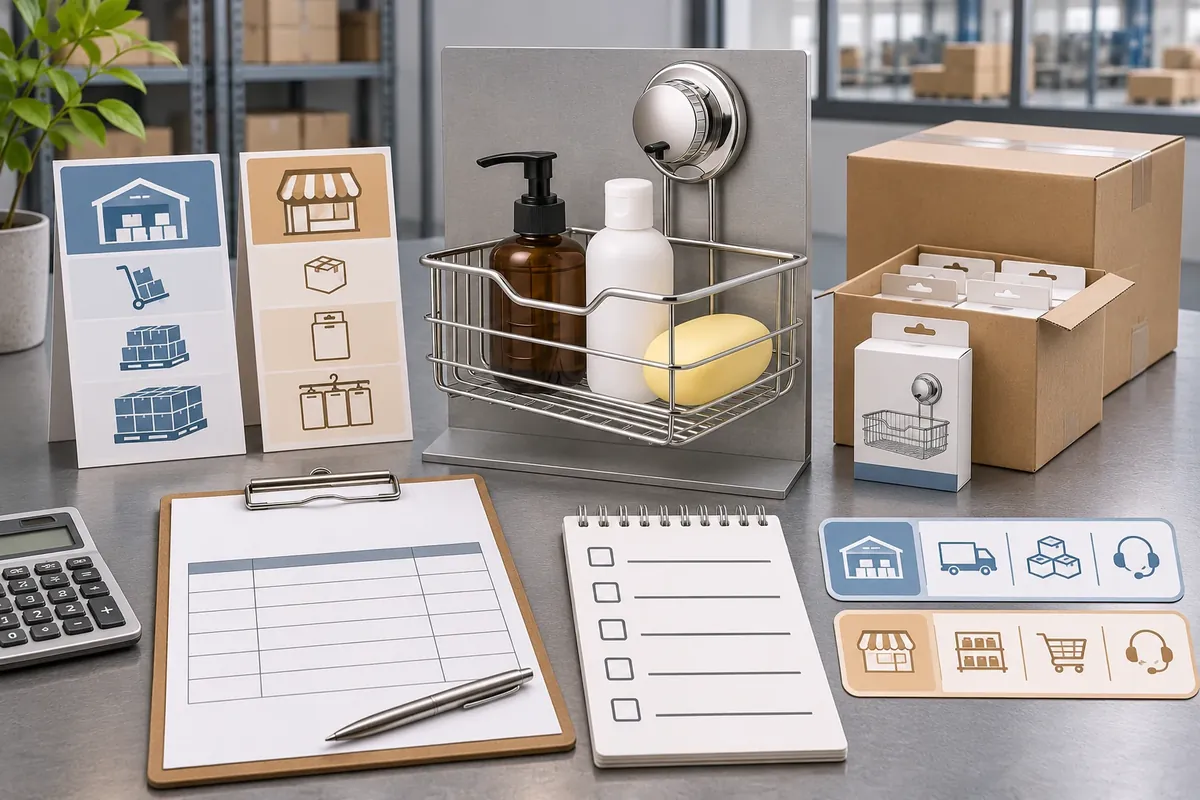
For a distributor choosing an assortment, wholesale vs retail is a channel decision that should be translated into customer type, order unit, fulfillment responsibility, and service expectations.
Sources
Discuss Your wholesale vs retail Requirements
Share the controlled drawing or sample, intended use and the specific question you are resolving. Koitor can discuss relevant metal hardware manufacturing scope and identify details that need confirmation for your project.
Fabrication pour compte de tiers / Marque de distributeur
Transformez ce guide d'approvisionnement en cahier des charges
Indiquez-nous le produit souhaité, ses dimensions, sa finition, la quantité commandée et vos exigences en matière d'emballage. Votre équipe recevra une analyse pratique de la faisabilité de la fabrication avant l'établissement du devis.



 English
 Español
 Português
 Français
 Deutsch
 العربية