
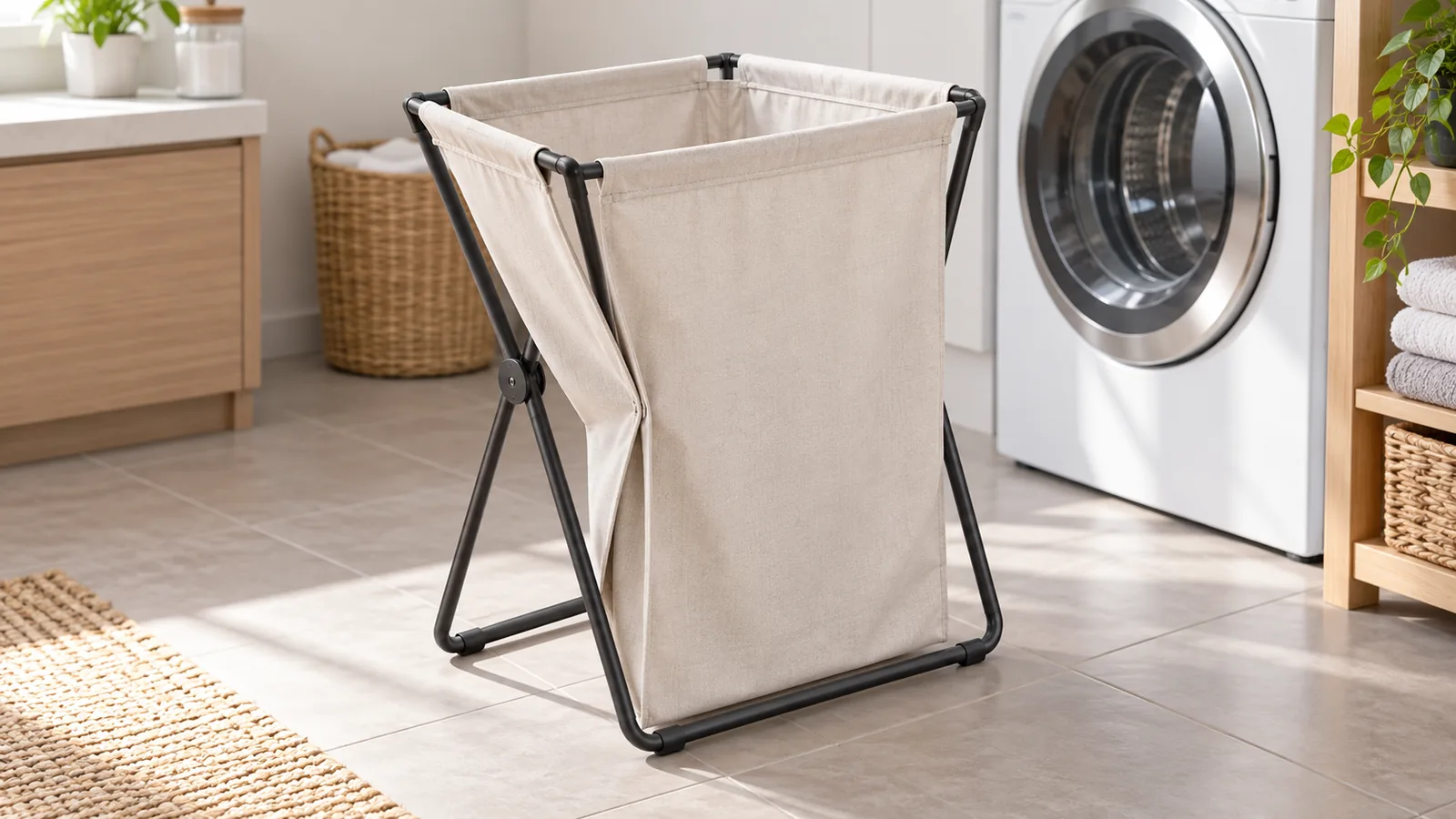
Wire laundry hamper frame contact point fabric tear risk should be reviewed at the metal-to-textile interface, at finished tube ends, and wherever the folding frame moves near the liner. Buyers should define the fabric contact areas, attachment method, intended fold path and sample checks with both the metal-frame supplier and textile partner. The goal is a clear, testable product specification—not an unsupported abrasion-life promise or an assumption that one frame-and-bag concept fits every liner.
Why can a metal frame wear through a fabric liner?
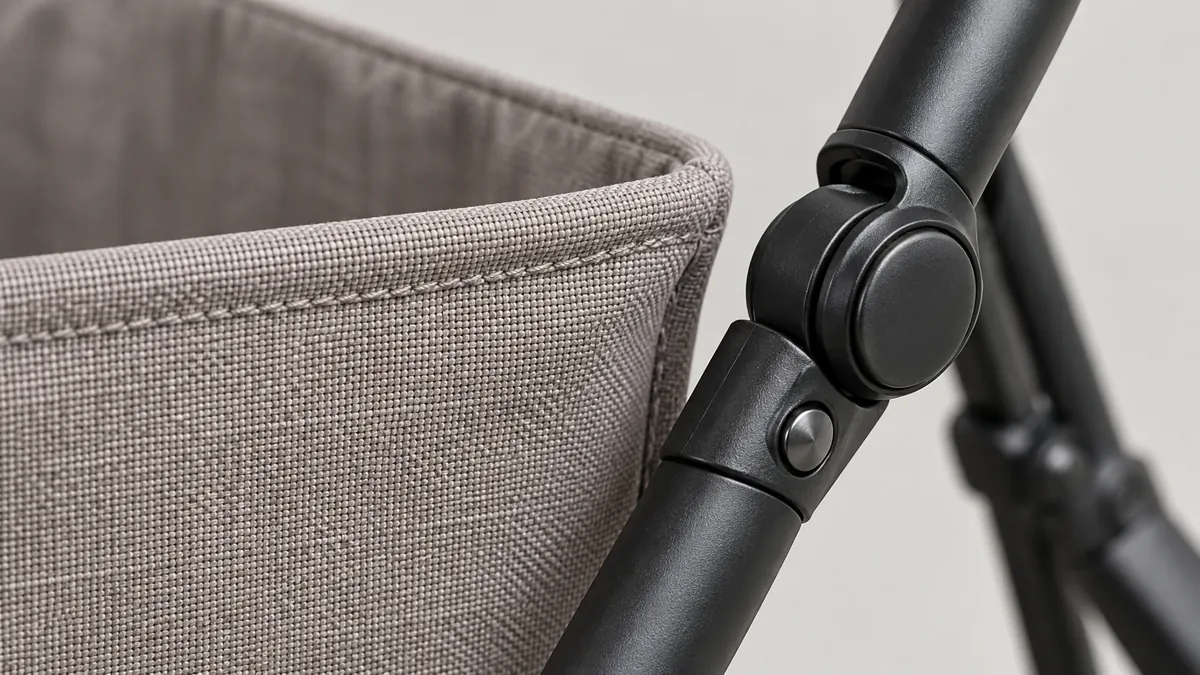
A fabric panel repeatedly rubbing a metal frame can experience local wear where pressure and motion meet. The contact may occur at a rail supporting the liner, a corner where the bag changes direction, an attachment point that pulls the textile tight, or a joint that shifts as the hamper opens. A smooth-looking tube is not proof that a particular fabric will last, because weave, coating, seam placement, tension and use pattern all affect the interface. Buyers should identify where contact occurs before deciding what to modify.
Exposed cut ends, burrs, weld transitions and abrupt changes in section can create more concentrated contact than a broad, smooth support. A liner edge may also migrate during loading, bringing fabric closer to a joint than intended. These are inspection questions rather than evidence that every metal frame has a defect. On a sample, trace the liner’s likely movement during use and folding, then examine both the metal surface and the textile for marks, snagging or displacement. Keep findings tied to the specific material and construction reviewed.
A folding hamper adds motion that a fixed basket does not have. Crossed or pivoting members can sweep past the liner, and a bag that hangs safely in the open position may enter a pinch area as the frame collapses. The buyer should consider the whole movement sequence—opening, loading, folding, storage and re-opening—not just a static photograph. If the textile supplier changes thickness or seam location, the contact behavior can change even though the metal frame drawing remains the same. Treat these components as an integrated development interface.
The source reports behind this topic are anecdotal examples of consumers noticing fabric wear against a metal frame and repairs that interfere with folding. They help identify questions worth asking; they do not establish a failure rate, root cause, material performance or Koitor customer experience. A buyer should use the reports to define a product review, then gather evidence from the actual intended liner and frame. This keeps a useful problem signal from becoming an unsupported claim about every laundry hamper or every supplier.
What should the frame-to-fabric drawing show?
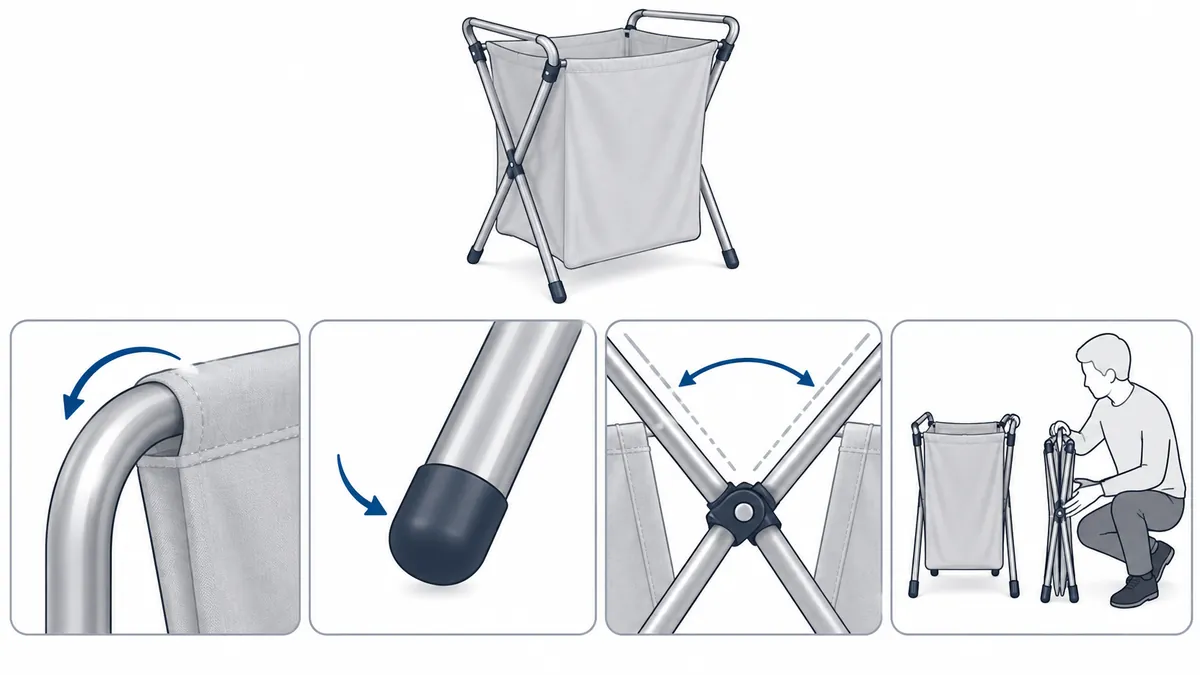
A useful drawing identifies the frame members that support or touch the liner, the direction in which the bag is loaded, and the attachment points that locate the textile. Show the tube or wire ends, corners, joined intersections and folding pivots near the fabric. A section view can clarify whether the liner wraps around a rail, hangs from loops, sits inside a perimeter or attaches with another method. Buyers do not need to dictate a specific construction if the design is still open, but they should make the intended interface visible.
Mark areas that should remain free of textile during movement, particularly near hinge paths or crossing members. The drawing can show open and folded states or include a simple movement envelope that the supplier and bag maker can review together. If the liner is removable, show how it detaches and whether clips, tabs or seams move during that action. Avoid treating a concept sketch as a tolerance drawing; the team should agree which details are fixed, which are adjustable and which still require sample learning.
Record the interface dimensions that matter to the actual design, such as opening width, frame perimeter, support spacing, liner depth, attachment-point locations and the clearance around a folding pivot. No generic numerical range is appropriate without a defined hamper geometry and textile. The buyer should supply the intended fabric sample, seam construction and any representative load shape relevant to fit. Where the fabric supplier owns sewing tolerances, establish how those values relate to the metal drawing so the two suppliers are not working from different assumptions.
If a coating, cap, sleeve or protective trim is proposed, define whether it is part of the metal supplier’s scope, the textile supplier’s scope or an approved purchased component. Such a feature can change fit, appearance, cleaning and assembly, and it should be reviewed in the complete product. Do not assume a soft covering solves abrasion without checking attachment security and fold clearance. The drawing and BOM should identify the released component and revision, while the buyer remains responsible for approving the final consumer-facing specification.
| Interface topic | What the buyer can define | Sample question |
|---|---|---|
| Contact geometry | Rails, corners and support zones | Does the liner stay seated without concentrated rubbing? |
| Metal ends and joints | Finished end treatment and joined transitions | Can fabric snag or migrate toward this area? |
| Folding sweep | Open/fold path and textile exclusion zones | Does fabric enter a pinch or moving contact area? |
| Attachment points | Location and removal method | Does the liner stay aligned yet remain serviceable? |
| Textile ownership | Fabric, seams and reinforcement by responsible vendor | Was the intended textile revision reviewed with the frame? |
How do finishing and attachment choices affect the interface?
Finishing decisions should start from the actual contact geometry and use environment. Deburring, edge rounding, polishing, a cap or a sleeve may be considered at different locations, but the suitable approach depends on the frame material, shape, finish and manufacturing sequence. A buyer should ask which surfaces are contacted by fabric and how the supplier will inspect them. Avoid generic claims such as snag-proof or fabric-safe unless the exact construction and validation support them. Visual smoothness is useful to review, but it does not predict long-term wear by itself.
Attachment methods also change where tension is concentrated. A liner held at a few loops may pull differently from one supported continuously around a top rail. A removable bag can shift toward an opening during folding if its attachment is loose; an overly tight attachment can complicate removal or washing. The chosen fabric, seam, reinforcement and frame geometry should be discussed with the responsible textile partner. Metal manufacturing expertise alone does not establish sewing capability or validate the textile’s abrasion performance.
A clean interface review compares at least the open, loaded and folded states of the intended product. Look for fabric trapped between members, stretched seams, exposed metal edges, shifting retainers and contact marks after the agreed sequence. If a protective feature is added, also check that it stays in place and does not create a new edge or interfere with folding. The team should document the observed condition and sample revision rather than conclude that an unquantified demonstration guarantees future performance.
How should OEM teams validate fit and folding on samples?
Build the first review around a production-intent frame and the intended liner, not an approximate bag with a different seam or fabric weight. Confirm that the liner seats as designed, remains attached during ordinary loading and can be removed if that is part of the product brief. Open and fold the hamper using the proposed sequence while observing the fabric near pivots, crossed members and corners. Record any contact that pinches, snags, rubs or pulls a seam. The result applies only to the configuration tested and should not be generalized beyond it.
Agree the review sequence before testing: set up the empty product, install the liner, load the buyer-selected representative items or a defined shape, remove the contents, fold the frame and reopen it. Repeat the sequence only to the level agreed for the sample stage; do not invent a cycle-life criterion. If a quantitative durability requirement is important, the buyer and relevant suppliers should define the method, conditions, sample size and acceptance criteria before making a claim. A casual folding demonstration is not an abrasion-life test.
Inspect both sides of the interface after the sample sequence. On the textile, look for pulled threads, bright rub marks, seam distortion, holes or movement of loops and tabs. On the frame, look for rough transitions, exposed sharpness, loose attachments or a protective part that has shifted. Photograph each observation with enough context to identify the location, and note whether it appeared while open, during motion or after folding. That makes corrective discussion more useful than a general statement that the hamper feels rough.
If a change is made, repeat the affected review using the revised frame and matching textile. A tube cap may alter the opening dimension; a moved seam may increase tension; a relocated pivot may change the sweep path. Approve the pair of revisions together rather than treating the frame sample as final while the textile remains provisional. If production is divided between vendors, designate who owns each action, how parts are identified and how the final assembled configuration is released for packaging.
How can buyers manage supplier scope and repeat-order changes?
Separate responsibilities clearly. The metal-frame supplier can address forming, joining, finishing, frame dimensions and metal-side sample observations within the confirmed project scope. A textile supplier can address fabric selection, seam construction, liner fit and sewing quality. The buyer or brand owner coordinates the assembled product requirements and approves the final consumer proposition. When responsibilities are not explicit, each supplier may assume the other controls the point where the materials meet, leaving a gap in fit review.
For an OEM sourcing package, identify the current frame and liner revisions, material descriptions supplied by the responsible vendors, approved colors or finish references, attachment method, packaging state and any optional accessories. Note which supplier provides the physical sample and who assembles it. If the fabric is sent separately, verify whether the frame is evaluated with the actual sewing version or merely a fit mock-up. These details help preserve a fair comparison when buyers collect quotations from different manufacturers.
Repeat orders need a check for changes on either side of the interface. A frame supplier may adjust a bend, joint location or finishing sequence; a textile partner may change fabric, seam allowance, reinforcement or attachment loop. Even when a change appears cosmetic, it can shift contact or folding behavior. Use the buyer’s normal change-approval process to decide whether a new sample is required. Do not imply that Koitor currently makes textile hampers; Koitor’s OEM home storage hardware context supports a discussion of relevant metal-frame requirements and sample coordination.
Buyer approval checklist
The primary expression wire laundry hamper frame contact point fabric tear should be treated as a buyer problem to investigate, not proof that a specific material is defective. During development, retain one approved assembled reference or a clear photo record showing the liner position, frame revision and folded configuration. When a complaint occurs later, compare the returned unit with that baseline and ask whether a supplier, material or assembly change happened. Preserve the fabric and frame observations separately so a corrective action addresses the actual interface. If a buyer selects a new liner vendor, recheck the combination instead of carrying forward an approval that applied to a different textile. The wire laundry hamper frame contact point fabric tear review should document the sample’s actual construction and any limitation in the validation performed.
- Identify all metal-to-fabric contact points and nearby joints in both open and folded states.
- Provide the intended liner material, seam and attachment revision for the fit sample.
- Review tube ends, corners, joined transitions and any caps or sleeves as part of the full assembly.
- Observe open, representative loaded, fold, storage and re-open actions without inventing a cycle-life claim.
- Record who owns metal, textile and assembled-product changes and which revision is approved.
Frequently asked questions
Can a metal frame alone prevent a fabric tear?
No. The outcome depends on the full interface, including tube ends, geometry, finish, textile, seam, attachment and folding motion. Review the actual combination with the responsible suppliers.
Should buyers specify a coating to make the frame fabric-safe?
Not as a generic fix. First identify the contact condition and materials. Any finish or protective part should be reviewed on the sample and should not be described as a durability guarantee without evidence.
Does a static open hamper sample prove folding clearance?
No. The frame should be reviewed through its intended movement and storage states, with fabric near pivots observed during folding and re-opening.
Who owns the textile abrasion test?
The brand owner should assign responsibility among the textile and frame suppliers and define a method if a quantified requirement is needed. A casual sample check is not a formal life test.
Does this guide mean Koitor manufactures laundry hampers?
No. It is an adjacent-category sourcing guide focused on metal-frame considerations. Koitor’s exact scope for any proposed product must be confirmed project by project.
Plan a buyer-ready product specification
Share your drawing, product range and sample requirements so the project team can review the relevant manufacturing questions.
Fabrication pour compte de tiers / Marque de distributeur
Transformez ce guide d'approvisionnement en cahier des charges
Indiquez-nous le produit souhaité, ses dimensions, sa finition, la quantité commandée et vos exigences en matière d'emballage. Votre équipe recevra une analyse pratique de la faisabilité de la fabrication avant l'établissement du devis.

 English
  Español
  Português
  Français
  Deutsch
  العربية