
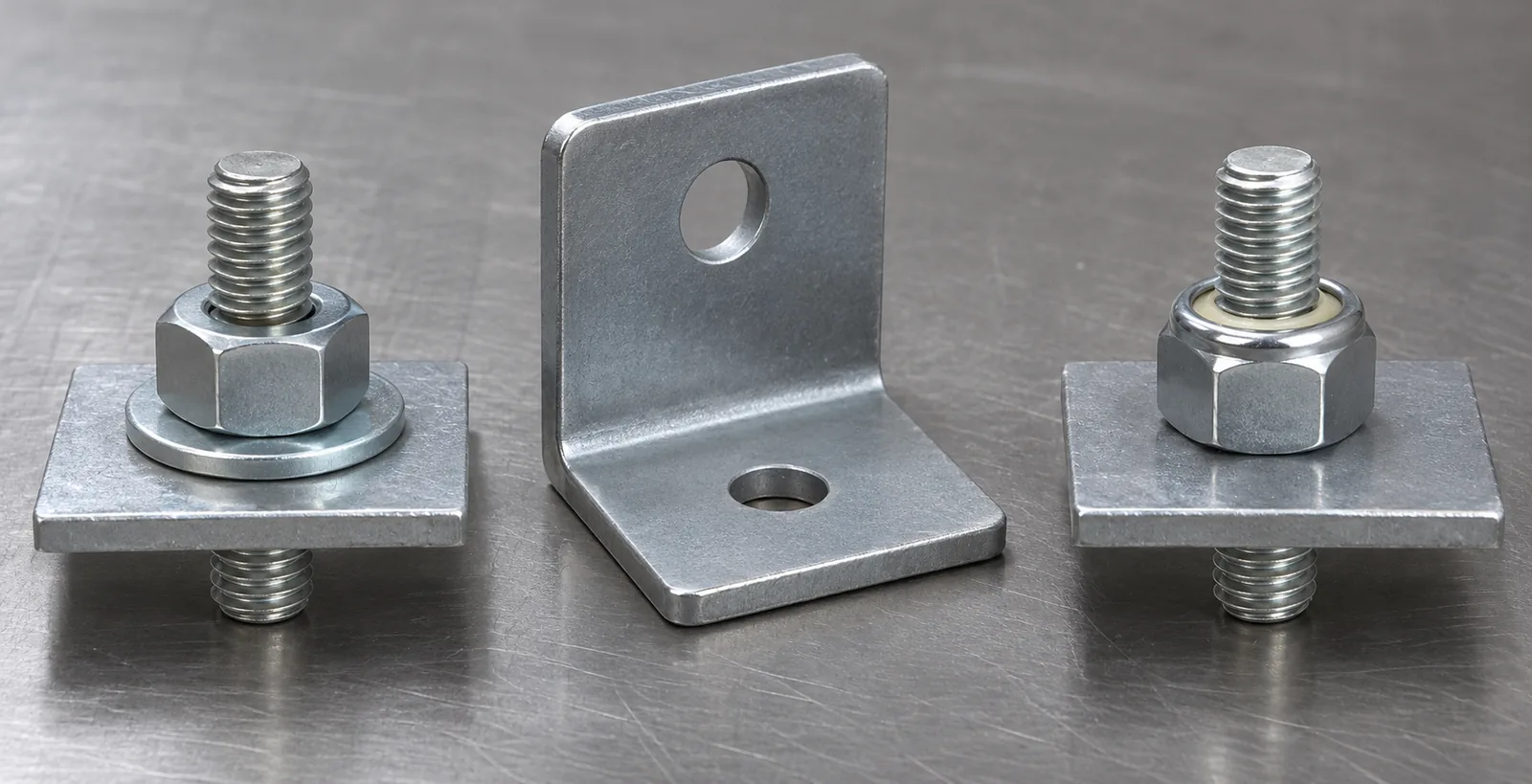
Lock washer vs lock nut is a comparison of where a locking feature sits in a fastener joint, not one universal device against another. A washer is a separate component in the bearing stack; a lock nut incorporates a retention or locking feature in or around the nut design. Both labels cover different mechanisms, and some products combine a nut with a captive washer. The buyer should identify the actual joint, mating surfaces, fastener design and the intended requirement before treating the parts as alternatives. Neither name by itself proves that a joint will resist every loosening condition or preserve its preload.
For an importer sourcing metal storage hardware or an assembled product, the practical starting point is to mark where the intended action occurs: at the threads, at the bearing interface, or through a combined design. Then confirm the fastener and washer types on the drawing and sample. A supplier should explain which components are included and which evidence applies to the actual assembly. Avoid adding, removing or stacking locking parts without an approved joint specification.
What problem does a lock washer vs lock nut decision solve?
The comparison helps buyers understand a supplier’s fastener proposal and avoid assuming that two different parts perform the same function. “Locking” can refer to different designs. A buyer needs to know which interface is affected and which assembly requirement is being discussed before approving a component change.
In a hypothetical metal bracket assembly, a bolt passes through a plate and engages with a nut. A separate washer might sit beneath the bolt head or nut to spread contact or to provide a particular locking feature. Another proposal might use a nut with an integrated retention design. Some assemblies include a nut and a washer captured together. These are distinct part arrangements even if a quotation describes each one with a short phrase such as “anti-loose fastener.”
The commercial question is therefore not simply which item has “more locking.” It is what the design must retain, what the assembly controls, and what the buyer has agreed to verify. A joint may need to resist nut rotation, maintain preload, protect a bearing surface, fit a limited space, or satisfy another requirement. Those outcomes do not automatically follow from the word “lock.”
The lock washer vs lock nut review should begin with a cross-section or assembly sketch. Mark the bolt head, nut, washer and clamped parts in their actual order. Then label where each proposed feature acts. A feature in the thread region and a feature at the bearing interface are not interchangeable simply because both appear in a catalog under a locking heading. The sketch also helps expose whether a “washer” is a loose part, a captive element, or part of another assembly. This is a practical specification exercise, not a test result. It gives the supplier and buyer a shared picture before a quote or sample is treated as equivalent.
The exact term matters during sampling and production too. If the buyer approves a joint with one washer and one nut, changing to a captive-washer nut affects the bill of materials and potentially the bearing stack. A product may still assemble, but the change should be visible and reviewed. The approved drawing, component list and sample should describe the same arrangement.
What does each label mean in a fastener joint?
A lock washer is a separate component placed in the joint’s bearing stack. “Lock washer” itself describes a broad family, not one universal shape or mechanism. A lock nut is a nut incorporating a feature intended to provide retention or resistance to turning; this too covers different designs. A nylon-insert prevailing-torque nut acts through a different mechanism than a paired wedge-locking washer. Some nut designs have a captive washer, so the categories can overlap in a product assembly.
| Comparison field | Lock washer | Lock nut | What the buyer should confirm |
|---|---|---|---|
| Position in the assembly | Separate element beneath a fastener head or nut | Nut itself includes a specified retention feature | Exact order and orientation in the drawing |
| Where the feature acts | May act at or near a bearing interface, depending on type | May act through a thread-related or integrated feature, depending on design | Product type, geometry and manufacturer description |
| Part count | Adds a separate component unless captured | May replace an ordinary nut; some designs add a captive washer | Bill of materials and included kit |
| Bearing surface | Washer thickness and face affect stack height and contact | Nut geometry and any integrated washer affect stack height | Mating materials, clearance and contact surface |
| What it proves | The name alone does not prove a required joint outcome | The name alone does not prove a required joint outcome | Project-specific assembly basis and acceptance evidence |
This distinction between feature location and joint outcome is the core of the comparison. A buyer may use a washer for a bearing-surface purpose while separately selecting a nut feature. The parts are not always mutually exclusive. A combination can be intentional, but it should be specified rather than assembled by guesswork.
Product listings from fastener suppliers illustrate how lock nuts may be offered as nylon-insert, jam or captive-washer variants. A wedge-locking washer maker describes a paired cam-and-serration approach for its own product family. These examples show why buyers should request the actual part designation rather than infer a universal function from the category name. They do not establish that any design suits every product, vibration level or assembly method.
The examples also show why the word “locking” must be attached to the mechanism. A nylon-insert nut is a nut design whose retention feature is associated with its thread engagement. A paired wedge-locking washer set is a washer design with coordinated parts and a particular bearing-side arrangement. A jam nut uses a different configuration again. These descriptions identify the broad location of the feature, not a recommendation for a specific product. The buyer should rely on the actual fastener maker’s documentation for the selected model and should not combine elements from different designs unless the joint engineer approves the stack.
When a supplier uses a shorthand label, ask for a part number, product drawing or manufacturer description. The record should distinguish the general family from the specific item selected. If a captive washer is supplied, note that it is integrated with the nut; if separate pieces are supplied, list each one. This small distinction can prevent inventory substitutions and make incoming inspection more reliable. It also helps the buyer detect whether an apparent one-piece product is actually a combination that changes the stack height or the order of assembly.
How should buyers distinguish nut retention from preload?
Nut retention and joint preload are related but different questions. Retention concerns whether a nut is likely to rotate or back away under specified conditions. Preload concerns the clamping force established in the joint. A device or supplier statement about one does not automatically prove the other. The buyer should identify which result matters and what evidence applies to the actual assembly.
This distinction prevents a common sourcing shortcut: treating “lock” as a guarantee that the joint will remain secure in every environment. The bolt length, thread engagement, fastener grade, clamped materials, surface finish, joint stiffness, assembly condition and use loads all influence the behavior of a fastener joint. This article does not prescribe torque, stacking, reuse counts or a universal test method. Those require a defined assembly and the instructions of the responsible fastener manufacturer or engineer.
When reviewing a supplier proposal, ask:
- Which part is intended to resist rotation or loosening, and where does its feature act?
- Is the requirement to maintain a particular clamping condition, prevent visible rotation, retain a component, or something else?
- What fastener, nut and washer design is being proposed by part number or drawing?
- Which assembly instructions and inspection method apply to this joint?
- Does the evidence address the actual mating materials and service condition?
- What conclusions are outside the evidence or supplier statement?
Do not ask the supplier to turn an ambiguous phrase into an invented test result. If joint retention is a critical performance requirement, engineering should specify the condition, method and acceptance rule before the sample is assessed. A drawing that only lists a “lock nut” may not communicate the buyer’s full requirement.
The acceptance plan should be proportionate to the joint risk. For a noncritical appearance-only assembly, the buyer may need to confirm component identity, fit and visible finish. For a joint that carries a defined load or affects product function, engineering may need a documented assembly instruction and a project-specific verification method. That method should name the condition, the fastener configuration and the pass rule. A product-family label does not create this plan, and a standard catalog statement cannot replace it. If the supplier’s evidence only covers a component alone, record that it does not necessarily establish performance of the full joint. Any test should be designed by the responsible technical party; this article supplies no torque values, stacking sequence or vibration test prescription.
What should be specified on the drawing and sample?
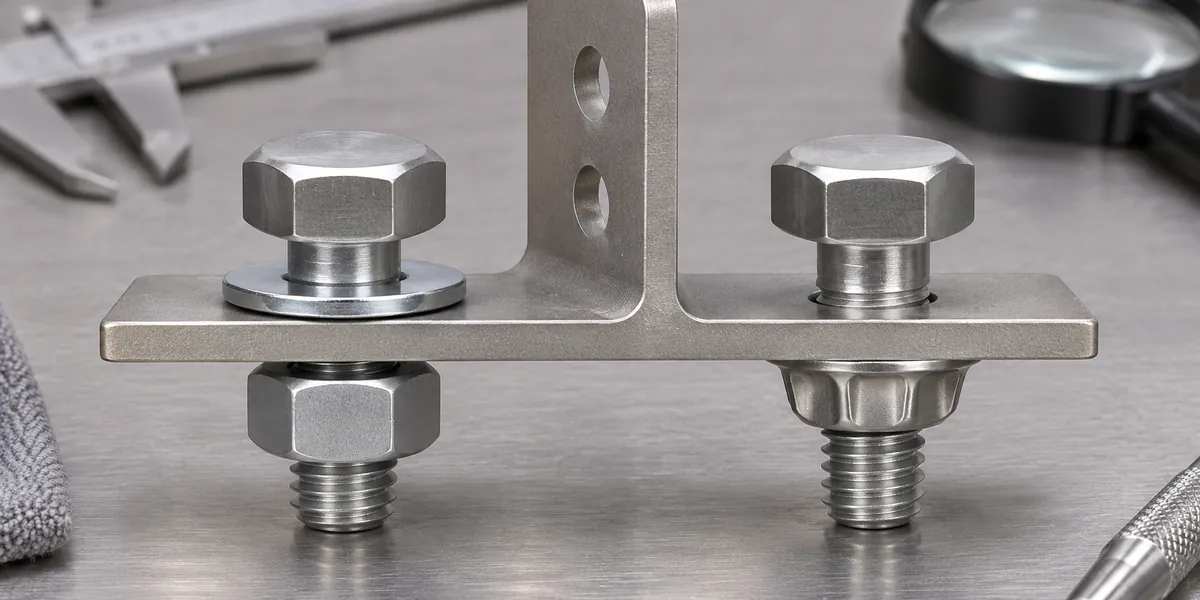
The drawing or BOM should identify the actual fastener arrangement clearly enough to avoid substitution by a similar-sounding category. Name the nut and washer design or approved part numbers when known, show the stack order, and state dimensions or material requirements that affect fit. If a supplier is expected to propose a suitable type, define the product condition and the performance question that needs review.
For a sample, compare the joint against the drawing and record the configuration. Note whether the washer is separate or captive, where it sits, which way it faces if orientation matters, and whether a changed design affects stack height or clearance. Verify the components supplied match the agreed list. A visual review can detect a missing part or obvious mismatch, but it does not itself establish torque, fatigue life, vibration behavior or preload retention.
If two suppliers quote different designs, compare them on a common basis. One may provide a separate washer and standard nut; another may propose an integrated or prevailing-torque design. Ask each to clarify the included parts, assembly instructions, part identification and supporting evidence. Do not compare cost alone and assume functional equivalence. If the buyer accepts an alternative, update the approval record and BOM so reorders do not revert to an unclear earlier stack.
Drawing control is particularly useful where a joint sits behind a cover or inside a product. The buyer may not see the part in normal use, but it still affects assembly sequence and serviceability. If the joint must be disassembled, the supplier’s guidance on reuse or replacement should be documented from the actual fastener source. This article does not state a general reuse count; products and manufacturer instructions vary.
For products that may be repaired or serviced, decide who will identify replacement hardware. A service part should match the approved thread, dimensions and locking feature, or be reviewed as a change. A generic washer pulled from a maintenance bin may look similar but can alter the stack or remove an intended feature. Include the fastener designation in the spare-parts list when the component is important to reassembly. This is a document-control decision; it does not imply that every joint is intended to be serviced or that every component can be reused after removal.
For broader hardware sourcing, Koitor’s OEM home-storage hardware overview explains the project context for custom metal products. It does not serve as a fastener engineering specification. The buyer should send the joint drawing or sample through the Página de contacto do Koitor when the metal component, mounting layout or included hardware needs project review.
What sourcing mistakes should buyers avoid?
The first mistake is treating all lock washers as one mechanism or all lock nuts as another. A category label can cover different products. The buyer should identify the actual design rather than assume that “lock washer” uniquely means a split-ring component or that “lock nut” uniquely means a nylon-insert type.
Other errors include:
- Assuming a washer and nut cannot be combined. Captive-washer products exist; the actual BOM and drawing determine the assembly.
- Treating rotation resistance as proof of preload. These are related but different outcomes, and evidence must match the question.
- Adding multiple locking components by habit. Extra parts can change stack height and bearing surfaces; the joint designer should approve the arrangement.
- Copying a torque value from a generic chart. Torque depends on fastener and joint conditions; use the responsible manufacturer’s instructions and project basis.
- Assuming a product works in every vibration condition. No universal security guarantee follows from a lock label.
- Ignoring the mating surface. Coatings, material hardness, washers and contact area can affect a joint’s behavior and appearance.
- Approving a sample without a clear part identity. A visually similar nut may have a different thread, insert or locking feature.
- Failing to document replacement rules. The buyer should clarify which components require replacement or inspection after service using actual product instructions.
- Leaving assembly order implicit. An assembler may use an incorrect stack if the sequence and orientation are not stated where necessary.
- Using a general term where the joint is critical. A high-risk joint needs a defined requirement and evidence plan, not only a purchase description.
Supplier comparisons should also separate quoted component scope from engineering responsibility. A hardware manufacturer may source and assemble a fastener, but the buyer should confirm who selected the design and who provides technical evidence. Do not infer an independent test, certification or vibration analysis from a supplier’s generic product statement.
How can an OEM supplier support a fastener review?
A metal hardware OEM can review how the specified fastener fits the product geometry, assembly sequence and buyer’s drawing. Koitor Hardware is a family-owned factory focused on custom bathroom and home-storage hardware. Its role in a project discussion is to clarify the metal product, sample, mounting layout and supplied component scope within confirmed capabilities. It does not imply a specialized fastener laboratory or a universal locking-performance guarantee.
During small-batch product development, the buyer can provide a joint detail, assembly sample, fastener reference and the condition that matters. The supplier can identify whether the question concerns metal thickness, hole geometry, access for assembly, included hardware or a component that needs separate evidence from its manufacturer. This boundary makes it easier to route a technical question to the right party.
The supplier discussion can also clarify whether the fastener is customer-specified or supplier-proposed. If the buyer’s drawing names an exact part, the supplier should confirm whether the part can be procured and included as specified. If the buyer has left the type open, the responsible engineering contact should make the selection and document its basis. This prevents a commercial substitution from being mistaken for a design decision. If a fastener maker changes the product or its instructions, the project team can then determine whether the buyer’s approval needs to be refreshed.
If the fastener changes after the sample is approved, record the new part and assess what the change affects. A nut with a captive washer may change the stack, while a different retention feature may change the assembly instructions. Even if the external appearance is similar, the change should not be silent. Update the drawing or BOM and decide whether a new sample or verification is needed before bulk production.
For a project quotation, include the target quantity, product drawing, finish, packaging and any private-label requirements alongside the joint detail. MOQ and schedule depend on the complete product and project scope, so confirm them for the specific request. The purchase documentation should separate the metal hardware requirement from any specialized fastener performance claim.
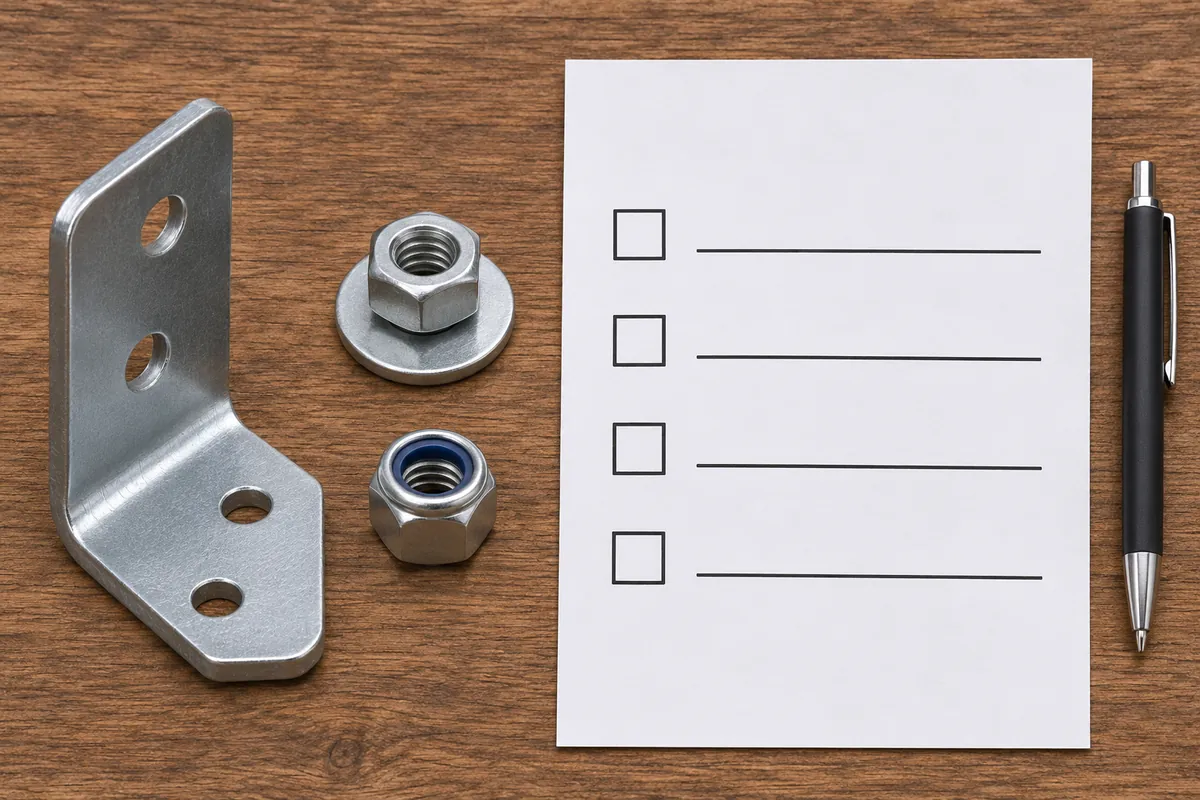
Buyer checklist before requesting a quotation
- Identify the actual nut and washer types or provide approved part numbers.
- Mark the fastener stack order and the location of each locking feature.
- State the joint’s function and the outcome the buyer needs to verify.
- Confirm thread, dimensions, materials and mating surfaces from the drawing.
- Clarify whether any washer is separate or captive.
- Request the responsible manufacturer’s assembly instructions and product evidence.
- Separate nut rotation resistance from any preload requirement.
- Define inspection or testing conditions before asking for a performance commitment.
- Record replacement and service guidance for the selected fastener design.
- Update the BOM and sample approval if a substitute is accepted.
Perguntas frequentes
Is a lock washer the same as a lock nut?
No. A washer is a separate element in the bearing stack, while a lock nut incorporates a retention or locking feature. Both labels cover more than one design, and combined products also exist.
Can a lock washer be used with a lock nut?
Some assemblies intentionally use more than one component or a nut with a captive washer. The approved drawing and fastener instructions should define the stack; buyers should not add parts by assumption.
Does a lock nut guarantee that a fastener cannot loosen?
No. The name does not guarantee performance under every condition. The exact design, mating parts, assembly basis and applicable evidence determine what can be concluded.
Does resistance to rotation prove that preload is maintained?
Not automatically. Rotation resistance and preload retention are distinct outcomes. If both matter, specify and review evidence for both on the actual joint.
Can I reuse every lock nut or washer after disassembly?
No universal reuse rule applies to every design. Check the actual fastener manufacturer’s guidance and project requirements, then document whether a part should be replaced or inspected.
Trabalhe com a Koitor Hardware
Review a Fastener Joint in Your Hardware Drawing
Share the metal drawing or sample, the proposed washer and nut, and the joint requirement you need to clarify. Koitor can discuss the product geometry and supplied hardware scope; the fastener manufacturer should confirm product-specific technical evidence.
OEM / MARCA PRÓPRIA
Transforme este guia de fornecimento num resumo do produto
Indique o produto pretendido, as dimensões, o acabamento, a quantidade a encomendar e os requisitos de embalagem. A sua equipa receberá uma análise prática da viabilidade de fabrico antes da apresentação do orçamento.
 English
 Español
 Português
 Français
 Deutsch
 العربية