

An aluminum vs stainless steel comparison is useful only after the buyer identifies the actual alloy or grade, product form, geometry, joining route, finish and service conditions. Aluminum often provides lower material mass for the same volume, but that fact does not establish the mass, stiffness, strength, corrosion behavior or suitability of a finished bathroom or home-storage assembly. Compare the two materials first at equal geometry to understand a material substitution, then at equal product function to understand what a redesigned part would require. Approve the actual drawing, components and sample rather than choosing from a generic material table.
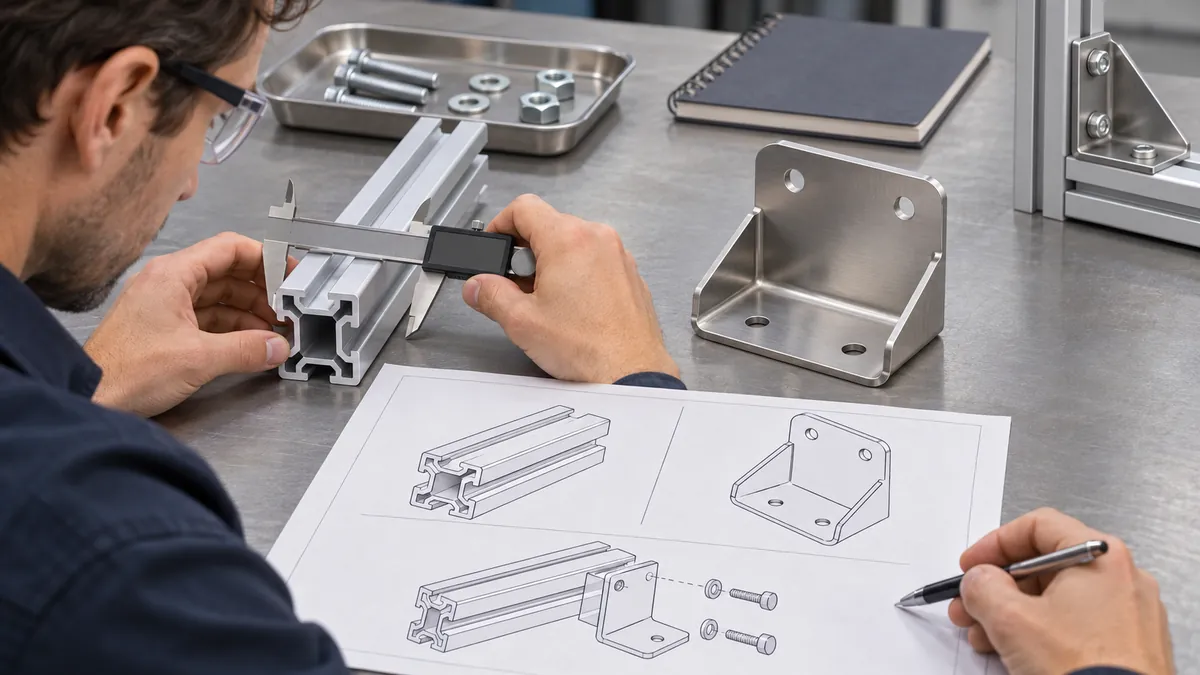
For a hardware buyer, the material choice is a decision about two proposed material-and-process systems, not two names in isolation. A formed tube, a stamped mounting plate, a welded wire basket and a purchased fastener do not behave as interchangeable test coupons. Each has a geometry and manufacturing history that affects what the buyer receives.
Start by naming the component. Is the comparison about a wall bracket, rail, shelf, hook, tube, decorative cover or complete product? Record which parts are changing and which remain fixed. If only a cover changes from stainless to aluminum while the screw, backing plate and coating remain unchanged, the assembly question is different from replacing every metal part.
Then identify the buyer’s decision. A procurement team may want to reduce shipping mass, meet a finish direction, match an existing product line, simplify a profile, or clarify a supplier quotation. Each purpose changes what should be held constant during evaluation. A lighter raw material is relevant to mass, but it is not by itself evidence that the final assembly satisfies the same use requirement.
The material family name is also incomplete; that is why an aluminum vs stainless steel decision must identify the grade and form. “Aluminum” can refer to different alloys, tempers and forms. “Stainless steel” includes multiple grades and product conditions. The Australian Stainless Steel Development Association’s grade-selection guidance emphasizes selecting a grade according to the required properties and environment. That is a useful reminder to make the designation and application explicit; it does not select a grade for every bathroom product.
An aluminum producer’s data sheet illustrates why the designation matters. Hydro’s 6061 alloy sheet describes particular forms and tempers, notes that severe bends may need a different condition, and warns that a heat-treated region can lose strength after welding. Those statements apply to the specified alloy and conditions in that sheet. They do not establish a universal aluminum rule or a capability claim for Koitor.
Use both comparisons, because they answer different questions. An equal-geometry comparison holds the component shape and dimensions constant to isolate what changes when material is substituted. An equal-function comparison allows each candidate to use a different geometry, if necessary, to meet the same defined product requirement. Mixing the two approaches makes conclusions difficult to interpret.
How should buyers compare the two materials?
For a hardware buyer, the two material proposals represent a decision about two proposed material-and-process systems, not two names in isolation. The comparison should begin with the component and buyer objective.
Should you compare equal geometry or equal function?
Record A: hold geometry constant
For Record A, use the same nominal envelope, wall or sheet thickness, feature positions, joint layout and interface wherever technically meaningful. Identify the grade, temper or condition for each candidate and document any difference in surface treatment. Compare the actual parts or controlled drawings, not a catalog value chosen from an unspecified grade.
This comparison can show whether the material substitution changes the mass of a particular component and whether it creates a forming, joining, finishing or interface issue that needs review. It cannot automatically answer whether the resulting products have equal capacity or service life. Equal dimensions do not guarantee equal performance, and a single property value does not define the behavior of a finished assembly.
For example, a designer comparing two brackets with the same outline might find that one proposed material has lower mass. The buyer still needs to ask whether the part deflects acceptably under the intended use, whether the attachment and substrate govern the outcome, whether the joint can be made consistently, and whether the finish meets the appearance requirement. No one material label supplies those answers.
Record B: hold the product requirement constant
For Record B, state the required function before comparing candidate designs. The function might involve a specified fit, permitted movement, intended installation interface, appearance sample or user-defined load case. Do not invent an engineering acceptance value when the product owner has not supplied one. Ask the responsible engineer or buyer to define it.
Then let each material proposal use its actual section, reinforcement, bend, joint and finish. Record all changes. One candidate may use a different section or an added component; another may retain the original envelope. Those changes affect part count, tooling, assembly, packaging and inspection. The comparison now concerns complete proposals rather than a material swap alone.
Do not call Record B “equivalent strength” unless the acceptance method and evidence support that description. A redesigned part may satisfy the buyer’s stated function while differing in weight, appearance, assembly sequence or cost. The buyer should decide which differences are acceptable and record them before sample approval.
| Equal geometry | Envelope, dimensions, feature locations and joint concept where feasible | Material designation and its required process details | What changes when this part is substituted in this shape? | Equal capacity, lifetime, corrosion resistance or cost |
|---|---|---|---|---|
| Equal function | Defined product requirement and acceptance evidence | Section, reinforcement, joint, finish and other design choices | What complete proposal can meet the same stated need? | That either material is universally superior |
| Finished assembly | Mating parts, intended environment and approved revision | Only declared alternatives under review | Does the assembled sample match the controlled proposal? | Performance beyond the actual inspection or test performed |
The comparison record should identify grade or alloy, product form, condition, dimensions, manufacturing route, finish and interfaces. Leaving any of these blank can make a quotation or sample comparison appear more precise than it is.
What material details belong in the comparison?
Identify grade, alloy and condition
For an aluminum proposal, request the alloy and temper or condition where applicable, together with the product form. A producer sheet for 6061 distinguishes tempers and forms and explains that formability can vary with condition. The correct conclusion is not that every part must use a particular temper; it is that the designation needs to match the intended forming and joining route and be confirmed by the responsible supplier or engineer.
For stainless steel, state the grade and supplied condition relevant to the part. Do not assume that every stainless grade shares the same corrosion behavior, forming response, appearance or procurement availability. A grade is only one input alongside the environment, surface state, design details and care conditions. If the finished product includes more than one stainless grade, identify which grade applies to each component.
If the vendor proposes an alternative designation, treat it as an engineering change, not a harmless wording update. Ask for a written comparison of the original and alternative material, the reason for the change, affected processes, finish implications and any evidence needed for approval. Keep the buyer’s acceptance in the revision record.
Identify the form and geometry
Sheet, tube, wire, bar, extrusion and casting are different product forms. This article does not claim Koitor supplies every form or makes every starting material. It asks the buyer to state what is being purchased or fabricated and who owns each transformation. A general aluminum-vs-stainless web article may discuss fabrication broadly, but its service capabilities do not transfer to another factory.
Geometry includes section shape, wall or sheet thickness, bends, holes, slots, welded joints and access for assembly. A change in thickness alone can alter clearances or how adjacent parts fit. A change in profile may alter stiffness and packaging. A different joint can affect finishing access and visible appearance. Put the important dimensions and cosmetic faces on the controlled drawing rather than relying on an adjective such as “heavy duty.”
Check where the part carries or transfers load in the assembly. A shelf, rail or mounting plate may depend on multiple parts, fasteners, substrate, spacing and installation. The material in one bracket may not be the limiting feature. If a requirement is safety-related or structural, assign it to a competent engineering review and a defined verification method; do not infer it from visual thickness or a material comparison table.
Identify joining and mixed-material interfaces
For a welded aluminum component, the alloy, temper, joint design, filler choice and heat-affected region can matter. Hydro’s 6061 document specifically notes a potential reduction in strength in the welded region of -T6 material. That is an example of why a parent-material data sheet is not a finished-weld approval. A project must confirm the actual specification and joining procedure with its responsible manufacturing and engineering parties.
For stainless parts, the buyer should also describe the joint, appearance face, finishing sequence and cleaning expectations. Welding, grinding and polishing can change the visible surface. Do not assume a hidden joint will remain hidden after assembly or that a material family label sets an acceptable weld appearance. Define inspection zones and sample references if appearance matters.
When aluminum contacts stainless or another metal, do not assume that a washer or coating automatically resolves every galvanic-corrosion concern. The contact geometry, electrolyte, coating continuity, fasteners, water retention and maintenance context affect the interface. Refer to the project’s corrosion and interface review. Koitor’s existing galvanic-interface resource provides a separate discussion of that topic; this article focuses on the broader material comparison.
Finish and service conditions should be specified as part of each candidate, because the name of the base metal does not describe the complete exposed surface. A finish affects appearance and can interact with the environment, cleaning routine, joints, edges and assembly.
Record the finish system, color or appearance reference, gloss or texture where relevant, and the faces that matter. Identify whether the part is anodized, plated, coated, brushed, polished or supplied in another finish only when that is what the project actually calls for. Do not substitute a finish name for an acceptance sample or a written specification. Ask who applies the finish and how the finished part is inspected.
Define the intended environment using concrete conditions: indoor or outdoor location, splash or standing water, exposure to cleaning products, frequency of cleaning, contact with dissimilar metals, coastal or industrial exposure if applicable, and whether water can remain trapped. Avoid treating “bathroom” as one uniform corrosion environment. A dry guest bathroom, a continuously wet shower, a hotel washroom cleaned with strong chemicals and a covered outdoor area create different questions, but the exact performance still needs evidence for the selected product.
Material and finish selections should also account for appearance over the product’s actual life. A color match on two different substrates may require separate process controls. A replacement component may not match a legacy finish even if the finish description sounds identical. If a buyer needs a close visual match, provide the master sample, lighting and viewing conditions, acceptable variation, and the surfaces that are visible in the installed assembly.
Do not claim that aluminum is corrosion-proof or that stainless steel cannot corrode. The relevant material, grade, fabrication, surface condition, contamination, joint and service environment all matter. Likewise, do not promise a lifetime based on a short exposure result or on the word “stainless.” If a specification calls for a test, define what is tested, the method, acceptance criteria and the limits of what the result demonstrates.
Compare evidence against a controlled revision and the same decision criteria. A sample can help reveal material, fit, finish and assembly questions, but it is not automatically proof that mass-production parts will match unless the production controls and acceptance plan are agreed.
First, align the quotation line items. Ask each supplier to state material designation, form, dimensions, finish, bought-in parts, joining and assembly assumptions, packaging and exclusions. If one quotation prices a fabricated assembly and another prices only the primary component, their totals are not comparable. If one supplier proposes a substitute, list it explicitly rather than comparing it as though it were the specified material.
Second, match sample identification to the specification. The sample should be traceable to a drawing revision and material/finish description. Record the sample’s dimensions, interface, visual conditions and any test that was actually conducted. Do not infer a hidden alloy or a weld procedure from appearance. Request applicable material documentation when the project needs it and evaluate its scope and traceability.
Third, state what changes require approval. Material, thickness, supplier, finish, joint, fastener and packaging changes can all affect the delivered product. The change-control agreement should identify who proposes a change, which documents are revised, whether a new sample or review is required, and which party gives written approval. A verbal assurance is difficult to compare later with the production lot.
| Drawing and bill of materials | Same revision, component scope and material designation | Approved files, revision date and explicit substitutions |
|---|---|---|
| Material evidence | Grade/alloy, temper or condition, form and traceability as required | Document name, supplier and covered items |
| Finish sample | Color, texture, visible faces and acceptance conditions | Master sample reference and known limitations |
| Assembly sample | Fit, interface, fasteners, visible joints and intended installation | Observations, dimensions checked and open questions |
| Test report, if required | Method, specimen, conditions, acceptance and scope | What the test proves and what it does not prove |
| Quotation | Same quantity basis, packaging, bought-in items and exclusions | Assumptions and items requiring clarification |
Avoid asking a supplier to “confirm equal quality” without defining the comparison. State the actual decision: same material on all parts, an approved alternative, an appearance match, a defined function, or a specific acceptance check. The more precise the buyer’s request, the easier it is to see where a supplier response remains incomplete.
The most common analytical mistake is to compare broad labels while ignoring the part. Other mistakes come from mixing measurement bases, treating a supplier article as independent proof, and assuming that a successful sample automatically defines production acceptance.
What mistakes create weak aluminum and stainless comparisons?
Choosing a winner from density or a generic strength number
Density can help compare material mass for a known volume. It does not directly tell the buyer how heavy the complete product will be after the geometry, joining, reinforcement, fasteners and finish are considered. A generic strength number can refer to a specific grade, product form, condition and test direction. It cannot be transferred to an unspecified welded, bent or assembled component.
The correct method is to state the part and comparison basis, then request evidence for the finished design. If the goal is lower mass, weigh or calculate the specified components and assembled product on an agreed basis. If the goal is a performance requirement, define that requirement separately and select an appropriate engineering verification plan.
Treating every stainless grade or aluminum condition as equivalent
A buyer may see “stainless” on a quotation and assume a known grade. Another buyer may see “6061” and assume the material will retain the same condition after every forming or joining step. Both are incomplete assumptions. Confirm the written designation, component coverage, supplied condition and applicable manufacturing sequence.
How do finish and service conditions change the decision?
Assuming the same coating process yields the same appearance
Substrate, preparation, geometry, edges and process controls affect a finish. A color reference does not necessarily produce identical appearance across different materials or routes. If the buyer requires a close visual result, approve samples representing the actual candidate construction and define visible areas.
Comparing quotations with different boundaries
Different offers may include different components, fasteners, finishing steps, inspection, labels and packaging. Build a line-by-line comparison before concluding one material is cheaper. Ask suppliers to identify exclusions and assumptions. Avoid publishing or relying on an unsupported price premium or lead-time promise for either material family.
How should a buyer compare sample and quotation evidence?
Treating a sample as a guarantee without controls
A pre-production sample supports a decision, but it needs an agreed relationship to production. Define the approved revision, materials, finish, inspection points and change-notification rule. Where production consistency matters, discuss the control plan and records rather than relying on “same as sample” as a complete instruction.
What can a small-batch OEM factory contribute to the review?
Ignoring the rest of the assembly
Fasteners, inserts, brackets, pads, adhesives, mounting substrate and packaging may be supplied by different parties. Their scope should be clear. The main material of a visible rail cannot compensate for an unsuitable mounting interface or an unreviewed mixed-metal contact. Trace each critical part to its responsible supplier and approval record.
A specialized OEM manufacturer can clarify manufacturing scope and review how a specified drawing or physical sample relates to fabrication, finishing, assembly and packaging. Koitor Hardware is a family-owned bathroom and home storage hardware factory with direct project communication. The relevant discussion is specific to the product and approved project scope; it is not a promise that every alloy, process, test or bought-in component is available in-house.
For a small-batch development project, share the assembly drawing, material proposal, finish target, annual or trial quantity, critical dimensions and sample expectations. Ask the factory to identify questions about bend access, joint visibility, finishing sequence, assembly interfaces and packaging. A useful response should separate confirmed capabilities from items that require a supplier, subcontractor or engineering review.
Small-scale production can be relevant when a buyer is developing a product, validating a range or placing a trial order. Quantity flexibility is not a reason to skip specifications. The buyer still needs a controlled drawing, clear revision, acceptable sample and agreement on how material and process substitutions are handled. The supplier should not silently choose between aluminum and stainless because a quotation line uses a broad label.
Koitor can review drawings or physical samples within its confirmed custom metal hardware scope and discuss feasible changes with the buyer. Whether a specific aluminum form, stainless grade, joining method, surface finish or third-party test applies must be confirmed for the actual project. Do not assume the factory melts or extrudes aluminum, operates a laboratory, or performs a particular unverified joining process. Ask for the responsible source and supporting evidence where those details are essential.
When asking for a quotation, make the comparison useful: provide the baseline construction, the proposed alternative, quantity, destination or use context relevant to the specification, finish sample, packaging need and required documents. If you want a supplier to propose a redesign, label it as an alternative proposal and ask for drawings and assumptions so it can be evaluated on the same functional basis.
Use this checklist to make the request comparable and auditable. Mark a field as “to be confirmed” when the project does not yet have an answer; an open item is safer than an invented specification.
- Component scope: identify every part that changes and every part that remains fixed.
- Comparison basis: state whether geometry is held constant or product function is held constant.
- Material: record the alloy or grade, form and temper/condition where applicable.
- Geometria: attach the controlled drawing with dimensions, tolerances, features and cosmetic faces.
- Joining: identify welds, fasteners, inserts, adhesives or other interfaces and who supplies them.
- Conclusão: specify the system and approved visual reference, including visible surfaces.
- Environment: describe moisture, cleaning, contact metals, location and relevant service conditions.
- Function: define the product requirement and how acceptance will be demonstrated.
- Sample: identify the revision, materials, finish and observations that need approval.
- Quotation scope: compare quantities, bought-in items, inspection, packaging, labels and exclusions.
- Change control: state which substitutions require notice, a revised drawing and written approval.
- Evidence: request only the material documents, test reports and traceability that the project actually needs.
For a helpful package, send one baseline specification and ask suppliers to respond in a structured alternative table. Require each proposed change to name the part, old requirement, new proposal, reason, evidence and buyer approval status. That format keeps a design conversation from turning into an untraceable email chain.
Frequently asked questions about aluminum vs stainless steel
Is aluminum always lighter than stainless steel?
Aluminum has lower density than common stainless material for the same volume, but the finished component’s mass depends on its geometry and assembly. A redesigned aluminum product may use a different section, reinforcements or fasteners. Compare the actual parts or controlled designs on the basis that matters to the project.
Is stainless steel always stronger than aluminum?
No universal answer follows from the family names. Strength depends on the specific grade or alloy, condition, form, direction, processing and joint. A parent-material data sheet is not automatically proof for a welded or finished assembly. Define the requirement and review applicable evidence.
Does stainless steel never rust?
No. Grade, environment, surface condition, contamination, crevices, cleaning and maintenance can affect corrosion behavior. Select and verify material for the actual service conditions rather than treating “stainless” as a no-corrosion guarantee.
Can an aluminum 6061-T6 property sheet approve a welded product?
Not by itself. Hydro’s 6061 sheet says strength in the -T6 condition can be reduced in the weld region and notes that filler selection depends on desired weld characteristics. The actual design and process need appropriate project-specific review.
Which option costs less?
There is no reliable universal price winner. Material, form, dimensions, yield, process route, finish, quantity, bought-in parts and packaging all affect the quotation. Request offers against the same drawing and scope, and record the assumptions behind any alternative.
Should buyers switch an existing product from one metal to another to reduce shipping weight?
Treat it as a design change. Compare component and assembly mass, interfaces, finish, packaging and the intended function. Review fit and applicable performance evidence, then approve a representative sample and revised documents before production.
What should an importer send for an aluminum versus stainless quotation?
Send the controlled drawing or sample, exact material proposal, dimensions, finish, use conditions, quantity, packaging requirements and required documentation. Identify which parts may be proposed as alternatives and ask the supplier to list every change and assumption.

Review a Material Alternative for Your Hardware Project
Share the drawing or sample, material designations, finish target, intended use and quantity so the project scope and manufacturing questions can be reviewed clearly.
OEM / MARCA PRÓPRIA
Transforme este guia de fornecimento num resumo do produto
Indique o produto pretendido, as dimensões, o acabamento, a quantidade a encomendar e os requisitos de embalagem. A sua equipa receberá uma análise prática da viabilidade de fabrico antes da apresentação do orçamento.

 English
 Español
 Português
 Français
 Deutsch
 العربية