

A buyer requested shipment hold factory storage should be managed as a documented order change with a named lot, agreed custodian, location, effective period, commercial treatment and later release instruction. A message saying “please hold the shipment” does not by itself show which cartons are affected, who accepted the request, how goods will be identified or what evidence permits dispatch. Importers should agree the practical steps in writing and keep legal, risk and title questions tied to the contract.
This is operational sourcing guidance, not a legal conclusion or a promise that any factory offers storage. Contract terms and applicable law control the parties’ rights, charges and responsibilities.
What does a shipment hold request need to identify?
Begin with the order and goods. Identify purchase order, SKU, production lot, quantity, cartons or pallets, current readiness status and the date on which the request applies. If an order contains several products or partial shipments, state whether the hold covers all finished goods or only a specific portion. A vague reference to “the order” can lead to a warehouse team holding the wrong goods or releasing an unapproved subset.
Then define the reason and requested window without assuming the supplier has accepted the request. The buyer may be waiting for a vessel booking, combining goods, resolving a document issue or adjusting a receiving appointment. The reason is useful context, but the operational record still needs a proposed start, expected end or review date, and a named buyer contact. If the timing is uncertain, define how often the parties will review the status.
The supplier should acknowledge whether it can accommodate the request and identify any conditions. A hold may affect packing completion, carton condition, warehouse space, collection planning and the order’s commercial terms. The buyer should obtain a written acceptance with the specific lot and terms before assuming the hold is active. Internal notes or an unanswered email do not confirm that the goods have been moved or segregated.
How should the lot and storage custody be recorded?
The hold record should establish where the goods are and how staff can identify them. Use order and lot references on the warehouse record and, where appropriate, carton or pallet labels. Record the quantity held, quantity excluded, location or storage area, status, custodian and the time the record was last confirmed. A supplier can use its own location codes; the buyer needs enough detail to reconcile them with the shipment documents.
A control record should distinguish at least these states:
| Order state | Buyer or supplier record | Evidence to retain |
|---|---|---|
| Ready for dispatch | Quantity, approved pack and readiness date | Readiness notice, inspection status and packing record |
| Hold requested | Buyer request and exact lot scope | Written request with PO, SKU and quantity |
| Hold accepted | Supplier acceptance and agreed conditions | Written acknowledgment, custodian and effective time |
| Under hold | Current location and periodic status | Inventory or warehouse confirmation |
| Release requested | Authorized buyer instruction and carrier plan | Written release notice and named contact |
| Re-released | Quantity handed to the next transport step | Dispatch record and applicable shipping documents |
These are administrative states, not evidence of ownership or risk transfer. Do not change a purchase order’s legal meaning merely by changing an inventory status.

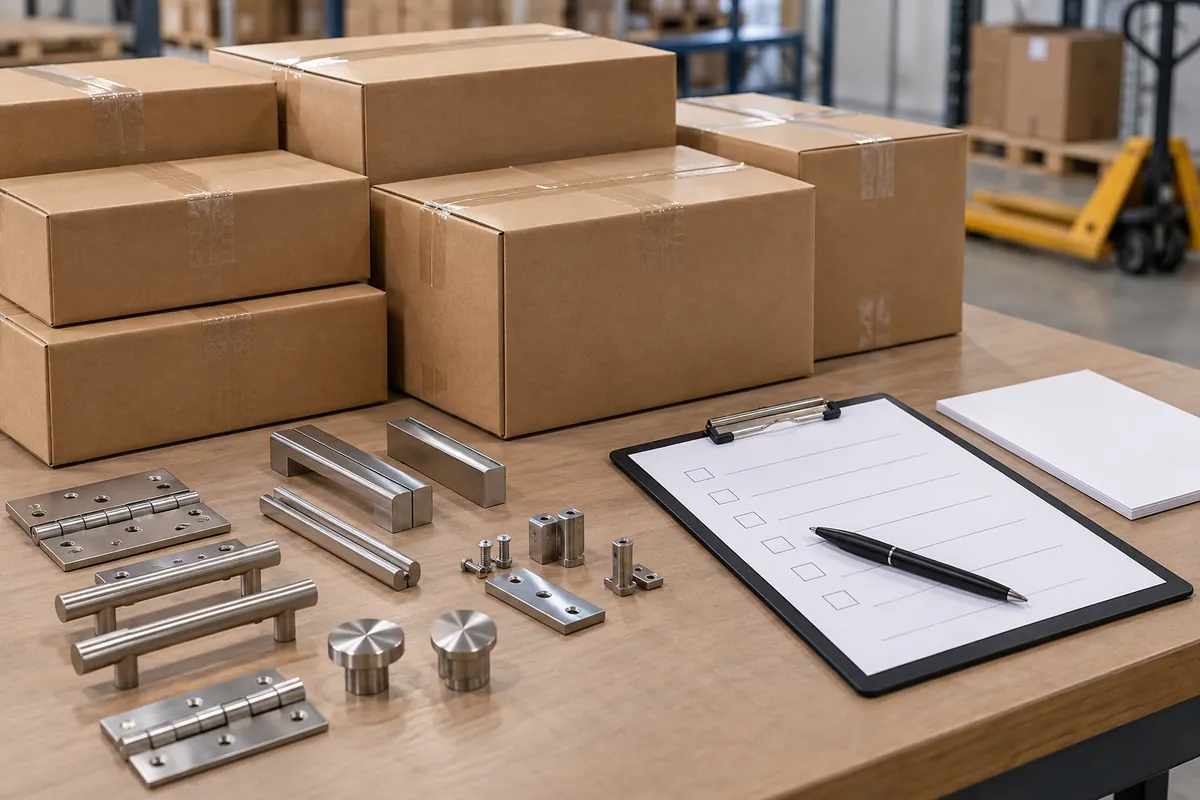
Use the process image to think through lot identity, location and status. It does not depict a Koitor warehouse or a real customer shipment. The actual supplier and buyer records should use their agreed systems and contract references.
A supplier’s published commercial terms can illustrate that firms may address buyer-requested storage differently. Alco’s policies page includes terms for storage at buyer request, with references to agreed charges and handling; the research review noted that its page describes terms effective in 2019. A separate FST finished-goods terms document is dated 2022 and describes its own treatment of delayed shipment and storage charges. These are supplier-specific examples, not universal terms and not necessarily current for another transaction. Check the applicable, current contract before relying on any charge or procedure.
Which storage and commercial terms should be agreed?
The buyer and supplier should state who will hold the goods, where they will be kept, how the lot will be identified, and who can access or move it. If any conditions such as separation, packaging state or protection from environmental exposure matter, describe the specific requirement and ask the supplier to confirm whether it can meet it. Do not assume the factory has an unused area, controlled environment or warehouse service simply because the order is temporarily delayed.
Agree the start date and review date. If the end date is not known, define a review cadence and the person who may extend or end the hold. Identify any proposed storage, handling, reinspection or re-packing charges in writing, including the basis and who authorizes them. Do not invent a fee, free period or duration from another supplier’s public terms. The parties should confirm the actual commercial arrangement for their order.
State what happens if the hold extends beyond the first review date. The supplier might ask for a new delivery plan, a new inspection or revised shipping documents. The buyer should know whether any action needs a formal change order and how it affects the production or shipment schedule. Each party’s contract team should review any term that changes a liability, payment or ownership condition.
If the goods are not yet fully packed, specify whether packing will be completed before storage or after release. If cartons have already been sealed, describe whether they may be opened for inspection or re-packing and who can authorize that work. An order held before final packing needs a different record from goods that are packed, labeled and ready for carrier collection.
How should condition and packaging be handled during a hold?
Record the goods’ condition at the point the hold begins. Capture quantity, SKU labels, packing stage, carton condition, seal or closure status and inspection disposition. If a buyer needs to distinguish approved finished goods from samples, rejected units or spare parts, label each category separately. The record should identify what is physically held, not merely repeat an invoice quantity.
Agree whether condition checks will occur during a prolonged hold and who will perform them. A periodic visual status may be enough for some order arrangements; other transactions may require a defined inspection or re-packing. The method, frequency, trigger and cost responsibility should be specified by the parties. Avoid claiming that cartons remain unchanged or protected indefinitely without agreed conditions and evidence.
If the buyer changes carton labels, shipping marks or destination data during the hold, record the approved artwork or instruction revision and who will apply it. Keep the original and revised information so receiving and dispatch teams can see what changed. A held shipment can be physically complete but still need updated labels, pallet IDs or commercial paperwork before release.
Packaging state matters. If cartons are stacked, describe whether stacking configuration can change. If goods are palletized, record the pallet identity and whether any wrap or straps may be disturbed. Any concern about humidity, temperature, handling or stacking should be expressed as a project-specific condition and accepted by the custodian. Do not assume every supplier can provide controlled storage or that ordinary factory space meets a particular environmental specification.
What must happen before the goods are re-released?
The release instruction should identify the order, lot, quantity, destination, authorized buyer contact, carrier or forwarder information, planned pickup window and required documents. If the release is partial, specify which cartons or pallets move and what remains held. The supplier should acknowledge receipt and confirm that the requested goods and paperwork are ready for the next transport step.
Reconcile the release instruction with the latest order and shipment records. Check that the SKU, quantity, label revision, packing list, commercial invoice and carrier details align. If the goods were split, re-count the released and remaining portions and ensure that each has a traceable identifier. A release should not depend on an informal verbal instruction from a contact who lacks authority.
If a quality issue, payment question, contract hold or compliance requirement remains open, the relevant responsible team should resolve it before dispatch. The shipment coordinator should not make a legal or finance decision based only on warehouse status. If payment is a contractual precondition, confirm the evidence and authorized release process with finance; if ownership or risk language is in question, obtain contract advice rather than infer it from the hold record.
Save proof of re-release: date/time, quantity, carrier or collecting party, dispatch note, updated packing list and any exception. The buyer should confirm receipt into its logistics tracking and close the hold status. This last step helps prevent a second release instruction from being acted on or a residual lot from disappearing from the order view.
A buyer requested shipment hold factory storage entry should identify the purchase order, lot, cartons and effective time without implying acceptance.
How does a shipment hold differ from title or risk transfer?
A physical hold concerns where goods are staged and what operations are permitted. It does not itself decide when title transfers, which party bears risk of loss, whether payment is due or whether a contract has changed. Those questions are governed by the purchase contract, incorporated terms and applicable law. A warehouse record can support factual traceability but should not be treated as an ownership or insurance determination.
This distinction is separate from the question of payment and delivery terms. Incoterms® do not determine title or payment timing, as explained in the International Trade Administration’s guidance. The shipment hold should therefore reference the existing contract and any signed amendment without claiming to override them. If parties intend a hold to affect charges, insurance, risk, title or payment, the language should be reviewed by qualified advisers.
K1368 covers the buyer’s broader record of ownership, risk and payment. This article stays focused on the operational hold: lot identification, custodian, condition, charges agreed for this transaction, and the re-release path. Keeping the topics separate makes it easier to route questions to warehouse, finance, logistics or legal personnel.
What mistakes make a hold hard to manage?
One mistake is failing to name the actual goods. A purchase order can contain multiple SKUs, lots and partial shipments; “hold the order” may be interpreted differently by each team. Include quantity and identifiers.
Another is assuming the supplier has accepted the request. Ask for written acknowledgment and confirm the effective date. Keep the request and acceptance together in the order file.
A third is leaving charges or handling undefined. Public terms from another supplier do not automatically apply. Confirm the applicable contract and any proposed commercial change before the hold begins.
A fourth is keeping no status review. A temporary hold can become a forgotten inventory position. Assign an owner and review date, even if the eventual release depends on a future booking.
A fifth is using an outdated release instruction. Confirm the latest carrier, destination and label details, and cancel superseded instructions. Maintain one authorized source for dispatch approval.
Keep the buyer requested shipment hold factory storage request linked to the supplier acknowledgment, current status and release instruction.
What should an importer checklist include?
At request, identify PO, SKU, lot, quantity, cartons, packing state, current readiness, requested start and review date, reason, buyer authority and expected release path. Ask the supplier to confirm custodian, location, acceptance, conditions, proposed charges and any contract amendments.
During the hold, maintain inventory status, labels, condition notes, changes, review dates and the responsible contact. Before release, revalidate quantity, destination, carrier, pack and shipping documents; obtain written authorization; reconcile partial lots; and record the final dispatch evidence. If any commercial term is unclear, route it to the appropriate contract or finance adviser before release.
Does a buyer request automatically create a factory storage obligation?
No. The supplier should acknowledge whether it accepts the request and state the applicable conditions under the order and contract.
Does a warehouse hold change ownership or shipping risk?
Not by itself. Those questions are separate from physical custody and require review of the contract and applicable law.
Should a buyer use another supplier’s published storage charge?
No. Supplier terms are specific to their own agreements. Confirm the terms and charges that apply to the actual order.
What makes a valid re-release instruction?
It should identify the exact order/lot and quantity, destination, authorized buyer contact, carrier or pickup plan, required documents and written approval authority.
Reference examples: Alco commercial policies e FST finished-goods terms illustrate supplier-specific storage wording. Their provisions do not establish terms for another supplier or order.
Da Koitor’s company site gives context about its hardware business; it does not state a general storage service or hold-fee schedule. For order-specific product or shipment records, contacte a Koitor and confirm the written arrangement with the responsible commercial contact.
Clarify order records with Koitor
Share the order reference, lot and requested release information. Any storage period, charge or contract change must be confirmed in writing for the specific order.
OEM / MARCA PRÓPRIA
Transforme este guia de fornecimento num resumo do produto
Indique o produto pretendido, as dimensões, o acabamento, a quantidade a encomendar e os requisitos de embalagem. A sua equipa receberá uma análise prática da viabilidade de fabrico antes da apresentação do orçamento.



 English
 Español
 Português
 Français
 Deutsch
 العربية