
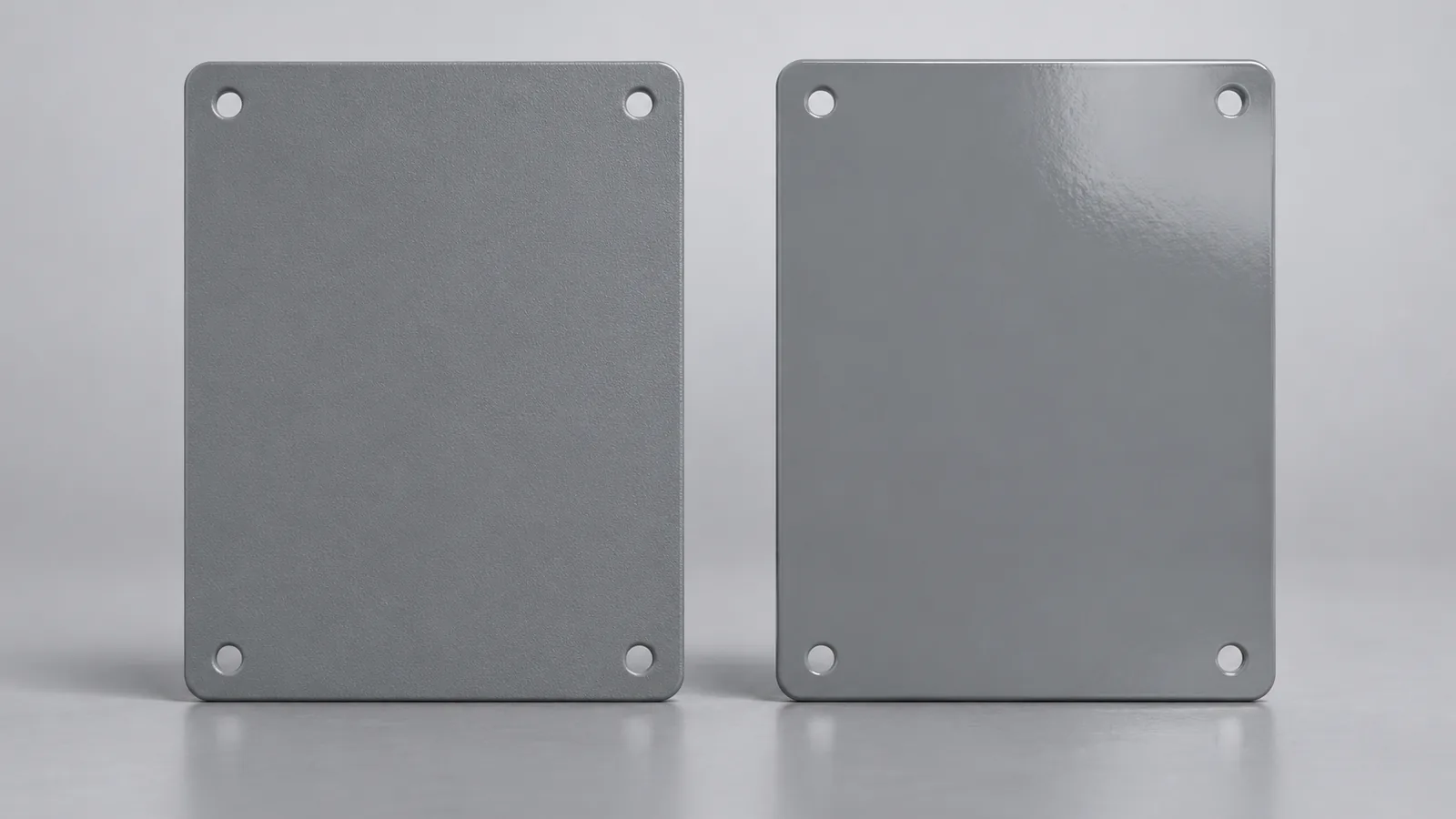
Powder coating vs paint usually means comparing a dry powder coating route with a liquid-applied coating, but “paint” includes many different formulations and application systems. Powder is also a coating technology, so the useful question is not whether one label is universally better. A buyer should compare the complete system: substrate, pretreatment, coating product, application access, cure requirements, assembly sequence, finish acceptance, and evidence for the intended environment. A color name or smooth sample does not establish adhesion, corrosion performance, lifetime, or suitability for a particular bathroom or home-storage product.
What problem does the powder coating vs paint comparison solve?
Product developers may receive quotations that use finish shorthand: powder coated, painted, black finish, or durable coating. The shorthand can hide different assumptions. One supplier may quote a powder system on a prepared steel component; another may assume a liquid system, a different pretreatment, or a different assembly sequence. Their prices and samples are not directly comparable until the scope is defined.
For metal hardware, the finish is part of the product system. It interacts with the substrate, edges, holes, welds, threads, mating pieces, visible surfaces, and packaging. A coating may need to reach a recess or avoid a fit interface. A component may be finished before assembly or after it. A part attached with heat-sensitive materials may limit the available cure route. The right answer depends on what the buyer is making and what the selected coating product requires.
This comparison helps importers write a more complete request for quotation, understand why samples differ, and avoid attributing every outcome to “powder” or “paint.” The terms do not define a single chemistry or performance class. Liquid coatings vary in resin, carrier, application, curing, and intended use; powder products also differ. TIGER’s comparison of liquid and powder e IGP’s technical note illustrate process distinctions and system-specific tradeoffs, but application-specific recommendations must remain within the relevant product documentation.
The goal is to choose and approve a defined finish route rather than announce a universal winner. Powder may fit a project where its product requirements and geometry are compatible. A liquid system may be selected for other requirements. Either needs a suitable specification, controlled preparation, and buyer acceptance criteria. Neither label proves that the finish cannot rust, chip, fade, or fail.
When the team frames a powder coating vs paint decision, it should also distinguish a product requirement from a supplier’s preferred production route. A buyer may specify an approved appearance and use condition while allowing the supplier to propose a coating system. That flexibility is reasonable only if the proposal is documented, reviewed against the part, and kept stable after sample approval. If the buyer names a particular finish product or process, explain whether equivalent alternatives are allowed and what evidence would support a substitution. This prevents the quotation stage from appearing flexible while production later treats an unapproved change as routine.
What is the difference between powder and liquid coating?
Powder coating is applied as dry powder and then processed according to the coating product’s instructions so it forms a film on the workpiece. A liquid coating is applied in a liquid form; systems may use different carriers, chemistries, application methods, and curing conditions. The common word “paint” can refer to very different products, so an RFQ should identify the actual coating product or performance specification where the project requires it.
The application route affects equipment, masking, handling, and access to the part. With either route, complex geometry, recesses, sharp transitions, edges, and shadowed areas deserve review. The supplier should explain how the selected system will be applied and which areas are controlled or masked. Do not assume that every internal corner receives the same film or that a simple flat coupon represents the complete part.
The cure step matters. Powder systems often require the workpiece to reach a product-specific cure condition, while liquid systems have their own drying or curing requirements. Do not insert a universal oven temperature or cure time into a specification without referencing the selected product’s technical documentation. Ask the supplier to confirm that the complete component, not just an isolated test card, can follow the proposed route without harming inserts, adhesives, purchased pieces, or dimensional fit.

The word “paint” should not be treated as the opposite of “coating.” Powder coatings are coatings; liquid paint is one broad category of liquid coating. In ordinary procurement conversations the labels are convenient, but the technical specification needs enough detail to distinguish the proposed system. If the supplier cannot name the product, the buyer can at least define color, gloss or texture reference, substrate, use conditions, required evidence, and the sample approval process.
What should buyers specify before comparing quotations?
Begin with the part identity: product code, drawing revision, material, product form, and whether the part is assembled. List surfaces that are cosmetic, concealed, threaded, bonded, or in contact with another part. State which faces need the agreed appearance and where coating build could affect fit. A coating note without geometry or assembly context leaves room for different interpretations.
Define the intended environment in practical terms. A bathroom accessory used in a dry vanity area is not necessarily exposed like a shower component, coastal installation, hotel washroom, or cleaning-intensive public facility. State moisture exposure, cleaning routine, temperature or chemical exposure if known, and any project-specific requirements. Do not rely on the room label alone to imply a performance test or coating class.
Request the proposed substrate preparation and finish route. Ask what coating family or product is quoted, how the surface is prepared, whether primer or multiple layers are part of the system, and how the supplier controls the process. Details can remain supplier-proposed when the buyer lacks a preferred system, but the supplier’s proposal should be documented and approved. If the buyer has an existing reference, provide a physical sample or a controlled color/texture standard rather than only a monitor image.
Clarify acceptance. Specify the viewing conditions for color and appearance, the reference sample, the visible inspection zones, and the kinds of defects that require rejection or review. If thickness, adhesion, corrosion exposure, or another test is contractually important, define the method, location, sampling plan, and acceptance criteria with competent technical input. Do not assume that one salt-spray number equals service life or that a test on a flat coupon proves every finished assembly.
| Campo «RFQ» | What to state | Por que é importante |
|---|---|---|
| Substrate | Material, grade when applicable, and part form | Finish compatibility and preparation depend on the actual base |
| Aparência | Color reference, gloss, texture, and visible zones | Reduces disagreement between words and sample |
| Geometry | Recesses, edges, holes, threads, welds, and mating faces | Determines access, masking, and fit considerations |
| Process | Supplier-proposed product, preparation, application, and cure | Makes competing quotations comparable |
| Montagem | Inserts, adhesives, pads, purchased components, and order | Helps identify heat or contamination constraints |
| Acceptance | Sample reference and relevant inspection/test criteria | Defines what approval actually demonstrates |
For a product family, set common appearance requirements and record any SKU-specific exceptions. A bracket hidden behind the product may not use the same cosmetic acceptance as the front rail. If the buyer approves a sample, label it with item, finish, date, and revision. Approval should distinguish appearance approval from performance qualification; a visually approved sample does not automatically establish performance outside the agreed conditions.
For comparison purposes, ask every bidder to identify exclusions and assumptions. One quote may include surface preparation, masking, coating, cure, inspection, and protective packing; another may price only the coating operation. One supplier may assume a finished assembly while another assumes separate components. Write those differences into a comparison table instead of treating the lowest line price as equivalent. Note whether sample development, color changes, special masking, touch-up, and nonconforming-part replacement are included or separately quoted. This keeps the buyer from attributing a cost difference to powder versus liquid alone when the production scope differs.
Ask how production lots will be identified and how the approved reference is retained. A color or texture can be reviewed differently under different lighting and neighboring materials, so record the agreed light conditions and viewing distance where appearance is commercially important. For repeat orders, identify whether a supplier will use the same coating product and process, or must submit a change for approval. If an equivalent product is proposed, require a revised sample and confirm the decision before the next lot. This is especially important for a private-label assortment whose components may be manufactured at different times or by more than one approved source.
How does the finish route affect design and assembly?
The finish is applied to a physical part, so it has to work with the design. Holes, slots, threads, edges, folded returns, weld seams, and mating surfaces can all affect coating access or fit. The engineer and supplier should review whether masking is needed, where coating build could change a clearance, and whether a component should be finished before or after assembly. The answer is part-specific; no blanket tolerance or film thickness should be inferred from the finish family.
The product team should mark features by function. A visible front face may be judged against a color and texture standard; a threaded hole may need to remain usable; an adhesive interface may require a defined surface condition; a concealed edge may be inspected for coverage without the same cosmetic limit. If all these are described as “same black coating,” suppliers may make different assumptions about masking and acceptance. The drawing can indicate critical zones, while a separate finish note describes the reference and control method. Do not place a numeric coating value on every surface unless a qualified design decision establishes that requirement and the supplier can measure it meaningfully.
Heat-sensitive elements deserve early attention. Adhesive pads, plastic inserts, suction components, labels, and purchased assemblies may not be suitable for the same sequence as a bare metal component. Ask the supplier to identify when each component is installed and whether the selected cure route is compatible with it. A workable alternative may involve finishing separate pieces before assembly, changing the sequence, or selecting a different documented system. The buyer should approve any change that affects appearance or fit.
Edges and cutouts need explicit review. A drawing should identify critical cosmetic faces and areas that must remain uncoated for fit, grounding, bonding, or assembly. An unmarked drawing can lead to inconsistent assumptions about masking. For welded constructions, the supplier should review the joint and surface preparation sequence so the approved appearance can be achieved on the visible faces. This is not a guarantee of invisible welds or identical appearance at every feature; it is a way to agree on a feasible sample and inspection boundary.
Packaging is a separate but connected control. Finished components can rub, scratch, or transfer marks during handling and transport. Specify protective separation, bagging or inserts where needed, carton layout, and how the product is identified. A successful coating sample does not show that the production packout prevents transit damage. Where the buyer has prior damage evidence, translate it into a packaging requirement and verify the final packing arrangement.
Keep those packaging instructions with the finish approval and inspection plan so that the approved surface is protected after it leaves the production line.
Record the packout version for repeat orders.
What mistakes should buyers avoid?
Calling every liquid finish “paint” and treating it as one system. Different liquid products have different chemistry and application requirements. Ask what the supplier is actually proposing and compare it with the powder product on the quote.
Assuming powder is automatically cheaper or more sustainable. Project economics depend on the coating, quantity, production setup, color changes, rework, part geometry, and supplier scope. Environmental comparisons require system-specific data and boundaries. Do not accept a generic percentage or universal savings claim without substantiation relevant to the project.
Assuming thicker means better. More coating is not automatically more protective or more suitable. Film build can affect fit, threads, edges, appearance, and the coating product’s recommended use. Define the relevant performance need and agree on evidence rather than maximizing an unspecified number.
Using a flat color card as the only approval. A card does not reproduce the substrate, edge, recess, weld, assembly, or application access of the finished part. Approve a representative part or relevant coupon and document its limits.
The representative sample should be chosen for the question being answered. A flat coupon can help compare color or texture if its substrate and preparation are specified, but a formed part may be necessary to review edge coverage, recessed geometry, masking, assembly fit, and packaging. If no single sample represents all attributes, record separate approvals for appearance, fit, and any agreed performance test. Mark a physical golden sample or use a controlled digital record with sufficient identification to avoid confusion among revisions. The sample should not quietly replace the drawing or purchase specification: it supplements them by showing approved appearance and construction details that are difficult to express in words.
Ignoring cure compatibility. A proposed route may conflict with an adhesive, insert, label, or preassembled component. Review the entire manufacturing sequence before approval and do not attach sensitive pieces without confirming the selected product instructions.
Treating smooth appearance as proof of adhesion. Visual inspection can reveal visible defects but cannot alone establish adhesion or corrosion performance. If those attributes matter, define suitable test evidence and acceptance before placing the order.
Making universal rust or lifetime claims. No powder or liquid label guarantees a product cannot corrode or how many years it will last. Performance depends on substrate, preparation, coating system, damage, environment, care, and other conditions. State only the claims supported for the specific system.
Comparing quotations with different preparation or masking scope. One quote may include surface preparation, primer, masking, or a particular finish reference while another omits them. Normalize inclusions, sample costs, packaging, inspection, and subcontracting before choosing on price.
How can an OEM factory help compare the actual part?
A manufacturing partner can review the drawing, material, geometry, assembly sequence, sample, finish reference, and quantity together. That review should identify open questions rather than presume every finish route is available in-house or technically suitable. Koitor’s approved scope includes metal fabrication, powder coating, assembly, and drawing/sample communication; an RFQ should still confirm the specific coating product, process responsibility, and evidence for each project.
Ask the supplier to mark the drawing with visible surfaces, masking zones, critical interfaces, and proposed sequence. Request a sample that represents the production route as closely as practical. If a prototype uses a different process, record the difference and state which questions the prototype can and cannot answer. The supplier should disclose when a coating step is subcontracted and identify who controls the specification and approval.
For a small run or trial order, the buyer can avoid over-specification while still defining the decision. State the required appearance, known use conditions, minimum evidence, and any future volume assumptions that might change the route. A small initial quantity does not automatically make every finish choice economical or technically feasible; the supplier should quote the actual scope and clarify setup or changeover assumptions rather than promise a universal minimum.
When reviewing a quotation, ask for a clear list of included operations: surface preparation, coating product or system, application, cure, assembly, inspection, and packaging. If an operation is outside the supplier’s direct control, ask how changes and nonconformance are communicated. Keep the signed-off sample, drawing revision, and purchase-order notes connected so later batches can be compared to the same reference.
For help framing a project, use the custom bathroom hardware manufacturing page or the OEM home-storage hardware page. These explain product and manufacturing context, not coating certification or a promise of a specific finish result. Send the part drawing, finish sample, intended use, target quantity, and the finish requirements that must be confirmed before production.
Buyer checklist before approving a finish

- Identify the substrate, item number, drawing revision, and component material.
- Define whether the comparison is powder against a named liquid system.
- State color, gloss, texture, reference sample, and visible inspection zones.
- Mark edges, recesses, threads, mating faces, and masking requirements.
- Describe environment, cleaning, and any relevant exposure conditions.
- Ask for the proposed preparation, coating product, application, and cure route.
- Review heat-sensitive inserts, adhesives, labels, and assembly sequence.
- Define which sample represents the proposed production process.
- Separate appearance approval from performance qualification.
- Specify test method and acceptance criteria only when needed and agreed.
- Clarify subcontracted operations and responsibility for finish changes.
- Confirm packaging protection and product identification for the approved finish.
- Keep sample, specification, drawing revision, and order records together.
Perguntas frequentes
Is powder coating a type of paint?
Powder coating is a coating technology; in everyday conversation people may use “paint” to mean liquid-applied paint. For procurement, define the exact system rather than relying on the broad terms.
Is powder coating always more durable than paint?
No universal conclusion follows from those labels. Durability depends on the specific substrate, preparation, coating product, application, cure, geometry, damage, and exposure. Compare documented systems for the actual part.
Does a thicker coating always protect metal better?
No. More coating is not automatically better and may affect fit, threads, edge behavior, or appearance. Follow the selected product guidance and define the relevant acceptance criteria.
Can a smooth sample prove that a coating will not peel?
No. Appearance is one review dimension, but a smooth surface alone does not establish adhesion. If adhesion is a requirement, agree on an applicable test and acceptance criteria before the order.
Can an assembled product be powder coated?
It depends on the parts, materials, assembly sequence, and cure requirements of the selected coating product. Review heat-sensitive components and fit interfaces with the supplier before selecting the route.
Review a Finish System for Your Hardware Part
Share the substrate, drawing, finish reference, intended environment, and target order scope. Koitor can discuss the manufacturing information to clarify for a custom metal hardware quotation.
OEM / MARCA PRÓPRIA
Transforme este guia de fornecimento num resumo do produto
Indique o produto pretendido, as dimensões, o acabamento, a quantidade a encomendar e os requisitos de embalagem. A sua equipa receberá uma análise prática da viabilidade de fabrico antes da apresentação do orçamento.
 English
 Español
 Português
 Français
 Deutsch
 العربية