
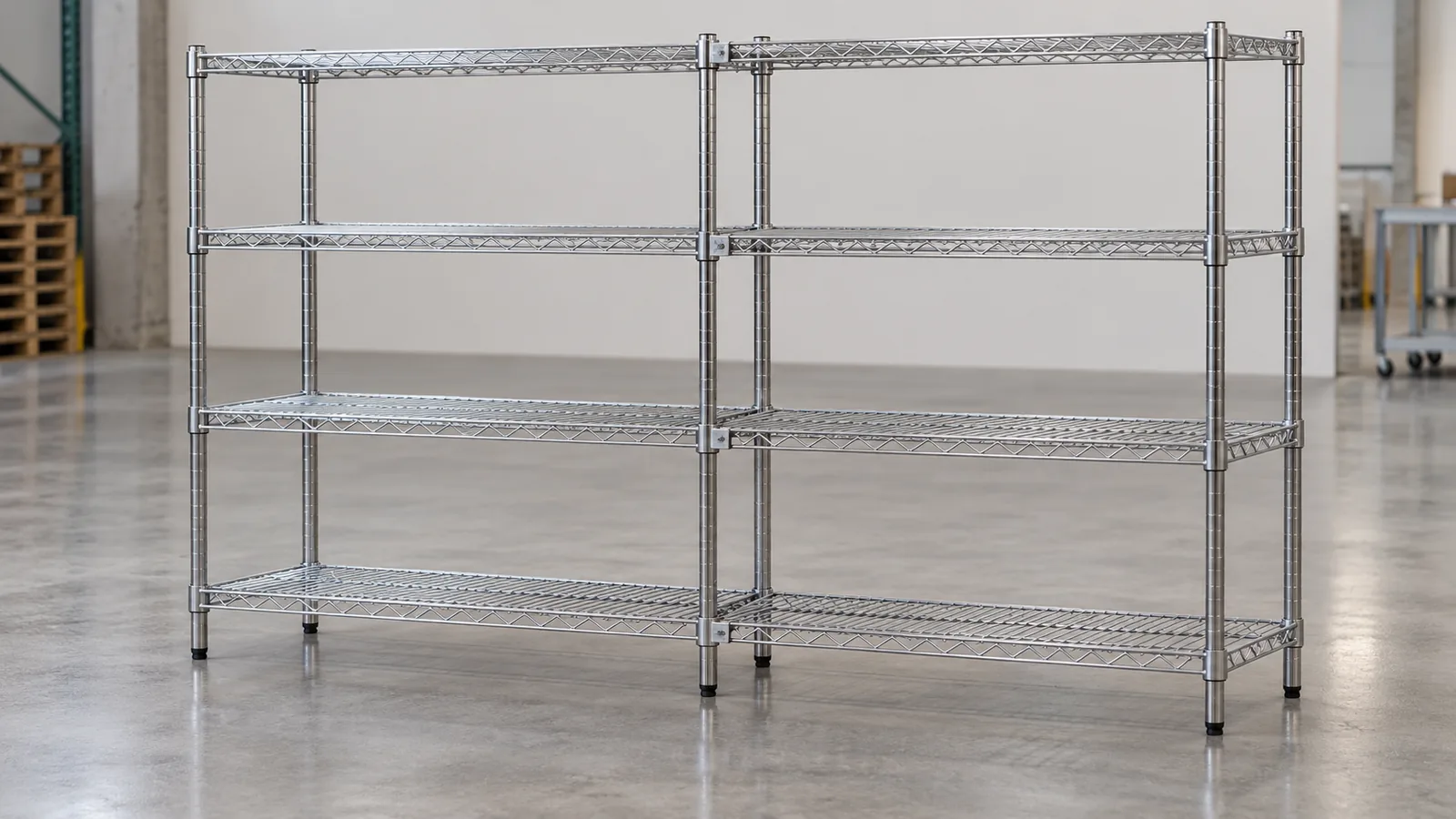
For a modular rack assortment, wire shelving post clamp joining units should begin with the system architecture: two complete freestanding racks joined side by side are different from an add-on bay that shares posts with an existing rack. A post clamp is intended for a defined post-to-post interface; it does not convert every shelf system into a compatible multi-bay assembly or replace wall anchoring, leveling or product-specific safety review.
Importers and private-label buyers should identify the post profile, shelf system, intended layout, clamp model and assembly instructions before approving the kit. The supplier should confirm fit for the exact rack family and the buyer should review a complete sample for alignment, contact and access. Do not infer compatibility from a clamp photograph or a similar-looking post.
What is the difference between joining two units and adding a bay?
Two complete standalone units each have their own posts and shelves. A post clamp may connect selected adjacent posts so the units remain aligned as a side-by-side layout. An add-on bay is designed to extend an existing system and may share some posts, shelves or connectors with the original unit. The required connectors and assembly sequence can differ.
This distinction changes the bill of materials. A buyer ordering two complete racks may need clamps that bridge adjacent posts while preserving both frames. A buyer ordering an add-on bay may need a connector designed to share posts and may receive a different count or installation sequence. Do not label both arrangements simply “join two shelves.” Show the frame architecture in the RFQ and ask the supplier to name the intended connector type.
Supplier references reflect this distinction. The current Grainger wire-shelving hardware guidance describes S-hook connectors for compatible add-on units that share posts, while its post-clamp category describes connectors joining two compatible standalone units side by side. The details apply to the products and system guidance shown there, not to every wire rack.
In the same way, Metro’s post-clamp product listing identifies a clamp for its Super Erecta industrial wire shelving system. A named system’s accessory listing can help buyers understand the part’s purpose, but it does not establish cross-brand compatibility or a universal clamp design.
What post and clamp details determine compatibility?
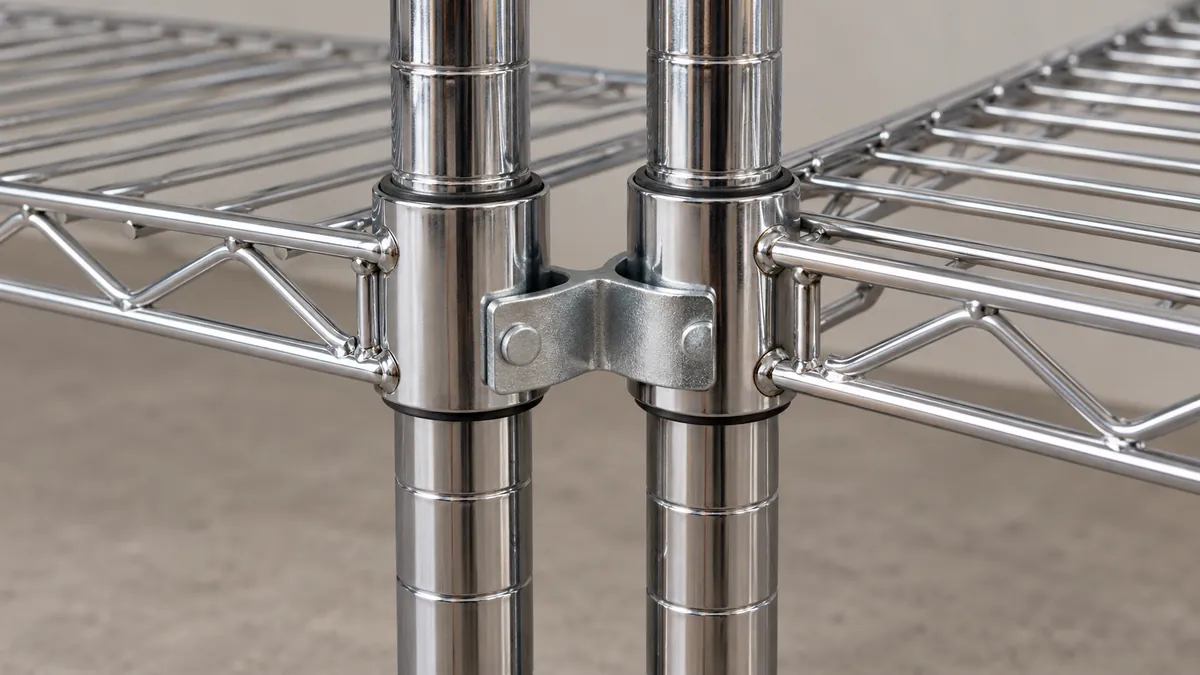
Compatibility depends on the actual post and clamp interface. Record the post outside diameter or profile, material, finish, wall thickness where available, groove or locating features, clamp opening, fastener type and contact surface. Also identify whether the clamp is intended to grip one pair of neighboring posts, attach through another fitting, or connect at a particular shelf level.
Two posts may look similar in a product photo but differ in diameter, finish build, groove pattern or accessory interface. A clamp may close around the posts but sit at an angle, contact only at an edge, scratch the finish or leave enough play for visible misalignment. These are sample observations to investigate; they do not prove that any single profile dimension is universal.
The supplier should provide a compatibility statement tied to part numbers or controlled drawings. If the clamp is from a different source than the racks, compare the drawings and try the actual parts together. Confirm whether the clamp is reversible, reusable, adjustable or single-use rather than assuming its appearance reveals the intended method. Ask if the finish or material changes require a different clamp variant.
The clamp’s role must also be stated clearly. A connector may help hold neighboring frames together or maintain alignment as described by its manufacturer. That statement does not automatically mean the joined rack is anchored against tipping, qualified for seismic conditions, or approved for a particular load. Use the rack supplier’s complete installation instructions and obtain separate engineering guidance for any structural or safety requirement.
How should buyers plan the joined rack layout?
Draw the intended arrangement before selecting clamp quantity. Show each standalone frame, post positions, shelf levels, overall width, access aisles, nearby walls or furniture, and the side where units meet. Indicate whether the joined racks will remain stationary, be moved separately, or be moved as a combined assembly. The intended handling can affect which product-specific instructions and review steps matter.
Check the floor and leveling arrangement. If the posts are not level or the rack feet sit on an uneven surface, the frames may not align at the joint. A clamp should not be used to force two misaligned units together. Adjust the units as instructed, verify the post positions, then fit the clamp according to the supplier’s procedure. If the two racks have different heights or shelf settings, confirm the exact clamp location remains accessible and does not interfere with shelf collars or accessories.
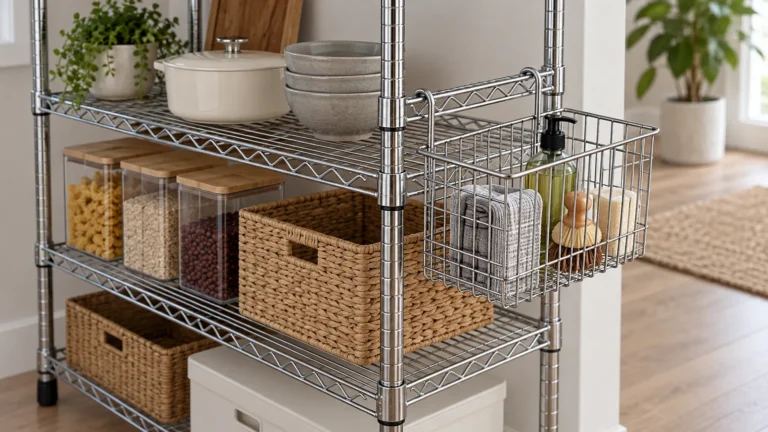
Also consider workflow and retrieval. A joined layout can reduce gaps between units, but a clamp can occupy a space that otherwise was open for baskets, labels, side accessories or cleaning. Check that shelves remain usable at the joint, that post caps and feet are still accessible, and that the combined width fits the room. If the rack will be disassembled for shipping or relocation, document how clamps are removed and whether they must be replaced after repeated use.
For a buyer comparing alternatives, the key question is not simply whether the two frames can be brought close together. Confirm what the connector is expected to do in normal service: locate neighboring frames, limit separation, or meet another system-specific purpose stated in the supplier instructions. Ask the supplier to distinguish those functions in writing. A clamp that keeps a row visually aligned should not be described as carrying shelf loads between racks unless the product design and supporting evidence say so. Likewise, a layout intended to be moved should be reviewed under the manufacturer’s handling guidance rather than assumed safe because the frames are connected.
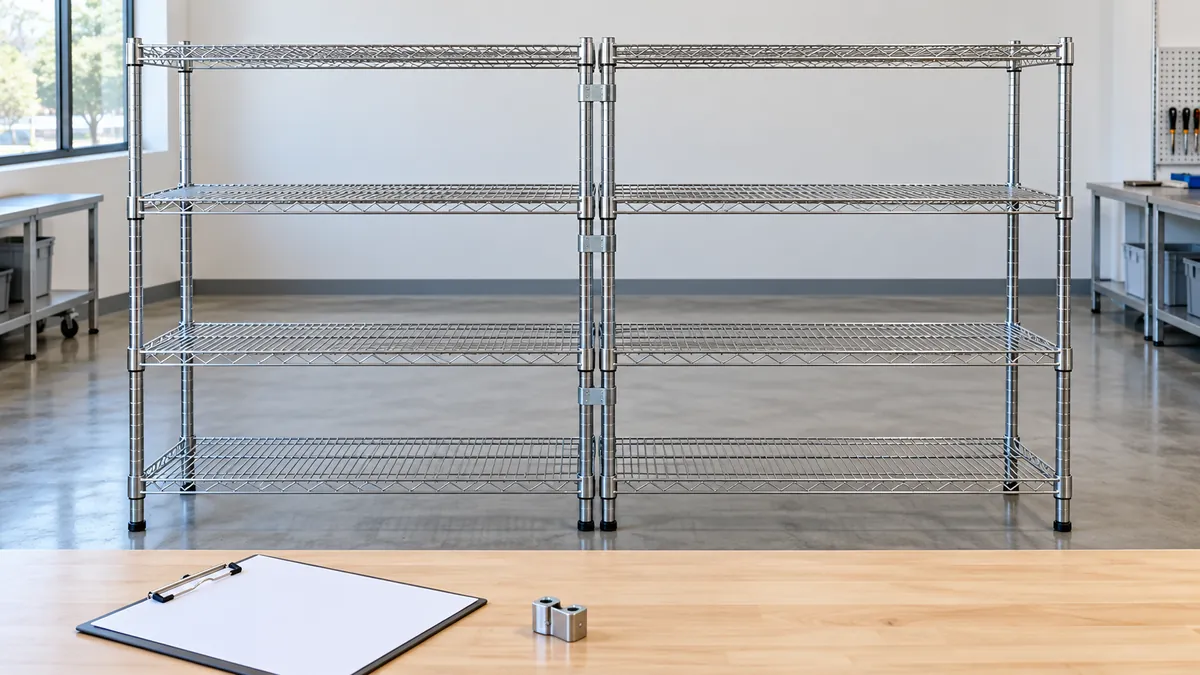
Document the arrangement with a top view and an elevation. Mark which two posts meet, which shelves are at matching heights, and where the user needs hand access. This simple drawing helps prevent a quote from silently changing from two full racks to a shared-post extension. It also makes it easier to compare a clamp connection with other options offered for the named system. Keep room clearances and floor conditions visible in the review, while leaving load and stability claims to the system-specific documentation.
How many clamps and where should they be installed?
Use the count and placement specified by the rack or clamp supplier for the exact system. Do not copy a count from another product listing or calculate a universal spacing rule from a photograph. Supplier instructions can be model-specific and may depend on rack height, configuration, connector design and intended use.
For example, the post-clamp guidance on a Metro-focused Grainger category page describes top and bottom connector positions and an additional-spacing condition for its listed product category. This is a supplier-specific reference, not a general engineering rule for unrelated racks. For a different system, use the current manual and obtain confirmation from that system’s supplier.
The buyer should verify that the quoted kit quantity matches the instructions and that each clamp can be reached after shelves and accessories are installed. If packaging includes one clamp type for multiple rack widths, ask which configurations it covers. If a combined row will be moved as a unit, obtain written confirmation that this handling is permitted; do not infer it from the mere presence of connectors.
When reviewing a quotation for wire shelving post clamp joining units, compare the connector line item with the rack configuration rather than accepting a generic accessory name. The quote or BOM should identify a part number, finish, compatible post family, pack quantity and referenced instruction revision. If the supplier offers several clamp versions, request a short compatibility matrix showing the specific rack models each version is intended to join. A matrix is a control document, not independent performance evidence, so match it to drawings and a physical sample before approval.
Also settle whether the connector is packed loose, pre-installed or supplied as a separate spare. That choice changes assembly labor, packing checks and the risk of a missing component at the destination. For private-label orders, the buyer should approve the wording and diagrams in the assembly sheet against the actual delivered kit. Avoid copying another brand’s pictures or installation steps; even similar-looking wire racks can use different post interfaces. Record any excluded rack models explicitly so later purchasing teams do not treat the approval as universal.
What should the assembled sample inspection cover?
Inspect the joined configuration with the production-intent posts, shelves, collars, clamps and feet. A clamp fitted to two loose posts is not enough to approve the full rack row. The complete sample reveals whether shelf edges align, whether clamps obstruct accessories, and whether the units remain level after assembly.
First confirm the rack identities and revisions. Check that each unit has the intended number of posts and shelves and that the clamp part number matches the approved BOM. Review the supplier’s assembly order and locate the connector positions from the same reference points. If shelves are at different heights, confirm the clamp does not collide with collars, post grooves or nearby shelf wires.
Fit the clamp according to the supplier instruction without forcing the posts together. Observe whether it seats at the intended location, contacts both posts as designed and leaves visible damage, coating marks or deformation. Compare the gap and alignment along the joined frames. Recheck the floor leveling after connection. If the clamp only fits after the frames are twisted or pulled out of alignment, stop and ask the supplier to review the geometry.
Then confirm the joined layout can be used as intended: shelves can be accessed, contents can be loaded, compatible side accessories still fit, and the units can be separated if that is part of the buyer’s service plan. Document the sample conditions, photos, revision IDs and any limitation. This is a fit and assembly review; it does not establish a load rating, tip-over test or structural certification.
Use a repeatable sample record so purchasing, quality and product teams are reviewing the same evidence. Include an overall photo, a close-up of each connector position, the rack and clamp identification, assembly date, instruction revision and a note of any adjustment needed. If the sample requires unusual force, leaves marks, rocks after assembly or blocks a shelf accessory, record the observation and request a design or instruction review before sign-off. Do not polish away a fit issue or substitute an unapproved clamp during the review; that would make the sample differ from the quoted production configuration.
After the initial fit review, disassemble and reassemble only if repeated assembly is part of the intended use and the supplier permits it. Record any visible wear or change in fit as an observation, not as a life prediction. Agree with the supplier which changes require a new sample: post diameter, coating thickness or finish, clamp material, fastener, rack width, shelf level, or manufacturing source. For wire shelving post clamp joining units, this disciplined match between approved sample and production BOM is more useful than a broad claim that a connector is “universal.”
What belongs in the RFQ and change-control record?
The RFQ should identify the rack architecture, not just ask for a quote for “clamps.” Include post and shelf drawings, finish, unit dimensions, number of standalone units, intended row layout, whether the row is stationary or mobile, compatible accessories, packaging and sample needs. Attach a sketch showing which posts are adjacent and whether each frame keeps all of its own posts.
| RFQ item | Buyer input | Supplier confirmation |
|---|---|---|
| Rack architecture | Two complete units or add-on/shared-post bay | Exact connector type and assembly sequence |
| Post interface | Profile, diameter, finish and revision | Compatible post family and clamp part number |
| Layout | Rack count, height, shelf levels and access side | Approved clamp locations and quantity per instructions |
| Utilização | Stationary or intended movement/relocation | System-specific handling assumptions and limits |
| Other components | Collars, feet, side baskets and accessories | Interference check and permitted combinations |
| Embalagem | Clamp count, labeling and spare parts | Packout list and installation sheet revision |
| Approval | Sample size and required photos | Sample record, fit observations and change triggers |
Change control should trigger review if the post profile, finish, clamp supplier, rack height, shelf arrangement, unit count, intended movement or installation instruction changes. A visual change that appears small can affect clamp contact or access. The buyer and supplier should decide whether drawing review, a fit check or a complete assembled sample is required before updating the BOM.
Perguntas frequentes
Are post clamps and S-hooks interchangeable?
Not necessarily. Supplier descriptions distinguish post clamps for joining two compatible standalone units from S-hooks used by some add-on systems that share posts. Confirm the rack architecture, exact connector and current system instructions.
Does joining two racks with clamps mean they are wall-anchored?
No. A post clamp connects adjacent units; it does not automatically provide wall anchoring or a safety qualification. Follow the rack supplier’s instructions and separately address any wall or structural requirements.
Can a post clamp fit every round wire-shelf post?
No universal fit should be assumed. Verify the clamp against the named post profile, finish and system revision, ideally using a representative sample.
Should a clamp count be selected by rack height alone?
Use the exact supplier instructions for the proposed configuration. Rack height may be one input, but connector type, system design and intended use can also matter.
Discuss a wire-rack joining configuration
Share the rack and post drawings, unit layout, finish, connector preference and sample requirements. Koitor can discuss metal-storage manufacturing and sourcing inputs within confirmed capabilities; compatibility and load performance must be verified for the exact system.
OEM / MARCA PRÓPRIA
Transforme este guia de fornecimento num resumo do produto
Indique o produto pretendido, as dimensões, o acabamento, a quantidade a encomendar e os requisitos de embalagem. A sua equipa receberá uma análise prática da viabilidade de fabrico antes da apresentação do orçamento.
 English
  Español
  Português
  Français
  Deutsch
  العربية