
For buyers comparing resistance welding vs TIG welding bathroom accessories, there is no universal winner. Resistance welding can join suitable parts through pressure and electrical current at the contact area, while TIG welding uses an arc and a non-consumable tungsten electrode, with filler metal when the joint requires it. The right choice depends on joint design, material and thickness, tool access, visible finish, production repeatability and the agreed acceptance standard. Buyers should approve a representative sample and its actual joint locations instead of selecting a process name in isolation.
What should an importer decide before naming the welding process?
First decide what the joint must do and what evidence will demonstrate that result. A wire basket may use several discrete connection points; a tube frame may need a different joint form; a visible towel-rack corner can place higher emphasis on appearance and finishing. Those are different design problems even if both products are chrome-colored bathroom accessories.
In a sourcing brief, identify the parts to be joined, their dimensions and material as known, the joint location, access on each side, expected finish, functional requirement and planned order range. Then ask the manufacturer to review process feasibility. The process label alone does not specify joint geometry, fixture, parameters, inspection method or post-weld finishing.
Resistance welding is a family of processes. In common resistance spot welding, electrodes press the workpieces together and electrical current generates heat at their contact area. Electrode geometry and access therefore matter. TIG welding creates an arc between a tungsten electrode and the workpiece under shielding gas; filler may be added depending on the joint. Neither short definition can establish a bathroom rack’s load performance or appearance without the exact design and process controls.
For a related product context, buyers can review Koitor’s custom shower caddy manufacturing options and discuss the drawing, finish and sample before fixing an OEM specification.
How do resistance welding and TIG welding differ in practice?
Both methods can appear in metal product manufacturing, but they differ in how heat is introduced, what joint access is needed, and what the finished surface may require. Buyers comparing resistance welding vs TIG welding bathroom accessories should use the same geometry, finish route and acceptance criteria wherever possible. The following comparison is a discussion guide—not a ranking or a process specification.
| Buyer consideration | Resistance welding | TIG welding | Question for the supplier |
|---|---|---|---|
| Joint form | Often suited to overlapping parts or discrete spot locations where electrodes can contact both sides | Can form a localized or continuous fused joint along accessible edges; filler can be used when needed | Does the drawing show an overlap, butt, corner or other joint form? |
| Tool access | Electrode shape, force and access to the joint faces are important | Torch access, viewing angle and space around the joint are important | Can the planned tool contact the joint without marking or distorting nearby wires? |
| Appearance | A discrete indentation or contact mark may need consideration on visible faces | Bead shape and heat-affected appearance may be more visible and can require cleanup | Which surfaces are customer-visible, and what sample appearance is acceptable? |
| Materials and section | Suitability depends on material, thickness, stack-up and electrode/workpiece contact | Suitability depends on material, thickness, fit-up, shielding and heat control | What material/section assumptions and sample configuration are being quoted? |
| Repetition | Fixture and electrode condition can influence repeatability | Torch path, fit-up and operator/process control influence repeatability | What fixture or workholding defines position for repeat production? |
| Finishing | Surface marks and coating preparation should be reviewed | Weld bead, discoloration, grinding and polishing may affect downstream finish | Which welds are dressed, and how is the finish baseline approved? |
| Evidence | The joint must be judged against its design and project criteria | The joint must be judged against its design and project criteria | What inspection or sample evidence supports the agreed requirement? |
TWI’s resistance welding explanation and MIG-versus-TIG technical comparison describe process mechanisms, while AWS guidance for selecting resistance-welding electrodes highlights the relationship among material, joint type and electrode geometry. These are engineering considerations, not a guarantee that one process performs better on a particular bathroom accessory. Ask for a product-specific recommendation and document the assumptions behind it.
How does joint geometry affect the process decision?
Joint geometry determines whether a process can access the connection, locate the components consistently and avoid damage to adjacent parts. A technically familiar process can still be a poor fit if the wire or tube orientation blocks an electrode or torch.
For wire bathroom accessories, map the connections on a drawing or marked sample. Identify wire crossings, end-to-frame joints, basket-to-frame connections and any decorative or user-visible intersections. Then ask the supplier to identify the planned weld points and fixture datums. If two wires meet at an angle, specify their intended alignment and whether a small visible mark is acceptable after finishing.
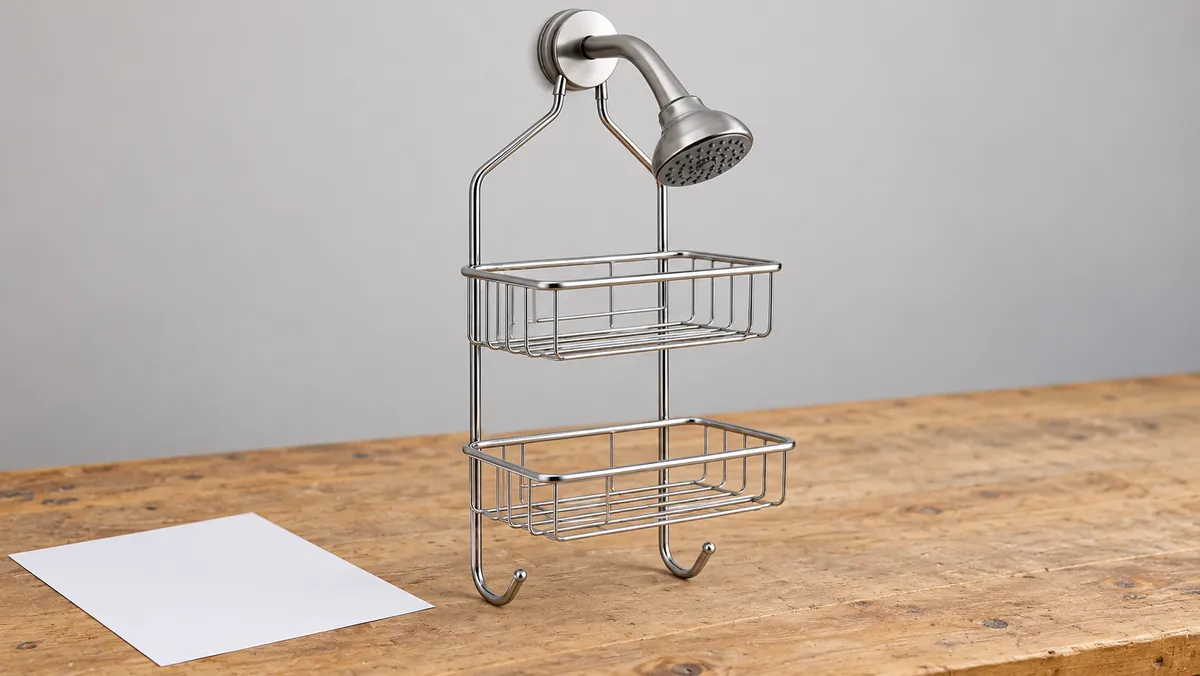
The twin support-wire structure on an under-showerhead basket is a useful example of why the assembly must be understood before discussing joints. Two support wires may originate near a wall escutcheon, route around the shower arm and descend as side rails. Their positions and symmetry affect the basket assembly; the product should not be represented with an invented central riser or alternative hanger. The sample and engineering drawing should agree on that topology.
Build tool clearance into the product design where possible. If an electrode cannot close on the target area, or a TIG torch cannot be positioned without disturbing a nearby wire, the joint, sequence, fixture or product geometry may need review. Do not assume the finish process can hide a structurally misplaced joint.
What appearance and finishing evidence should buyers request?
Buyers should identify which areas are visible after installation and define acceptable appearance under normal viewing conditions. Polished chrome, other electroplated finishes and powder coating can reveal different surface conditions, so the approved sample must represent the intended finishing route as well as the joining operation.
Request close-up views of the same joints on each sample revision. Check the joint location, alignment, protrusion or depression, discoloration, grinding marks, sharp edges and any finish disruption. If a weld is ground or polished before plating, evaluate the completed finish; do not judge only the unfinished weld and assume the final result will match.
A sample review should distinguish structural acceptance from cosmetic acceptance. If the buyer cares about both, state the criteria separately. A visually smooth surface does not independently prove a joint’s mechanical performance, just as a process name does not establish a load rating. Any performance claim needs project-specific requirements and evidence agreed between buyer and supplier.
How can buyers compare samples without overclaiming process performance?
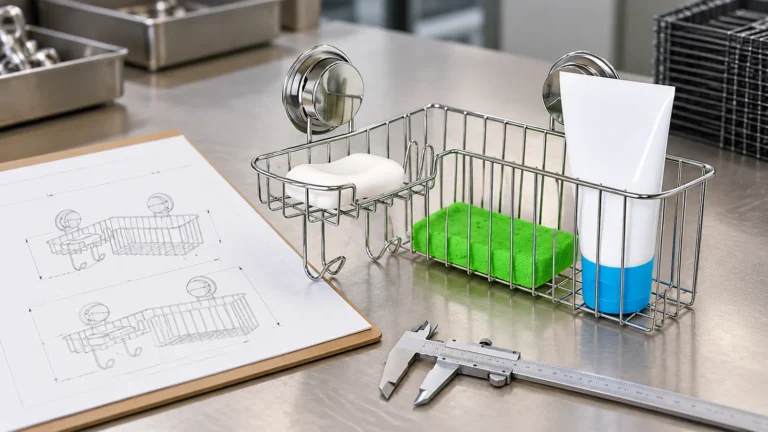
Compare samples against one controlled drawing revision and the same finish expectation. Record which unit uses which joining proposal, what changed, and the buyer’s actual acceptance criteria; do not infer an unseen production process from an attractive photograph.
- 1. Mark each joint location on a drawing or sample photo.
- 2. Confirm the material, section and product geometry for the sample.
- 3. Record proposed joining process and any related fixture or sequence assumptions.
- 4. Review fit, alignment, visible marks, finishing and assembly on the completed product.
- 5. Measure critical interfaces or fit the product to its actual mating part.
- 6. List defects or deviations distinctly from process preferences.
- 7. Approve the sample or request a revision in writing, identifying the version and quantity covered.
Where a buyer compares resistance welding vs TIG welding bathroom accessories, make the comparison fair: same product geometry, material, finish route and acceptance criteria wherever possible. If those differ, the evaluation cannot isolate process choice. For repeat production, ask how joint position and appearance will be checked; a one-off hand-adjusted sample may not represent the planned repeatability.

If a quality concern emerges during sampling, record the joint location and acceptance criteria and discuss it through the Koitor contact page. Keep process selection separate from any later defect investigation or shipment inspection.
What process-selection mistakes create avoidable sourcing risk?
The most common mistake is declaring a process before the joint and product requirements are defined. This can constrain the manufacturer without giving the buyer a verifiable acceptance criterion.
Avoid these pitfalls:
- – Choosing TIG because it sounds “premium” or resistance because it sounds “automated” without a joint-specific review.
- – Assuming one method is always stronger, cheaper, faster or more corrosion-resistant.
- – Specifying a process name but omitting joint location, geometry, access, finish and acceptance evidence.
- – Evaluating a hidden or unfinished joint when the finished surface will be customer-visible.
- – Comparing samples with different materials, wire positions or polishing routes as though only the process changed.
- – Treating a clean-looking joint as proof of a particular load capacity.
- – Approving a structure whose basket support or mounting topology differs from the drawing.
- – Failing to define what happens if tooling access requires a proposed design change.
If a manufacturer recommends an alternative, request the reason in terms of the actual geometry, tooling access, finish route and planned production. The buyer can accept, reject or request a sample comparison, but should retain control of the product definition and release record.
How does Koitor review a wire-hardware joining plan?
Koitor Hardware is a family-owned custom metal hardware factory whose approved process capabilities include resistance, laser and TIG welding, alongside bending, grinding, polishing, powder coating, assembly and packaging preparation. For a bathroom or home storage project, the team can review drawings or physical samples, discuss joining points and downstream finishing, and develop samples after project details are confirmed.
The value of early review is practical: a product designer can show the intended joint and finish before the supplier quotes a production route. That discussion can surface an access problem, awkward polishing area, exposed weld, assembly tolerance or packaging vulnerability while the drawing is still adjustable. The manufacturer should not promise performance from process names alone, and the buyer should not treat a general article as an engineering approval.
When requesting an OEM review, provide the product drawing or sample, known material and wire/tube sections, target finish, order range, customer-visible areas and intended use. If a load, corrosion or other performance requirement matters, specify how it should be evaluated and agree the evidence before production. Product structure and order quantities affect sample planning, MOQ and lead time, so confirm project-specific terms in the quotation.
Buyer checklist for a welding-process discussion
Use this list during drawing review or supplier quotation so the process decision stays connected to buyer requirements.
- – [ ] Product drawing and revision show each joint and intended mounting/basket topology.
- – [ ] Material and wire/tube sections are identified or flagged as assumptions.
- – [ ] Joint form and tool approach are discussed for every important connection.
- – [ ] Visible versus concealed joints are identified.
- – [ ] Finishing sequence and expected post-weld cleanup are reviewed.
- – [ ] Critical dimensions, alignment and interface checks are defined.
- – [ ] Sample revision and comparison conditions are recorded.
- – [ ] Any process substitution requires buyer review before bulk production.
- – [ ] Mechanical or corrosion claims have separate project-specific evidence criteria.
- – [ ] Production repeatability and later inspection responsibilities are agreed.
Frequently asked questions
Is resistance welding always faster than TIG welding?
No universal timing can be inferred from the method names. Actual cycle time depends on joint design, tooling, fixture, sequence, operator/process control, finishing and order conditions. Ask for a project-specific quotation and sample route.
Which method is stronger for a bathroom wire basket?
There is no general answer without the material, joint geometry, thickness, process setup and required performance criteria. A sample and agreed project-specific evaluation are needed before claiming that a design meets a particular load requirement.
Does TIG always leave a better-looking joint?
Not automatically. Bead form, access, heat effects, grinding, polishing and final coating or plating influence appearance. Review the completed sample under agreed visual conditions.
Can a buyer require a particular welding process?
Yes, a buyer can include a process requirement in the specification or purchase agreement. It should be technically and commercially reviewed with the manufacturer, and any substitution should require written approval if the process is part of the controlled product definition.
How should importers approve a welding sample?
Tie approval to a drawing revision, joint locations, material and finish route. Record dimensional, fit, appearance and project-specific functional results separately, plus any deviations and the quantity covered by approval.
Review Your Wire-Hardware Joint Design
Share the drawing or physical sample, material, visible finish areas and production range. Koitor can discuss joint access, sample review and manufacturing considerations for your bathroom or home storage OEM project.
OEM / PRIVATE LABEL
Turn this sourcing guide into a product brief
Share your target product, size, finish, order quantity and packaging requirements. Your team receives a practical manufacturability review before quotation.
 English
  Español
  Português
  Français
  Deutsch
  العربية