
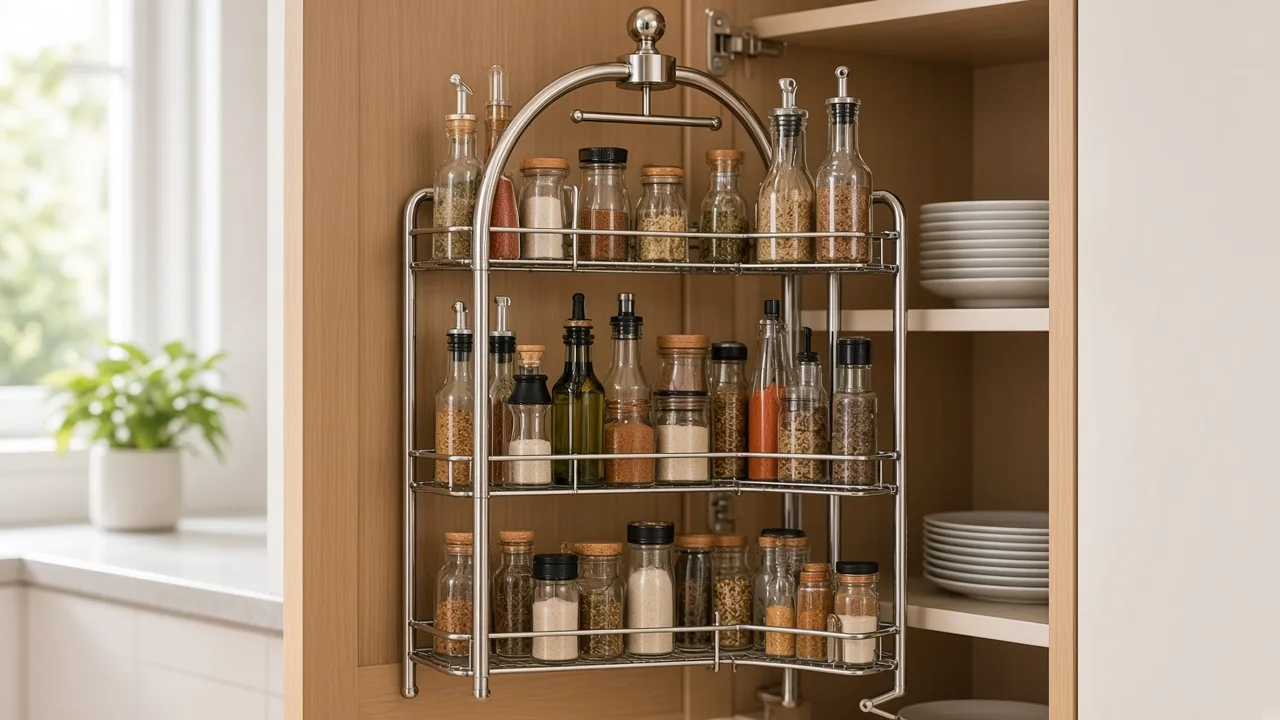
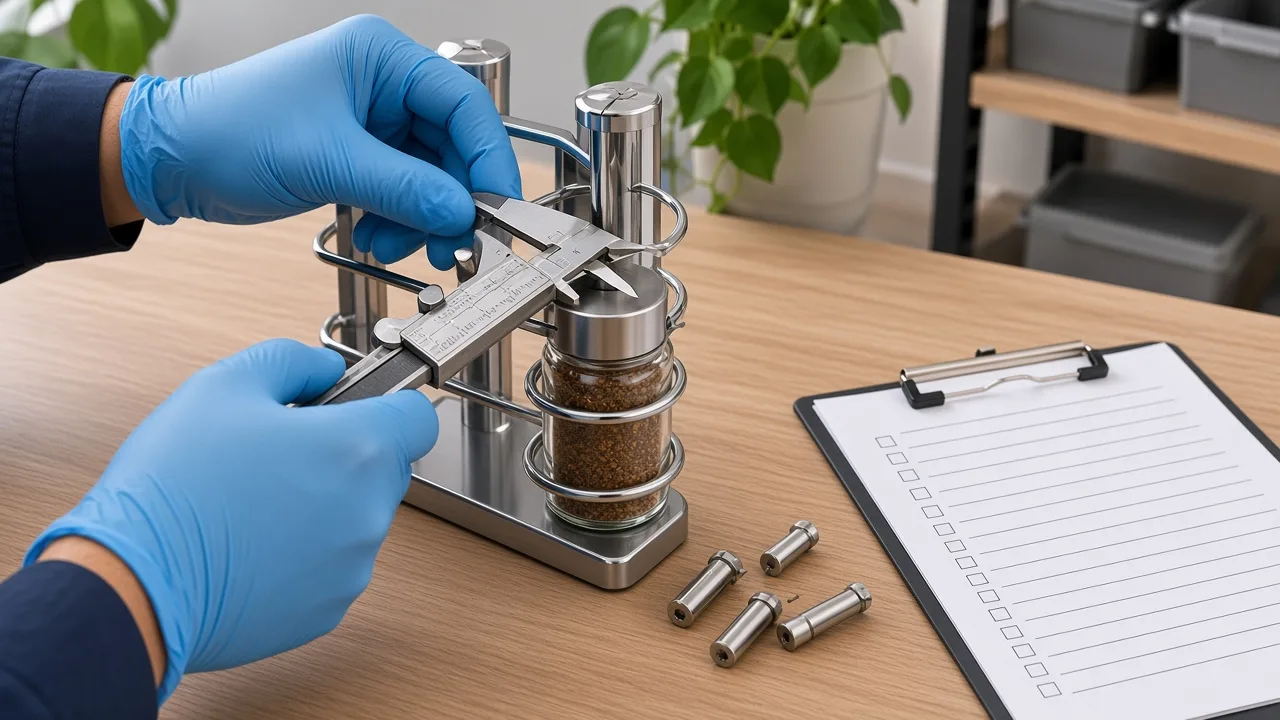
Retail returns that say “bottles don’t fit” are usually a missing spice rack bottle diameter window on the drawing—not a mysterious weld defect. This guide freezes min/max diameter, ovality, cap interference, and go/no-go IQC for a spice rack bottle diameter program without rewriting kitchen spice rack jar clearance design essays or filler pull-out spice rack cabinet posts.
Jar clearance posts emphasize shelf pitch and label height. Filler pull-outs emphasize cabinet filler width. Here the primary angle is bottle diameter versus opening geometry on the rack itself.
In this guide
- Why Bottle Diameter Fit Differs From Jar Clearance Essays
- How to Freeze Spice Rack Bottle Diameter CTQs
- 9 Diameter Fit Checks Buyers Must Spec
- Accept, Rework, or Reject on Diameter Fit
- RFQ Checklist Language for Min/Max Bottle Diameter
- FAQ: Spice Rack Bottle Diameter Specs
- Send Your Spice Rack Bottle Diameter Spec for Review
Why Bottle Diameter Fit Differs From Jar Clearance Essays
Clearance above the jar matters for lids and pour spouts. Diameter decides whether the bottle enters the wire ring or between rails at all. Both CTQs belong in a complete RFQ, but they are not interchangeable.
See kitchen spice rack jar clearance design for pitch/height neighbors, filler pull out spice rack OEM specification guide for filler cabinet mechanisms, and over door spice rack door clearance specification for door-mount envelopes. This page stays on diameter fit.
How to Freeze Spice Rack Bottle Diameter CTQs
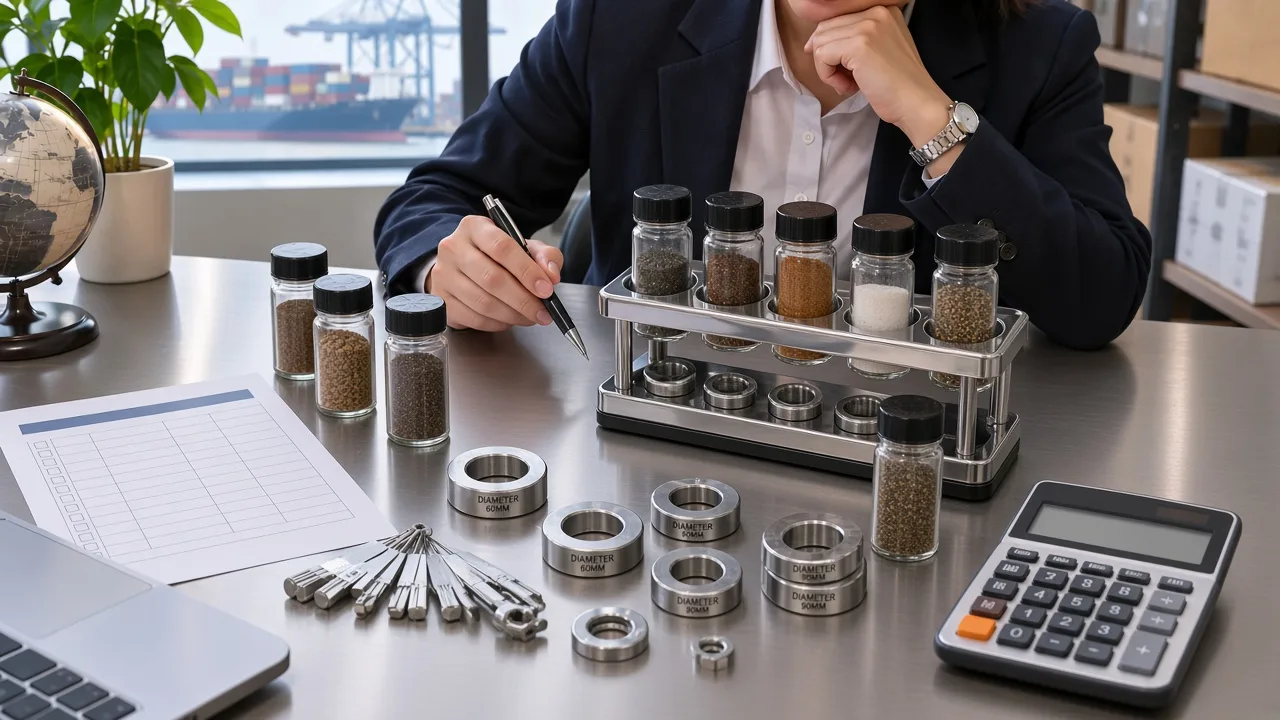
Freeze opening ID, rail spacing, min/max bottle diameter, ovality allowance, cap diameter, and a physical go/no-go pin or ring set. Write spice rack bottle diameter as the IQC header.
Measure bottles the way customers buy them
Include retail glass rounds, plastic square bottles, and tall oil bottles if marketing shows them. Square bottles need diagonal and across-flat notes.
Openings are not perfect circles
Welded rings distort. Measure min ID after finish. Chrome buildup narrows openings versus raw wire.
Dimensional tolerancing discussions often reference ISO 2768 when drawings omit specifics. Gauge calibration culture can lean on NIST. Material thickness and coating measurement methods appear across ASTM catalogs—cite only what you adopt.
9 Diameter Fit Checks Buyers Must Spec
DIA-01 — Opening ID after finish
Min ID __ mm; measure multi-point. Log under spice rack bottle diameter.
DIA-02 — Max bottle diameter pass
Largest claimed bottle inserts without force. Log under spice rack bottle diameter.
DIA-03 — Min diameter retention
Smallest claimed bottle does not fall through / tip out under yank. Log under spice rack bottle diameter.
DIA-04 — Ovality / out-of-round
Max ovality __ mm on rings. Log under spice rack bottle diameter.
DIA-05 — Cap interference
Cap Ø and height clear adjacent rails when seated. Log under spice rack bottle diameter.
DIA-06 — Square bottle diagonal
Across-flat and diagonal notes for claimed squares. Log under spice rack bottle diameter.
DIA-07 — Tier pitch interaction
Tall thin bottles do not collide with the shelf above when diameter fits. Log under spice rack bottle diameter.
DIA-08 — Finish buildup control
Chrome/powder thickness window so openings stay in DIA-01. Log under spice rack bottle diameter.
DIA-09 — Go/no-go kit identity
Pin/ring set IDs on IQC sheet; photo with sample. Log under spice rack bottle diameter.
FAQ: Spice Rack Bottle Diameter Specs
Is jar clearance enough?
No. Clearance covers height/pitch; diameter covers entry and retention.
Chrome vs powder effect?
Buildup narrows openings—measure after finish.
One size for all markets?
US/EU retail bottles differ; freeze regional bottle boards if needed.
Send Your Spice Rack Bottle Diameter Spec for Review
If you are building an RFQ or PPS checklist around spice rack bottle diameter, send the drawing revision, target retail channel, and sample matrix to Koitor Hardware contact or email simon@koitorhardware.com. We will map CTQs, suggest accept language, and note where a complementary pillar post already covers an adjacent angle.
Factory reference: Jiangmen, Guangdong OEM wire and bathroom/kitchen storage hardware. Photos in this draft are generic laboratory and product scenes, not a claim that every SKU ships from one line.
Include magnetic spice tins if marketing shows them—their OD differs from glass rounds.
Weld spatter inside rings is a Major when it reduces ID.
Do not approve marketing that shows bottles larger than the frozen max.
Keep go/no-go rings calibrated; plastic print rings wear fast.
Square bottles can jam on wire grids even when round OD would pass—test both.
Tier-to-tier pitch still matters once diameter passes; link to jar clearance annex.
Forbid silent wire diameter changes that shrink inner openings.
Photograph each tier’s openings on PPS.
Retail multipacks of bottles should be part of the golden kit.
If the rack is pull-out, test diameter fit while the unit is extended and retracted.
Label min/max Ø on the sell sheet in mm and inches for AU/US buyers.
CAPA should name welding jig IDs when rings go oval.
Export cartons must protect rings from ovalizing under strap pressure.
Train IQC to measure after coating cure, not before.
Keep a failed bottle set in quarantine for training, not for resale demos.
Align SKU codes when one frame offers two opening sizes.
Oil bottles with pour spouts need cap/spout envelope notes beyond plain Ø.
Feeler gauges help when rings are slightly egg-shaped.
Digital calipers need zero checks each shift.
Bilingual RFQs keep the English phrase spice rack bottle diameter stable for search.
Tie every fail to a fixture ID, tool ID, and revision letter so CAPA is not a blame meeting. Lock carton marks and insert revision with the hardware BOM to protect retail intake identity.
Photograph the scale or caliper display in the same frame as the sample tag whenever metrology decides the lot. Prefer a short process note on the controlling dimension over a marketing capacity claim.
Separate Critical, Major, and Minor before the audit walk so rework cannot be redefined after goods leave the dock. Require the supplier to name the consumer-condition fixture used in the lab.
Ask for bilingual callouts when EU and AU share tooling but not copy decks. Skip-lot cadence should be written, not implied by “we tested the first lot.”
Confirm cure and cool-down after finishing before functional cycles begin. Keep quarantine cages for failed units so they cannot re-enter finished goods without a retest.
Map left-hand and right-hand variants explicitly; silent mirroring errors become field returns. Export edge protection on golden samples prevents false field narratives.
Store golden samples with desiccant when finish rub is part of accept criteria. Train inspectors to reject undocumented tool substitutions during the audit.
Lock carton marks and insert revision with the hardware BOM to protect retail intake identity. When retailers demand in-store demos, label non-rated demo masses clearly.
Prefer a short process note on the controlling dimension over a marketing capacity claim. Humidity loggers near wet-room fixtures prevent dry-lab theater.
Require the supplier to name the consumer-condition fixture used in the lab. Change wire diameter or slide brand only with a protocol re-run, not a verbal OK.
Skip-lot cadence should be written, not implied by “we tested the first lot.” Retail channel differences (hotel yank vs residential bottle mass) belong in the RFQ notes.
Keep quarantine cages for failed units so they cannot re-enter finished goods without a retest. Third-party labs must receive your mount kit and coupons, not “equivalents.”
Export edge protection on golden samples prevents false field narratives. Digital records should keep the English CTQ phrase stable across translations.
Train inspectors to reject undocumented tool substitutions during the audit. Tie every fail to a fixture ID, tool ID, and revision letter so CAPA is not a blame meeting.
When retailers demand in-store demos, label non-rated demo masses clearly. Photograph the scale or caliper display in the same frame as the sample tag whenever metrology decides the lot.
Humidity loggers near wet-room fixtures prevent dry-lab theater. Separate Critical, Major, and Minor before the audit walk so rework cannot be redefined after goods leave the dock.
Change wire diameter or slide brand only with a protocol re-run, not a verbal OK. Ask for bilingual callouts when EU and AU share tooling but not copy decks.
Retail channel differences (hotel yank vs residential bottle mass) belong in the RFQ notes. Confirm cure and cool-down after finishing before functional cycles begin.
Third-party labs must receive your mount kit and coupons, not “equivalents.” Map left-hand and right-hand variants explicitly; silent mirroring errors become field returns.
Digital records should keep the English CTQ phrase stable across translations. Store golden samples with desiccant when finish rub is part of accept criteria.
Tie every fail to a fixture ID, tool ID, and revision letter so CAPA is not a blame meeting. Lock carton marks and insert revision with the hardware BOM to protect retail intake identity.
Photograph the scale or caliper display in the same frame as the sample tag whenever metrology decides the lot. Prefer a short process note on the controlling dimension over a marketing capacity claim.
Separate Critical, Major, and Minor before the audit walk so rework cannot be redefined after goods leave the dock. Require the supplier to name the consumer-condition fixture used in the lab.
Ask for bilingual callouts when EU and AU share tooling but not copy decks. Skip-lot cadence should be written, not implied by “we tested the first lot.”
Confirm cure and cool-down after finishing before functional cycles begin. Keep quarantine cages for failed units so they cannot re-enter finished goods without a retest.
Map left-hand and right-hand variants explicitly; silent mirroring errors become field returns. Export edge protection on golden samples prevents false field narratives.
Store golden samples with desiccant when finish rub is part of accept criteria. Train inspectors to reject undocumented tool substitutions during the audit.
Lock carton marks and insert revision with the hardware BOM to protect retail intake identity. When retailers demand in-store demos, label non-rated demo masses clearly.
Prefer a short process note on the controlling dimension over a marketing capacity claim. Humidity loggers near wet-room fixtures prevent dry-lab theater.
Require the supplier to name the consumer-condition fixture used in the lab. Change wire diameter or slide brand only with a protocol re-run, not a verbal OK.
Skip-lot cadence should be written, not implied by “we tested the first lot.” Retail channel differences (hotel yank vs residential bottle mass) belong in the RFQ notes.
Keep quarantine cages for failed units so they cannot re-enter finished goods without a retest. Third-party labs must receive your mount kit and coupons, not “equivalents.”
Export edge protection on golden samples prevents false field narratives. Digital records should keep the English CTQ phrase stable across translations.
Train inspectors to reject undocumented tool substitutions during the audit. Tie every fail to a fixture ID, tool ID, and revision letter so CAPA is not a blame meeting.
When retailers demand in-store demos, label non-rated demo masses clearly. Photograph the scale or caliper display in the same frame as the sample tag whenever metrology decides the lot.
Humidity loggers near wet-room fixtures prevent dry-lab theater. Separate Critical, Major, and Minor before the audit walk so rework cannot be redefined after goods leave the dock.
Change wire diameter or slide brand only with a protocol re-run, not a verbal OK. Ask for bilingual callouts when EU and AU share tooling but not copy decks.
Retail channel differences (hotel yank vs residential bottle mass) belong in the RFQ notes. Confirm cure and cool-down after finishing before functional cycles begin.
Third-party labs must receive your mount kit and coupons, not “equivalents.” Map left-hand and right-hand variants explicitly; silent mirroring errors become field returns.
Digital records should keep the English CTQ phrase stable across translations. Store golden samples with desiccant when finish rub is part of accept criteria.
Tie every fail to a fixture ID, tool ID, and revision letter so CAPA is not a blame meeting. Lock carton marks and insert revision with the hardware BOM to protect retail intake identity.
Photograph the scale or caliper display in the same frame as the sample tag whenever metrology decides the lot. Prefer a short process note on the controlling dimension over a marketing capacity claim.
Separate Critical, Major, and Minor before the audit walk so rework cannot be redefined after goods leave the dock. Require the supplier to name the consumer-condition fixture used in the lab.
Ask for bilingual callouts when EU and AU share tooling but not copy decks. Skip-lot cadence should be written, not implied by “we tested the first lot.”
Confirm cure and cool-down after finishing before functional cycles begin. Keep quarantine cages for failed units so they cannot re-enter finished goods without a retest.
Map left-hand and right-hand variants explicitly; silent mirroring errors become field returns. Export edge protection on golden samples prevents false field narratives.
Store golden samples with desiccant when finish rub is part of accept criteria. Train inspectors to reject undocumented tool substitutions during the audit.
Lock carton marks and insert revision with the hardware BOM to protect retail intake identity. When retailers demand in-store demos, label non-rated demo masses clearly.
Prefer a short process note on the controlling dimension over a marketing capacity claim. Humidity loggers near wet-room fixtures prevent dry-lab theater.
Require the supplier to name the consumer-condition fixture used in the lab. Change wire diameter or slide brand only with a protocol re-run, not a verbal OK.
Skip-lot cadence should be written, not implied by “we tested the first lot.” Retail channel differences (hotel yank vs residential bottle mass) belong in the RFQ notes.
Keep quarantine cages for failed units so they cannot re-enter finished goods without a retest. Third-party labs must receive your mount kit and coupons, not “equivalents.”
Export edge protection on golden samples prevents false field narratives. Digital records should keep the English CTQ phrase stable across translations.
Train inspectors to reject undocumented tool substitutions during the audit. Tie every fail to a fixture ID, tool ID, and revision letter so CAPA is not a blame meeting.
When retailers demand in-store demos, label non-rated demo masses clearly. Photograph the scale or caliper display in the same frame as the sample tag whenever metrology decides the lot.
Humidity loggers near wet-room fixtures prevent dry-lab theater. Separate Critical, Major, and Minor before the audit walk so rework cannot be redefined after goods leave the dock.
Change wire diameter or slide brand only with a protocol re-run, not a verbal OK. Ask for bilingual callouts when EU and AU share tooling but not copy decks.
Retail channel differences (hotel yank vs residential bottle mass) belong in the RFQ notes. Confirm cure and cool-down after finishing before functional cycles begin.
Third-party labs must receive your mount kit and coupons, not “equivalents.” Map left-hand and right-hand variants explicitly; silent mirroring errors become field returns.
Digital records should keep the English CTQ phrase stable across translations. Store golden samples with desiccant when finish rub is part of accept criteria.
Tie every fail to a fixture ID, tool ID, and revision letter so CAPA is not a blame meeting. Lock carton marks and insert revision with the hardware BOM to protect retail intake identity.
Photograph the scale or caliper display in the same frame as the sample tag whenever metrology decides the lot. Prefer a short process note on the controlling dimension over a marketing capacity claim.
Separate Critical, Major, and Minor before the audit walk so rework cannot be redefined after goods leave the dock. Require the supplier to name the consumer-condition fixture used in the lab.
Ask for bilingual callouts when EU and AU share tooling but not copy decks. Skip-lot cadence should be written, not implied by “we tested the first lot.”
Confirm cure and cool-down after finishing before functional cycles begin. Keep quarantine cages for failed units so they cannot re-enter finished goods without a retest.
Map left-hand and right-hand variants explicitly; silent mirroring errors become field returns. Export edge protection on golden samples prevents false field narratives.
Store golden samples with desiccant when finish rub is part of accept criteria. Train inspectors to reject undocumented tool substitutions during the audit.
Lock carton marks and insert revision with the hardware BOM to protect retail intake identity. When retailers demand in-store demos, label non-rated demo masses clearly.
Prefer a short process note on the controlling dimension over a marketing capacity claim. Humidity loggers near wet-room fixtures prevent dry-lab theater.
Require the supplier to name the consumer-condition fixture used in the lab. Change wire diameter or slide brand only with a protocol re-run, not a verbal OK.
Skip-lot cadence should be written, not implied by “we tested the first lot.” Retail channel differences (hotel yank vs residential bottle mass) belong in the RFQ notes.
Keep quarantine cages for failed units so they cannot re-enter finished goods without a retest. Third-party labs must receive your mount kit and coupons, not “equivalents.”
Export edge protection on golden samples prevents false field narratives. Digital records should keep the English CTQ phrase stable across translations.
Train inspectors to reject undocumented tool substitutions during the audit. Tie every fail to a fixture ID, tool ID, and revision letter so CAPA is not a blame meeting.
When retailers demand in-store demos, label non-rated demo masses clearly. Photograph the scale or caliper display in the same frame as the sample tag whenever metrology decides the lot.
Humidity loggers near wet-room fixtures prevent dry-lab theater. Separate Critical, Major, and Minor before the audit walk so rework cannot be redefined after goods leave the dock.
Change wire diameter or slide brand only with a protocol re-run, not a verbal OK. Ask for bilingual callouts when EU and AU share tooling but not copy decks.
Retail channel differences (hotel yank vs residential bottle mass) belong in the RFQ notes. Confirm cure and cool-down after finishing before functional cycles begin.
Third-party labs must receive your mount kit and coupons, not “equivalents.” Map left-hand and right-hand variants explicitly; silent mirroring errors become field returns.
Digital records should keep the English CTQ phrase stable across translations. Store golden samples with desiccant when finish rub is part of accept criteria.
Tie every fail to a fixture ID, tool ID, and revision letter so CAPA is not a blame meeting. Lock carton marks and insert revision with the hardware BOM to protect retail intake identity.
Photograph the scale or caliper display in the same frame as the sample tag whenever metrology decides the lot. Prefer a short process note on the controlling dimension over a marketing capacity claim.
Separate Critical, Major, and Minor before the audit walk so rework cannot be redefined after goods leave the dock. Require the supplier to name the consumer-condition fixture used in the lab.
Ask for bilingual callouts when EU and AU share tooling but not copy decks. Skip-lot cadence should be written, not implied by “we tested the first lot.”
OEM / PRIVATE LABEL
Turn this sourcing guide into a product brief
Share your target product, size, finish, order quantity and packaging requirements. Your team receives a practical manufacturability review before quotation.
 English
 Español
 Português
 Français
 Deutsch
 العربية