
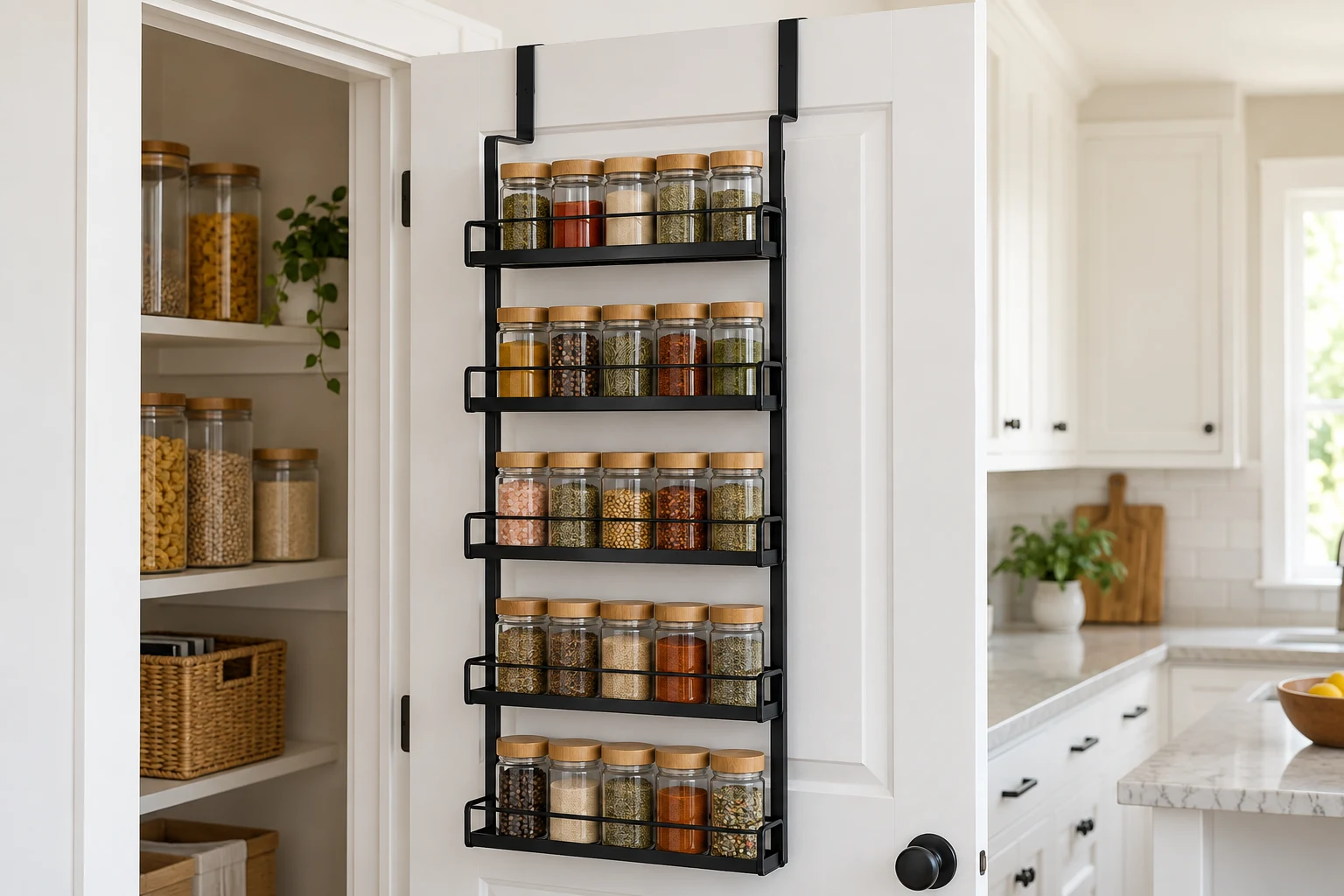
An over door spice rack door clearance specification should define the door and frame first, then the loaded rack. A private-label buyer needs evidence that the hook fits the intended door thickness and top gap, the door still closes, the loaded rack clears nearby shelves and trim during its full swing, and jars remain retained during ordinary use. Confirm those decisions on a representative cabinet or pantry-door sample before approving production. A catalog photograph of a rack hanging on an open door cannot establish any of them.
Which door dimensions should a buyer obtain before the RFQ?
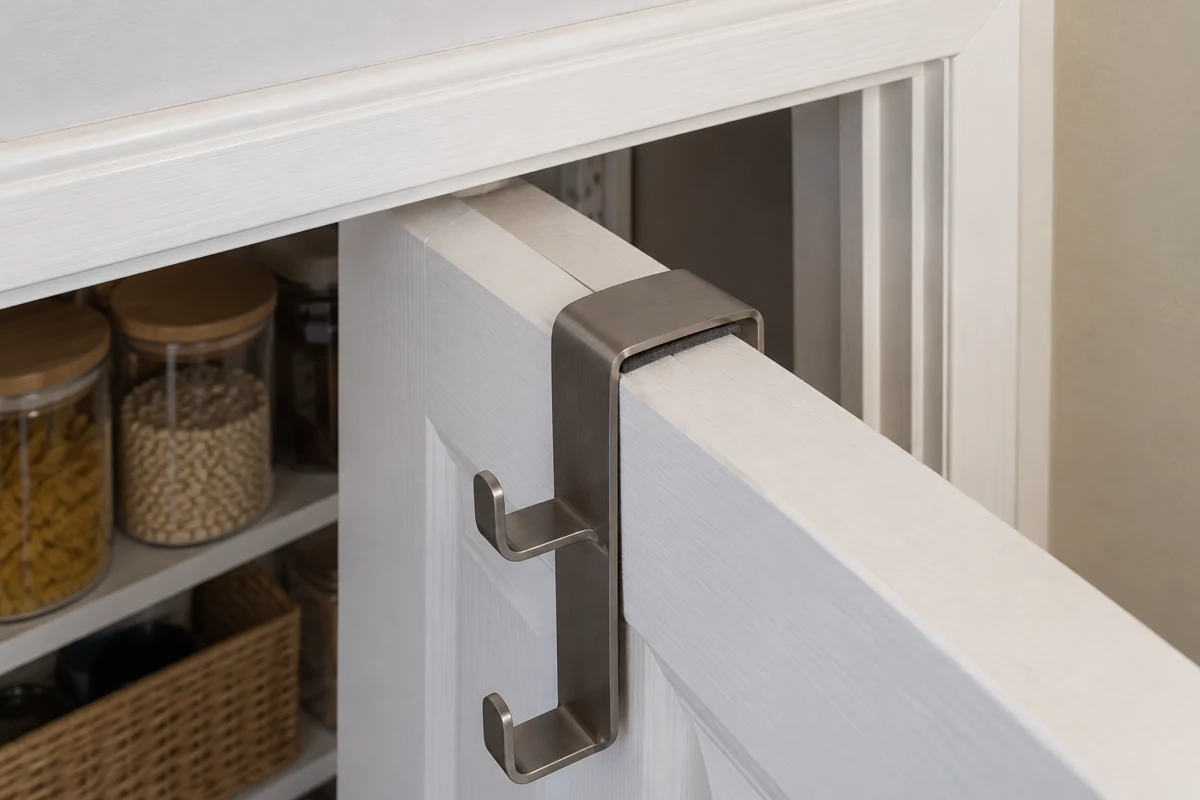
Measure the actual door thickness at the top edge, not only the nominal door specification. Paint, veneer, edge banding and local profile changes can affect how a bent hook sits. Record the distance from the door top to the frame or cabinet head when closed, the width of the upper rail, and any gasket or soft-close feature in that region. Some doors close into a recessed frame; others sit proud of the cabinet. The same hook can clear one arrangement and prevent another from closing.
The buyer should identify whether the product is intended for an interior pantry door, a kitchen cabinet door or another door type. These are different installation envelopes. Document the door’s opening direction, hinge side, typical swing angle, nearby wall or cabinet trim and usable space on both faces. A rack marketed for a wide range of doors needs a documented compatibility range and excluded cases, not a promise based on one convenient sample.
Obtain the door construction and any installation restrictions. A metal hook can damage a finish if its contact points are unprotected or if the loaded rack moves. Protective pads may change effective hook clearance and may wear or detach. The buyer should specify whether pads are supplied, where they are applied and whether the customer must install them. Do not assume a pad solves an unsuitable door or unsupported load path.
Include the intended jars in the brief: count, typical filled mass, largest diameter and highest lid profile. Jar dimensions matter to shelf layout, but this guide focuses on door mounting and movement. For a fuller jar-envelope decision, see Koitor’s spice rack jar clearance guide if that live article remains available. The buyer should keep the jar assortment consistent across fit and retention trials.
How should hook profile and top-gap clearance be specified?
Draw the hook as a cross-section through the door top and frame, showing metal thickness, inside bend radius, any padding, the downward legs and the door surface. Define a maximum assembled thickness at the top contact zone. A nominally thin metal strip can become too thick when a pad, decorative coating or folded edge is included. The buyer should test the complete finished hook, not an uncoated bare-metal prototype.
Check how the hook loads the door. When jars are placed away from the door surface, the weight can create a turning moment that makes the rack swing or pull the upper hook forward. Two top hooks may distribute the load, but their spacing and relation to the door panel should be specified. A lower restraint, stabilizing bar or pad may reduce movement; its exact effectiveness depends on the door and loaded rack. Avoid a universal weight rating without a defined door, fastener arrangement and test method.
Door closing is a pass/fail observation in the target installation, not a dimension guessed from a web photo. Install the complete rack with pads and intended accessories, close the door gently, then open and close it repeatedly as the buyer’s project requires. Observe rubbing, scraping, compression, noise and whether the latch engages. If a finish mark appears, determine the actual contact point rather than hiding the issue with a broad statement that the hook is “door safe.”
For repeat orders, control the hook drawing and pad specification. A change in metal thickness, bend tooling, coating build or pad supplier can alter fit even if the rack’s visible shelves look identical. The over door spice rack door clearance specification should therefore identify the hook assembly revision, measured door samples and an agreed change-review trigger.
What loaded swing envelope must the sample clear?
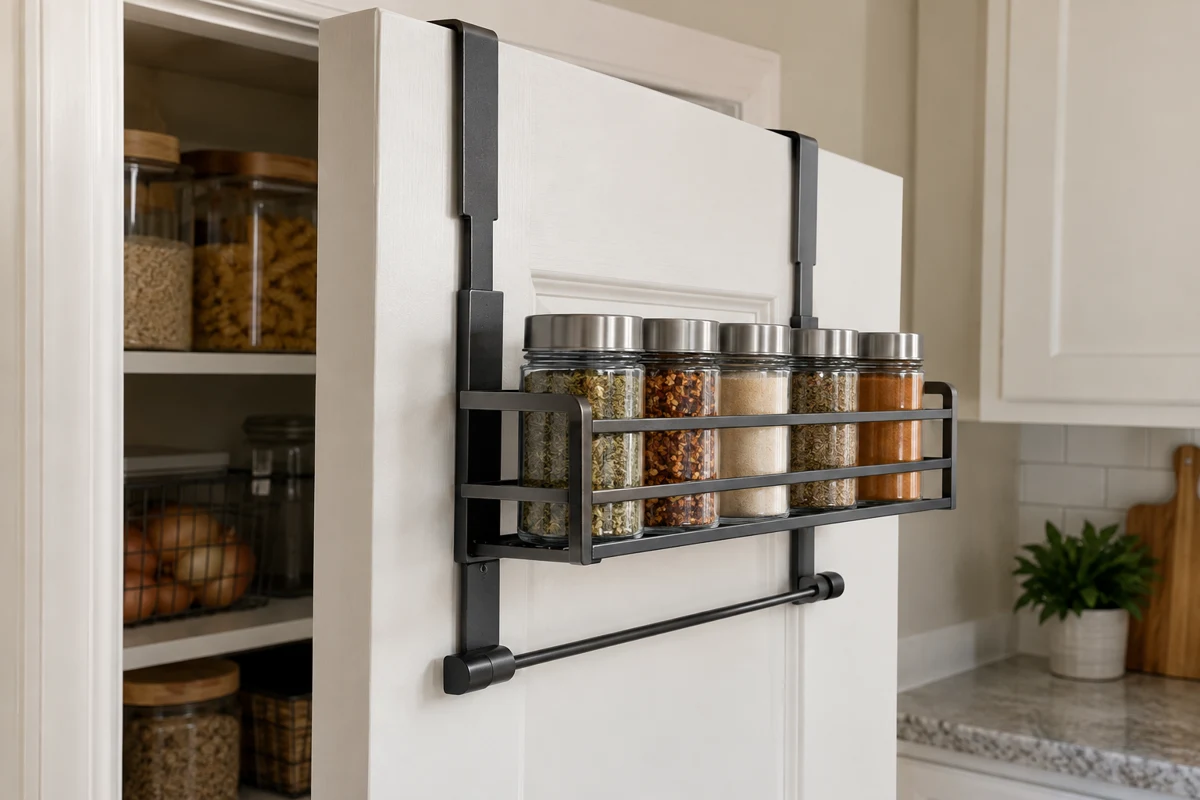
The rack moves with the door. Draw its outer envelope at closed, intermediate and fully open positions, including jars, lids, handles, side rails and any lower restraint. The path can intersect a wall, pantry shelf, refrigerator, cabinet trim or another door. A front elevation showing that the rack fits the door panel does not reveal those side collisions. Buyers should review the swing in plan view and on a physical sample.
Loaded movement can differ from empty movement. Jars may extend beyond the rail, and a rack may flex or swing away from the door during opening. Ask the supplier to show the intended jar arrangement and the most protruding item. Test opening and closing at a realistic pace, without slamming and without relying on a person holding the rack steady. If the product is meant for a narrow pantry, include the narrowest planned clearance in the sample set.
Hinges and door closers create another constraint. A soft-close cabinet door may slow before the rack reaches its parked position; an interior pantry door may have a stop that prevents the rack from striking the wall. The rack designer should not assume one hinge or stopper applies to every buyer channel. If compatibility depends on a certain swing angle or door stop, state that clearly in installation guidance.
Access to the jars is part of the swing decision. A rack installed on the inner face may become difficult to reach if the door opens only partially. A rack mounted on the outside face may enter a traffic route. The buyer should decide which side of the door is intended and where the user stands. For a private-label assortment, this may affect packaging images, assembly instructions and the claim on the product detail page.
How should jars be retained when the door moves?
A stationary rack can look stable while a moving door causes jars to rattle, tip or leave the shelf. Define the intended jar shapes and fill condition, then review shelf depth, front rail height, side stops and any anti-slip features. The rail should retain the target jars without making them difficult to lift out. A buyer should not approve a rack using empty demonstration jars if the selling proposition assumes filled glass containers.
The key review is controlled movement through the full door path. Load the rack according to the approved arrangement, open and close the door and record any jar contact, shifting, noise or escape. Agree a project-specific movement method and acceptance criteria with the product and quality teams; there is no credible universal number for every door and jar. Inspect whether a lower restraint keeps the rack against the door or merely transfers impact to another surface.
Consider misloading. Customers may put a tall or heavy jar on one side. The buyer cannot test every possible misuse, but should identify foreseeable loading patterns within the promised use. If the rack requires even distribution or restricts jar size, the instructions and merchandising should say so. The loading rule should match the physical sample, not be added after complaints appear.
Metal manufacturing details matter at the retention rail and hook. Bends should have consistent geometry; welds or joining points should not leave sharp protrusions near jars or hands; the finish should survive assembly and normal contact with the intended containers. Koitor’s established metal storage-rack and spice-rack experience can inform these questions. It does not confirm that Koitor currently produces this over-door spice-rack configuration or a particular hook system; buyers must verify the exact proposed scope.
When is a screw-fixed rack a different product decision?
An over-door hook and a screw-fixed door rack may appear similar in a catalog, but they place loads into the door differently and require different customer actions. A hook avoids drilled holes yet depends on the top gap, door profile and movement restraint. A screw-fixed rack can offer a more direct attachment but requires an approved substrate, drilling pattern and installation procedure. Buyers should not treat the two mounting methods as interchangeable variants without a new fit and installation review.
| Mounting approach | Potential buyer value | Approval question |
|---|---|---|
| Over-door hook | Installation without drilling for a defined door range | Does the finished hook clear the frame and stay stable on the loaded door? |
| Hook plus lower restraint | May reduce swing and surface contact | Does the restraint work with the intended door finish and movement? |
| Screw-fixed door mount | Different attachment route when drilling is acceptable | Is the door construction suitable, and are fastener positions approved? |
| Wall or cabinet-side mount | Moves the load away from the door | Does the new installation location still solve the buyer’s access problem? |
A mounting change can also alter cost and packaging. A hook assembly may need pads, covers and a protected shape that does not scratch neighboring parts in transit. A screw-fixed version needs a controlled fastener pack, drilling instructions and possibly a template. If the buyer requests both versions, create distinct bills of material and sample approvals rather than one ambiguous product sheet.
Check commercial intent carefully. A buyer looking for a supplier of kitchen storage hardware may use Koitor’s custom kitchen storage rack manufacturer page to discuss capability. This article addresses a narrower technical specification: whether a proposed over-door spice rack fits and behaves correctly on its intended door. A supplier inquiry should include the door and jar evidence, rather than assume that a general metal rack quotation proves fit.
Which sample checks and instructions belong in approval?
Select representative doors before approving the first sample. Include at least one door near the tight end of the intended top-gap range and one with the hinge or trim condition most likely to interfere. Test the actual finished hook and pad, not a drawing approximation. Record the door manufacturer or construction where known, measured thickness, gap, hinge arrangement, swing angle and finish. Photographs should include the rack both unloaded and loaded.
Use an installation sequence that a customer could follow. Can one person hang the rack without bending the hook or scratching the door? Can the door close immediately after installation? If a lower restraint must be placed at a particular height, does the instruction make that obvious? If a door type is excluded, state it where a buyer can see it before purchase, not only in a complaint response.
Then run a loaded movement review. Fill the approved jar assortment, open and close the door through the intended path, observe jar retention and rack movement, and inspect contact points for marks. Record the conditions, observations and any adjustment made. A supplier should not quietly retighten or reposition the rack between photographs. The buyer’s quality team should establish numerical criteria when it has a defined method and target market; this guide intentionally does not invent a rating.
Finally, verify packaging and repeat-order controls. The hook should not puncture or rub the carton, pads should be identified, jars if supplied should be protected, and installation instructions should match the approved mounting variant. Preserve the drawing, material/finish references, sample photographs and fit-test notes. Any change to hook geometry, pad, shelf rail, lower restraint or packaged jar assortment should trigger a review of the over door spice rack door clearance specification.
- Identify buyer, target market, door type and whether the rack hangs inside or outside.
- Record door thickness, top gap, upper rail, hinge, trim, gasket and closing behavior.
- Draw the finished hook cross-section including coating and padding.
- Define loaded jar assortment, filled mass assumptions and foreseeable loading pattern.
- Draw the rack and jar sweep at closed, intermediate and open door positions.
- Check front rail, side retention, lower restraint and finish contact points.
- Agree representative doors, installation sequence, loaded movement observations and acceptance owner.
- Control drawings, component substitutions, packaging and compatibility exclusions.
When preparing a private-label brief, send the door drawings and intended jar set together. Contact Koitor to ask whether the exact metal construction and product-development scope can be supported; general spice-rack experience is not proof of current over-door SKU production.
What do buyers ask about over-door spice rack development?
Is door thickness enough to specify the hook?
No. The top gap, frame profile, pad and coating thickness, door swing and intended load all affect fit. Check the finished hook on a representative door with the rack loaded.
Why should the rack be tested while the door opens?
The moving rack and jars may strike shelves, trim or a wall even when the door closes in a static photo. Movement can also make jars shift. Review the full swing envelope with the intended item assortment.
Can a protective pad guarantee no door damage?
No. Its location, attachment, wear and contact pressure matter, as does the door finish. Inspect the sample contact points and define compatible doors and care instructions instead of making a universal no-damage claim.
Can the same approval cover a screw-fixed version?
No. Drilling, substrate suitability, fastener placement and installation differ. Treat it as a separate mounting variant with its own drawing, sample and instructions.
Does Koitor currently make an over-door spice rack?
Its documented experience includes metal storage hardware and spice racks. The exact over-door model and hook arrangement are not confirmed current products; ask Koitor to verify capability for the proposed design before making a production claim.
Discuss a door-mounted storage brief
Share the door profile, top gap, swing envelope and intended jars. Koitor can review relevant metal-hardware questions and confirm the exact project scope.
OEM / PRIVATE LABEL
Turn this sourcing guide into a product brief
Share your target product, size, finish, order quantity and packaging requirements. Your team receives a practical manufacturability review before quotation.
 English
  Español
  Português
  Français
  Deutsch
  العربية