

As checked on 23 October 2026, a UK importer should prepare for CBAM by screening each SKU against HMRC’s current list of covered UK commodity codes, then tracking the value tests only for goods confirmed in scope. The UK CBAM home storage hardware importer workflow is not a blanket “steel product” rule: product identity, customs classification and importer responsibility must be confirmed first. From 1 January 2027, the UK uses £50,000 value-based registration tests; that differs from the EU’s current mass-based threshold. This is a dated buyer-planning guide, not legal or customs-classification advice.
Why must a buyer start with the exact SKU and code?
CBAM scope is not decided by a retail name such as “bathroom basket,” “metal shelf” or “storage rack.” HMRC says UK CBAM applies to specified goods within named sectors and identifies product-level scope by commodity codes. The UK government includes aluminium, cement, fertiliser, hydrogen, and iron and steel sectors, but only listed goods within those sectors are covered. An item that contains steel is not automatically a CBAM good.
Start with the exact product as it will be imported. Give the customs professional a current drawing or clear product photo, the article’s principal function, construction, material composition, and how components are presented at import. For mixed-material products, note which elements are metal, plastic, rubber, wood or other materials. These facts help a broker or classification specialist assess the applicable commodity code under customs rules; they do not let a supplier or blog author choose that code on the importer’s behalf.
The buyer should then compare the confirmed UK commodity code with HMRC’s current in-scope schedule, keeping a dated copy or reference to the exact code line reviewed. Use HMRC’s CBAM scope checker and sector schedules rather than a supplier catalogue, search snippet, old tariff spreadsheet or an EU CN-code list. UK commodity codes and EU CN codes serve related customs purposes but their CBAM schedules and legal regimes should not be treated as interchangeable.
If a code is unclear, record the status as “unresolved” and assign an owner and due date. Do not mark the SKU as covered or excluded simply to complete an internal spreadsheet. A change in design, material, function or import presentation can also require a classification review; a changed marketing name alone may not alter the objective product facts.
Who owns the CBAM scope decision and the import record?
The buyer-side legal responsibility must be mapped to the actual importing arrangement. Depending on the transaction and customs procedures, the liable person may not be the factory that made the product or the brand that designed it. The importer should ask its customs broker or adviser to confirm which legal entity is responsible, what declarations and customs records identify that entity, and how representatives act in the specific arrangement. A purchase order, invoice or shipping instruction alone should not be assumed to settle the legal role.
For each SKU, name separate owners for product facts, customs classification, import values, CBAM threshold monitoring, emissions information when required, and regulatory updates. Procurement can maintain the product record; the customs team or broker can confirm codes and import entries; finance can reconcile values; a compliance owner can monitor rule changes; and the supplier can provide verified product or production facts requested for a confirmed covered good. Assigning owners prevents a vague request such as “send CBAM documents” from going unanswered or producing irrelevant files.
Keep the supplier’s role narrow and factual. Koitor Hardware is a family-owned custom metal hardware factory focused on bathroom and home storage hardware. Where confirmed product records are available, the factory can discuss the product’s construction, materials and manufacturing information relevant to a buyer’s SKU file. Koitor is not the importer’s customs broker, HMRC registration agent, tariff-classification authority or emissions verifier, and a factory response does not transfer the importer’s legal obligations.
Identify the SKU revision and state the exact factual fields requested, such as composition, weight or process detail. Buyers comparing customization scope can review Koitor’s home-storage hardware manufacturing information and send a specific SKU question. Do not request unsupported certificates or a supplier certification of CBAM scope.
How do the UK £50,000 registration tests work?
HMRC’s current guidance describes two tests, both limited to UK CBAM goods and applying from 1 January 2027. The forward-looking test asks whether the importer expects to bring £50,000 or more of CBAM goods into the UK within the next 30 days. The backward-looking test is checked on the first day of each month and asks whether £50,000 or more of CBAM goods were imported during the preceding 12 months. If both tests apply, HMRC says to use the earlier date on which liability begins.
This is not a £50,000 allowance per order, SKU, supplier or shipment. The importer needs a consolidated view across its relevant covered imports, mapped to the legal person and the applicable period. The test must not include goods that have not been confirmed as CBAM goods. HMRC’s registration-date guidance explains the tests and examples; use the current wording when setting up an internal monitor.
| Review item | Forward-looking test | Backward-looking test |
|---|---|---|
| When to review | On or after 1 January 2027 when a relevant expectation arises | On the first day of each month from 1 January 2027 |
| Period examined | Next 30 days | Preceding 12 months; during 2027, look back only to 1 January 2027 |
| Trigger described by HMRC | Expected UK imports of CBAM goods worth £50,000 or more | UK imports of CBAM goods worth £50,000 or more |
| Practical record | Forecast, expected tax-point dates, values and source | Customs-entry dates, values and covered-good evidence |
| What to do if reached | Confirm liability start date and required action with current HMRC guidance/adviser | Confirm liability start date and required action with current HMRC guidance/adviser |
The threshold is a registration trigger, not a product-scope test. A buyer should first establish that a commodity code and good fall within the current UK schedule, then calculate the relevant value under official rules. Do not add all metal bathroom or home-storage purchases to the threshold merely because they share a material. Do not use a factory invoice total as a substitute for the importer’s confirmed CBAM goods records without checking the valuation and tax-point rules with an adviser.
The policy summary also says registration opens on 1 January 2028. For the first CBAM calendar year, businesses that become liable during 2027 have until 31 January 2028 to register; that does not make the 2027 monitoring tests optional. HMRC’s policy summary describes the first accounting period as 1 January to 31 December 2027, with the first return and payment due 31 May 2028. Confirm the latest timetable before relying on it, because detailed guidance and implementation can change.
What should the importer ask a broker to confirm?
Give the broker a product pack that lets them assess the item rather than guess from a short description. Include the SKU and revision, function, product photographs, drawing, bill of materials where available, the material and construction facts, country of origin information, import presentation, and the date the goods are expected to cross the relevant tax point. Clearly distinguish confirmed facts from preliminary supplier data or assumptions.
Ask the broker or customs specialist to record the classification basis, applicable UK commodity code, the exact HMRC scope-list version or date checked, whether the product description matches a listed CBAM good, and any unresolved classification question. Ask who owns the final decision and whether a formal ruling or other authoritative route is appropriate for the case. The article does not prescribe a code; codes can depend on the imported article and its characteristics.
The same record should identify the legal importer and any customs representative, how relevant entries will be extracted, and which value data is used for each threshold test. Ask how corrections, split consignments, returns, changing importers, special customs procedures or amended declarations affect the review. These are fact-specific customs questions. Capture the answer and source rather than silently converting an adviser note into a permanent rule for every product.
If a product falls outside the current list, retain the basis and set a review trigger instead of treating “not in scope today” as an unchangeable conclusion. Triggers may include a commodity-code change, an amended HMRC schedule, a substantive design change or a revised classification. The register should show the review date, the person who approved the status, and the next event that would reopen the analysis.
What product information can the factory provide?
Once a buyer has a confirmed in-scope SKU and a precise request, supplier information can support the importer’s record. Depending on the product and what has been documented, a buyer may ask for material identification, product composition, net product or component weights, manufacturing-process facts, and source records the factory actually maintains. Ask for the specific level of detail required by the applicable HMRC rules and the buyer’s adviser; do not assume every field applies to every home-storage product.
A useful handoff distinguishes product facts from regulatory conclusions. For example, a factory can confirm that a particular revision is a wire basket with stated components and materials when those facts are supported by its records. The broker assesses the UK commodity code. The importer determines its legal role, aggregates import data and monitors registration. The emissions or CBAM adviser clarifies any required calculation evidence. A clear responsibility matrix avoids asking one party to certify information that belongs to another.
When requesting information, identify the SKU revision, requested field, unit and measurement basis, supporting evidence, owner and due date. Preserve the response and any corrections. Separate net mass of covered goods from product-component weight, packaging weight and gross shipping weight; they are not interchangeable fields.
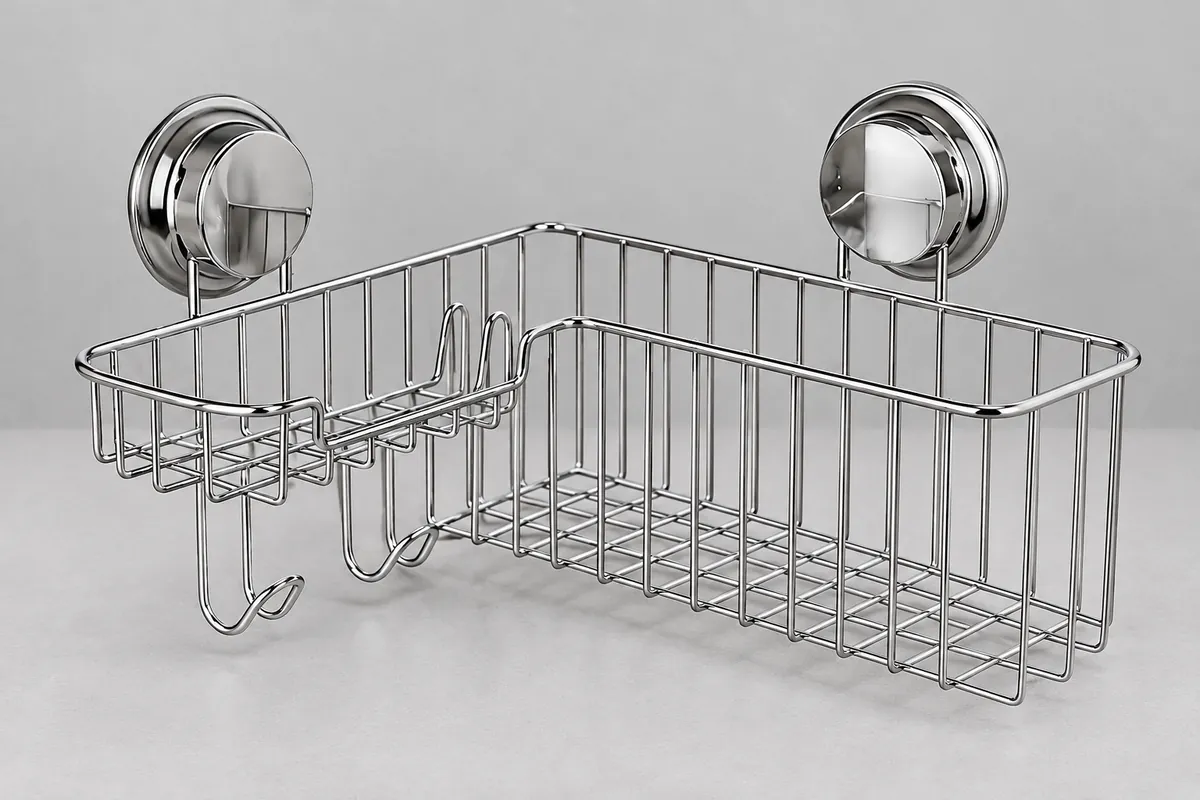
Do not use the image or physical sample alone as proof of hidden material composition, emissions, customs origin or a legal code. A visual review can help match a sample to an SKU, but it cannot independently establish those properties. If supplier records do not support a requested claim, say so and ask the buyer’s adviser what alternative evidence is acceptable.

How should a UK CBAM home storage hardware importer maintain a SKU-level register?
Use one row per product revision or distinct import classification, with linked records for import entries and adviser decisions. A practical register is a control tool, not a substitute for customs records or professional advice. It should make it easy to answer: what is the SKU, who owns the decision, which code and scope list were checked, what imports count, and when is the next review due?
Suggested fields include:
- Buyer SKU, supplier item reference, product description and revision date.
- Product drawing, photo and bill-of-materials reference, with document owner.
- Confirmed UK commodity code, classification source, reviewer and decision date.
- HMRC scope result, exact schedule or code line reviewed, status and evidence location.
- Importer of record or liable-person determination and customs-representative details.
- Import date or tax-point date, covered-goods value, net weight where applicable, and customs-entry reference.
- Rolling prior-period total and forward 30-day expected value, populated only with confirmed CBAM goods under the adviser’s method.
- Supplier data requested, response status, source document and unresolved issue.
- Applicable HMRC rate or filing guidance reference when needed, next review date and change trigger.
Keep a separate watch column for proposed changes. HMRC publishes CBAM rates by the beginning of each quarter from 1 January 2027; the value tests and rates answer different questions. A quarterly rate update does not itself determine that a SKU is in scope. Link the actual rate to the relevant in-scope good and import period only when the official calculation rules require it.
The register should reconcile to customs-entry data. Purchase orders, supplier invoices and warehouse receipts can be useful matching sources, but they may not independently identify the relevant legal importer, tax point or value basis. Agree with the broker how the register will treat corrected entries and changes in importing entity. Set access controls and keep a change log so a replaced code or altered supplier response does not erase the earlier evidence.
Assign an owner and review date for each SKU. Reopen the record after product changes, corrected entries, threshold checks, broker decisions or HMRC updates; date every no-change conclusion.
How is UK CBAM different from EU CBAM?
The UK and EU systems have different legal schedules, start dates, thresholds and administration. The useful lesson for a multi-market buyer is not to copy one market’s worksheet into another. Maintain separate code fields and official-source checks for the UK and EU, even when the physical product or supplier is identical.
| Buyer question | UK CBAM | EU CBAM (current regime) |
|---|---|---|
| Start date | 1 January 2027 | Definitive regime from 1 January 2026 |
| Product scope reference | UK commodity-code schedules published by HMRC | EU CN-code scope in the CBAM Regulation and current EU materials |
| Threshold described in current official guidance | £50,000 value tests: expected over next 30 days and prior 12 months | Single mass threshold of more than 50 tonnes for covered CBAM goods, with current rules and exceptions to be checked |
| First control owner | UK importer/liable person and its adviser under UK rules | EU importer or indirect customs representative, with authorised-declarant obligations under EU rules |
| Buyer discipline | Keep UK code, GBP value monitor and HMRC dates | Keep EU CN code, mass tracking and EU authorisation controls |
HMRC’s policy summary and the European Commission’s CBAM definitive-regime page are the starting points for the current comparison. Do not reuse an EU CN code as a UK conclusion, or apply the EU mass threshold to a UK calculation. Likewise, do not infer that a product is covered in either market simply because it is made from steel.
This distinction matters for a supplier data request. The same buyer may need one set of product facts for both markets, but their brokers may request different classifications, evidence and data fields. Ask the factory for facts once where practical, but route each legal interpretation to the appropriate customs professional and keep the resulting decisions separate by importing jurisdiction.
What should importers do before the first 2027 shipments?
Before purchasing or shipping, identify the UK legal importer, screen relevant SKUs with a broker, check the current HMRC code schedule, and establish whether any goods are actually within scope. Then prepare both the forward-looking forecast and the monthly backward-looking review process. Assign the owners and dates before imports begin, not when a threshold may already have been reached.
Use the following buyer checklist:
- [ ] Separate UK CBAM review from the EU CBAM process.
- [ ] Build an SKU list with product revision, composition and import presentation.
- [ ] Confirm UK commodity-code classification with the responsible customs professional.
- [ ] Save the HMRC schedule line and date checked for each in-scope or unresolved SKU.
- [ ] Identify the liable importer and any customs representative.
- [ ] Define the source for covered-goods values, import dates and other required records.
- [ ] Create a forward 30-day expectation review and a first-of-month prior-period review.
- [ ] Route only precise, verified product-data requests to the supplier.
- [ ] Keep proposed rule changes separate from enacted requirements.
- [ ] Set a named owner and review trigger for codes, product revisions and guidance changes.
For a product-data handoff, a buyer can share the drawing, current revision, verified material facts available, supplier item reference and a clear question. Koitor Hardware can discuss confirmed manufacturing details for bathroom and home-storage metal products within its documented scope. The importer and its customs adviser remain responsible for code selection, legal scope, registration and tax decisions.
Frequently asked questions
Does every steel bathroom or home-storage product fall under UK CBAM?
No. UK CBAM covers specified goods identified by commodity codes within named sectors. The presence of steel alone does not establish that a product is within the current UK list. Have the actual imported product classified and compare the confirmed code with the latest HMRC schedule.
Is the £50,000 threshold per supplier, order or SKU?
HMRC describes registration tests based on the total value of relevant CBAM goods imported or expected to be imported by the person over the specified periods. It is not a per-supplier or per-SKU allowance. The importer should have its adviser confirm the liable person, applicable value basis and records.
When does UK CBAM begin, and when can businesses register?
The tax regime begins on 1 January 2027 for specified goods. HMRC’s policy summary says registration opens on 1 January 2028 and provides a first-year registration timetable through 31 January 2028 for businesses liable during 2027. Recheck current HMRC guidance for the importer’s circumstances and any later amendments.
Can the factory confirm the importer’s commodity code?
A factory can provide factual product information such as construction or material details when supported by its records. The importer and its customs professional should determine the applicable classification and legal treatment. A supplier’s commercial description is not an authoritative customs decision.
What if a UK CBAM code or product scope remains uncertain?
Mark the SKU unresolved, document the facts already gathered, and ask the responsible customs professional what classification or ruling process is appropriate. Do not count it as covered or excluded merely to complete an internal sheet. Record the owner, evidence needed and next review date.
For a UK CBAM home storage hardware importer, confirm the SKU and UK code, check HMRC’s current scope list, identify the liable importer and monitor both £50,000 tests using the official method. This guide was checked on 23 October 2026; verify current rules with HMRC and a qualified customs adviser.
Prepare a Clear Product Information Brief
Share a product drawing, SKU revision and the specific manufacturing facts your buyer-side adviser needs. Koitor can discuss documented bathroom and home-storage hardware details; classification and UK CBAM obligations remain with the importer and its customs adviser.
OEM / PRIVATE LABEL
Turn this sourcing guide into a product brief
Share your target product, size, finish, order quantity and packaging requirements. Your team receives a practical manufacturability review before quotation.


 English
 Español
 Português
 Français
 Deutsch
 العربية