

When comparing small hardware quotes, a minimum batch charge and a setup fee can describe different commercial mechanisms. A minimum batch charge may establish a floor for an order or process, while a setup fee may be an additional line associated with preparation, tooling, programming, color change or another defined activity. Suppliers do not use these terms identically, so a buyer should compare what the amount covers and how it is applied instead of judging the label alone.
The minimum batch charge vs setup fee decision should be checked against the buyer’s actual product, interface and intended use.For an importer, the useful question is how each quote behaves at the expected quantity and whether the charge repeats on a reorder. Ask which activity or service triggers the fee, whether it is included in unit pricing, and what happens if the order changes. This article provides a quote-comparison framework, not pricing advice or a statement about Koitor’s rates. Actual commercial terms must be confirmed in the supplier quotation and purchase agreement.
Define the commercial terms before comparing numbers
For this decision, record the minimum batch charge vs setup fee requirements in the controlled specification and sample review so the approved scope remains clear to purchasing, quality and the supplier.
The minimum batch charge vs setup fee specification should also identify the assumptions that remain open and who must confirm them before order release.
A minimum batch charge can be understood as a monetary floor for a specific order or operation in some quoting arrangements. It may mean the buyer pays at least a stated amount even if a calculated quantity-based charge would be lower. The supplier may apply the floor to the whole order, a production process, a finishing batch, a purchase line or another scope. The phrase by itself does not identify which one.
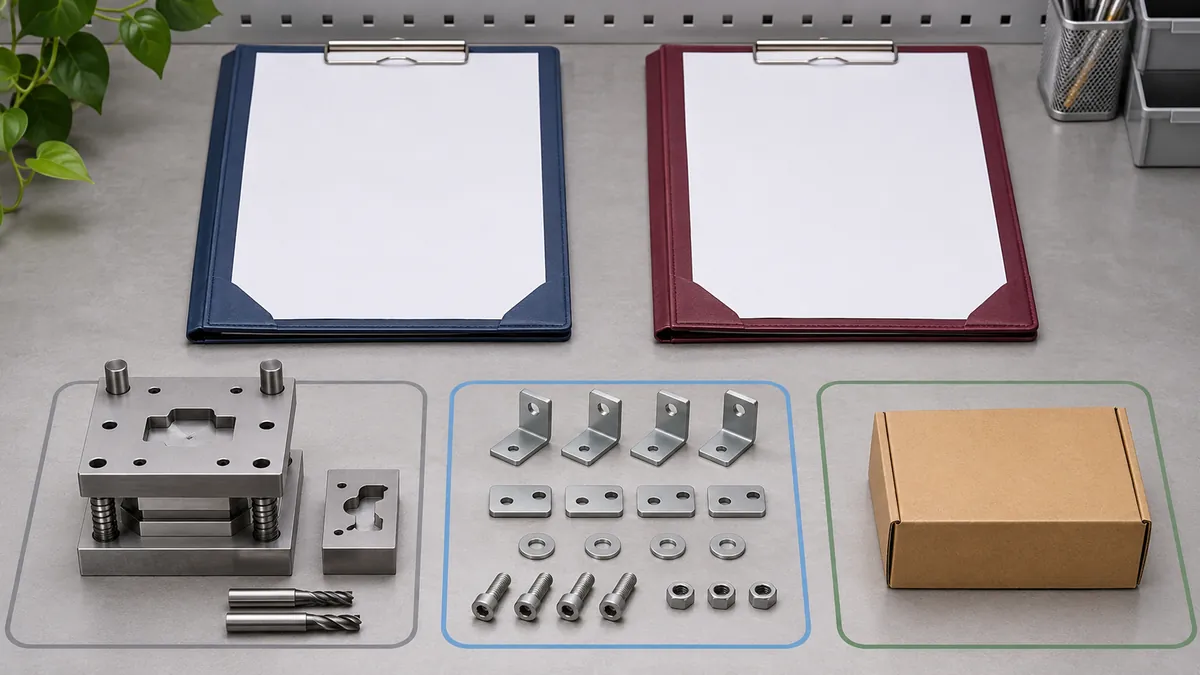
A setup fee may cover a defined activity required to prepare production or service. Depending on the supplier and process, that could be a changeover, job setup, screen, fixture, programming task or another preparation step. Some setup costs may be included in unit price, quoted separately, amortized across quantity or waived under certain commercial conditions. These are possible models, not universal rules. The supplier should explain its own treatment.
The buyer should also separate a one-time tooling charge from a recurring setup charge. Tooling may involve a physical tool or a design-specific asset and can have ownership, maintenance and storage terms. A setup fee may instead apply to each job, run, color or batch. The quotation should state whether the cost is incurred once, per purchase order, per process batch, after a design change or at each reorder.
| Quote line | Buyer clarification | Comparison question |
|---|---|---|
| Minimum batch charge | Scope, trigger and quantity basis | What amount is guaranteed or floored? |
| Setup fee | Activity covered and recurrence | What work occurs, and when is it charged again? |
| Tooling | Asset, owner, life and maintenance | Is this a separate one-time or lifecycle cost? |
| Unit price | Quantity tier and included operations | Which activities are already built into the piece price? |
| Finishing batch | Color, rack or process grouping | Does mixing SKUs change the charge or yield? |
| Freight and packing | Shipment scope, carton and destination | Are logistics being confused with production charges? |
Some software and suppliers use minimum-amount fields in their own specific way. For example, Microsoft Business Central documentation describes system-level purchasing values and workflows; that does not define how every factory or finisher quotes. A finisher’s own published terms, such as those from AVP Coating or E-IMS, apply to that provider and service. Request a project-specific quotation and written definitions rather than treating an example as an industry-wide tariff.
Normalize the quote to the same order scenario
Two prices cannot be compared fairly if the suppliers assume different quantities, specifications, packaging, finish or delivery scope. Build one comparison scenario with the same product drawing, material, finish, approved sample, order quantity, SKU mix, carton configuration and delivery point. Send that scenario to each supplier and ask them to flag exclusions and assumptions.
Then calculate the total under each supplier’s stated model. If a supplier provides a unit price plus a minimum batch floor, ask how that floor is applied when the quantity changes. If a separate setup fee is charged, ask whether it is one-time or repeated for every production run. Use the supplier’s actual written terms; do not invent a universal formula from the words alone.
A simple normalized worksheet can include:
- Requested order quantity and SKU mix.
- Unit price and price tier.
- Minimum charge amount and scope.
- Setup, tooling and changeover lines.
- Included operations and any subcontracted steps.
- Finish, color and process-batch assumptions.
- Inspection, packing and labeling scope.
- Freight, insurance, taxes or delivery exclusions.
- Reorder assumptions and charges that recur.
- Quote validity and conditions that change the price.
For each quote line, separate cost from timing. One supplier may include preparation in the unit price while another lists it separately. The total may be similar at the first quantity but differ on a reorder. A lower line-item value is not necessarily the lower total if it excludes a process or applies a minimum elsewhere. Conversely, a setup fee may be reasonable if it represents real work that the alternative supplier has included in another line. The buyer’s goal is comparability, not a preferred label.
Model small quantities and mixed-SKU orders
Small orders can amplify fixed charges because fewer units share the cost. That does not mean a supplier’s quoted fee is unreasonable or that every small-batch order has the same cost structure. The buyer should ask which cost drivers are fixed, variable or conditional. Examples might include machine preparation, production scheduling, color change, dedicated packaging or inspection, but each supplier must confirm its own basis.
A mixed-SKU order can introduce another layer. Several products may share material, finish or packaging operations, but different dimensions or colors can require separate setup or process batches. Ask whether the supplier can combine those items and what conditions apply. A shared finish name does not prove that different products can run together without separate fixtures, masking, sequence or inspection.
Compare at least two realistic quantity scenarios when reorder behavior matters: the initial trial order and the likely replenishment quantity. Include possible color or drawing changes only if they are plausible for the program, and ask the supplier how those changes would affect charges. Do not treat an informal estimate as a binding quote. Record the quantity, specification revision, assumptions and validity date for each comparison.
Ask questions that reveal the charge basis
Use specific questions instead of asking only “Can you remove the fee?” The supplier may be able to explain whether a minimum is tied to a particular process, whether setup is repeated, or whether a change in quantity allows the cost to be spread differently. A clear explanation can reveal negotiation options without hiding the underlying scope.
Questions for the supplier include:
- What exact activity, process or order scope does this line cover?
- Is the charge a floor, an additional fee or an amount already included elsewhere?
- What event triggers the charge, and how often does it recur?
- Does the charge change with quantity, SKU count, finish color or production batch?
- Which operations, inspection steps, packing materials and documents are included?
- If tooling is quoted, who owns it and what maintenance or reuse terms apply?
- What happens if the drawing, material, finish or carton changes after approval?
- Can you show the total for the initial order and a comparable reorder scenario?
After receiving answers, map each charge to a scope and recurrence column. Flag “included,” “not included,” “one time,” “per order,” “per process batch” or “requires confirmation.” If a supplier cannot define a term, leave it unresolved in the comparison rather than assuming it matches another quote. This makes the eventual purchase order more precise.
Evaluate trade-offs, not just the first-order total
A buyer might accept a higher first-order total if a documented setup cost will not recur on a reorder, but only if that condition is clear and commercially agreed. Another supplier might quote a lower setup amount but impose a different minimum or exclude packaging. A small trial order can also test a new design or finish before a larger commitment. Compare the business purpose of the order, not just per-piece arithmetic.
Review lead time and change control alongside the money. A fee may relate to reserving a production slot or preparing a dedicated process, but it does not automatically guarantee a delivery date or quality result. Confirm those terms separately. If the buyer changes the drawing or finish after the quote, ask for a revised quote and identify the superseded version.
Consider payment milestones and the documentation needed to close the order. Keep quotations, revisions, approved samples, purchase orders, invoices and supplier clarifications connected to the same project reference. If a charge is disputed, the buyer should be able to point to the exact scope and written agreement rather than a remembered conversation.
When a supplier offers a revised quotation, compare it line by line against the prior version. Confirm whether a fee disappeared because it was included in a new unit price, waived under a stated condition or removed from scope. A lower visible setup line can be offset by a higher unit price or a different minimum. Preserve the previous revision so the purchasing team can see what changed and why. Do not combine a verbal concession from one version with the unit prices from another unless the supplier confirms the combined terms in writing.
For framework or repeat orders, define whether the quoted assumptions remain valid when quantities are split across delivery dates, finishes or purchase orders. A supplier might price one production batch differently from several smaller releases, but that depends on the actual process and agreement. Ask how the charge applies to the planned release pattern and what happens if the buyer consolidates the orders. Keep the answer tied to the relevant specification and validity period. If production conditions change, request a fresh quotation rather than projecting old fees forward without confirmation.
Koitor’s confirmed position includes flexible small-batch OEM production for bathroom and home-storage hardware, but this article does not state any particular minimum order, setup fee, price, tooling charge or policy. Actual terms depend on the product, scope, quantity, process and written project quotation. Buyers can learn about relevant work on the custom kitchen storage rack manufacturer page and send a specific RFQ through the Koitor contact page.

Buyer checklist for a comparable quotation
- Use the same drawing, finish, quantity, SKU mix and delivery scope for each quote.
- Define the exact scope behind each minimum charge or setup fee.
- Confirm whether each amount is a floor, an addition or included in another line.
- Record whether the charge is one-time, per order, per batch or change-triggered.
- Separate tooling ownership and maintenance from setup activity.
- Reconcile unit price, freight, packing, inspection and process exclusions.
- Compare both initial and likely reorder scenarios using written supplier terms.
- Capture assumptions, revisions, quote validity and the supplier’s clarification.
- Put accepted charge definitions into the purchase order or agreement.
Frequently asked questions
Is a minimum batch charge the same as a setup fee?
Not necessarily. A minimum charge may establish a floor for a defined scope; a setup fee may cover a preparation activity. Suppliers can define terms differently, so ask what each line covers and when it applies.
Is a setup fee always charged once?
No universal rule applies. It may be one-time, per order, per production batch or triggered by a change. Obtain the supplier’s written recurrence terms.
Should buyers divide every fee by the order quantity?
That can help compare a specific scenario, but it does not explain recurrence, scope or future orders. Keep the line item visible and compare both total cost and the supplier’s conditions.
Does a lower unit price guarantee the cheaper quote?
No. A quote may exclude setup, packaging, inspection or another process, or apply a minimum elsewhere. Normalize the full scope and quantity scenario.
Does this article state Koitor’s prices or fee policy?
No. It offers a buyer comparison method and does not assert a specific Koitor minimum, setup fee or price. Request a current project quotation for actual terms.
Discuss a Relevant Metal Hardware Project
Share the product scope, drawings or samples, quantities and requirements relevant to this decision. Koitor can clarify whether a metal hardware project fits its confirmed production scope. The minimum batch charge vs setup fee specification should state the intended interface and review conditions.
OEM / PRIVATE LABEL
Turn this sourcing guide into a product brief
Share your target product, size, finish, order quantity and packaging requirements. Your team receives a practical manufacturability review before quotation.


 English
 Español
 Português
 Français
 Deutsch
 العربية