
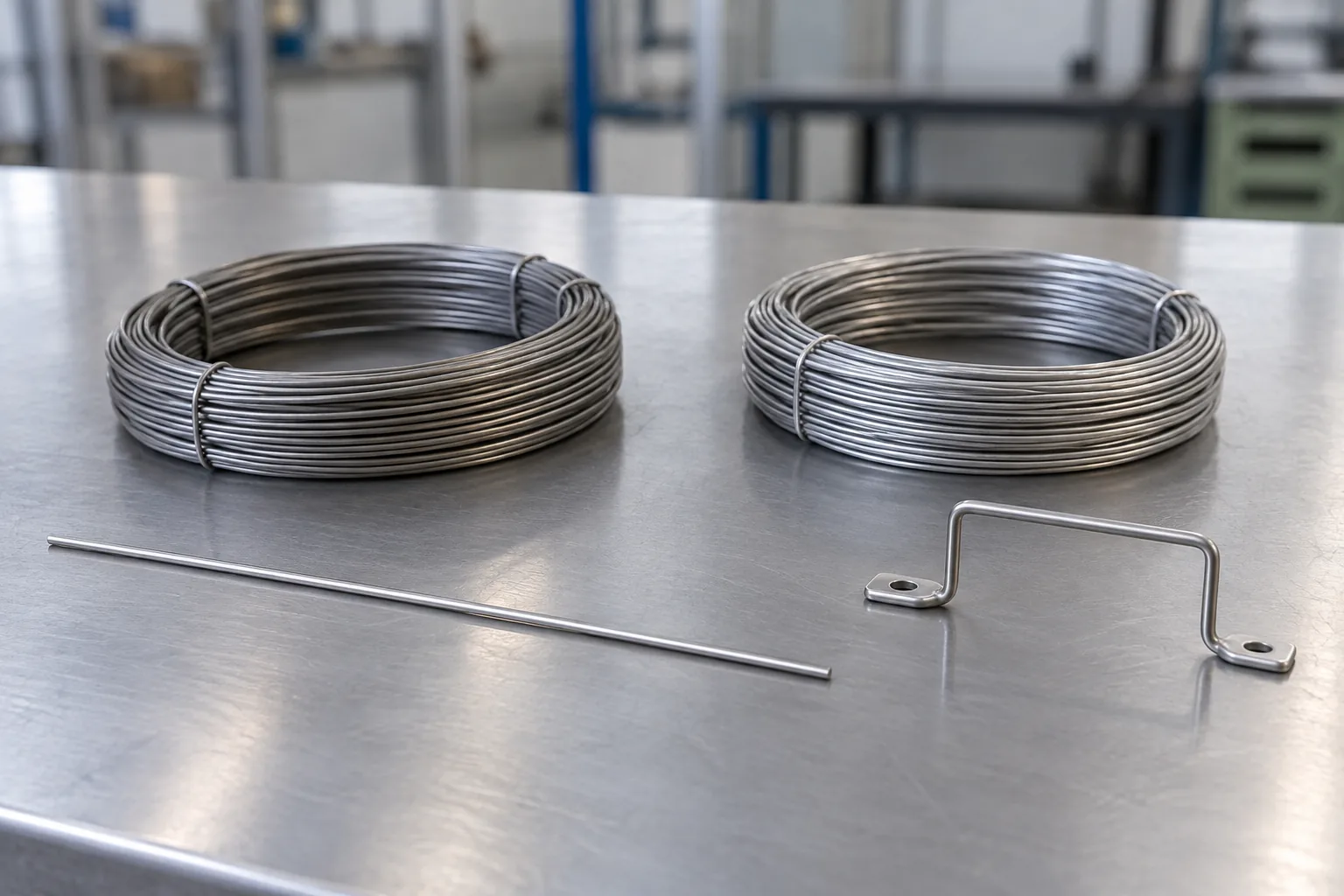
For annealed vs hard drawn steel wire forming, buyers should specify the required finished geometry, material grade and wire condition, bend details, joining and finishing route, and the evidence used to approve a representative sample. “Annealed” and “hard drawn” describe material conditions, not guaranteed product outcomes. The correct choice depends on the actual grade, diameter, geometry, process sequence, and functional needs of the finished hardware.
This article is for importers, product developers, and sourcing teams specifying wire baskets, racks, frames, and related metal storage components. It offers a decision framework rather than a universal material recommendation. The exact wire grade and condition available for a specific Koitor project must be confirmed; this article does not claim Koitor uses every listed steel condition.
What do annealed and hard-drawn wire mean?
Wire is commonly drawn through dies to reduce its diameter and control its dimensions. Drawing changes the wire condition. Annealing is a heat-treatment operation that can be used to alter material condition after drawing. The terms do not identify a complete specification by themselves: grade, diameter, chemistry, mechanical properties, surface, and supply condition still matter.
A wire supplier’s selection guidance identifies grade, diameter, temper, finish, and packaging as relevant selection dimensions. It also distinguishes hard-drawn wire and annealed conditions as supply options. That is a useful reminder for the RFQ: do not quote only “steel wire” if the formed part depends on a specific condition. It is not a process capability statement about Koitor or a substitute for the project’s material certification. Review a wire supplier’s material-selection overview.
In general terms, a harder or more heavily worked condition may resist deformation differently from a softer condition, while a more formable condition may be easier to shape under some process circumstances. These tendencies are not sufficient to choose a grade or condition without a supplier review. The word “annealed” also does not mean that every shape is easy to form, and “hard drawn” does not mean that every bend will crack or spring back excessively.
How can condition affect a formed wire component?
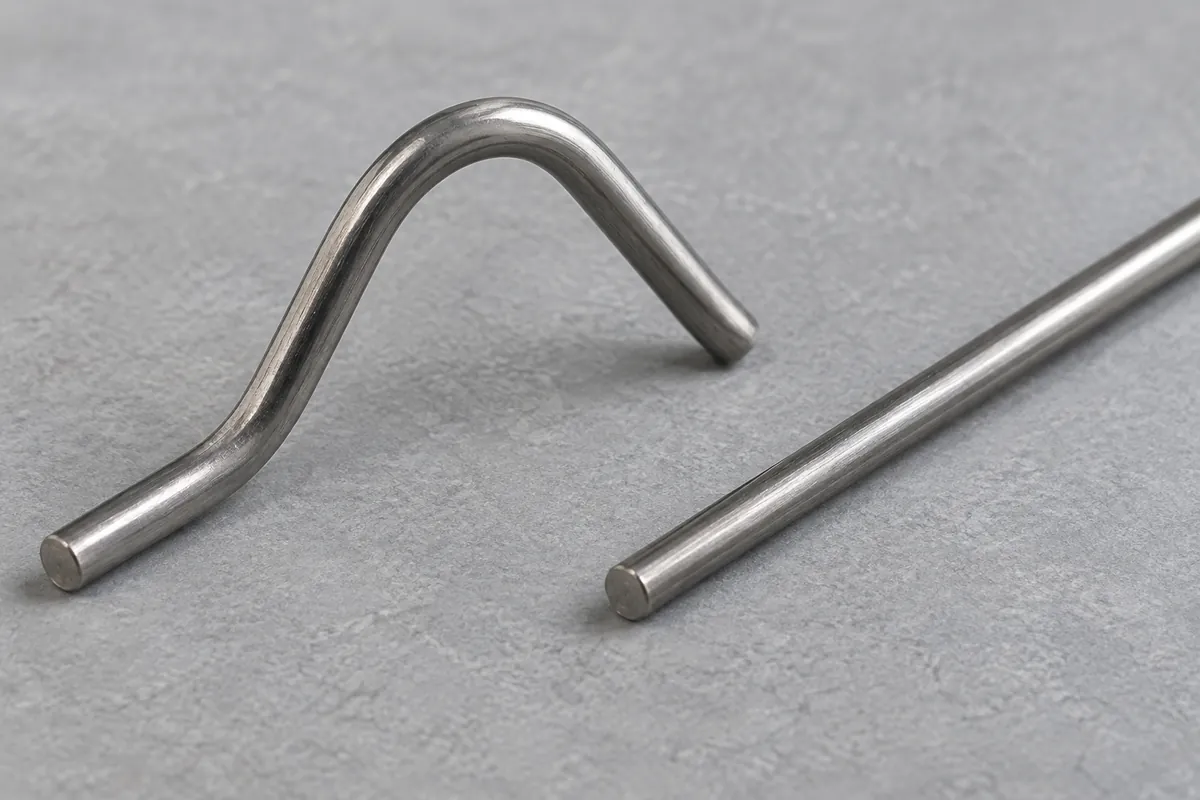
Wire-forming behavior depends on the wire’s diameter, grade, condition, bend radius, tooling, feed, and sequence. A tight bend or repeated bends may create different demands from a broad curve. A component with multiple intersecting wires can introduce joining and assembly constraints after forming. The buyer should evaluate the finished product rather than infer performance from a material label.
Potential review areas include:
- – Bend consistency: whether legs, hooks, and returns follow the intended geometry across samples.
- – Springback: whether formed features relax after tooling or handling and affect assembly.
- – Surface condition: whether drawing or forming marks are acceptable on visible faces.
- – Joining: whether the selected condition and geometry are appropriate for the proposed joining process, subject to supplier confirmation.
- – Finish: whether the wire surface is suitable for the approved plating, coating, polishing, or other route.
- – Handling: whether the part remains stable during assembly and packaging.
- – Cost and yield: whether an alternative condition changes material availability, forming difficulty, scrap exposure, or processing cost.
These are questions to investigate, not predictions about a particular batch. If a bend is out of position, causes may include tooling, setup, material variation, or a mismatch between drawing and process assumptions. A buyer should not attribute a defect to temper alone without evidence.
Which buyer decision should lead the selection?
Begin with the functional part. Is the wire intended to form a hook, rail, basket perimeter, divider, mounting leg, or visible support? Identify which features control fit, load path, clearance, appearance, and assembly. The material decision follows those requirements rather than replacing them.
| Buyer priority | What to define | Supplier evidence to request |
|---|---|---|
| Shape retention | Critical bend locations and assembled interfaces | Production-intent formed sample and dimensional review |
| Visible finish | Surface faces, acceptable marks, and finish sequence | Finished sample under consistent lighting |
| Joining | Joint positions, appearance, and functional role | Process proposal and sample review |
| Material traceability | Grade, diameter, condition, and lot identification | Material documentation tied to the order |
| Cost stability | Approved alternatives and change limits | Quote assumptions and written substitution approval |
| Repeatability | Critical features and inspection method | Control plan or agreed sampling record |
Avoid asking the supplier to optimize wire condition in isolation. A cheaper wire choice may create forming or finishing compromises, but a more expensive condition may not improve the finished part if geometry and process already meet the requirement. Ask for a controlled comparison only when a real cost or quality question justifies it.
What belongs in the RFQ?
The RFQ should identify the wire grade and diameter where the buyer has already established them, plus the required condition or a request for supplier recommendation. State whether substitutions are permitted. If a material property or test is essential, identify the specification and evidence required; do not use an undefined adjective such as “strong wire.”
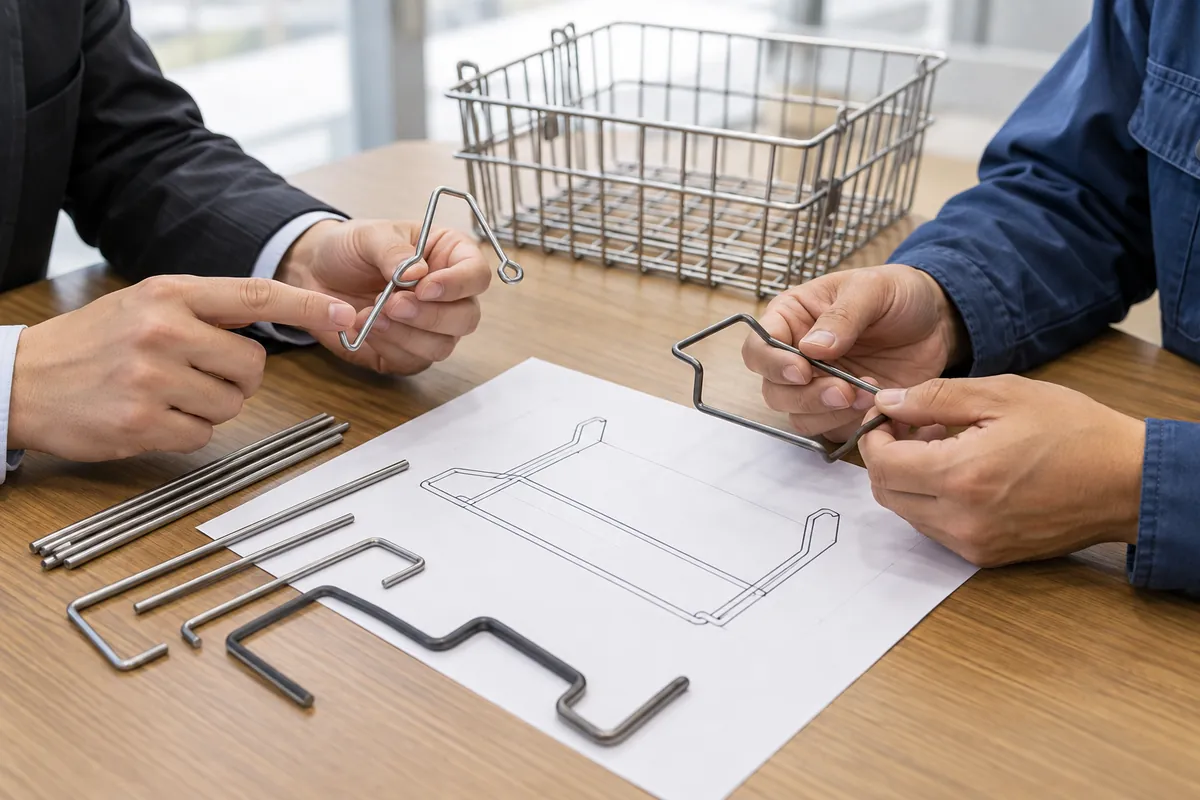
Include a drawing with critical dimensions, bend radii or profiles where controlled, flatness or alignment needs, joint details, surface finish, and assembly references. Identify visible faces and any cosmetic standards. If the supplier proposes a different condition, ask them to state the grade, supply condition, and rationale, and provide a sample before production approval.
Ask the supplier to identify:
- – exact material designation, wire diameter, and supply condition;
- – whether the quoted stock is purchased to a specified standard or a supplier-specific condition;
- – process assumptions for bending, forming, joining, and finishing;
- – dimensions that may change due to springback or subsequent processing;
- – sample material and process route compared with the planned production route;
- – measurement points and inspection method for critical geometry;
- – any proposed substitution and how it will be approved;
- – packaging and corrosion-protection assumptions during transit and storage.
If the material is sourced through an upstream wire supplier, clarify which party controls the material certificate and how lot traceability reaches the finished product. Buyers need not prescribe confidential process settings, but they should receive enough product and material evidence to confirm that the specification has been met.
How should buyers compare samples?
Ask for samples made from the proposed production material and route. A hand-formed prototype made from a different diameter or condition can help evaluate appearance and approximate fit, but it should not be treated as production validation. Record which sample characteristics are provisional.
Inspect the dimensions that affect assembly and use. Compare overall width, height, parallelism, return angles, and interface positions according to the controlled drawing. For a basket or rack, assemble the sample with mating parts and review whether the wire layout remains square and whether the part sits in its intended orientation. Inspect the finished surface and joints under consistent lighting.
If a dimensional feature is near the limit, ask the supplier how it was measured and whether the result is representative. The sample record should include the wire designation as known, sample ID, drawing revision, finishing sequence, measurement values, photographs, and unresolved deviations. Use written disposition for any change; do not silently update the drawing to match a one-off prototype.
How do welding and finishing change the decision?
Formed wire often joins other wires or components. The condition and geometry of the wire may influence how the supplier proposes to join it, but the buyer should evaluate the actual assembled sample and process evidence rather than prescribe a process based only on the term “annealed” or “hard drawn.” Joint appearance, distortion, sharp edges, and post-joining finishing should be included in acceptance criteria.
A finishing operation may alter the appearance of a wire surface or make an underlying forming mark more visible. It may also require contact points, hanging points, or masking decisions. Ask the supplier when finishing occurs relative to forming and joining and whether the sample uses the same sequence intended for production. If the product is intended for a wet environment, describe that use and state the agreed durability requirement; do not assume the wire condition alone defines corrosion behavior.
Cost should also be assessed across the complete route. Material availability, forming complexity, joining, finishing, inspection, and scrap all contribute. Suppliers should quote against one controlled product and list alternatives clearly. Changing wire grade or condition after sample approval should trigger a documented review if it can affect fit, appearance, joining, or durability.
What are common sourcing mistakes?
One mistake is placing “annealed wire” in the specification without grade or diameter. Another is specifying only an alloy or grade while ignoring condition and finish. A third is assuming every supplier uses the same terminology or stock classification. Ask the supplier to identify the exact material and documentation behind its quote.
A buyer may also approve a prototype that uses a substitute condition, then expect the mass-produced item to match the sample. That weakens the approval basis. If substitutions are needed during development, mark the sample as provisional and define what remains to be confirmed. Similarly, a photo does not demonstrate bend consistency, material identity, or joining process.
Finally, do not use broad claims such as “hard drawn is stronger” as a complete engineering argument. Strength, forming behavior, springback, and finished-product function depend on the grade, dimensions, process, geometry, and test method. The article’s objective is to improve supplier communication, not to replace engineering review.
Buyer checklist: what should be frozen?
- – Product function: list the wire features that control fit, support, appearance, and assembly.
- – Material: specify grade, diameter, condition, finish, and substitution rules.
- – Geometry: control critical bends, returns, spacing, and assembled interfaces.
- – Process: record supplier assumptions for forming, joining, and finishing.
- – Sample: confirm material and process represent the planned production route.
- – Inspection: define measurement points, methods, and acceptance criteria.
- – Traceability: link material documentation to sample and order where required.
- – Cost: compare alternatives across complete process routes, not raw material alone.
- – Packaging: protect formed parts and visible surfaces during shipment.
- – Change control: review grade, condition, source, tool, process, or finish changes.
For related metal storage sourcing context, see Koitor’s custom metal storage baskets and custom metal storage racks pages. They do not confirm a particular wire grade or condition for a future project.
For a wire-forming project, connect the material declaration to the actual production sample. The record should identify the wire grade, diameter, condition, surface, and supplier lot where available. If the supplier recommends an alternative condition, preserve the original requirement and describe the proposal as a deviation until reviewed. This avoids confusion when sample and bulk parts use different stock.
The sample review should include the complete part after joining and finishing. A straight piece of wire cannot show how a finished basket or bracket holds its shape, aligns with mating components, or presents a visible surface. The annealed vs hard drawn steel wire forming decision should therefore be checked against product-level dimensions and appearance, with material identity retained as supporting evidence rather than as a substitute for fit validation.
For this project, the annealed vs hard drawn steel wire forming requirement should be recorded with the approved sample and drawing. Reconfirm the annealed vs hard drawn steel wire forming criteria if material, process, supplier, or intended use changes.
FAQ
It may be more formable in some material and geometry combinations, but condition alone does not predict the result. Confirm the exact grade, diameter, bend design, tooling, and supplier process with a sample.
Does hard-drawn wire always spring back more?
Not as a universal rule. Springback depends on the material condition and geometry as well as tooling and process. Define the finished geometry and verify the sample.
Should buyers specify wire temper?
If the condition affects the part or process, yes—record it or request a documented supplier recommendation. Do not leave “steel wire” as the only material input when condition matters.
Can a supplier substitute wire after approval?
Only under the agreed change-control process. A substitution can affect forming, appearance, joining, finish, or traceability, so review the impact and sample as required.
Does the material condition determine corrosion resistance?
No. Corrosion behavior depends on the exact material and surface system, environment, finish, and handling. Specify and validate the relevant requirement separately.
Can this guide determine Koitor’s current wire grades?
No. Confirm project-specific material availability and evidence directly. The guide is a buyer framework, not a declaration of inventory or capability.
Work With Koitor Hardware
Discuss a Custom Metal Hardware Project
Share your drawing, target interface, material, finish, sample needs, and buyer acceptance criteria with Koitor. Confirm exact category capability and process responsibilities for each project.
OEM / PRIVATE LABEL
Turn this sourcing guide into a product brief
Share your target product, size, finish, order quantity and packaging requirements. Your team receives a practical manufacturability review before quotation.

 English
  Español
  Português
  Français
  Deutsch
  العربية