
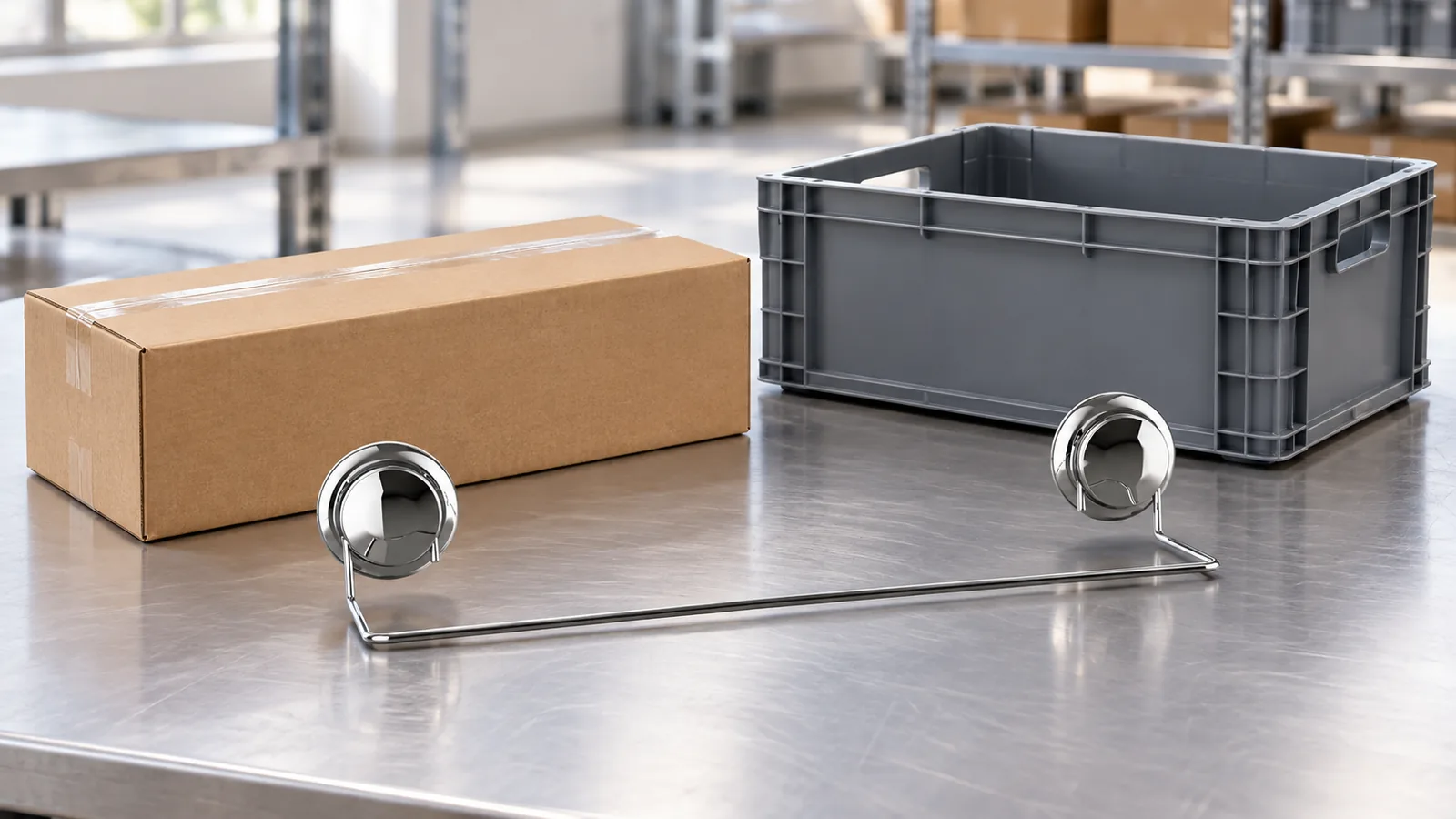
The PPWR transport packaging reuse target is not a rule to replace every corrugated export carton with a returnable box. Under Article 29 of Regulation (EU) 2025/40, cardboard boxes are expressly excluded from the specified reuse obligations, while certain transport packaging formats used within the Union may be subject to 2030 reuse targets. A separate 10% target applies to certain grouped packaging boxes other than cardboard; special rules also address defined intra-company or same-Member-State movements. The format, function, route and operator must be checked together, and the cardboard exception does not exempt a carton from the PPWR as a whole.
This is a buyer-oriented classification guide, not legal advice for an individual importer. The result depends on the actual packaging unit, the way it is used, the movement and the economic operator. Ask the responsible EU compliance owner or qualified adviser to confirm the relevant provision for the real shipment flow.
What does Article 29 say about cardboard and reuse targets?
Article 29 of Regulation (EU) 2025/40 sets out reuse targets for specified packaging formats and movements. It expressly excludes cardboard boxes from the relevant reuse obligations. The European Commission’s PPWR frequently asked questions, adopted 3 August 2026, clarifies that corrugated cardboard cartons can function as transport packaging when they facilitate handling and transport; depending on their function, they may also be grouped packaging. Even so, the Article 29 cardboard-box exemption is not a blanket exemption from all PPWR requirements.
The common buyer confusion is to treat “transport packaging” as if it always meant a reusable pallet, crate or tote. A disposable corrugated shipping carton, a reusable plastic tote circulating between distribution sites, and a pallet used to stabilize a load are different formats. Article 29 applies by defined packaging type and movement, not simply because the item appears in a freight plan.
The headline target in Article 29(1) is at least 40% reusable packaging within a reuse system from 1 January 2030 for relevant operators using specified transport packaging—or sales packaging used to transport products—within the Union. The list includes pallets, foldable plastic boxes, boxes, trays, plastic crates, intermediate bulk containers, pails, drums, canisters, certain flexible formats, and pallet wrap or straps for stabilization and protection. Article 29 contains separate exceptions and special provisions, so buyers should not infer that every party using one of these formats has the same percentage calculation or legal duty.
Article 29(4)(d) excludes packaging in the form of cardboard boxes from the relevant reuse requirement. That means an ordinary corrugated outer carton is not automatically required to be reused merely because it transports a bathroom rack within a broader logistics chain. It does not mean that carton size, material, recyclability, waste responsibility, conformity, marking, or future empty-space rules are irrelevant under other PPWR articles or other laws.
How should a hardware buyer classify each packaging format?
Classify packaging by its function, material and route. A carton containing several individually packaged shower shelves might be transport packaging if it facilitates handling and shipping; in another distribution arrangement, it could also function as grouped packaging. A reusable tote that circulates between warehouses has a different reuse-system and movement profile. A pallet used to stabilize multiple cartons is another packaging unit to assess separately.
| Format in a bathroom-hardware flow | Article 29 buyer question | Initial review direction |
|---|---|---|
| Corrugated export or shipping carton | Is it a cardboard box, and what function does it perform? | Article 29 expressly excludes cardboard boxes from the relevant reuse targets; check other PPWR requirements separately |
| Non-cardboard grouped box | Does it group products outside sales packaging into a stock or distribution unit? | Check the separate 10% target in Article 29(5), which applies to certain grouped boxes excluding cardboard |
| Reusable pallet or plastic crate | Is it one of the specified formats used to transport products within the Union? | Check the relevant Article 29 target, the responsible operator, the reuse system and applicable exceptions |
| Pallet wrapping or straps | Are they used to stabilize or protect palletized goods, and does a specific exception apply? | Review the current regulation and delegated measures; do not assume the original 100% same-operator rule still applies unchanged |
| Sales packaging used for transport | Is the package serving a transport function and does the actual route fall within the Union scope? | Assess the definition and movement, then confirm the appropriate target or exemption |
| Import carton arriving from outside the Union | What happens to it after entry, and who uses it in any later intra-Union movement? | Do not assume arrival at an EU border alone makes every carton subject to the same Article 29 reuse target |
In a metal hardware program, product details help explain why packaging was designed in a certain way, but they do not decide legal classification. A towel bar’s length, a basket’s wire geometry, suction cups, screws, finish protection, or a product kit can affect how cartons are packed and how a returnable tote is arranged. The buyer should document those facts for the packaging owner and legal reviewer rather than convert them into a self-issued legal conclusion.
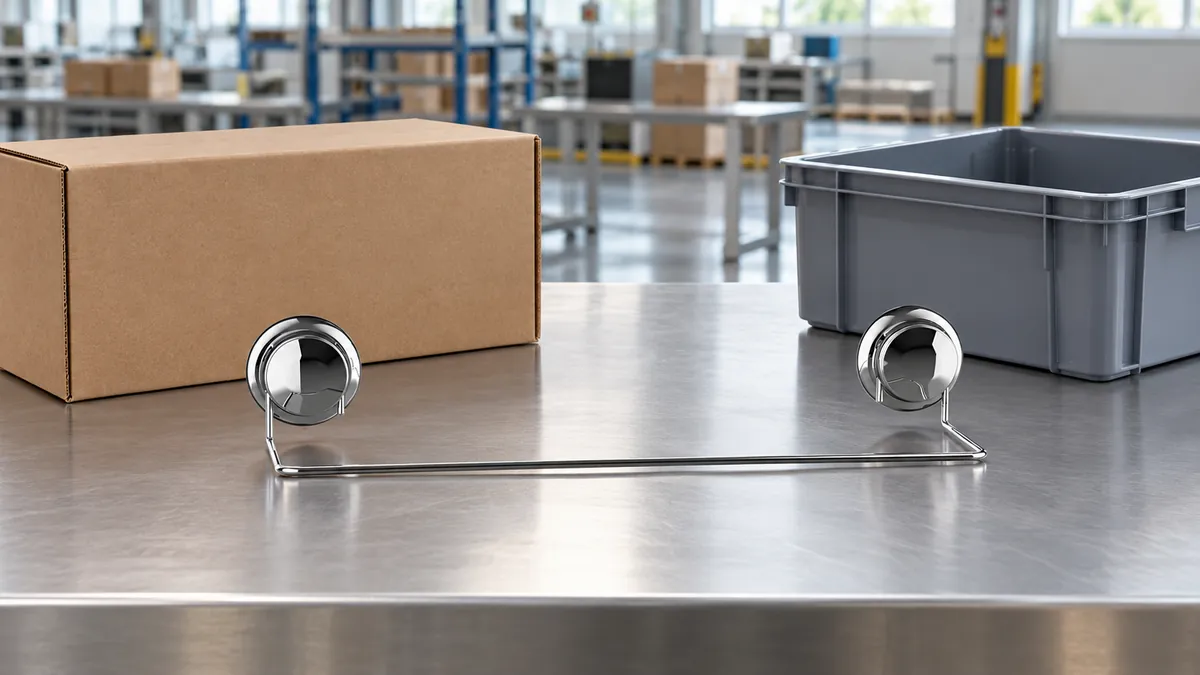
Does the 40% target apply to every shipment or every carton?
No. The Article 29(1) target is tied to specified formats, qualifying economic operators and packaging used for transport within the territory of the Union. It is not a simple order-level instruction to turn 40% of every shipment’s corrugated cartons into reusable boxes. The base, denominator, movements and applicable exceptions require a structured review using the legal definitions and the operator’s actual packaging data.
A carton shipped from a factory outside the EU to an importer does not become a reusable package merely because the importer later distributes products across the EU. The importer may use or arrange other transport packaging for that later movement. Conversely, a pallet, reusable crate or foldable plastic box used after import for qualifying intra-Union transport may need a separate assessment. The point is to map each movement and packaging unit, not infer the rule from the country of manufacture or the international leg alone.
Article 29(2) and (3) also contain special 100% reusable requirements for defined packaging used between an operator’s own sites or related/partner undertakings, and for certain deliveries to another economic operator within the same Member State. These provisions have their own scope and exceptions. The Commission has also adopted a delegated measure exempting certain operators using pallet wrapping and straps from the 100% requirements. Because legal measures and guidance can change, buyers should check current texts before treating an internal transfer, same-country delivery, stretch wrap or strap as covered or exempt.
For grouped packaging, Article 29(5) sets a separate 10% reuse target from 1 January 2030 for certain boxes used outside sales packaging to group products into a stock-keeping or distribution unit, excluding cardboard boxes. This is distinct from the 40% target in paragraph 1. A buyer should not apply the 40% figure to non-cardboard grouped boxes without checking which paragraph governs the particular arrangement.
The 2040 language in Article 29(1) says relevant operators shall “endeavour” to use at least 70% in reusable formats within a reuse system. That is not the same formulation as the 2030 minimum. Avoid turning an effort obligation into an absolute result guarantee or importing it into a 2026 purchase-order clause without a legal basis.
Why does the cardboard exception not end the PPWR review?
The cardboard exception is limited to the Article 29 reuse requirements. A cardboard carton may still be affected by other PPWR provisions, including Article 10 packaging minimisation, the Article 24 empty-space ratio when applicable, material-information or conformity requirements, and producer-responsibility obligations. Those rules have different actors, dates and package scopes.
For example, Article 24 addresses empty space in specified grouped, transport and e-commerce packaging with a future 50% ceiling and a calculation methodology that the Commission is to adopt. That is a different question from whether a cardboard carton must participate in a reuse system under Article 29. See the separate PPWR transport-packaging empty-space guide for the Article 10/24 distinction. A buyer should keep one decision record for each requirement rather than write “cardboard exempt” across the entire packaging specification.
The actual operator also matters. A brand owner, importer, distributor, packer/filler, logistics provider or another economic operator may have different roles depending on the packaging activity and supply chain. The fact that a factory supplies a carton does not by itself prove the factory is the legal operator for every EU obligation. Identify who specifies, fills, uses, imports or supplies each packaging unit, and ask the responsible compliance professional to map the formal duty.
This distinction can prevent both overreaction and missed obligations. A brand may not need to redesign a corrugated export carton solely to meet an Article 29 reuse percentage, yet it may need to consider a returnable pallet loop for later Union movement or verify Article 24 and other requirements for the same carton. Reuse planning should follow the package’s role in the route, not just its material name.
What should the importer record before choosing returnable transport packaging?
Before changing from cartons to reusable transport formats, build a movement map for one product family and one representative route. Record each packaging layer, material, function, filled-by party, handoff, location of use, receiving site, and whether the package returns through a documented reuse system. If the route changes after the initial assessment, update the map.
| Evidence field | Supplier or logistics information to capture | Why it matters |
|---|---|---|
| Packaging identity | Format, material, reusable or single-use description, SKU and revision | Distinguishes cardboard cartons from pallets, crates, totes and other listed formats |
| Packaging function | Sales, grouped, transport, e-commerce or load-stabilization role | The same shape can have different functions in the distribution chain |
| Movement | Origin and destination, Union or non-Union leg, intra-company/partner movement, receiving site | Article 29 uses defined geographic and operator conditions |
| Filling and use | Who fills, closes, owns, uses and returns each unit | Helps the compliance owner identify the relevant economic operator and data source |
| Reuse evidence | Reuse-system participation, return loop, cleaning/repair, loss and replacement records | A reusable format must be considered within its actual system rather than from material alone |
| Product protection | Contact points, finish protection, immobilization, carton or tote layout | A transport change must still protect hooks, rails, baskets, coatings and hardware kits |
| Legal review | Applicable Article 29 paragraph, exception, official source and approval date | Makes the decision traceable and prevents a broad “PPWR compliant” assumption |
Do not redesign packaging based only on the headline 40% target. Compare the return route, asset pool, storage space, collection responsibility, handling practice, loss rate, return distance, and administrative control. A reusable tote can be feasible on a closed distribution loop but impractical if the package does not return or if sites cannot handle the format. These are operational factors for the buyer to assess; they do not alter the legal text.
A useful PPWR transport packaging reuse target review records the exact Article 29 paragraph and journey segment for each package format, then assigns an owner to confirm the calculation and any applicable exception.
Product protection also remains relevant. A long towel bar may need end protection; a wire basket can have projecting hooks; screws or suction cups can scratch a coated or polished surface if they move. A returnable crate should hold the product without allowing metal-to-metal contact or unplanned stacking stress. A carton still needs an appropriate pack-out even when it is excluded from one specific reuse target.
For shipment quantity and carton reconciliation, use the separate container-loading inspection checklist. It addresses SKU and carton counts before sealing, not Article 29 reuse applicability. Keeping those checks separate helps purchasing teams assign a source, owner and status to each question.
How should buyers hand off the Article 29 question to suppliers?
Ask suppliers for facts they can confirm and reserve the legal conclusion for the importer’s compliance owner or adviser. A practical handoff can request the packaging material and format, the drawing revision, the function at each distribution stage, who fills and uses it, the origin/destination route, and whether the package is returned within an organized reuse system. The supplier can confirm product dimensions and pack feasibility; it should not be asked to certify the importer’s regulatory status without a clear basis.
Before approving a packaging change, buyers can follow these steps:
- List the actual package units from retail pack through transport and load stabilization.
- Identify which units are cardboard boxes and which are pallets, crates, totes, wrap, straps or other listed formats.
- Map the movement separately for export-to-EU arrival, post-entry Union distribution, same-Member-State supply and internal or related-site transfers.
- Identify the party that fills or uses each unit and the person responsible for compliance review.
- Ask the reviewer to confirm Article 29(1), any special paragraphs, the cardboard exclusion, the 10% grouped-box rule where relevant, and any current delegated measures.
- Review Article 24 and other PPWR requirements separately; do not treat the Article 29 exception as a general exemption.
- Store the regulation or guidance reference, reviewed route, package revision, decision owner, date and evidence with the packaging approval record.
Review the official Commission PPWR FAQ and the current consolidated legal text before making a final decision. The Commission’s 2026 PPWR guidance notice discusses how the regulation applies across packaging types and operators. These sources provide a framework, but the correct treatment for a specific hardware flow depends on the real facts and any later amendments or delegated acts.
Koitor’s تصنيع تجهيزات الحمامات حسب الطلب context is product-focused: buyers can discuss the geometry, finish and packaging feasibility of a rack or accessory. Koitor is not an EU legal adviser, packaging compliance authority or owner of a European returnable-packaging pool. The buyer remains responsible for confirming which operator and obligation apply.
The practical takeaway is that the PPWR transport packaging reuse target must be checked format by format and movement by movement. Corrugated cardboard boxes are excluded from Article 29’s specified reuse targets, but other packaging units and other PPWR provisions may still matter. Keep the carton, pallet, reusable crate and onward EU route distinct in the supplier file, then obtain a current, role-specific legal review before changing a packaging specification.
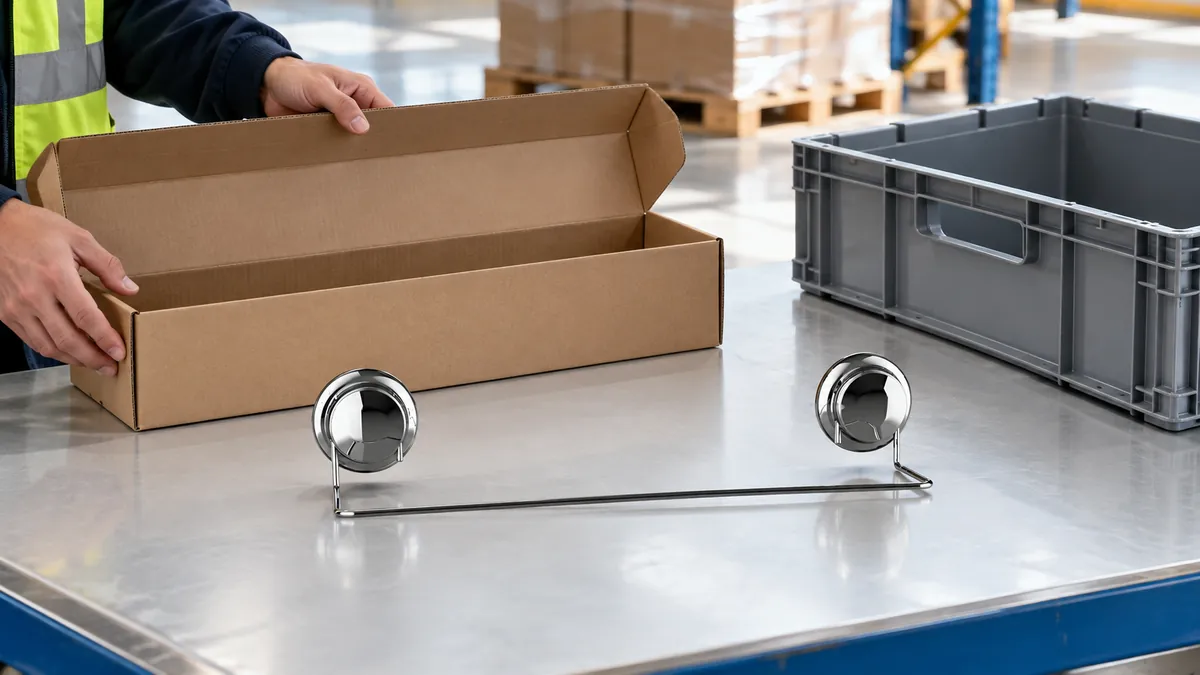
Review a hardware pack-out before a logistics change?
Share your product drawing, finish, packaging layout and shipment route with Koitor for a manufacturing-feasibility discussion. Your EU compliance owner should confirm applicable Article 29 and other PPWR duties.
OEM / العلامة التجارية الخاصة
حوّل دليل التوريد هذا إلى موجز منتج
يرجى إطلاعنا على المنتج المستهدف، والحجم، والتشطيب، وكمية الطلب، ومتطلبات التغليف. وسيتلقى فريقك تقييمًا عمليًّا لإمكانية التصنيع قبل تقديم عرض الأسعار.

 English
 Español
 Português
 Français
 Deutsch
 العربية