

Procurement vs sourcing is a comparison between related activities within buying. Sourcing generally focuses on identifying, evaluating and engaging suppliers; procurement can describe a wider acquisition lifecycle that also coordinates the need, approval, order, receipt and payment. The terms overlap and organizations assign them differently, so a job title alone does not define authority. For an importer buying bathroom or home-storage hardware, map each activity to its owner, required input, approval and next handoff. Supplier selection does not itself authorize a factory to begin production.

What is the difference between procurement and sourcing?
Sourcing generally concerns finding potential suppliers, evaluating whether they fit a requirement, comparing proposals and engaging an appropriate supplier. Procurement is often used for the broader process of acquiring the goods or services an organization needs. Depending on the organization, procurement can include needs recognition, requirements, sourcing, approvals, purchase orders, receipt, invoice review and payment coordination.
The relationship is not an absolute division between two teams. Sourcing is commonly one component of procurement, while a sourcing function may also manage supplier relationships or repeat-order decisions after an initial purchase. An organization may use “procurement” as the name of the department and “sourcing” as a specialized activity, or it may assign both responsibilities to the same person.
SAP’s explanation of sourcing describes supplier discovery and selection as part of the broader acquisition process. GS1 US also explains the relationship and notes that sourcing may be considered part of procurement, while acknowledging different organizational approaches. These are explanatory business sources, not laws or mandatory corporate structures. The buyer’s actual process and internal authority control.
| Activity | Sourcing contribution | Broader procurement connection | Approval question |
|---|---|---|---|
| Define need and specification | Clarifies supplier-facing requirements | Establishes what the organization intends to acquire | Who approves the product requirement and drawing? |
| Identify suppliers | Finds possible sources | Provides candidate suppliers for the buying process | Who may add or qualify a new source? |
| Evaluate proposals | Compares supplier fit, scope and assumptions | Informs the acquisition decision | Who reviews technical, commercial and quality criteria? |
| Negotiate and engage | Develops commercial and supplier terms | Supports an approved commitment | Who has authority to accept terms or issue an order? |
| Place an order | Supplies the selected source and agreed scope | Creates or coordinates the purchasing transaction | Which document or system authorizes the purchase? |
| Receive and reconcile | May coordinate supplier questions | Confirms what was ordered and delivered | Who confirms quantity, identity and discrepancies? |
| Review invoice and payment | May resolve supplier documentation | Closes the financial part of the acquisition | Which finance and approval controls apply? |
The table is a practical map, not a universal job description. Some companies separate these activities across procurement, engineering, product, quality, finance and logistics. Others use one buyer or founder to coordinate several steps. What matters is that each activity has a known decision owner and handoff.
Is sourcing part of procurement?
Often, yes. Sourcing is commonly described as supplier identification and evaluation within a wider procurement or acquisition lifecycle. Some organizations define the functions differently, so document actual responsibilities rather than assuming one universal structure.
How do the activities fit across an acquisition lifecycle?
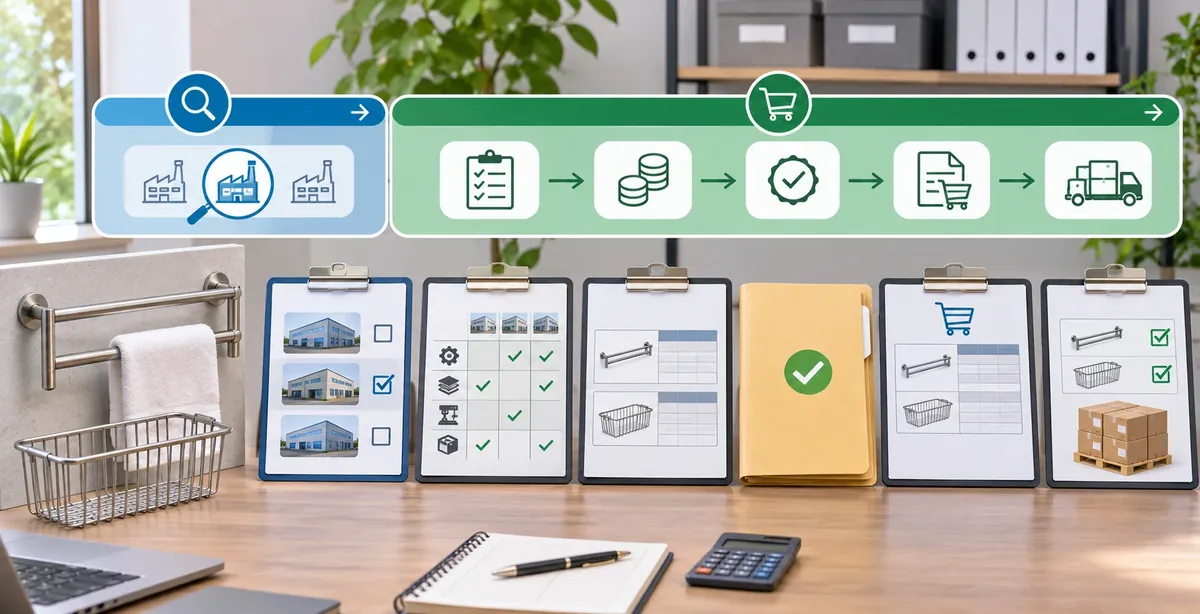
A buyer can use a lifecycle view to avoid treating supplier selection as the whole purchase. The sequence may begin with a product or replenishment need, move through specification and supplier evaluation, continue through internal approval and order release, and then cover receipt, reconciliation and payment. The sequence is a conceptual map; actual company systems and timing vary.
Need and requirement. A product manager, engineer or category owner may define the part, drawing, finish, pack-out, quantity assumptions and intended use. Sourcing can help translate these needs into comparable supplier questions. Procurement may coordinate how the requirement enters the organization’s approved buying process.
Supplier discovery and evaluation. Sourcing may identify potential factories or distributors, request proposals and compare scope, capability evidence, assumptions and communication. A low quotation does not automatically indicate a better source; the comparison should establish that suppliers are pricing the same product and requirements. Technical and quality reviewers may need to assess evidence separately.
Internal authorization. The selected supplier or proposal may require approvals from budget owners, engineering, quality, legal or other designated roles. The person who discovered the supplier does not necessarily have authority to approve a specification change, commit funds or release an order.
Order and execution. A purchase order or other approved document communicates the agreed scope to the supplier. Production may require a separate approved drawing, sample, purchase order and written release. A supplier shortlist, verbal discussion or draft order is not automatically authorization to manufacture.
Receipt and closeout. The receiving team can reconcile the shipment against the order, product identifiers, quantities and documents. Quality may inspect the delivered parts; finance may review invoices; logistics may resolve discrepancies. Supplier sourcing can remain involved if a product or document issue needs supplier communication, but the ownership of each acceptance or payment decision should be clear.
Is procurement only the activity of placing orders?
No. Many organizations use procurement to describe a broader acquisition process that can include requirements, supplier selection, approvals, ordering, receipt and payment coordination. The exact scope depends on the organization.
Procurement vs sourcing during a repeat order
On a repeat purchase, some supplier-evaluation work may already exist, but the buyer still needs to confirm that the prior decision applies to the current product and order. The drawing, finish, packaging, source, quantity, destination or commercial terms may have changed. A sourcing review can determine whether the existing supplier remains suitable or whether new proposals are needed. The broader procurement workflow can then confirm the current need, approvals, order release, receipt and payment responsibilities.
The distinction is practical rather than a fixed chronology. Sourcing may be revisited after an order when a supplier proposes a process change or when a buyer is considering another source. Procurement activities can continue after a supplier is selected because order, receipt and invoice controls remain. The buyer should record which prior approvals still apply and which must be renewed for the current revision.
For repeat orders, preserve the approved supplier, drawing revision, sample status, quote assumptions and change approvals. If the source remains the same but the product changes, technical approval may be needed even if the commercial contact is familiar. If the product stays the same but the supplier changes, the buyer may need new source qualification or comparison. Each organization decides the applicable controls, but a prior relationship should not be treated as automatic authorization for a changed order.
This is why procurement vs sourcing should be discussed in terms of activities and handoffs rather than as a one-time stage chart. The same person may coordinate both, but the buyer should still identify what changed, what evidence is current, and who can approve the next action.
Assign decision rights, not just job titles
The terms procurement and sourcing do not establish who can approve a supplier, change a product or release a production order. A “sourcing manager” may lead supplier discovery but lack budget authority. A buyer may prepare a purchase order but require another person’s approval. A product engineer may approve a drawing but not commercial terms. The organization’s actual delegation and controls determine who can make each decision.
For a purchase, distinguish at least four roles:
- Contributor: supplies information or analysis, such as supplier comparisons or cost assumptions.
- Reviewer: checks a defined part of the proposal, such as technical scope, quality evidence, commercial terms or packaging.
- Approver: has authority to accept a requirement, deviation, budget or change.
- Executor: performs the next action, such as issuing an order, booking shipment or recording receipt.
One person may hold several roles. The roles still need to be explicit when a decision affects product requirements, cost, production release or acceptance.
A handoff is complete only when the receiving owner has the information and authority needed for the next step. For example, a sourcing comparison may recommend a supplier but leave engineering approval, budget, order terms and sample release unresolved. The recommendation should state those open items. This prevents the supplier from interpreting selection as permission to start work.
| Decision or handoff | Useful record | Owner to identify |
|---|---|---|
| Product requirement and drawing | Controlled specification and revision | Product or engineering approver |
| Supplier shortlist | Evaluation criteria, evidence and open questions | Sourcing or procurement lead |
| Commercial commitment | Approved quote and order terms | Authorized budget or purchasing approver |
| Production release | Approved order, drawing and sample status | Buyer and supplier contacts named in the project |
| Receipt acceptance | Quantity, identity and quality records | Receiving and quality owners |
| Invoice and payment | Matching order, receipt and invoice | Finance or delegated approver |
| Change or deviation | Written change request and impact review | Designated technical and commercial approvers |
The exact names and documents vary. The point is to identify the authority for each decision, not to impose a particular organization chart.
A metal-hardware purchasing example
Suppose an importer needs a revised metal storage product for a new retail program. A product owner may define the dimensions, finish, packaging and target assortment. A sourcing colleague may look for factories and compare proposals. Engineering may check the drawing and manufacturability assumptions. Quality may define inspection evidence. Finance or a designated buyer may approve spending. The purchase process then issues the approved order and coordinates receipt and payment.
The sourcing activity is not simply “find the cheapest factory.” It should produce a comparable view of what each supplier is offering: material assumptions, process scope, finish, tooling or sample terms, packaging, quantities, lead-time basis and unresolved requirements. Those are proposal details to verify for the specific order, not proof that any supplier has a capability merely because it was mentioned in a sales conversation.
A useful handoff could read:
| Handoff field | Example entry for the hypothetical project |
|---|---|
| Buyer need | New metal storage product for a defined assortment |
| Controlled requirement | Current drawing, finish reference and pack-out revision |
| Sourcing result | Supplier options and their stated assumptions |
| Technical review | Open questions about geometry, joining, finish or interfaces |
| Commercial review | Quote scope, quantity basis, sample or tooling terms |
| Decision owner | Named approver for supplier, specification and budget |
| Order status | Not released until the buyer’s approved order and instructions are issued |
| Next action | Close open questions and confirm who sends the authorized release |
This is a generic example, not a claim about an actual Koitor customer or project. It illustrates the difference between supplier evaluation and the broader acquisition process. A supplier’s participation in a meeting or sample discussion does not establish that the buyer has issued an order. A buyer’s selection does not authorize unapproved deviations.
The same logic applies to repeat orders. A buyer may re-source an existing product, negotiate terms, confirm an unchanged drawing, check pack-out and obtain an internal approval. Sourcing does not end permanently after the first supplier is selected; procurement does not necessarily restart from zero. The organization should decide which checks are repeated and which records remain valid for the current order.
From supplier recommendation to authorized order
A sourcing recommendation is an input to a buyer’s decision, not the same thing as an approved commitment. The recommendation can summarize supplier options, scope differences, risks and open technical questions. A designated approver then decides whether the supplier and proposal are acceptable under the organization’s own controls. The authorized buyer or system may next issue an order or other commitment document. Depending on the company, production release can also require an approved drawing, sample or a separate written instruction.
It helps to label the project’s state precisely. “Supplier identified,” “proposal under review,” “preferred source,” “supplier approved,” “order placed,” and “production released” describe different points. They do not need to form a universal software status list; they simply prevent a casual phrase such as “we chose the factory” from being interpreted as final authority. The state should be visible to the buyer, technical reviewers and supplier contact.
When communicating with a factory, specify what the message authorizes. A request for a revised quotation authorizes a quote response, not tooling or production. A request for a sample may authorize sample preparation under stated terms but not mass production. An approved purchase order should identify the scope and any conditions that still need closure. If the supplier sees a conflict between the order and drawing, the buyer should resolve it before work proceeds.
This distinction protects both sides from an avoidable misunderstanding. It is not a statement about contract law or a universal document hierarchy; the buyer’s applicable terms, delegated authority and explicit instructions govern.
Keep the sourcing file useful after supplier selection
The sourcing record should remain useful to the team that will place and manage the order. Preserve the evaluated proposal, supplier assumptions, technical and quality questions, negotiated scope, approval outcome and any condition attached to the selection. Note which statements came from the supplier and which are buyer requirements. This distinction helps future reviewers avoid treating a proposal assumption as a verified company capability or a contractual commitment.
After selection, procurement or the assigned buyer can link the record to the order, drawing revision, sample status and delivery plan. If the order is split across factories or sub-suppliers, specify which source is responsible for each item and who coordinates a discrepancy. Sourcing may stay involved in supplier communication, but acceptance, payment and change approvals still follow the buyer’s delegated process.
For a later supplier change, compare the new proposal with the saved requirement, not just the old supplier’s name. A change can require new technical review even when the product description remains the same. Conversely, a familiar source does not guarantee that a revised drawing or packaging scope has been reviewed. A versioned record helps the buyer understand what was actually approved and what remains open.
These records do not guarantee savings or supplier performance. They make the decision traceable and give the next owner enough context to carry out the approved work without reinterpreting the original selection.
Common errors in procurement and sourcing discussions
Treating the functions as competing alternatives
Sourcing and procurement overlap. A supplier search can sit within a procurement lifecycle rather than replacing it. State the activity being discussed.
Defining sourcing as a one-time event
Supplier discovery and evaluation can recur when requirements change, a source is unavailable, a product is revised or the buyer conducts a periodic review. The organization decides how its sourcing work continues.
Calling procurement only reactive order processing
Some organizations include strategic planning and supplier management in procurement. Avoid universal reactive-versus-strategic claims; focus on actual activities and owners.
Assuming the supplier shortlist authorizes production
A shortlist or recommended source is not an approved order or manufacturing release. State what written instruction the supplier needs before beginning work.
Assuming job title proves authority
A title does not establish spending, specification, order or change-approval authority. Check the company’s delegation and project controls.
Combining technical and commercial approval
A person can review a quote without approving a drawing deviation, supplier quality claim or budget commitment. Record separate reviewers where needed.
Treating a handoff as complete when information was sent
The receiving owner needs to know what decision is requested, what evidence supports it and what happens next. Track acknowledgment and unresolved questions.
Using a generic savings or performance promise
Supplier selection may consider price, quality, delivery, risk and other factors, but this article makes no guaranteed savings, quality improvement or supplier-performance claim. Use project evidence and the buyer’s evaluation criteria.
Buyer checklist for supplier selection and order handoff
Before moving from supplier evaluation to purchase execution, confirm:
- What product or service does the buyer need, and which revision controls?
- Which requirements must every supplier quote on the same basis?
- Who is responsible for identifying and communicating with potential sources?
- What evidence is required to evaluate supplier fit?
- Who reviews technical, quality, commercial and packaging assumptions?
- Who can approve the supplier and authorize spending?
- What document or system creates the approved order?
- What constitutes a production release, including sample and drawing status?
- Who receives the shipment and reconciles quantity and product identity?
- Who reviews quality acceptance and discrepancy disposition?
- Who approves a change or substitute after the order is placed?
- Which records must be retained for reorders and invoice review?
This checklist is an activity map, not a procurement policy template or legal guide. Adapt it to the buyer’s authority matrix and systems. It should make open items visible rather than assume every organization uses the same role names or document sequence.
For an overseas hardware order, it is also useful to define who owns product specifications, factory communication, export documents, shipment handoff and receiving discrepancies. Those activities can involve several teams or outside providers. Assigning an owner helps avoid gaps, but does not transfer legal or compliance responsibility without a formal arrangement.
Koitor’s role in the buyer’s process
Koitor is a family-owned custom metal bathroom and home-storage hardware factory. Its approved scope includes customization from buyer drawings or physical samples and relevant forming, joining, finishing, assembly and packaging work. Koitor is the manufacturing counterpart in a buyer’s supplier relationship; it is not represented here as the buyer’s procurement department, an independent sourcing agent or a procurement-outsourcing provider.
A buyer can make a supplier discussion more productive by providing the controlled product brief, drawing or sample, finish and packaging requirements, order assumptions and unresolved questions. Koitor can review manufacturing scope and clarify what is needed to quote or develop the relevant product. The buyer’s organization remains responsible for its own sourcing criteria, approvals, purchase authorization, quality acceptance and payment decisions.
A sourcing conversation can also identify missing information before a formal quotation. The factory may ask for a drawing revision, quantity basis, sample reference or finish expectation. These clarifications support a comparable quote; they do not themselves constitute a final purchase commitment. The buyer should state who will issue the approved order and when the factory is authorized to proceed.
Häufig gestellte Fragen
Is sourcing part of procurement?
Often it is. Supplier discovery, evaluation and engagement are commonly treated as part of a broader procurement or acquisition process. Internal structures differ, so confirm the organization’s actual definitions.
Does procurement mean only purchase orders?
No. Procurement can describe a wider set of activities around acquiring goods or services. The purchase order is one possible record or transaction step, not the entire function.
Does a sourcing job title authorize a factory to begin production?
Not by itself. Production release depends on the buyer’s approved order and explicit project instructions. Confirm who has authority and what document or communication is required.
Can the same person handle sourcing and procurement?
Yes. Organizations may assign multiple activities to one person or distribute them among teams. What matters is that decision authority and approvals are clear.
Is supplier selection the same as a purchase commitment?
No. A preferred supplier or recommended source does not necessarily mean an approved purchase. The authorized buyer must follow the organization’s commitment and order process.
Arbeiten Sie mit Koitor Hardware zusammen
If you are evaluating an OEM source for bathroom or home-storage hardware, share the product brief, controlled drawing or sample, quantity assumptions and questions needed for a comparable proposal. Koitor can clarify its manufacturing scope and quote assumptions. Your organization retains responsibility for supplier selection, approvals, purchase authorization, acceptance and payment.
Discuss an OEM Hardware Requirement
Send the controlled product brief or drawing, the requested scope and the questions that affect quotation. Koitor can review the manufacturing side of your supplier evaluation.
OEM / EIGENE MARKE
Verwandeln Sie diesen Beschaffungsleitfaden in ein Produktdossier
Teilen Sie uns Ihr Zielprodukt, die Größe, die Oberflächenausführung, die Bestellmenge und Ihre Verpackungsanforderungen mit. Ihr Team erhält vor der Angebotserstellung eine praxisorientierte Prüfung der Herstellbarkeit.



 English
 Español
 Português
 Français
 Deutsch
 العربية