
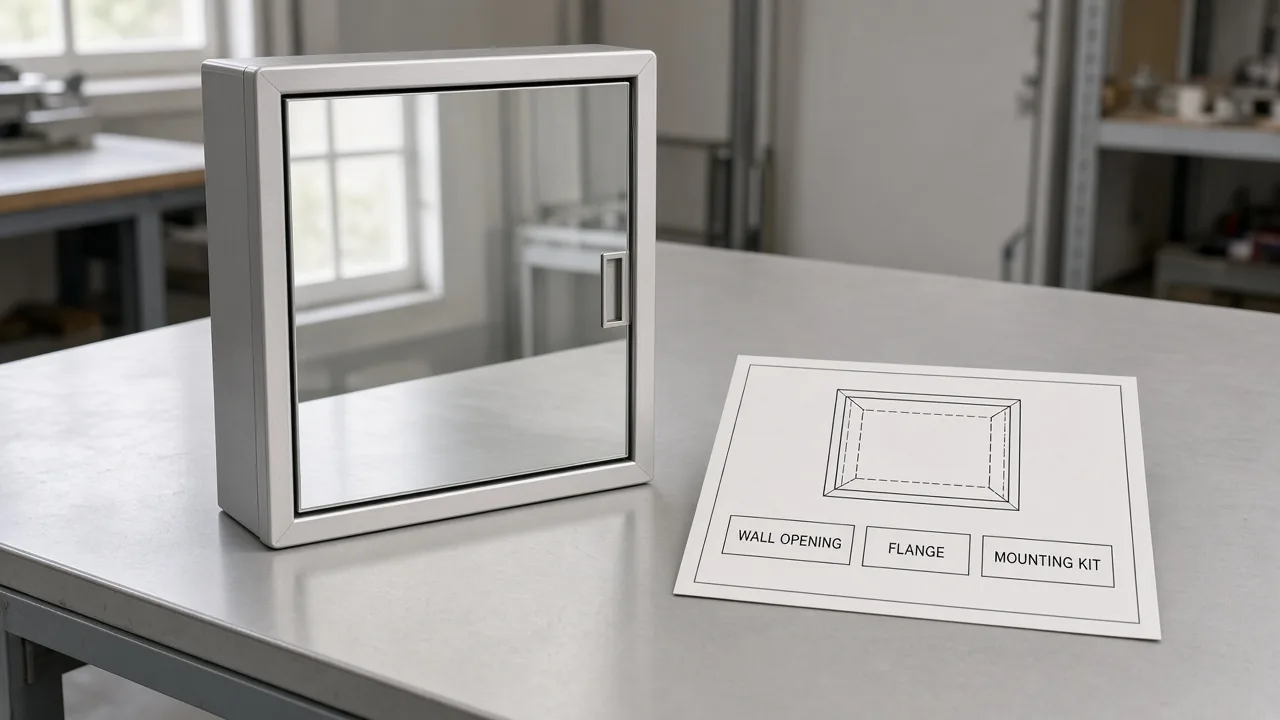
An install sheet can tell a buyer how to install a recessed medicine cabinet only after the packed mount architecture is named from the supplier’s drawing and install sheet. That architecture is the model’s wall-opening or rough-in term, the flange or frame coverage, and the included mounting parts. It is not a generic “cut a hole and hang it” sequence.
Mounting height belongs on the live height-datum file. Overall size versus the wall opening belongs on the live recessed-versus-surface specification file, which is explicitly not an installation manual. Taking the cabinet body off the wall belongs on the companion removal file in this batch. None of those decisions is this recessed first-hang kit, and none should be rewritten as one.
This guide is for importers, distributors, and private-label teams approving first-install wording and kit scope for recessed medicine cabinets treated as an adjacent bathroom-storage line. Koitor Hardware is a family-owned China OEM manufacturer of custom metal bathroom and home storage hardware. Adjacent medicine-cabinet OEM pages already sit in that published library.
That published-library fact is not a claim that Koitor currently manufactures a named medicine-cabinet SKU, a glass or mirror cabinet, or an electrical product. Send the cabinet drawing or install sheet, the intended mount type, the vanity or room layout, and the mounting kit list. We can review the wording and the kit scope. We will not issue a universal opening, a hanging-height number, or an electrical plan.
What does a how to install a recessed medicine cabinet file actually freeze?
It freezes the packed recessed opening, the flange or frame coverage, and the included mounting parts. It does not freeze a hanging height, an RFQ dimension comparison, a body-removal map, or a lighted electrical install.
Searchers often ask how to install a recessed medicine cabinet, or how to install a medicine cabinet in the wall, because they want a carpentry sequence. That demand is real. For an importer, the usable decision is whether a listing or an install sheet may say the recessed cabinet is easy to install, and which packed opening, flange, and mounting kit are being promised.
A recessed first hang and a surface-mount hang do not share a kit, even when the door style matches. If the sheet does not say that the packed architecture is recessed, an easy-install line written for a surface back-plate will be applied to the wrong job. This file is not a surface-only tutorial presented as recessed, and it is not a product listing.
Related phrases such as how to install a medicine cabinet recessed, how to install a medicine cabinet in the bathroom, and how to hang a medicine cabinet are coverage of the same first-hang decision when the packed mount is named. They are not a license to borrow the failed thin SERP of the parent “how to install a medicine cabinet,” and they are not a license to walk a lighted cabinet.
A fabricante de accesorios de baño a medida can review whether a kit list and an install-sheet sentence stay together. Matching a metal finish or a door style to a collection is not the same as inventing a default rough-in, a default anchor, or a timed install method. If you are screening this adjacent line, bring the intended opening term and the packed mounting list with the drawing.
A published “easy to install” claim is only as complete as the named opening, the named flange, and the named mounting parts. If the photograph shows a flange and the bag does not include the mounting parts the flange assumes, the sheet has already failed, even if the cabinet looks familiar.
This file can precede an RFQ. It should not be turned into a catalog page, a height chart, a removal map, or an electrical plan. Those jobs already have, or should keep, their own files.
Which packed opening, flange, and mounting parts must be named first?
Name the packed recessed architecture first: the supplier’s wall-opening or rough-in term, the flange or frame coverage, and the included mounting parts. Preserve the supplier’s opening term rather than renaming it into a factory synonym. Do not start with a generic cut-out sequence, and do not start with a hanging-height number.
The wall-opening or rough-in field must use the term the drawing already uses, or it must quote that term and cite the drawing. Do not invent a millimetre opening, a stud layout, or a “standard rough-in” as a Koitor rule. If the project has not supplied a figure, keep the field named and leave the value blank.
Flange or frame coverage is a different field from the opening. The flange may cover a raw opening edge, or it may be specified as a trim that the packed kit includes. Name the coverage the model actually ships. A recessed box without a flange is not the same packed architecture as a flanged model, even when the door matches.
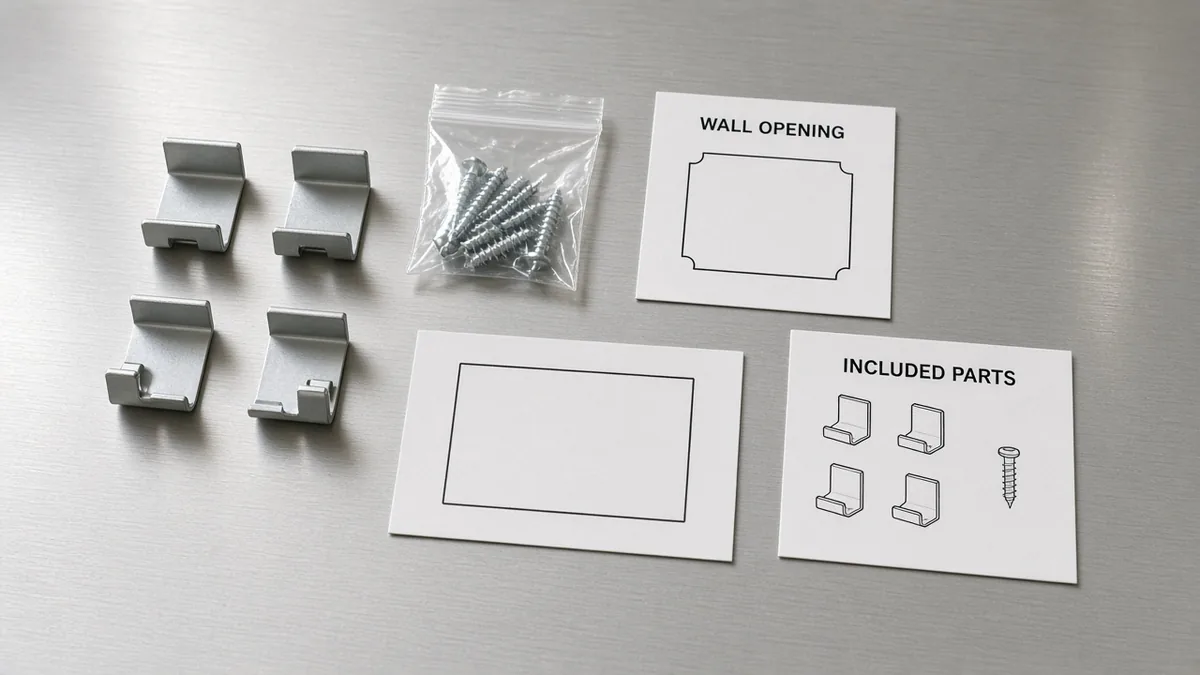
Included mounting parts must be listed or explicitly excluded. Clips, bars, screws, and any frame fasteners the install sentence assumes belong in the kit, or they must be marked sold separately or not applicable. A blank field will be read as included.
Door-swing clearance belongs on the install sheet as a named field, not as an invented millimetre chart. If the supplier’s drawing already names a clearance, the sheet may repeat it and cite the drawing. If it does not, name the field and leave the value blank, rather than guessing past a vanity, a wall return, or a lighting fixture.
How to hang a medicine cabinet, when it appears in the search mix, is surface-hang coverage only by naming the mount type. If the packed architecture is recessed, do not print a surface-only hang as the recessed sequence. If a program also ships a surface model, give that model its own sheet or make the difference unmistakable.
How to install a medicine cabinet with lights stays off this page. If the SKU includes a light or a supply connection, exclude electrical work and point it to the lighting SKU’s own sheet and a qualified trade. This first-hang file may say the electrical work is out of scope. It should not print a wiring method.
What belongs in the first-hang kit, and what stays out?
The kit should include every part the ready-to-install sentence assumes. For a recessed first hang, that usually means the cabinet body, the flange or frame if it ships, the included mounting parts, the fasteners, the instructions, and a door-swing field if the drawing uses one.
A hardware kit packing inspection checklist is a useful neighbor when you are comparing the bag to the sheet. That checklist does not invent an opening or an anchor rating. It only asks whether the named parts were packed. Use it as a completeness check, not as a substitute for the architecture line.
| Architecture or claim | What must be named | What belongs in the kit | What this row is not |
|---|---|---|---|
| Packed wall opening or rough-in | The supplier’s opening term, taken from the drawing or install sheet | The term itself, and a figure only if the cited drawing already supplies one | A factory-universal rough-in, a stud layout, or a cloned RFQ dimension table |
| Flange or frame coverage | The flange or frame that actually ships, and what edge it is meant to cover | The flange or frame parts, if they are included, or an explicit exclusion | A surface back-plate hang presented as recessed, or an invented trim size |
| Included mounting parts | Clips, bars, screws, or other mounting parts the sentence assumes | Only the parts that are actually packed, with sold-separately or not-applicable marks as needed | An invented anchor rating, or a “cut a hole and hang it” kit with no list |
| Door-swing clearance | That clearance is a named field, cited from the drawing if a value is printed | The field, not a guessed millimetre chart | A lighting, vanity, or code opinion invented to fill a blank |
| Easy to install | The packed opening, flange, and mounting kit the sentence is allowed to assume | Nothing beyond that named list | A replacement-install walkthrough, an electrical plan, or a height number |
Keep overall versus opening dimensions on the Recessed vs Surface Mount Medicine Cabinet: Importer Checks file. That page is a specification and RFQ guide, not an installation manual. This first-hang file may name the opening term in the carton. It should not clone that RFQ.
Do not fill a blank opening, anchor, or height field with a plant default. If a later buyer file names a required value and cites a source, the sheet may repeat that requirement. Until such a source exists, keep the field named and leave the value blank.
Why is a generic “cut a hole and hang it” sequence not a factory method?
It erases the packed architecture. Different recessed models use different opening terms, flange coverage, and mounting parts. A generic sequence will be applied to the wrong kit, and it will be applied with invented openings and anchors this pack does not authorize.
Third-party install videos and dealer sheets are demand evidence. Quote them only as named-model examples, and only after you have checked that the packed opening and kit still match. Label them as third-party examples. They are not a Koitor standard, not a timed method, and not a replacement-install walkthrough.
Brand-navigational phrases, including phrases built around another company’s cabinet model, are not this page’s target. Describe the hardware in packed-opening and kit terms. Do not borrow a competitor’s install video, or that video’s search volume, as a Koitor standard.
A replacement-install, in which an old cabinet comes out and a new one goes in, is not this first-hang file and is not the companion removal file rewritten as a two-step tutorial. How to replace a medicine cabinet was already rejected as a target. This page must not become that backdoor.
Which neighboring medicine-cabinet files should stay out of this sentence?
Height stays on the live medicine-cabinet installation-height file. That href is not in the official lock-copy list used for this draft, so the file is named here in prose only. Do not invent an address for it, and do not reprint a hanging-height number as the answer to a first-hang kit question.
Overall versus opening dimensions stay on the live recessed-versus-surface specification file already linked above. Door-assembly and shelf-clip replacement stay on their own buyer guides, named in prose only when they are missing from the lock copy. Organizer-insert fit stays on the Bathroom Medicine Cabinet Organizer Inserts: SKU Fit Checks for Importers file.
Body-off-the-wall removal stays on the companion article in this batch, how to remove a medicine cabinet. That file freezes the shipped mount architecture and the packed release map. This first-hang file may name the architecture being hung. It should not print a removal sequence, and the removal file should not become a new-cabinet install.
Towel-bar or robe-hook height must not be merged into this hang. Those are different products and different datums. Lighted or electrical installation remains out of scope, as does glass-handling advice invented as a factory method.
What should be checked before a listing says the recessed cabinet is easy to install?
Check the packed opening term, the flange, the mounting-part list, the door-swing field, and the exclusions before any easy-install sentence is printed. If any of those is missing, the sentence is not ready, even if the door photographs well.
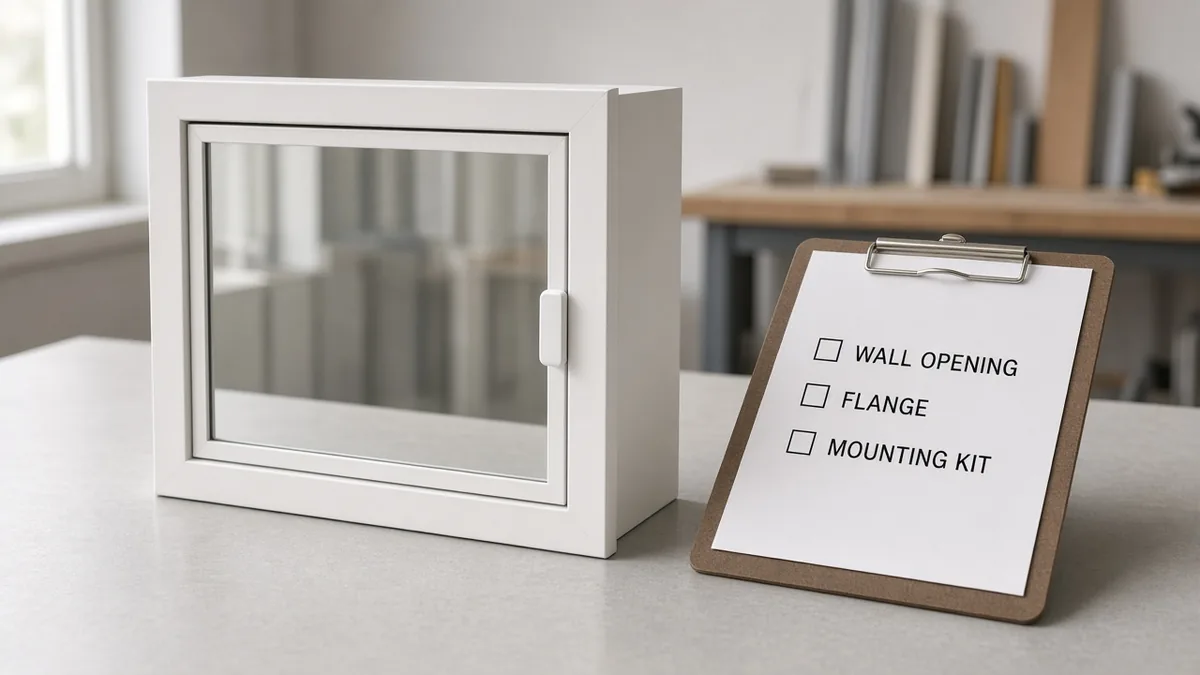
- Name the packed recessed architecture from the supplier’s drawing: wall-opening or rough-in term, flange or frame coverage, and included mounting parts.
- Preserve the supplier’s opening term; do not rename it into a factory synonym, and do not invent a millimetre opening or a stud layout.
- Name every mounting part the ready-to-install sentence assumes, and mark missing parts as sold separately or not applicable.
- Treat door-swing clearance as a named field, cited from the drawing if a value is printed, and leave the value blank if no source exists.
- Pack instructions that belong to the recessed architecture, not a surface-only leaflet presented as a recessed hang.
- Keep hanging height on the live height-datum file; this first-hang file may exclude the figure, but it should not reprint an inch chart.
- Keep overall versus opening dimensions on the live recessed-versus-surface RFQ, and do not clone that file.
- Keep body removal on the companion removal file in this batch; do not print a replacement-install walkthrough.
- Exclude lighted or electrical steps, wall-cavity invention, and glass-handling methods that the official sheet does not already carry.
- Do not invent an anchor rating, a building-code or ADA determination, a current named Koitor cabinet SKU, or a claim that Koitor manufactures medicine cabinets, mirrors, or electrical products.
- Revise the ready-to-install line whenever the packed opening, the flange, or the mounting list changes.
Translations on a bilingual carton should follow the same named fields. A mounting-part exclusion that appears only in one language is not an exclusion in the other market. Review both languages against the same packed list before the ready-to-install line is translated.
Incoming sample checks can use a simple bag-to-sheet comparison: open the box, lay out the mounting parts, and tick the named opening term and flange against the drawing. That check is not a rough-in study, and it is not an install-time trial. It only asks whether the carton can be believed.
If a later order adds a surface-mount SKU beside a recessed SKU in the same finish, treat that as a new kit, not as a sticker change on the same bag. The mounting parts, the instructions, and the opening field may all change. A recessed ready-to-install sentence left on a surface carton will be believed, and it will be wrong.
The same discipline applies when a hardware-only mounting kit later adds a complete-cabinet offering, or the reverse. The flange may look familiar. The packed list is a new list. Reprint the opening, flange, and mounting fields before the carton reuses an old ready-to-install line.
How to install a recessed medicine cabinet is not completed by pointing at a height number or an RFQ table. Those neighbors remain neighbors. The first-hang sheet is ready only when the packed architecture and the packed kit can be believed on their own terms.
Finish and door style can change without changing the packed opening, and the packed opening can change without changing the finish. Treat those as separate fields. A new powder color or a new mirrored door is not, by itself, a license to reuse an old rough-in sentence, and a new opening term is not a license to keep last year’s mounting bag just because the door looks familiar.
How to install a recessed medicine cabinet in a bathroom with an existing vanity still stays on this first-hang file for the packed architecture, not on a vanity-height essay. If the drawing already names a relationship to a vanity or a wall return, the sheet may repeat that relationship and cite the drawing. If it does not, name the relationship as a field and leave unsourced figures off the carton.
Sample photographs should not show a surface back-plate next to a recessed flange in one easy-install frame. Incoming inspection can tick the packed mounting parts against the named flange and opening term without turning the bench into a wall-cut trial. The check is still a completeness check, not a rough-in study and not a removal rehearsal.
If a project later names a required opening, a required anchor, or a required clearance and cites a source, the install sheet may repeat that requirement and cite the same source. Until such a source exists, keep the field named and leave the value blank. A blank field is safer than a borrowed carpentry blog that does not match the packed kit.
Preguntas frecuentes
Can the listing say the recessed medicine cabinet is easy to install?
Only after the packed opening, the flange or frame, and the included mounting parts are named, and only if the sentence does not go beyond that kit. An easy-install line is not a substitute for a missing mounting list or an unnamed opening term. This article does not supply a minute-count, a universal rough-in, or a hanging-height number.
Should this sheet also print the hanging height or the overall versus opening dimensions?
No. Height sits on the live height-datum file, and overall versus opening dimensions sit on the live recessed-versus-surface RFQ. This first-hang file may name the opening term in the carton. It should not reprint those neighbors.
Is this the same file as how to remove a medicine cabinet?
No. The companion removal file freezes the shipped architecture and the packed release map for taking the body off the wall. This file freezes the first hang of a recessed cabinet. Do not merge them into a replacement-install tutorial.
Can a surface-mount hang be printed on a recessed carton?
No. Surface-only instructions presented as recessed are a kit failure. If the program ships both mounts, pack matching sheets, or make the difference unmistakable.
What about lighted cabinets or a replacement of an existing cabinet?
Lighted or electrical installation is out of scope and stays with the lighting SKU’s own sheet and a qualified trade. Replacement-install is also out of scope and must not be used as a backdoor for how to replace a medicine cabinet.
Does Koitor currently offer a named medicine-cabinet catalog SKU?
This article does not assert a current named production SKU, and it does not claim that Koitor manufactures medicine cabinets, mirrors, or electrical products. Adjacent medicine-cabinet OEM pages already sit in the published library. If you are screening this line, send the intended mount type, opening term, and mounting kit list for review of wording and kit scope.
Trabaja con Koitor Hardware
Need a recessed medicine-cabinet first-hang kit reviewed?
Send Koitor the cabinet drawing or install sheet, the intended mount type, the vanity or room layout, and the mounting kit list. Our team can review the wording and the kit scope, without offering a universal opening, a hanging-height number, or an electrical plan. MOQ can start from about 100 pcs depending on the product; samples usually take 5-7 working days after details are confirmed; bulk production usually takes 4-6 weeks depending on the project.
OEM / MARCA BLANCA
Convierte esta guía de abastecimiento en un resumen del producto
Indícanos el producto que deseas, el tamaño, el acabado, la cantidad del pedido y los requisitos de embalaje. Tu equipo recibirá un análisis práctico de la viabilidad de fabricación antes de recibir el presupuesto.
 English
 Español
 Português
 Français
 Deutsch
 العربية