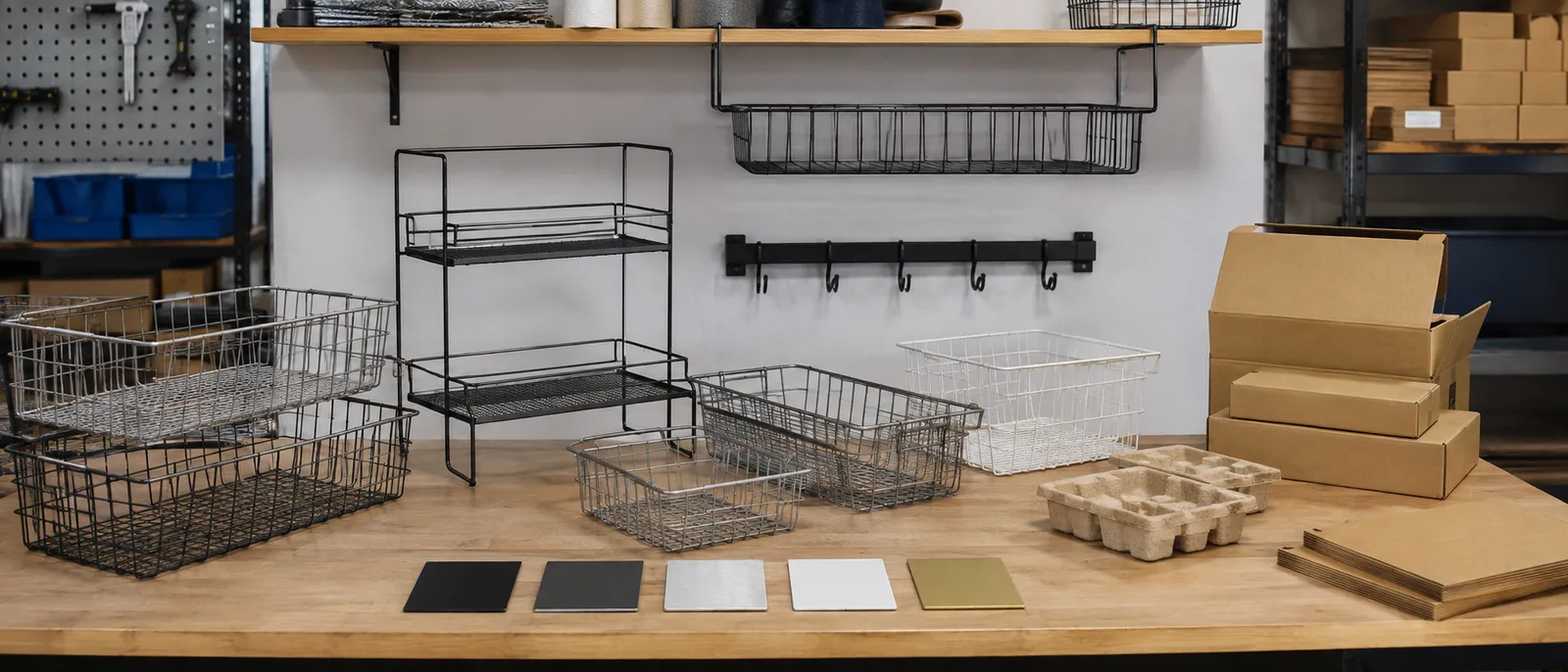
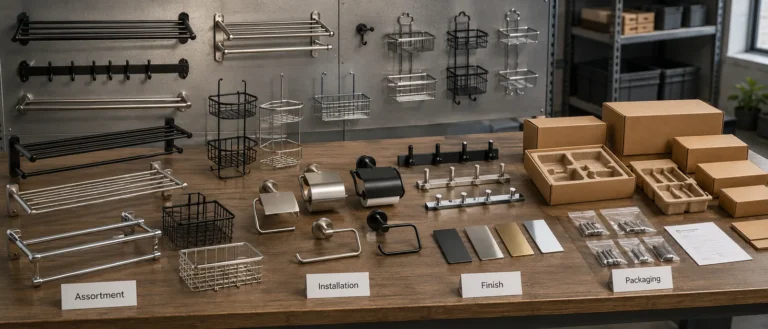
Metal storage products for home organization brands should be selected by storage task, installation method, usable capacity, manufacturing repeatability, packaging efficiency and range fit. Strong starting categories include wire baskets, kitchen racks, bathroom storage, cabinet organizers, hook systems and freestanding multi-tier racks. Buyers should test a focused product family before adding many near-identical SKUs.
A successful assortment does not need the largest number of products. It needs clear reasons for each item to exist. The buyer should define the room, problem, target contents, price position and sales channel, then compare products using the same approval criteria.
Which Metal Storage Categories Offer Clear Buyer Value?
Categories offer clear value when customers can immediately understand what they store, where they fit and how they install. Products with a defined task are easier to specify, photograph, package and merchandise than generic racks with unclear use.
Wire baskets can serve bathrooms, kitchens, cabinets, entryways and general home storage. Their open structure supports visibility and ventilation, while wire spacing, rim shape, handles and mounting features create meaningful variations. Small-item containment and stable base geometry must be checked with real target items.
Kitchen racks include under-shelf baskets, sink racks, spice racks, paper towel holders and multi-tier organizers. The buyer should confirm cabinet or shelf interfaces, bottle sizes, drainage, heat or moisture exposure where relevant, and whether assembly is required.
Bathroom storage includes shower caddies, corner baskets, towel racks, tissue holders, hook bars and hair dryer holders. Installation and finish are critical because products may face moisture and visible wall placement. No product should be described as universally rust-proof.
Freestanding racks provide flexible placement but require careful checks for wobble, footprint, shelf spacing and packaging volume. Cabinet organizers can solve high-value space problems, but they depend on precise fit and may interact with doors, hinges, shelves or runners.
How Do Product Types Compare for a New Assortment?
New assortments should compare products by customer clarity, customization complexity, installation risk, packaging volume and opportunities for shared components. The following table helps buyers screen concepts before sampling.
| Product type | Primary use | Main opportunity | Main buyer check |
|---|---|---|---|
| Open wire basket | Flexible item storage | Sizes, handles, dividers and finishes | Wire spacing, rim, welds and base stability |
| Under-shelf rack | Use unused cabinet space | Compact, task-specific storage | Shelf fit, clearance and movement |
| Wall-mounted basket | Bathroom or kitchen storage | Coordinated mounting families | Hole spacing, hardware and instructions |
| Freestanding tier rack | High-capacity flexible storage | Multiple shelf formats | Wobble, assembly and packed volume |
| Hook or rail system | Vertical organization | Accessory ecosystem | Interface dimensions and safe edges |
Brands can review OEM home storage hardware as a broader range, then identify two or three related products with shared material, finish or packaging rules for the first trial.
What Makes a Product Suitable for OEM Customization?
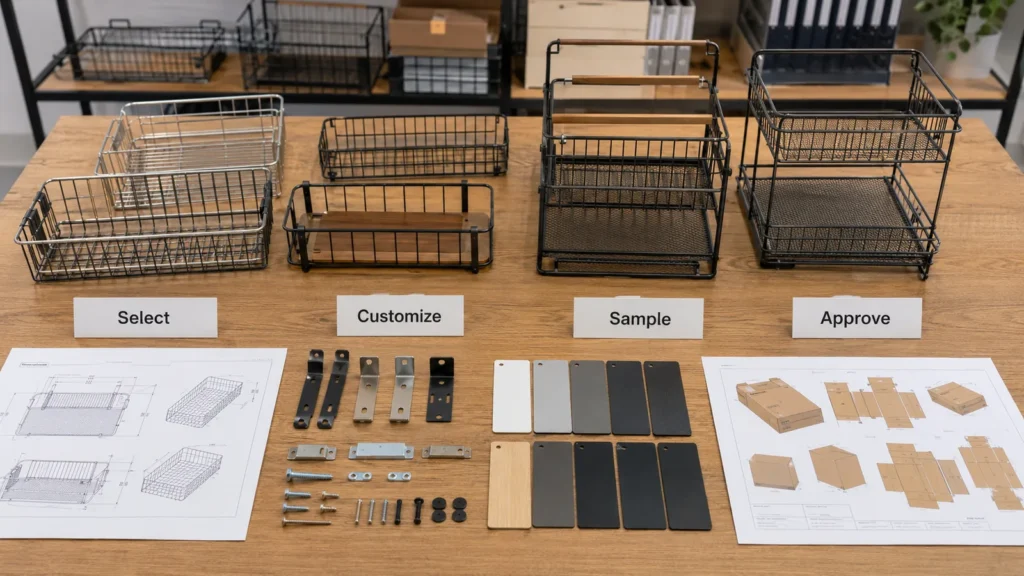
A product is suitable for OEM customization when the buyer can define the customer value and the factory can translate it into measurable dimensions, materials, processes and approval points. Customization should solve a range or user problem, not add decoration without purpose.
Useful variables include overall size, usable space, wire diameter, tube size, shelf spacing, rim construction, handle shape, bracket location, finish and packaging. Each variable can affect tooling, fixtures, weight, welding, appearance and minimum quantities.
Buyers should distinguish fixed interfaces from flexible features. Cabinet width, mounting centers or target bottle size may be fixed. Decorative curve, wire layout or cap style may allow manufacturing proposals. This creates room for practical development without losing the product brief.
Koitor Hardware can develop samples from drawings or physical references. For Fabricación a medida de cestas metálicas de almacenamiento, the factory can review rim structure, wire layout, welding points, finish and packaging before sampling.
Concept Screening Checklist
- Does the product solve one clear storage task?
- Are target items and usable dimensions defined?
- Is the installation or placement method understandable?
- Can the critical structure be measured and inspected?
- Does it share components or finishes with the planned range?
- Can it fit a practical retail or e-commerce package?
- Can a trial quantity test market demand?
- Are claims and project-specific tests controlled by the buyer?
How Should Material, Structure and Finish Be Evaluated?
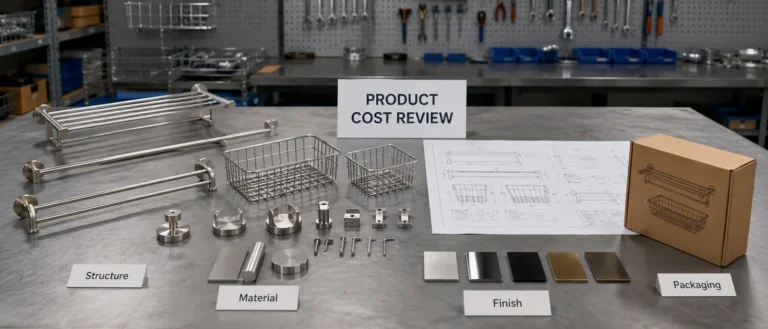
Material, structure and finish should be evaluated as one system because changing one element can alter weight, rigidity, welding, appearance, corrosion resistance and packaging. A heavier product is not automatically more durable, and a lower material weight is not automatically more efficient.
Wire spacing determines what the basket retains and how open it appears. Rim and cross-support construction help control shape. Long spans may need different support from compact baskets. Mounting brackets and feet create important load paths and should not be selected from appearance alone.
Powder-coated steel can offer broad color and texture options. Stainless steel can support a metallic appearance and a different corrosion-resistance strategy. Material grade, preparation, finish coverage, exposure and cleaning all matter; buyers should avoid unsupported guarantees.
Approve physical finish references on representative product geometry. Wire intersections, welds, bends and large surfaces may look different from a flat swatch. Smooth or polished surfaces can also need more careful packaging separation.
Any load, stability or installation requirement should use a project-specific test method and acceptance criteria. The buyer and factory should record the sample revision, fixture, orientation and result before bulk production.
How Can Brands Build a Coherent Product Line?
Brands can build a coherent line by sharing visual rules and suitable components while keeping each SKU’s storage task distinct. A product family should look related without becoming a collection of nearly identical sizes that divide inventory.
Start with a hero storage problem, then add adjacent products. A kitchen brand might begin with an under-shelf basket, sink rack and paper towel holder. A bathroom range might combine a shower basket, towel rack and hook bar. An entryway range might use baskets, rails and hooks.
Create a component matrix for wire sizes, tube sizes, brackets, caps, screws, feet and finish references. Shared parts can simplify purchasing and instructions when technically compatible. Do not force common parts where fit, performance or appearance suffers.
Use a weighted concept score before paying for samples. Customer-task clarity and range fit may receive the highest weight, followed by usable capacity, installation risk, manufacturing complexity, packaging volume and expected quantity. The exact weighting belongs to the brand, but every concept should be judged with the same method. This prevents a visually exciting idea from bypassing practical checks applied to other products.
Channel requirements can change the ranking. A compact under-shelf basket may work well for e-commerce because the use is easy to demonstrate and the pack can be relatively small. A large assembled tier rack may be clearer on a retail floor but create higher parcel and storage volume. A wall-mounted product can look compact while generating more customer-service questions if the mounting system and instructions are not simple.
Brands should define a stop rule as well as a launch rule. A concept may be removed before sampling if it duplicates an existing SKU, cannot reach a practical packed size, requires a unique component without enough buyer value or depends on an unsupported marketing claim. After a trial, review sales together with damage, missing parts, assembly questions and returns. Products that create disproportionate operational effort should be revised or retired rather than kept only to increase assortment count.
For kitchen-focused concepts, custom kitchen storage rack manufacturing provides a useful product-development path from drawings or samples.
Metal storage products for home organization brands should also share a clear finish and packaging hierarchy. Record color references, typography, label placement, component naming and instruction style so later SKUs do not require the range to be redesigned.
When comparing metal storage products for home organization brands, keep the product brief short enough to use in meetings and detailed enough to guide quotation. One page can state the customer task, target items, key dimensions, installation, target finish, packaging direction, expected quantity and non-negotiable features. Supporting drawings and test criteria can then add technical control without hiding the commercial purpose.
What Should Buyers Approve Before a Trial Order?
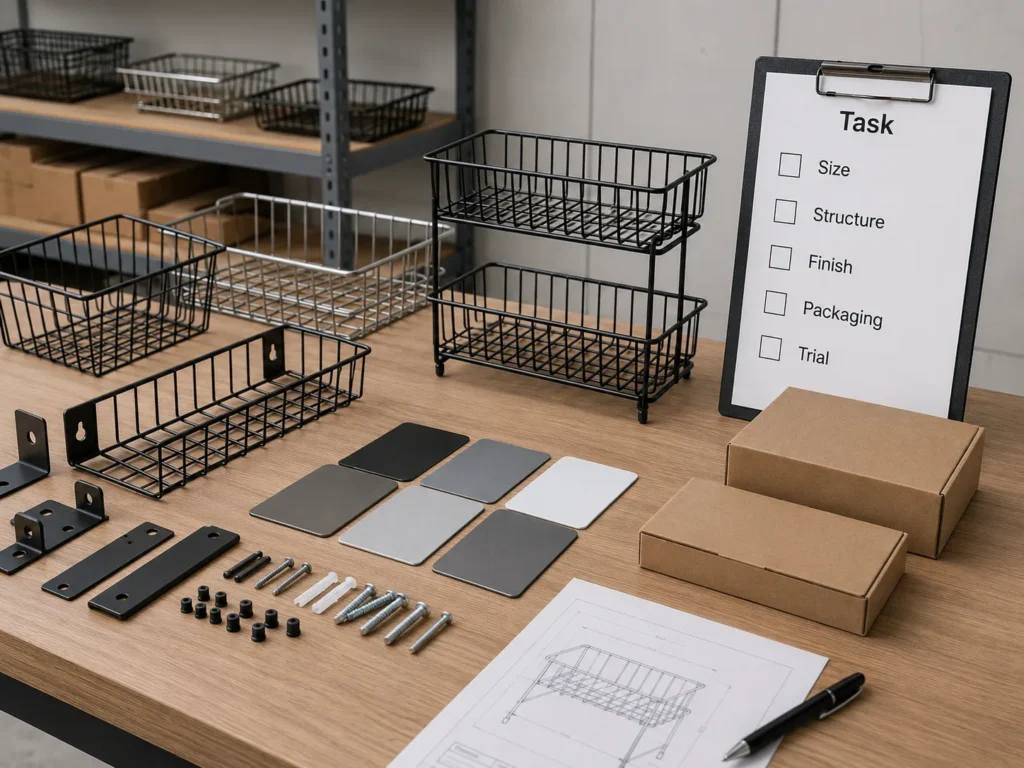
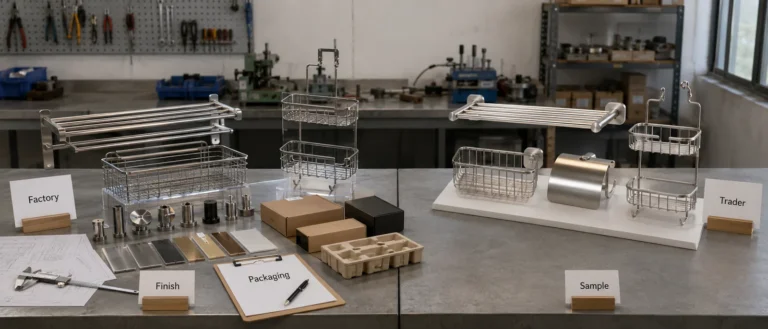
Buyers should approve the complete selling configuration before a trial order: drawing, physical sample, finish, hardware, instructions, retail package, master carton and inspection points. Approving only the metal frame leaves customer-facing risks unresolved.
Koitor Hardware’s practical workflow is to review manufacturability, develop a sample and discuss packaging before small-batch production. As a family-owned custom metal hardware factory, Koitor supports resistance welding, laser welding, TIG welding, bending, grinding, polishing, powder coating, assembly and packaging preparation according to the project.
MOQ can start from 100 pieces depending on structure, material, finish and packaging. Samples usually take 5-7 working days after details are confirmed. Bulk production usually takes 4-6 weeks depending on quantity, complexity, material availability, finish and packaging. These are planning references, not guarantees.
- Confirm product code, drawing revision and critical dimensions.
- Test the item with intended contents and installation.
- Inspect alignment, joints, safe edges and visible surfaces.
- Approve material and finish against a physical reference.
- Count mounting or assembly components.
- Verify instructions against the actual product.
- Review movement and contact points inside packaging.
- Confirm units per carton and packed dimensions.
- Document project-specific test results.
- Issue written approval for the final revision.
A trial should collect operational evidence, not only sales. Record assembly questions, damage, missing components, customer feedback and return reasons. This helps determine whether to repeat, revise or retire the product.
Before approving a repeat order, compare the trial results with the original product brief. Confirm that any correction is reflected in the drawing, component list, instructions and packaging artwork. The purchase order should reference the final revision rather than relying on informal messages.
Preguntas frecuentes
Which metal storage product is easiest to launch first?
A simple basket or rack with a clear use, limited parts and practical packaging can be a manageable first project. The best starting point depends on the brand’s customer, channel and existing range.
Can several products share one finish?
Yes, but the finish should be checked on representative materials and geometries. Wire, tube and sheet surfaces can present the same color differently.
Should a home organization brand start with custom tooling?
Not necessarily. Buyers can first explore drawing or sample-based modifications using practical structures. Tooling decisions depend on the product geometry, quantity and required differentiation.
How should brands compare product ideas?
Use the same scorecard for customer task, usable capacity, installation risk, manufacturing complexity, packed volume, expected quantity and range fit. Avoid comparing only factory price.
Can a small-batch order support product testing?
Yes. A small-batch trial can help review production, packaging and market response before a larger repeat order, depending on product and packaging feasibility.
Trabaja con Koitor Hardware
Planning a Metal Storage Product Line?
Send Koitor your product ideas, drawings or samples, target storage tasks, finish direction, packaging needs and expected quantity. Our team can review manufacturability and small-batch options before quotation.
OEM / MARCA BLANCA
Convierte esta guía de abastecimiento en un resumen del producto
Indícanos el producto que deseas, el tamaño, el acabado, la cantidad del pedido y los requisitos de embalaje. Tu equipo recibirá un análisis práctico de la viabilidad de fabricación antes de recibir el presupuesto.
 English
  Español