
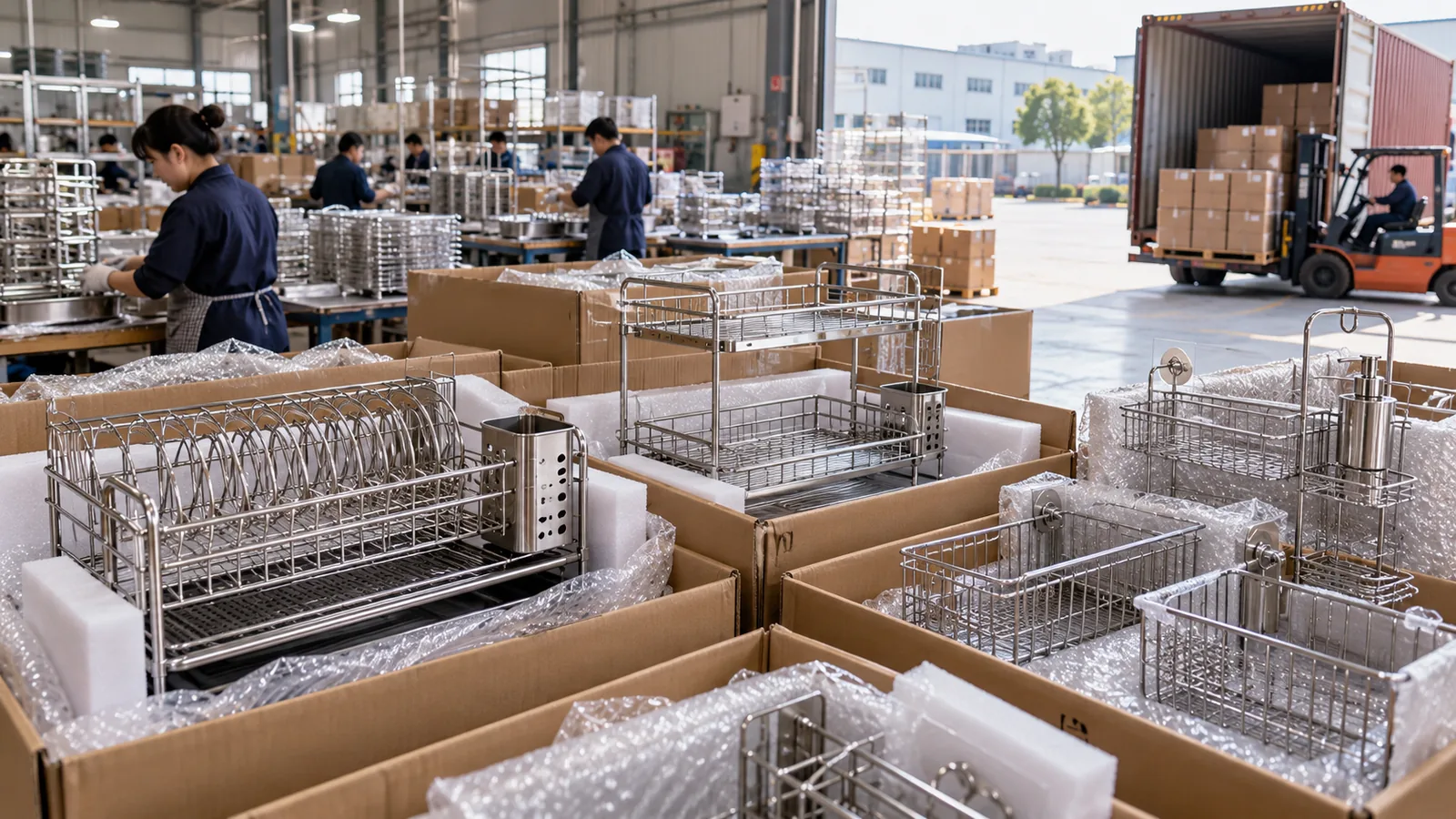
China kitchenware suppliers are not concentrated in one universal “best” city. Buyers should first match the product and process to a plausible manufacturing cluster, then verify the individual supplier’s legal identity, actual production address, equipment and subcontracting, quality controls, packaging and export experience. A regional cluster is a useful research map—not proof that a specific factory can make a particular SKU. This comparison of China kitchenware suppliers is a discovery aid, not an endorsement of any listed company.
This guide uses dated government and trade-promotion sources to show several relevant Chinese production areas. It distinguishes stainless kitchenware, knives and scissors, home hardware, sanitary ceramics and appliances instead of treating them as interchangeable. The map is illustrative, not exhaustive or a supplier ranking.
What does a manufacturing cluster tell a buyer?
A cluster is a geographic concentration of related manufacturers, component makers, service providers or labor. It can help a buyer frame a sourcing trip, locate category-specific supplier candidates and understand why an area appears repeatedly in a directory. It does not certify product quality, export compliance, current capacity, factory ownership or a supplier’s ability to meet your drawing. A shortlist of China kitchenware suppliers still needs order-specific qualification.
For an RFQ, the decisive unit is the specific facility and production route—not the city name. A kitchen utensil producer may have different processes from a stainless wire basket maker even if both are described as “metal housewares.” Likewise, a regional industry plan can identify a longstanding product association without showing which companies currently make it or whether they accept OEM work.
Use a cluster as a lead-generation filter, then ask the shortlisted supplier to identify the site that will produce your order. Request a process map, material and finish specification, sample plan, quality checkpoints, packaging proposal and a clear list of outsourced operations. Confirm that the sample and the eventual mass-production route will use the same approved requirements.
Which Chinese regions are associated with which product groups?
The table summarizes documented associations from public sources. The dates matter: older industrial statistics are historical context and must not be presented as current output or supplier capacity.
| Region | Documented product association | What a buyer can use it for | Boundary to keep in mind |
|---|---|---|---|
| Xinhui / Siqian, Jiangmen | Stainless-steel daily-use products and kitchenware | Researching stainless kitchenware and metal housewares candidates | Municipal materials cite historical figures; they do not establish a specific supplier’s current capability |
| Kaiping Shuikou and Heshan Zhishan, Jiangmen | Faucets; Jiangmen planning also identifies bathroom fittings and related hardware activity | Separating faucet and bath-fitting leads from general kitchenware searches | An industrial plan is not a current supplier directory or a product approval |
| Yangjiang, Guangdong | Knives, scissors and related hardware products | Cutlery and cutting-tool sourcing research | Do not extend the cluster label to all kitchen or bathroom products |
| Yongkang, Zhejiang | Broad hardware, metal kitchenware, doors, insulated cups and tools | Hardware and metal-houseware discovery | Broad city profiles do not prove that every local factory makes every listed category |
| Foshan, Guangdong | Home hardware, kitchen/bath cabinets and bathroom-vanity activity | Cabinet, furnishing and home-hardware supplier discovery | Districts and processes differ; verify the actual production site |
| Guxiang, Chaozhou | Sanitary ceramics | Toilets, basins and ceramic sanitary-ware research | Ceramic sanitary ware is not metal bathroom storage |
| Cixi, Ningbo | Small household appliances and supporting suppliers | Appliance and electrical-houseware research | This is adjacent housewares, not evidence of a metal-rack cluster |
Xinhui is a useful example for stainless daily-use goods. Jiangmen municipal reporting describes the area’s foreign-trade transformation-base designation and gives historical industry figures, including 2019 output and 2018 production data. Treat each number as dated context, not as a current market-size estimate. See the Xinhui district report and the Jiangmen commerce statistics page.
Jiangmen itself contains different product specializations. A municipal industrial plan associates Kaiping Shuikou and Heshan Zhishan with faucet production and identifies other subregions for hardware and bathroom fittings. This is a reason to make the search more specific—not to assume every factory in the city has the same tooling or process. The Jiangmen plan is a dated planning source, not a live supplier list.
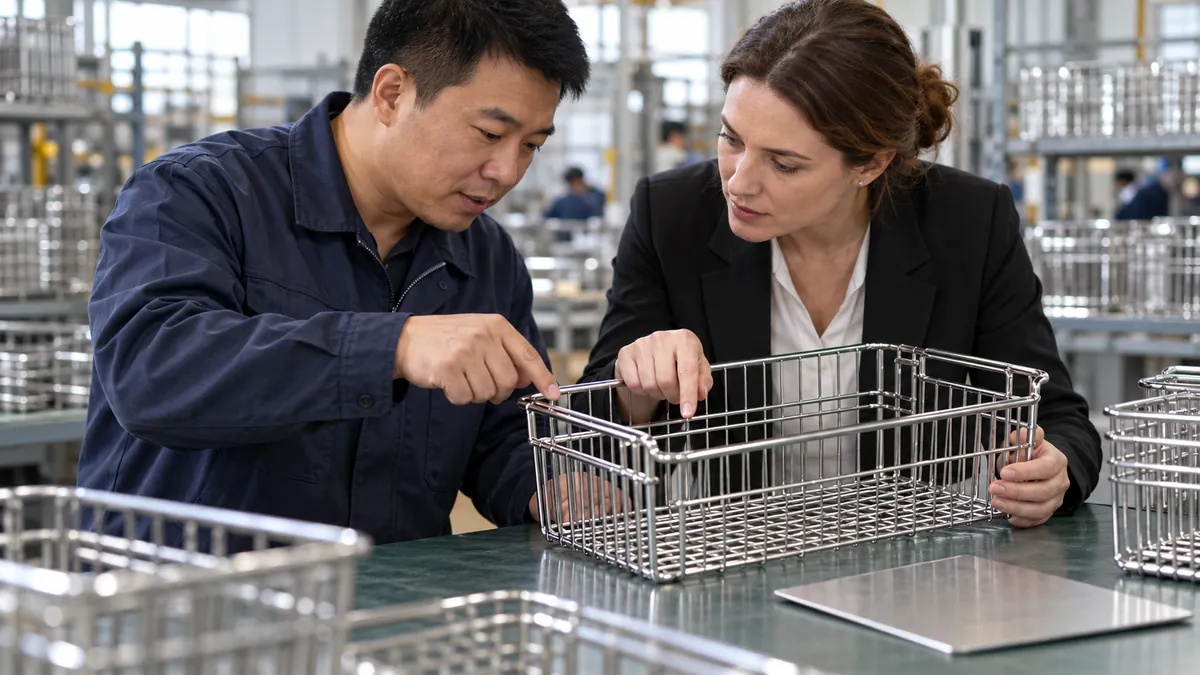
Yangjiang is best treated as a knives-and-scissors lead. Government sources describe a substantial hardware production and export cluster there, but that label is not a shortcut to a cookware, wire basket or bathroom-accessory supplier. Check the product family and factory route directly. Relevant references include the Yangjiang government overview et Guangdong foreign-affairs reporting.
Yongkang’s development-zone profile lists modern hardware alongside metal kitchenware, doors, insulated cups and tools. That makes it a broad industrial discovery point, not a guarantee of a single, vertically integrated supply chain. A buyer should distinguish formed sheet, wire products, cast or machined components, surface finishing and final assembly when screening candidates. See the Zhejiang CCPIT profile.
Foshan is relevant to home hardware, cabinetry and bathroom furnishings. Government sources cover activity across distinct districts and product categories. A buyer seeking cabinet organizers should specify whether the product is a cabinet-mounted mechanism, a metal storage rack or a furniture component, then verify the factory’s relevant process and installation interface. For context, see the Foshan high-tech-zone report et Guangdong government coverage.
Chaozhou’s Guxiang area is associated with sanitary ceramics, while Cixi is reported as a small-appliance base. These are useful when the category is actually ceramic ware or appliances; they should not be relabeled as metal storage clusters. The Chaozhou 2025 city report provides ceramic-industry context. A Zhejiang government-linked Cixi report describes small-appliance manufacturing and its supporting chain.
How should buyers turn a region map into a shortlist?
Start with product architecture. List the major parts, materials, joining methods, finish, moving components, installation method and packaging constraints. For a stainless kitchen basket, for example, the critical supplier evidence may include wire forming, welding, polishing, passivation or plating route, dimensional control and scratch protection. A cookware line, ceramic basin and cabinet pull-out have different production needs even if all appear in a broad household-goods directory.
Next, search within the product-specific region and across at least one adjacent region. A second geography can expose differences in process specialization, sourcing cost or logistics assumptions. Do not infer that the nearest city is automatically the lowest-cost option: supplier location is only one input alongside material, process, consolidation, transport and order quantity.
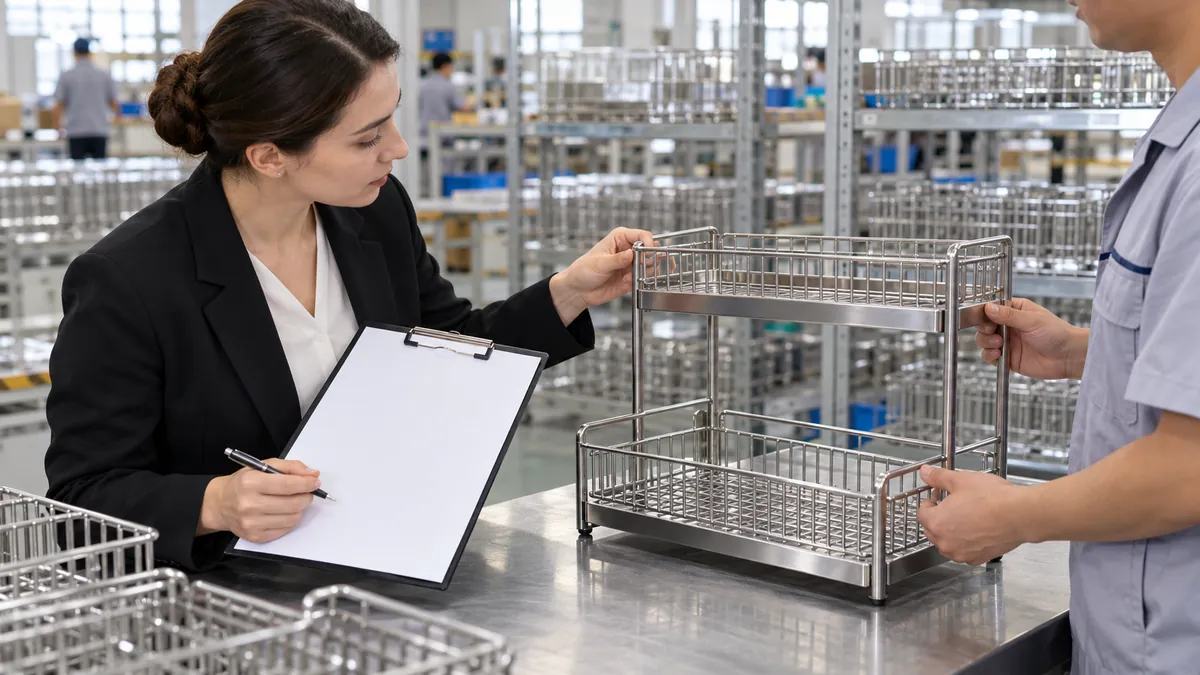
For each candidate, establish who you are dealing with and where production will occur. Ask for the registered legal entity, factory address, site video or visit option, and an explanation of any separate trading, assembly or finishing locations. Confirm which operations are in-house and which are subcontracted. A directory profile, trade-show booth or cluster membership can help locate a lead, but cannot replace this basic qualification.
Then compare suppliers on the same RFQ. Provide the same drawing revision, target material and finish, tolerance-critical dimensions, estimated volume, packaging requirement, inspection method and delivery basis. Ask suppliers to identify assumptions and exclusions rather than silently filling gaps. This makes the replies comparable and reveals whether a quote reflects the same construction and production scope.
Finally, validate the proposed sample and change-control process. Define what constitutes an approved sample, which dimensions and cosmetic surfaces are critical, how revisions are recorded, and what must be re-approved before production. Confirm whether the production sample uses the intended materials, tooling and finishing route. A sample demonstrates one configuration; it does not alone prove ongoing batch consistency.
What should buyers verify before approving a supplier?
Use a product-specific qualification checklist rather than a generic “factory audit” score. The questions below connect regional discovery to the order that will actually be produced.
| Vérifier | Evidence to request | What it can help establish | What it cannot prove by itself |
|---|---|---|---|
| Legal and production identity | Registered entity, production address, site records and named subcontractors | Who contracts and where listed operations occur | Quality or future delivery performance |
| Process capability | Product-relevant route, equipment or fixture evidence, sample workmanship | Whether the supplier appears equipped for the specified design | Capacity at every quantity or absence of all possible defects |
| Material and finish | Grade/designation, certificates or traceability plan, finish specification and sample | Whether the buyer and supplier agree on inputs | Long-term corrosion life without suitable testing and use conditions |
| Sample and revisions | Dated sample, drawing revision, approval record and change process | Which configuration is the reference | That later production will match unless controls are maintained |
| Inspection | Agreed dimensions, functional checks, cosmetic criteria, sampling plan and records | What is checked and how nonconformities are handled | That untested characteristics pass or defects are impossible |
| Packaging and export | Pack layout, protection, carton data, marks, loading assumptions and document responsibilities | Whether shipment preparation has been considered | That transit damage cannot occur or customs clearance is guaranteed |
Ask for evidence tied to your SKU, not a general machine list. A factory may own a process but still use a subcontractor for a particular finish. If a test is proposed, agree on its method, sample size, acceptance threshold and scope. A load result, salt-spray report or packaging drop test only answers the question represented by that method and sample; it does not establish every field-use condition.
Document communication and corrective-action ownership too. Identify who approves a drawing revision, who releases a sample, how production deviations are reported and who authorizes rework or shipment. These controls are particularly important when a private-label product combines a metal frame with bought-in screws, pads, anchors or plastic parts. State who supplies and verifies each component.
Does a regional cluster approve a supplier?
No. A cluster is a way to discover relevant candidates and frame an efficient sourcing plan. It does not confirm legal identity, product-specific capability, quality systems, ethical conduct, export readiness or commercial suitability. The buyer remains responsible for evaluating the individual supplier and the order requirements.
Keep the evidence hierarchy clear: a government or trade-promotion source can support a statement about a region’s documented industry association; a supplier’s records are needed to verify that supplier; and an approved sample plus production controls are needed to manage the specific product. Do not use old regional statistics as a current capacity claim, or assume the cluster’s average reflects any one business.
This distinction also prevents category errors. A kitchenware directory may mix stainless cookware, knives, ceramics, small appliances and cabinet fittings. They share a household setting but not necessarily materials, equipment, compliance needs or quality checks. Build a shortlist from the product’s bill of materials and manufacturing route, not a broad “home goods” label alone.
How can Koitor help with a metal-storage RFQ?
Koitor’s approved scope is bathroom and home-storage hardware. The team can discuss metal storage product requirements, custom development from drawings or samples, material and finish questions, sampling, inspection and packaging based on the information supplied for a project. Koitor should not be presented as operating in the regional clusters listed above or as a source for cookware, knives, ceramics or appliances.
For a kitchen or bathroom storage product, buyers can review Koitor’s fabrication de rayonnages de rangement sur mesure pour cuisines et OEM home-storage hardware manufacturing. A useful inquiry includes the target application, drawings or reference sample, material and finish expectations, annual or trial quantity, critical dimensions, packaging and destination-market requirements. That gives the manufacturer a clearer basis for discussing manufacturability and a sample plan.
Foire aux questions
Where should I start looking for China kitchenware suppliers?
Start with the material and product family. Xinhui/Jiangmen is a documented lead for stainless daily-use goods and kitchenware; Yangjiang is relevant to knives and scissors; Yongkang is a broad hardware and metal-houseware lead. Then verify individual factories and do not treat these as exhaustive or exclusive locations.
Is the largest manufacturing cluster always the best choice?
No. A cluster can make discovery easier, but supplier fit depends on the product’s process, quality needs, quantity, communication, packaging and logistics. Compare actual candidates against the same RFQ.
Does a regional industrial plan mean a supplier is currently active?
No. Plans and government profiles describe documented or intended regional activity, often at a particular date. Confirm the supplier’s present legal status, site, process and order-specific capability using current evidence.
Can a cluster map replace a factory audit or sample approval?
No. It is an initial research tool. Supplier qualification, sample approval and production controls remain separate steps.
Collaborez avec Koitor Hardware
Koitor is a specialized OEM manufacturer for bathroom and home-storage hardware, not a general kitchenware sourcing agent. If your project involves metal storage racks or bathroom accessories, contacter Koitor with the product brief and sourcing requirements for a factory discussion.
Developing a metal kitchen or bathroom storage product?
Share your product brief, drawings or sample, target material and packaging needs to discuss OEM feasibility.
Fabrication pour compte de tiers / Marque de distributeur
Transformez ce guide d'approvisionnement en cahier des charges
Indiquez-nous le produit souhaité, ses dimensions, sa finition, la quantité commandée et vos exigences en matière d'emballage. Votre équipe recevra une analyse pratique de la faisabilité de la fabrication avant l'établissement du devis.


 English
 Español
 Português
 Français
 Deutsch
 العربية